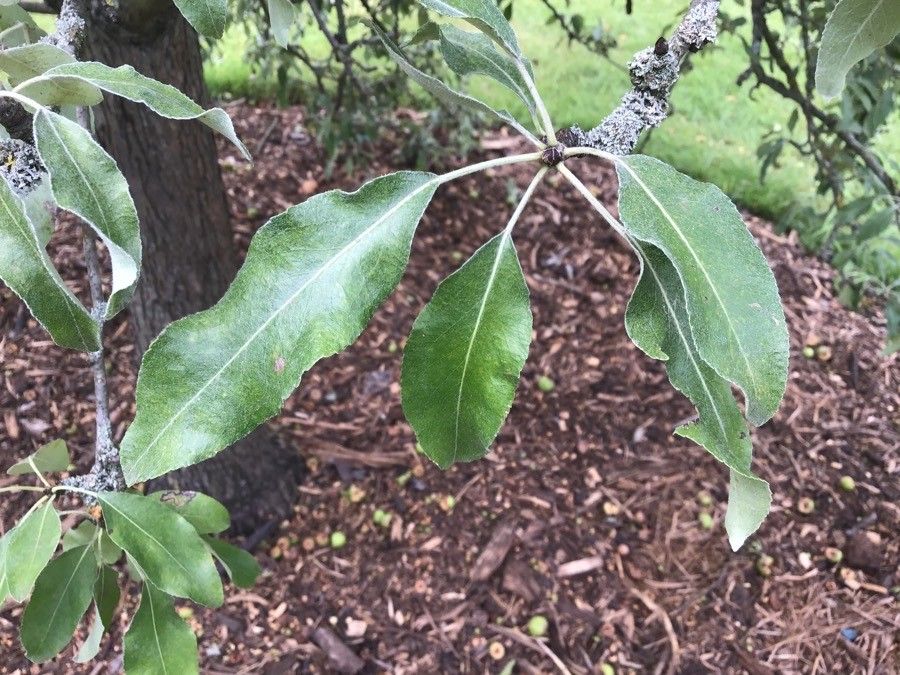
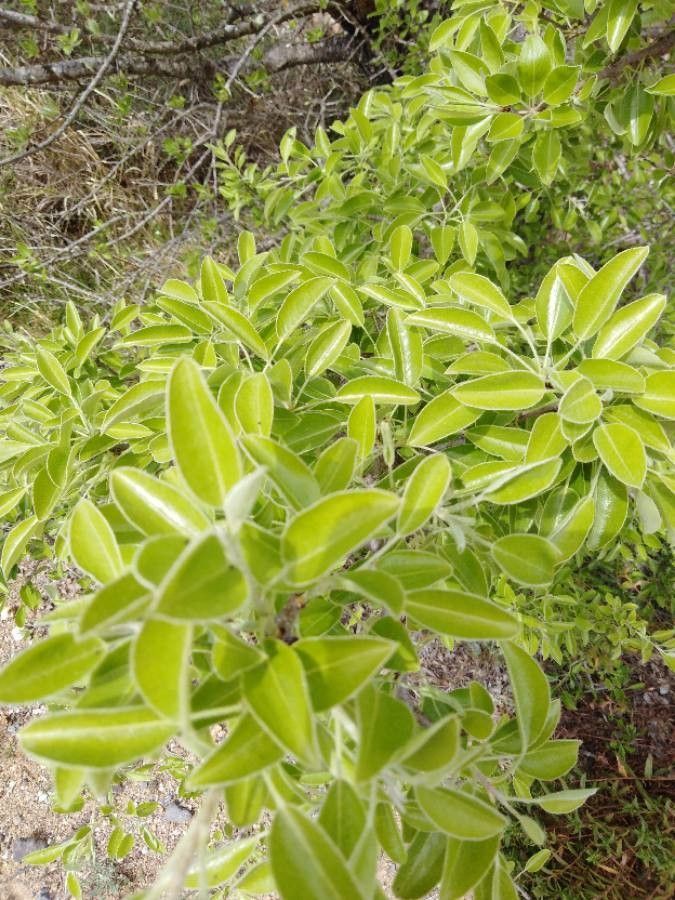
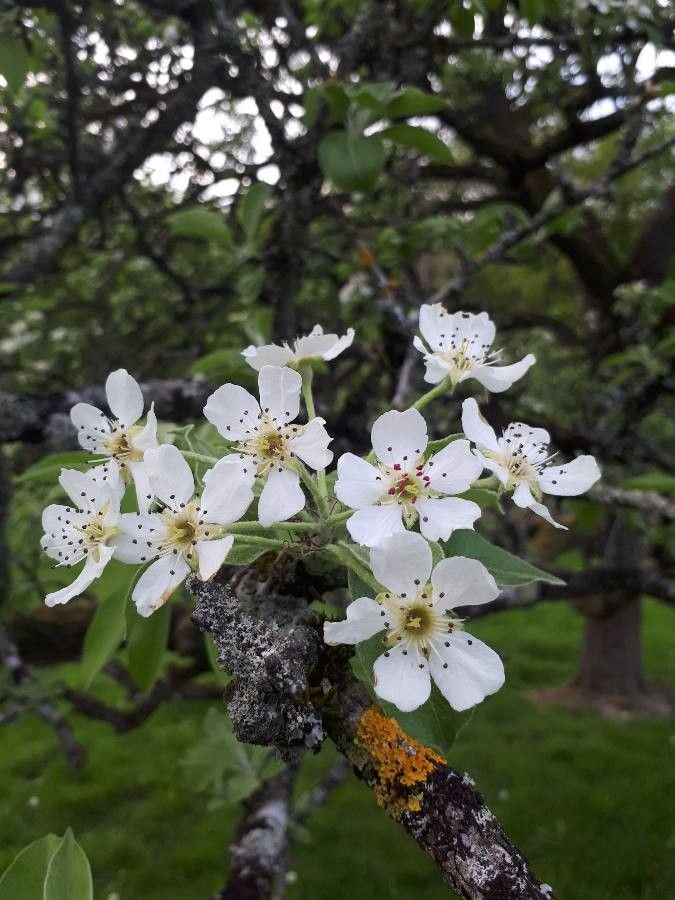
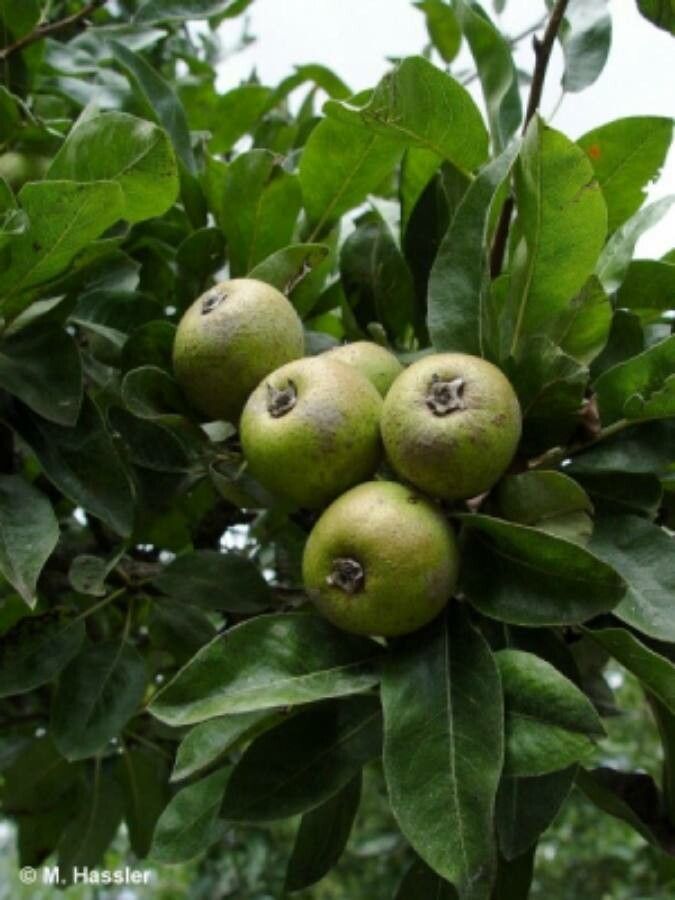
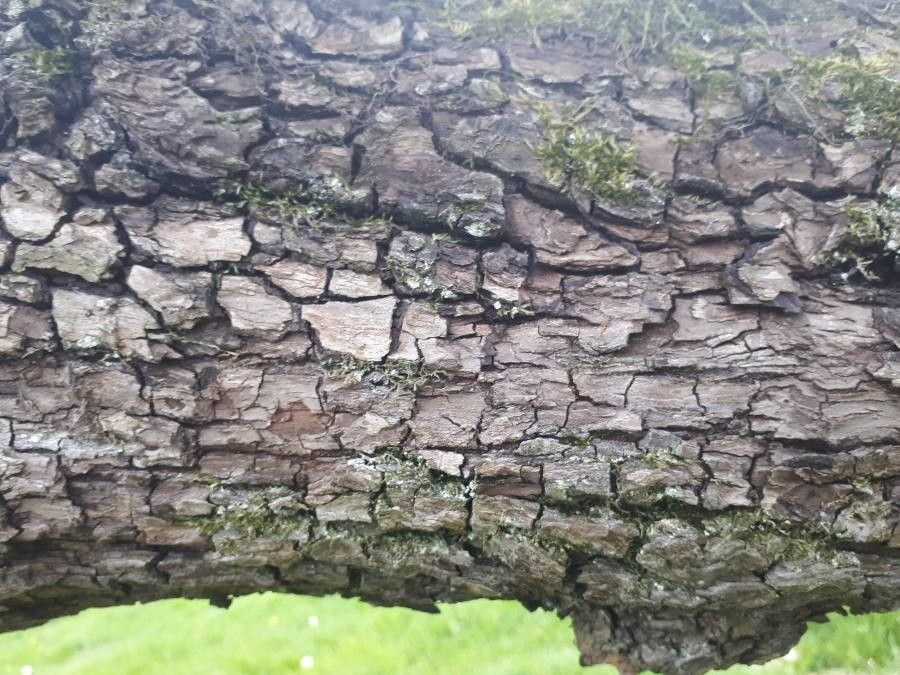
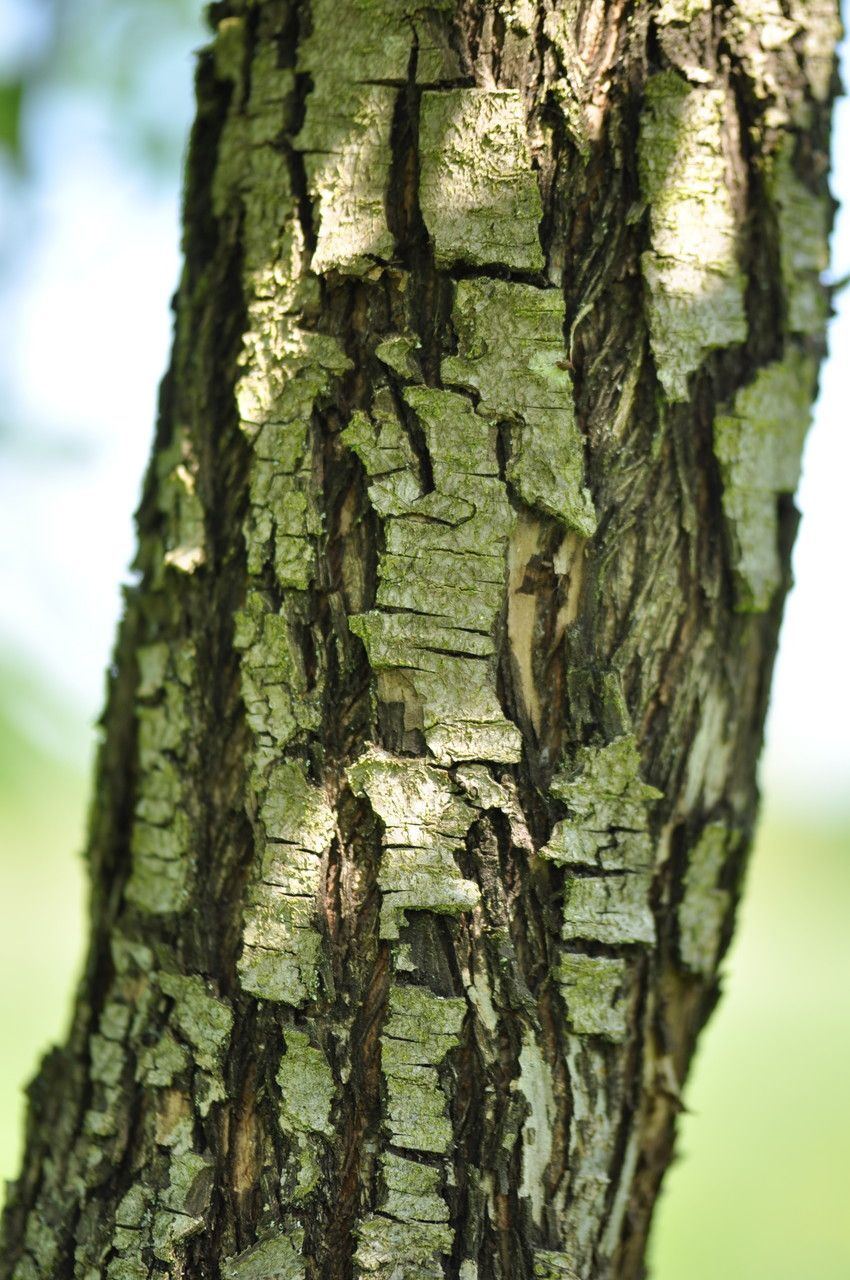
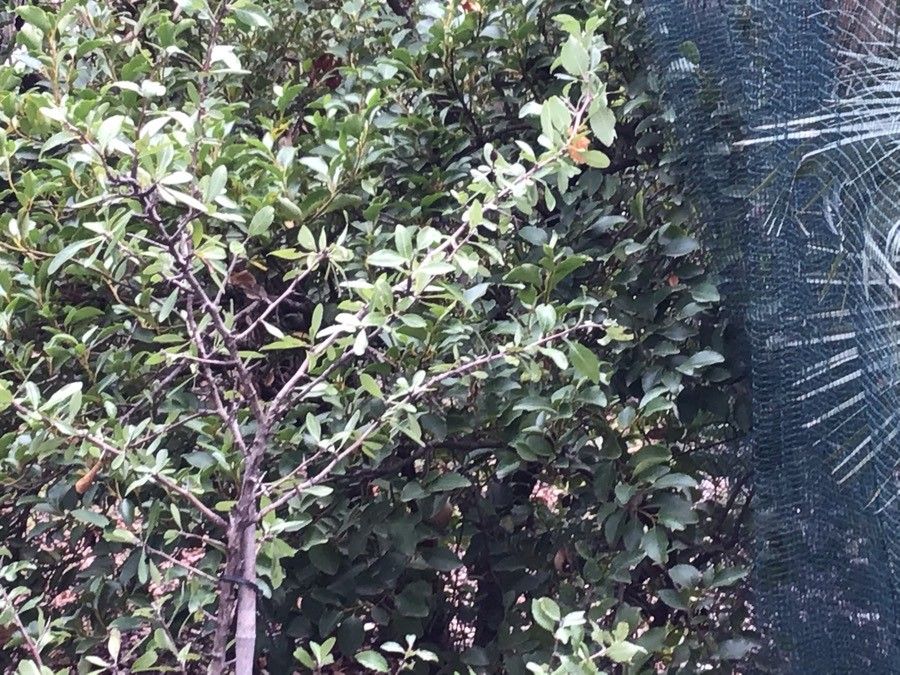
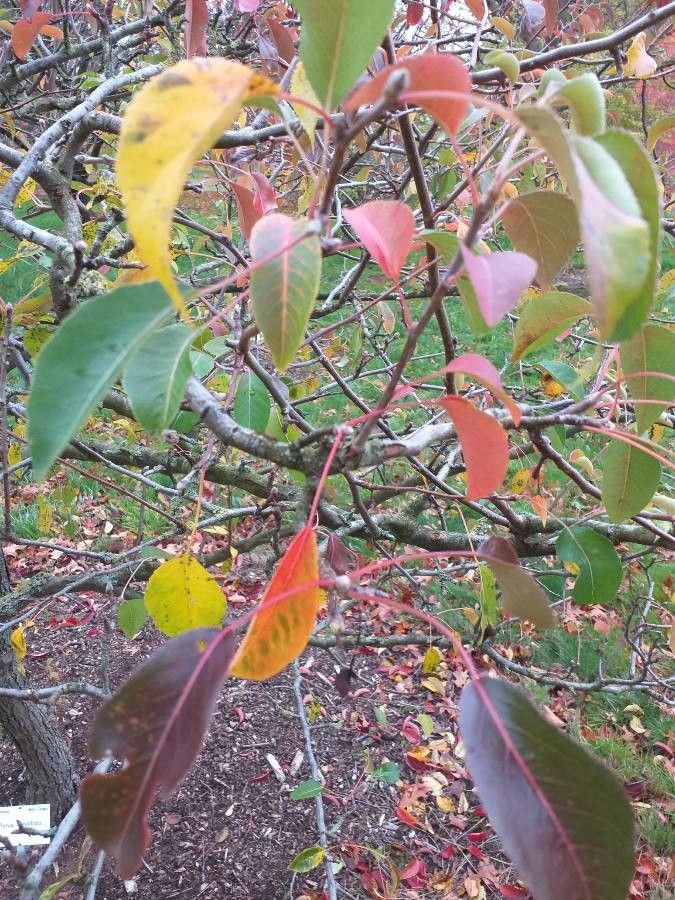
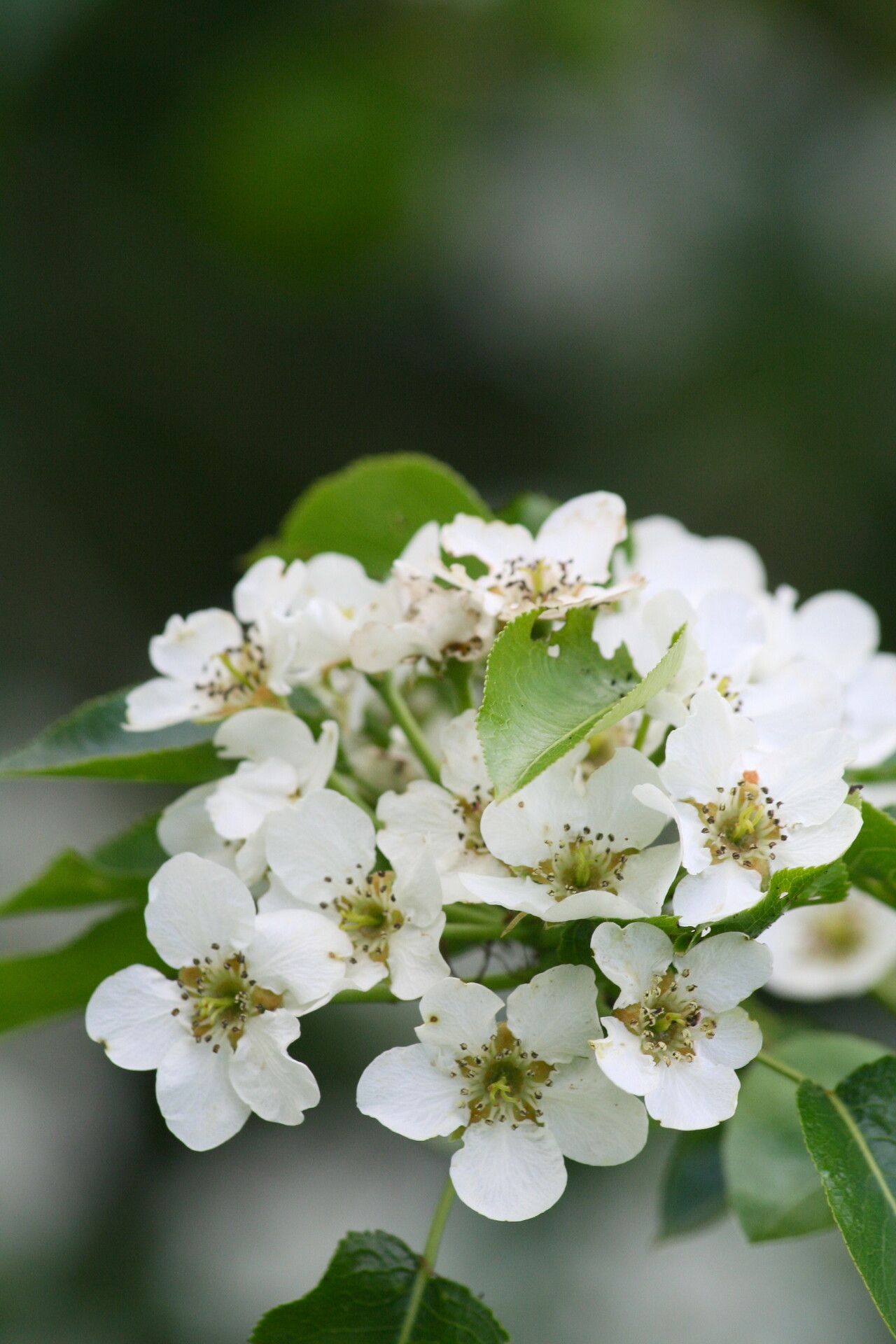
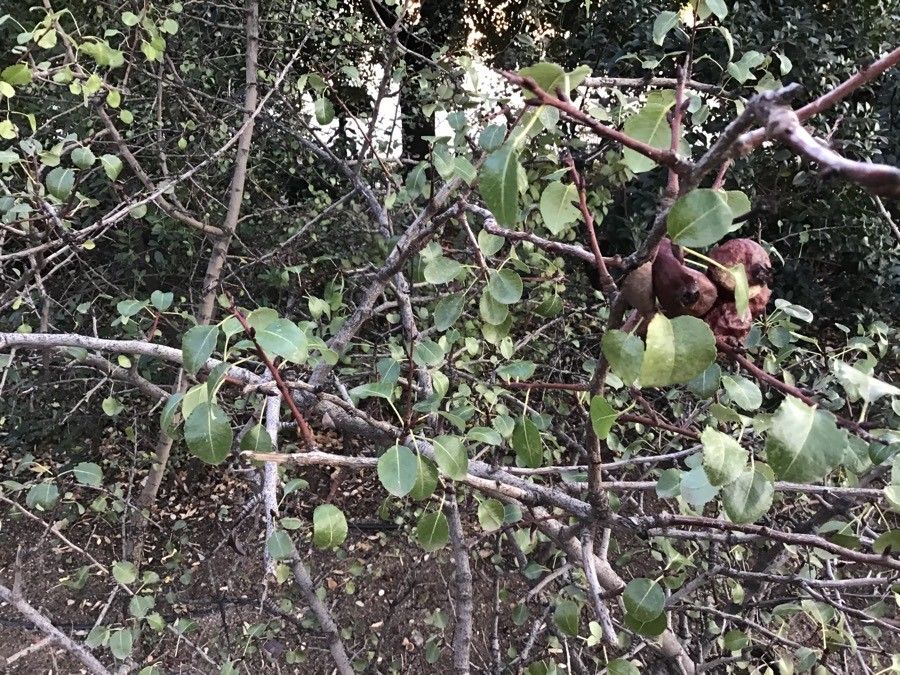
Pyrus nivalis, commonly known as yellow pear, is a species of tree in the family Rosaceae that grows naturally from south-east Europe to western Asia. Like most pears, its fruit can be eaten raw or cooked; it has a mild sour taste. The plant is very colorful and may grow to a height of up to 10 meters and a width of about 8 meters. It is a very hardy plant that is able to withstand a small supply of water or very high or low temperatures. It may hybridize with other pears, producing, for example, Pyrus austriaca in a cross with Pyrus pyraster.
The almond-leaved pear is disease-resistant and generally unlikely to develop illnesses. As for care, this plant is fairly low-maintenance. When grown outdoors it needs only light watering, and larger specimens typically do not require pruning. Nevertheless, smaller plants should be trimmed after they have finished blooming. The almond-leaved pear is appropriate for anyone who has an outdoor area, such as a garden or a deck, and it does not demand much experience in plant care.
How to keep Pyrus Nivalis.
Light
Almond-leaved pear favors abundant sunlight but can also tolerate moderate light levels similar to those in its native environment. A little shade is acceptable but may limit healthy growth, leading to reduced flowering and fruiting. On the other hand, excessive sun exposure can cause leaf scorch.
Water
The snow pear, which naturally grows in cold environments, is adept at conserving moisture. It should be watered moderately twice a week to maintain evenly moist soil without causing waterlogging. As a deciduous plant, its water requirements decrease during its dormant phase in the colder months, demonstrating its resilience to changing water conditions.
Humidity
This plant will thrive in moderate humidity, which is probably the level in your home. However, misting it a few times a week can be very beneficial. Make sure the room has good ventilation.
Temperature
The almond-leaved pear is native to temperate regions and grows best in temperatures of 50 to 77 °F (10 to 25 °C). It is essential to protect this plant from extreme conditions, particularly winter frosts and summer heat.
Fertilizer
Applying fertilizer at the right time is important for the Almond-leaved pear. Begin fertilizing in early spring and continue once a month until early summer. Fertilizer encourages attractive blooms and supplies energy during both dormant and active growth phases.
Pruning
The snow pear is a deciduous tree known for its white blossoms. To help it thrive, it is important to prune it in early spring. Key practices during pruning include removing dead wood, thinning out branches, and shaping the tree to enhance air circulation and sunlight exposure. By pruning regularly, you can prevent diseases and pests, leading to healthier growth and increased fruit production.
Botanical profile.
- Plant Type
- Tree, Shrub
- Life Cycle
- Perennial
- Genus
- Pyrus
- Family
- Rosaceae
- Hardiness Zone
- 6
- Mature Height
- 6.1 m
- Mature Spread
- 2.13 m to 3.96 m
- Leaf Color
- Dark Green, Olive Drab
- Leaf Type
- Deciduous
- Flower Color
- White
- Flower Size
- 2.03 cm to 3.05 cm
- Bloom Time
- Mid spring, Late spring
- Planting Time
- Spring, Summer, Autumn
- Harvest Time
- Late summer, Early fall, Mid fall
- Native Area
- Turkey, Italy, Spain, Serbia, Montenegro, Bulgaria, Albania, Greece, Croatia, Slovenia, France
Other names.