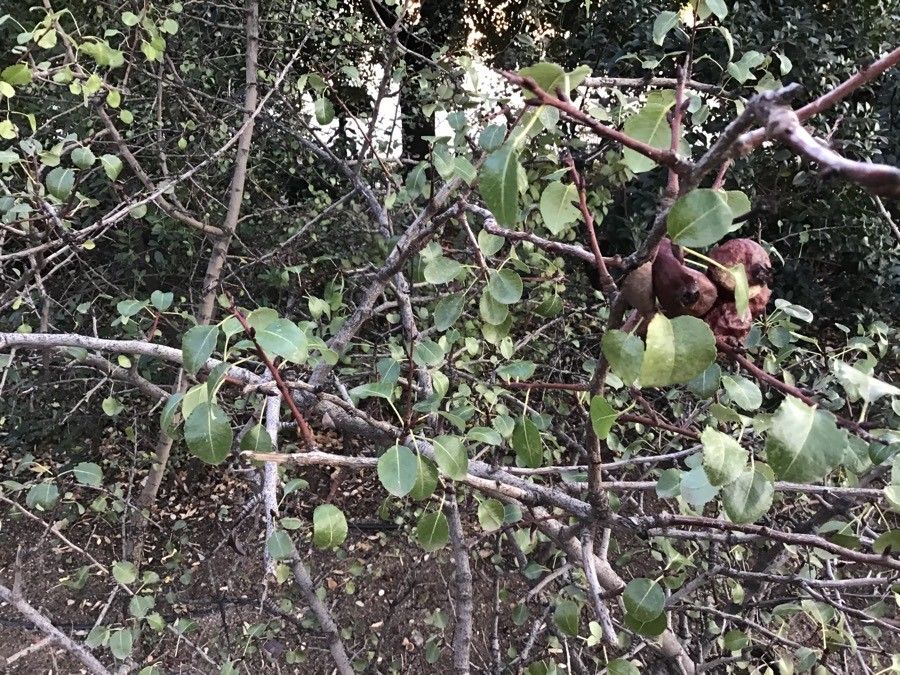
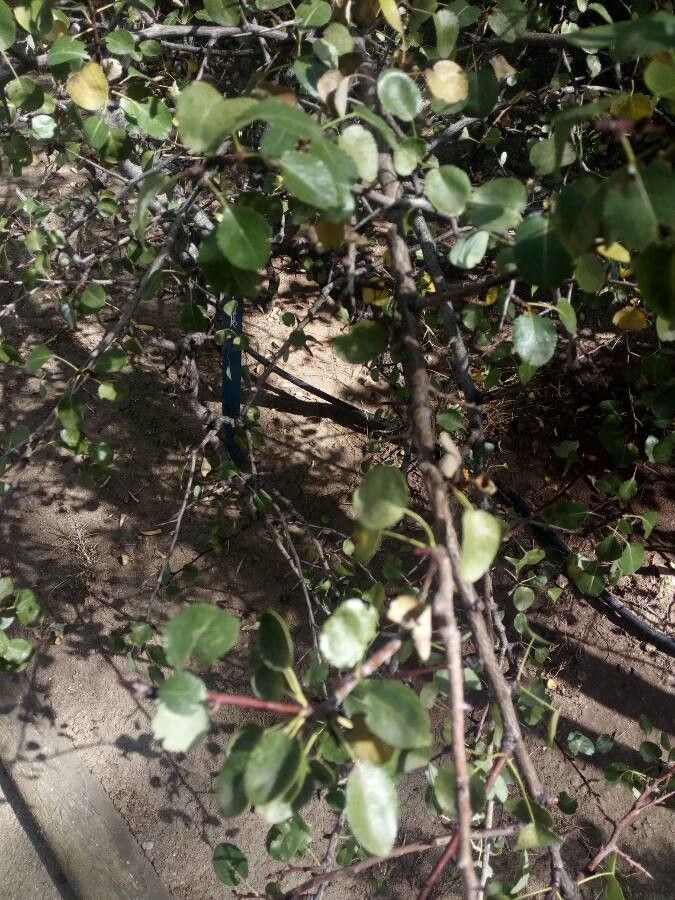
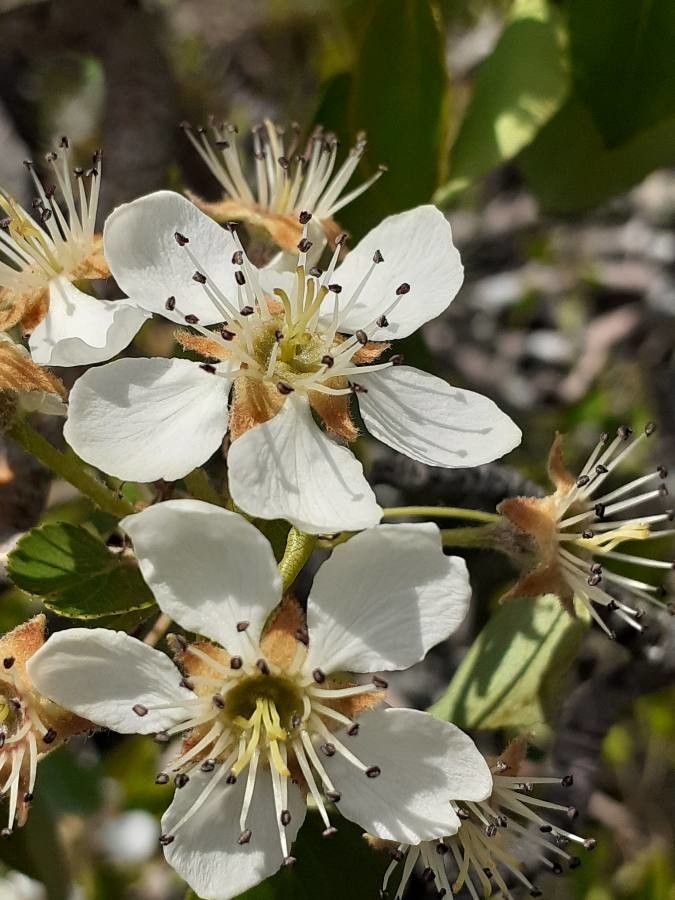
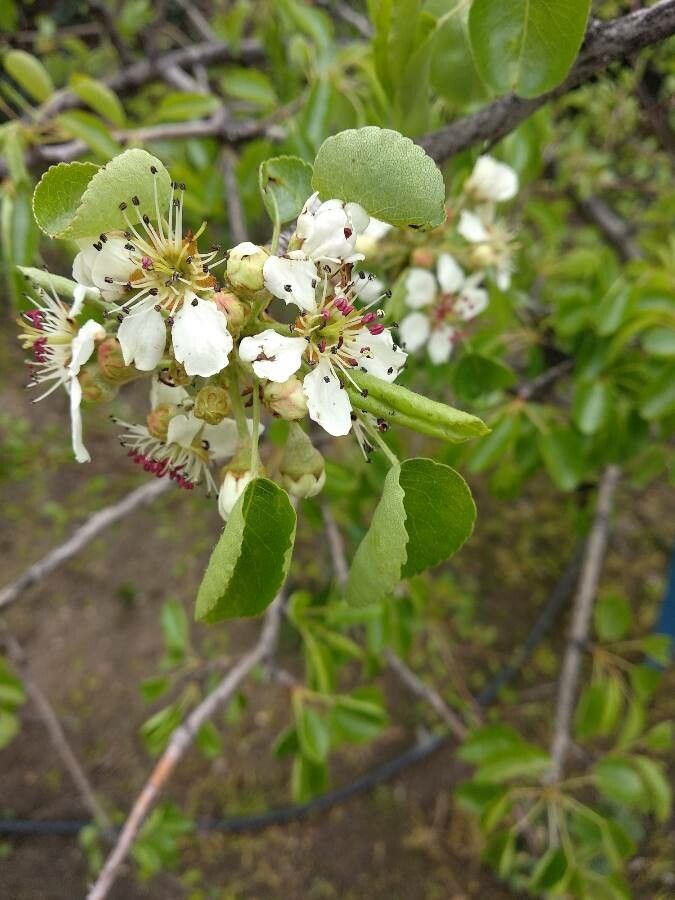
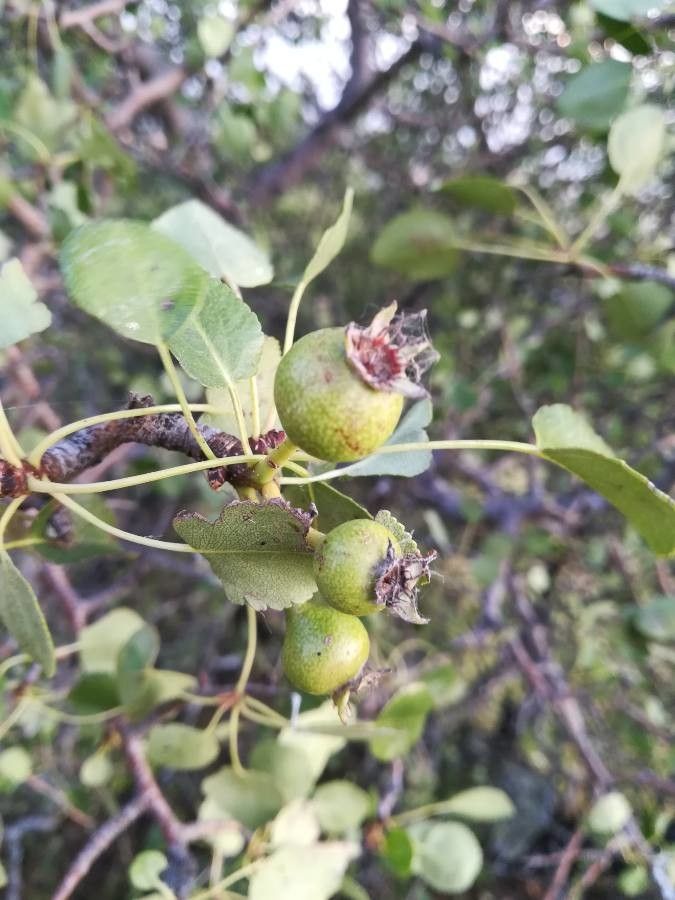
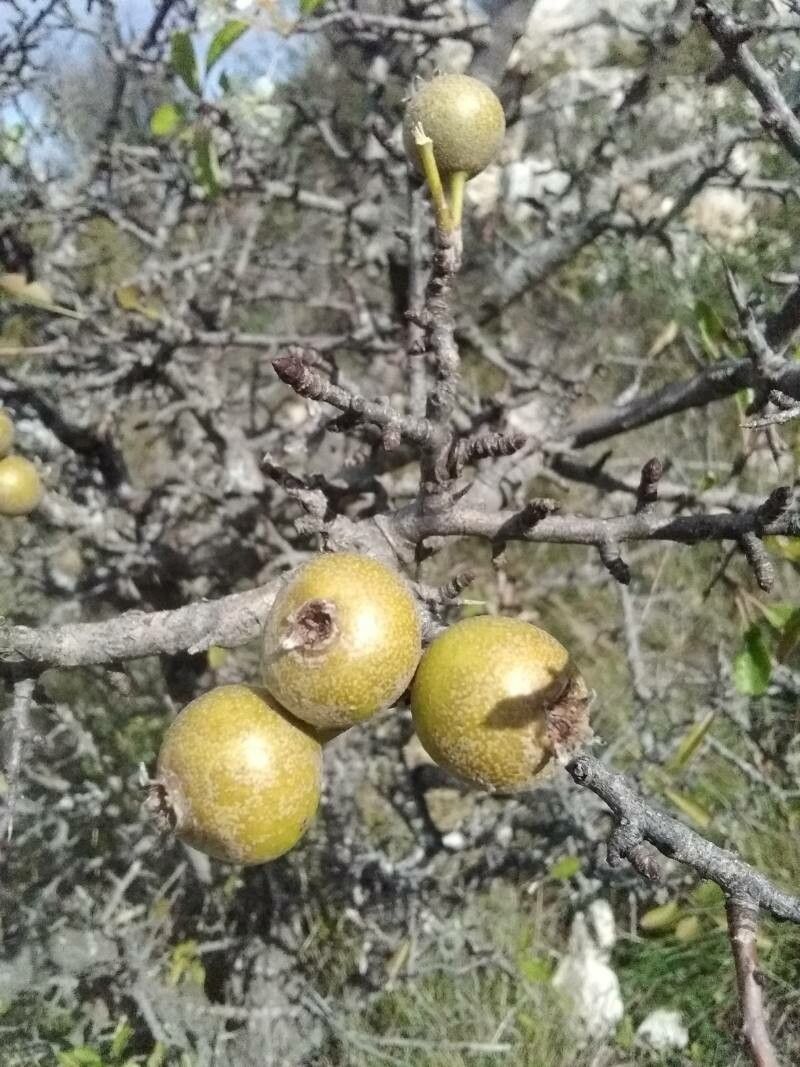
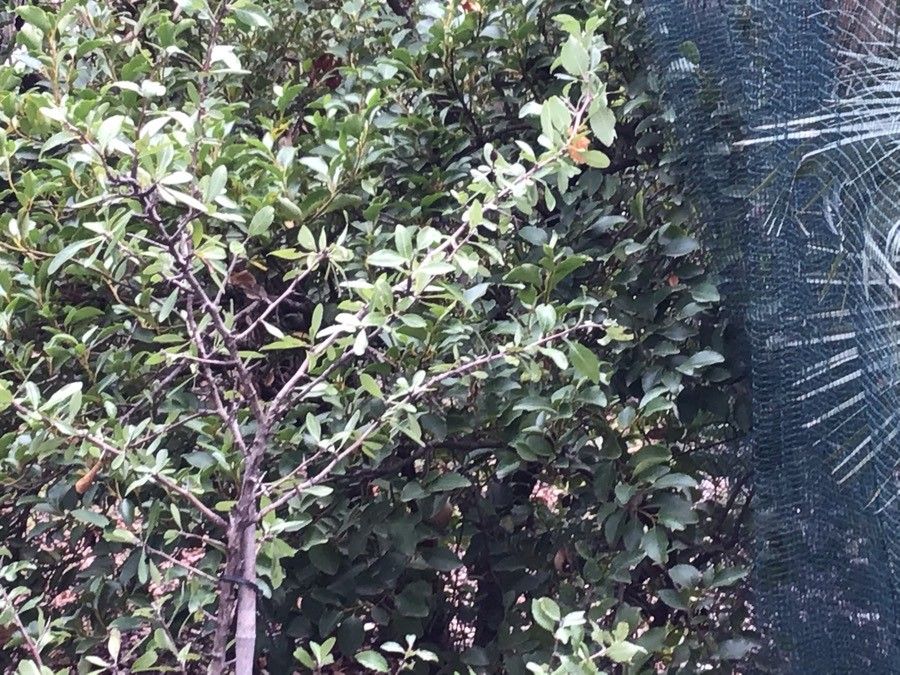
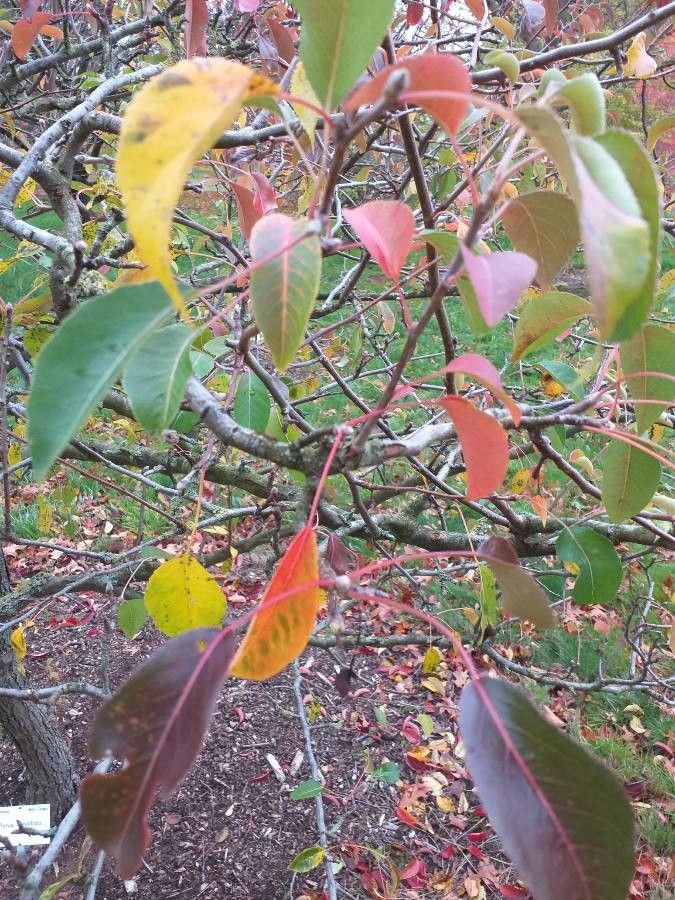
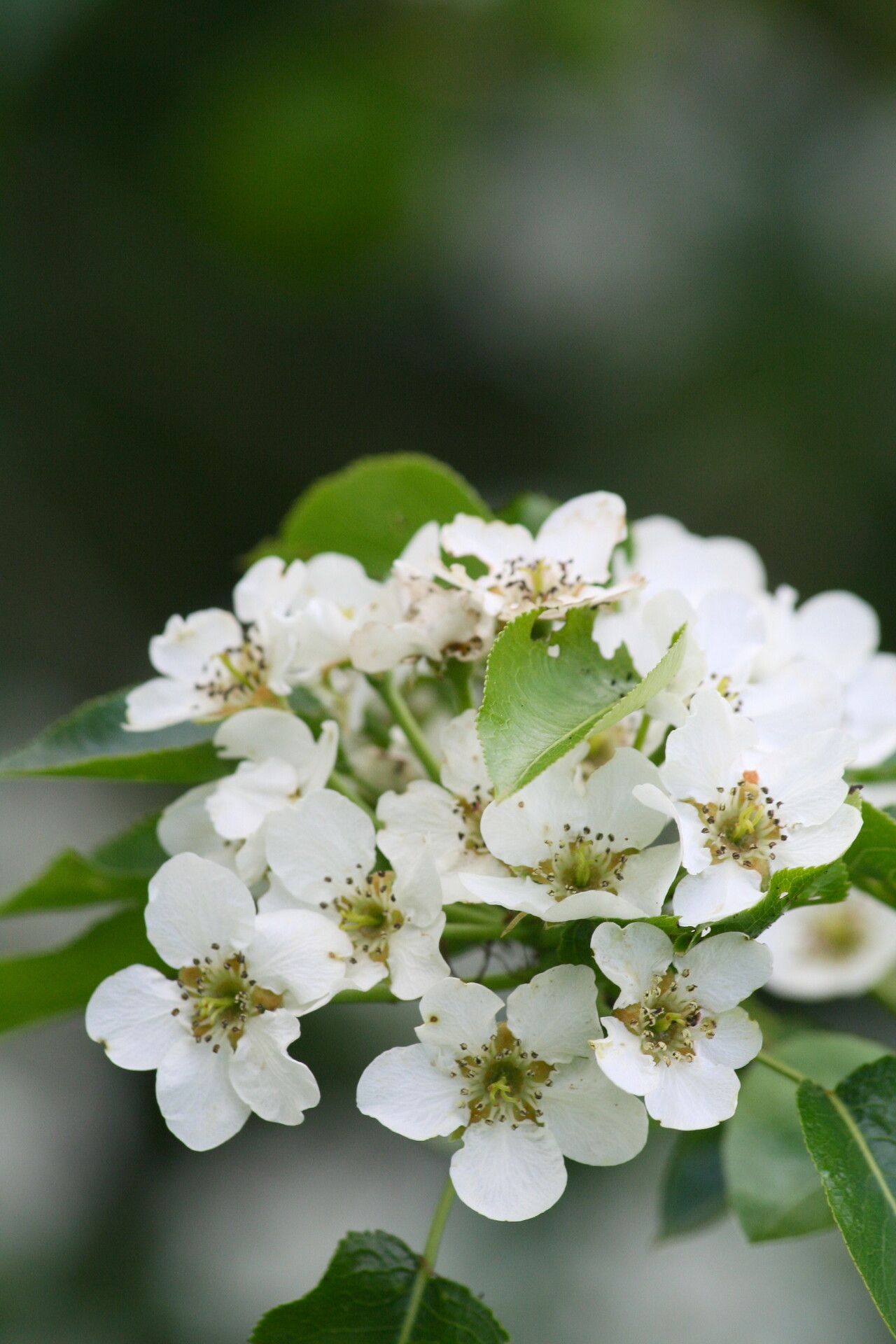
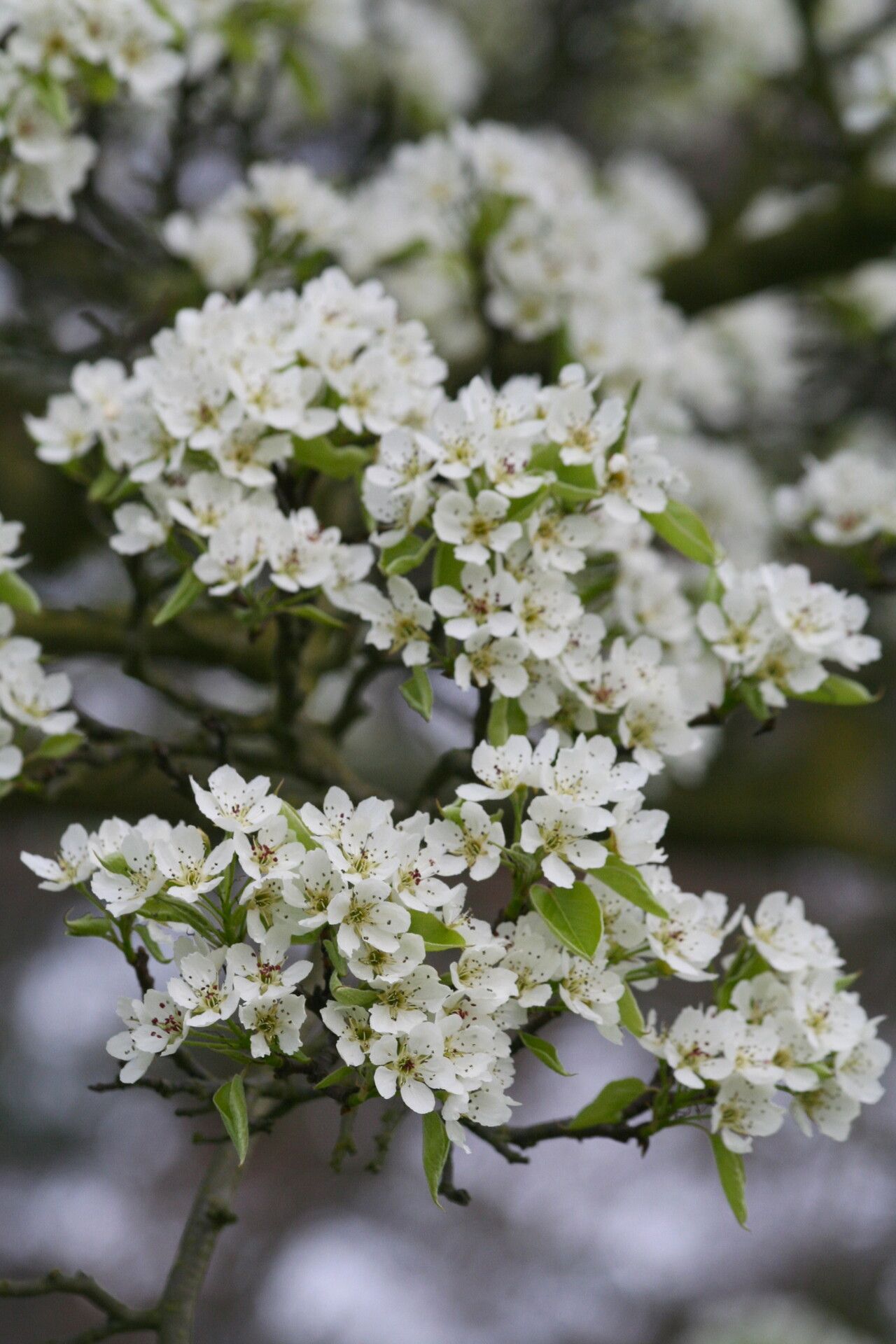
Pyrus bourgaeana, commonly known as the wild pear or Algerian pear, is a deciduous tree in the Rosaceae family. Native to North Africa as well as parts of Europe and Asia, this tree can grow up to 10 meters tall. It features a rounded crown with dense, glossy green foliage that turns yellow in autumn. In spring, Pyrus bourgaeana produces small white flowers, followed by green fruits that ripen into yellow or brown pears in late summer. While these fruits are edible, they are not commonly consumed due to their sour taste. The wild pear tree is highly adaptable and can thrive in various soil types, provided they are well-drained. It prefers full sun exposure but can also tolerate partial shade. Because of its attractive foliage, flowers, and fruit, Pyrus bourgaeana is often used for ornamental purposes. Additionally, various parts of the plant have been used for medicinal purposes, such as treating digestive disorders and respiratory problems. The wood from this species is also utilized for making furniture and fuel. Overall, Pyrus bourgaeana is an appealing deciduous tree with ornamental value and medicinal benefits. Its adaptability to different growing conditions makes it an excellent addition to gardens and landscapes.
The Iberian wild pear tree has strong resistance to disease and is generally not susceptible to illnesses. In terms of care, this plant is fairly low-maintenance. When grown outdoors it needs little watering, and larger plants typically do not require pruning. However, smaller plants should be pruned after they have finished blooming. The Iberian wild pear tree is suitable for anyone with an outdoor area, such as a garden or a deck, and does not require much gardening experience.
How to keep Pyrus Bourgaeana.
Light
The Iberian wild pear tree comes from open habitats, for example sunny meadows and forest edges, that offer abundant light. It does best in Full Sun but can also tolerate Partial Sun, adapting well to different sunlight conditions.
Water
The Iberian wild pear tree flourishes in Mediterranean climates, preferring dry conditions and tolerating drought well. To maintain optimal moisture levels without over-saturation, it should be watered twice a week. Usually grown outdoors, the Iberian wild pear tree benefits from rainwater, especially during its active growing season when its water demand increases.
Temperature
The Iberian wild pear tree is highly adaptable to a variety of climatic conditions, tolerating both hot summers and cold winters. Still, it has a preferred temperature range for healthy growth. If temperatures become too high, the plant can suffer from heat and humidity stress, which may cause it to die. In locations where temperatures near the lower limit of its cold tolerance, insulating the plant is necessary to protect it.
Fertilizer
Proper timing is essential for fertilizing an Iberian wild pear tree. Apply fertilizer in early spring and repeat monthly until early summer. Fertilizer encourages attractive blooms and supplies energy during both dormant and active growth periods.
Pruning
The Iberian wild pear tree is a hardy species, celebrated for its beautiful white blossoms in the spring. To maintain its health and appearance, prune the tree in early spring. This helps to shape it and remove any dead branches, improving air circulation and light penetration. Be cautious not to prune too heavily, as this can stress the tree. When the tree is young, proper shaping encourages healthy growth and enhances flowering.
Botanical profile.
- Plant Type
- Tree
- Life Cycle
- Perennial
- Genus
- Pyrus
- Family
- Rosaceae
- Hardiness Zone
- 5-9
- Mature Height
- 4.88 m to 10.06 m
- Mature Spread
- 3.96 m to 6.1 m
- Leaf Color
- Green, Dark Green
- Leaf Type
- Deciduous
- Flower Size
- 2.03 cm to 3.05 cm
- Bloom Time
- Early spring, Mid spring
- Planting Time
- Spring, Summer, Autumn
- Harvest Time
- Late summer, Early fall, Mid fall
- Native Area
- Morocco, Spain, Portugal
Other names.
Reader questions.
What are the sunlight requirements for an Iberian wild pear tree (Pyrus bourgaeana)?
The Iberian wild pear tree, known scientifically as Pyrus bourgaeana, thrives under specific sunlight conditions. It requires 'full sun', which is defined as receiving more than 6 hours of sunlight daily, to grow optimally. However, it can also tolerate 'partial sun', meaning it should receive about 3-6 hours of sunlight each day. It's crucial to observe the movement of sunlight through your garden to identify areas that offer a good balance of light and shade, ensuring the best growth conditions for your plant.
What is the Iberian wild pear tree?
The Iberian wild pear tree, botanically known as Pyrus bourgaeana, is a species of pear tree native to the Iberian Peninsula. While specific details about its essentials and symptoms were not provided, the tree is known for its ability to thrive in the Mediterranean climate of the region.