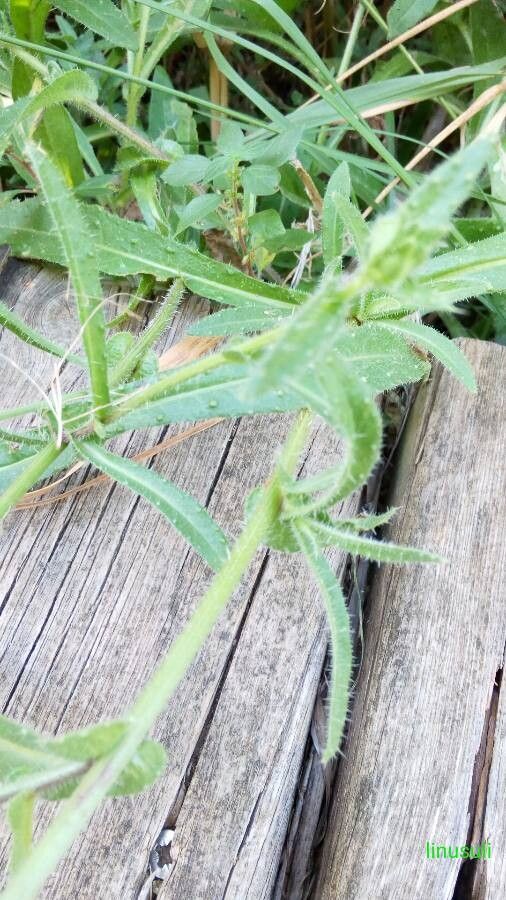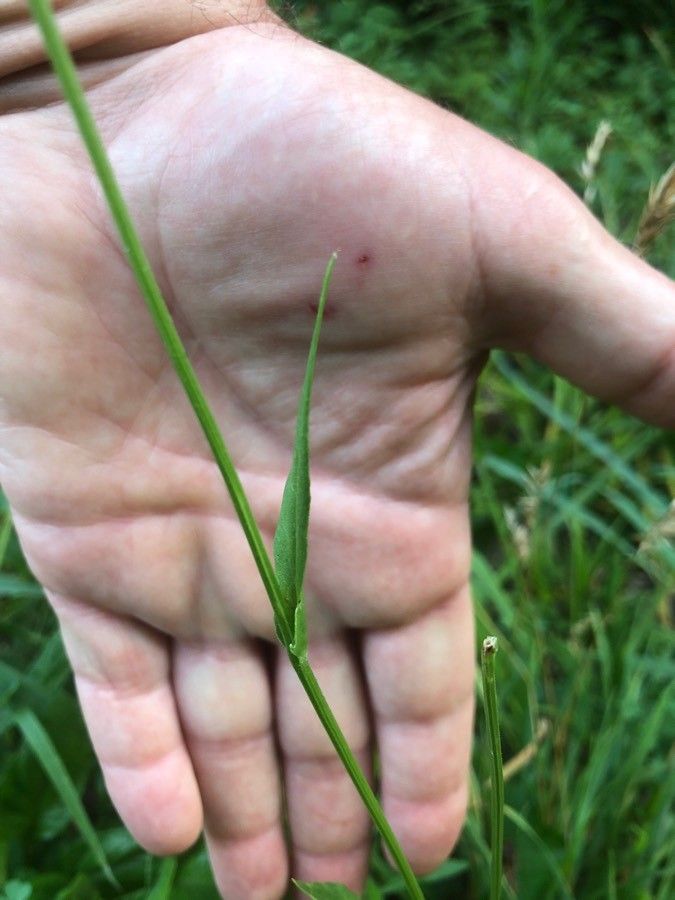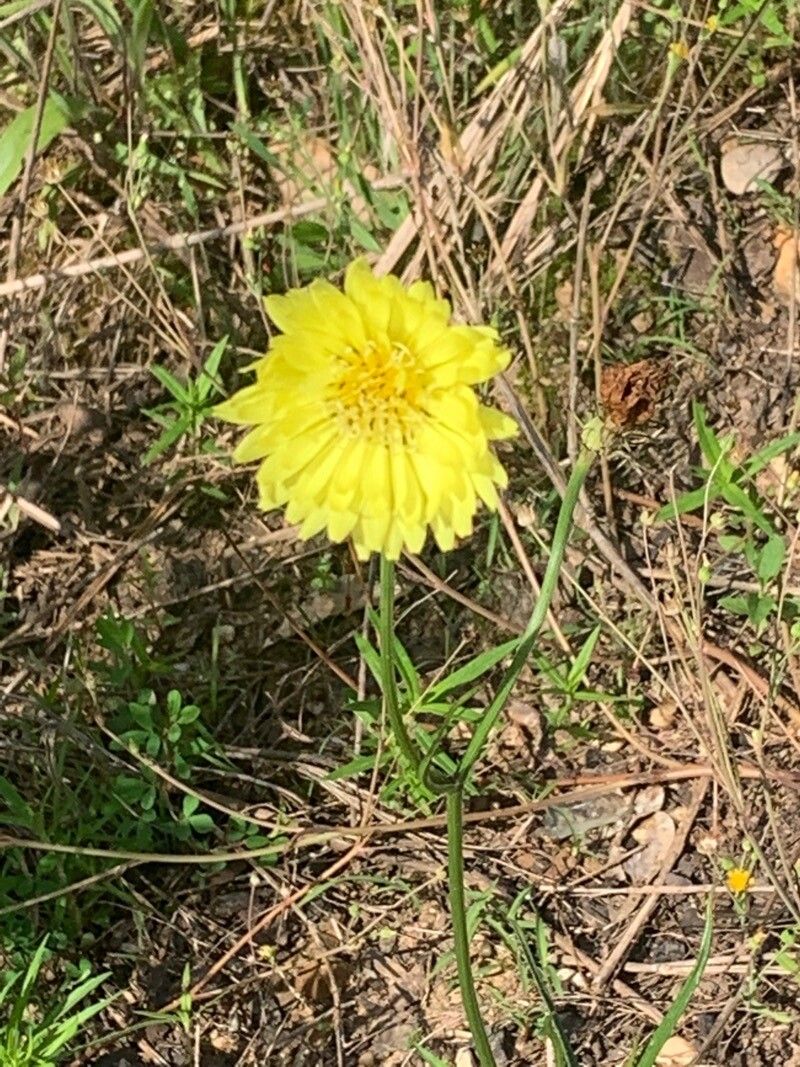
Pyrrhopappus grandiflorus: The Large-Flowered Desert-Chicory Pyrrhopappus grandiflorus, commonly known as the large-flowered desert-chicory, is a perennial herbaceous plant belonging to the Asteraceae family. It is native to the southwestern United States and northern Mexico, thriving in arid regions such as deserts, grasslands, and rocky slopes. This plant typically grows up to 3 feet tall, featuring a woody base and multiple stems. Its leaves are deeply lobed with toothed edges and covered in fine hairs. The striking flowers, up to 3 inches in diameter, have bright yellow petals encircling a central disk of small yellow florets. Blooming from March through June, Pyrrhopappus grandiflorus attracts a variety of pollinators, including bees, butterflies, and hummingbirds. Additionally, it serves as a vital food source for desert animals like rabbits. Native American tribes have historically used this plant for medicinal purposes, treating various ailments such as stomach problems, reducing fever, and healing wounds. Overall, Pyrrhopappus grandiflorus is a visually appealing wildflower that enhances arid landscapes. It also offers ecological benefits by supporting pollinator populations.
Botanical profile.
- Genus
- Pyrrhopappus
- Family
- Asteraceae