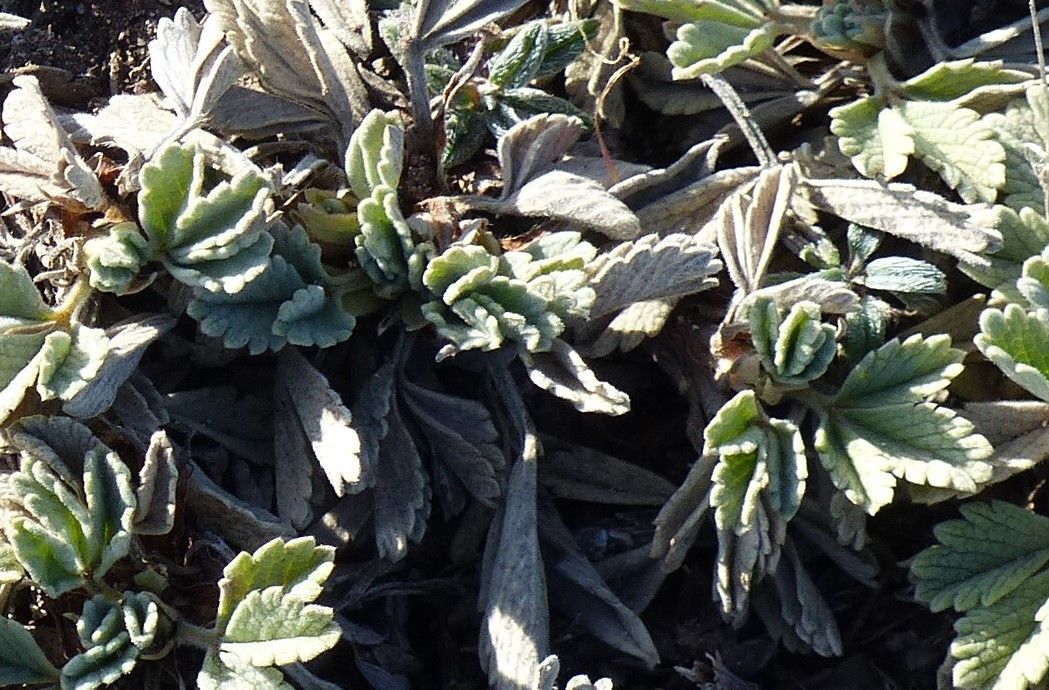
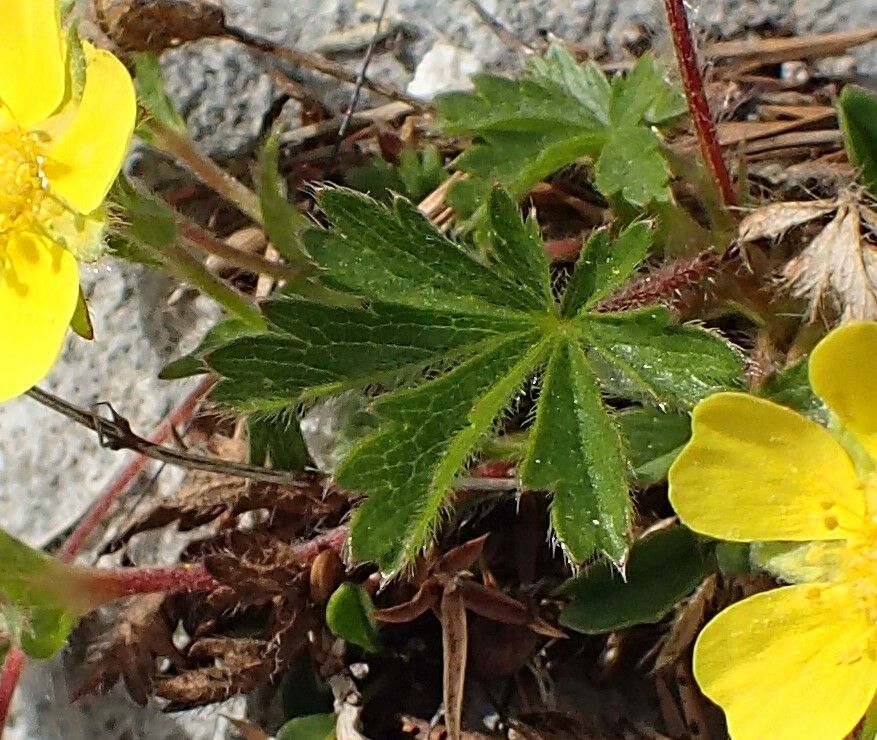
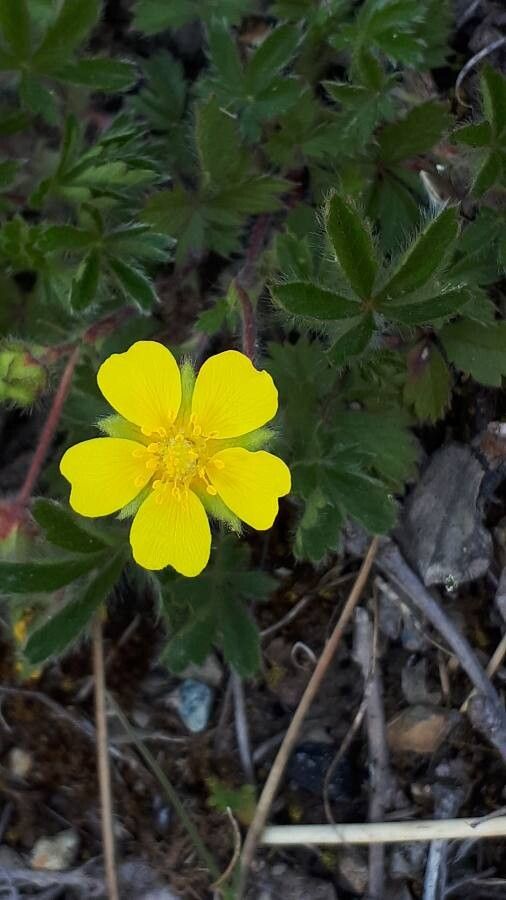
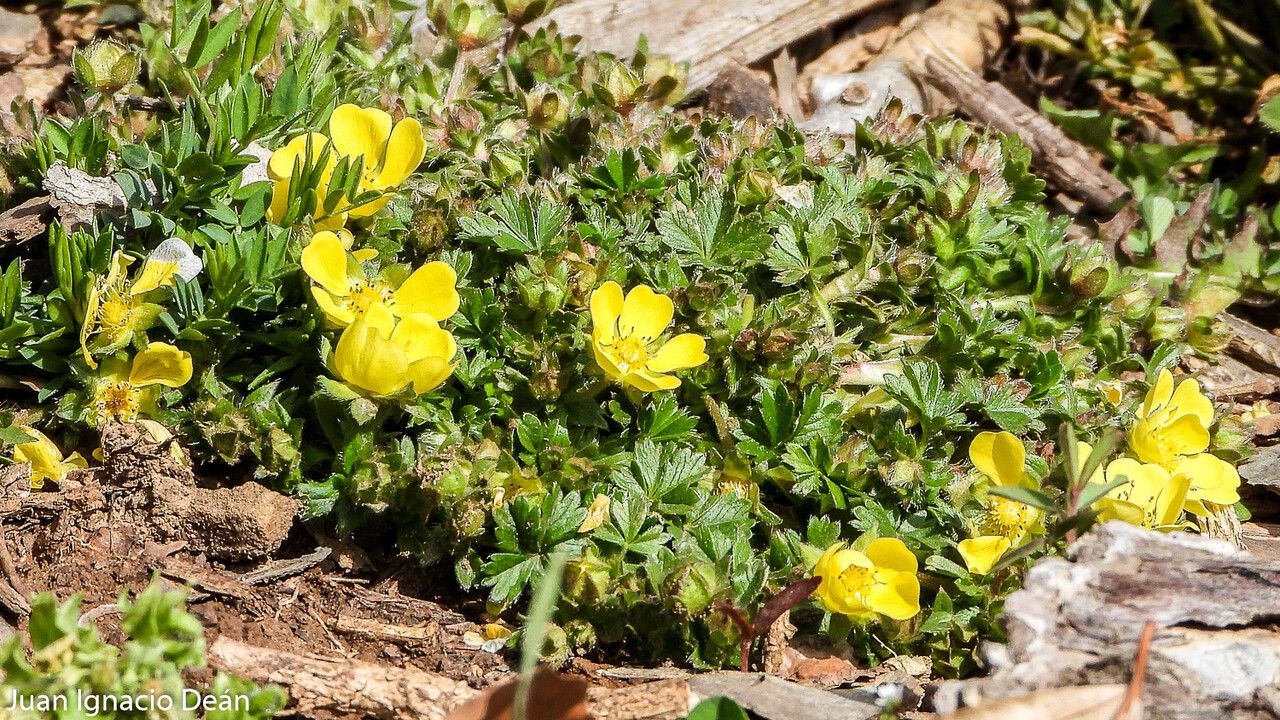
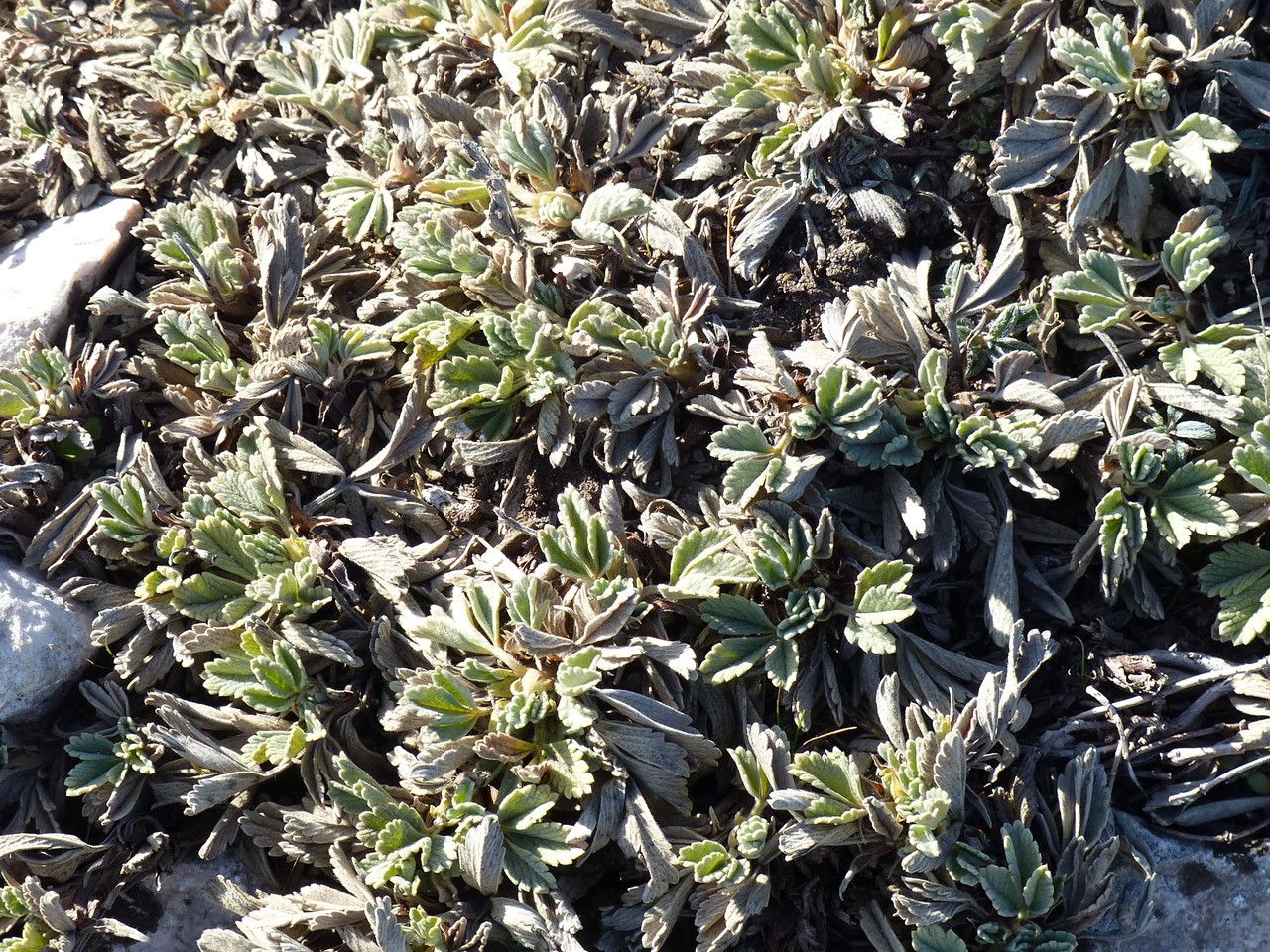
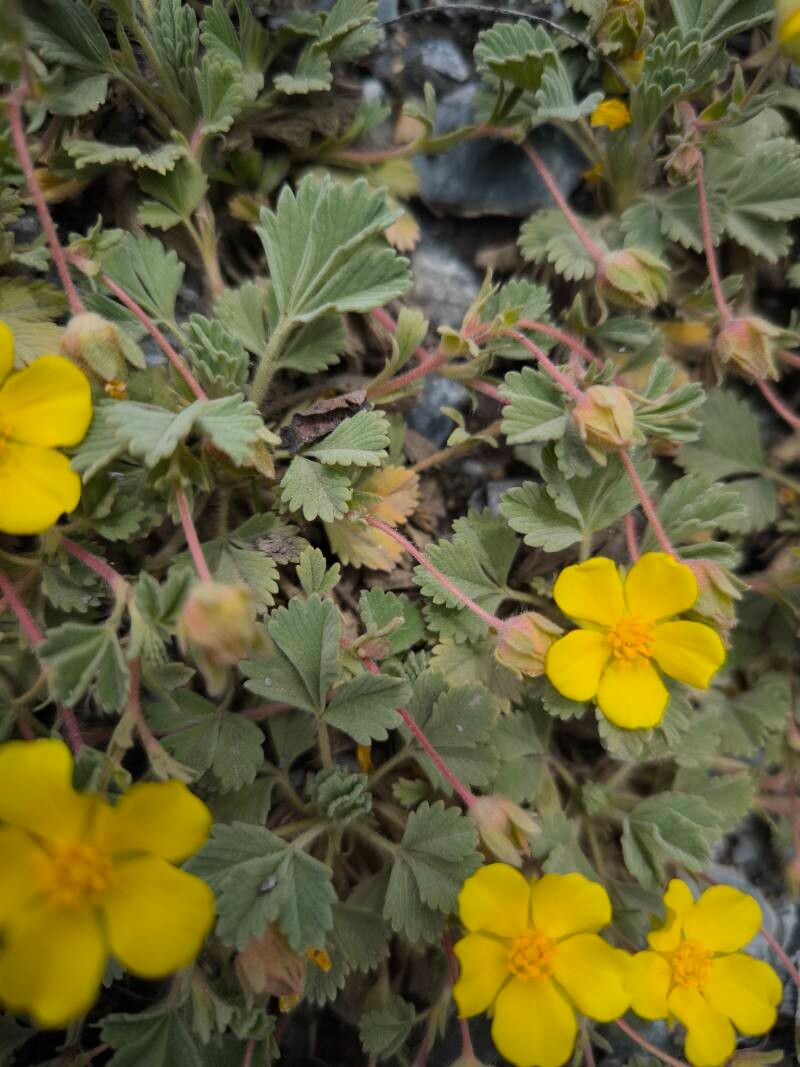
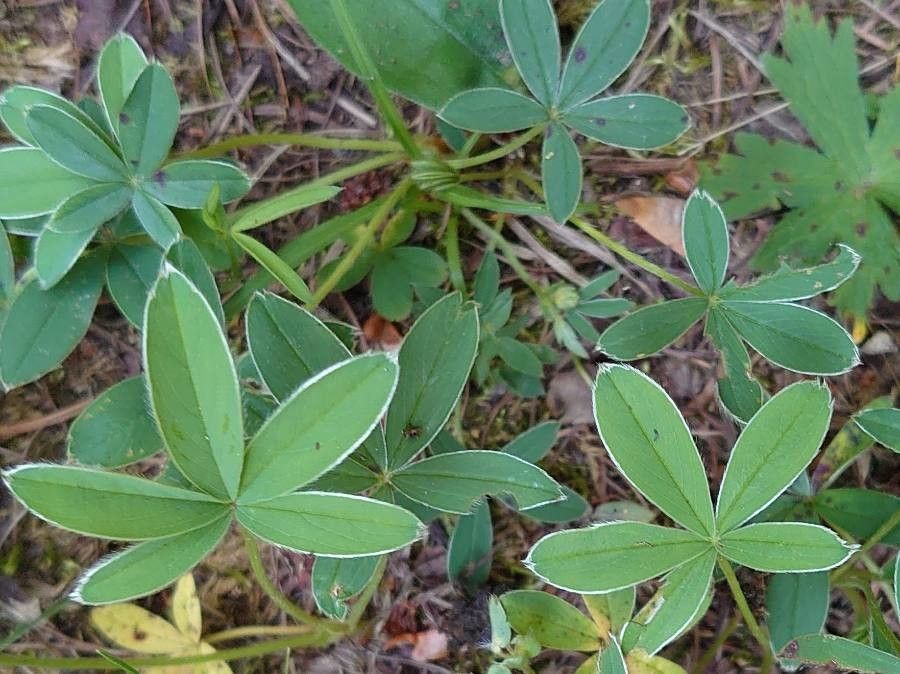
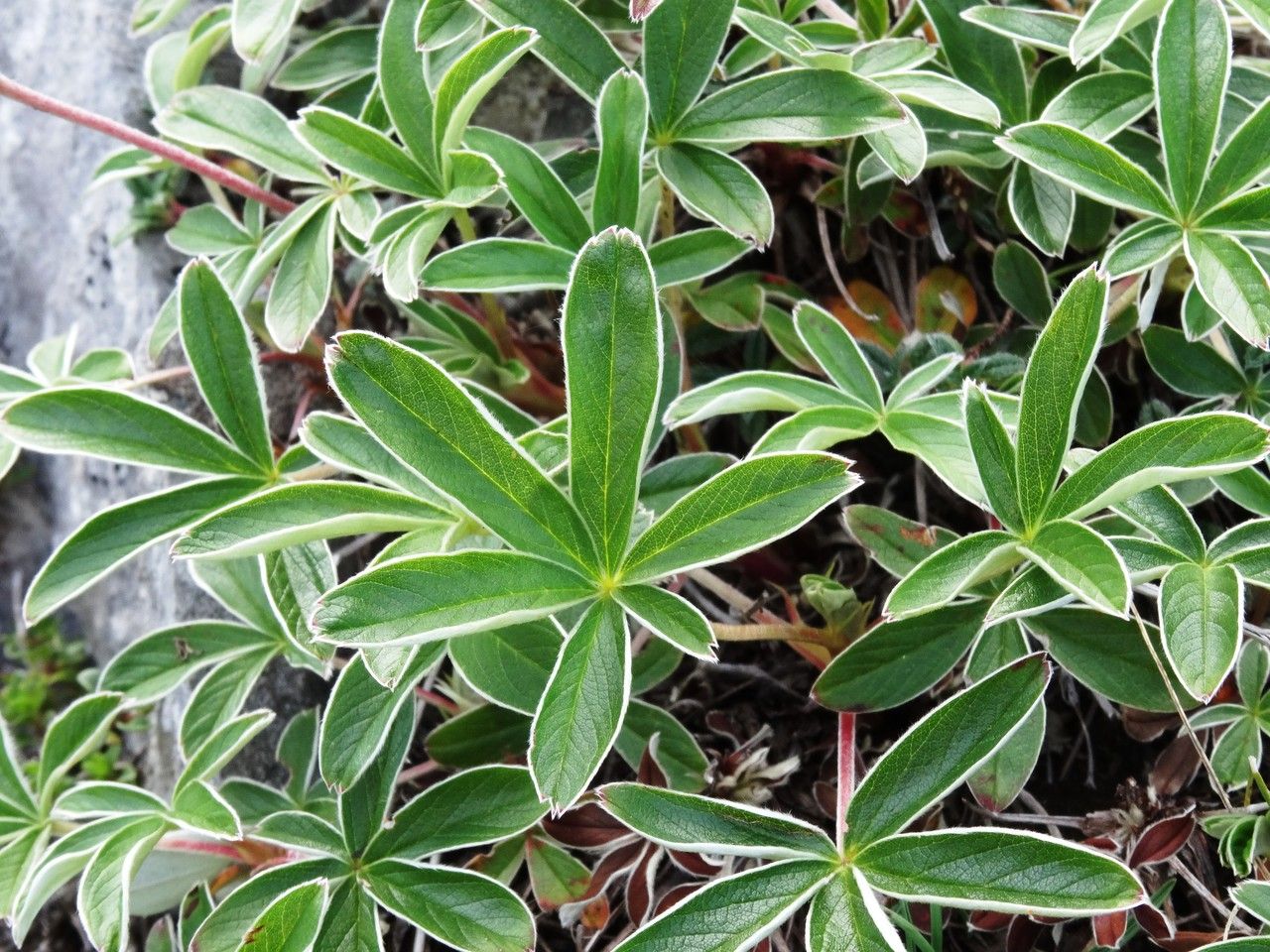
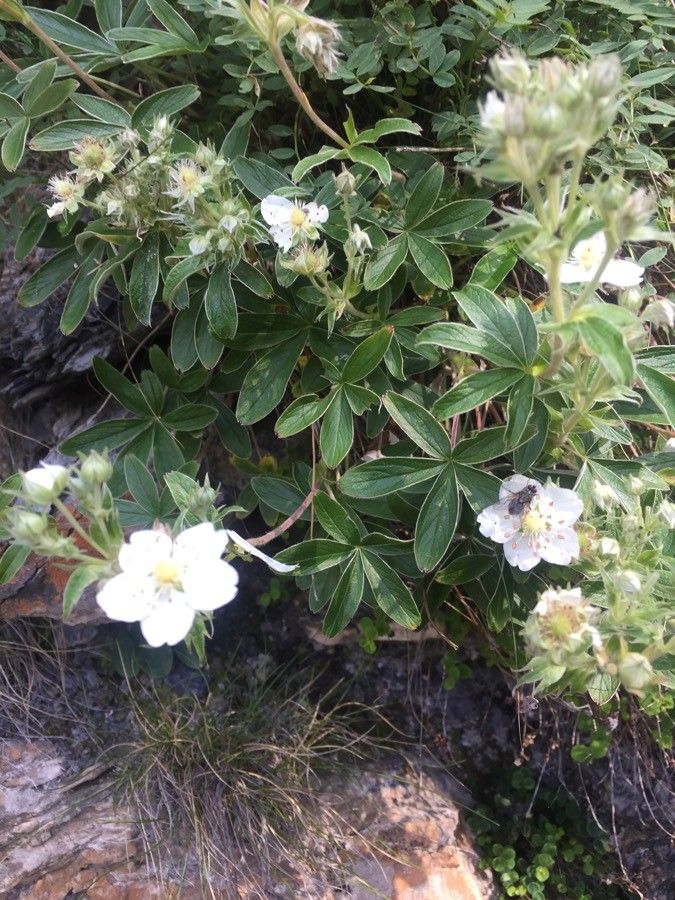
Potentilla is a genus containing over 300 species of annual, biennial and perennial herbaceous flowering plants in the rose family, Rosaceae. Potentillas may also be called cinquefoils in English, but they have also been called five fingers and silverweeds. Some species are called tormentils, though this is often used specifically for common tormentil (P. erecta). Others are referred to as barren strawberries, which may also refer to P. sterilis in particular, or to the closely related Waldsteinia fragarioides. Several other cinquefoils formerly included here are now separated in distinct genera - notably the popular garden shrub P. fruticosa, now Dasiphora fruticosa. Potentillas are generally found throughout the northern continents of the world (holarctic), though some occur in montane biomes of the New Guinea Highlands.
Spring cinquefoil has strong resistance to disease and is generally unlikely to suffer from illnesses. Still, it can be affected by pests and diseases that exist in the nearby environment. Such infections are typically mild. Regarding care, this plant is of moderate maintenance. It should be pruned on a regular basis to preserve a neat appearance and encourage healthy growth. Applying fertilizer can also aid in boosting blooms. Spring cinquefoil is appropriate for anyone with outdoor space, like a garden or patio, and does not demand much gardening experience. It may need increased attention if cultivated indoors.
How to keep Potentilla Verna.
Light
Spring cinquefoil is a sun-loving perennial herbaceous plant that comes from open habitats and is commonly found in meadows and grasslands. It prefers full sun but can also tolerate partial sun.
Water
Spring cinquefoil is a drought-tolerant plant that typically needs moderate watering every 1-2 weeks. It thrives in temperate conditions and is versatile enough for both indoor and outdoor environments. As an herbaceous perennial, it goes dormant during colder months, which significantly reduces its water requirements.
Temperature
Spring cinquefoil can tolerate a wide span of temperatures, but its range may still be restricted by various combinations of moisture and heat. It performs best in warm summer climates with sufficient rainfall or watering. Extended periods of cloudy, rainy weather or prolonged high temperatures can raise the chances of Spring cinquefoil dying. In winter, adequate protection from cold can boost the plant's survival.
Fertilizer
The primary time to fertilize Spring cinquefoil is in early spring, when the flowers are beginning to form. Applying the appropriate fertilizer promotes stronger blooms and helps Spring cinquefoil produce attractive flowers. Fertilizing at this early-spring stage ensures excellent flowering during the season and supplies energy for its dormant growth phases.
Pruning
The spring cinquefoil is known for its vibrant yellow flowers and low-growing nature. To promote growth, it's beneficial to prune the plant annually from early to late spring. During pruning, remove spent blooms and damaged stems, and thin out crowded areas to improve air circulation. This practice supports the spring cinquefoil's natural growth cycle, resulting in healthier foliage and more abundant blooms.
Botanical profile.
- Plant Type
- Herb
- Life Cycle
- Perennial
- Genus
- Potentilla
- Family
- Rosaceae
- Hardiness Zone
- 3-8
- Mature Height
- 8 cm to 15 cm
- Mature Spread
- 15 cm to 30 cm
- Leaf Color
- Green
- Leaf Type
- Evergreen
- Flower Color
- Yellow
- Flower Size
- 1.02 cm to 2.03 cm
- Bloom Time
- Spring
- Planting Time
- Spring, Summer, Autumn
- Harvest Time
- Early summer, Mid summer
- Native Area
- Austria, Sweden, Slovakia, Croatia, Russia, Germany, Canada, Estonia, Koppen, South Korea, Romania, Belgium, Netherlands, France, Portugal, Czech Republic, Bulgaria, Poland, China, Norway, Italy, Kazakhstan, Spain, Switzerland, Denmark, Mongolia, Finland, United Kingdom, Hungary
Other names.
Reader questions.
How should I water my Spring cinquefoil?
To properly water the Spring cinquefoil plant, it is recommended to use filtered water that is at room temperature. Tap water may contain harmful particles, so filtered water is preferred. It is important to consider the temperature of the water as well. Since the Spring cinquefoil is accustomed to warm environments, cold water may shock the plant. Additionally, overhead watering should be avoided as it can cause issues with the foliage. Instead, it is best to apply filtered room temperature water directly to the soil until it is soaked completely. This soaking process provides beneficial moisture to the roots, allowing them to spread and absorb the necessary nutrients from the soil.
Why should I put fertilizer on my Spring cinquefoil plant?
The leaves of the Spring cinquefoil are a crucial part of its structure. Fertilization plays a significant role in keeping these leaves healthy and attractive. By fertilizing properly, you can ensure that your Spring cinquefoil maintains consistent leaf color and a robust texture. Fertilization also benefits the plant beneath the soil. It helps the Spring cinquefoil grow new roots and maintain existing ones, which improves its overall health and ability to absorb soil nutrients in the long run.
What are the sunlight requirements for Spring cinquefoil?
Spring cinquefoil is a sun-loving perennial herb that thrives in full sun, requiring above 6 hours of sunlight. It can also tolerate partial sun conditions, which means about 3-6 hours of sunlight. When planting Spring cinquefoil, observe your garden's sunlight patterns to ensure spots you choose provide an ideal balance of light and shade, promoting the health and happiness of your plants.
What should I do if I give too much or too little water to my Spring cinquefoil?
Both overwatering and underwatering can harm your Spring cinquefoil, but overwatering is more commonly problematic. Excessive water can cause the plant's stems and leaves to wilt and turn yellow. Extended periods of overwatering can also lead to diseases like root rot, mold, and mildew, which can be fatal to the plant. While underwatering is less common due to the plant's drought tolerance, it is still possible. In such cases, you may notice that the leaves of your Spring cinquefoil become brittle and brown. It is important to identify signs of overwatering promptly when caring for your Spring cinquefoil. Some diseases resulting from overwatering, such as root rot, may be irreversible if not addressed early. If you observe early signs of overwatering, reduce your watering schedule immediately. Additionally, assess the quality of the soil your Spring cinquefoil is planted in. If the soil drains poorly, replace it with a loose, well-draining potting mix. Conversely, if you notice signs of insufficient water, simply water more frequently until those signs improve.
When should I fertilize my Spring cinquefoil for the best results?
If you grow your Spring cinquefoil outdoors, it will start sending out new growth in early spring. This is when you should start fertilizing. Usually, a single application of fertilizer in the spring is sufficient. However, if you want your Spring cinquefoil to grow as much as possible, you can fertilize it multiple times throughout the spring and early summer. In this case, you can feed it about once every month to a month and a half.
How can artificial lighting be used for indoor Spring cinquefoil plants?
For indoor Spring cinquefoil plants where natural sunlight is insufficient, especially in winter, artificial lighting is a great solution. Opt for LED lights, as they can be customized to meet the specific light wavelengths needed by your plants. Full sun plants should have 30-50W/sq ft, partial sun 20-30W/sq ft, and full shade 10-20W/sq ft of artificial light. Place the light source 12-36 inches above the plant and mimic natural daylight hours, ensuring 8-12 hours of light per day for optimal growth.
How frequently should I water my Spring cinquefoil plant?
If you have a potted Spring cinquefoil plant, the best way to know if it needs water is to stick your finger into the soil. If the top two to three inches of soil are dry, it's time to water. If you have the plant in the ground outdoors, you can use the same method. If the top few inches of soil are dry, it's time to water. Typically, during spring and early fall, watering once a week is sufficient. However, when it gets really hot, you may need to water twice a week or more. It's worth noting that mature, well-established Spring cinquefoil plants can tolerate drought well.
When is the best time to not fertilize my Spring cinquefoil?
During the late fall and winter, your Spring cinquefoil goes into a dormant phase and does not grow. So, avoid fertilizing it during this time. If you choose to fertilize it in the spring and summer, reduce the amount as summer approaches because the growth rate slows down. It's not a good idea to fertilize your Spring cinquefoil when it's exceptionally hot or the soil is very dry. Doing so can stress the plant and cause it to die prematurely.
What are the symptoms of light deficiency in Spring cinquefoil?
Symptoms of light deficiency in Spring cinquefoil include smaller new leaves, leggy or sparse growth, faster leaf drop, slower or no new growth, and lighter-colored new leaves. These symptoms indicate that the plant is not receiving enough sunlight, leading to less chlorophyll and nutrient production. Conversely, symptoms like chlorosis, sunscald, leaf curling, wilting, and leaf scorching suggest too much direct sunlight, resulting in damage to the plant's tissues and reduced ability to photosynthesize.
How much water does my Spring cinquefoil require?
To water your Spring cinquefoil effectively, don't be hesitant in providing an ample amount of water. Check the soil and if the top two to three inches are dry, it's time for watering. Give enough water to completely saturate the soil, allowing excess water to drain through the pot's drainage holes. If you don't see any excess water coming out, it means you haven't watered enough. However, be cautious not to let the water accumulate in the soil, as this can harm the plant. On the other hand, if water doesn't drain properly, it indicates poor soil drainage, which is harmful to the plant's health and should be avoided. If your plant is located outdoors, receiving around 1 inch of rain per week will suffice.
What kind of fertilizer does my Spring cinquefoil plant need?
Choosing the best fertilizer for a Spring cinquefoil is straightforward. These plants thrive on a general-purpose garden fertilizer with equal amounts of nitrogen, phosphorus, and potassium. A fertilizer with a 10-10-10 ratio or similar is very effective. Avoid fertilizers with high nitrogen content if unsure. Most suitable fertilizers come in granular form, which are easy to apply and should be slow-release. Using an organic soil amendment like compost can also be beneficial for feeding your Spring cinquefoil.
What solutions can address Spring cinquefoil's sunlight needs?
To meet Spring cinquefoil's sunlight needs, indoors, gradually increase sunlight exposure to at least 6 hours daily using a south-facing window or artificial light for 8 hours if the plant is large. Outdoors, move plants gradually to sunnier spots to avoid sunburn. For ground planting, reduce obstructions like overhanging branches, or consider transplanting during the dormant season to a sunnier location with good drainage. Remember, while the damaged part of the plant may not recover, new growths post-adjustment should be healthy.