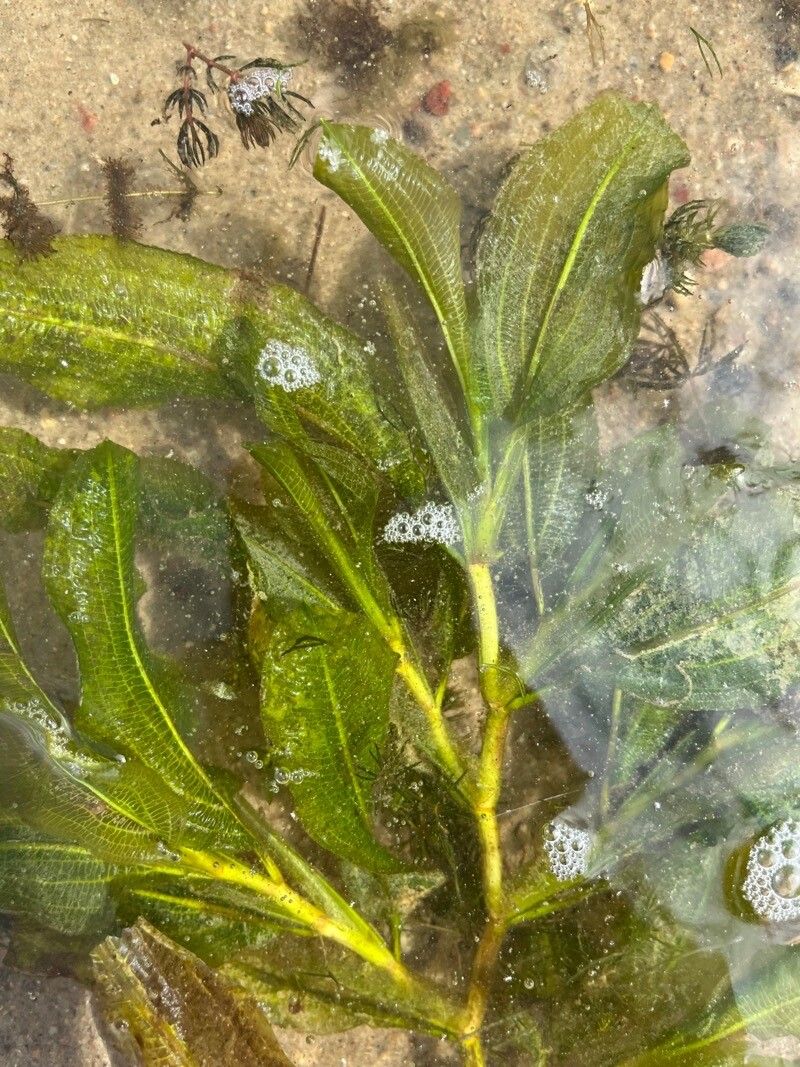
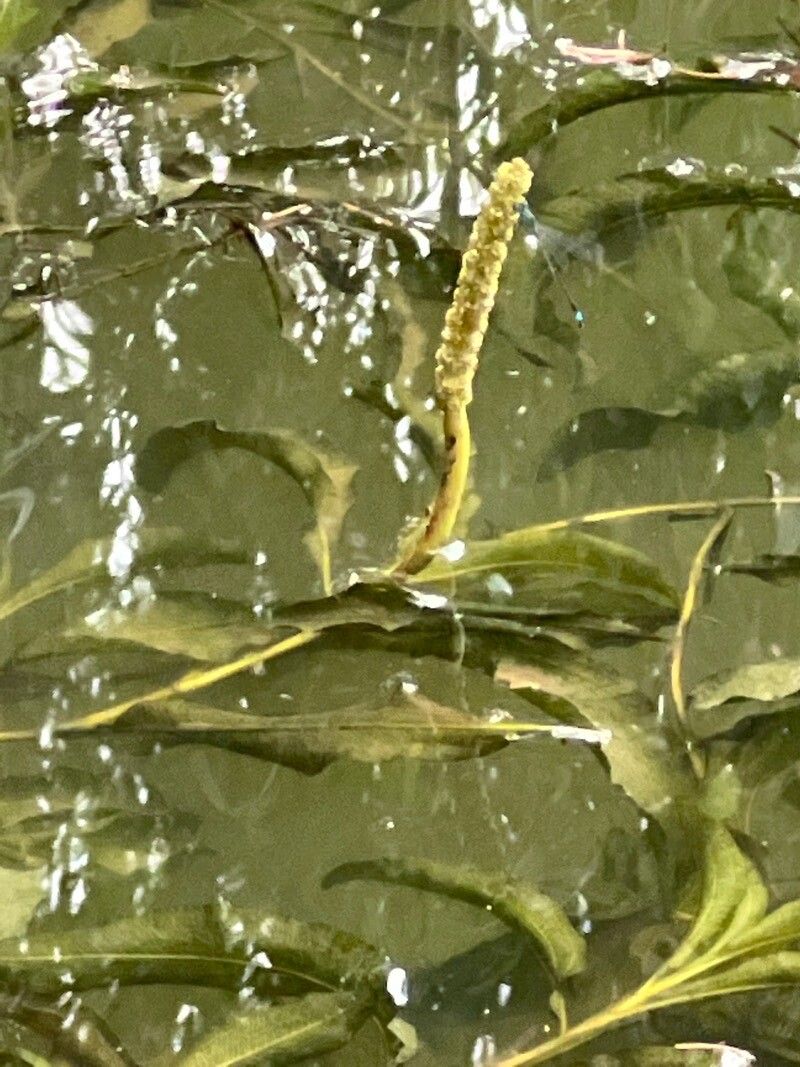
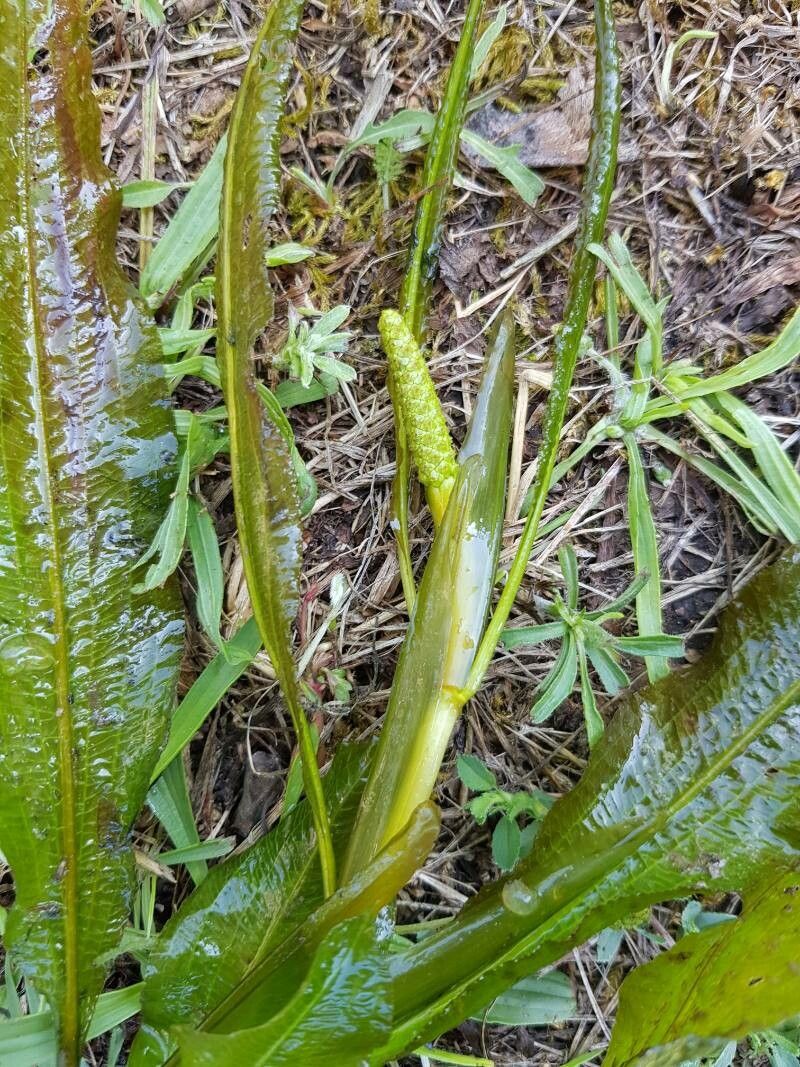
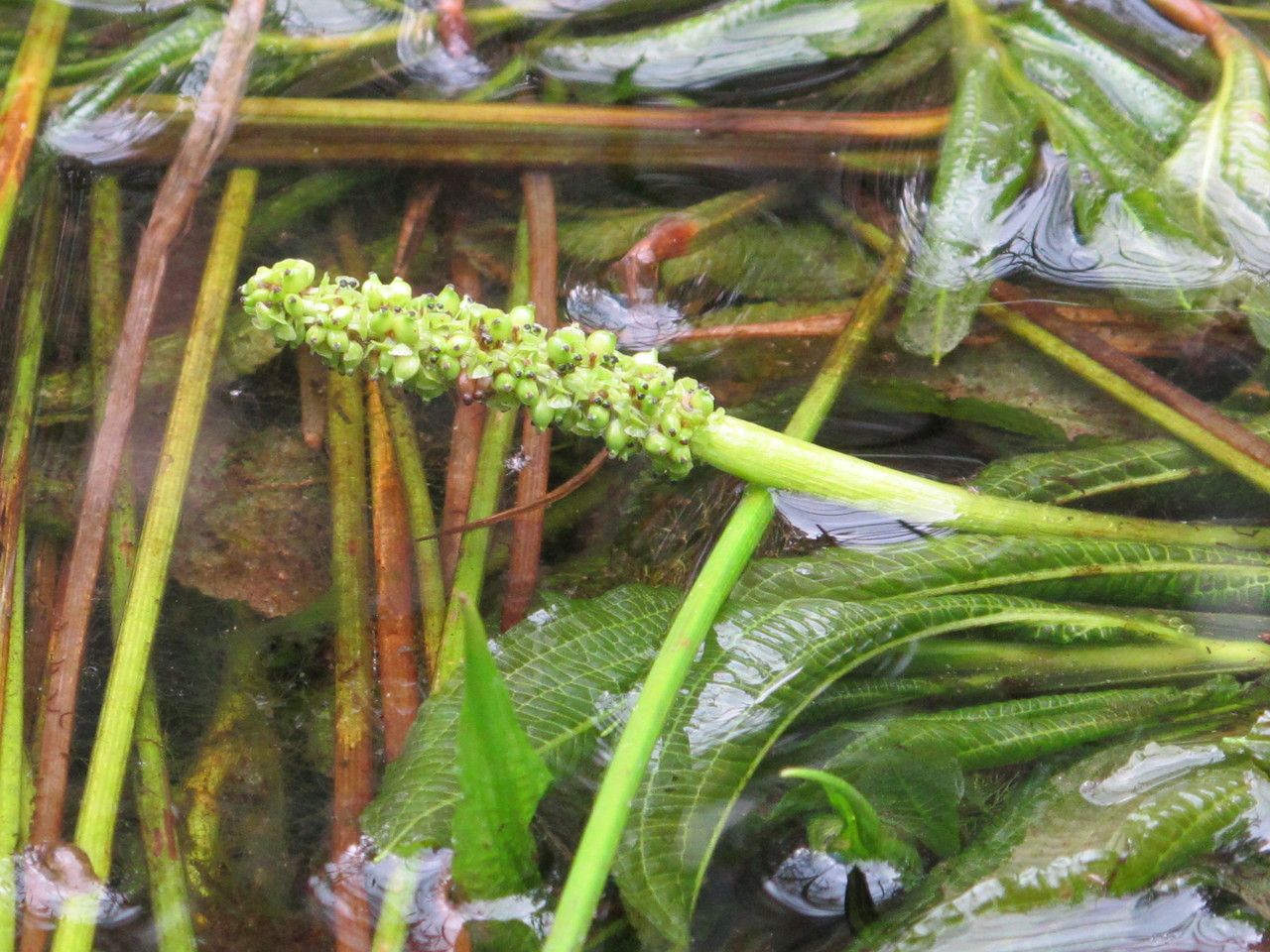
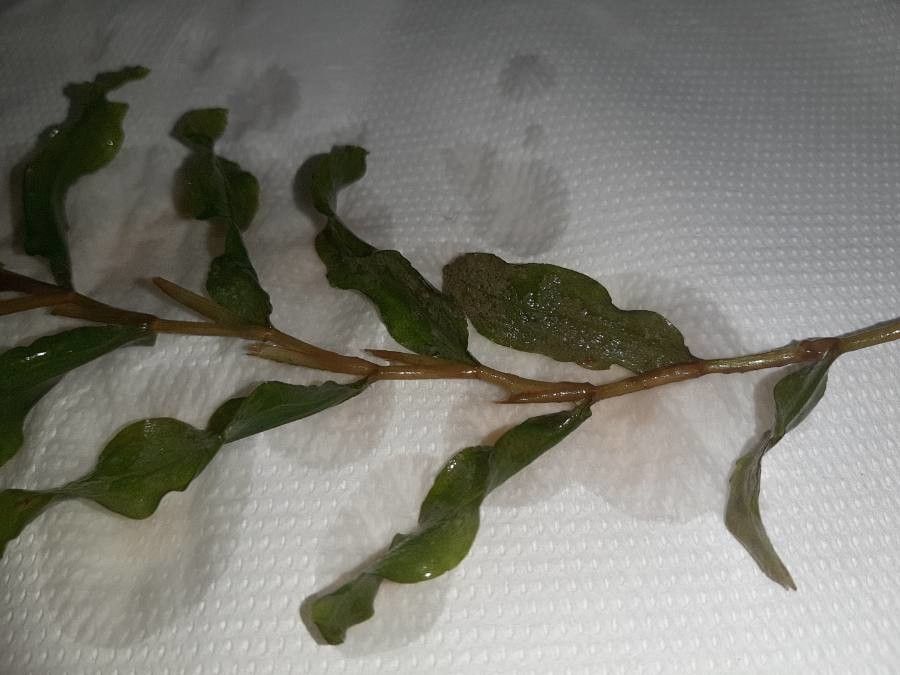
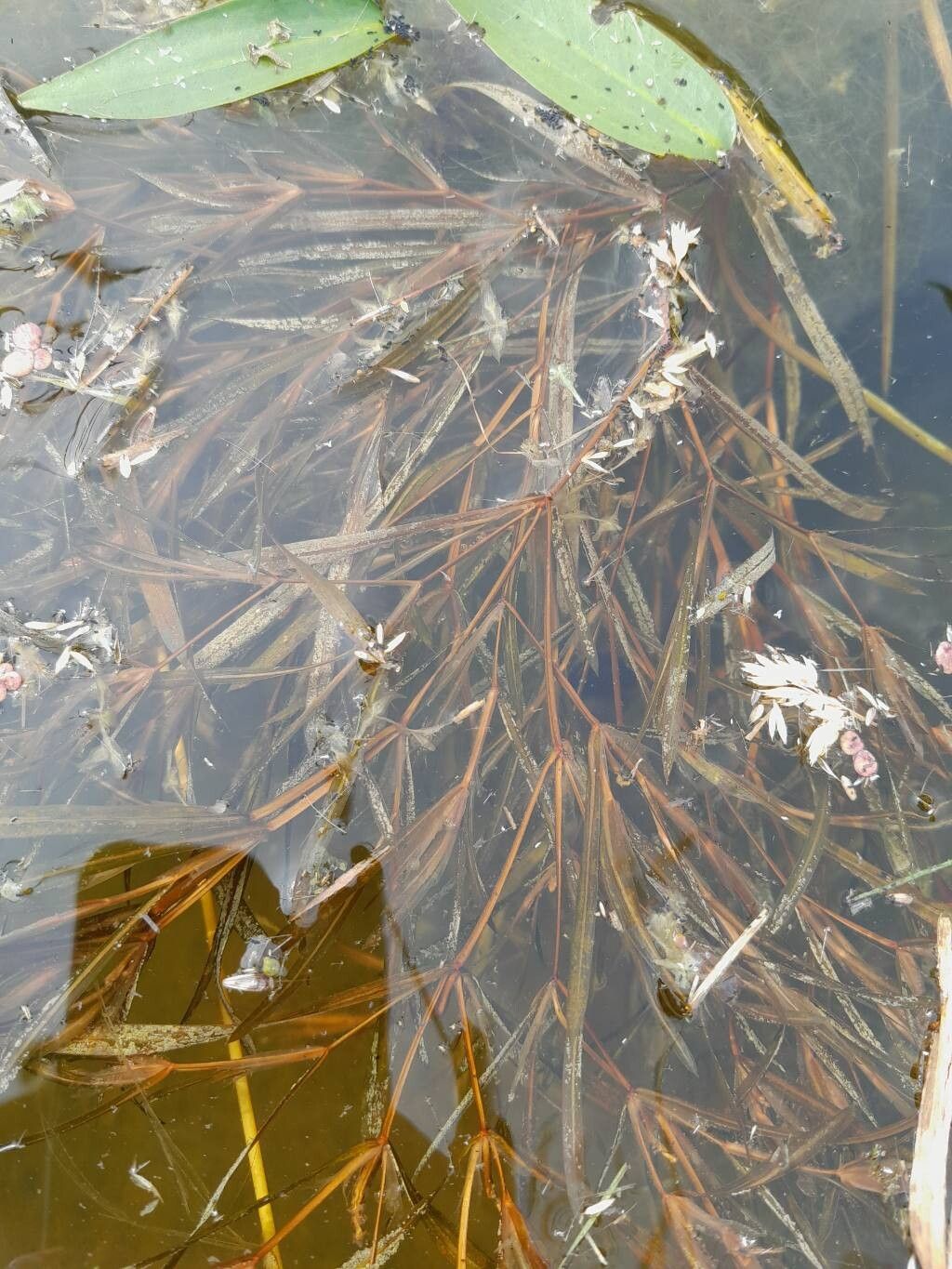
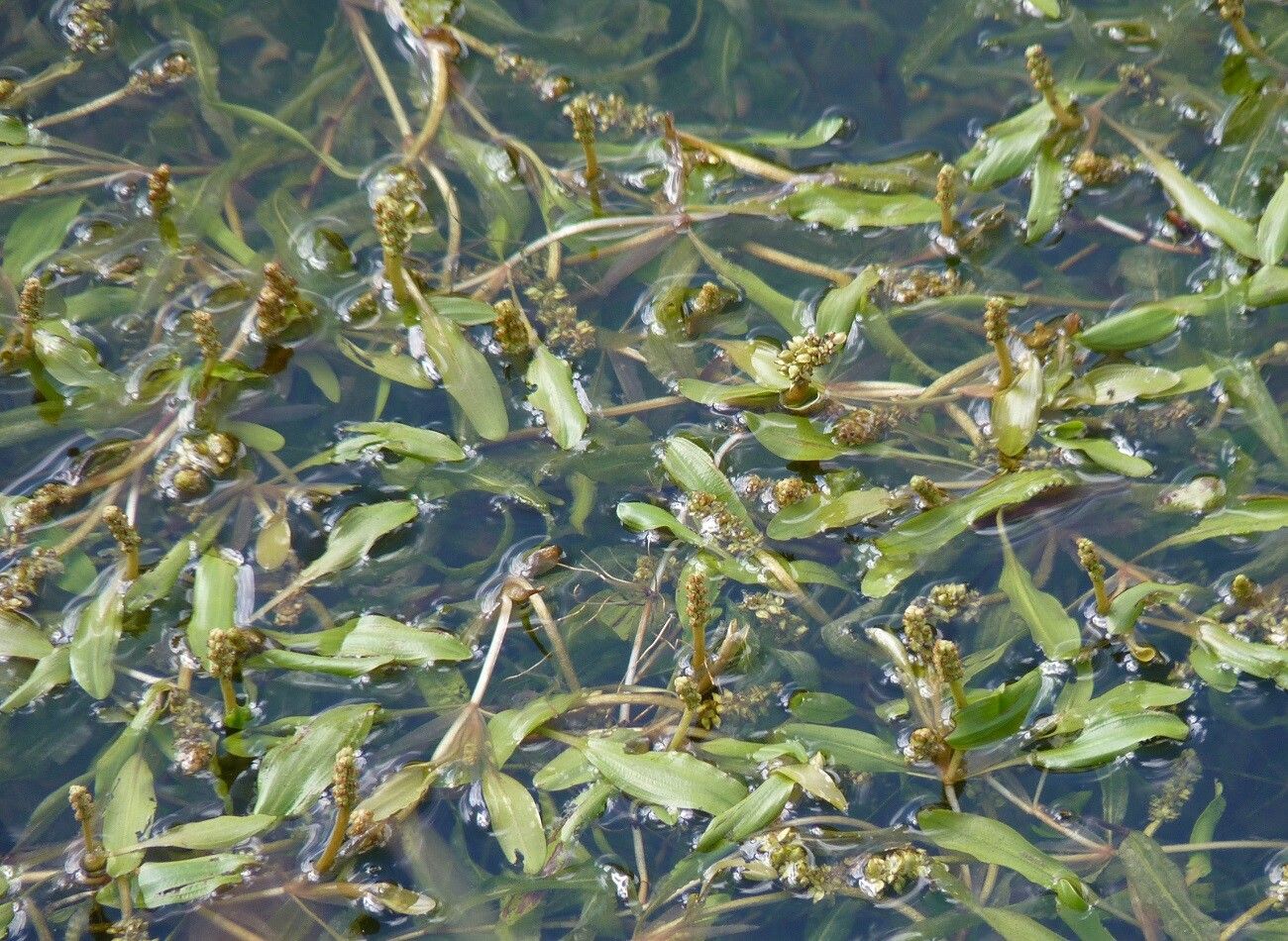
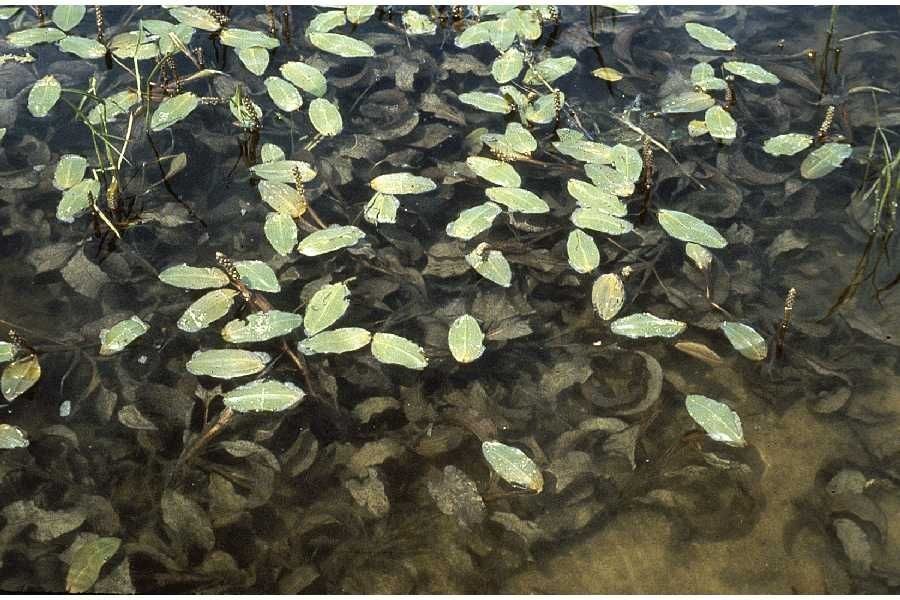
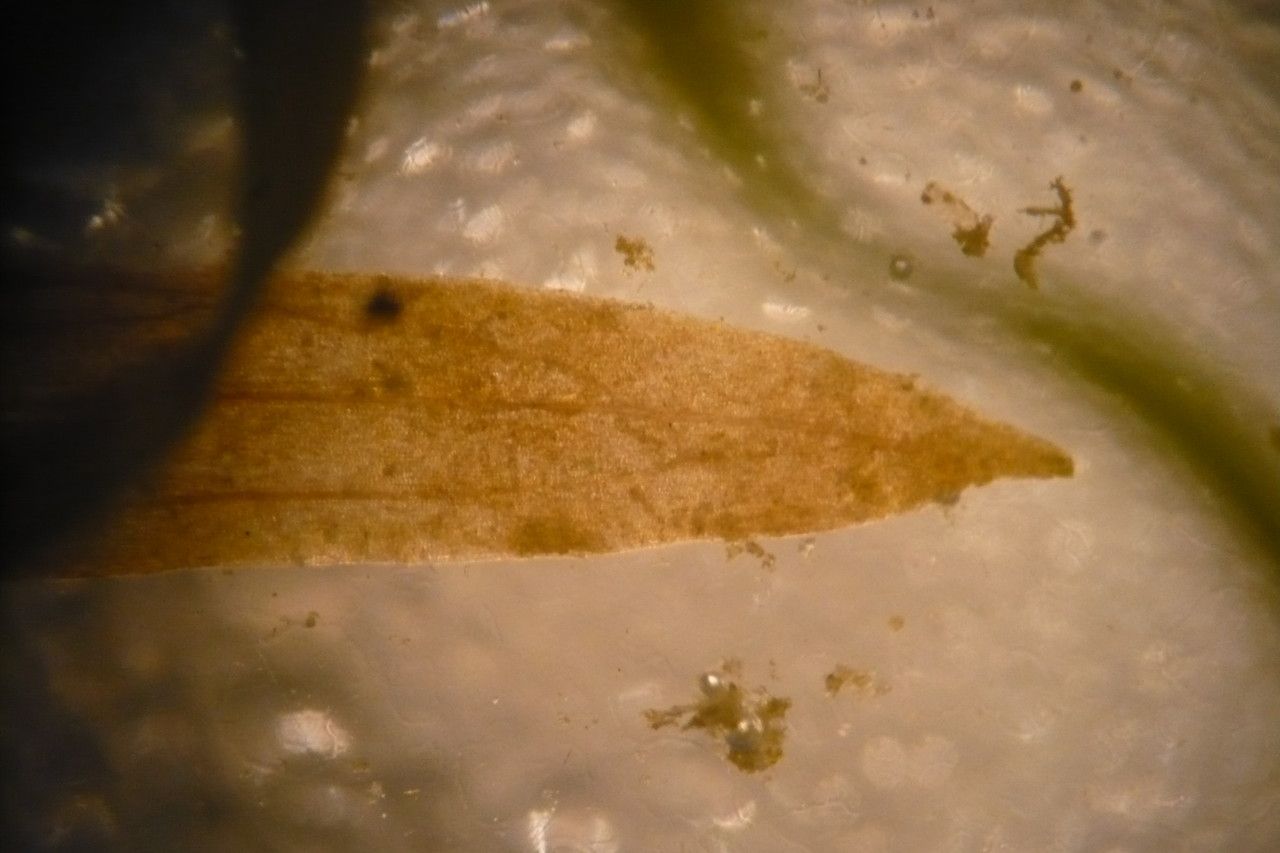
Potamogeton lucens, commonly known as shining pondweed, is an aquatic plant species in the family Potamogetonaceae. This perennial plant thrives in freshwater habitats such as ponds, lakes, and slow-moving streams. It features long, slender stems that can grow up to 2 meters in length, and its leaves are narrow, ribbon-like, and shiny green.
Shining pondweed is an essential species in aquatic ecosystems, providing habitat for various aquatic animals, including fish and insects. It also contributes to improved water quality by absorbing excess nutrients from the water column.
The plant reproduces both sexually and vegetatively. During sexual reproduction, the flowers of Potamogeton lucens are pollinated by wind or water currents, which then produce seeds for new plants.
In summary, Potamogeton lucens plays a crucial role in maintaining healthy freshwater ecosystems by offering habitat for numerous organisms and enhancing water quality through nutrient absorption.
Shining pondweed is fairly resistant to disease and is usually not prone to ailments. However, it can be vulnerable to pests and diseases present in its environment. Such infections are generally mild. For care, this plant needs moderate maintenance. It should be pruned regularly to preserve a neat appearance and support healthy growth. Fertilizing can also help encourage flowering. Shining pondweed is well suited to anyone with an outdoor area, like a garden or patio, and does not demand a lot of prior care experience. It may need more attention if grown indoors.
How to keep Potamogeton Lucens.
Light
Shining pondweed is native to habitats with abundant sunlight, such as the shallow edges of ponds and lakes. It favors full sun but can also tolerate partial sun.
Water
Shining pondweed is well-suited to aquatic environments, thriving when fully submerged and able to tolerate fluctuations in water levels. It prefers a consistently moist environment and requires weekly watering. This plant benefits from moving water, which helps improve nutrient absorption and minimizes problems associated with stagnation.
Temperature
Shining pondweed is a plant that does well in temperate areas, preferring a temperature range of 41 to 77 °F (5 to 25 ℃). The plant naturally copes with seasonal temperature shifts, although careful monitoring is advised during periods of extreme cold or heat.
Fertilizer
To maintain the health of shining pondweed, apply a balanced fertilizer once a month during the growing season. Be cautious not to over-fertilize, as this can lead to nutrient runoff. Keep in mind that fertilization needs may decrease with seasonal changes. When applying fertilizer, distribute it carefully around the shining pondweed to encourage healthy growth and safeguard the aquatic environment.
Pruning
Shining pondweed thrives in freshwater environments, characterized by its glossy leaves. To manage its growth and support aquatic life, it is best to prune the pondweed from early to late spring. To encourage healthy new growth, remove any damaged leaves above the base. Ensure your tools are clean to prevent the spread of disease, and follow guidelines to maintain ecosystem balance.
Botanical profile.
- Plant Type
- Herb
- Life Cycle
- Perennial
- Genus
- Potamogeton
- Family
- Potamogetonaceae
- Hardiness Zone
- 5
- Mature Height
- 2.44 m to 6.1 m
- Mature Spread
- 30 cm to 61 cm
- Leaf Color
- Dark Green, Olive Drab
- Leaf Type
- Evergreen
- Flower Color
- Yellow, Green
- Flower Size
- 3.05 cm to 6.35 cm
- Bloom Time
- Summer
- Planting Time
- Spring, Summer, Autumn
- Harvest Time
- Late summer, Early fall, Mid fall
- Native Area
- Libya, Turkey, Sweden, India, Slovakia, Madagascar, Montenegro, Pakistan, Slovenia, Morocco, Croatia, Uganda, Belarus, Germany, Ethiopia, Romania, Latvia, Belgium, Portugal, Netherlands, Saudi Arabia, Tunisia, Philippines, Bulgaria, Ukraine, Chad, Lebanon, China, Afghanistan, Kyrgyzstan, Kazakhstan, Italy, Japan, Mongolia, Finland, Iran, Azerbaijan, Somalia, Egypt, Austria, Eritrea, Uzbekistan, Russia, Iraq, Estonia, Oman, France, Nepal, Tajikistan, Czech Republic, Sudan, Armenia, Poland, Greece, Serbia, Lithuania, Norway, Spain, Switzerland, Denmark, Myanmar, Israel, Albania, Ireland, United Kingdom, Hungary, Algeria, Turkmenistan
Other names.
Reader questions.
How should I water my Shining pondweed?
To properly water the Shining pondweed, follow these guidelines: 1. Use filtered water that is at room temperature or slightly warmer. Tap water may contain harmful particles for the plant's health. 2. Cold water can be a shock to the Shining pondweed, so avoid using it. The plant is accustomed to a warm environment. 3. Do not water the plant from above, as this can cause issues with its foliage. 4. Instead, apply the filtered room temperature water directly to the soil until it is completely soaked. 5. Soaking the soil is highly beneficial for the plant as it helps moisten the roots and allows them to spread and gather necessary nutrients.
Why do I have to add fertilizer to my Shining pondweed?
Fertilization plays a crucial role in maintaining the health and appearance of Shining pondweed. By properly fertilizing, you can ensure that the leaves of the pondweed retain consistent color and a healthy texture. Additionally, fertilization benefits the plant below the soil's surface by promoting the growth of new roots and maintaining existing ones. This not only keeps the plant healthy in the present but also improves its ability to absorb soil nutrients in the future.
What are the sunlight requirements for Shining Pondweed?
Shining pondweed, or Potamogeton lucens, is a sun-loving perennial herb that prefers full sun, meaning it thrives best with more than 6 hours of sunlight daily. However, it can also tolerate partial sun conditions, which translates to about 3-6 hours of sunlight. It's essential to watch how sunlight moves through your garden to ensure you choose spots that offer the right balance of light and shade, ensuring the plants' happiness.
What is the ideal temperature range for Shining pondweed?
Shining pondweed thrives in temperate regions, with an ideal temperature range of 41 to 77 °F (5 to 25 °C). The plant naturally adapts to seasonal temperature changes, although careful monitoring is advisable during extreme cold or hot conditions to maintain its health.
If I give my Shining pondweed too much or too little water, what should I do?
Overwatering is a common issue that can harm your Shining pondweed. It can cause wilting, yellowing of the stems and leaves, and even diseases like root rot, mold, and mildew. Underwatering is less likely, but it can still happen. In this case, the leaves will become brittle and brown. It's important to recognize the signs of overwatering early and reduce your watering schedule accordingly. Check the soil quality and replace it if it drains poorly. If your Shining pondweed is not getting enough water, simply increase the frequency of watering until the signs improve.
When should I put fertilizer on my Shining pondweed?
If you grow your Shining pondweed outdoors each year, it will start growing new leaves in early spring as a sign that it's time to fertilize. Usually, one application of fertilizer in spring is enough, but if you want maximum growth, you can fertilize multiple times during the spring and early summer. In that case, you can feed your Shining pondweed about once every month to a month and a half.
How can artificial lighting support Shining Pondweed's growth indoors?
Indoor shining pondweed requires adequate lighting for optimal growth. When natural sunlight is insufficient, artificial lights can be a vital solution. LED lights are recommended as they can be customized to provide specific wavelengths needed by your plants. Full sun plants need 30-50W/sq ft, partial sun plants 20-30W/sq ft, and shade plants 10-20W/sq ft of artificial light. The light source should be placed 12-36 inches above the plant to mimic natural sunlight for 8-12 hours per day.
Does Shining pondweed require frost protection during winter?
Shining pondweed is highly cold-tolerant and does not require additional frost protection measures during winter. However, it is recommended to water the plant generously before the first freeze in autumn. This ensures the soil remains moist and enters a frozen state, preventing drought and water scarcity for the plant during winter and early spring.
How frequently should I water my Shining pondweed?
If your Shining pondweed is in a pot, the best way to determine if it needs water is by sticking your finger into the soil. If the top two to three inches of soil feel dry, it's time to water it. For those growing Shining pondweed outdoors in the ground, you can use the same method to check the soil. Once the top few inches of soil have dried out, it's time to water. In the spring and early fall, watering about once a week is generally sufficient. However, during extremely hot weather, you may need to water twice or more per week. It's worth noting that mature, well-established Shining pondweed tends to be quite resilient to drought.
When is the best time to not fertilize my Shining pondweed?
During the late fall and winter, your Shining pondweed goes into a dormant phase and stops growing. So, it's important not to fertilize during this time. If you choose to fertilize during spring and summer, you should start reducing the fertilization rate as summer approaches, as the growth rate of your Shining pondweed will also slow down. In general, it's not a good idea to fertilize your Shining pondweed when the weather is unusually hot or the soil is very dry. Fertilizing in these conditions can stress the plant and make it die earlier than expected.
What are the symptoms of inadequate lighting in Shining Pondweed?
Symptoms of light deficiency in shining pondweed include smaller new leaves, leggy or sparse growth, faster leaf drop, slower or stopped new growth, lighter-colored new leaves, chlorosis, sunscald, leaf curling, wilting, and leaf scorching. These symptoms indicate the plant's struggle under inadequate light conditions and may result in reduced health and growth.
What happens if Shining pondweed is exposed to temperatures below -25°C?
If the temperature drops below -25°C, Shining pondweed, though extremely cold-tolerant, may not show noticeable changes during winter but could experience a decrease in sprouting or fail to sprout in the spring. If this occurs, it is advisable to remove any parts that have failed to sprout come spring.