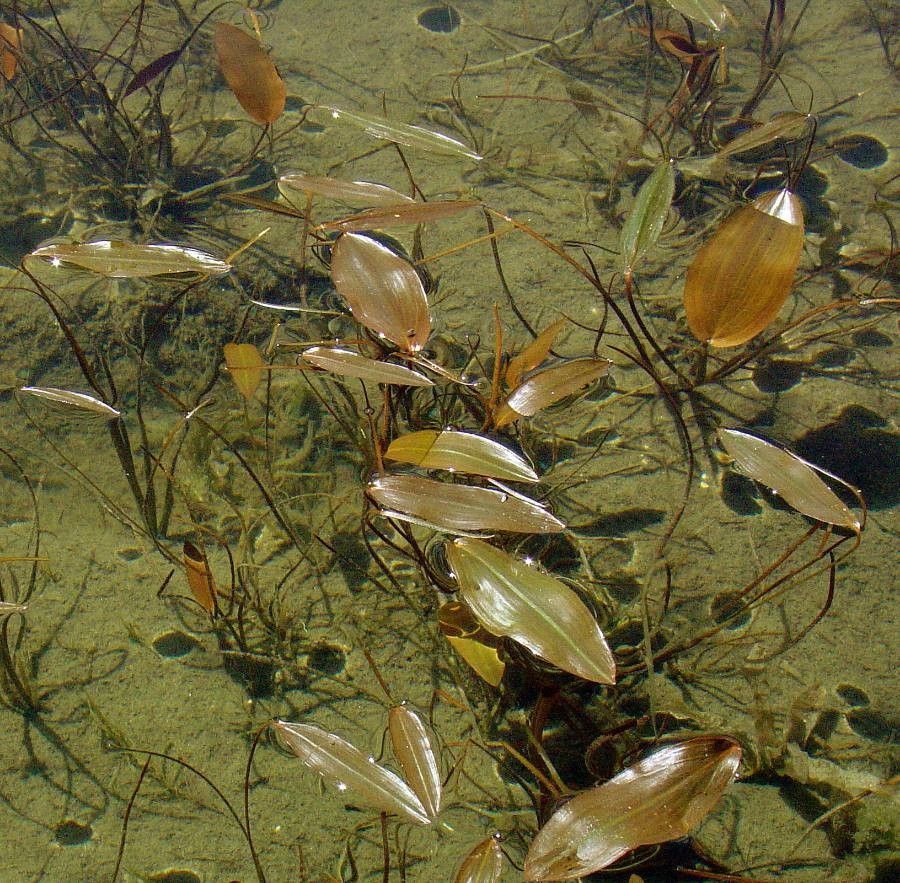
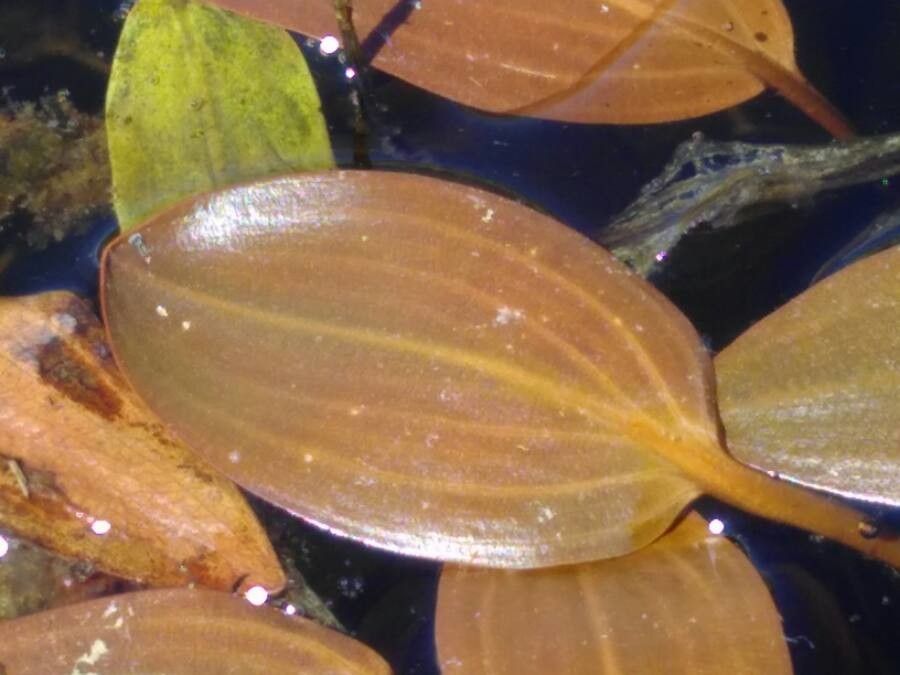
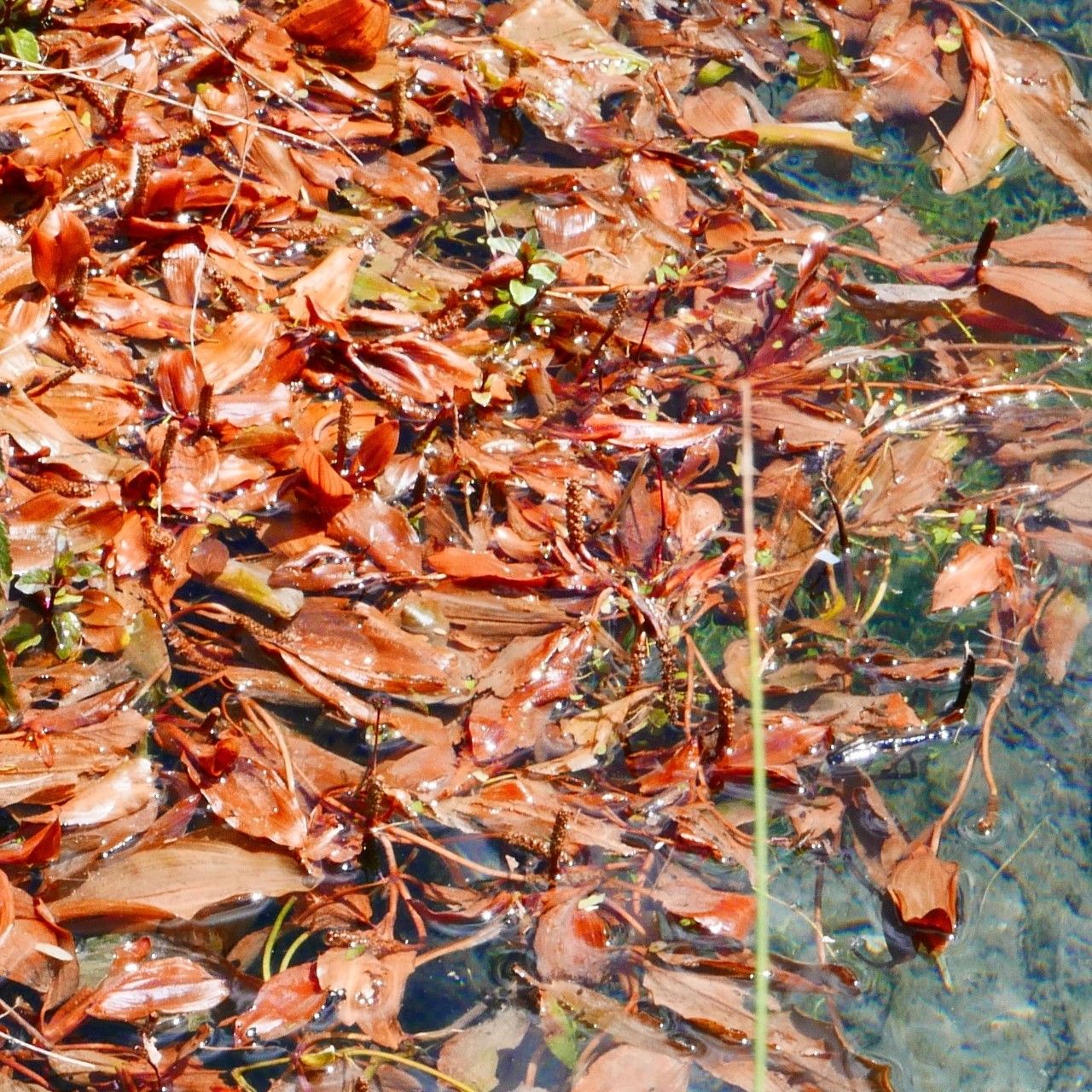
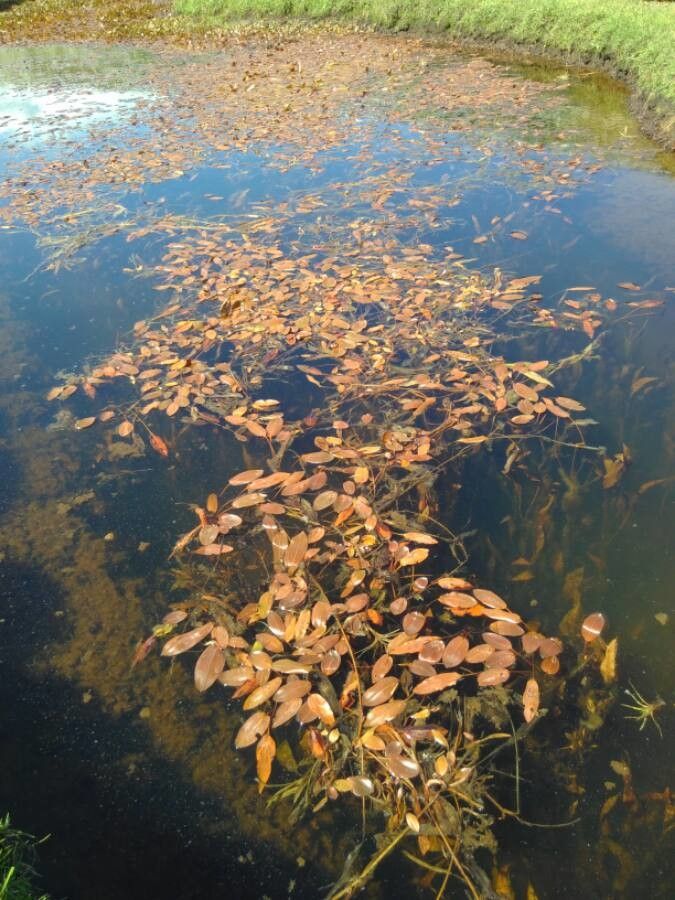
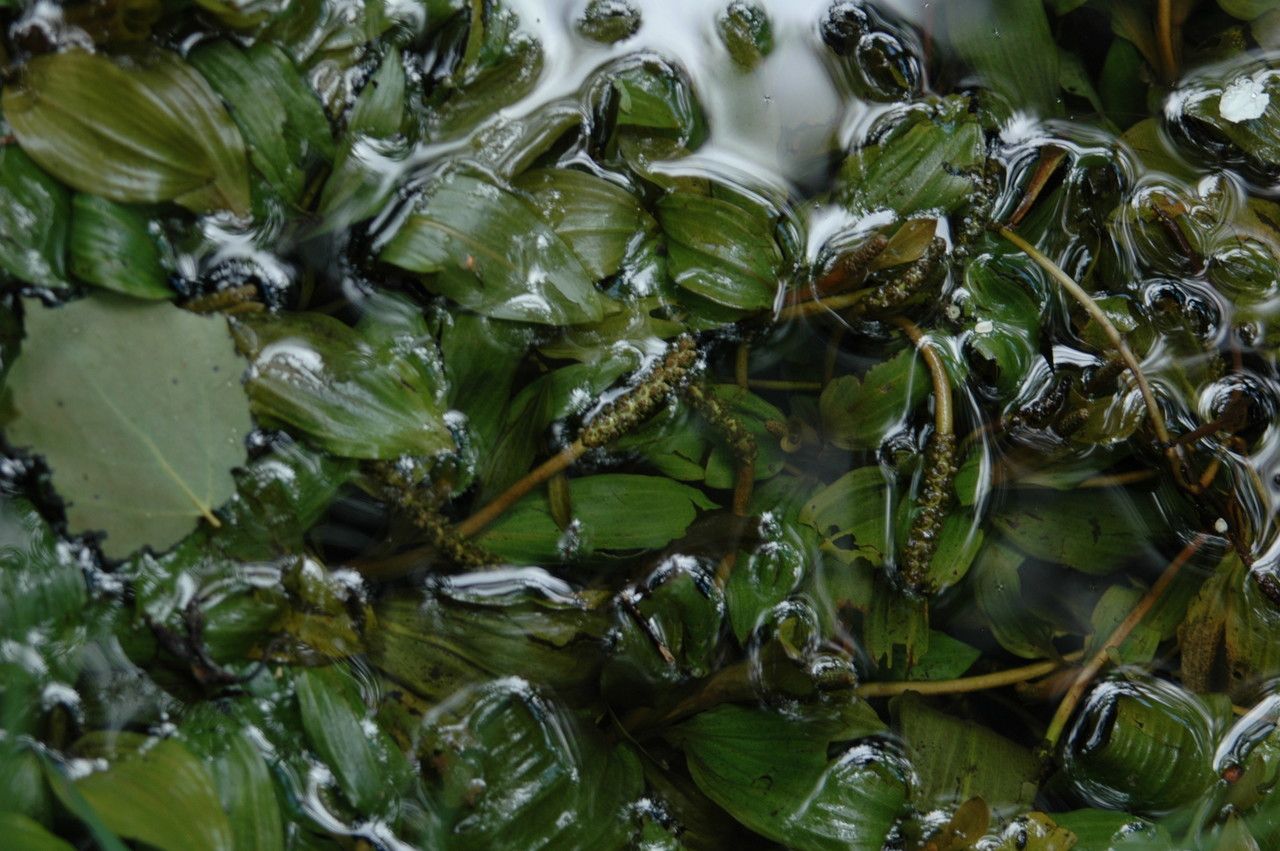
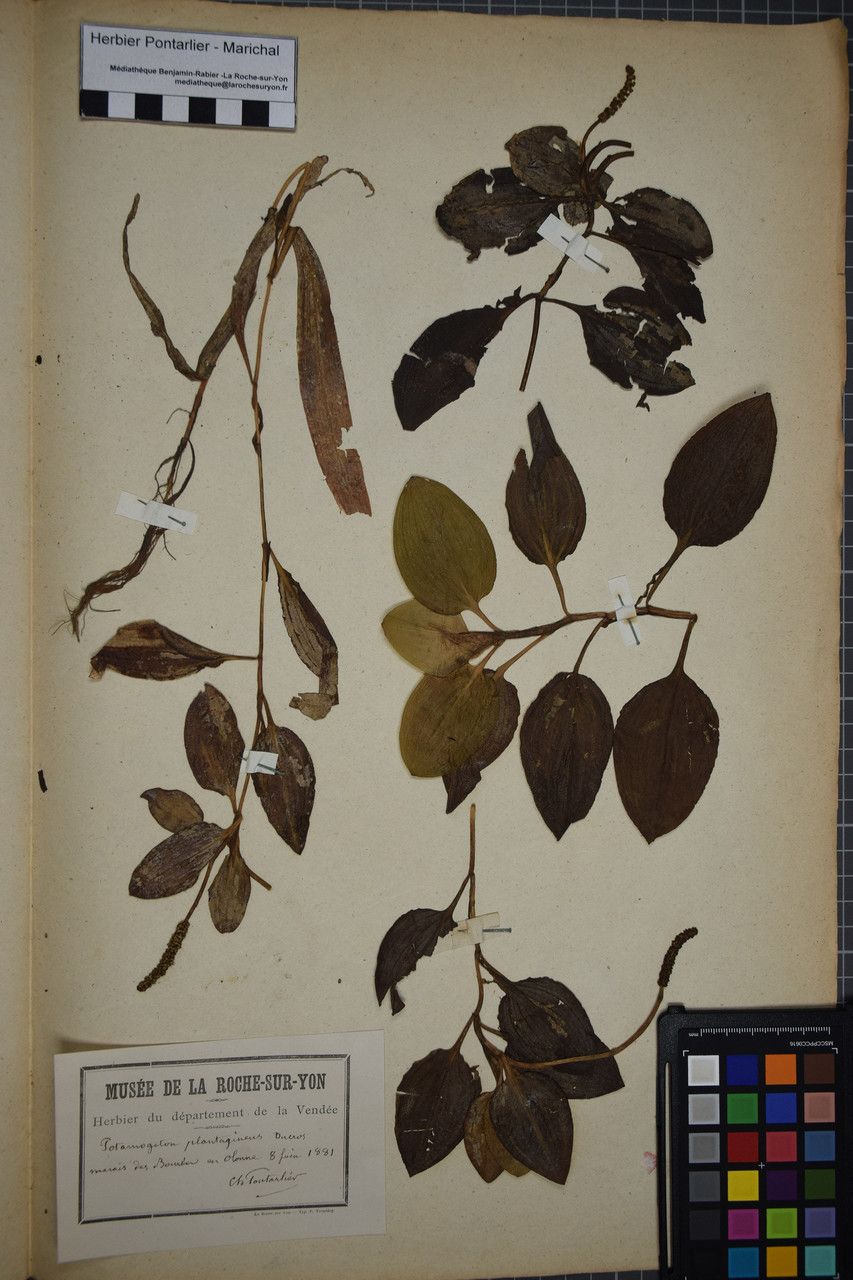
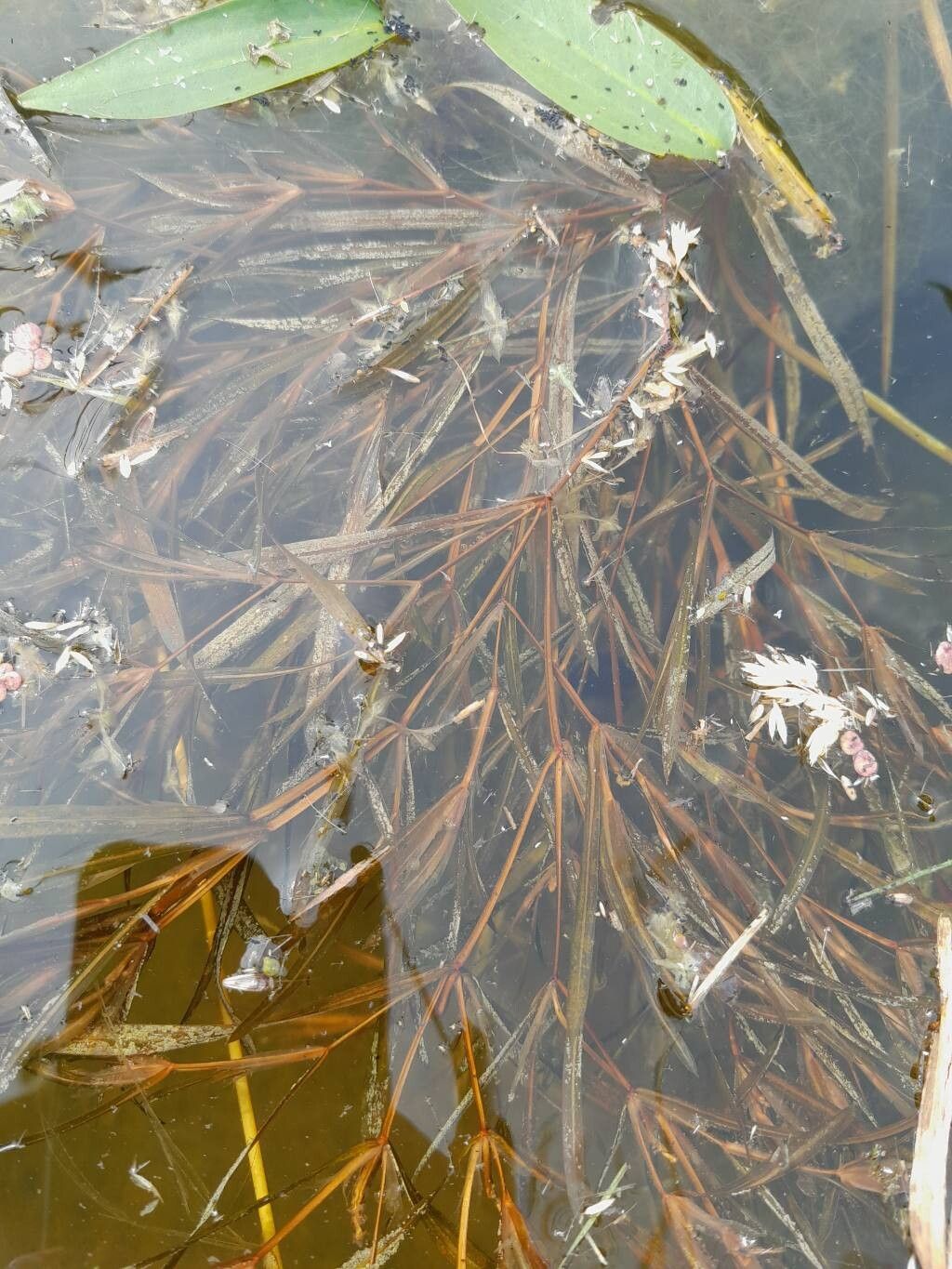
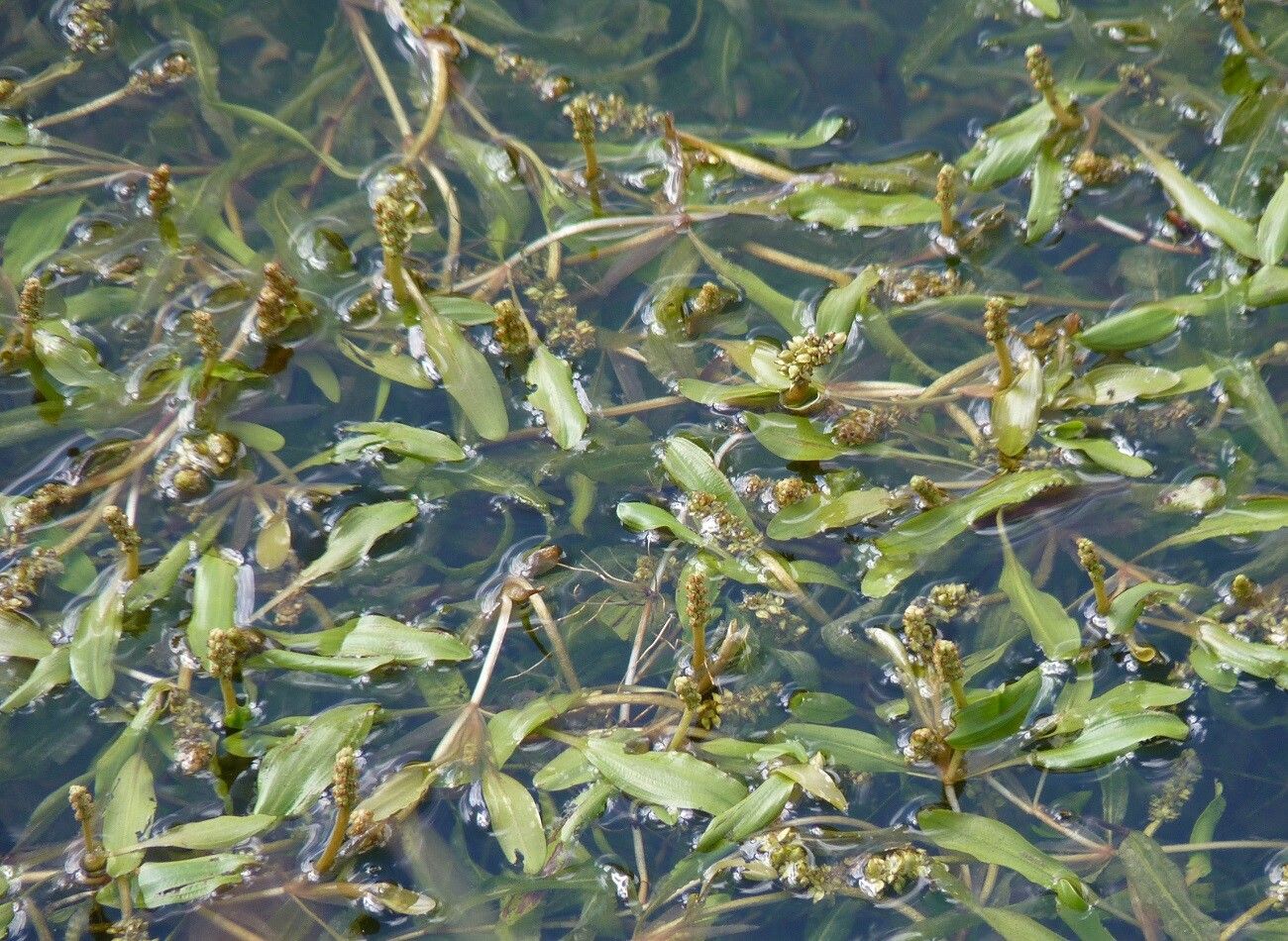
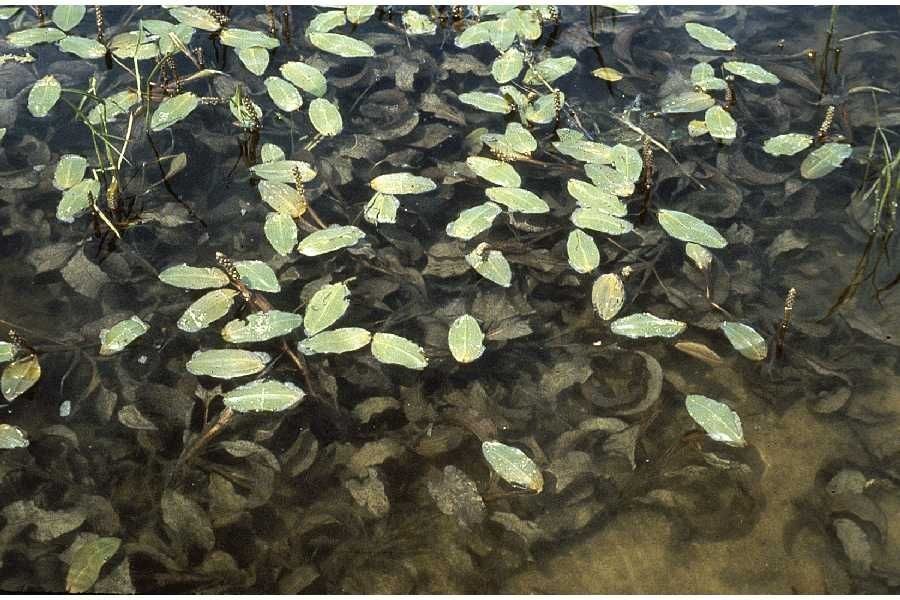
Potamogeton coloratus, commonly known as grass-wrack pondweed, is a species of aquatic plant in the family Potamogetonaceae. This perennial plant thrives in freshwater habitats such as ponds, lakes, and slow-moving streams. It features long, narrow leaves that are arranged in opposite pairs along the stem, which are dark green and have a smooth texture.
During the summer, the grass-wrack pondweed produces small greenish-white flowers that grow on spikes above the water's surface. These flowers eventually yield small fruits containing seeds, which can be dispersed by water currents.
This aquatic plant plays a crucial role in freshwater ecosystems by providing habitat for fish and other aquatic organisms, as well as improving water quality by absorbing excess nutrients from the surrounding waters.
Potamogeton coloratus is widely distributed across North America, Europe, Asia, Africa, and Australia. It can be found growing either submerged or floating on the surface of still or slow-moving waters, at depths of up to 5 meters.
In summary, this species is valuable for its ability to absorb excess nutrients, making it an important component of many wetland restoration projects worldwide.
Fen pondweed shows strong resistance to disease and is generally not prone to illnesses. Still, it can be vulnerable to pests and diseases found in its environment. When such infections occur, they are typically mild. Regarding care, this species needs medium maintenance. Regular pruning is necessary to preserve a neat appearance and support healthy growth. Applying fertilizer can also encourage flowering. Fen pondweed is appropriate for anyone who has an outdoor area, like a garden or patio, and does not demand extensive plant-care experience. If grown indoors, it may need a higher level of care.
How to keep Potamogeton Coloratus.
Light
Fen pondweed comes from habitats that receive plenty of sunlight, such as the shallow edges of ponds and lakes. It prefers full sun but can also tolerate partial sun.
Temperature
Fen pondweed can tolerate a wide range of temperatures, but its distribution may still be restricted by different combinations of water and heat. It grows best in warm summer climates when there is sufficient rainfall or watering. Extended periods of cloudy, rainy weather, as well as prolonged high temperatures, can make Fen pondweed more likely to die. In winter, protecting it from cold can increase its chances of survival.
Botanical profile.
- Plant Type
- Herb
- Life Cycle
- Perennial
- Genus
- Potamogeton
- Family
- Potamogetonaceae
- Hardiness Zone
- 5-9
- Mature Height
- 30 cm to 91 cm
- Mature Spread
- 20 cm to 49 cm
- Leaf Color
- Olive Drab, Dark Green
- Leaf Type
- Evergreen
- Flower Size
- 0.20 cm to 0.25 cm
- Bloom Time
- Summer, Early fall
- Planting Time
- Spring, Summer, Autumn
- Harvest Time
- Late summer, Fall
- Native Area
- Saudi Arabia, Turkey, Sweden, Austria, Czech Republic, Dominican Republic, Poland, Greece, Croatia, Slovenia, Morocco, Jamaica, Bahamas, Hungary, Germany, Portugal, Italy, Haiti, Spain, Switzerland, Denmark, France, Albania, Ireland, United Kingdom, Romania, Algeria, Azerbaijan, Belgium, Netherlands
Other names.