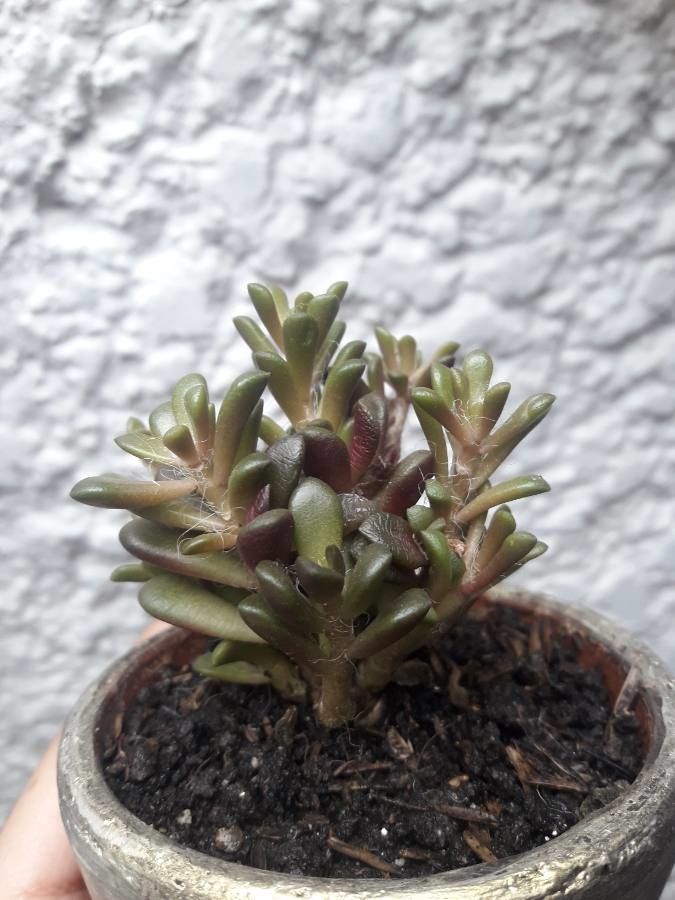
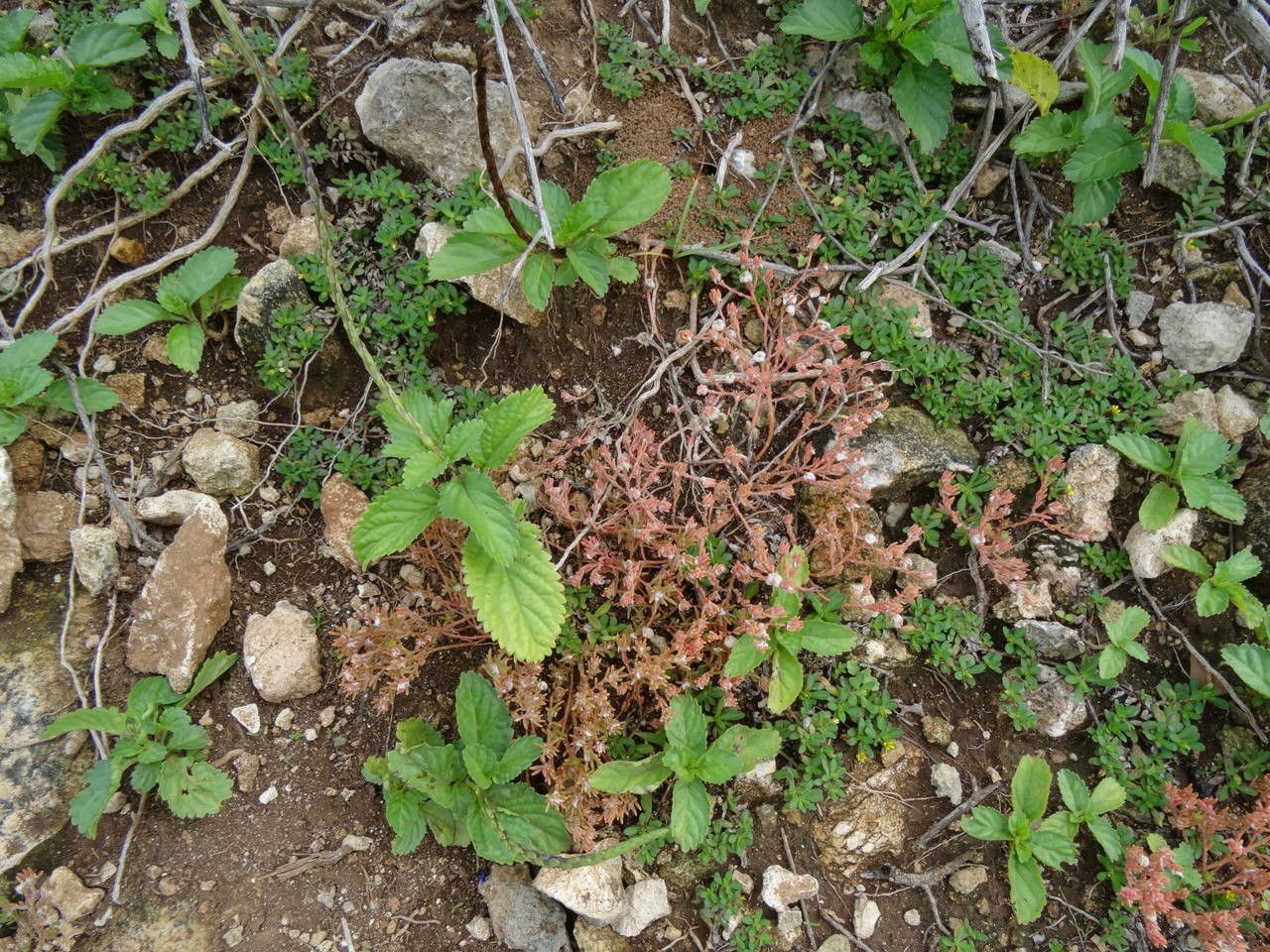
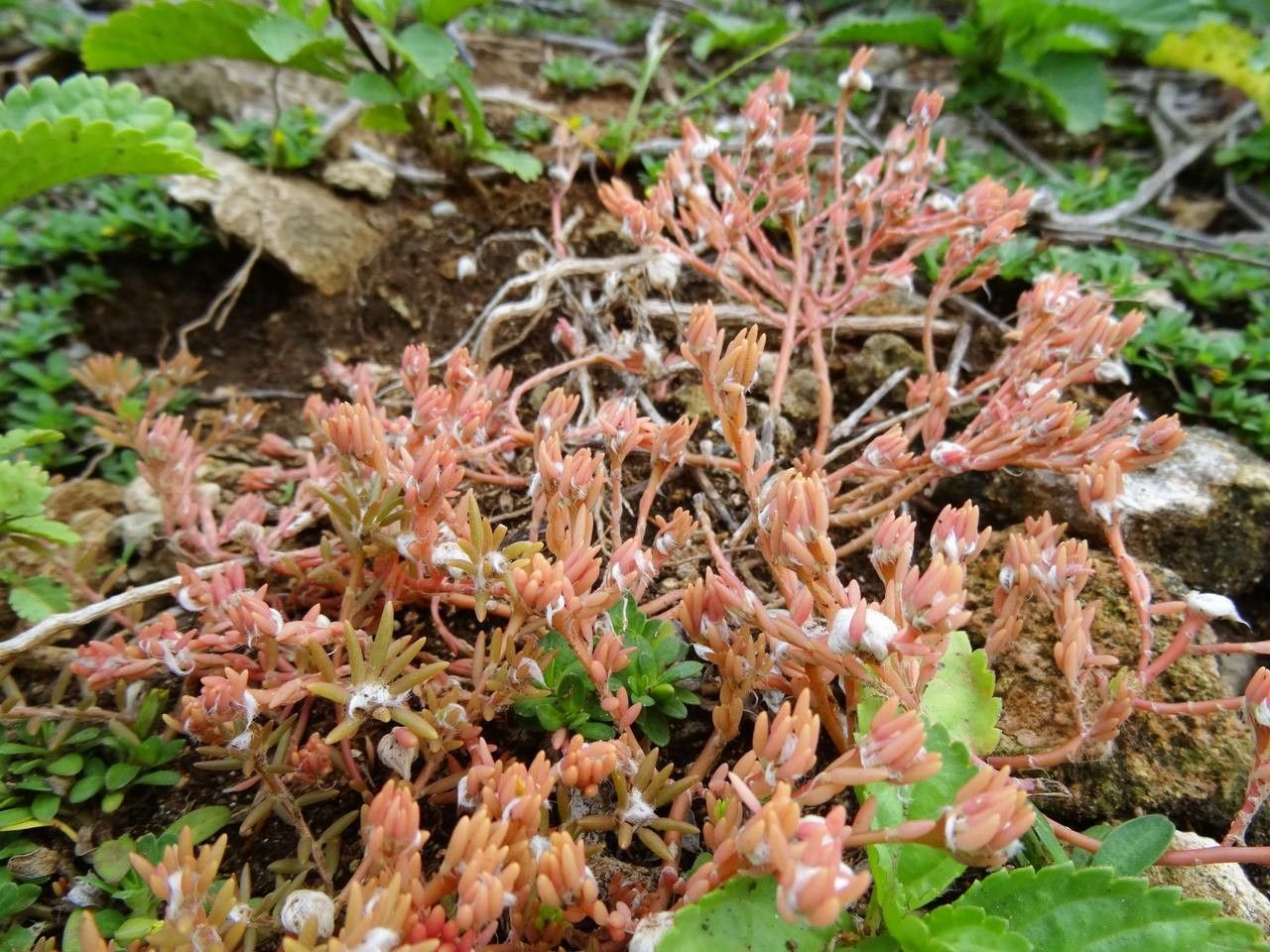
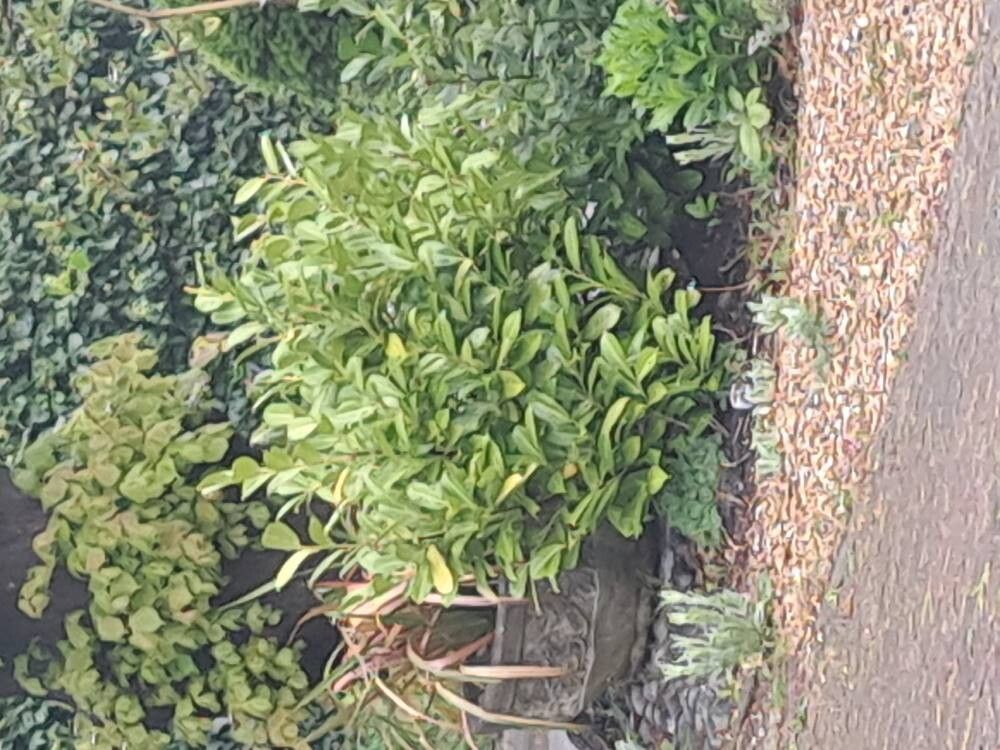
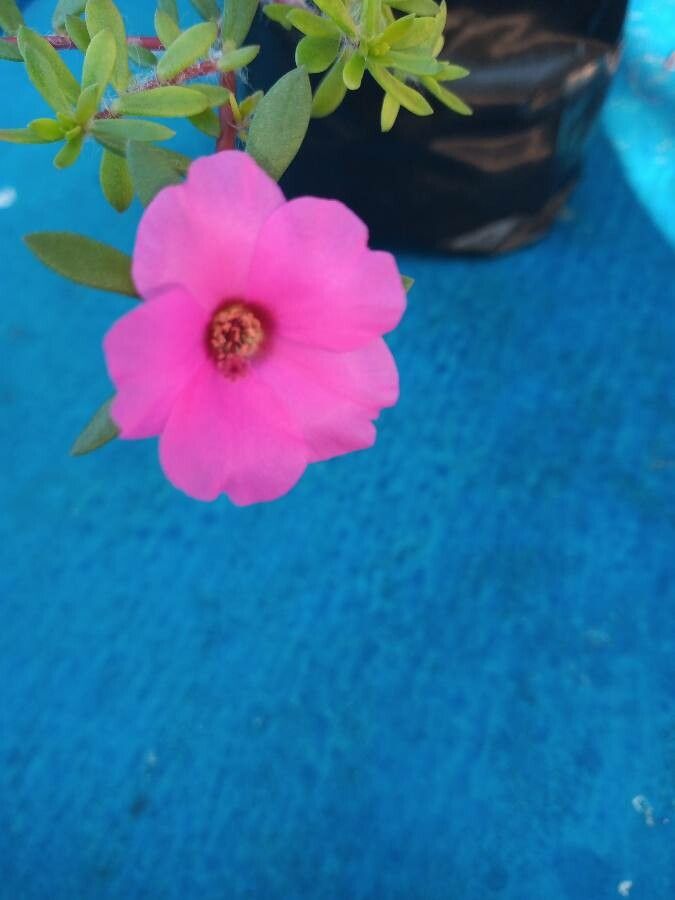
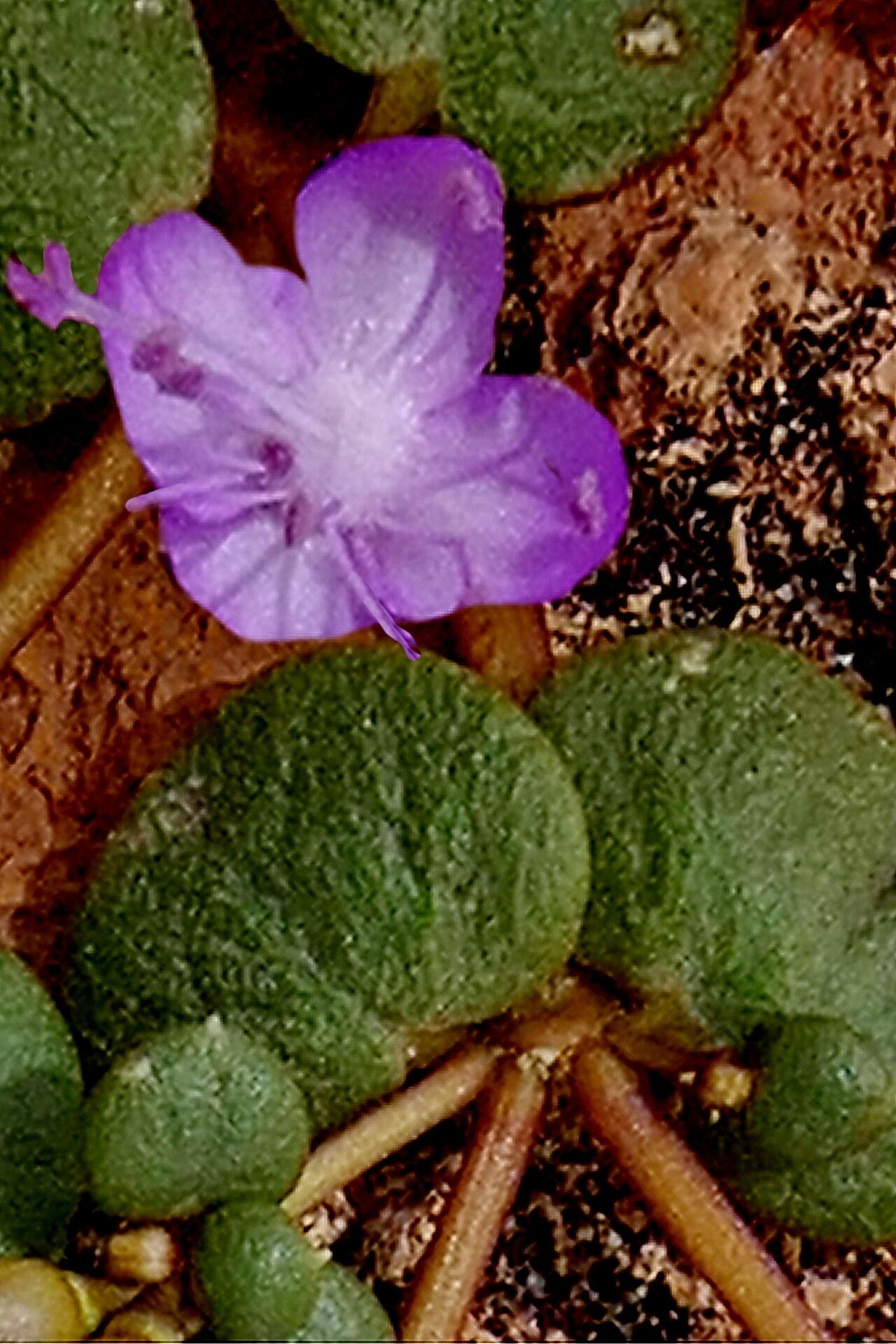
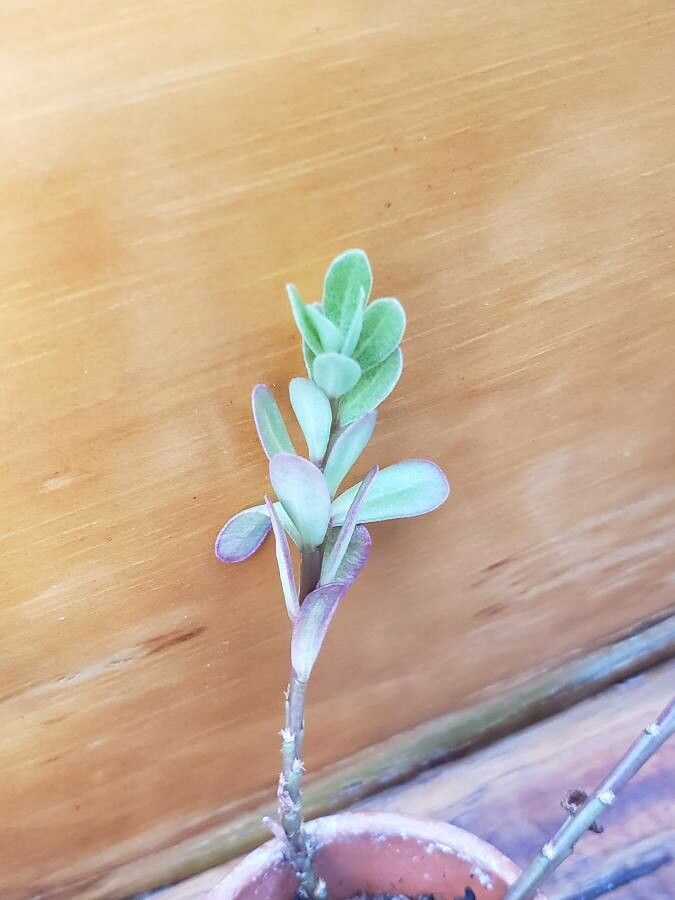
Portulaca halimoides is a species of purslane known by the common name silkcotton purslane. It is native to the deserts of the southwestern United States and northern Mexico, as well as parts of Central and South America. It is a fleshy annual herb producing a branching stem spreading to a maximum length around 25 centimeters. It is often pink or red in color and there are strands of woolly hairlike trichomes at nodes along the stem and within the inflorescence. The thick, cylindrical, blunt-tipped leaves are up to 2 centimeters in length and green to red in color. Flowers occur in clusters of up to 10 at the tips of the stem branches. Each is a few millimeters wide with yellow petals which are sometimes hidden under the two fused, fleshy red sepals. The fruit is a tiny capsule which contains several seeds. The grainlike seeds may be black, grayish, or silvery in color.
Silkcotton purslane has medium disease resistance and is more sensitive to high humidity and overwatering. It becomes more prone to disease if it receives insufficient light and is overwatered. Regarding care, Silkcotton purslane is drought tolerant and can withstand long periods without watering. It requires little fertilizer and only occasional pruning. This makes it suitable for people at any experience level, especially those who want to spend less time maintaining their plants and who may occasionally be away from home for long periods. It is a good option for people who do not want to devote much time to plant care but still want an easy-to-maintain plant.
How to keep Portulaca Halimoides.
Light
Originating from arid areas, Silkcotton purslane does best in full sun, its native habitat defined by intense sunlight and sparse shade. It also tolerates partial sun, which gives it some flexibility in where it can grow.
Temperature
Silkcotton purslane does best in warm conditions and needs relatively high temperatures during the growing season to support growth and metabolic activity. It prefers plenty of sunlight, proper moisture, and good air circulation. It can be damaged by very low temperatures and by overwatering. Maintaining a balance is important, and excessively high temperatures or overly dry conditions should also be avoided.
Fertilizer
For Silkcotton purslane, light applications of fertilizer once or twice a year during the growing season are sufficient. Do not fertilize in winter or in summer when the plant is dormant. Use less fertilizer for repotted plants and wait a few months after repotting before feeding. Fertilizing promotes healthy growth and encourages flowering.
Pruning
Silkcotton purslane thrives in well-drained, sandy soil and requires full sunlight. For best results, prune the plant from early to late spring. This will encourage vigorous growth, remove weak stems, and help maintain a compact shape. Using clean, sharp tools can enhance the effectiveness of your pruning, improving the plant's appearance, airflow, and flowering potential while reducing the risk of disease.
Botanical profile.
- Plant Type
- Herb, Succulent
- Life Cycle
- Annual
- Genus
- Portulaca
- Family
- Portulacaceae
- Hardiness Zone
- 9-11
- Mature Height
- 10 cm to 20 cm
- Mature Spread
- 15 cm to 30 cm
- Leaf Color
- Green, Light Green
- Leaf Type
- Deciduous
- Flower Color
- Yellow, White, Pink
- Flower Size
- 1.02 cm to 2.03 cm
- Bloom Time
- Late spring, Summer, Early fall
- Planting Time
- Spring, Autumn
- Harvest Time
- Summer, Early fall, Mid fall
- Native Area
- Colombia, Bahamas, Cuba, Haiti, Mexico, Guatemala, Venezuela, Peru, Brazil, Ecuador, Dominican Republic, Jamaica
Other names.
Reader questions.
What are the sunlight requirements for Silkcotton purslane (Portulaca halimoides)?
Silkcotton purslane (Portulaca halimoides) thrives in conditions where it can receive various amounts of sunlight throughout the day. It requires full sun, which means it needs more than 6 hours of sunlight daily to flourish. However, it can also tolerate partial sun, which entails about 3-6 hours of sunlight each day. It's important to observe how sunlight moves through your garden over the day, selecting locations that offer a healthy balance of light and shade. This careful placement ensures your plants' growth and happiness by providing them with the appropriate amount of sunlight they need.