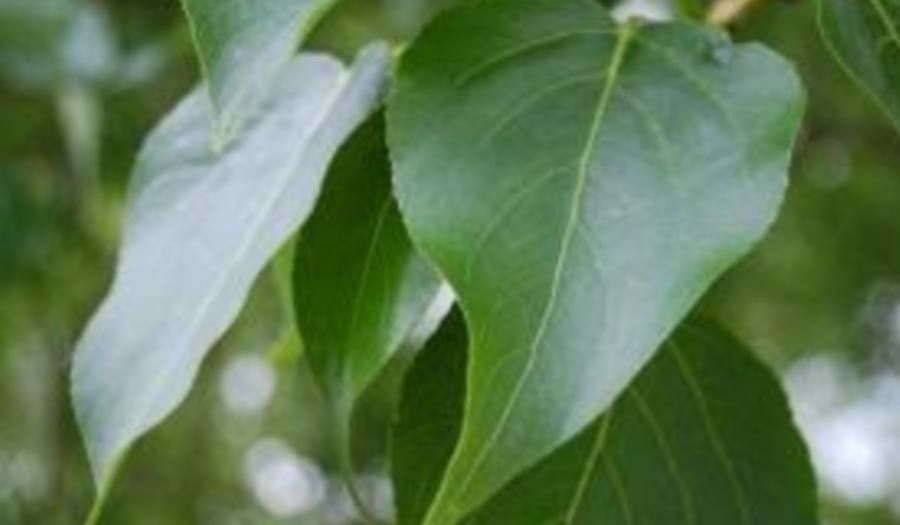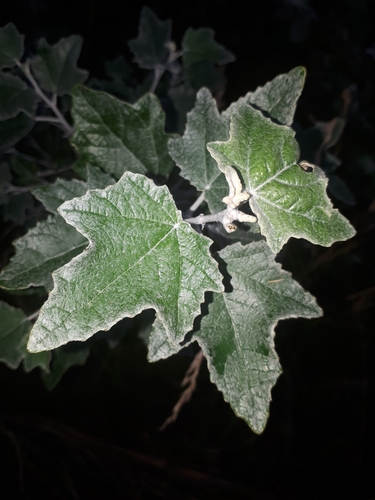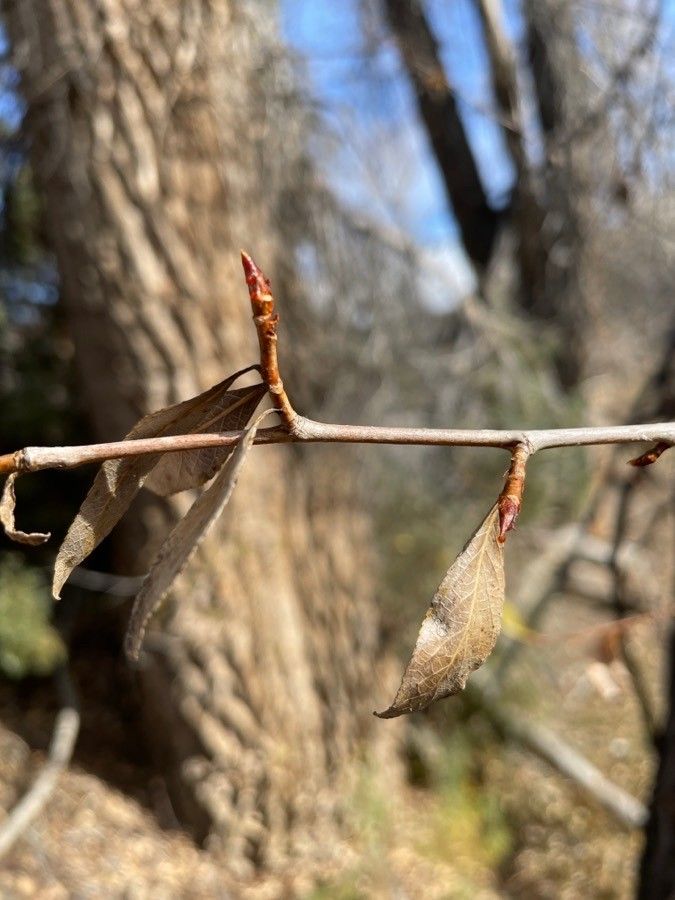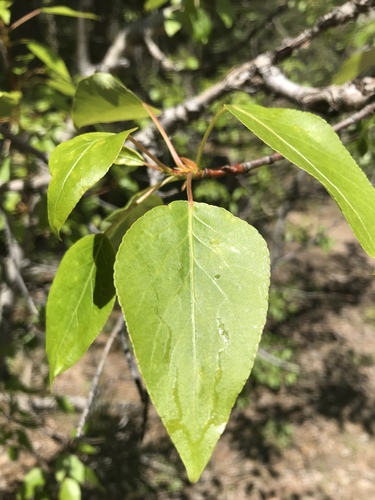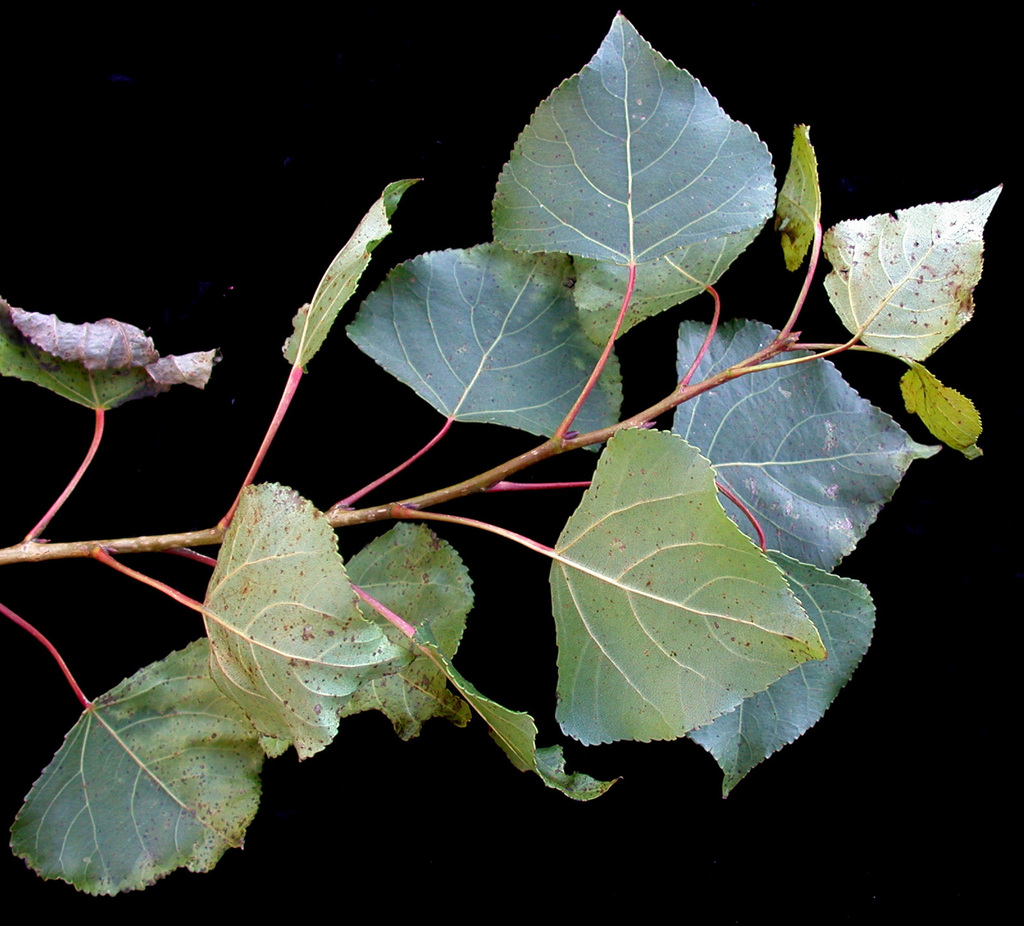
Populus nigra, commonly known as black poplar, is a deciduous tree species belonging to the Salicaceae family. Native to Europe and Western Asia, this tree can grow up to 30 meters tall. The bark is dark gray and deeply furrowed, while the leaves are triangular with serrated edges. Black poplar trees are dioecious, meaning they have separate male and female flowers. The male flowers are long catkins that hang from the branches, while the female flowers grow on shorter catkins. Throughout history, the black poplar tree has been used for various purposes. Its wood has been utilized for furniture-making, paper pulp, and matches, as well as a source of fuelwood. Additionally, its bark contains salicin, which can be used for medicinal purposes such as pain relief. However, Populus nigra has become rare due to habitat loss caused by human activities such as urbanization and agricultural expansion. Conservation efforts are being implemented to protect this species from extinction by planting new trees and preserving existing ones through proper management practices. Overall, Populus nigra plays an important role in maintaining ecological balance by providing habitat for various wildlife species. It also contributes significantly to human well-being through its numerous uses, including its medicinal properties. Therefore, it is an important plant species worth conserving.
Black poplar is a tree species that, despite being widely distributed across Europe, is now considered endangered. Its most distinctive characteristic is its black bark, which is covered with deep wrinkles. This unique feature is why it is known as the black poplar.
Black poplar is resistant to disease and typically is not susceptible to illnesses. In terms of care, this plant is fairly low-maintenance. When grown outdoors, it needs only light watering, and larger specimens generally do not require pruning. However, smaller plants should be pruned after they have finished blooming. Black poplar is appropriate for anyone with an outdoor area, such as a garden or a deck, and does not demand extensive care experience.
How to keep Populus Nigra.
Light
The black poplar grows best with abundant sunlight, which benefits its growth and health. It can also survive in moderate light conditions. Its native habitat receives a great deal of sun. Too little light can stunt its growth, while too much can scorch the leaves.
Water
Black poplar trees are well-suited to riverbank habitats, flourishing in moisture-rich environments and able to withstand brief periods of drought. They should be watered every 1-2 weeks, but it's important to avoid waterlogging the soil. Typically cultivated outdoors, black poplars possess a strong root system that efficiently taps into available water during their active growing season.
Humidity
This plant will thrive in moderate humidity, which is probably the level in your home. However, misting it a few times a week can be very beneficial. Make sure the room has good ventilation.
Temperature
The black poplar is native to temperate regions and prefers temperatures between 41 and 95 °F (5 and 35 °C). During the growing season, temperatures should be kept above 50 °F (10 °C). In winter the plant can tolerate colder conditions, though protection from extreme cold is advised.
Fertilizer
To encourage healthy growth, apply fertilizer to your Black poplar in early spring. Consistent feeding boosts the tree’s overall health, leading to robust growth, greater tolerance of harsh conditions, and enhanced resistance to diseases and pests. Follow a regular fertilization timetable for your Black poplar to maintain rich, deeply colored foliage and a full, lush look.
Pruning
The black poplar is a fast-growing tree known for its heart-shaped leaves. To maintain its health and appearance, prune the tree in early spring. Focus on removing dead or damaged branches and thinning out any crowded areas to improve air circulation and light penetration. Be careful not to over-prune, as this can stress the tree. Using proper pruning techniques will enhance both the aesthetics and structural health of the black poplar.
Toxicity
Populus nigra is usually not toxic to people, pets and livestock .
Further reading →
The toxicity and danger assessments provided are for reference only. We do not assure their accuracy, so it's crucial not to depend on them. Seek professional advice when necessary for accurate guidance.
Botanical profile.
- Plant Type
- Tree
- Life Cycle
- Perennial
- Genus
- Populus
- Family
- Salicaceae
- Hardiness Zone
- 4-10
- Mature Height
- 20.12 m to 39.93 m
- Mature Spread
- 3.05 m to 3.66 m
- Leaf Color
- Green
- Leaf Type
- Deciduous
- Flower Color
- Green, Red, Yellow
- Flower Size
- 5.08 cm to 6.35 cm
- Bloom Time
- Spring
- Planting Time
- Spring, Autumn
- Harvest Time
- Early summer, Mid summer
- Native Area
- Libya, Turkey, Austria, Tunisia, Czech Republic, Slovakia, Montenegro, Bulgaria, Armenia, Poland, Greece, Croatia, Slovenia, Morocco, Belarus, Ukraine, Serbia, Russia, China, Hungary, Germany, Italy, Kazakhstan, Switzerland, Iran, Albania, Azerbaijan, Algeria, Romania, Netherlands
Other names.
Reader questions.
When Should I Water My Black Poplar?
Determining the right time to water your Black Poplar (Populus nigra) is key to its health and growth. Look for signs like dry top soil, curling or dull leaves, and stunted growth as indicators for the need to water. Over or underwatering can cause significant damage, including root issues and altered leaf color. Pay attention to these signs to ensure your Black Poplar remains vibrant and healthy.
Why is it necessary to add fertilizer to my Black poplar?
Irrespective of the type of Black poplar you own, regular fertilization is important for its overall health. When you provide the right nutrients, the plant grows more vigorously, making it better equipped to handle harsh growing conditions and resist diseases and pests. Since the foliage is a key feature of your Black poplar's attractiveness, it is crucial to maintain it. This involves establishing a specific fertilization schedule for your Black poplar to encourage the development of deeply colored leaves and a lush appearance.
What are the sunlight requirements for Black Poplar?
Black Poplar requires full sun, meaning it needs above 6 hours of sunlight daily, but it can also thrive in partial sun conditions, which is about 3-6 hours of sunlight. It's important to observe how sunlight moves through your garden to ensure plants receive the ideal balance of light and shade. Insufficient exposure may stunt growth, while excessive exposure can cause leaf scorching.
What is the native region and preferred temperature range for black poplar?
The black poplar, or Populus nigra, is native to temperate regions. It thrives in a temperature range of 41 to 95°F (5 to 35°C). For optimal growth, it is advised to keep the temperatures above 50°F (10°C) during the growing season. While black poplar has strong cold resistance, it still needs protection from extreme cold in winter, especially if temperatures are expected to drop below -30°C.
How Should I Water My Black Poplar?
Water your Black Poplar ensuring the soil remains moist but not waterlogged, using techniques that distribute water evenly, such as a watering can with a showerhead spout. Utilize tools like moisture meters to gauge soil moisture accurately. Water at the base to avoid diseases, and avoid watering during the hottest part of the day to prevent stress and root rot. Tailoring your watering technique to these preferences will support the Black Poplar's health.
When should I put fertilizer on my Black poplar tree?
To properly fertilize your Black poplar, it is recommended to do so in the late winter or early spring. This will provide the necessary nutrients for healthy growth when the weather becomes warmer. In warm climate regions, it can be beneficial to give your Black poplar an additional fertilizer feeding during early fall. This not only adds nutrients for the following growing season but also strengthens the tree's ability to withstand the winter cold without foliage damage. By fertilizing earlier, the new branches will have enough time to grow and be more resistant to the cold winter.
What are the essentials for growing Black Poplar?
The Black Poplar thrives in areas with abundant solar exposure, which significantly benefits its growth and health. Although it can survive under moderate lighting, its native habitat experiences substantial amounts of sun. Artificial lighting can be a solution for indoor plants when natural sunlight is insufficient, especially during winter or in less sunny spaces. LEDs are recommended for indoor plants, and the amount of artificial light required ranges based on the plant's natural sunlight needs.
How should black poplar be cared for during winter?
During winter, the black poplar can tolerate colder temperatures, but protections against extreme cold are advisable. Wrapping the trunk and branches with non-woven fabric or cloth can provide necessary cold protection if temperatures drop below -30°C. It is recommended to water the plant abundantly before the first freeze in autumn to ensure the soil remains moist and enters a frozen state. This care helps prevent drought and water scarcity for the plant during winter and early spring.
How Much Water Does Black Poplar Really Need?
Black Poplar thrives in moist conditions, necessitating thorough soakings that ensure water reaches the deep roots. A mature Black Poplar may require 2 to 3 liters per session, depending on pot and plant size. Signs of adequate hydration include vibrant leaves and strong stems. Yet, over or underwatering poses risks like root rot or stunted growth. Adjust watering to maintain slightly moist soil, emulating Black Poplar's natural wetland habitat.
When is it not a good idea to use fertilizer on my Black poplar?
There are certain times of the year when you should avoid fertilizing your Black poplar. The first is during the early and mid-winter months when the tree is dormant and doesn't need any nutrients. It is also not advisable to fertilize during late spring and summer when the weather is hot and dry. These conditions can have a negative effect on the tree if it's given fertilizer. To prevent any problems, it's best to only fertilize in the early spring and early fall.
What are important symptoms to watch for in Black Poplar due to incorrect lighting?
Black Poplar may show several symptoms if it receives insufficient sunlight, including small and lighter-colored new leaves, leggy or sparse growth, faster leaf drop, and slower or no new growth. Conversely, excessive sunlight can cause chlorosis, sunscald, leaf curling, wilting, and leaf scorching. These symptoms indicate stress conditions due to inappropriate lighting and can affect the plant's overall health.
What are the symptoms and solutions for black poplar in low temperatures?
Black poplar is cold-tolerant and thrives best when temperatures are above 5°C. During winter, it should be kept above -25°C to avoid damage. If temperatures fall below -30°C, the branches may become brittle and dry by spring, with no new shoots emerging. The solution for such damage is to prune away any dead branches that have failed to produce new leaves in spring.