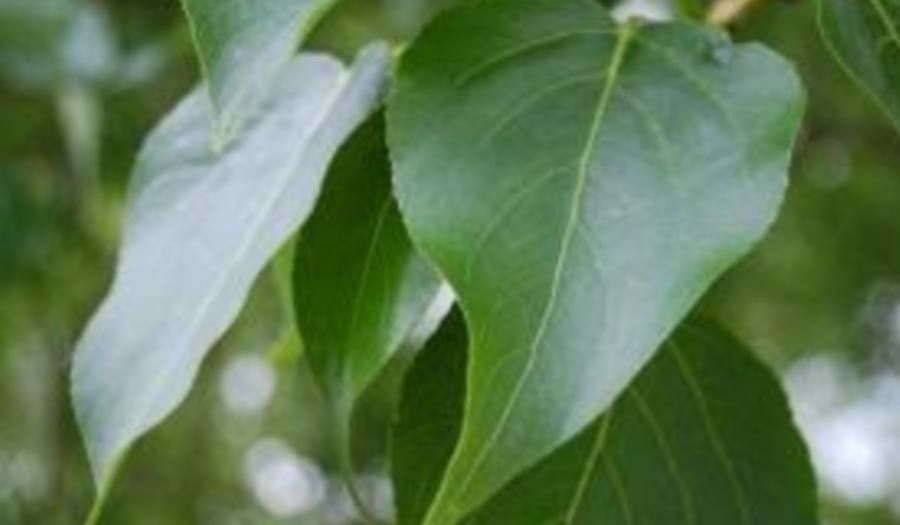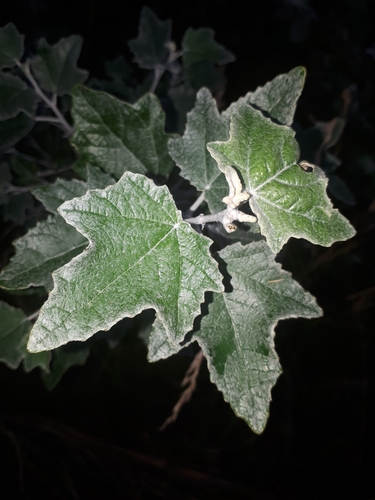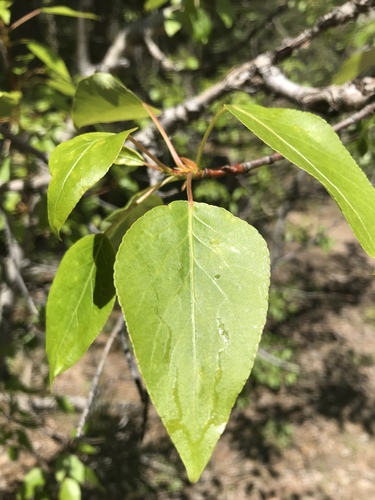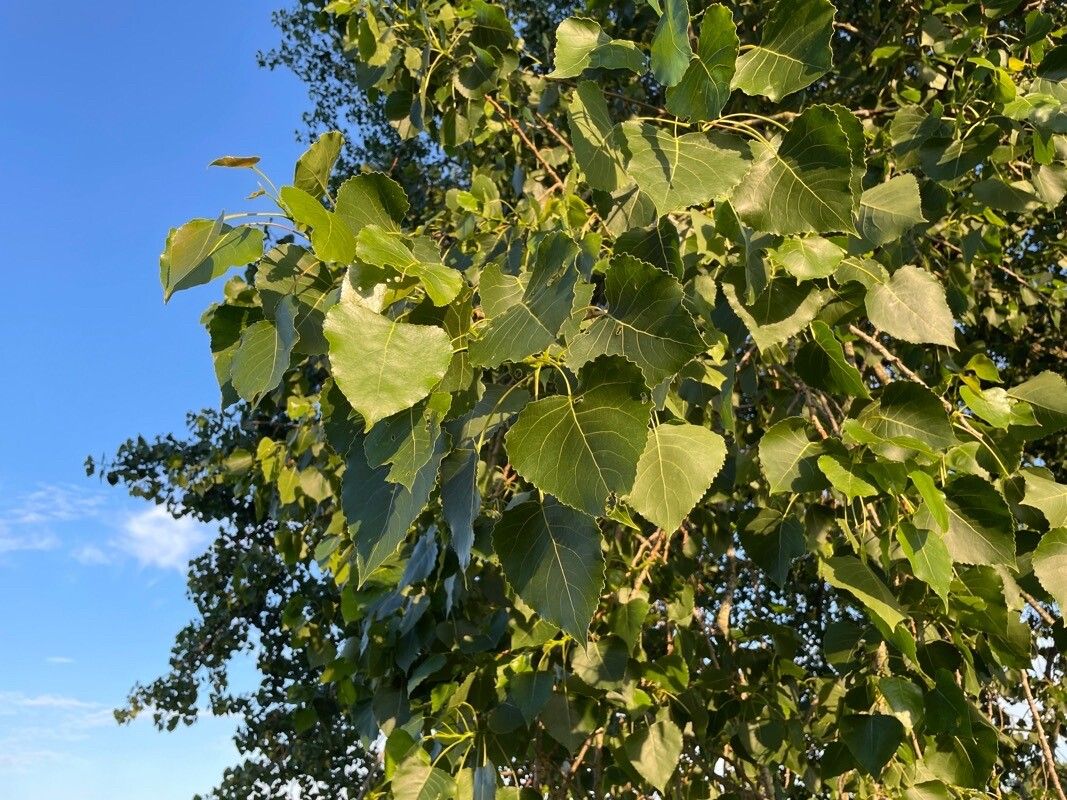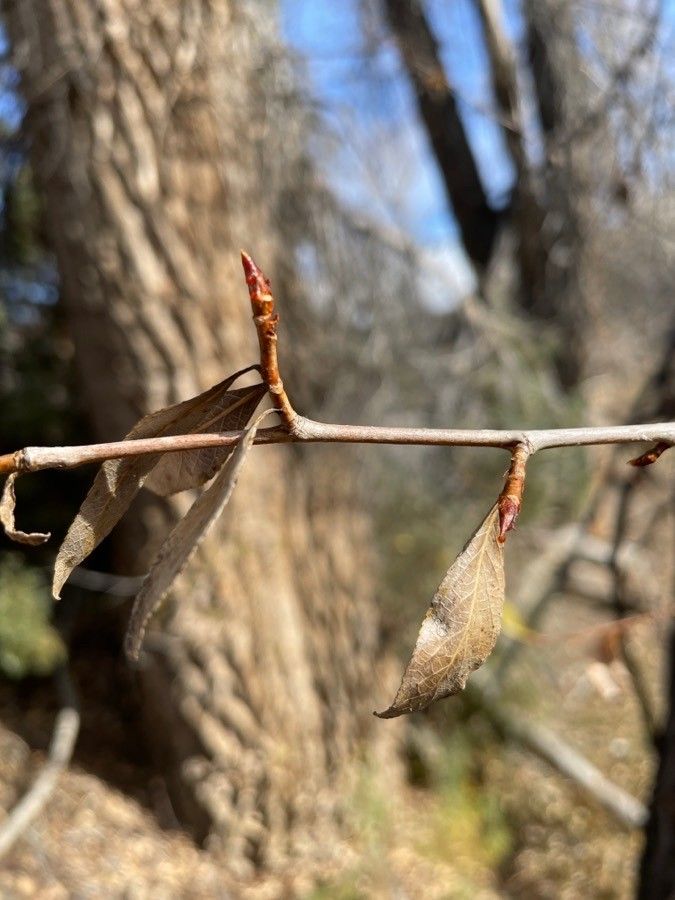
Populus angustifolia, commonly known as the narrowleaf cottonwood, is a species of tree in the willow family (Salicaceae). It is native to western North America, where it is a characteristic species of the Rocky Mountains and the surrounding plains. It ranges north to the provinces of Alberta and Saskatchewan in Canada and south to the states of Chihuahua, Coahuila, and Sonora in Mexico. Its natural habitat is by streams and creeks between 3,900 to 7,900 feet (1,200 to 2,400 m) elevation.
Black cottonwood is resistant to many diseases and is generally not susceptible to them. Regarding care, this plant is fairly low-maintenance. When grown outdoors it needs only minimal watering, and larger specimens typically do not require pruning. Smaller plants, however, should be pruned after they finish blooming. Black cottonwood is appropriate for anyone with an outdoor area, such as a garden or deck, and does not demand extensive care experience.
How to keep Populus Angustifolia.
Light
Black cottonwood prospers in bright light and needs strong illumination for optimal growth. Consequently, it should be given plentiful light. As a tree of open woods, it shows some tolerance for partly sunlit situations. Too much or too little sun can disturb its growth and overall health.
Water
Narrowleaf cottonwood, which comes from regions with varying water levels, is moderately drought-tolerant and thrives with intermittent moisture. For best health and growth, water the plant every 2 to 3 weeks, and ensure it has well-draining soil similar to its natural habitat along riverbanks.
Temperature
Black cottonwood naturally occurs in settings where temperatures range from 32 to 95 °F (0 to 35 ℃). Because the plant favors cooler conditions, adjusting temperatures appropriately during harsh seasons is vital for healthier growth.
Fertilizer
To encourage healthy development, apply fertilizer to your Black cottonwood in early spring. Consistent feeding improves overall health, leading to vigorous growth, increased tolerance of harsh conditions, and stronger resistance to diseases and pests. Follow a regular fertilization schedule for your Black cottonwood to keep the foliage vivid in color and lush in appearance.
Pruning
Narrowleaf cottonwood is a fast-growing, deciduous tree characterized by its slender leaves. For healthy growth, it's best to prune this tree in early spring. Focus on removing dead or crossing branches and thinning out dense areas. Regular pruning encourages a strong structure and helps prevent diseases. Always use clean, sharp tools to make precise cuts.
Botanical profile.
- Plant Type
- Tree
- Life Cycle
- Perennial
- Genus
- Populus
- Family
- Salicaceae
- Hardiness Zone
- 3-10
- Mature Height
- 29.87 m to 49.99 m
- Mature Spread
- 10.06 m
- Leaf Color
- Dark Green, Light Green
- Leaf Type
- Deciduous
- Flower Color
- Yellow, Green
- Flower Size
- 5.08 cm to 7.62 cm
- Bloom Time
- Early spring, Mid spring
- Planting Time
- Spring, Autumn
- Harvest Time
- Late spring, Early summer
Other names.
Reader questions.
What are the sunlight requirements for Narrowleaf cottonwood?
Narrowleaf cottonwood thrives in environments that offer full to partial sun. It requires more than 6 hours of direct sunlight (Full Sun) for optimal growth but can also adapt to receiving about 3-6 hours of sunlight (Partial Sun). Originating from sunny meadows and forest edges, this species is versatile and can adjust to various lighting conditions, making it suitable for both garden and home environments. When choosing a location for your Narrowleaf cottonwood, it’s important to observe how sunlight moves through the space to provide the plant with a balance of light and shade, ensuring its growth and well-being.
How can artificial lighting be used for Narrowleaf cottonwood grown indoors?
When natural sunlight is insufficient for Narrowleaf cottonwood grown indoors, especially during winter or in less sunny spaces, artificial lighting can be an effective solution. It’s recommended to use LED lights as they can be tailored to provide specific wavelengths needed by plants. For full sun plants like the Narrowleaf cottonwood, 30-50W/sq ft of artificial light is needed, while ensuring that the light source is placed 12-36 inches above the plant to mimic natural sunlight. Additionally, mimicking natural daylight hours, most plants require 8-12 hours of light per day for healthier and faster growth. These measures help in compensating for the lack of natural light and promoting the plant’s development.
What symptoms indicate insufficient light for Narrowleaf cottonwood?
Narrowleaf cottonwood may show various symptoms when it receives insufficient light, especially if grown indoors. These include smaller new leaves, leggy or sparse growth, faster leaf drop, slower or no new growth, and lighter-colored new leaves. Other signs are chlorosis, which is the yellowing of leaves due to lack of chlorophyll; sunscald, which results from intense sunlight causing damaged areas on the plant tissue; leaf curling, where leaves twist to reduce surface area exposed to the sun, minimizing water loss; wilting, where plants lose turgor pressure making leaves and stems droop; and leaf scorching, characterized by brown, dry, and crispy leaf edges. These symptoms highlight the plant's struggle with suboptimal light conditions and the need for corrective measures.
What are the solutions for caring for Narrowleaf cottonwood under insufficient sunlight?
To care for Narrowleaf cottonwood under insufficient sunlight, it’s important to improve its light exposure gradually and consider using artificial lighting when natural light is not enough. Indoors, gradually move the plant to sunny locations, such as a south-facing window, ensuring it receives at least 6 hours of direct sunlight daily, and consider using artificial grow lights for additional support. Outdoors, shift the plants to sunnier spots weekly, avoiding abrupt changes to prevent sunburn. Removing obstacles that block sunlight, such as pruning trees, and transplanting smaller plants to more sun-exposed areas during their dormant period can also help. Note that parts of the plant affected by low light may not recover, but increasing light exposure will promote healthy new growth.