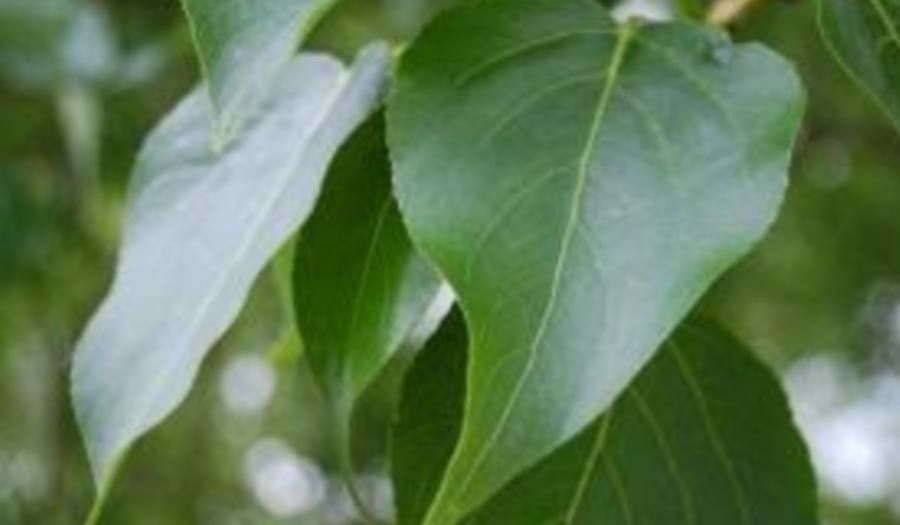
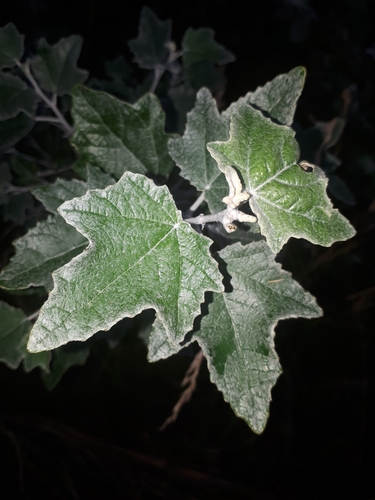
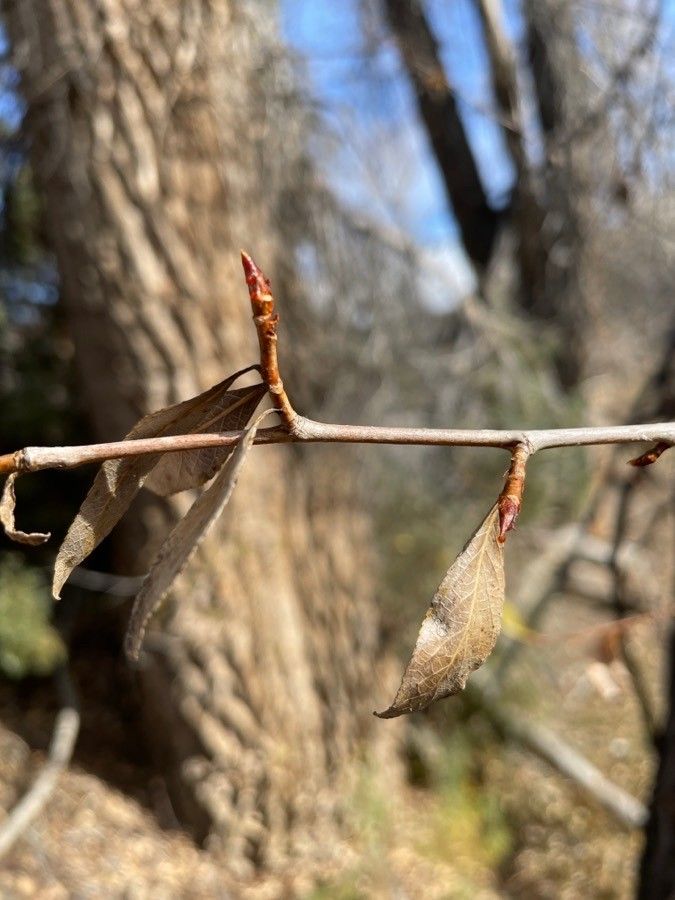
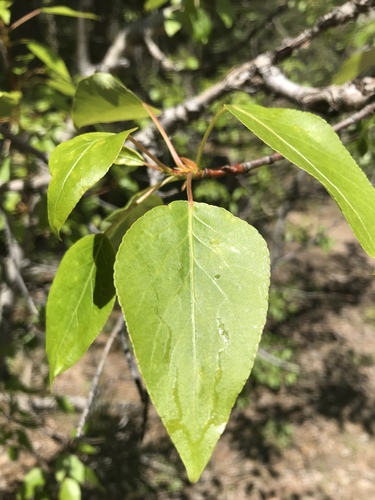
Populus ciliata, the Himalayan poplar, is a large deciduous tree with tall clean straight trunk and wide rounded crown. The bark of the young trees is smooth greenish-grey and the bark of the old trees is dark brown with vertical cracks. Leaves are broadly ovate with serrulate-crenate and hairy margins. Flowers are drooping raceme catkins appear before or with leaves. Populus ciliata flowers are dioecious, individual flowers are either male or female. Perianth of male flowers is bell-shaped and female flowers are bluntly toothed. Their capsule encloses an average of 100–150 seeds, which are covered by long silky hair.
Populus deltoides subsp. deltoides is resistant to disease and generally not susceptible to illnesses. With respect to care, this plant is fairly low-maintenance. When grown outdoors it needs little watering, and larger specimens usually do not require pruning. Smaller plants, however, should be pruned after they have bloomed. Populus deltoides subsp. deltoidest is appropriate for anyone with an outdoor area, such as a garden or deck, and does not demand extensive care experience.
How to keep Populus Ciliata.
Light
Populus deltoides subsp. deltoides is found in open habitats, such as sunny meadows and forest margins, which provide abundant light. It does best in Full Sun but can also tolerate Partial Sun, adapting well to a range of sunlight conditions.
Temperature
Populus deltoides subsp. deltoides shows strong adaptability to a range of climatic conditions, whether facing scorching summers or chilly winters. It nevertheless has an optimal temperature range for growth. If temperatures rise too high, the plant is susceptible to heat and humidity stress, which may lead to its death. In areas where temperatures near the lower bound of its cold tolerance, it is necessary to apply insulation measures to protect the plant.
Fertilizer
Fertilize your Populus deltoides subsp. deltoides in early spring to encourage healthy growth. Regular feeding improves overall health, producing vigorous growth, increased tolerance of harsh conditions, and enhanced resistance to pests and diseases. Keep a consistent fertilization schedule for your Populus deltoides subsp. deltoides to maintain vibrant, deeply colored foliage and a lush appearance.
Botanical profile.
- Plant Type
- Tree
- Life Cycle
- Perennial
- Genus
- Populus
- Family
- Salicaceae
- Hardiness Zone
- 2-9
- Mature Height
- 20.12 m to 29.87 m
- Mature Spread
- 14.94 m to 20.12 m
- Leaf Color
- Green, Yellow Green
- Leaf Type
- Deciduous
- Bloom Time
- Early spring, Mid spring
- Planting Time
- Spring, Summer, Autumn
- Harvest Time
- Late spring, Early summer
- Native Area
- Mexico