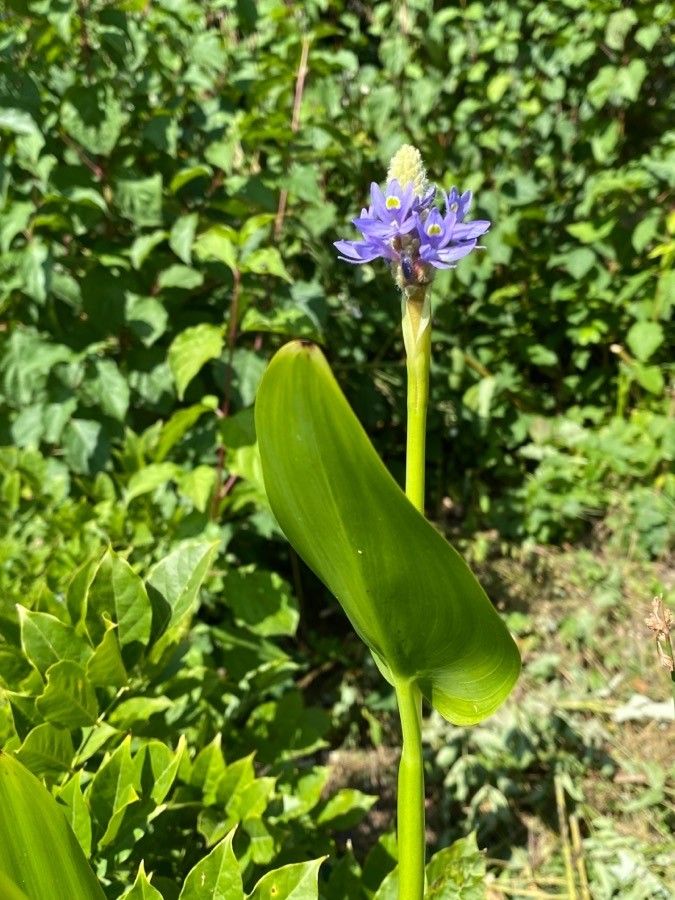
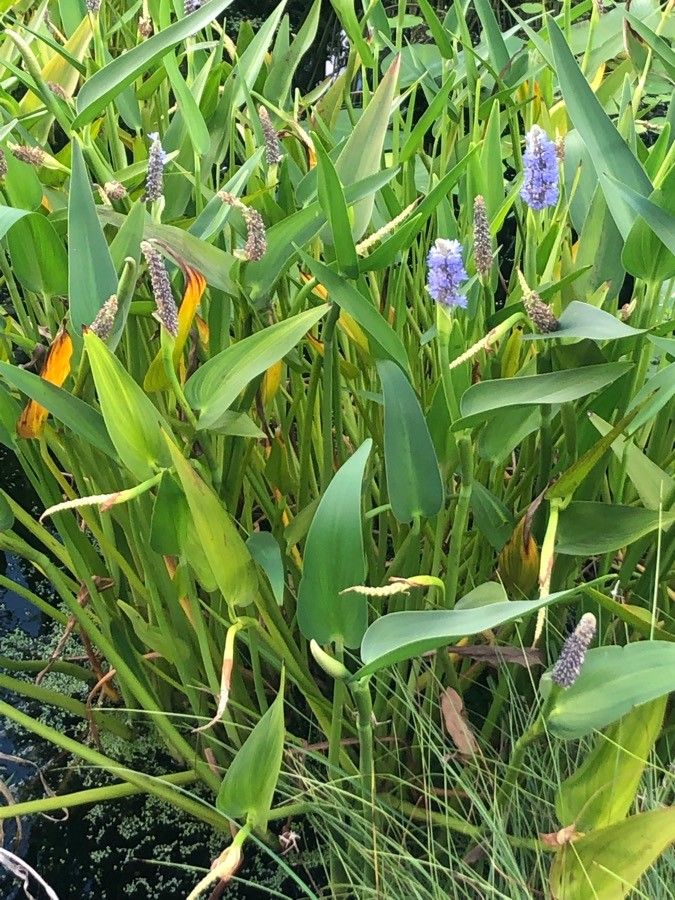
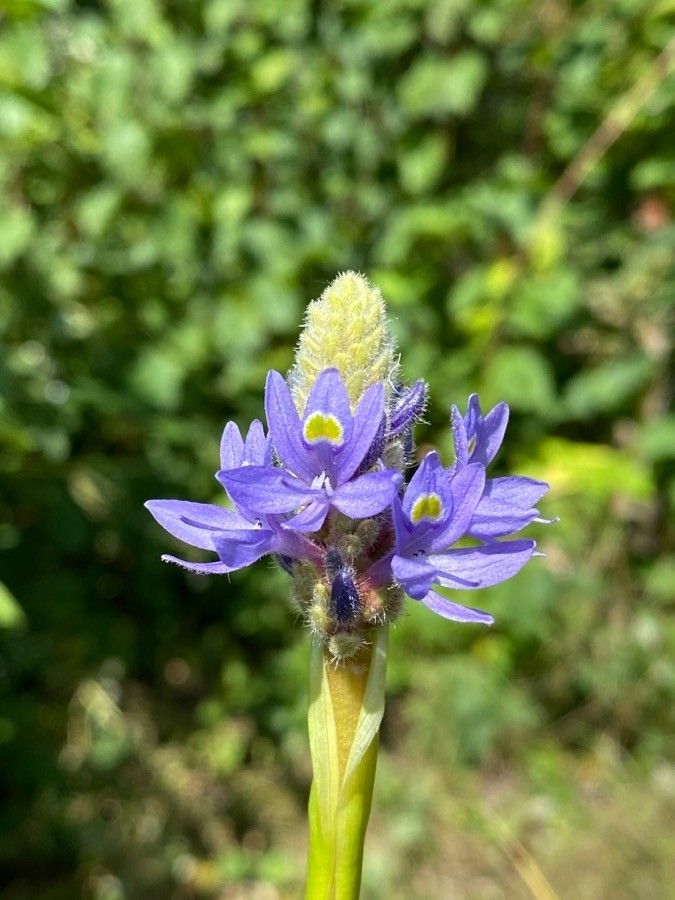
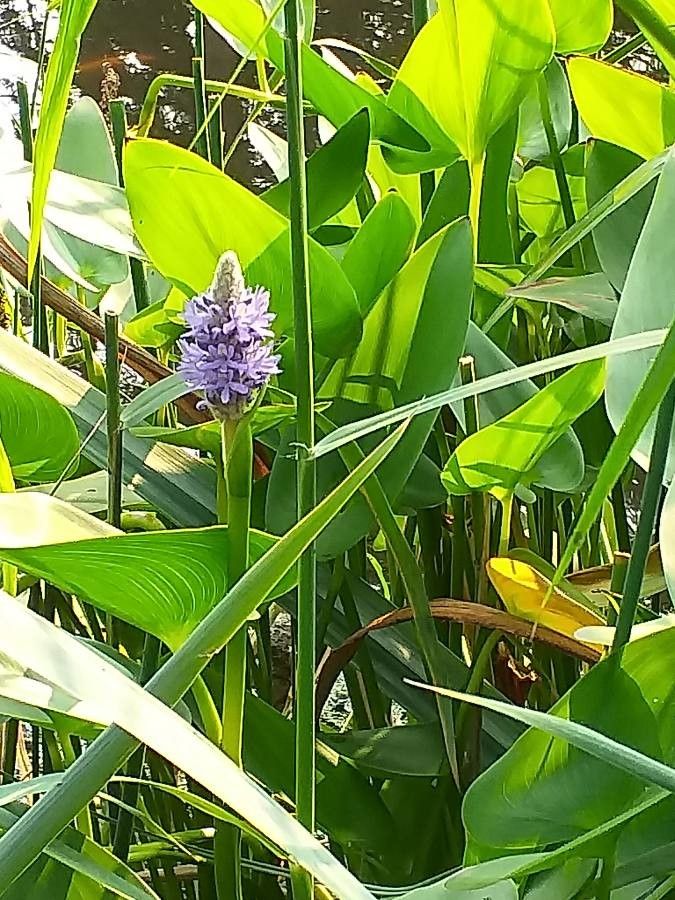
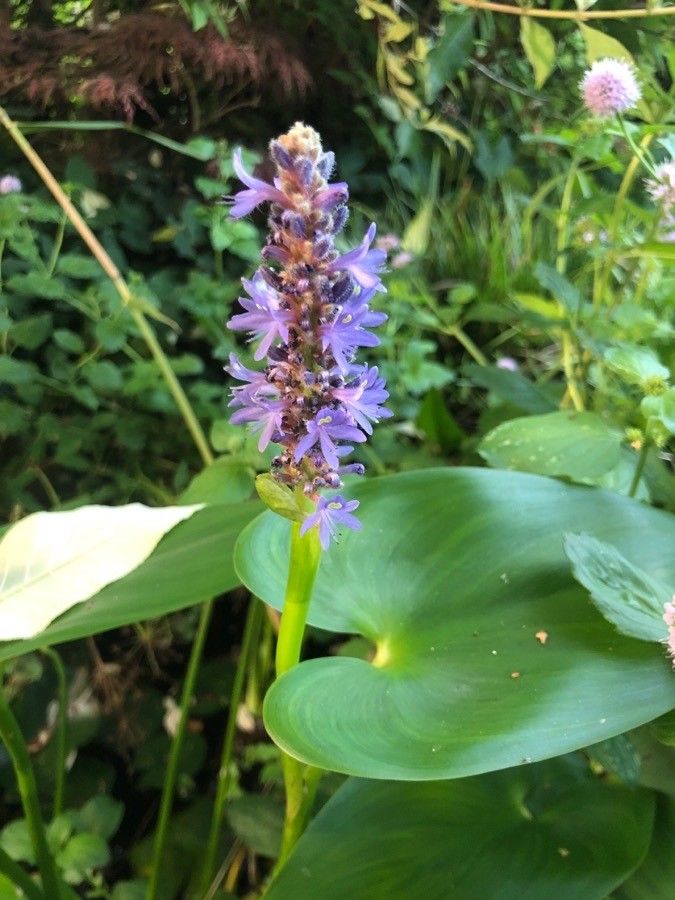
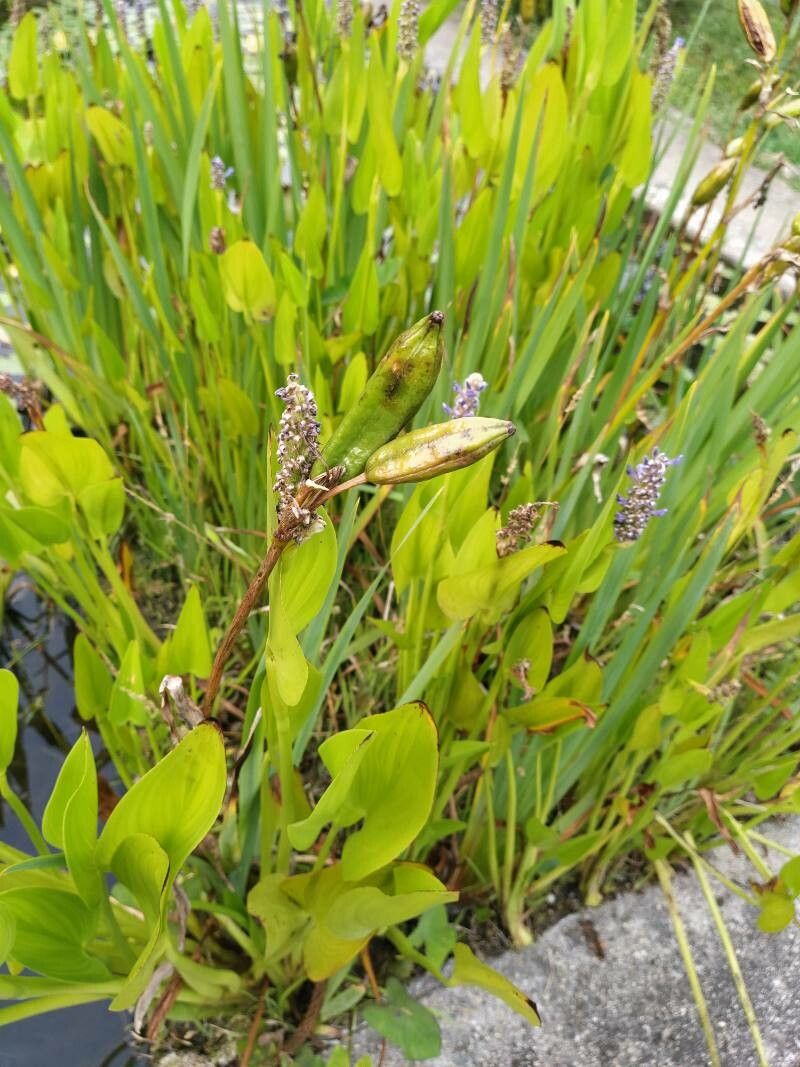
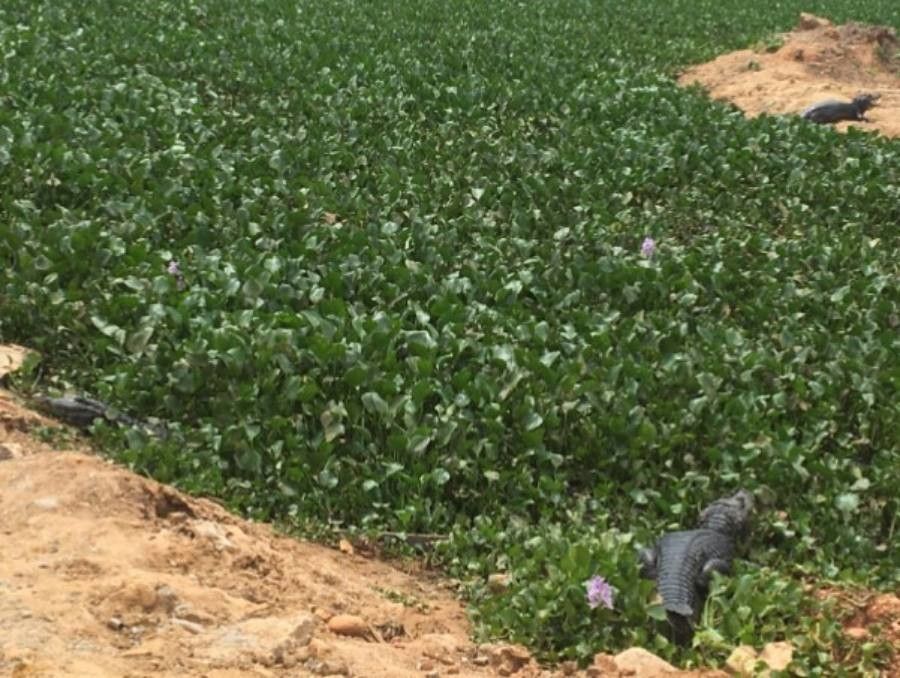
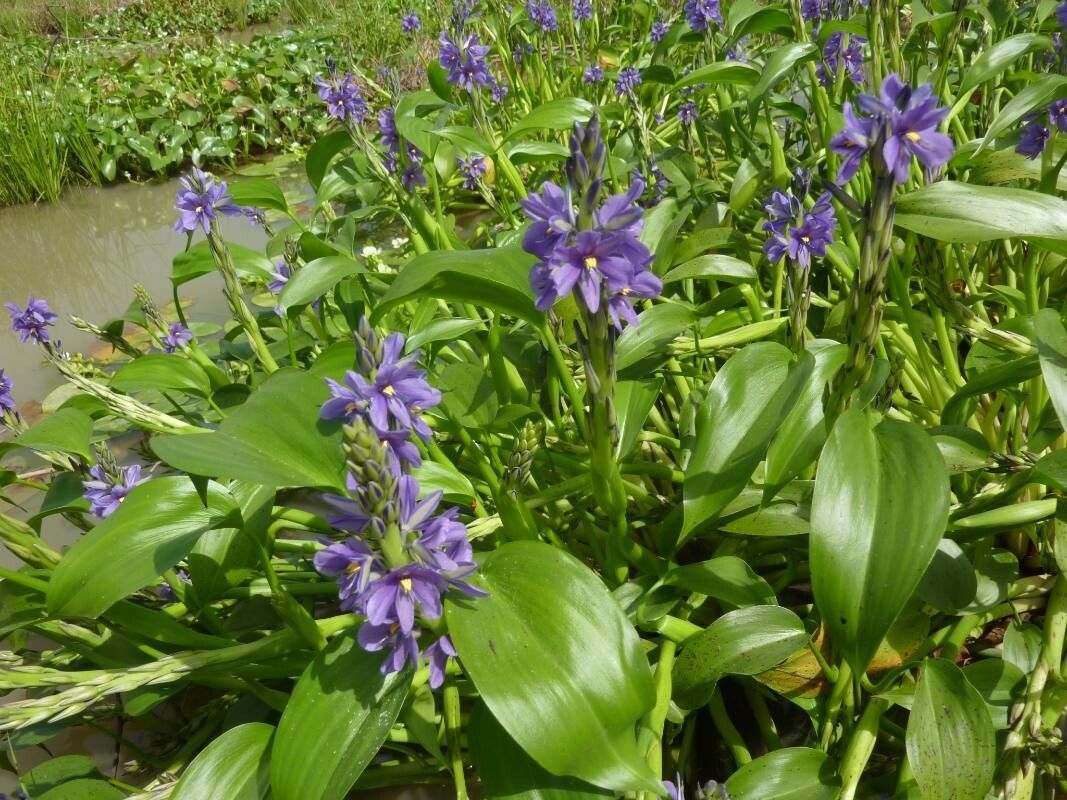
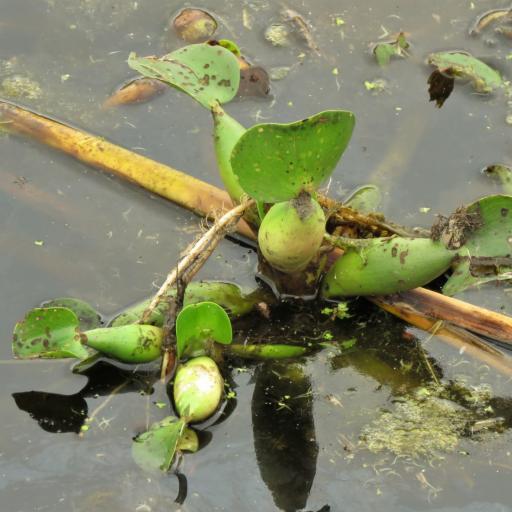
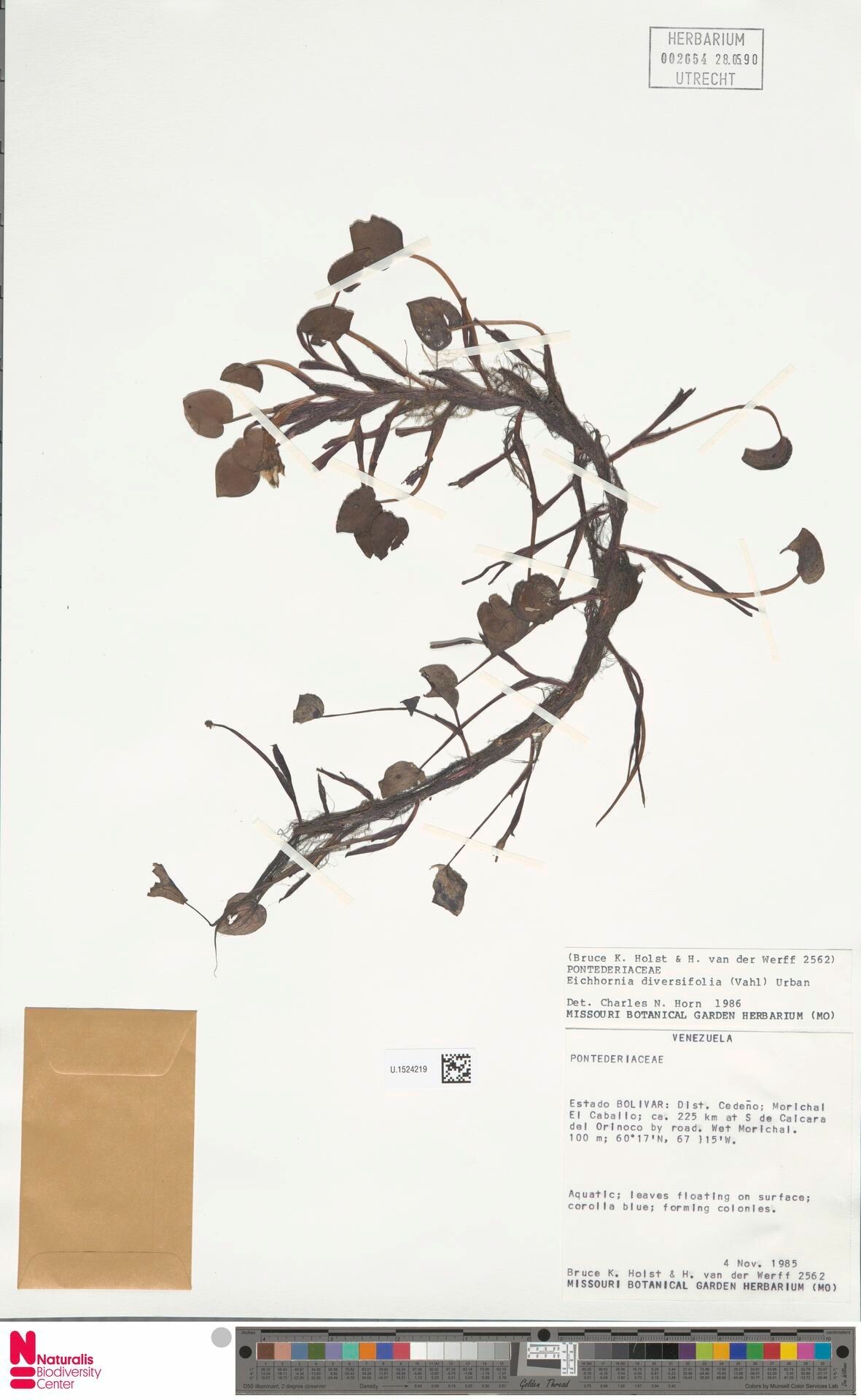
Pontederia cordata, commonly known as pickerelweed, is a perennial aquatic plant in the Pontederiaceae family. Native to North America, it thrives in wetlands, ponds, and slow-moving streams. The plant features heart-shaped leaves that are green on top and purple underneath. In the summer, it produces spikes of blue-purple flowers that attract pollinators, such as bees and butterflies.
Pickerelweed plays a crucial role in wetland ecosystems by providing habitat for aquatic animals such as fish, turtles, frogs, and insects. Additionally, it helps improve water quality by filtering pollutants.
The plant can be cultivated in garden ponds or other water features, provided it receives full sun exposure for optimal growth. It can be propagated by dividing its rhizomes or planting seeds.
In traditional medicine practices of some Native American tribes, such as the Cherokee, Pontederia cordata was used to treat various ailments, including snake bites and skin infections, due to its anti-inflammatory properties.
Overall, Pontederia cordata is a beautiful aquatic plant with significant ecological value. It adds aesthetic appeal to any garden pond while contributing to wildlife habitat conservation efforts.
Botanical profile.
- Plant Type
- Herb
- Life Cycle
- Perennial
- Genus
- Pontederia
- Family
- Pontederiaceae
- Hardiness Zone
- 3-10
- Mature Height
- 1.22 m
- Mature Spread
- 46 cm to 61 cm
- Leaf Color
- Green
- Leaf Type
- Deciduous
- Flower Color
- Purple
- Flower Size
- 2.54 cm
- Bloom Time
- Early summer, Mid summer
- Planting Time
- Spring
- Harvest Time
- Mid summer, Late summer
- Native Area
- Uruguay, Colombia, Belize, Cuba, Paraguay, Argentina, Honduras, Mexico, Georgia, Bolivia, Venezuela, Brazil
Other names.