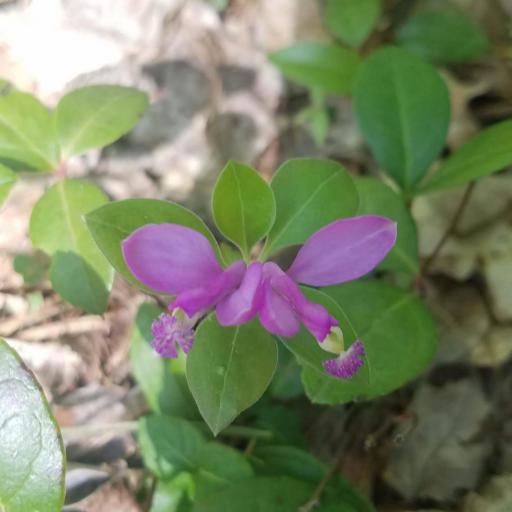
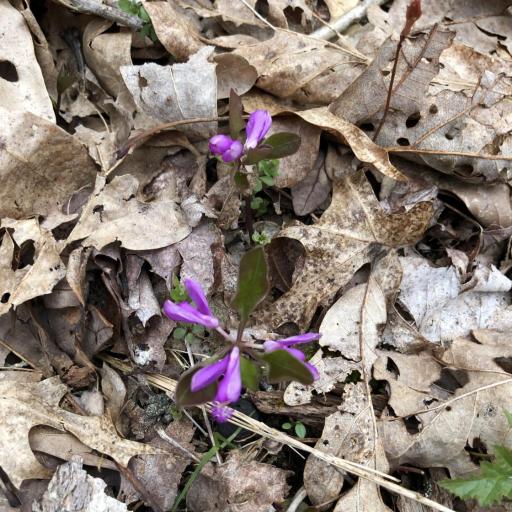
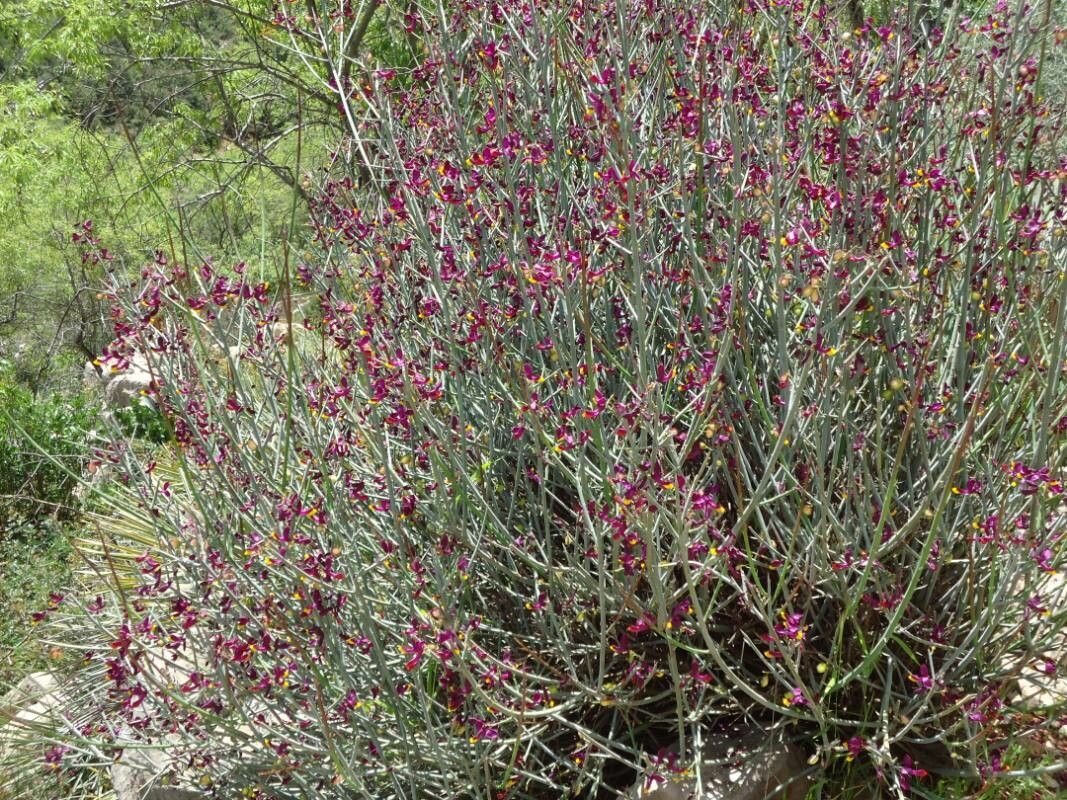
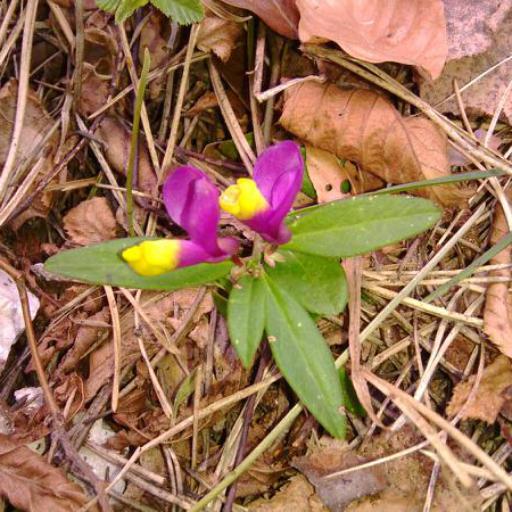
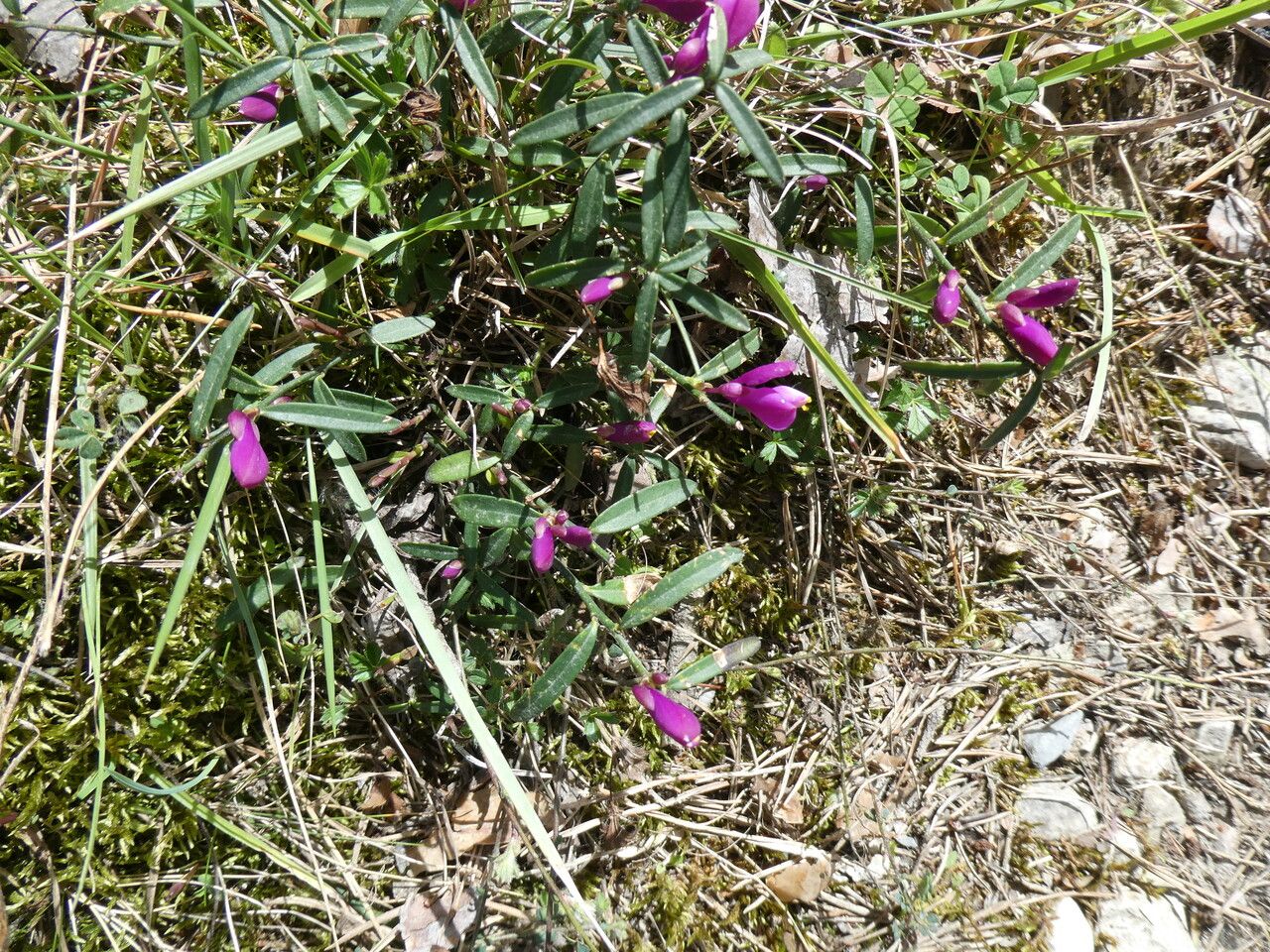
Polygaloides paucifolia, synonym Polygala paucifolia, known as gaywings or fringed polygala, is a perennial plant of the family Polygalaceae. Mature plants are 3 to 6 inches tall. Stems are smooth, slender and green. Leaves are clustered at the top, appearing to be whorled, but they are not. Leaflets are oblong to lanceolate—narrow at the base with a pointed tip. Leaves have an entire margin and are thin. Flowers are pink and white, blooming in April and May. The species was first described, as Polygala paucifolia, by Carl Ludwig Willdenow in 1802. In 2011, John Richard Abbott divided up part of the genus Polygala into more sharply defined genera. He placed P. paucifolia in Polygaloides as Polygaloides paucifolia.
Fringed polygala has strong disease resistance and is typically not susceptible to illnesses. However, it can be affected by pests and diseases present in its environment, and these problems are usually mild. In terms of care, this plant requires a moderate level of maintenance. It should be pruned regularly to keep a neat appearance and support healthy growth. Fertilizing can also encourage flowering. Fringed polygala is well suited for anyone with outdoor space, such as a garden or patio, and does not demand extensive gardening experience. It may need more attention when grown indoors.
How to keep Polygaloides Paucifolia.
Light
Fringed polygala does best in places sheltered from intense sunlight; moderate or low light favors its growth. The habitat it comes from features these conditions, which supports its adaptation to such light levels. Too much sun can impede its development, and insufficient lighting can be harmful as well.
Water
Fringed polygala flourishes with regular, moderate watering, typically needing a drink once a week to stay healthy. It thrives in stable conditions that mimic its natural habitat, which balances periods of wetness with dry spells. If you're growing it in containers, it's important to carefully monitor the soil's moisture levels to prevent overwatering or drying out.
Temperature
Fringed polygala thrives at temperatures of 41 to 89.6 °F (5 to 32 ℃). Native to temperate climates, it can accommodate seasonal variations. In winter, adjust heating to mimic those climates for optimal growth.
Fertilizer
For Fringed polygala, the best time to apply fertilizer is in early spring when the flowers are forming. Using the appropriate fertilizer promotes better blooms and helps Fringed polygala produce attractive flowers. Feeding in early spring ensures strong flowering throughout the season and supplies energy for dormant growth phases.
Pruning
Fringed polygala is a low-growing perennial known for its vibrant purple flowers and foliage. To encourage healthy growth and abundant blooming, prune the plant in early to late spring using sharp, sterilized tools. This helps to invigorate the plant, maintain its shape, and maximize its flowering potential.
Botanical profile.
- Plant Type
- Herb
- Life Cycle
- Perennial
- Genus
- Polygaloides
- Family
- Polygalaceae
- Hardiness Zone
- 5-7
- Mature Height
- 8 cm to 18 cm
- Mature Spread
- 3.05 m
- Leaf Color
- Green, Dark Green
- Leaf Type
- Evergreen
- Flower Color
- Purple, Red
- Flower Size
- 2.54 cm
- Bloom Time
- Early spring, Mid spring
- Planting Time
- Winter
- Harvest Time
- Late spring, Early summer
- Native Area
- Georgia
Other names.