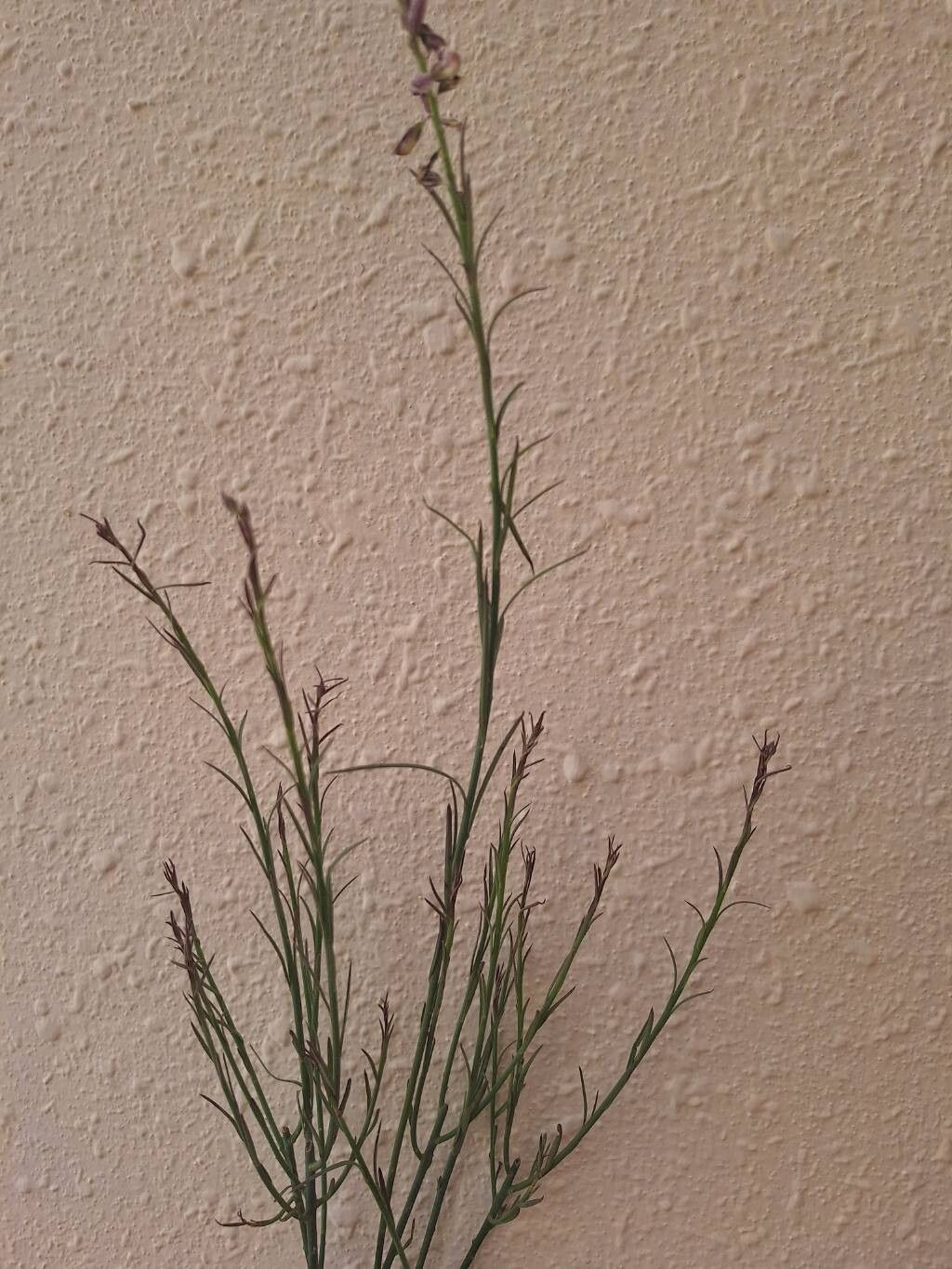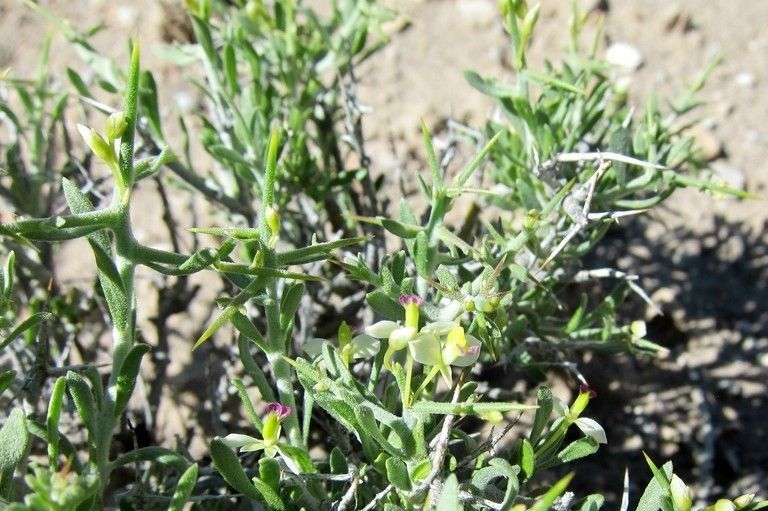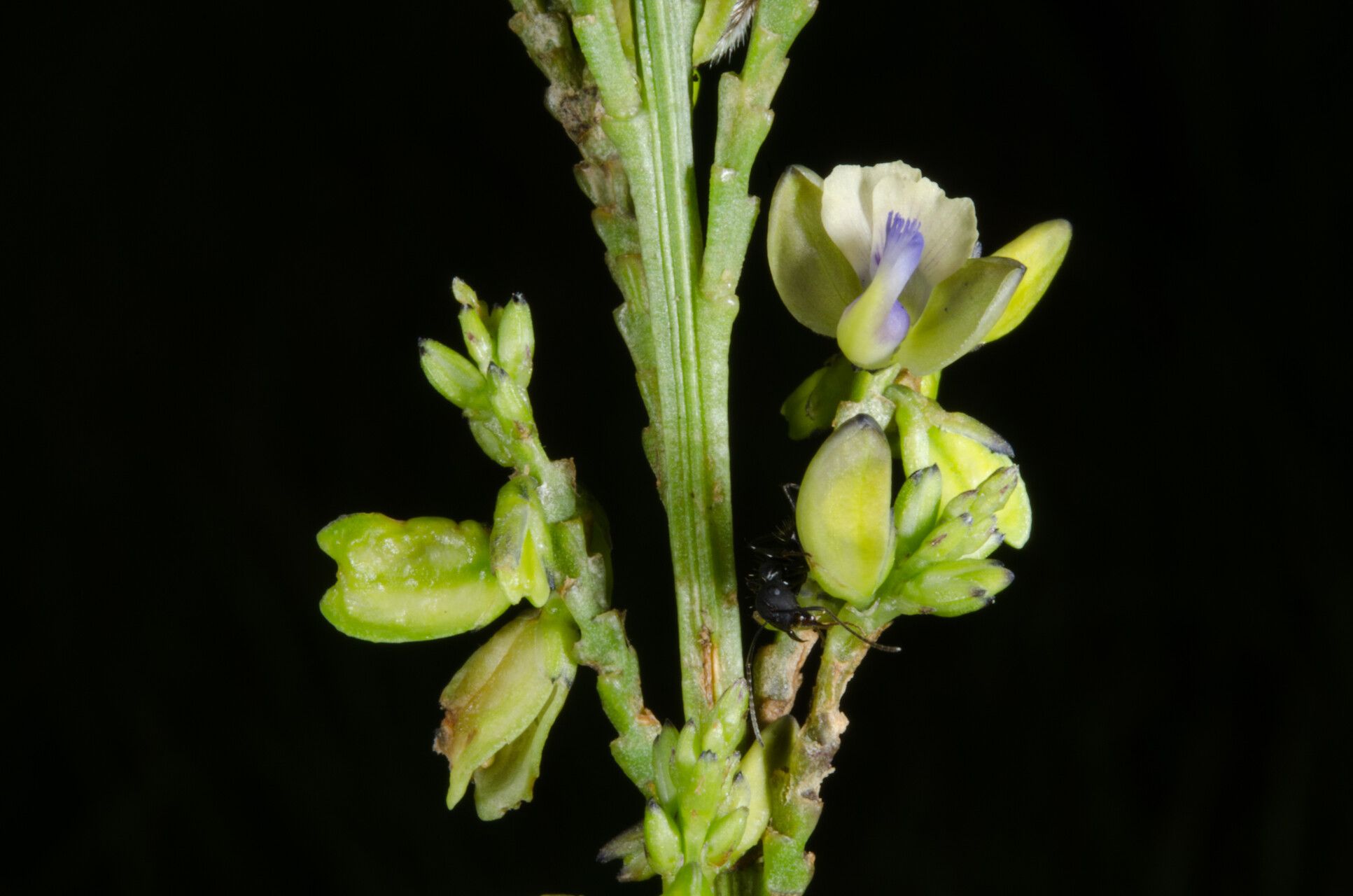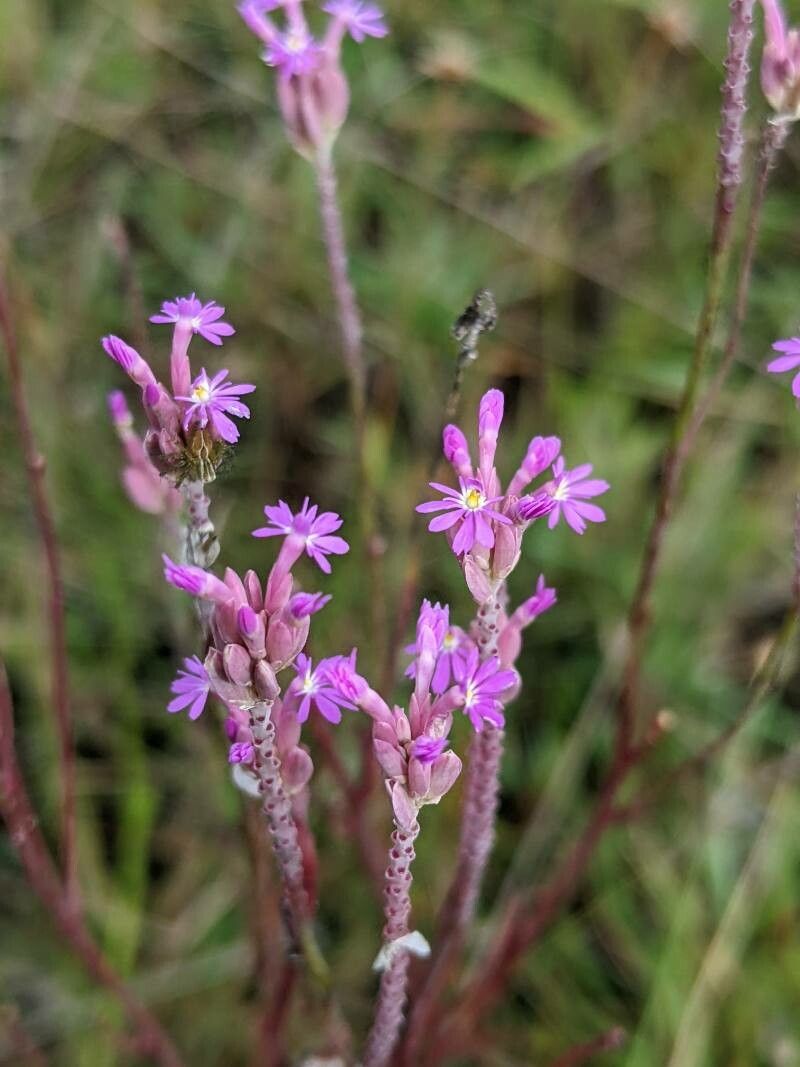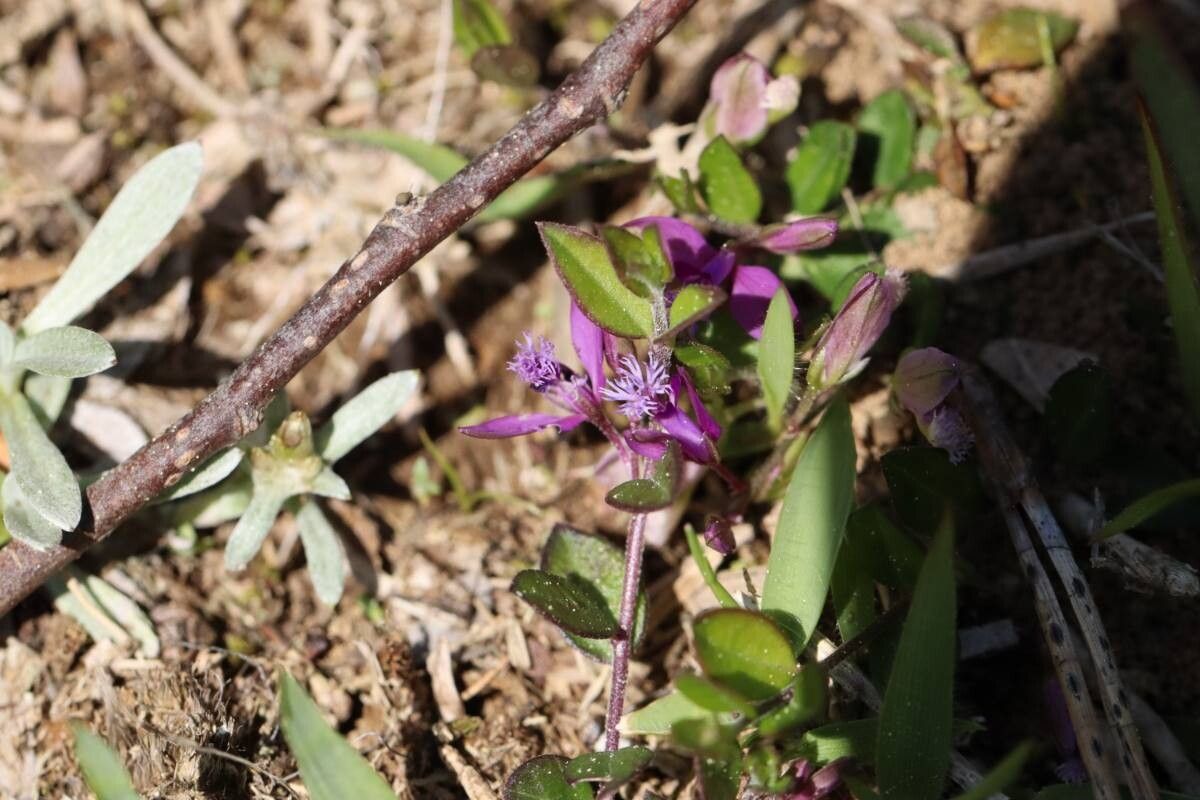
Polygala japonica is a species of flowering plant in the milkwort family (Polygalaceae). It is native to Northeast, East and Southeastern Asia, as well as eastern Australia. It is a wiry and decumbent dwarf shrub with a height between 10 and 25 centimetres. Its stems have tiny curled hairs. Its leaves are 5 to 20 millimetres long and 3 to 10 millimetres wide. Its flowers are purple to mauve and 5 to 6 millimetres long. It flowers between October and December.
Dwarf milkwort is fairly resistant to disease and typically does not suffer from illnesses. Still, it can be affected by pests and diseases present in its surroundings. These problems are generally mild. For care, the plant needs moderate maintenance. It should be pruned regularly to keep a neat appearance and support healthy growth. Fertilizing can also encourage flowering. Dwarf milkwort is suitable for anyone with outdoor space, such as a garden or patio, and does not demand extensive gardening experience. It may need more attention if grown indoors.
How to keep Polygala Japonica.
Light
Dwarf milkwort is a perennial herb that originates from open environments and often prospers in meadows and grasslands. Although it has a strong affinity for full sun, it is also capable of withstanding conditions of partial sun. This plant is particularly fond of sunlight.
Temperature
Dwarf milkwort possesses the capacity to acclimatize to diverse temperature environments, though the mix of heat and water circumstances can still restrict its dispersal. It flourishes optimally in heated climates throughout the summer if sufficient rainfall or irrigation is provided. Extended bouts of overcast and rainy climate, along with prolonged elevated temperatures, can escalate the chances of Dwarf milkwort perishing. During the winter, ensuring suitable protection from the cold can bolster the plant's chance of survival.
Fertilizer
The optimum period to supply nutrients to a Dwarf milkwort is in the beginning of spring, as it transitions from a dormant state to a period of active growth. Fertilizing serves to give essential nutrients vital for robust growth. Despite Dwarf milkwort not requiring much fertilization, fertilizing once a year can boost its resilience and contribute to the production of superior, more enduring flowers.
Botanical profile.
- Plant Type
- Herb, Shrub
- Life Cycle
- Perennial
- Hardiness Zone
- 7-10
- Mature Height
- 10 cm to 25 cm
- Mature Spread
- 20 cm to 40 cm
- Leaf Color
- Green, Dark Green
- Leaf Type
- Deciduous
- Flower Color
- Pink, Purple
- Flower Size
- 0.51 cm to 0.51 cm
- Bloom Time
- Mid spring, Late spring, Summer, Early fall
- Planting Time
- Spring, Summer
- Harvest Time
- Summer, Fall
- Native Area
- Russia, India, Indonesia, Vietnam, Myanmar, Japan, Philippines, Koppen, Laos, South Korea, Thailand, China