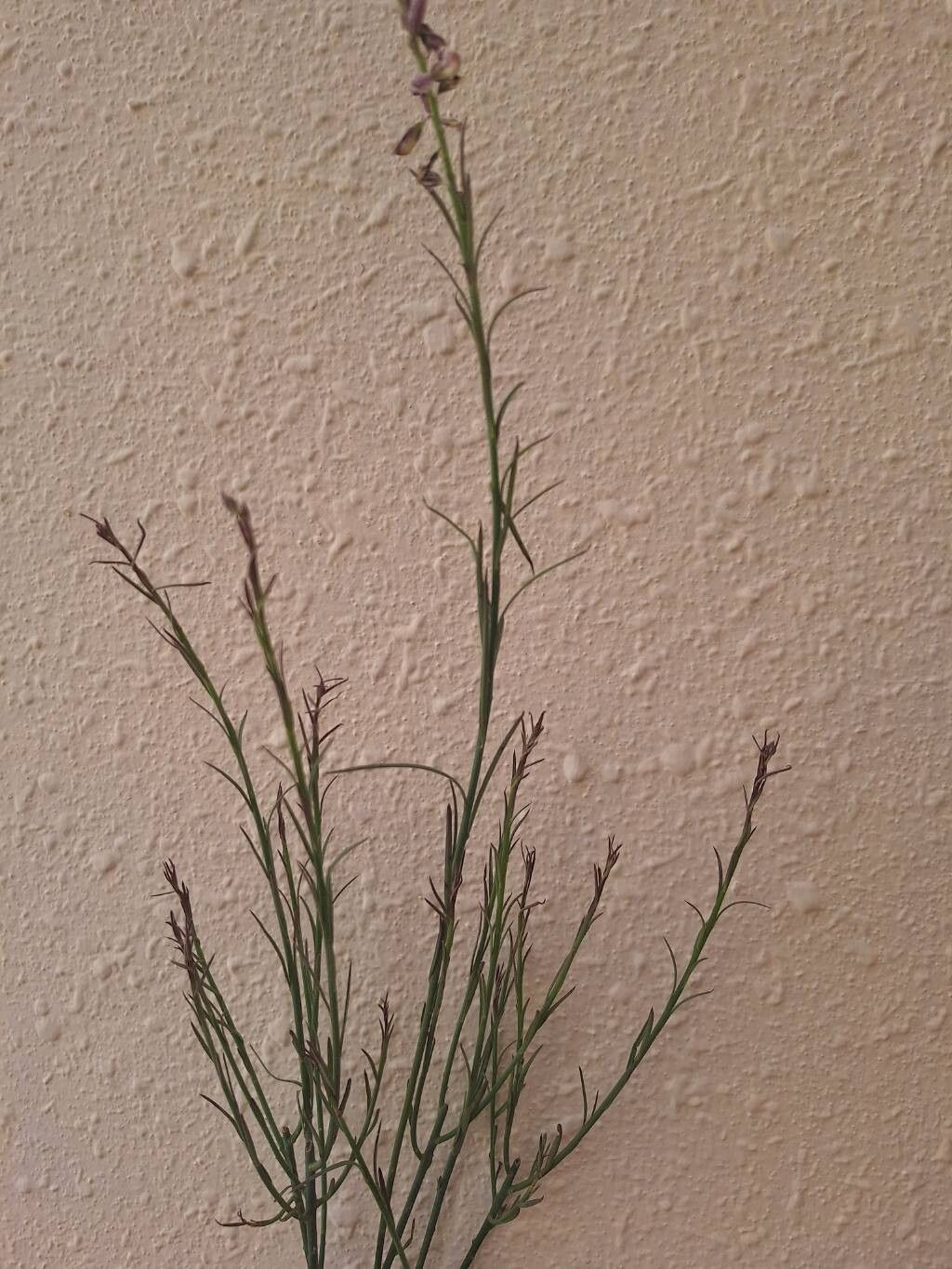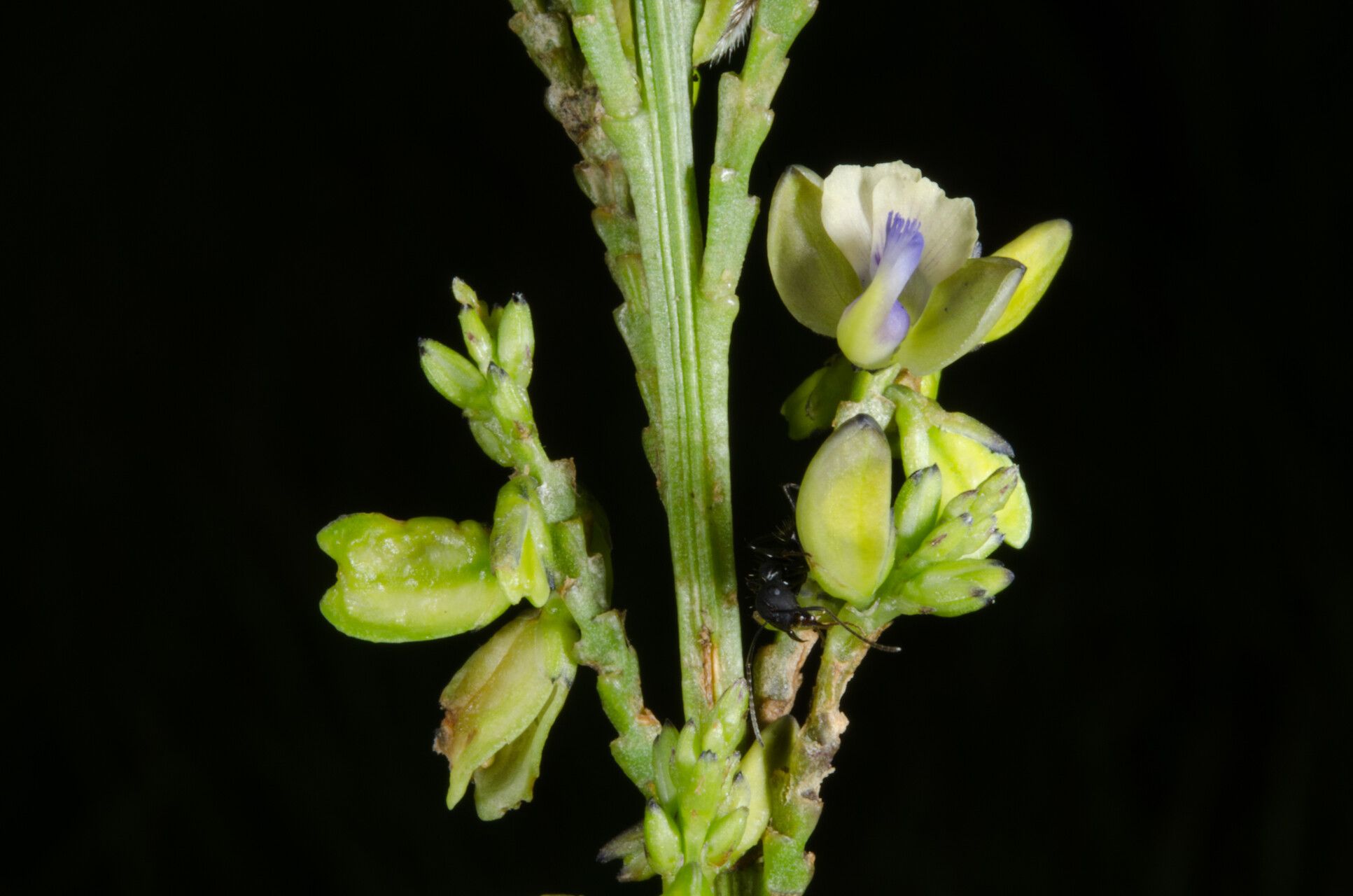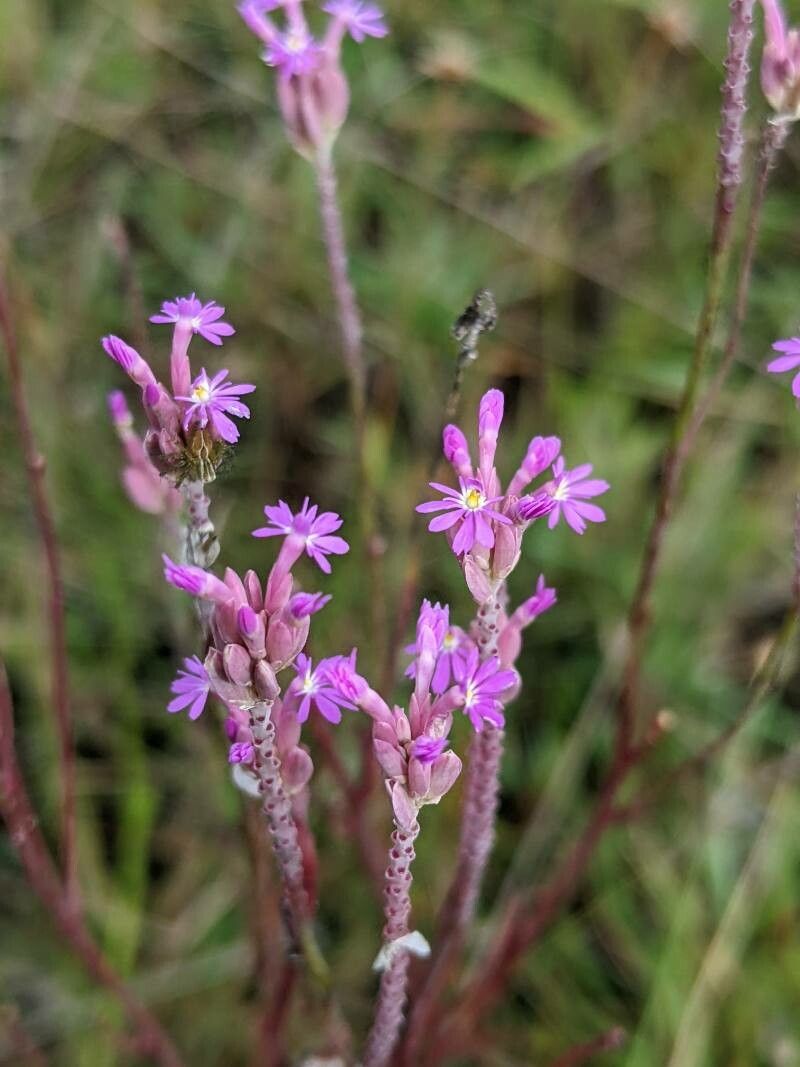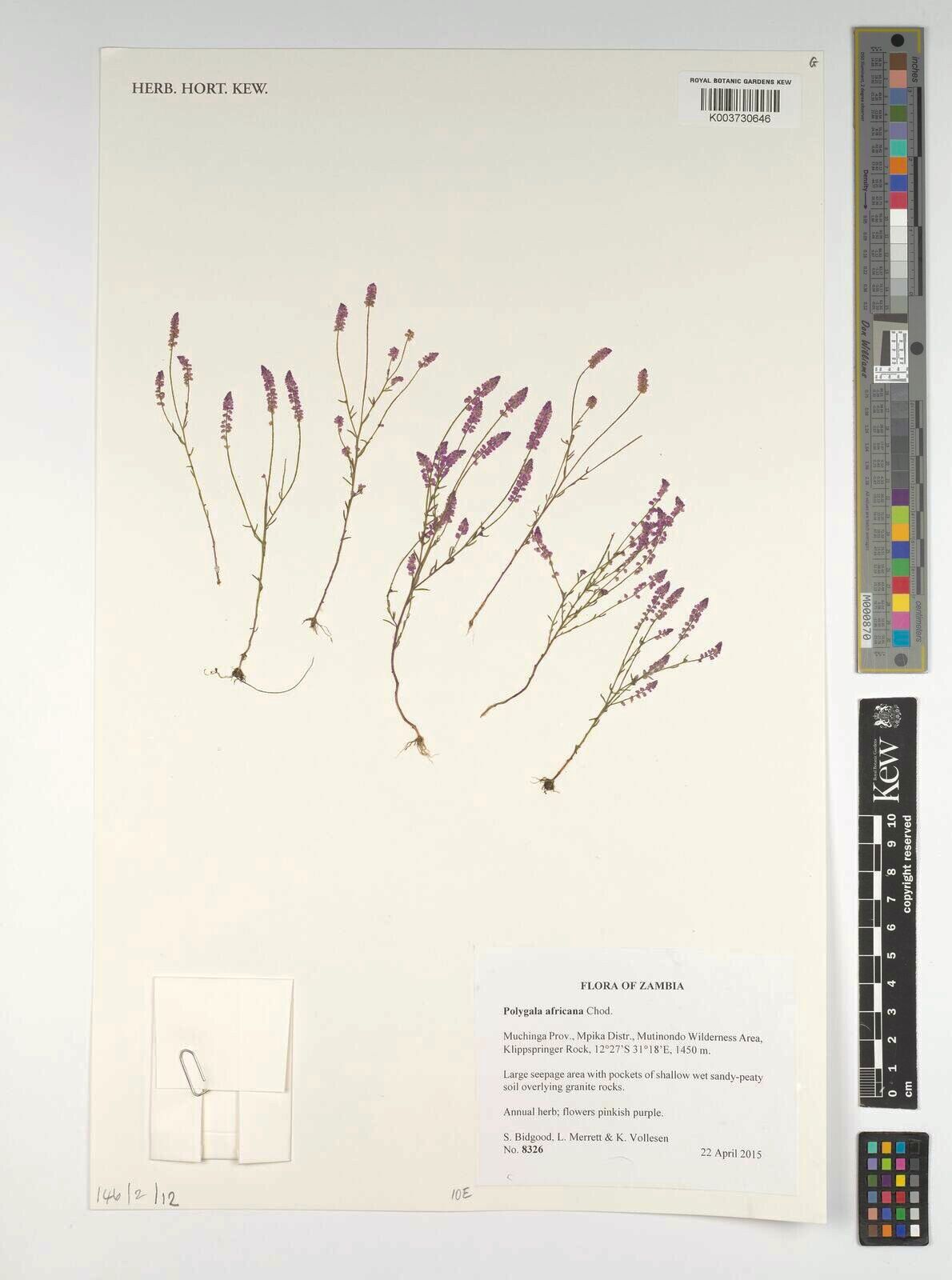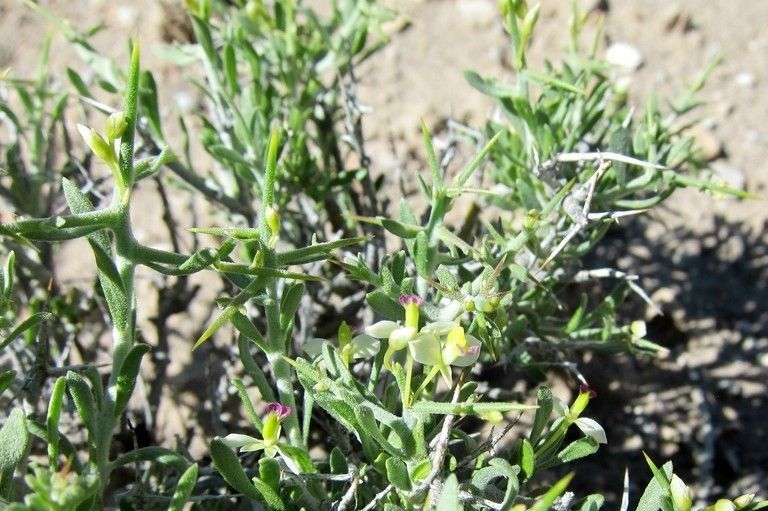
Rhinotropis acanthoclada, synonym Polygala acanthoclada, is a species of flowering plant in the milkwort family known by the common names desert polygala and thorn milkwort. It is native to the desert woodlands of the southwestern United States from Utah to the Mojave Desert. It is a small, bushy shrub spreading or growing erect and approaching one meter in maximum height. It is hairy in texture, the youngest twigs hairiest with a feltlike coat of short, whitish fibers. The lance-shaped or oval leaves are up to 2.5 centimeters long. Some of the twigs narrow to spines at the tips, especially in the inflorescences. The flowers are solitary or in clusters of up to 15. Each flower has five sepals, the lateral two white in color and spreading out like wings. The middle petal is keeled, with a flat tip protruding. The fruit is a capsule about half a centimeter long.
thorny milkwort is resistant to disease and typically not susceptible to illnesses. As for maintenance, this plant is fairly low-maintenance. When grown outdoors it needs only minimal watering, and larger specimens usually do not require pruning. Smaller plants, however, should be pruned after they finish blooming. thorny milkwortt is appropriate for anyone who has an outdoor area, such as a garden or deck, and does not demand much experience in plant care.
How to keep Polygala Acanthoclada.
Light
Open surroundings like sunlit meadows and the periphery of forests are the places where thorny milkwort springs from, as they supply a sufficient amount of light. It flourishes in total sun exposure but also does well with partial sun, demonstrating its adaptability to different sunlight situations.
Temperature
The thorny milkwort is native to tropical regions where the weather is typically hot and moist. Consequently, it is well-suited to high heat and humidity conditions. It isn't fond of abrupt shifts in temperature and favors a steady climate, so preventing indoor temperature inconsistencies is crucial. It generally can't endure chilly conditions and necessitates warmer temperatures to grow. If the surrounding temperature gets too cold, the plant's growth might halt or it may even perish.
Fertilizer
The care of thorny milkwort greatly depends on fertilization. Consistent nourishment throughout the growth period maintains vitality for vibrant leaves and promotes general development. Failing to fertilize can lead to sickly leaves, reduced decorative allure, and impaired or feeble growth that is susceptible to damage.
Botanical profile.
- Plant Type
- Shrub
- Life Cycle
- Perennial
- Genus
- Polygala
- Family
- Polygalaceae
- Hardiness Zone
- 7-10
- Mature Height
- 30 cm to 61 cm
- Mature Spread
- 30 cm to 49 cm
- Leaf Color
- Green, Dark Green
- Leaf Type
- Deciduous
- Flower Color
- Yellow
- Flower Size
- 0.51 cm to 0.76 cm
- Bloom Time
- Mid spring, Late spring
- Planting Time
- Spring, Summer, Autumn
- Harvest Time
- Early summer, Mid summer