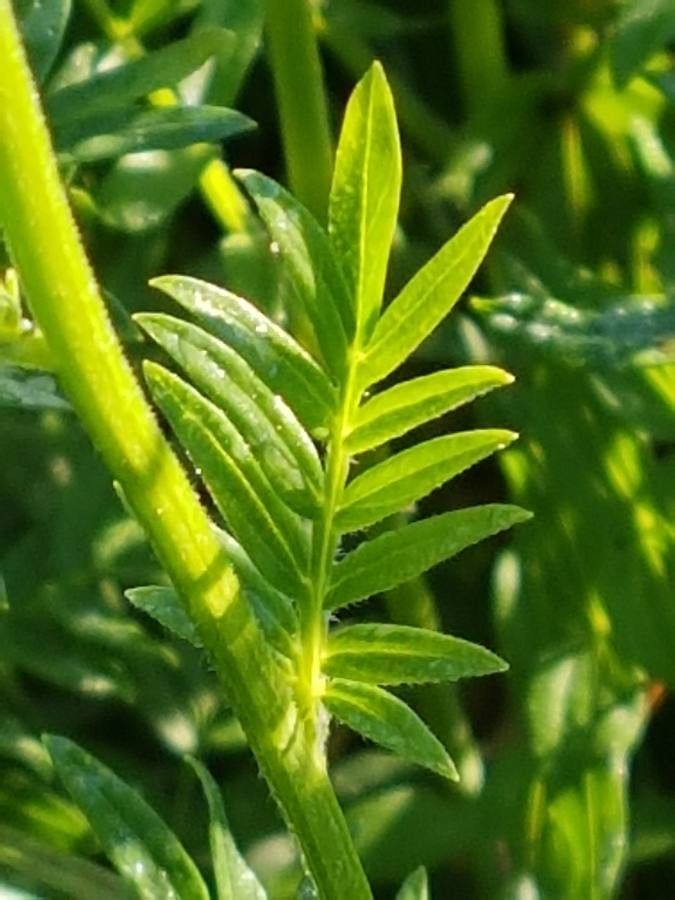
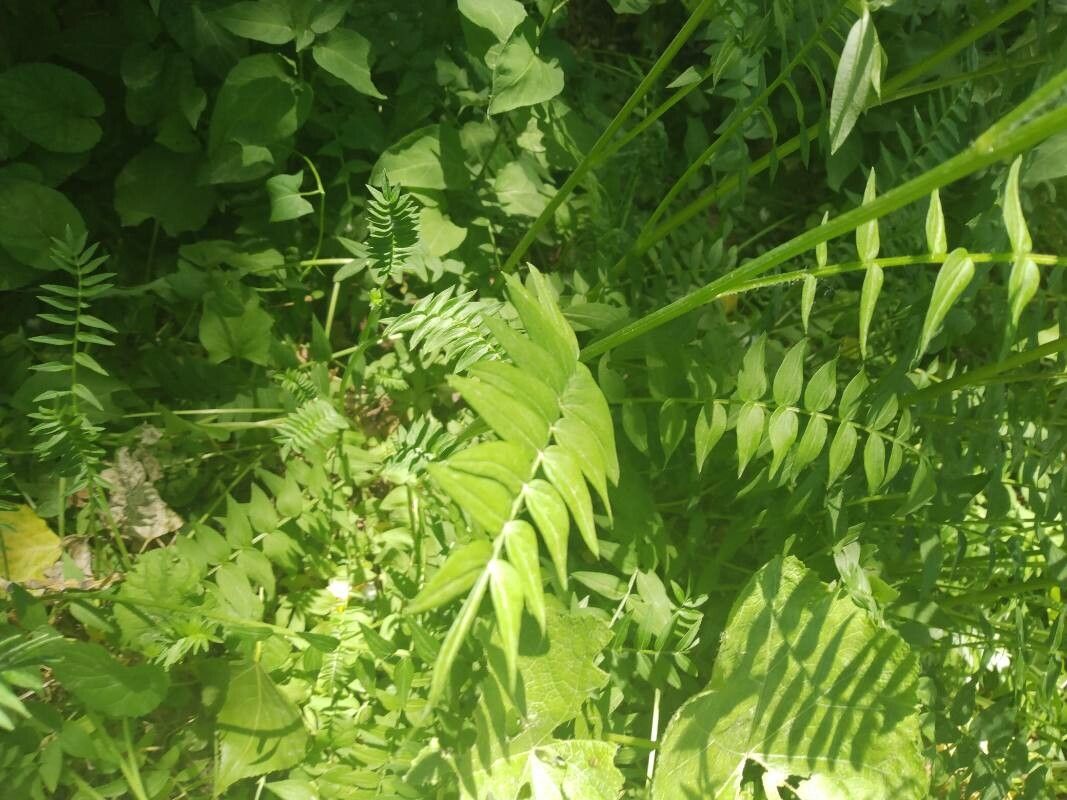
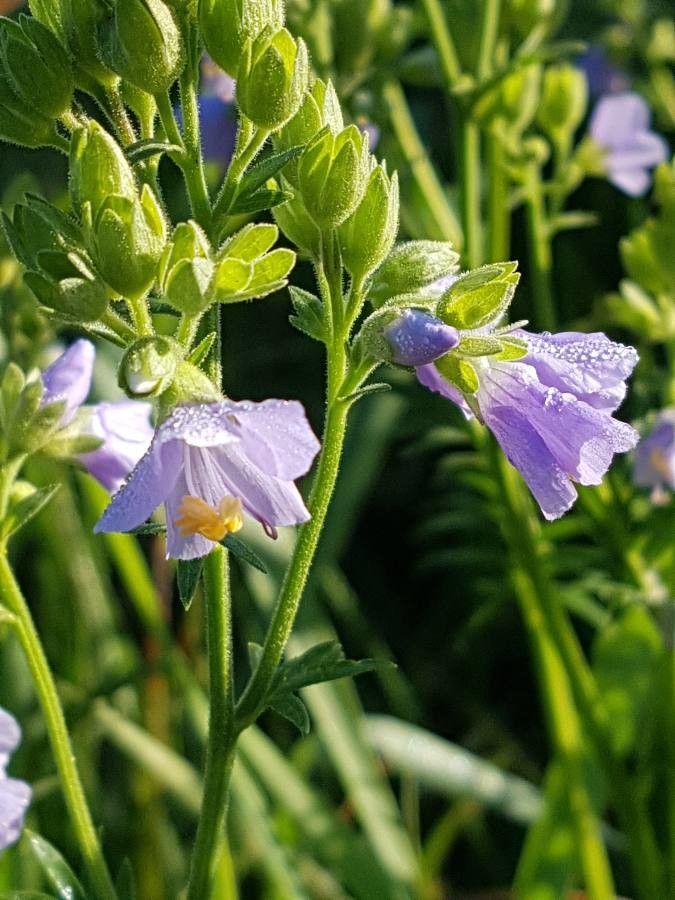
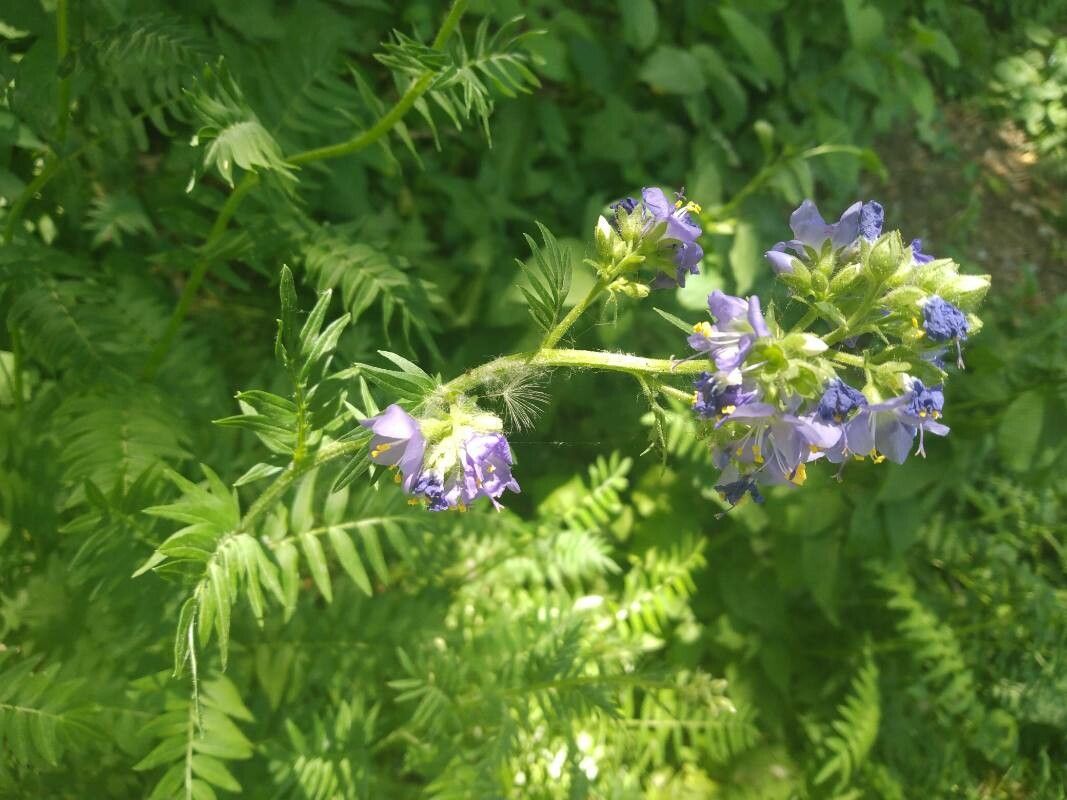
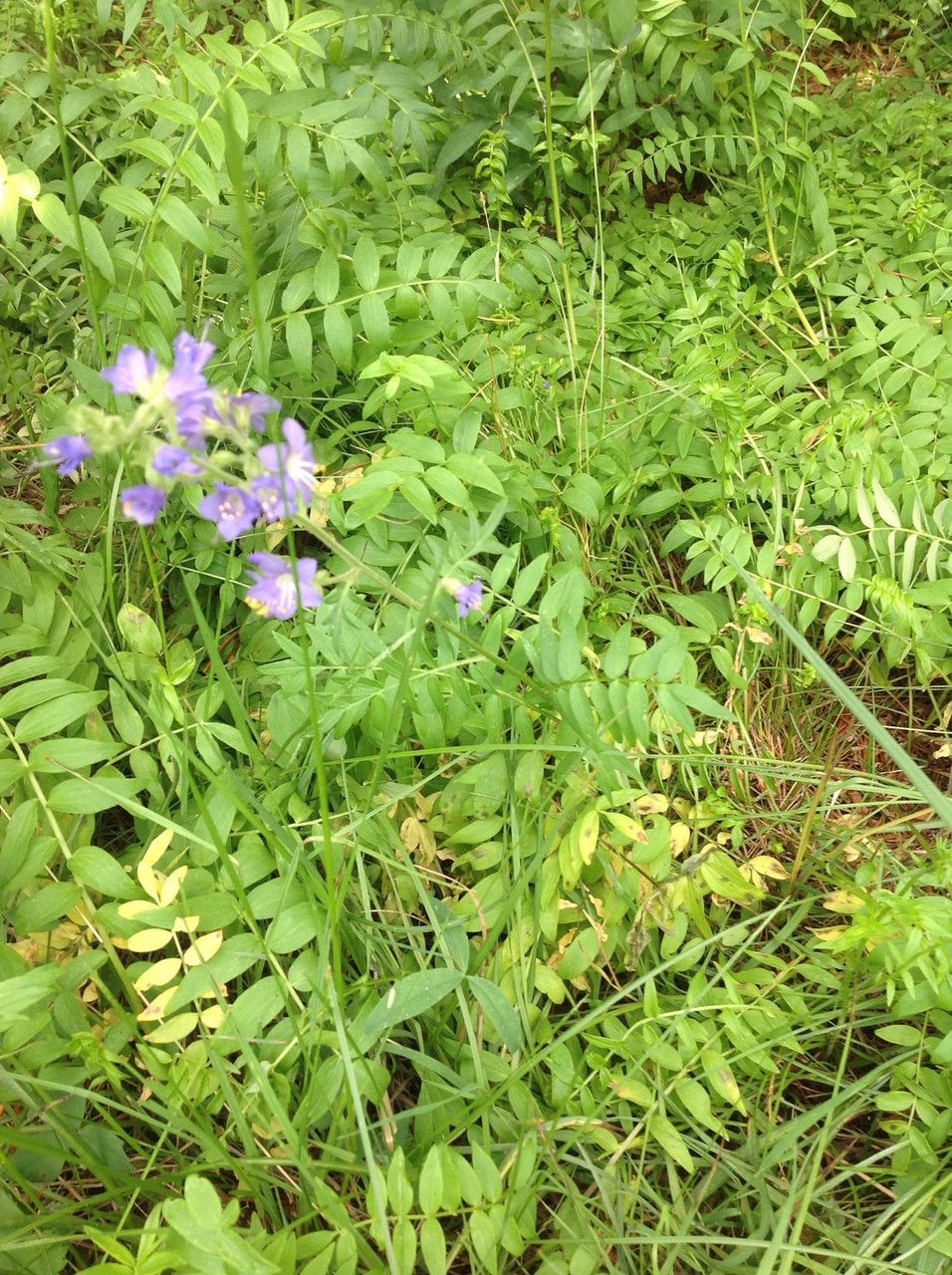
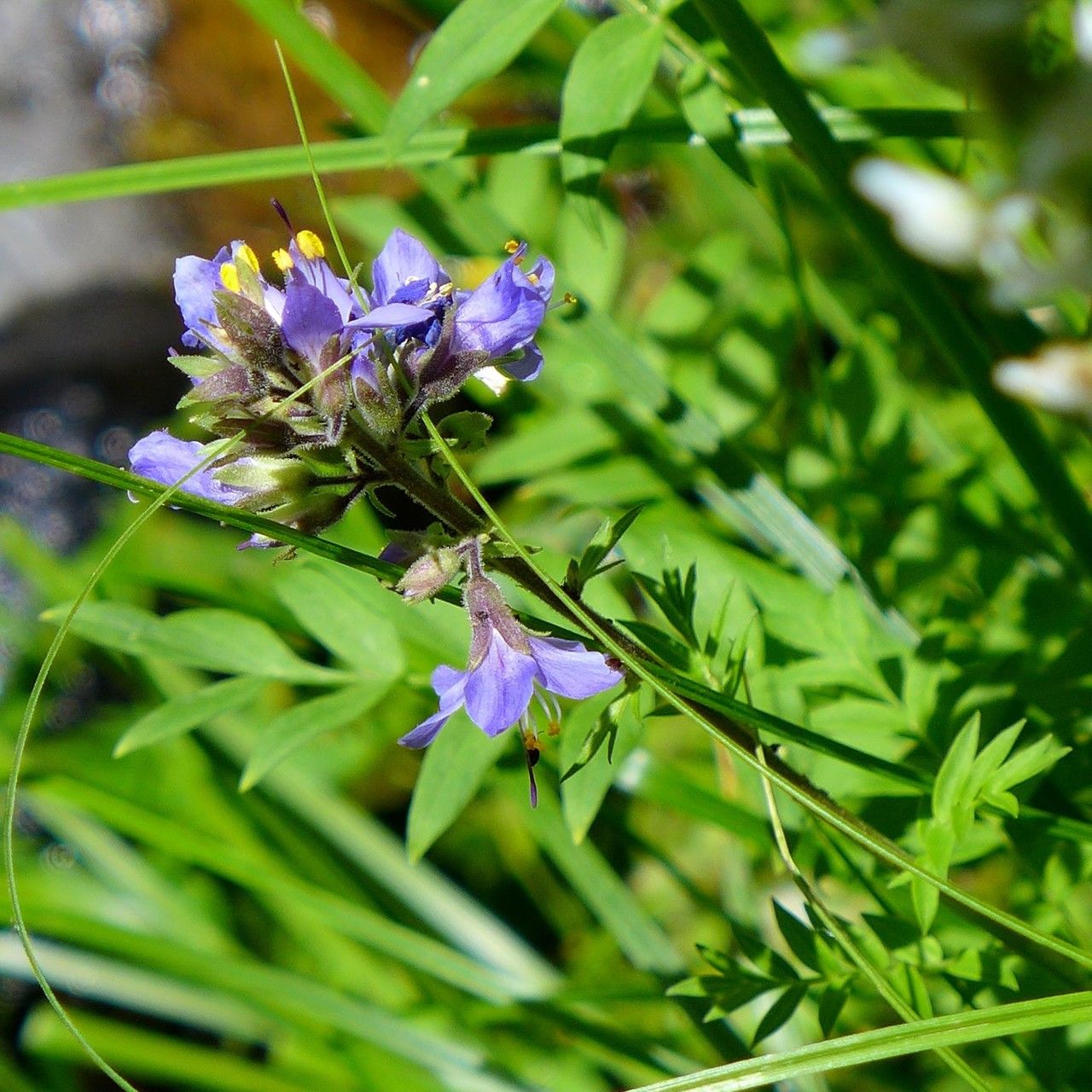
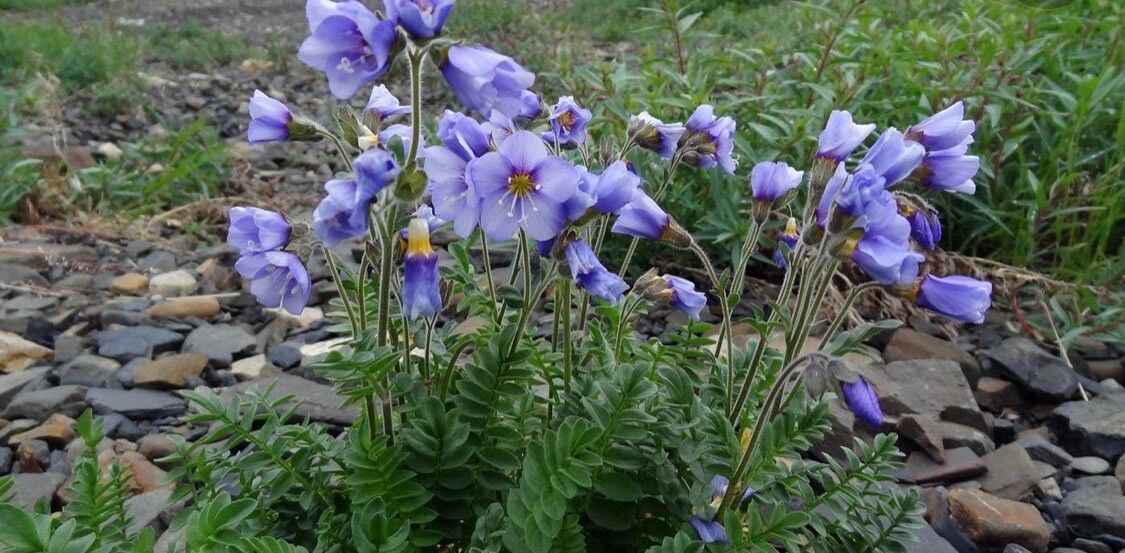
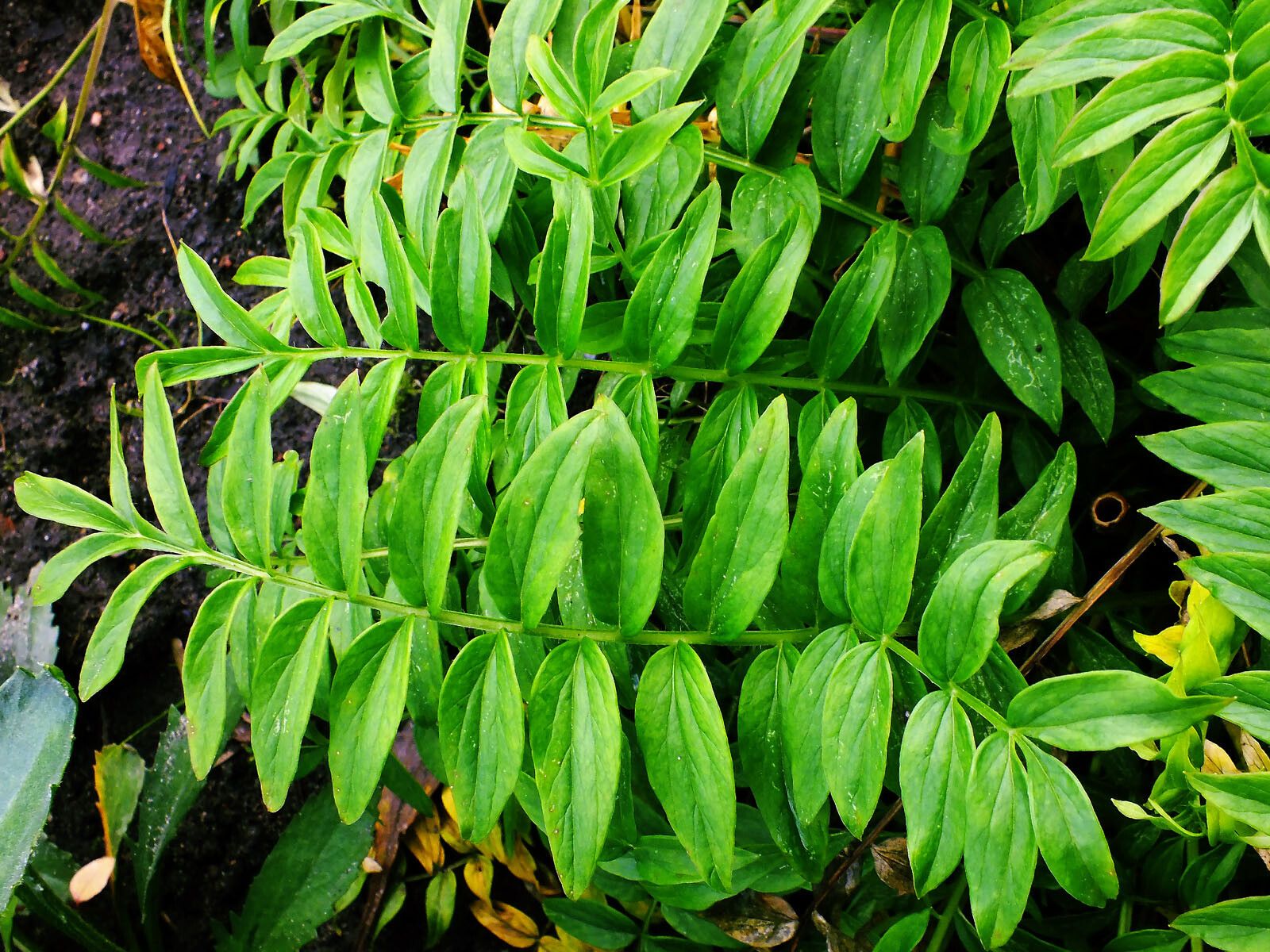
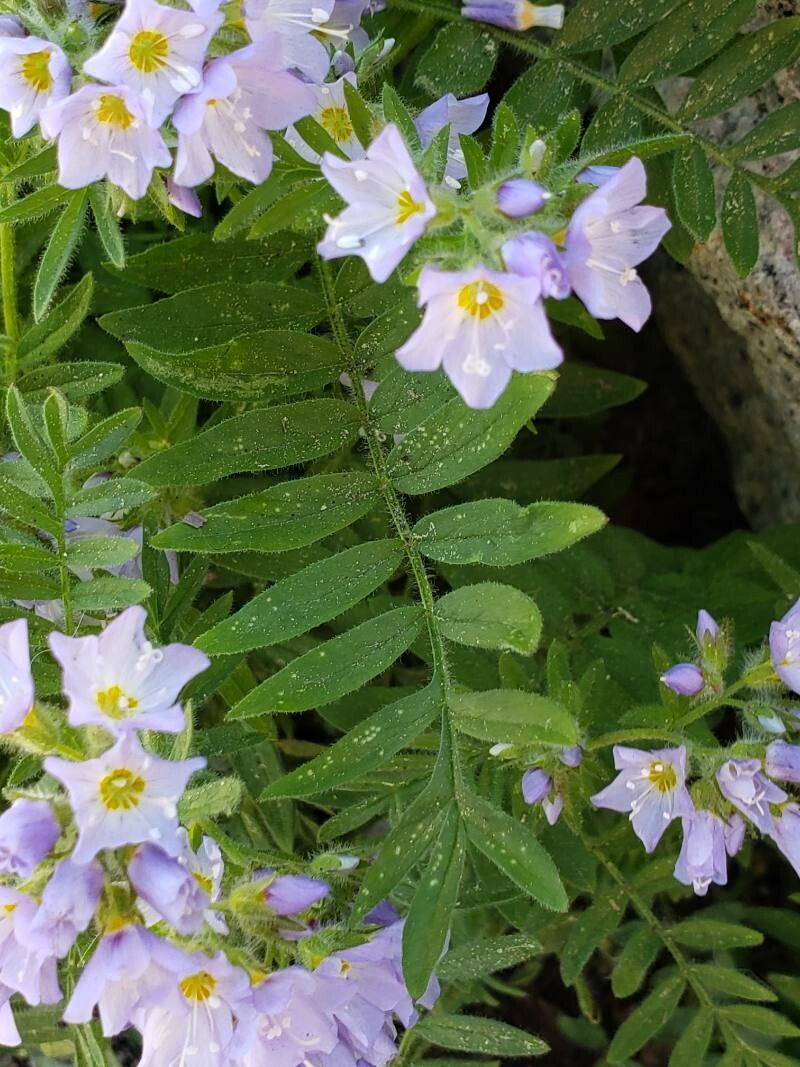
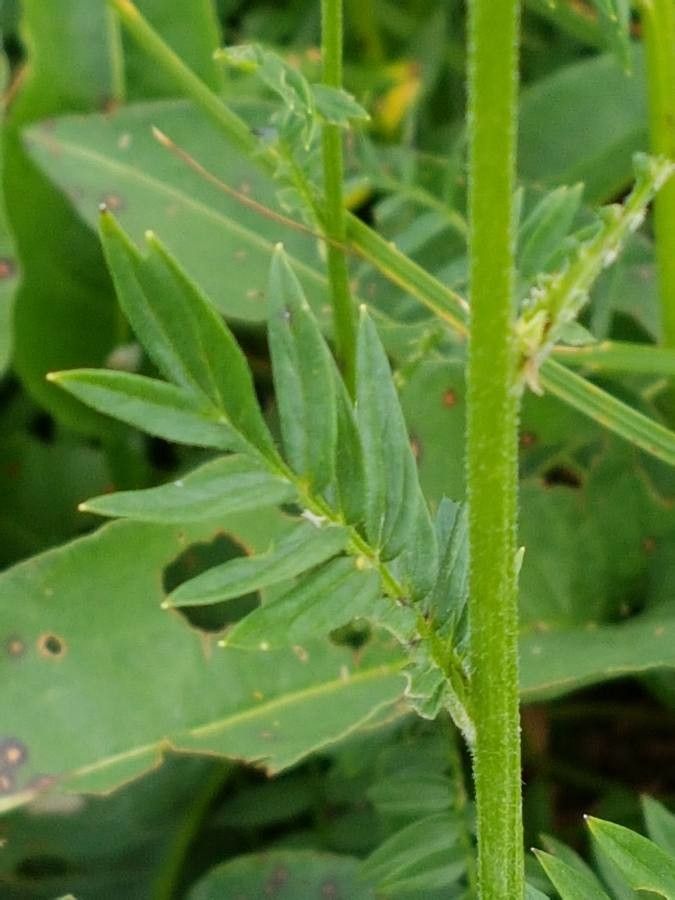
Polemonium occidentale is a species of flowering plant in the phlox family known by the common names western polemonium and western Jacob's-ladder. There are two subspecies. The common ssp. occidentale is native to western North America from British Columbia to Colorado to California, where it can be found in moist areas of many habitat types, including meadows and woodlands. There is also a rare subspecies, ssp. lacustre, which is known only from a total of three counties in Minnesota and Wisconsin, and is found only in white cedar swamp habitat there.This is a rhizomatous perennial herb producing an erect stem up to one meter tall. The leaves are located along the stem, each divided into many small lance-shaped leaflets. The inflorescence is an open, elongated array of several bell-shaped, five-lobed flowers each up to 1.5 centimeters long. The flower corolla is blue to bright purple with a white throat.The rare subsp. lacustre faces threats including peat mining in its swamp habitat, herbivory by deer, and alterations in the local hydrology where it grows. There are only five populations of this subspecies.
Western jacob's ladder has good disease resistance and is generally not prone to diseases. However, it can be affected by pests and diseases present in its environment. These infections are usually not severe. Regarding care, this plant requires moderate maintenance. Regular pruning is needed to keep a neat appearance and support healthy growth. Fertilizing can also help encourage flowering. Western jacob's ladder is suitable for anyone with an outdoor area, such as a garden or patio, and does not require extensive care experience. It may need more attention when grown indoors.
How to keep Polemonium Occidentale.
Light
Western Jacob's ladder is native to habitats like forest understories and rocky sites, where it grows with natural shade. It prefers partial sun but can tolerate full sun or full shade, showing its versatile and hardy nature.
Fertilizer
Early spring, when Western jacob's ladder is coming out of dormancy and entering active growth, is the best time to fertilize. Fertilization supplies essential nutrients for healthy growth. Although Western jacob's ladder has relatively low fertilizer needs, an annual application can boost its survival and encourage stronger, longer-lasting flowers.
Pruning
Western Jacob's Ladder is known for its delicate blue flowers and fern-like foliage. To encourage growth and abundant flowering, it's important to prune the plant in early spring. During this time, remove any dead stems and thin out crowded areas. Regular pruning not only improves the plant's appearance but also helps prevent diseases. Be sure to use clean tools to avoid infections, ensuring that your Western Jacob's Ladder thrives throughout the season.
Botanical profile.
- Plant Type
- Herb
- Life Cycle
- Perennial
- Genus
- Polemonium
- Family
- Polemoniaceae
- Hardiness Zone
- 3-8
- Mature Height
- 0.2 m to 1.07 m
- Mature Spread
- 30 cm to 46 cm
- Leaf Color
- Green, Dark Green
- Leaf Type
- Deciduous
- Flower Color
- Lavender
- Flower Size
- 1.52 cm to 2.54 cm
- Bloom Time
- Late spring, Early summer, Mid summer
- Planting Time
- Spring, Summer, Autumn
- Harvest Time
- Late summer, Early fall
Other names.