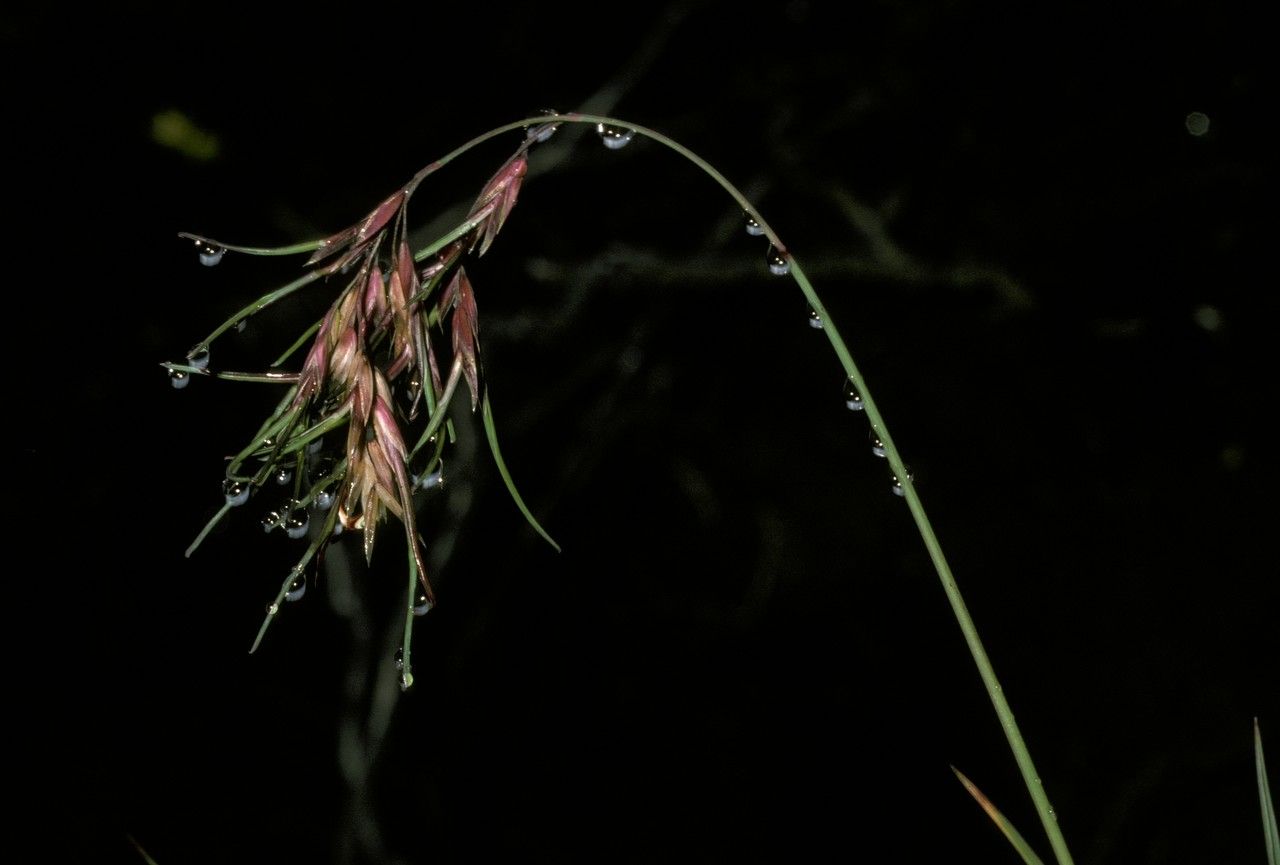
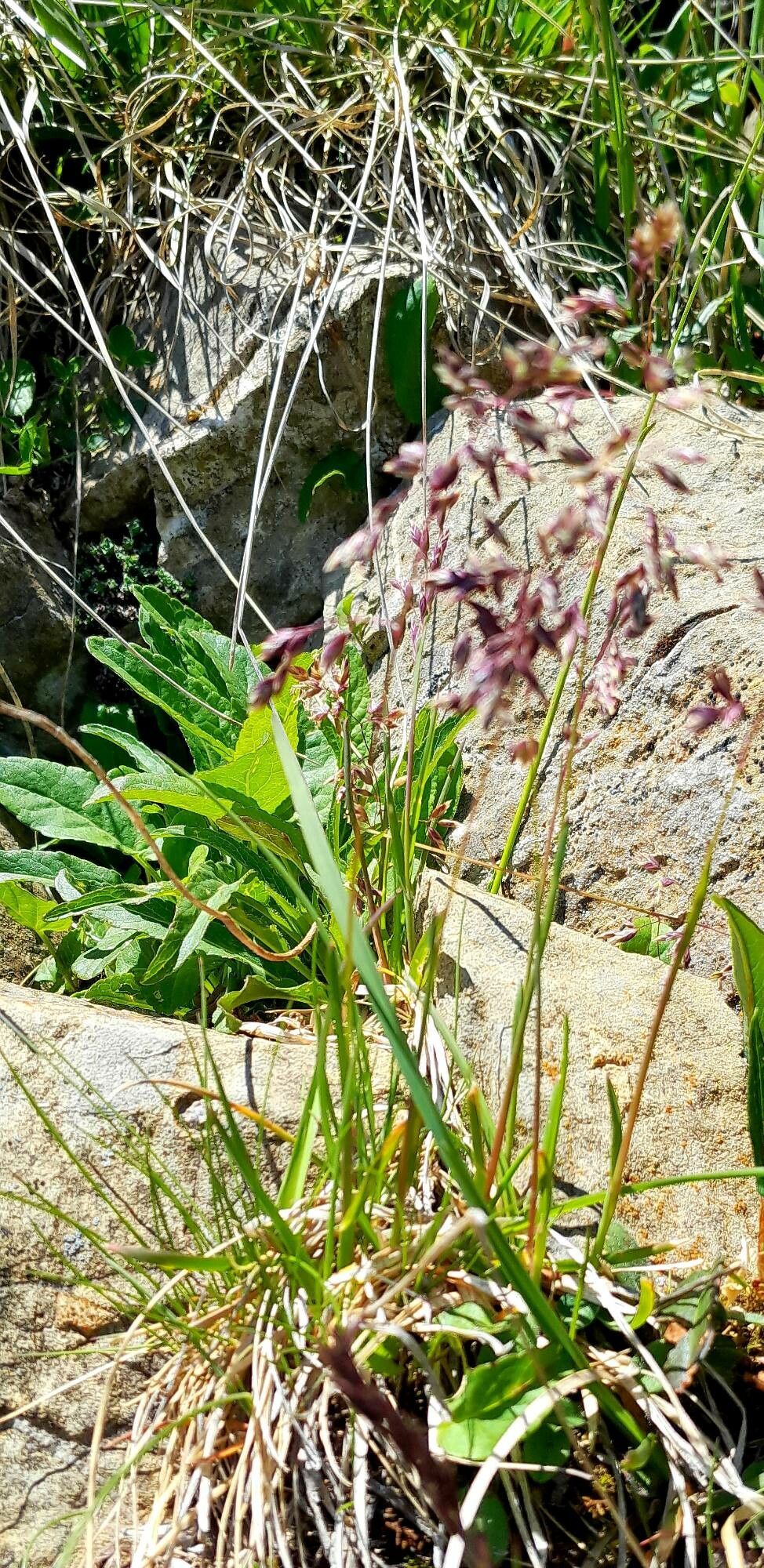
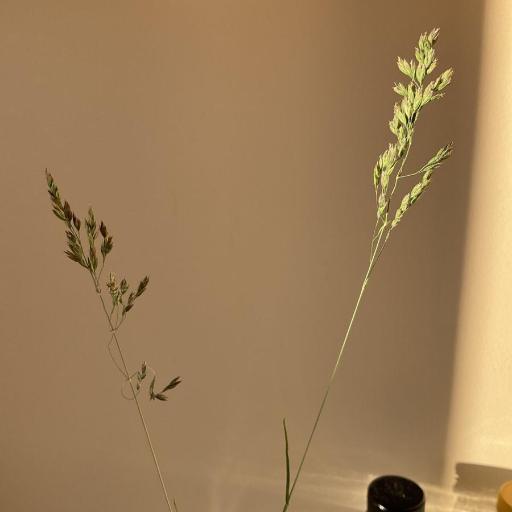
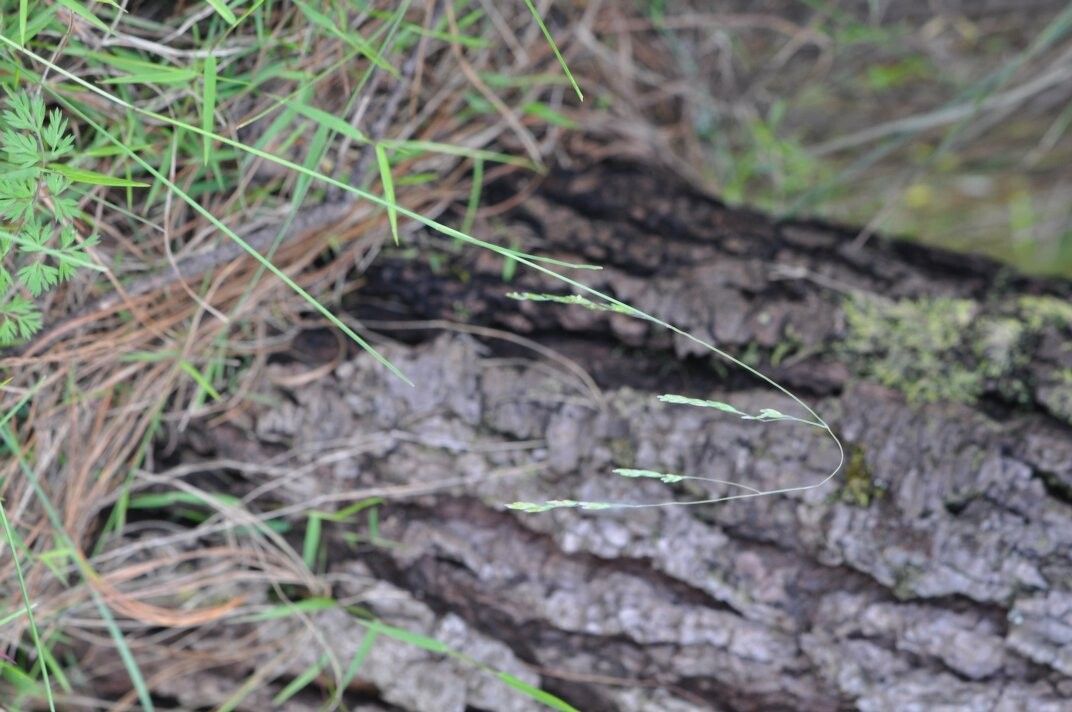
Poa arida is a species of grass known by the common names plains bluegrass and prairie speargrass. It is native to North America, where it occurs throughout western and central Canada and the central United States. It is most common east of the Continental Divide; specimens west are often misidentifications.This perennial grass grows up to 80 centimeters tall. The inflorescence is usually compact, its spikelets containing 3 to 7 flowers each. The grass sometimes has rhizomes. It grows in tufts or clumps or sometimes solitary. It reproduces by seed and by rhizome.The grass grows in many types of habitat in the Rocky Mountains, the Colorado Plateau, the Great Plains, and other adjacent regions. It can be found in grassland, sagebrush, shrubsteppe, and prairie. It can be found in alpine climates and saltgrass plant communities. The northern limit of its distribution is in northern Alberta.
Plains bluegrass is highly resistant to disease and generally not likely to suffer from illnesses. With regard to care, this plant is fairly low-maintenance. When planted outside it needs only minimal watering, and larger plants typically do not need pruning. Smaller plants, though, should be pruned after they have bloomed. Plains bluegrasst is appropriate for anyone with an outdoor area, such as a garden or deck, and does not require extensive care experience.
How to keep Poa Arida.
Light
Plains bluegrass is a sun-loving, perennial herbaceous plant that comes from open habitats and commonly thrives in meadows and grasslands. It favors full sun but can also tolerate partial sun.
Temperature
Plains bluegrass can adjust to a wide range of temperature conditions, but its distribution may still be limited by different combinations of water and heat. It does best in warm summer climates with adequate rainfall or watering. Long stretches of cloudy, rainy weather and extended high temperatures can increase the likelihood of Plains bluegrass dying. In winter, proper protection from cold can improve the plant’s survival rate.
Fertilizer
Plains bluegrass needs extra nutrients to encourage healthy new growth. In spring, putting compost around the plant’s base can effectively supply the nutrition it requires. Fertilizing helps support vigorous growth and improves the plant’s resistance to diseases and pests.