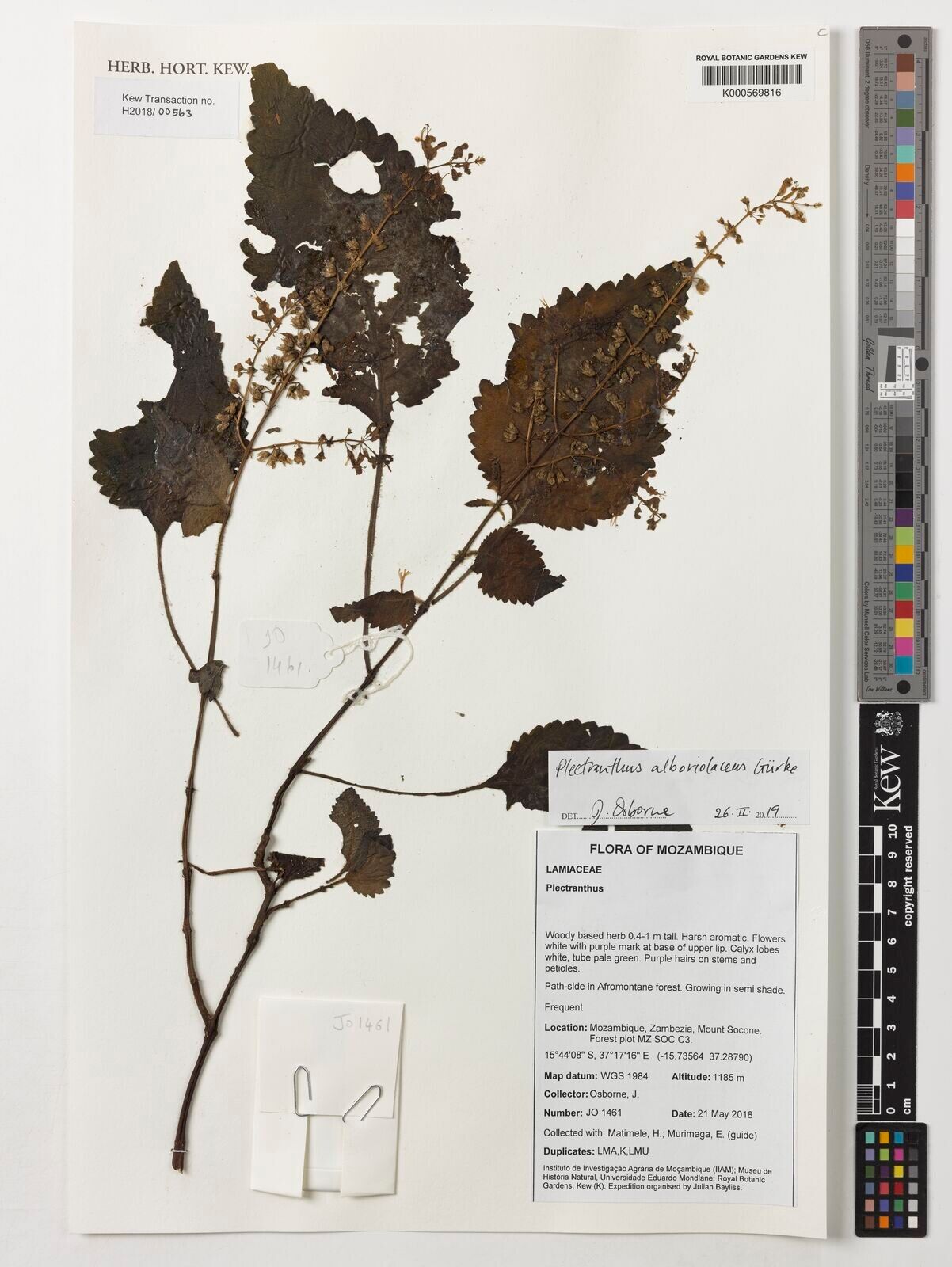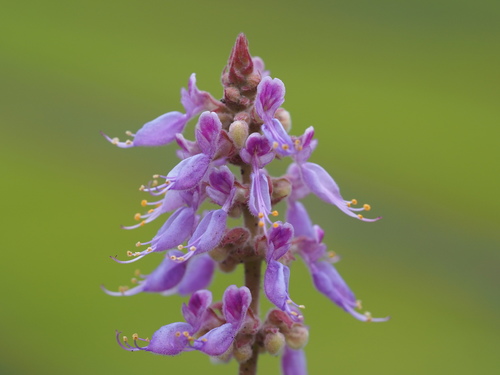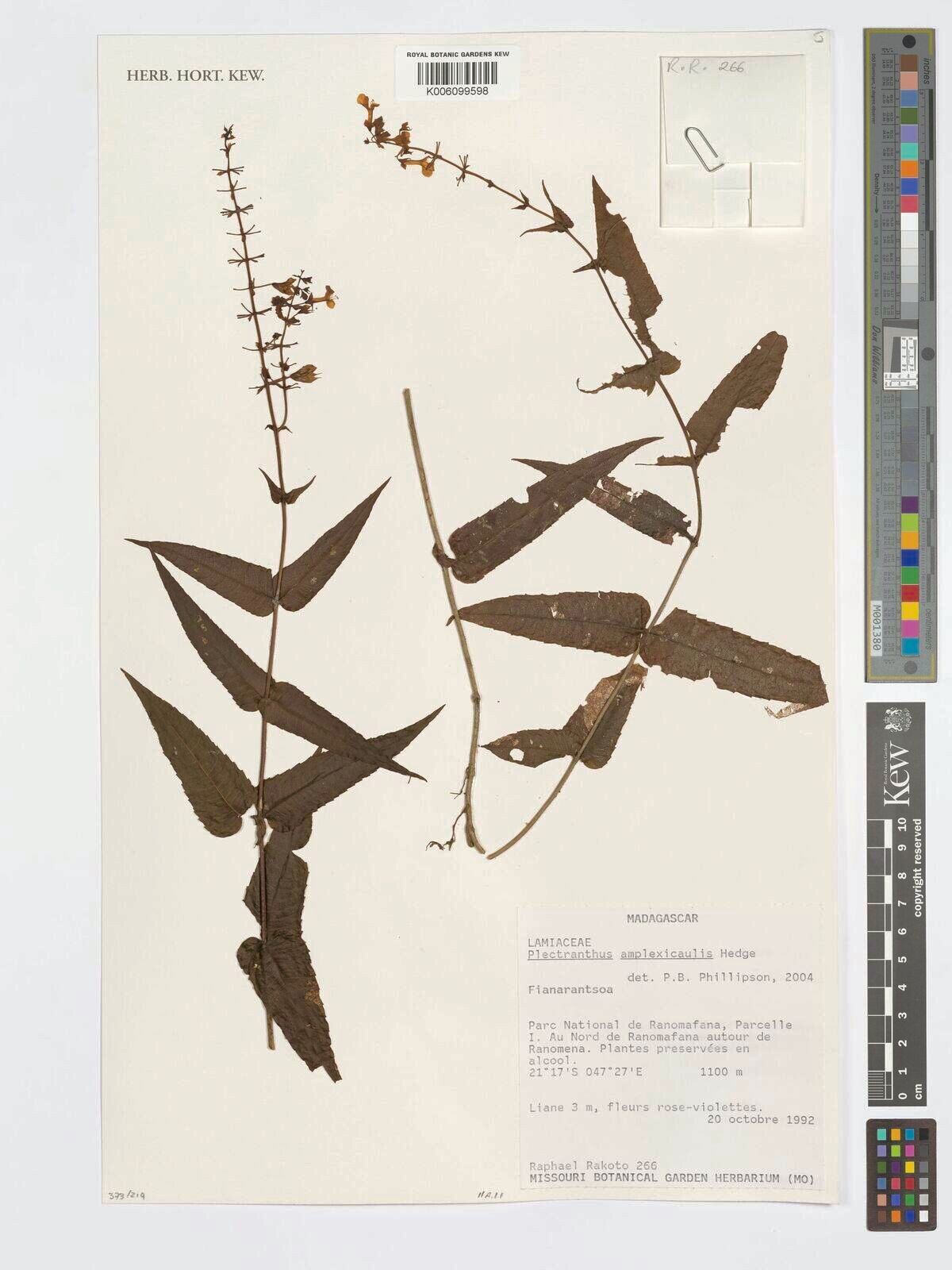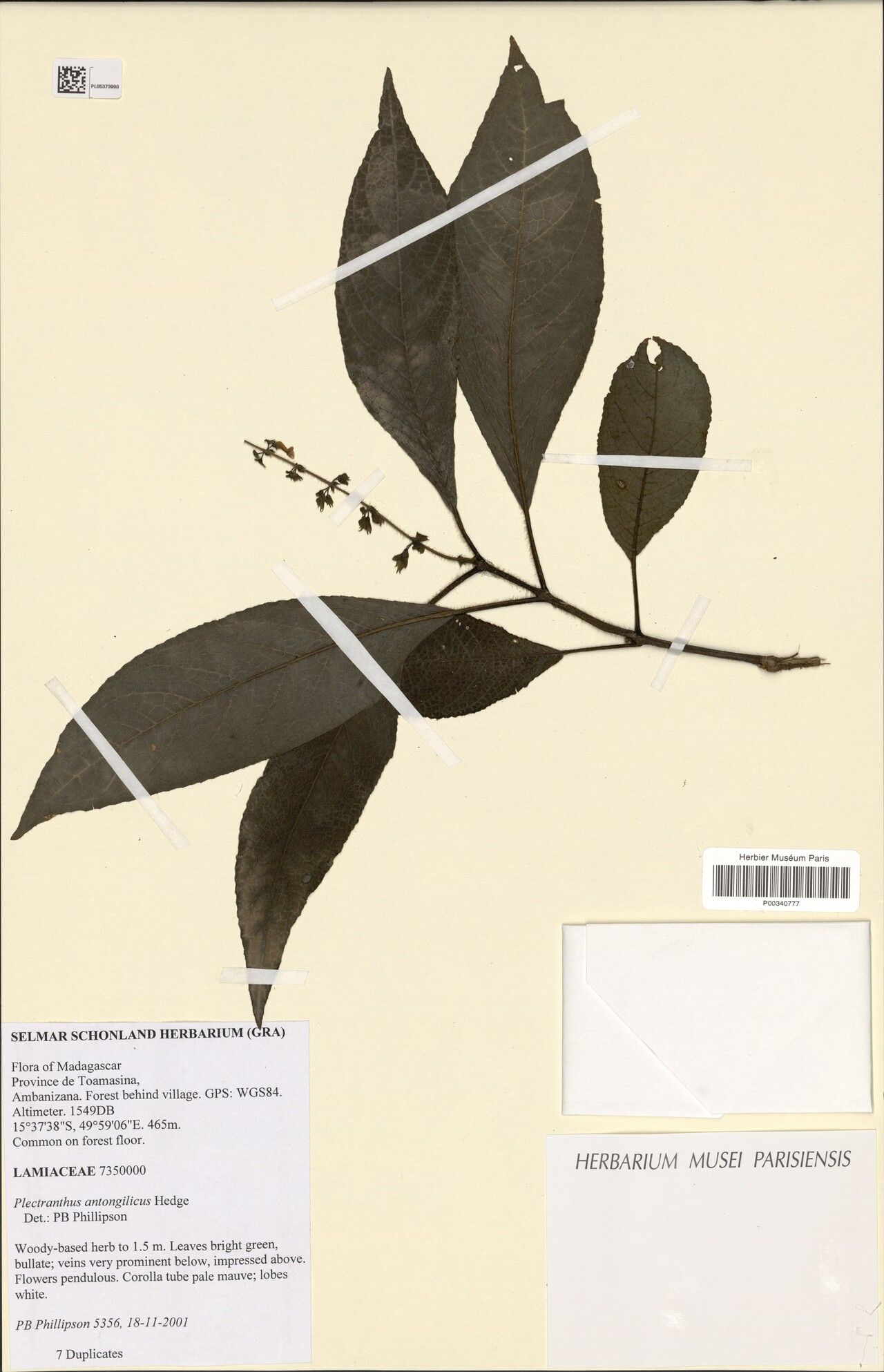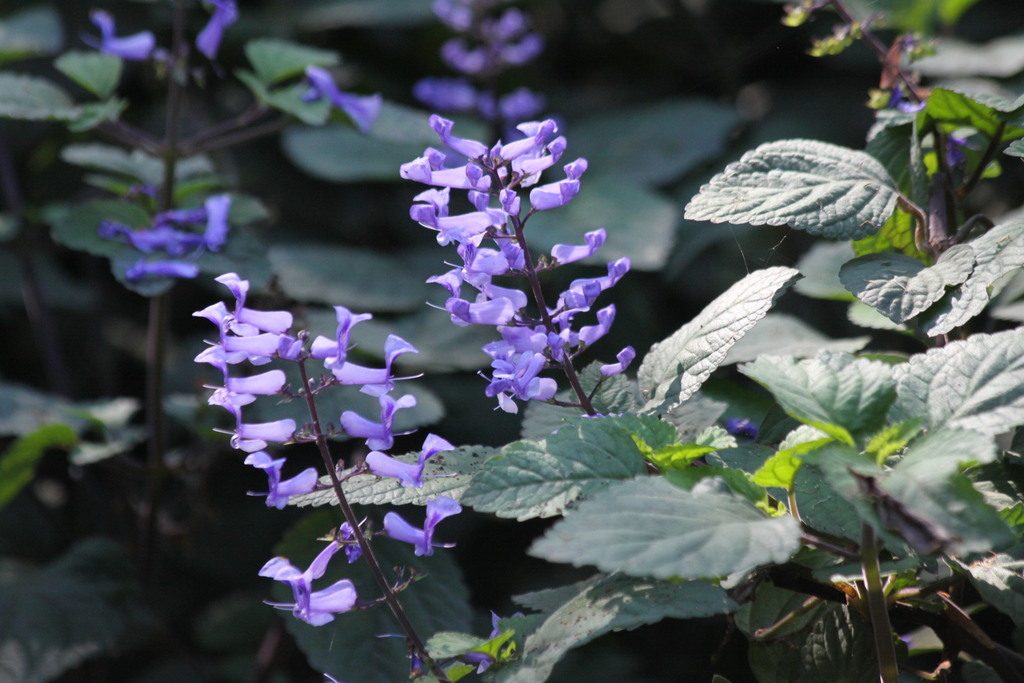
Plectranthus zuluensis is a perennial herbaceous plant belonging to the mint family, Lamiaceae. Native to South Africa, it typically grows in rocky areas and on cliffs. The plant features a woody stem that can reach up to 1 meter in height, with leaves that are green on the top and purple underneath. These leaves are aromatic when crushed.
This plant produces small, tubular flowers that are either white or pale pink with purple spots. The blooming season extends from late summer through early autumn.
Traditionally, the Zulu people of South Africa have used Plectranthus zuluensis for medicinal purposes, treating ailments such as coughs, colds, headaches, and stomach problems.
In addition to its medicinal uses, Plectranthus zuluensis is also popular as an ornamental plant due to its attractive foliage and flowers. It prefers well-drained soil and can thrive in either partial shade or full sun.
In summary, Plectranthus zuluensis is a versatile plant with both medicinal and ornamental value. Its ability to adapt to various growing conditions makes it a superb addition to any garden or landscape design project.
Zulu Spurflower is generally disease-resistant and not usually prone to illnesses. However, it can be susceptible to pests and diseases present in its surroundings. These infections are generally not severe. In terms of care, the plant requires moderate maintenance. It should be pruned regularly to maintain a good appearance and healthy growth. Fertilization can also help encourage flowering. Zulu Spurflower is suitable for anyone with outdoor space, such as a garden or patio, and does not demand a lot of care experience. It may require more care when grown indoors.
How to keep Plectranthus Zuluensis.
Light
Zulu Spurflower originates from habitats like forest understories or rocky areas, where it grows in natural shade. It prefers partial sun but can adjust to full sun or complete shade, illustrating its versatile and hardy nature.
Temperature
Zulu Spurflower is fairly adaptable to temperature, tolerating higher heat and wider temperature fluctuations. In hot conditions, attention should be paid to watering and providing suitable shade to avoid sunburn. Conversely, Zulu Spurflower is not very cold-hardy. It can endure some chill, but very low temperatures may cause frost damage.
Fertilizer
The best time to fertilize a Zulu Spurflower is in early spring, when it is coming out of dormancy and beginning active growth. Fertilization supplies essential nutrients needed for healthy development. Although Zulu Spurflower has relatively low fertilizer requirements, applying fertilizer annually can improve its survival and encourage better, longer-lasting flowers.
Botanical profile.
- Plant Type
- Herb
- Life Cycle
- Perennial
- Genus
- Plectranthus
- Family
- Lamiaceae
- Hardiness Zone
- 9-11
- Mature Height
- 46 cm
- Mature Spread
- 91 cm
- Leaf Color
- Yellow, Green
- Leaf Type
- Evergreen
- Flower Color
- Lavender
- Flower Size
- 1.02 cm to 1.52 cm
- Bloom Time
- Mid summer, Late summer, Early fall
- Planting Time
- Spring, Summer, Autumn
- Harvest Time
- Fall
- Native Area
- South Africa, Eswatini