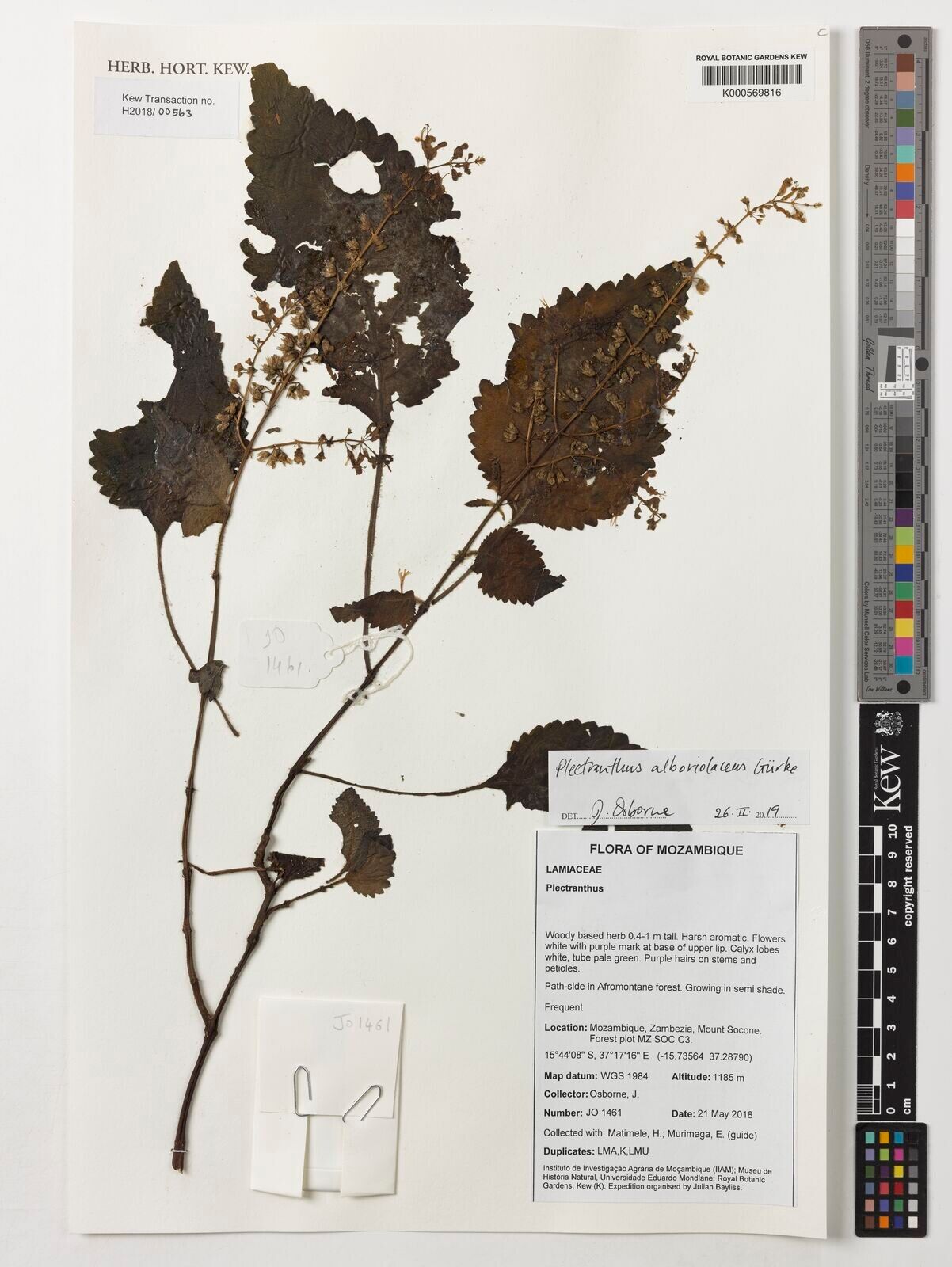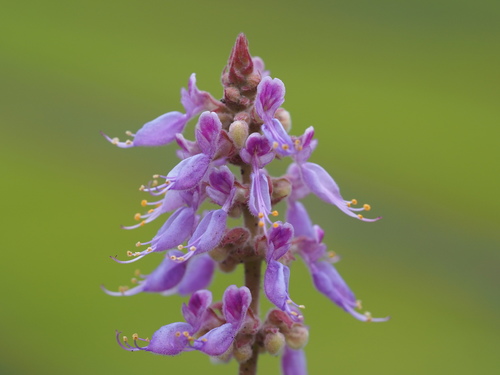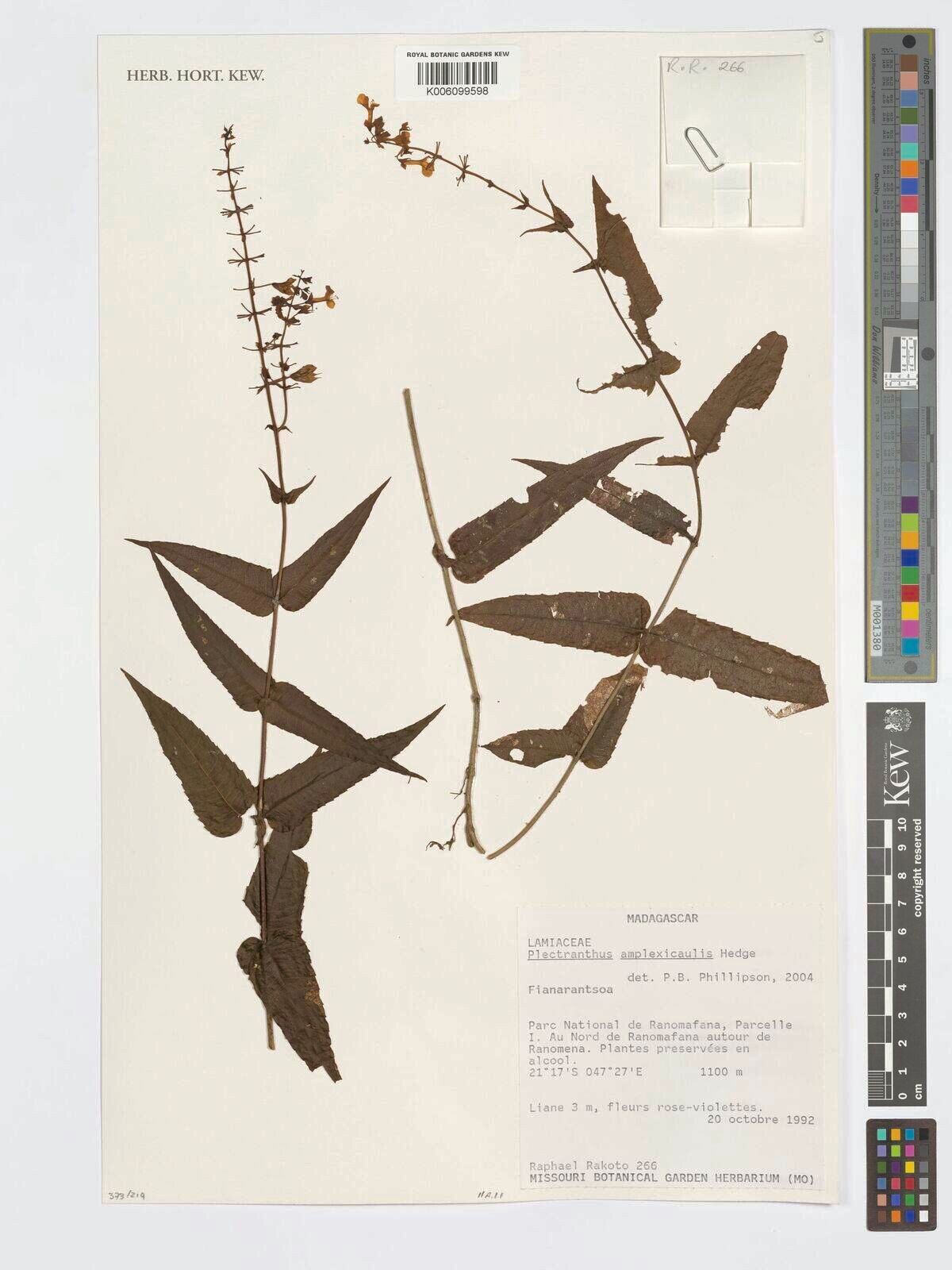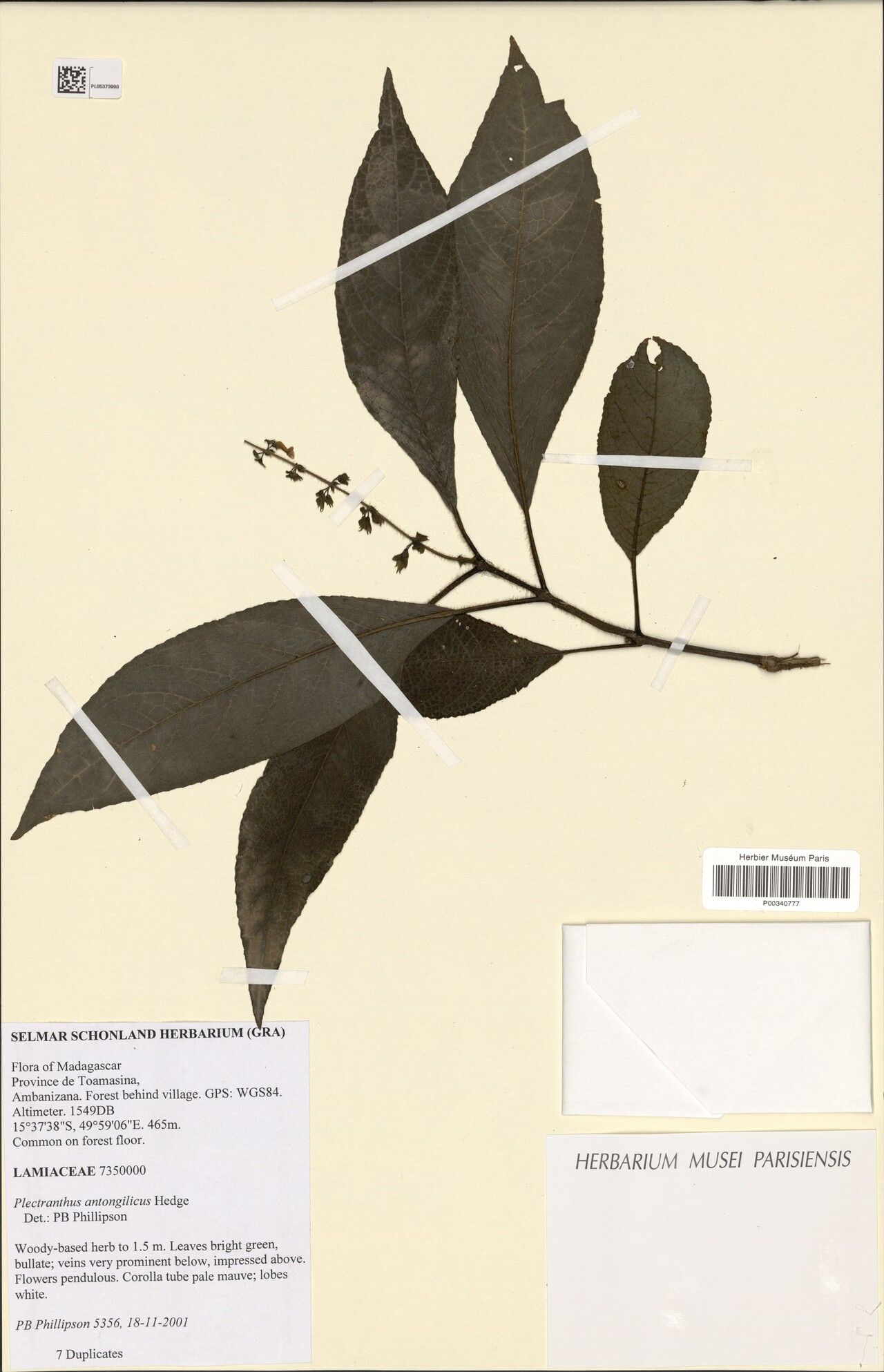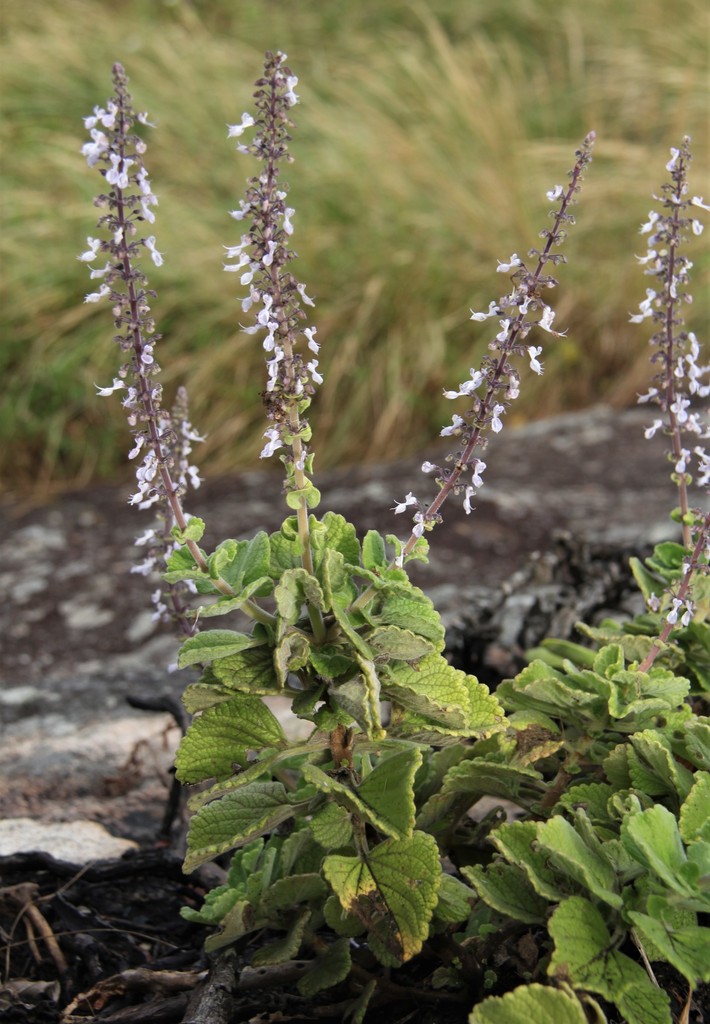
Coleus madagascariensis, synonym Plectranthus madagascariensis, called thicket coleus, Madagascar coleus and candle plant (a name shared with many other species), is a species of flowering plant in the family Lamiaceae. It is native to South Africa, eSwatini, Mozambique, Mauritius and Réunion, but not Madagascar. Its cultivar 'Variegated Mintleaf' has gained the Royal Horticultural Society's Award of Garden Merit.
Common thicket spurflower has strong resistance to disease and is usually not vulnerable to illnesses. However, it can be affected by pests and diseases present in its environment. These problems are generally mild. Regarding care, this plant requires a moderate level of maintenance. It should be trimmed regularly to keep a tidy appearance and support healthy growth. Using fertilizer can also help encourage flowering. Common thicket spurflower is appropriate for anyone with outdoor space, such as a garden or patio, and does not demand much experience in plant care. It may need more attention when grown indoors.
How to keep Plectranthus Madagascariensis.
Light
Common thicket spurflower does best in spots that receive abundant sunlight throughout the day, yet it can tolerate areas with reduced light. In the wild, it occupies well-lit locations. Too much or too little light can interfere with its healthy growth, causing it to look weak or faded.
Water
The common thicket spurflower flourishes in subtropical environments, where consistent moisture is essential. To avoid over-saturation, it should be watered weekly. As an evergreen plant, it requires regular hydration to keep its foliage healthy. Usually cultivated indoors, the common thicket spurflower thrives in a humid atmosphere that mimics its natural habitat.
Temperature
Common thicket spurflower is native to habitats with temperatures from 68 to 100 °F (20 to 38 °C). Its provenance indicates a preference for warm conditions, making it well suited to regions with similar climates. Seasonal adjustments are usually unnecessary, except when temperatures drop sharply.
Fertilizer
Correct feeding is essential for the Common thicket spurflower's health and appearance. Apply fertilizer during the summer, repeating the treatment every month throughout the season. Nutrients drive growth and support the plant's structures. Feeding improves the Common thicket spurflower's flower display, helping it produce the finest blooms.
Pruning
The common thicket spurflower benefits from pruning in early spring to remove damaged branches and encourage a bushier growth. Shaping the plant in late spring helps maintain a compact appearance. Regular pruning enhances air circulation, reduces the risk of disease, and stimulates robust regrowth. Make sure to use clean, sharp tools for optimal results. Avoid heavy pruning when the plant is at its peak growth stage.
Pot & Repot
Repot the common thicket spurflower every 2-3 years in the spring to promote optimal growth. Select a larger container and make sure to keep the soil consistently moist, but be careful not to overwater. Place the plant in bright, indirect light to help it adjust to its new environment. Handle the plant gently during repotting to ensure a smooth transition.
Botanical profile.
- Plant Type
- Herb
- Life Cycle
- Perennial
- Genus
- Plectranthus
- Family
- Lamiaceae
- Hardiness Zone
- 11
- Mature Height
- 61 cm
- Mature Spread
- 61 cm
- Leaf Color
- Green, Blue, White, Variegated
- Leaf Type
- Semi-evergreen
- Flower Color
- Lavender
- Flower Size
- 2.54 cm
- Bloom Time
- Late spring, Early summer, Mid summer
- Planting Time
- Spring, Autumn
- Harvest Time
- Mid summer, Late summer
Other names.
Reader questions.
How should I water my Common thicket spurflower?
To properly water the Common thicket spurflower, use filtered water at room temperature. Tap water may have harmful particles, so filtered water is preferred. Since this plant originates from a warm environment, it is best to avoid using cold water, which could be a shock to its system. Additionally, overhead watering should be avoided as it can cause issues with the foliage. Instead, water the plant by applying filtered room temperature water directly to the soil, ensuring that the soil is fully soaked. This method benefits the plant by moisturizing the roots and aiding in the spread and absorption of nutrients.
Why do I have to put fertilizer on my Common thicket spurflower?
All plants, including the Common thicket spurflower, rely on soil nutrients for growth. However, it's not always guaranteed that the soil will have all the necessary nutrients. To make sure your garden plants get the nutrients they need, fertilization and soil amendments are important. For the Common thicket spurflower, fertilization is necessary to support the development of healthy roots and stems during the growing season. It also helps the plant have beautiful leaves, which are its main ornamental feature.
What are the sunlight requirements for Common thicket spurflower?
Common thicket spurflower thrives in full sunlight, requiring more than 6 hours of sunlight daily for optimal growth. It can also tolerate partial sun, which means about 3-6 hours of sunlight. It's essential to observe how sunlight moves through your garden to find spots with the perfect balance of light and shade, ensuring the plants' wellbeing and growth.
What is the ideal temperature range for growing Common thicket spurflower?
The Common thicket spurflower thrives in temperatures ranging from 68 to 100 °F (20 to 38 °C), indicative of its preference for warmer climates. Seasonal adjustments are typically not required, but it's crucial to protect the plant from extreme cold temperatures. During winter, it's advisable to maintain the environment above 20°C and ensure the plant is kept indoors near a bright window, away from direct heat sources to avoid damage.
What should I do if I give too much or too little water to my Common thicket spurflower?
Both overwatering and underwatering can harm your Common thicket spurflower, but overwatering is more common. When this plant gets too much water, its stems and leaves may wilt and turn yellow. Overwatering for a long time can also lead to diseases like root rot, mold, and mildew, which can kill your plant. Underwatering is less likely as the Common thicket spurflower can handle drought, but it can happen. Signs of underwatering include brittle, brown leaves. It's important to notice signs of overwatering early and take action. Some diseases caused by overwatering, like root rot, are irreversible if not addressed promptly. If you see early signs of overwatering, reduce watering immediately. Check the soil quality too; if it drains poorly, replace it with a loose, well-draining potting mix. If you notice signs of underwatering, simply water more regularly until the signs go away.
When should I fertilize my Common thicket spurflower plant?
The Common thicket spurflower requires the most fertilizer when it is actively growing, which is usually during spring, summer, and early fall. Starting from the end of winter, you should feed it every two to four weeks until fall. As fall approaches, you can gradually decrease the amount of fertilizer until you stop completely before winter, when the plant's growth slows down significantly.
How does artificial lighting support Common thicket spurflower's growth?
Artificial lighting is crucial for the growth of Common thicket spurflower, especially when natural sunlight is insufficient, like during winter or in less sunny spaces. LED lights are a popular choice because they can provide specific wavelengths needed by plants. For full sun plants, 30-50W per square foot is recommended; for partial sun plants, 20-30W per square foot; and for full shade plants, 10-20W per square foot. The light should be placed 12-36 inches above the plant for 8-12 hours per day to mimic natural sunlight conditions.
How does low temperature affect Common thicket spurflower and what should I do?
Common thicket spurflower is sensitive to low temperatures, preferring environments above 20°C and requiring conditions to be kept above 10°C during winter to prevent damage. Exposure to temperatures below 5°C can cause the leaves to lighten in color, and frost damage may result in the leaves turning brown or black, along with wilting and drooping. To mitigate frost damage, trim off the damaged parts and relocate the plant to a warmer spot indoors, ideally near a south-facing window, while avoiding too close proximity to heaters or air conditioning vents to prevent air dryness.
How frequently do I need to water my Common thicket spurflower?
If your Common thicket spurflower is in a pot, the best way to check if it needs water is to stick your finger in the soil. If the top two to three inches of soil are dry, it's time to water it. If you're growing the plant outdoors in the ground, you can use a similar method to test the soil. Once the first few inches of soil have dried out, it's time to water it. In spring and early fall, you'll usually need to water the plant about once a week. In extremely hot weather, you may need to water it twice a week or even more. However, mature, well-established Common thicket spurflower plants can handle drought well.
When is the best time to not fertilize my Common thicket spurflower?
Keep feeding your Common thicket spurflower regularly throughout most of the year, including spring, summer, and most of fall. The only time to pause is if your plant has received too much fertilizer or has been fertilized incorrectly, causing fertilizer burn or other issues. Make sure to remedy these problems before resuming regular feeding. During winter, when the plant is dormant, it is unnecessary and unhelpful to fertilize. This can also cause fertilizer burn, especially if you are growing it indoors in a cold winter climate.
What are the symptoms of light deficiency in Common thicket spurflower?
Symptoms of light deficiency in Common thicket spurflower include small or maturing leaves, leggy or sparse growth, faster leaf drop, slower or halted new growth, and leaves that may appear lighter or develop irregular color patterns, indicating a lack of chlorophyll and essential nutrients. Conditions like chlorosis, sunscald, leaf curling, wilting, and leaf scorching can also manifest when the plant is exposed to incorrect light conditions, whether it's too much or too little light.
What should I do if the Common thicket spurflower experiences high temperatures or sunburn?
In the summer, it's important to ensure that the Common thicket spurflower is not exposed to temperatures exceeding 38°C, as high temperatures above 43°C can result in lighter leaf colors and increased susceptibility to sunburn. If sunburn occurs, trim away the sunburned or dried parts, move the plant to a shaded area away from the intense midday and afternoon sun, and water the plant during cooler times like the morning and evening to maintain soil moisture.