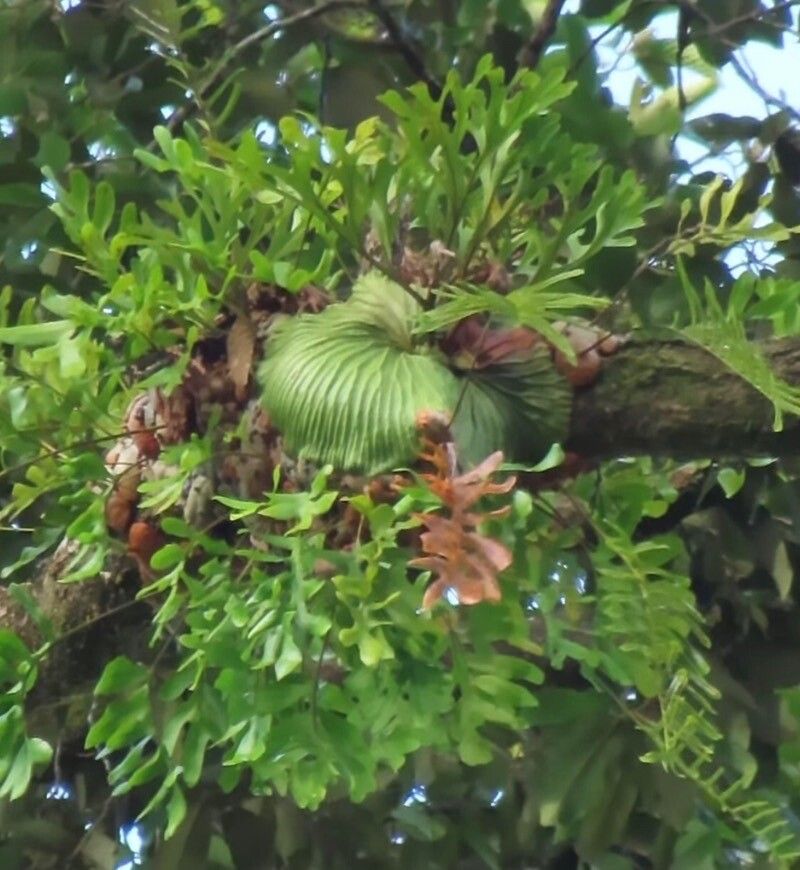
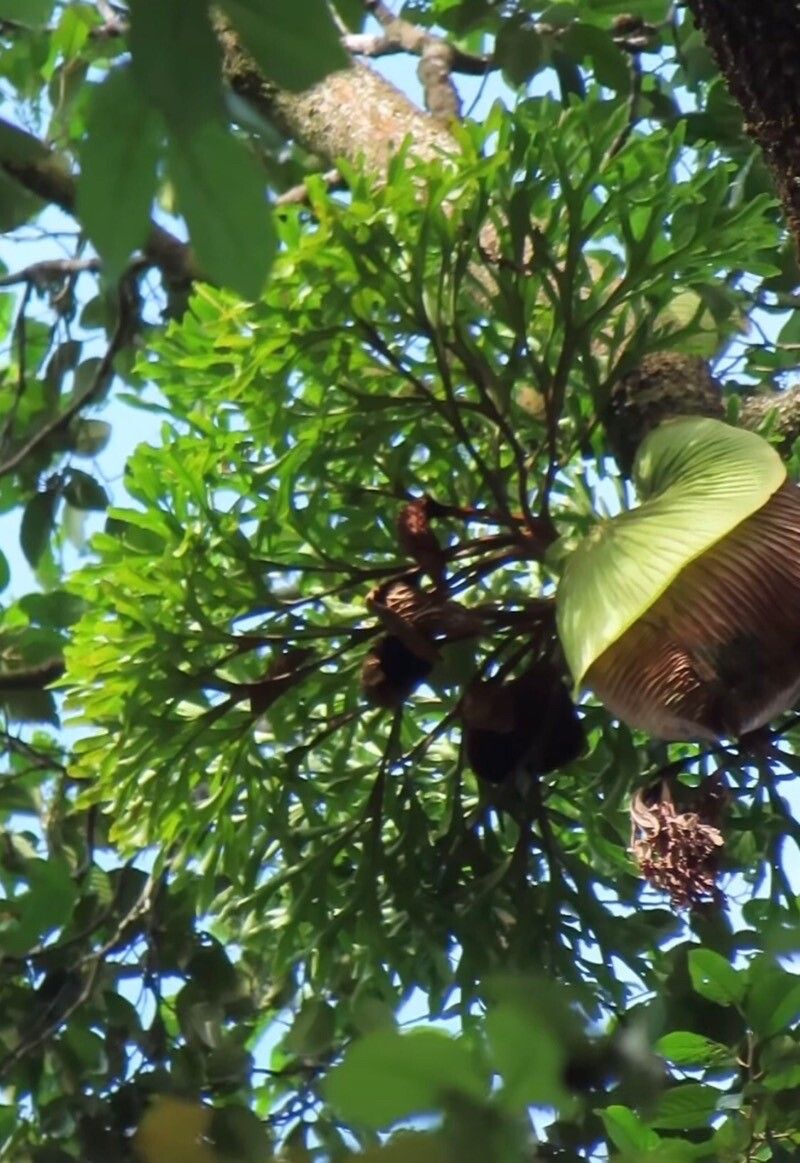
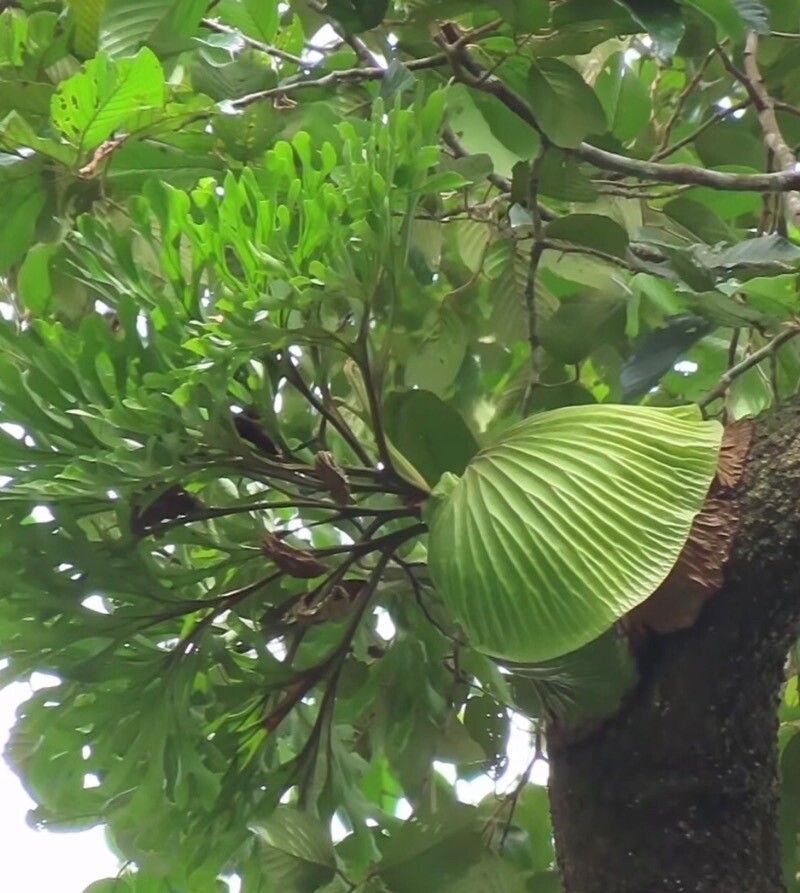
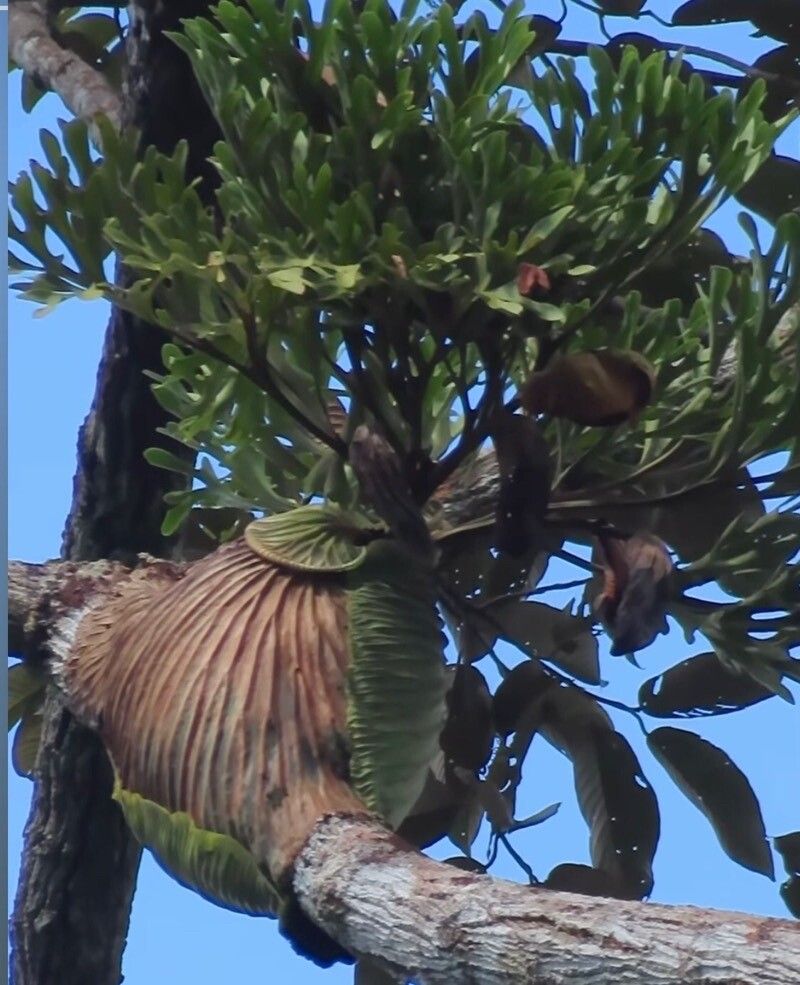
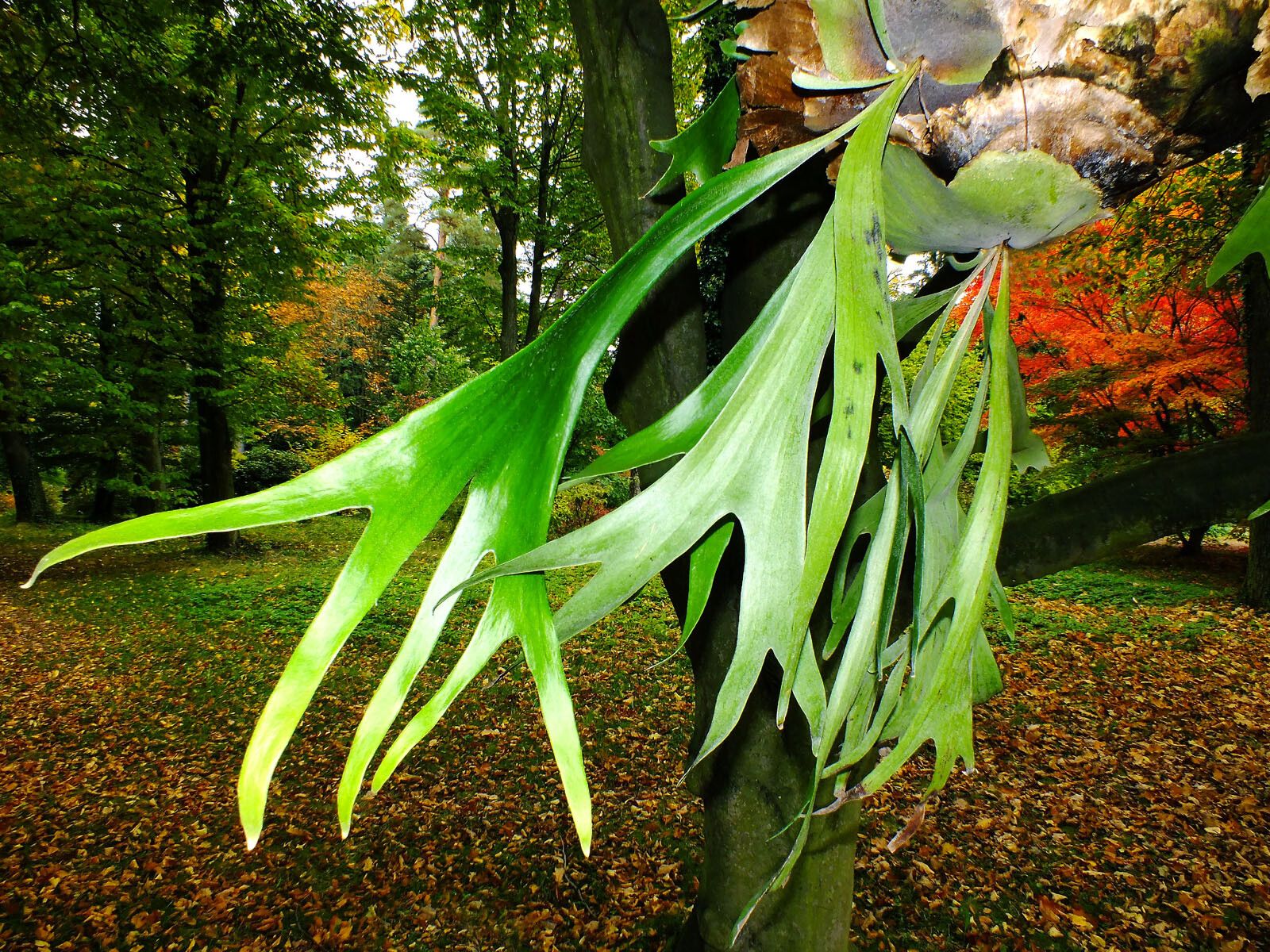
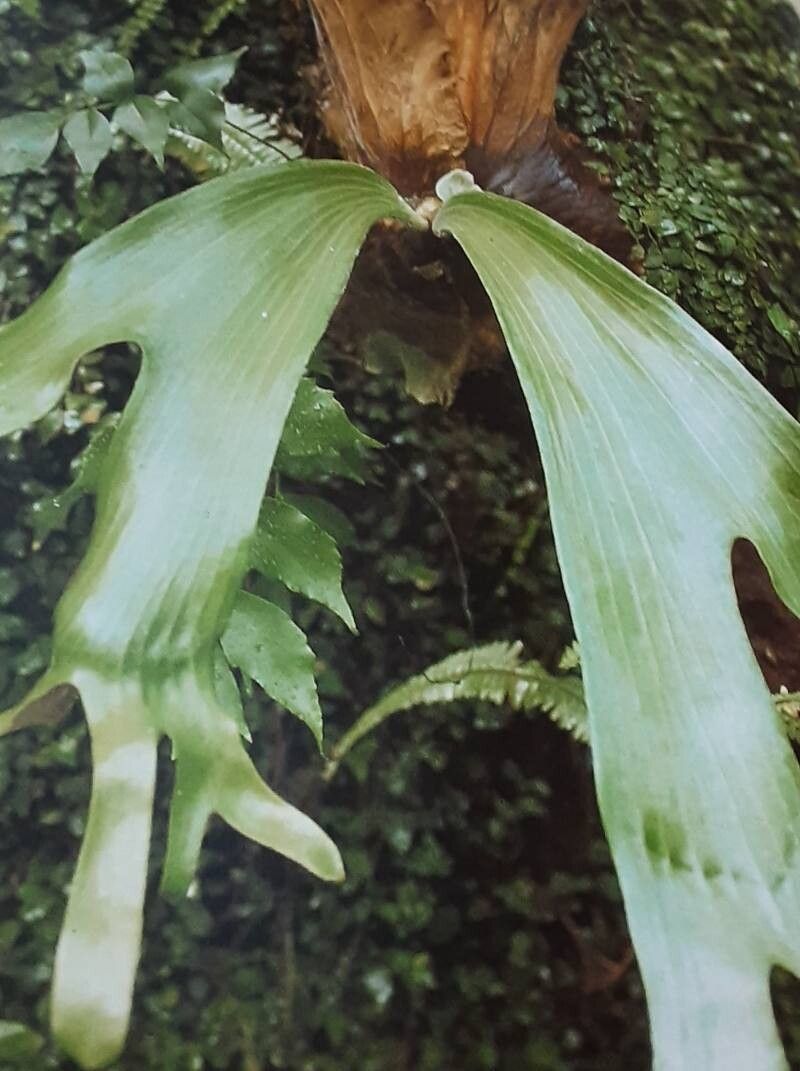
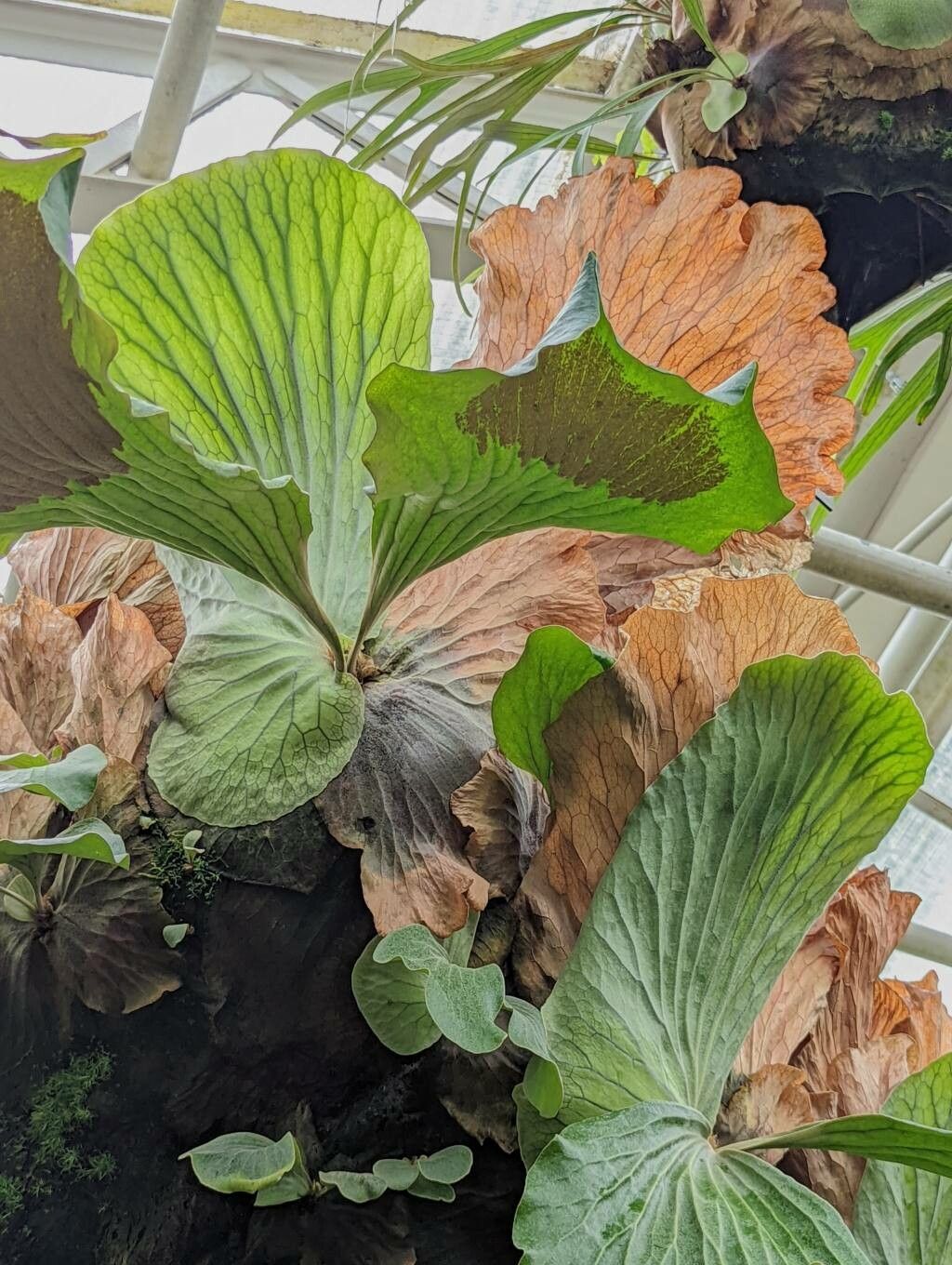
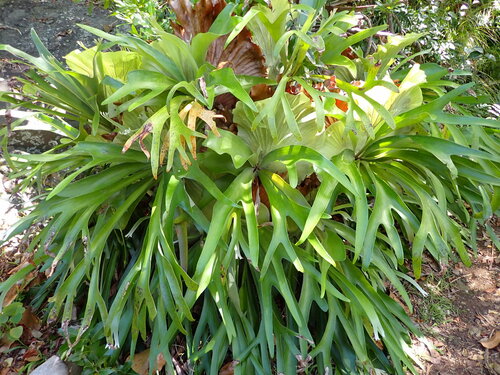
Ridley's staghorn fern typically resists disease well and is affected by relatively few insect pests. Its care is regarded as difficult because it requires a moist environment and frequent watering. However, the roots can rot if the plant is overwatered or if the environment lacks good ventilation. Ridley's staghorn fern is appropriate for people with some growing experience, since most individuals can keep it alive for a certain amount of time. Nevertheless, it may struggle to thrive, and its leaves can dry out and become less healthy as time passes.
How to keep Platycerium Ridleyi.
Light
The staghorn fern of Ridley species naturally thrives in habitats such as forest understories or rocky terrains that provide natural shelter from the sun. Though it prefers Full Shade for optimal sunlight conditions, it is also capable of tolerating Partial Sun.
Water
Platycerium ridleyi does best with regular watering, typically once a week during the warmer months. Make sure the soil dries out and the fronds wilt slightly before watering again. In winter, reduce watering to twice a month. Maintaining humidity is essential; mist only the new green leaves and avoid misting the darker, dry leaves, as they are responsible for producing spores.
Temperature
The Ridley's staghorn fern is native to tropical areas where the climate is consistently hot and moist. Consequently, it has acclimated to high heat and high levels of humidity. It does not take well to abrupt shifts in temperature and thrives best in steady temperature conditions, thus avoiding frequent changes in indoor conditions is key. It generally can't withstand low temperatures and needs warmth for optimal growth. Should the surrounding temperature plummet excessively, the fern might halt growth or potentially perish.
Pruning
Platycerium ridleyi is a low-maintenance plant, but it doesn't handle heavy pruning well. Only remove any fronds that are damaged, and be careful not to cut nearby plants that contribute to its nutrition. To prevent overcrowding and promote healthy growth, regularly separate any offshoots.
Pot & Repot
When you're ready to repot Ridley's staghorn fern, opt for a pot that's 1-2 inches (2.5-5 cm) larger and has sufficient drainage. Utilize a potting mix that drains well. Do the repotting in the spring or fall, making sure that the fern's root ball sits a bit lower than the pot's rim. After repotting, water the plant adequately and position it in a warm area where it will receive indirect sunlight.
Botanical profile.
- Plant Type
- Fern
- Life Cycle
- Perennial
- Genus
- Platycerium
- Family
- Polypodiaceae
- Hardiness Zone
- 10-12
- Mature Height
- 49 cm to 91 cm
- Mature Spread
- 0.61 m to 1.22 m
- Leaf Color
- Forest Green, Dark Green
- Leaf Type
- Evergreen
- Planting Time
- Spring, Summer, Autumn
- Native Area
- Indonesia, Singapore, Malaysia, Thailand
Other names.