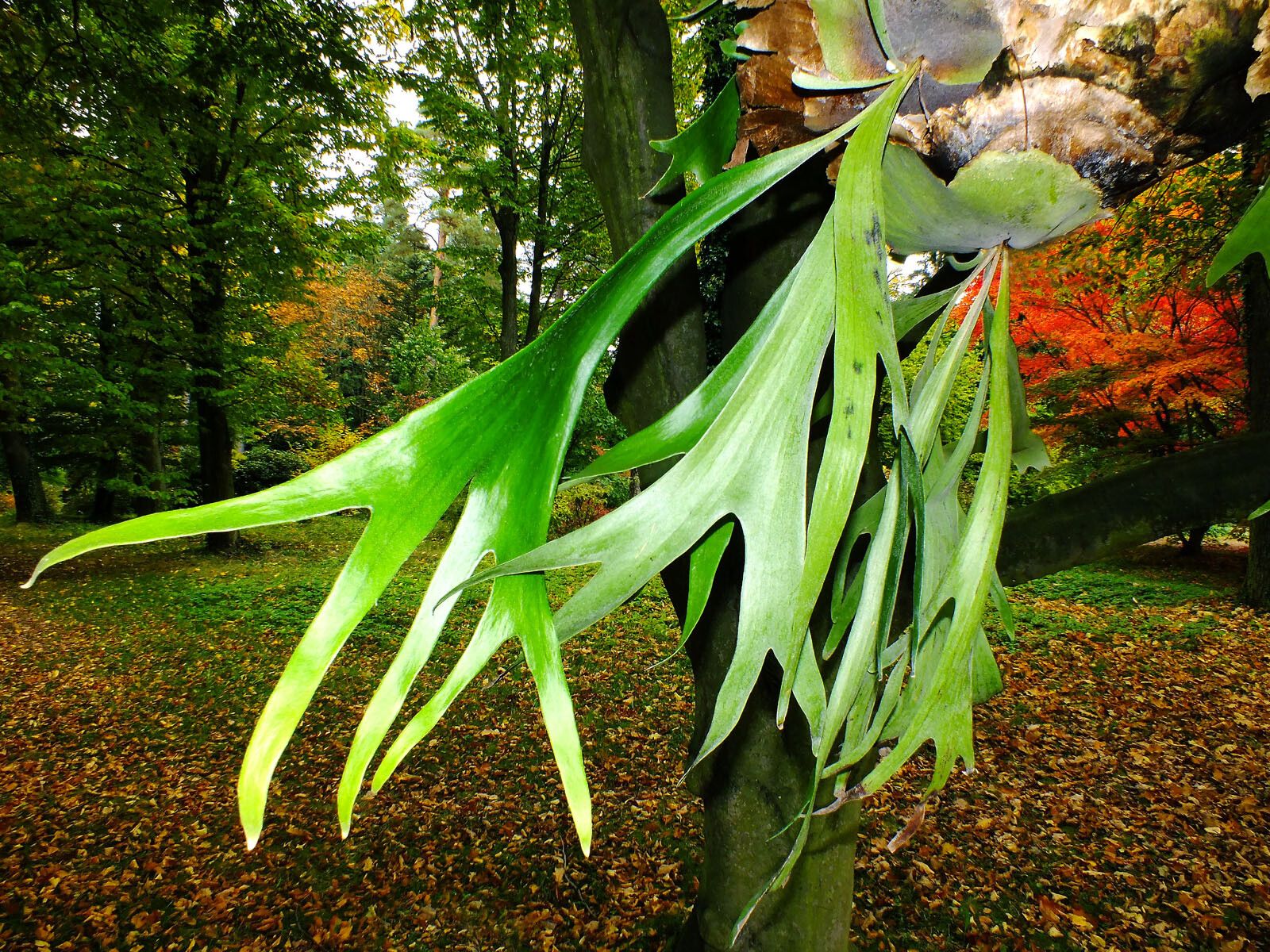
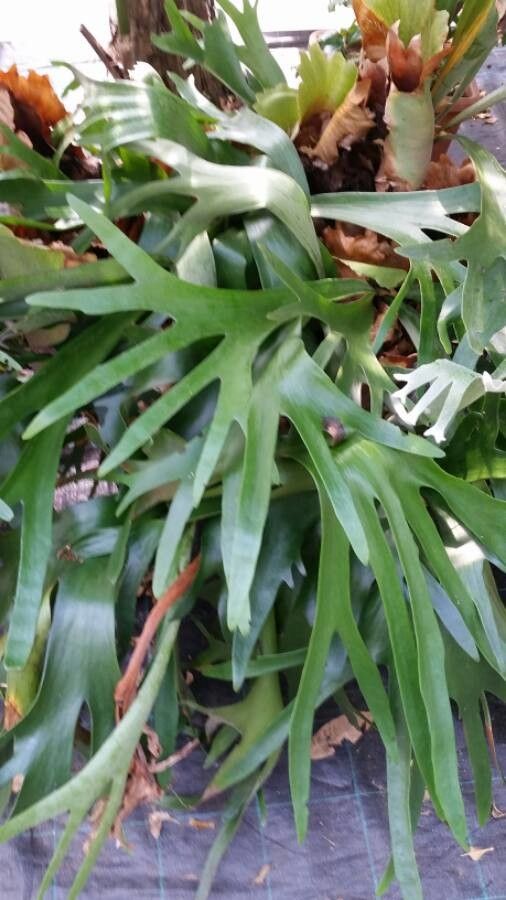
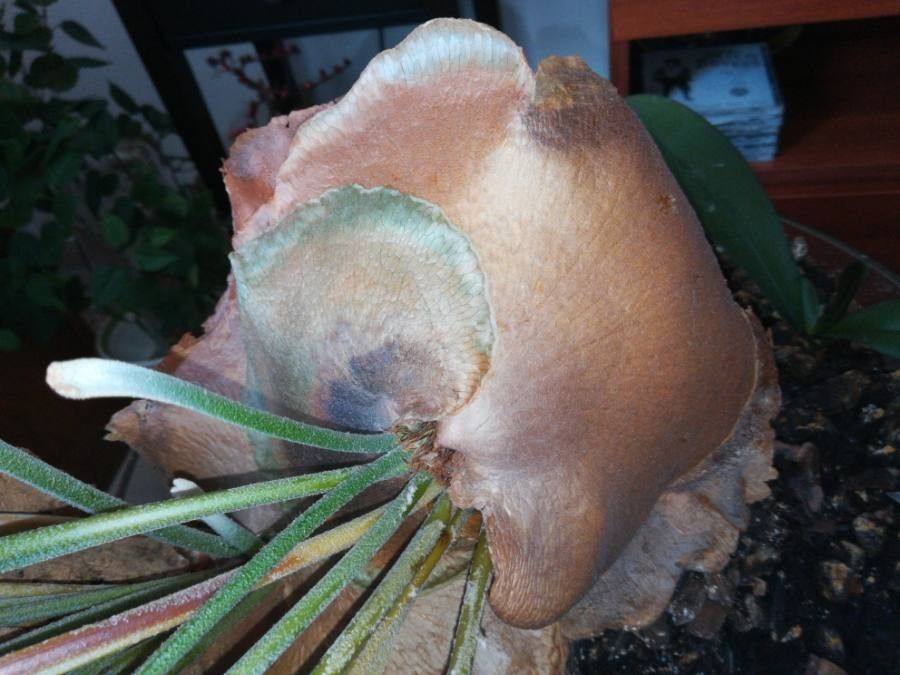
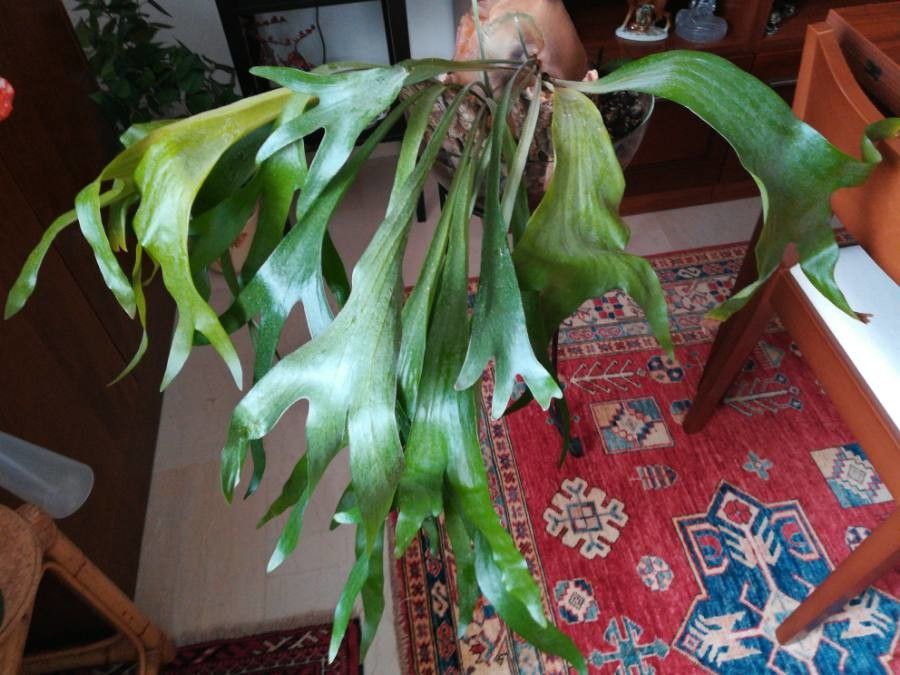
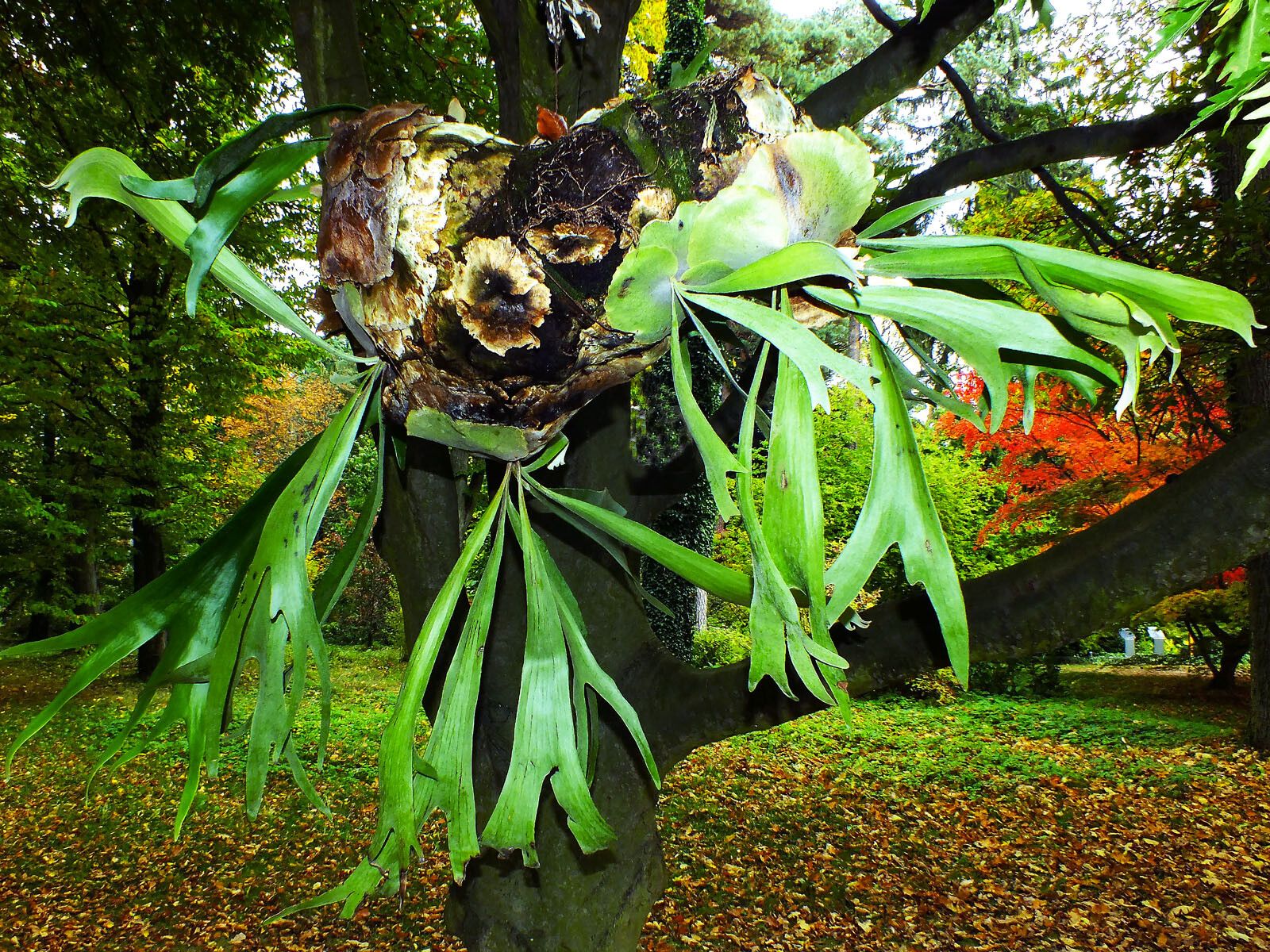
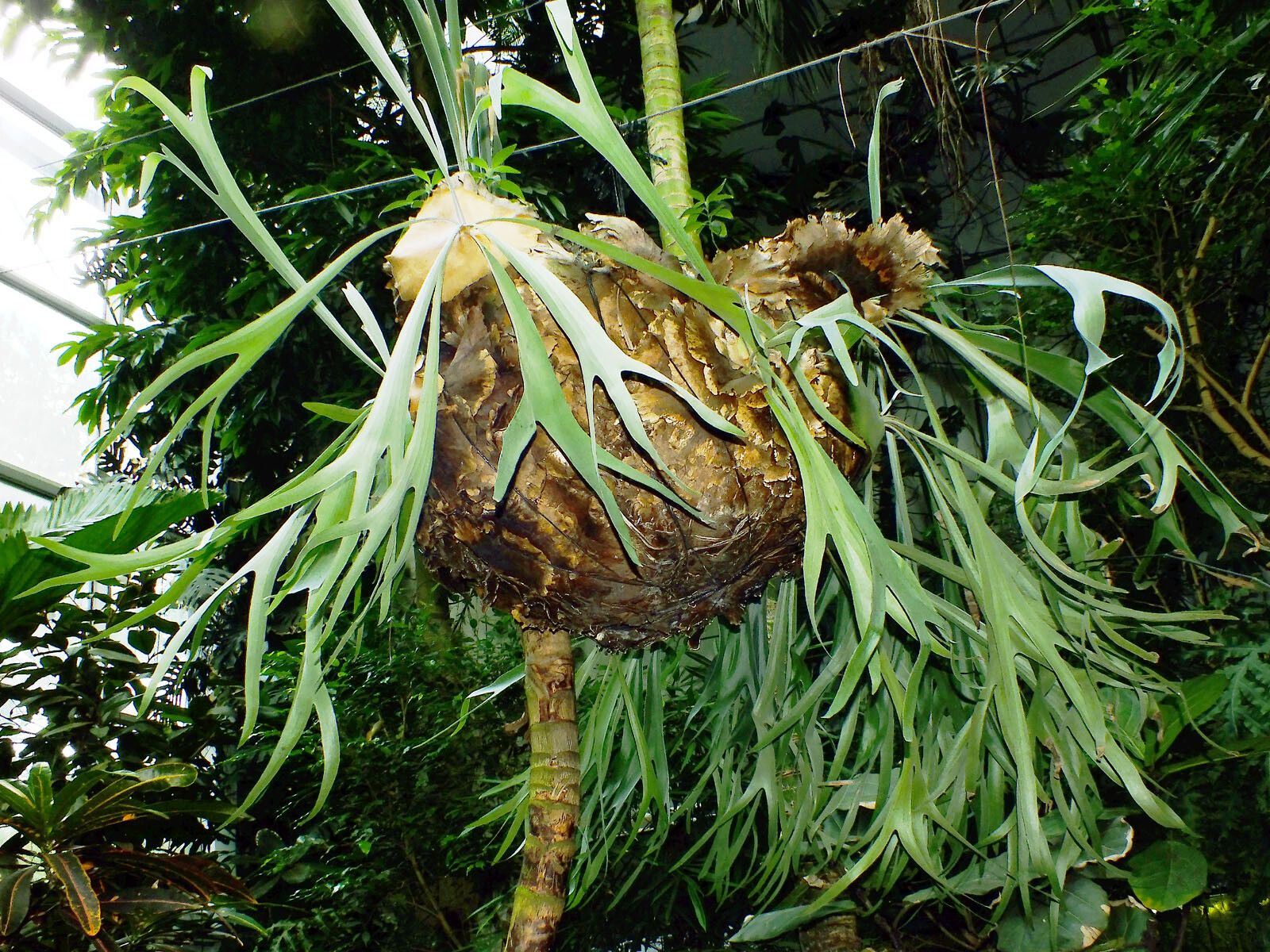
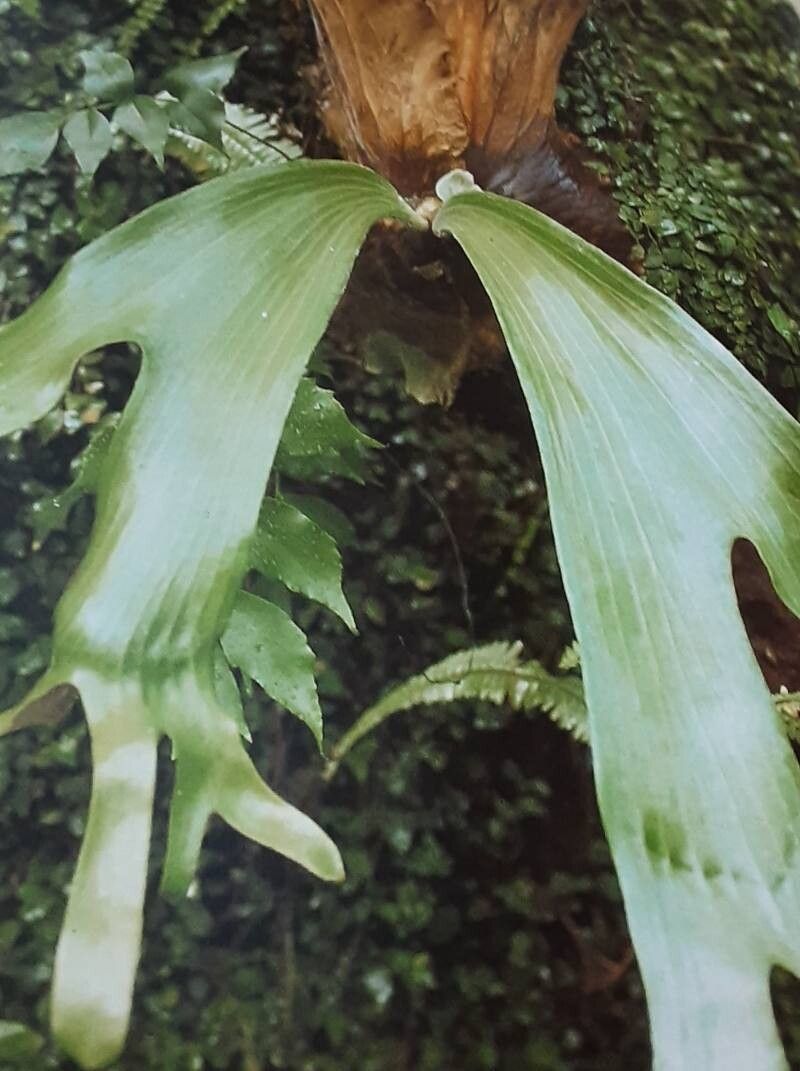
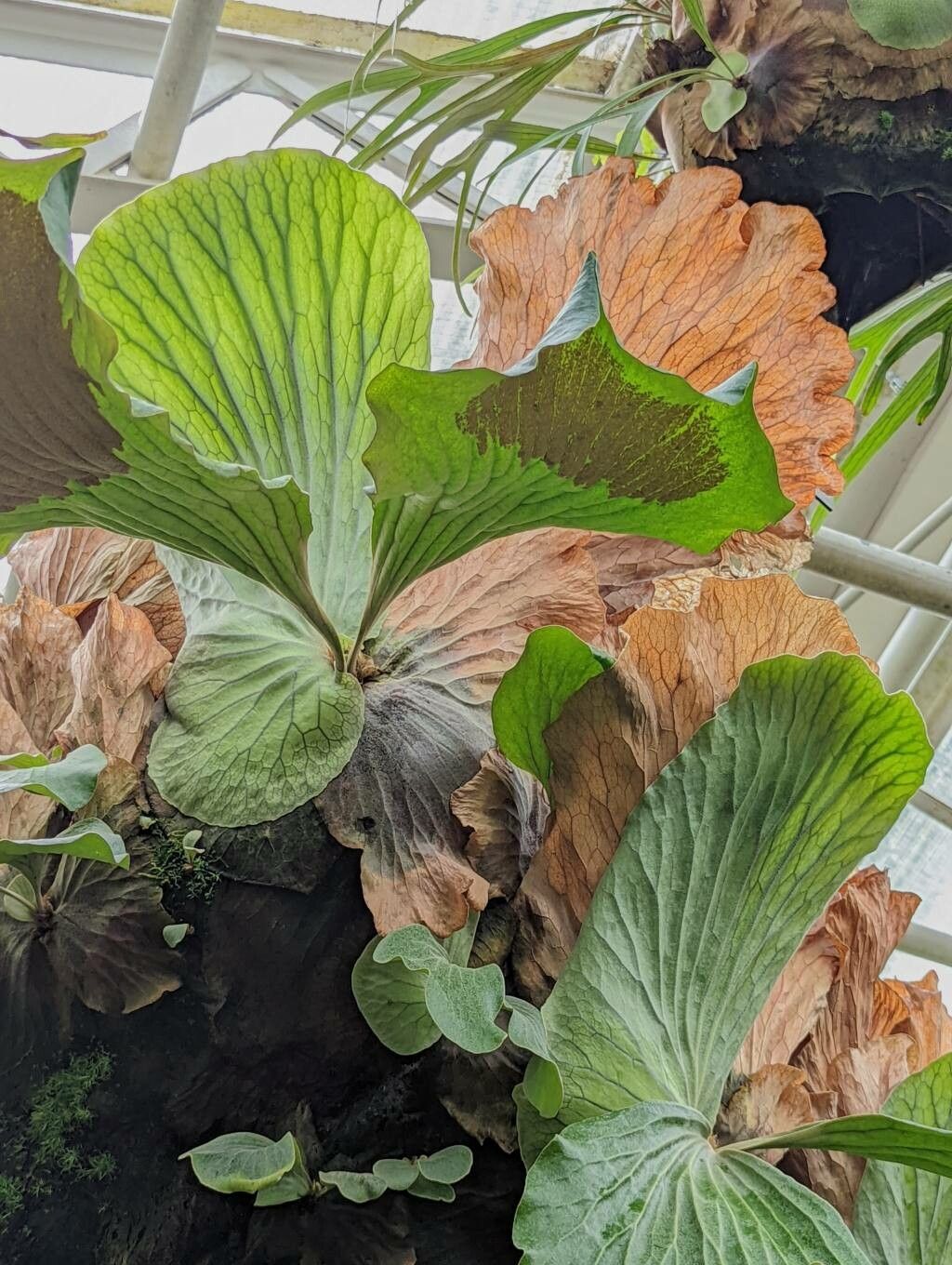
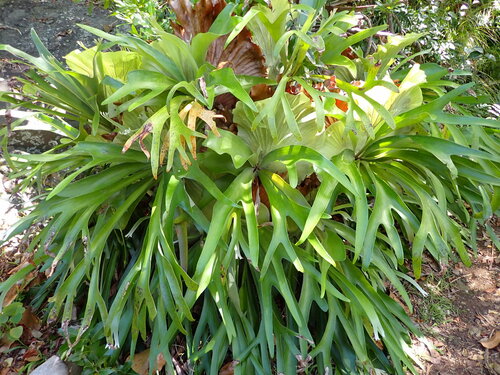
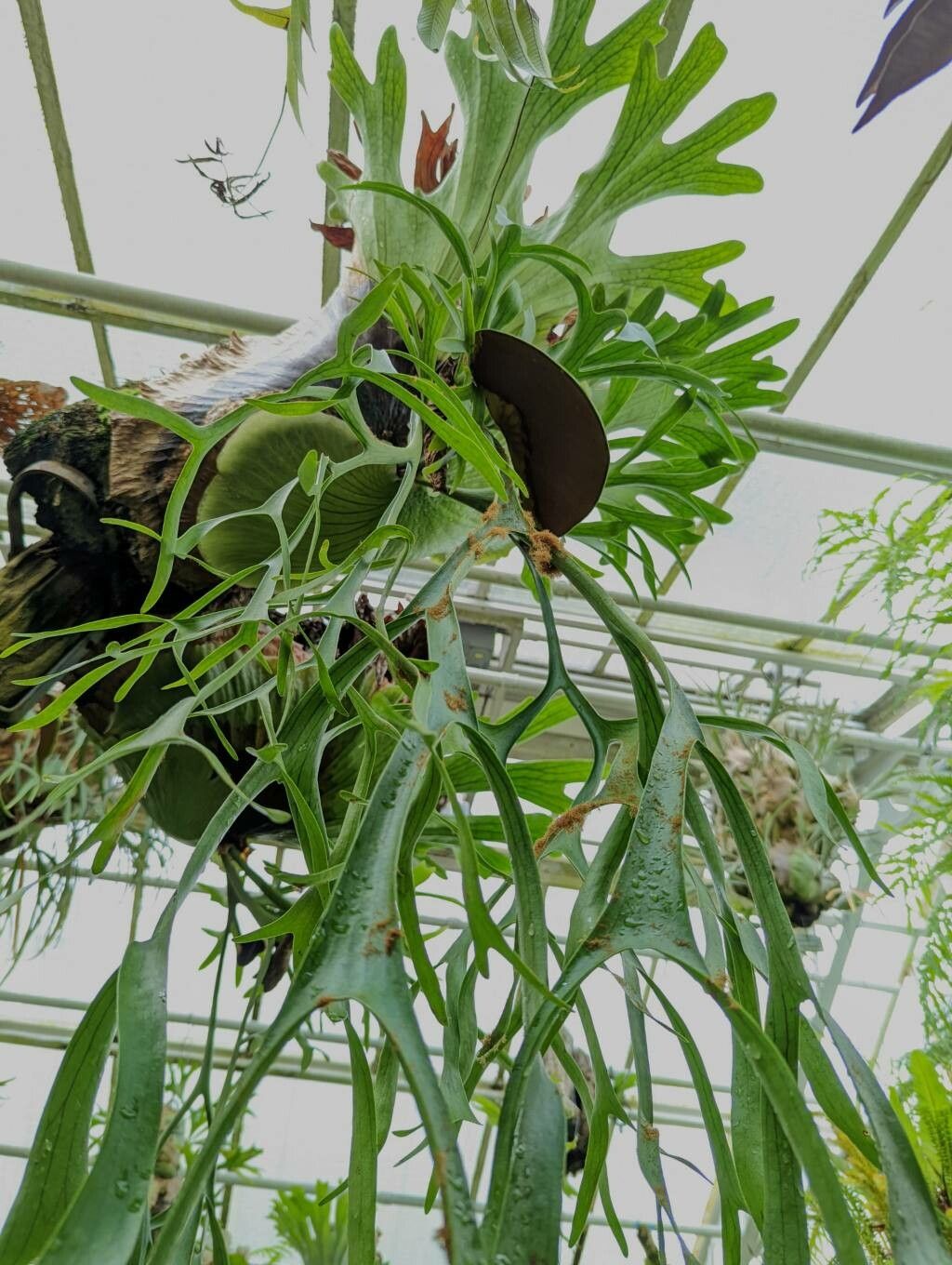
Platycerium alcicorne is a species of staghorn fern (Platycerium) native to Madagascar, the Seychelles and Comoros Islands, as well as Mozambique and Zimbabwe. It is cultivated as an ornamental plant for gardens.
Platycerium alcicorne typically has strong resistance to disease and is affected by relatively few insect pests. Its care is considered difficult because it requires a moist environment and frequent watering. However, its roots are susceptible to rot if overwatered or if the surroundings are poorly ventilated. Platycerium alcicorne is appropriate for people with some growing experience; most individuals can keep it alive for a period, but it may struggle to thrive and its leaves can dry out and become less healthy over time.
How to keep Platycerium Alcicorne.
Light
Platycerium alcicorne is native to habitats such as forest understories or rocky sites that provide natural shade. Its ideal light exposure is Full Shade, though it can tolerate Partial Sun.
Water
Platycerium alcicorne thrives in humid environments much like its tropical origins. For optimal growth, water it twice a week. Although it becomes drought-tolerant once established, it still benefits from regular misting to maintain humidity and support healthy frond development.
Temperature
Platycerium alcicorne comes from tropical areas, where the climate is generally warm and humid. Therefore, it is well suited to high temperatures and humidity. It does not tolerate sudden temperature changes and prefers a steady temperature, so it is important to avoid temperature fluctuations indoors. It typically cannot withstand cold and needs warmer temperatures to grow. If the environmental temperature falls too low, the plant may stop growing or even die.
Pruning
Platycerium alcicorne is known for its distinctive fronds that resemble deer antlers. To maintain its health and ornamental beauty, it's best to prune in early spring. Use sterilized shears to carefully remove only the dead or damaged fronds. Proper pruning enhances air circulation and helps prevent fungal infections, ensuring the healthy growth of your plant.
Pot & Repot
When repotting Platycerium alcicorne, select a pot 1-2 inches (2.5–5.1 cm) larger with good drainage. Use a well-draining potting mix. Repot in spring or fall, making sure the root ball is slightly lower than the rim of the flower pot. Water thoroughly after repotting and place in a warm spot with indirect sunlight.
Botanical profile.
- Plant Type
- Fern
- Life Cycle
- Perennial
- Genus
- Platycerium
- Family
- Polypodiaceae
- Hardiness Zone
- 9-11
- Mature Height
- 61 cm to 91 cm
- Mature Spread
- 61 cm to 91 cm
- Leaf Color
- Forest Green, Olive
- Leaf Type
- Evergreen
- Planting Time
- Spring
- Native Area
- Mozambique, Zambia, Madagascar, Kenya, Tanzania, Zimbabwe
Other names.
Reader questions.
What are the sunlight requirements for Platycerium alcicorne?
Platycerium alcicorne, also known by its botanical name, requires specific sunlight conditions to thrive. For full shade, it needs less than 3 hours of sunlight daily. In contrast, a partial sun environment should provide about 3-6 hours of sunlight. It's important to observe how sunlight moves through your garden, identifying locations that offer a harmonious balance of light and shade. This attention to the plant's lighting needs is crucial for ensuring its well-being and happiness.