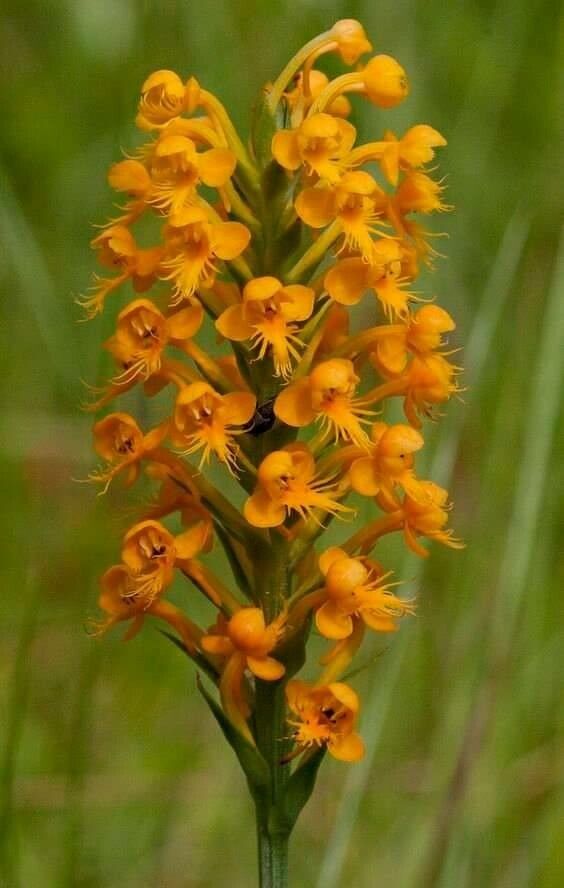
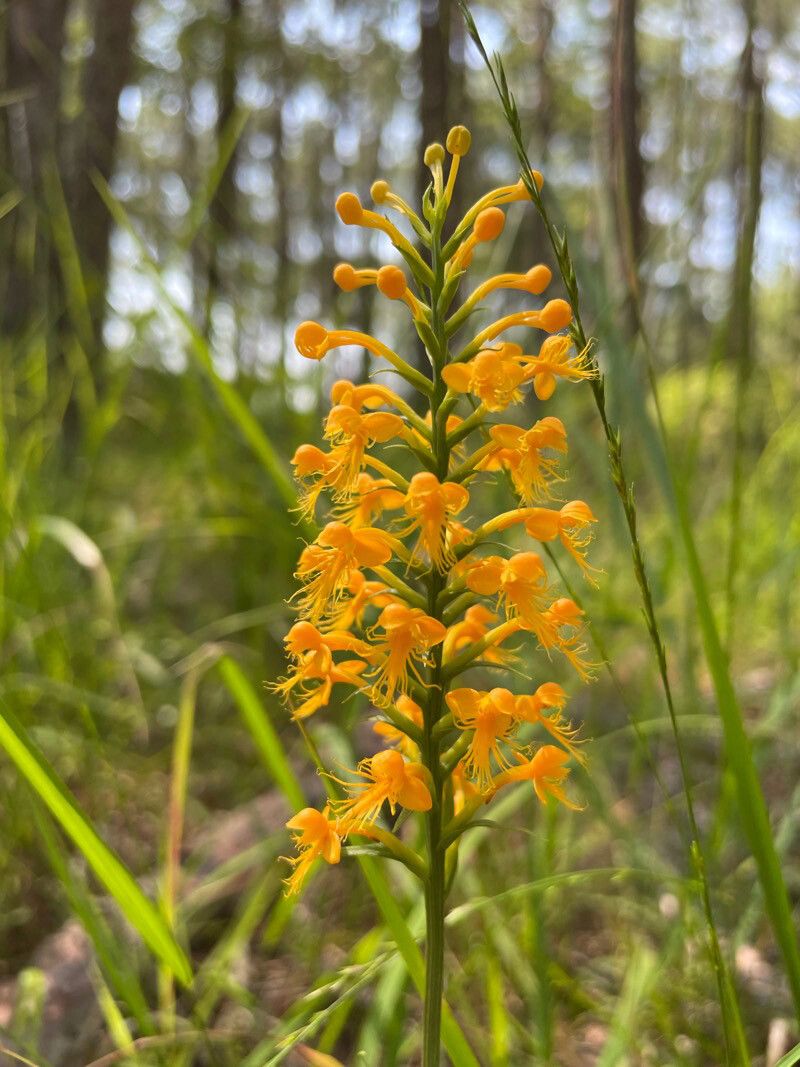
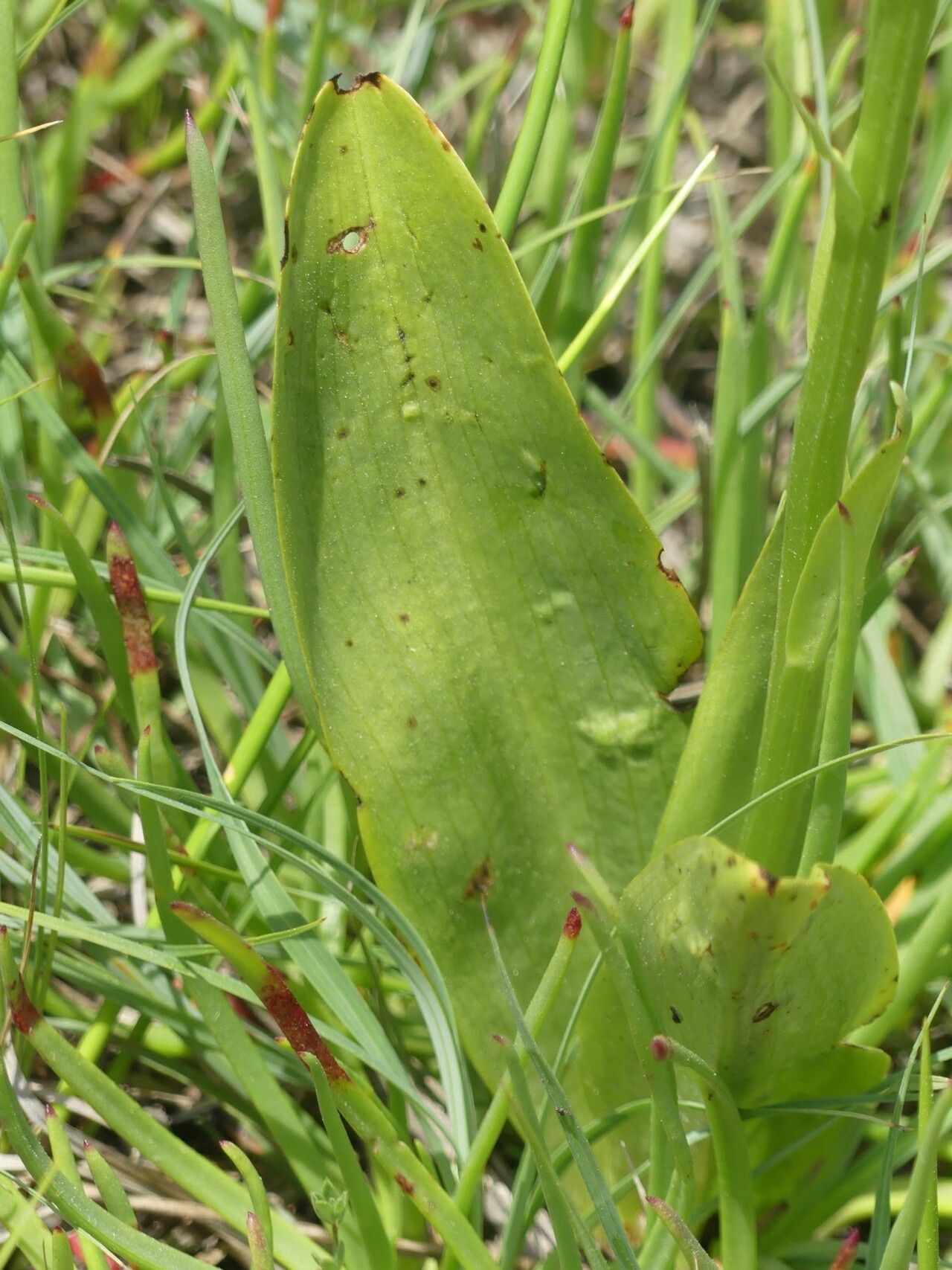
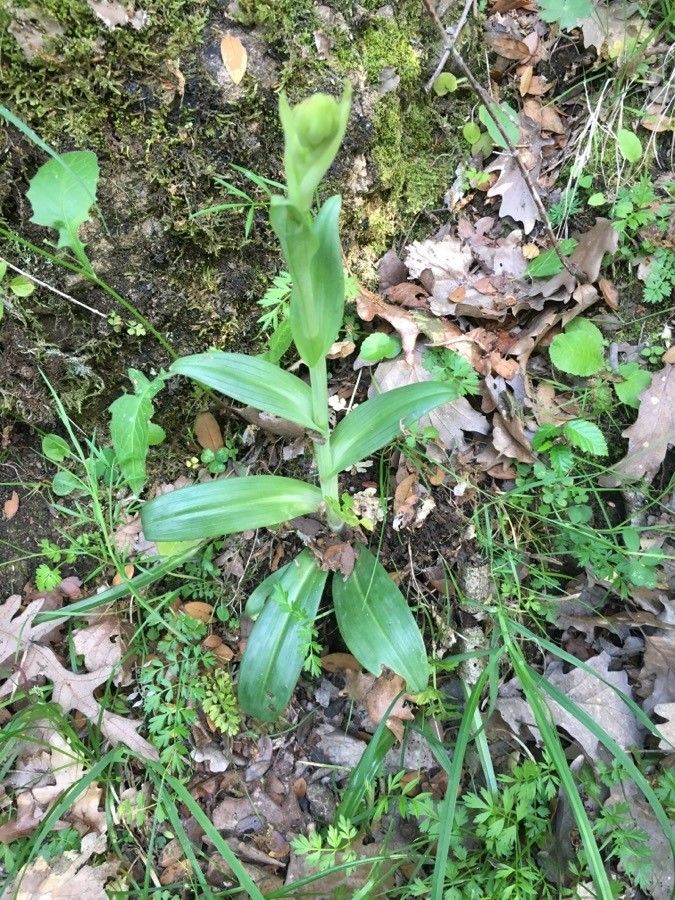
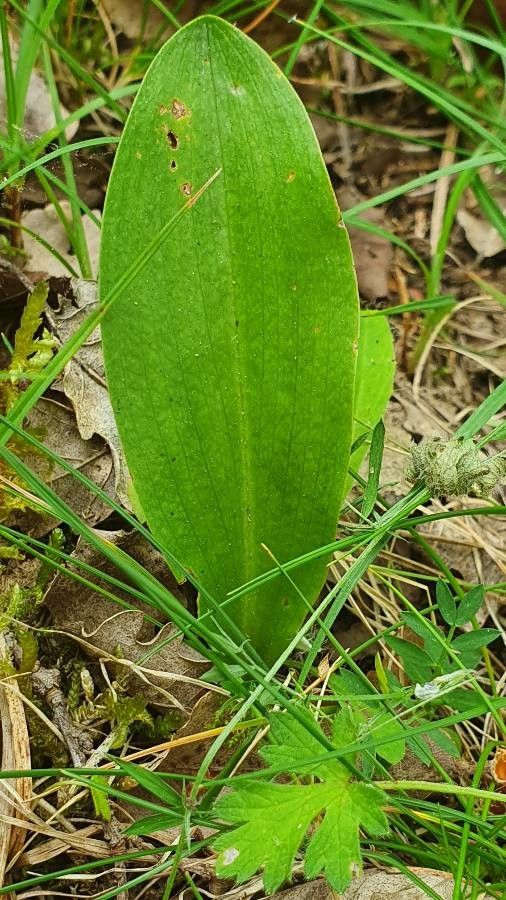
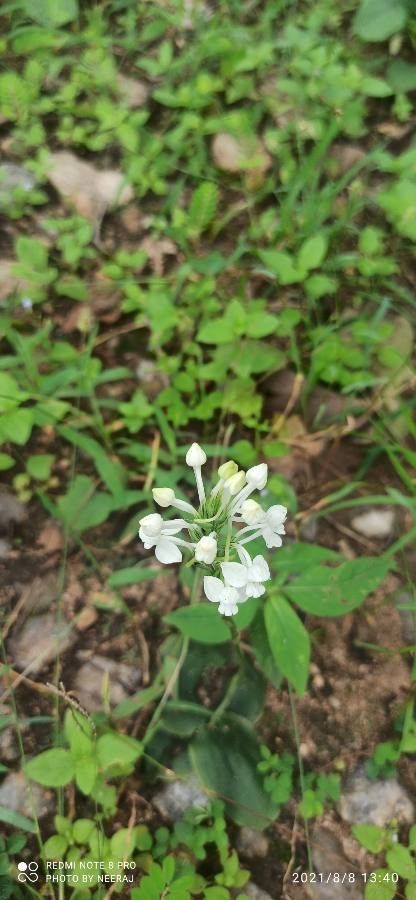
Platanthera cristata, commonly known as the crested yellow orchid or the crested orange bog orchid, is a species of orchid, a flowering plant in the family Orchidaceae, native to North America. It was first formally described in 1835 by English botanist, John Lindley. It produces 2–4 stem leaves and bears a dense inflorescence of multiple showy, bright orange flowers. The labellum is often highly fringed, and a spur protrudes from the back of the flower with a triangular or key-hole shaped opening. It can be found growing in moist meadows, marshes, and prairies, as well as in sphagnum bogs and wooded flats across the southeastern United States from Texas to Florida and up the east coast to New Hampshire.
The Crested yellow orchid is generally resistant to disease and is affected by relatively few insect pests. Its care is regarded as difficult because it needs high humidity while also having good ventilation and minimal harmful pathogens. Overwatering can result in root rot. While anyone can grow the Crested yellow orchid, keeping it healthy and getting it to bloom again requires more cultivation experience.
How to keep Platanthera Cristata.
Light
Crested yellow orchid occurs naturally in habitats like forest understories and rocky areas, where it receives natural shade. It prefers partial sun but can tolerate full sun or full shade, reflecting its versatile and hardy nature.
Water
The crested yellow orchid, native to moist woodlands, thrives in consistently damp soil but can tolerate moderate drought. It requires weekly watering. Typically grown outdoors, this orchid adapts to seasonal rainfall. However, during crucial growth and flowering periods, it needs careful watering attention.
Temperature
The Crested yellow orchid can adapt to a wide range of temperature conditions, but its distribution may still be limited by particular combinations of moisture and heat. It does best in warm summer climates with adequate rainfall or watering. Extended periods of cloudy and rainy weather, as well as prolonged high temperatures, can raise the likelihood of the Crested yellow orchid dying. In winter, proper protection from cold can improve the plant's survival rate.
Fertilizer
The best time to fertilize a Crested yellow orchid is in early spring, as it comes out of dormancy and begins active growth. Fertilization supplies essential nutrients needed for healthy development. Although the Crested yellow orchid has relatively low fertilizer requirements, giving it fertilizer once a year can improve its survival and encourage better, longer-lasting flowers.
Pruning
The crested yellow orchid benefits from pruning between early and late spring. This involves removing dead stems and old flower spikes. Pruning at this time stimulates growth, improves air circulation, and lowers the risk of disease. As a result, the orchid becomes healthier and produces more vibrant blooms. For specific pruning techniques, consult horticultural guides.
Botanical profile.
- Plant Type
- Herb
- Life Cycle
- Perennial
- Genus
- Platanthera
- Family
- Orchidaceae
- Hardiness Zone
- 5-9
- Mature Height
- 30 cm to 61 cm
- Mature Spread
- 10 cm to 20 cm
- Leaf Color
- Green
- Leaf Type
- Deciduous
- Flower Color
- Orange, Yellow
- Flower Size
- 0.51 cm to 1.02 cm
- Bloom Time
- Early summer, Mid summer
- Planting Time
- Spring, Summer
- Harvest Time
- Late summer, Early fall
Other names.