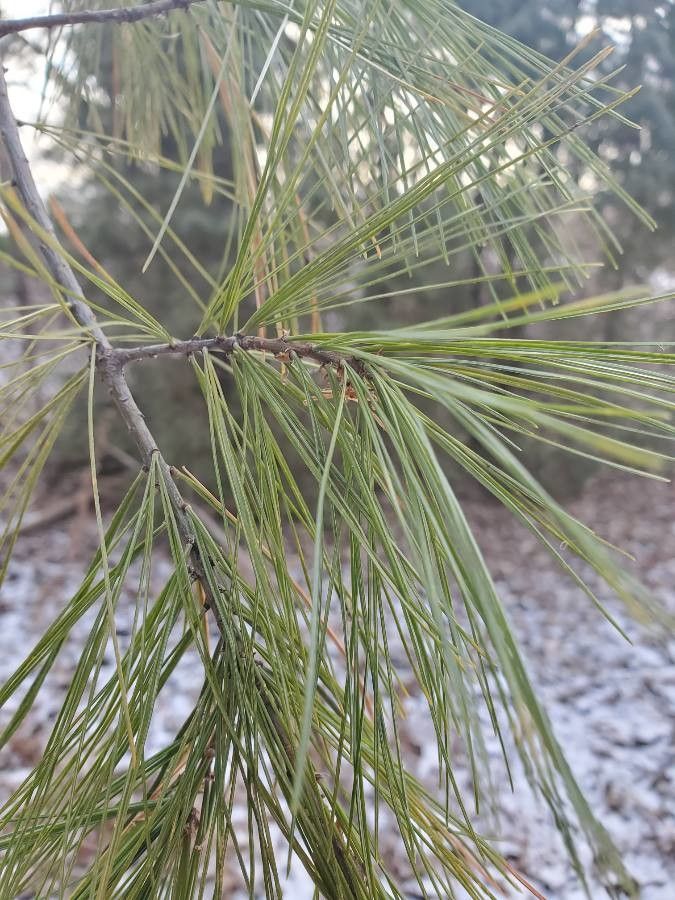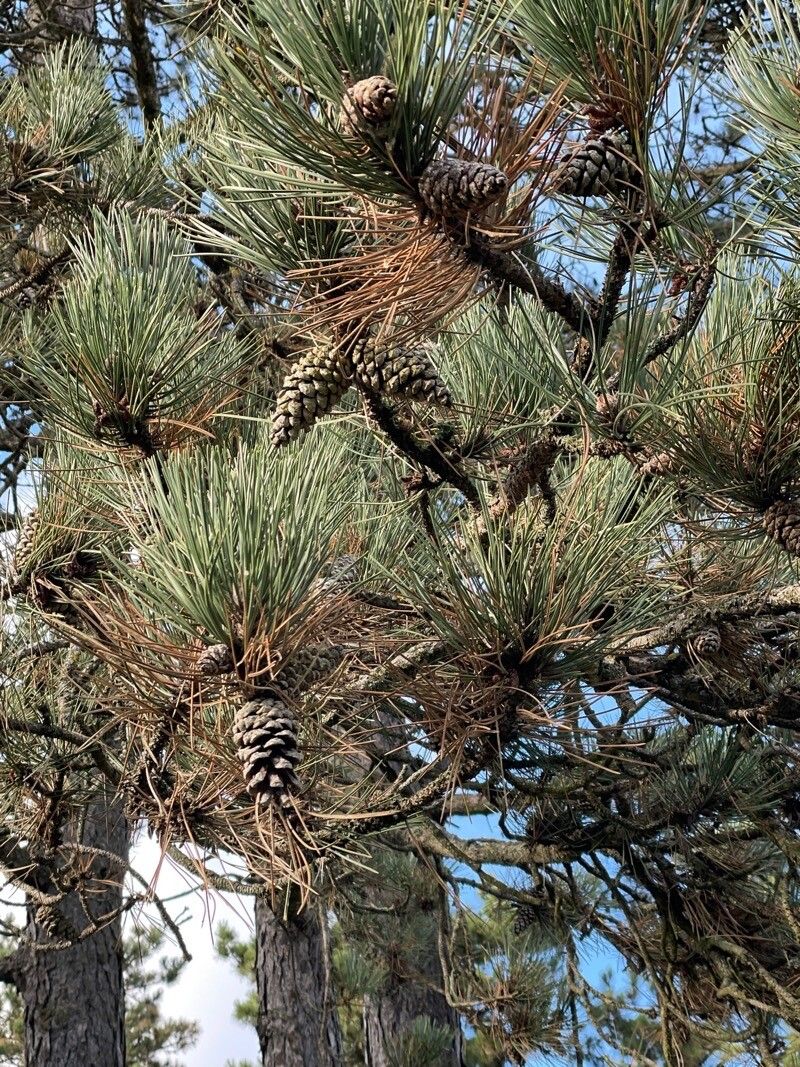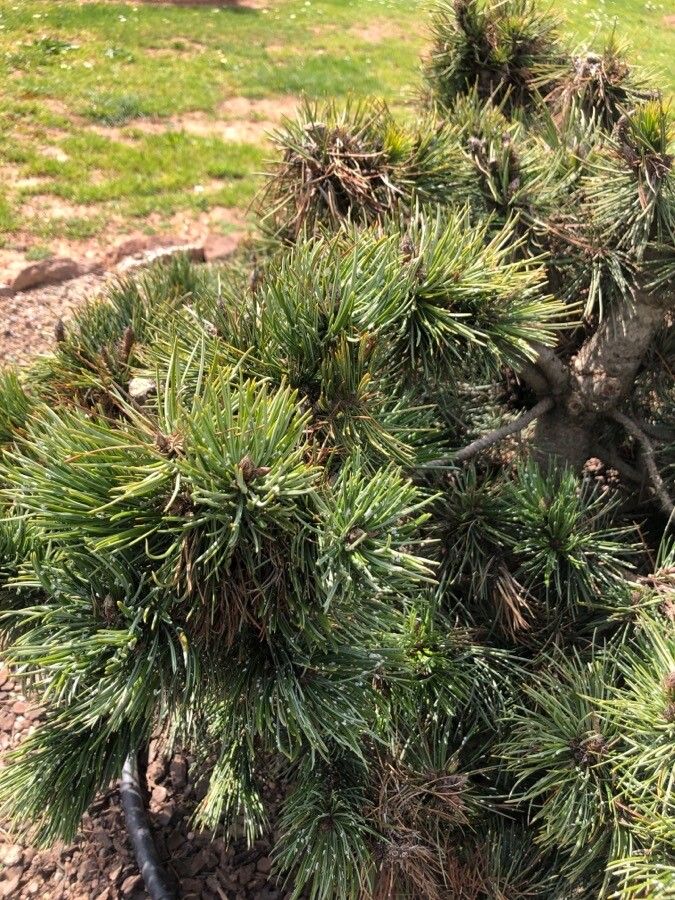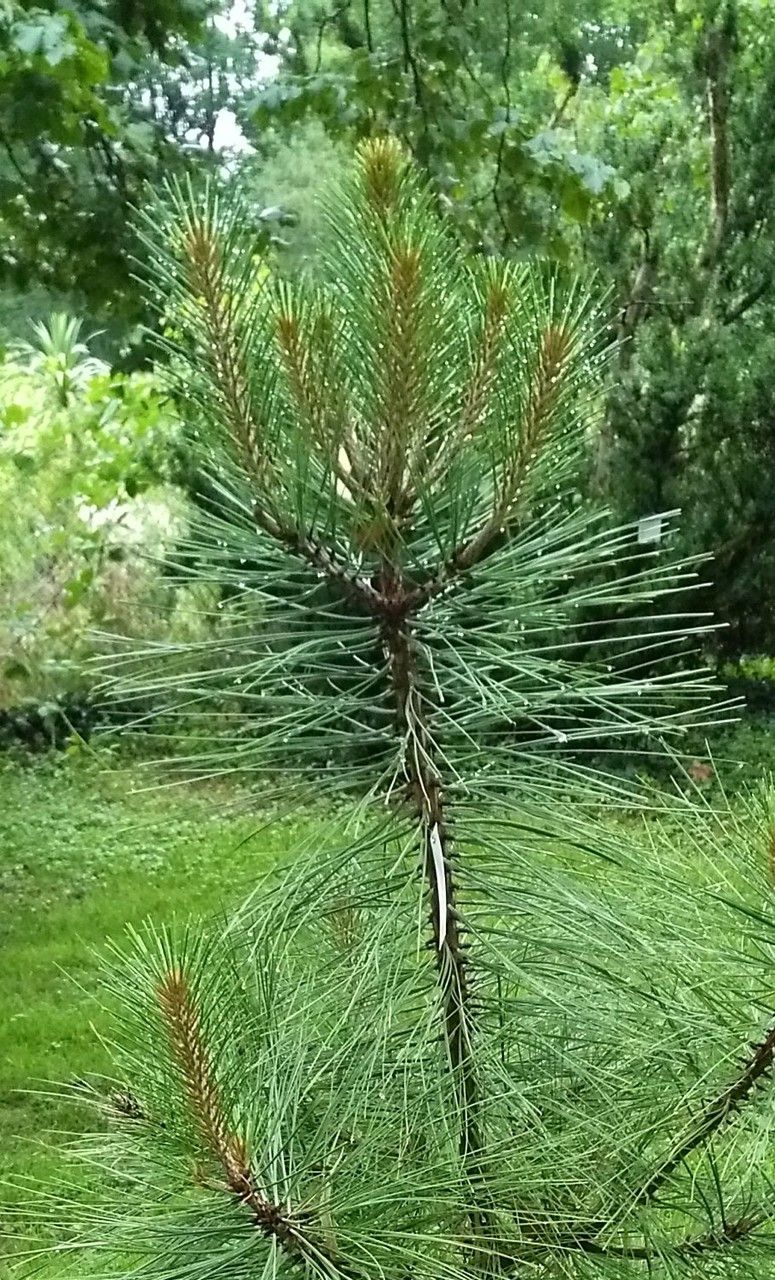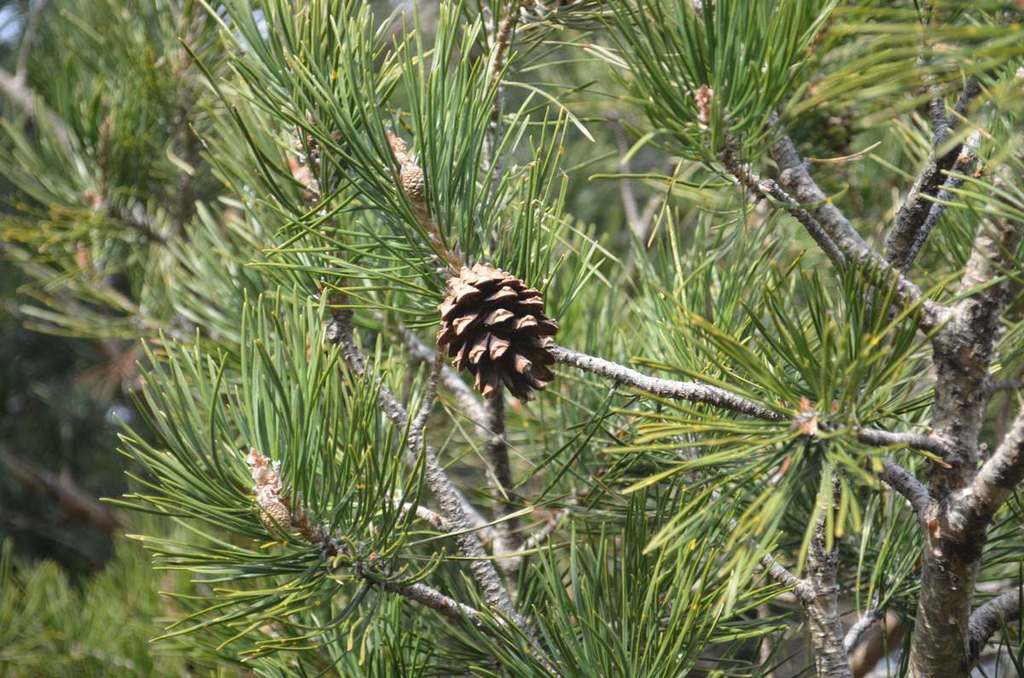
Pinus sylvestris, commonly known as Scots pine, is a coniferous tree species belonging to the Pinaceae family. Native to Europe and Asia, it has also been widely introduced to other parts of the world. The tree can grow up to 35 meters tall, with a trunk diameter of up to 1 meter. Its bark is thick, scaly, and reddish-brown in color. Pinus sylvestris has evergreen needles that measure between 4-7 cm in length and grow in pairs on the branches. These needles are dark green and slightly twisted in shape. Scots pine produces both male and female cones on separate branches. The male cones are yellowish-brown, while the female cones are green when young, turning brown as they mature. Mature female cones can reach up to 10 cm long. Pinus sylvestris thrives best in well-drained soils but can also tolerate poor soils. It grows optimally in full sun but can also endure partial shade conditions. The wood from Pinus sylvestris is valued for its durability and has been used for various purposes, including construction materials, paper production, and furniture making. Overall, Pinus sylvestris is an important tree species both ecologically and economically. It provides habitat for various wildlife, such as birds, and serves as a crucial resource for its wood properties, making it an essential plant globally.
Scots pine is fairly resistant to disease and typically does not suffer from health problems. As for care, this species is relatively low-maintenance. When grown outdoors it needs only light watering, and larger specimens usually do not require pruning. Smaller specimens, however, should be trimmed after they finish blooming. Scots pine is well suited to anyone with an outdoor area, such as a garden or a deck, and does not demand extensive gardening experience.
How to keep Pinus Sylvestris.
Light
The scots pine does best in locations where it gets sunlight for most of the day while also tolerating moderate afternoon shade. This promotes healthy growth. However, constant shade can hinder development and cause poor growth, and excessive light can lead to damage.
Water
Scots pine thrives in dry conditions, easily adapting to sporadic rainfall by efficiently absorbing moisture. It is drought-tolerant and needs watering only every 1 to 2 weeks, making sure to avoid waterlogging. This resilient evergreen can flourish in various climate zones and effectively manages water uptake to keep its needle-like foliage healthy.
Humidity
This plant will thrive in moderate humidity, which is probably the level in your home. However, misting it a few times a week can be very beneficial. Make sure the room has good ventilation.
Temperature
Scots pine favors a moderate temperature range of 41 to 90 ℉ (5 to 32 ℃) and is well adapted to temperate climates. In its native habitat, it grows best where summers are cool, about 50 to 68 ℉ (10 to 20 ℃), and winters are cold, roughly 23 to 41 ℉ (-5 to 5 ℃). In summer it may need some shade or moist soil to help lower temperatures. In winter it copes with colder conditions by increasing needle density and lowering its photosynthetic activity.
Fertilizer
Scots pine has distinct nutrient needs and does not require heavy fertilization. Spring is the best time to apply fertilizer to promote optimal growth. Supplying nutrients enhances its health, increases resistance to pests and diseases, and helps sustain its long lifespan.
Pruning
The Scots pine is a tall tree characterized by its blue-green needles. It's best to prune it during its dormant winter period to maintain its shape, remove dead wood, and improve airflow. When pruning, focus on thinning the branches and ensure your tools are clean to prevent disease. This practice enhances the tree’s health and reduces the risk of pest infestations.
Toxicity
The Scots pine tree is generally not toxic to humans and pets. However, it's best to keep children and pets away from the tree to avoid ingestion of the prickly pine needles.
Further reading →
The toxicity and danger assessments provided are for reference only. We do not assure their accuracy, so it's crucial not to depend on them. Seek professional advice when necessary for accurate guidance.
Botanical profile.
- Plant Type
- Tree
- Life Cycle
- Perennial
- Genus
- Pinus
- Family
- Pinaceae
- Hardiness Zone
- 4-8
- Mature Height
- 35.05 m to 47.85 m
- Mature Spread
- 9.14 m to 11.89 m
- Leaf Color
- Green, Blue, Yellow, Gray
- Leaf Type
- Evergreen
- Flower Color
- Yellow
- Flower Size
- 2.54 cm to 7.62 cm
- Bloom Time
- Late spring, Early summer
- Planting Time
- Spring, Autumn
- Harvest Time
- Mid summer, Late summer, Early fall
- Native Area
- Turkey, Sweden, Austria, Slovakia, Montenegro, Slovenia, Croatia, Belarus, Russia, Germany, Estonia, Romania, Latvia, Portugal, Netherlands, France, Czech Republic, Bulgaria, Armenia, Poland, Greece, Ukraine, Serbia, Lithuania, Norway, Italy, Spain, Switzerland, Mongolia, Finland, Iran, Albania, Azerbaijan, United Kingdom, Hungary
Other names.
Reader questions.
When Should I Water My Scots Pine?
Watering your Scots Pine is vital for its health, growth, and resistance to diseases and pest infestations. You should check the soil's dryness, allowing the top 2 to 3 inches to dry out before watering again. Observing the needles is also crucial; if they start to lose their vibrant green color and turn dull or grayish-brown, it's a sign the tree needs water. Premature needle drop and slower growth are other indicators. It's important to avoid watering while the soil is still moist to prevent diseases like root rot. Conversely, delaying water can result in dehydration stress, indicated by brown needles, stunted growth, and an increased susceptibility to pests.
Do I have to put fertilizer on my Scots pine?
To promote healthy growth in Scots pine, it is recommended to fertilize them in the spring. It's important to remember that these plants have a long lifespan and require support. By adding nutrients to the soil, their overall health can be improved, helping them to better resist common pests and diseases that can hinder their growth or lead to a shorter lifespan.
What are the sunlight requirements for Scots Pine?
Scots pine requires full sun, meaning it should receive above 6 hours of sunlight daily, but it can also thrive in partial sun with about 3-6 hours of sunlight. The essentials for this plant involve ensuring it has adequate exposure to sunlight throughout the day while also being tolerant of locations with moderate afternoon shade. However, it's crucial to avoid constant shadow, as it can impede growth, and be wary of light oversaturation that might cause damage. Observing the movement of sunlight through your garden and selecting spots that offer a balance of light and shade will contribute to the happiness and health of your Scots pine.
What are the ideal temperature conditions for Scots pine?
Scots pine, or Pinus sylvestris, prefers a moderate temperature range and is well-suited to temperate climates. Ideally, it thrives in areas with cool summer temperatures between 50 to 68°F (10 to 20°C) and cold winter temperatures ranging from 23 to 41°F (-5 to 5°C). It has strong cold resistance and doesn't usually require special frost protection measures. However, if winter temperatures are expected to drop below -30°C, providing some cold protection by wrapping the trunk and branches with non-woven fabric or cloth is advisable. Prior to the first freeze in autumn, it's recommended to water the plant abundantly to ensure the soil remains moist, which helps prevent drought and water scarcity during winter and early spring.
How Should I Water My Scots Pine?
Scots Pine requires specific attention to its watering needs, including the technique and the tools used. The most effective method is deep watering, which saturates the root zone, encourages deep root growth, and ensures that the tree isn't susceptible to drought. Using a watering can with a rose attachment will help distribute water evenly, preventing runoff and allowing water to reach deeper roots. This technique is particularly beneficial during the tree's younger stages to establish a strong root system.
What is the best time to add fertilizer to my Scots pine?
The growing medium sometimes lacks enough nutrients for healthy growth, but Scots pine is unique compared to garden plants. It doesn't need a lot of additional nutrients. Springtime, before new growth emerges, is the ideal season to fertilize Scots pine.
How does artificial lighting affect Scots Pine growth?
Artificial lighting can be crucial for indoor Scots pine plants, especially when natural sunlight is insufficient, like during winter or in less sunny spaces. For optimal growth, it's important to choose the right type of artificial light, with LED lights being a popular choice due to their ability to provide specific wavelengths needed by plants. Full sun plants require 30-50 W/sq ft of artificial light, partial sun plants need 20-30 W/sq ft, and full shade plants need 10-20 W/sq ft. The light source should be placed 12-36 inches above the plant, and most plants will need 8-12 hours of light per day to mimic the length of natural daylight hours.
How does Scots pine cope with low temperatures?
Scots pine is notably cold-tolerant, favoring temperatures above 5°C during winter and ideally should not be kept below -25°C. Yet, it can endure colder weather with little to no noticeable impairment during the winter months. When temperatures fall below -30°C, the tree's branches may become brittle and dry, leading to no new shoots emerging in spring. To mitigate this, in spring, it's essential to prune away any dead branches that have failed to produce new leaves, helping the tree to recover and continue healthy growth.
How Much Water Does Scots Pine Really Need?
The water requirements for Scots Pine can vary based on several factors including pot size, root depth, and the tree's size. A general rule is to soak the root zone thoroughly, ensuring the water reaches the bottom of the pot. For a mature tree in a large pot, approximately 1.5 to 2 liters per watering session is a good estimate. Proper hydration is indicated by healthy green needles and vigorous growth. Too much water can lead to root rot, whereas not enough water can stress the tree, causing it to have weak growth and be more susceptible to diseases. It's crucial to balance water intake to ensure the tree thrives.
When is the best time to not add fertilizer to my Scots pine?
While some plants benefit from regular fertilization, Scots pine is an exception as it does not need an abundance of nutrients. Over-fertilizing can lead to its decline. To properly care for Scots pine, only apply fertilizer in the spring and refrain from doing so during the summer, fall, and winter seasons. It is also important to avoid adding any additional organic matter to the soil during these times.
What are the symptoms of light deficiency in Scots Pine?
When Scots pine experiences suboptimal lighting, it may show symptoms such as smaller new leaves, leggy or sparse growth, faster leaf drop, slower or no new growth, and paler new leaves. These symptoms indicate the plant's struggle with insufficient light. Conditions like chlorosis, sunscald, leaf curling, wilting, and leaf scorching can also occur due to excessive sunlight, harming the plant's ability to photosynthesize properly and maintain overall health.
What should be done if Scots pine experiences high temperatures?
During the summer, the Scots pine should ideally be kept under 32°C. When temperatures exceed 35°C, it may exhibit signs of stress, such as lighter leaf color, dry and withered tips, and increased susceptibility to sunburn. To alleviate these symptoms, sunburned and dried-up parts should be trimmed away. Moving the plant to a shadier location or using a shade cloth can provide necessary protection from the midday and afternoon sun. Additionally, watering the plant in the morning and evening can help keep the soil moist and reduce temperature stress.