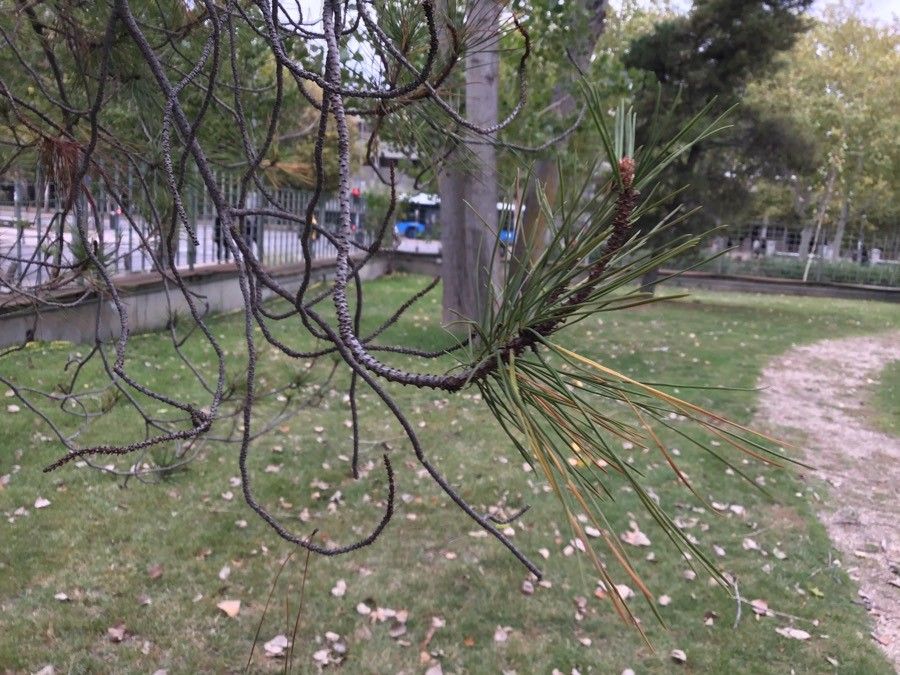
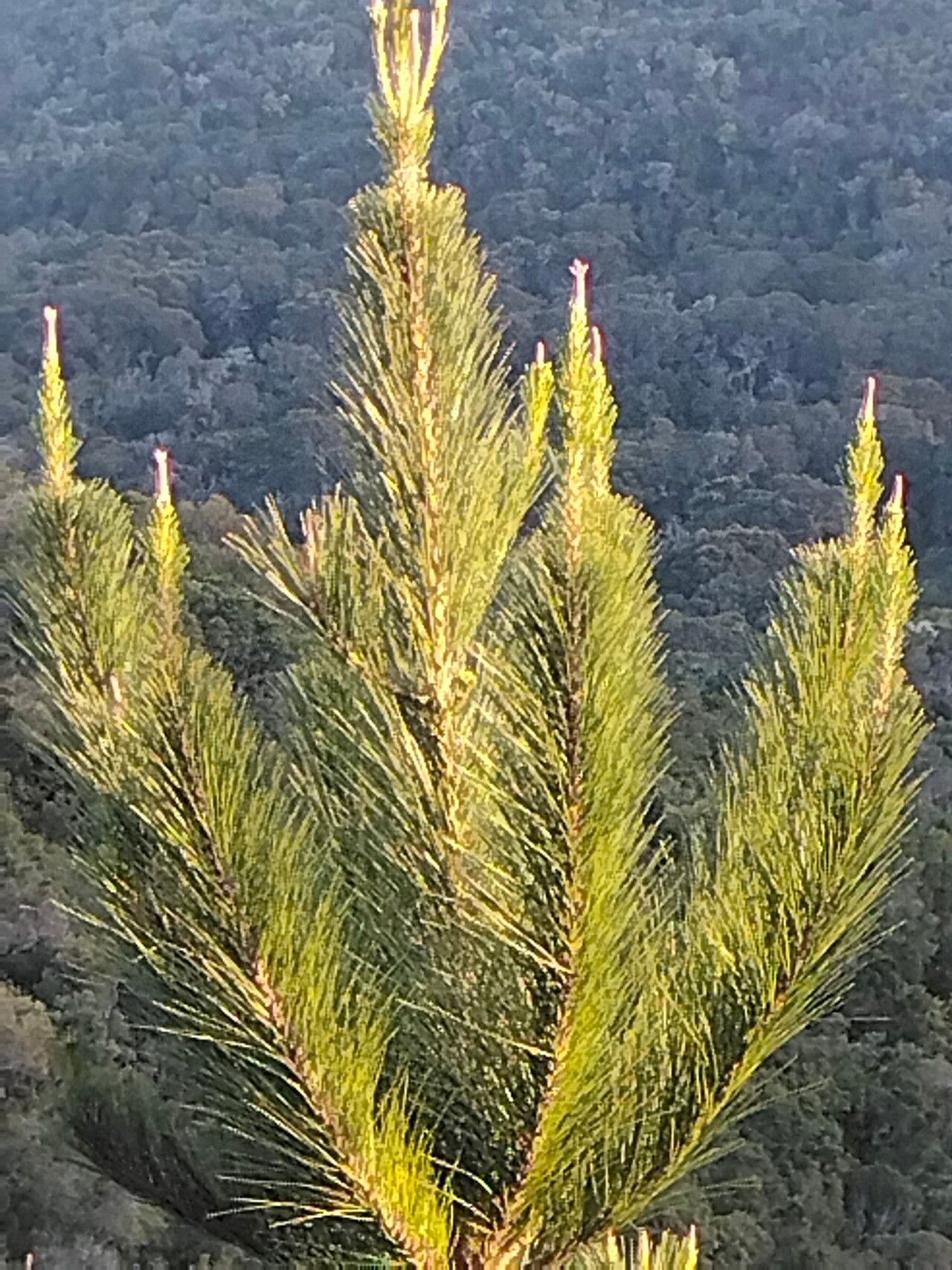
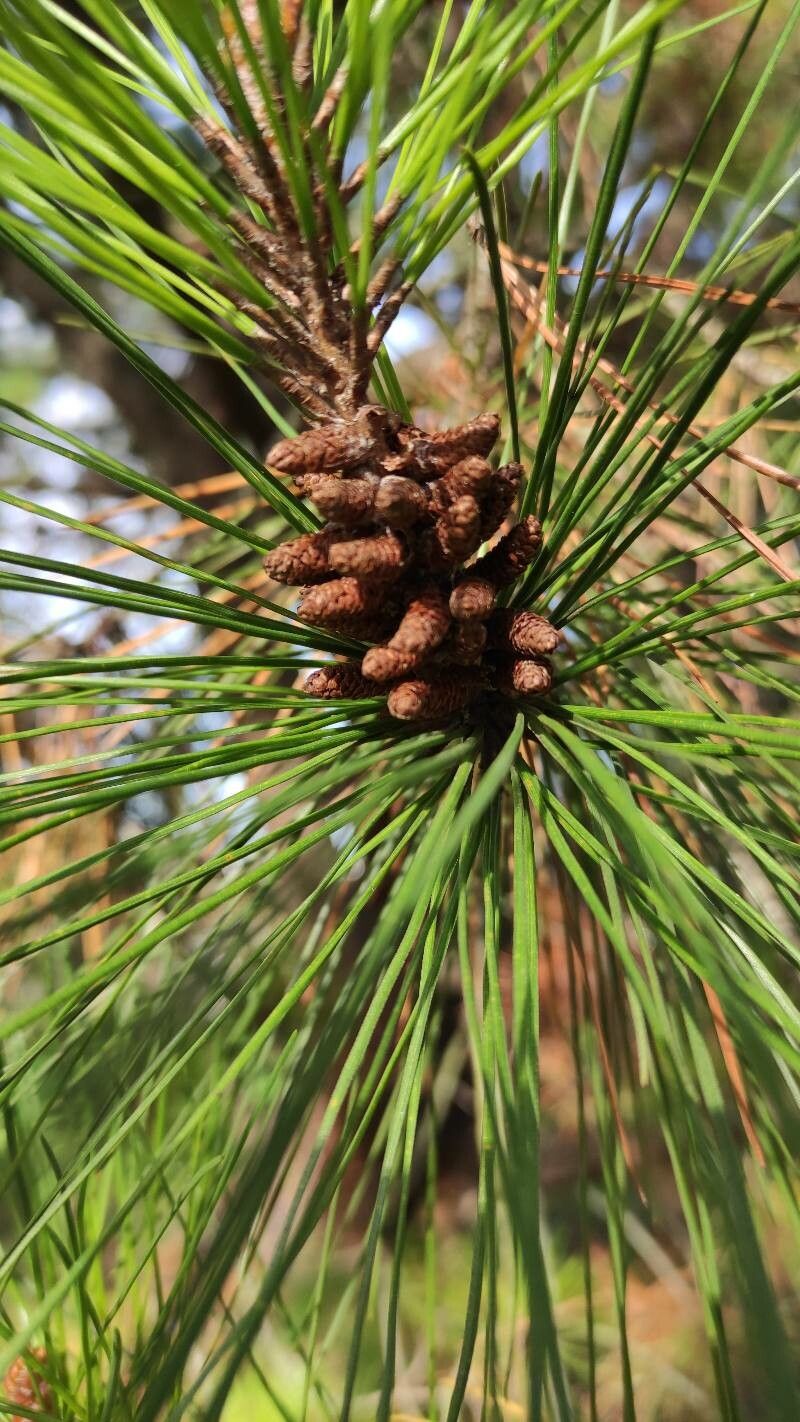
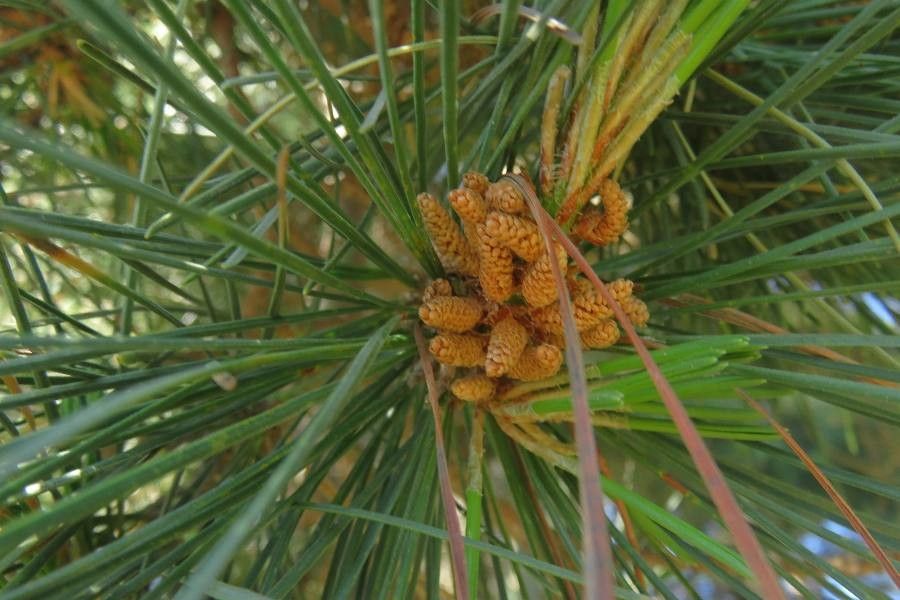
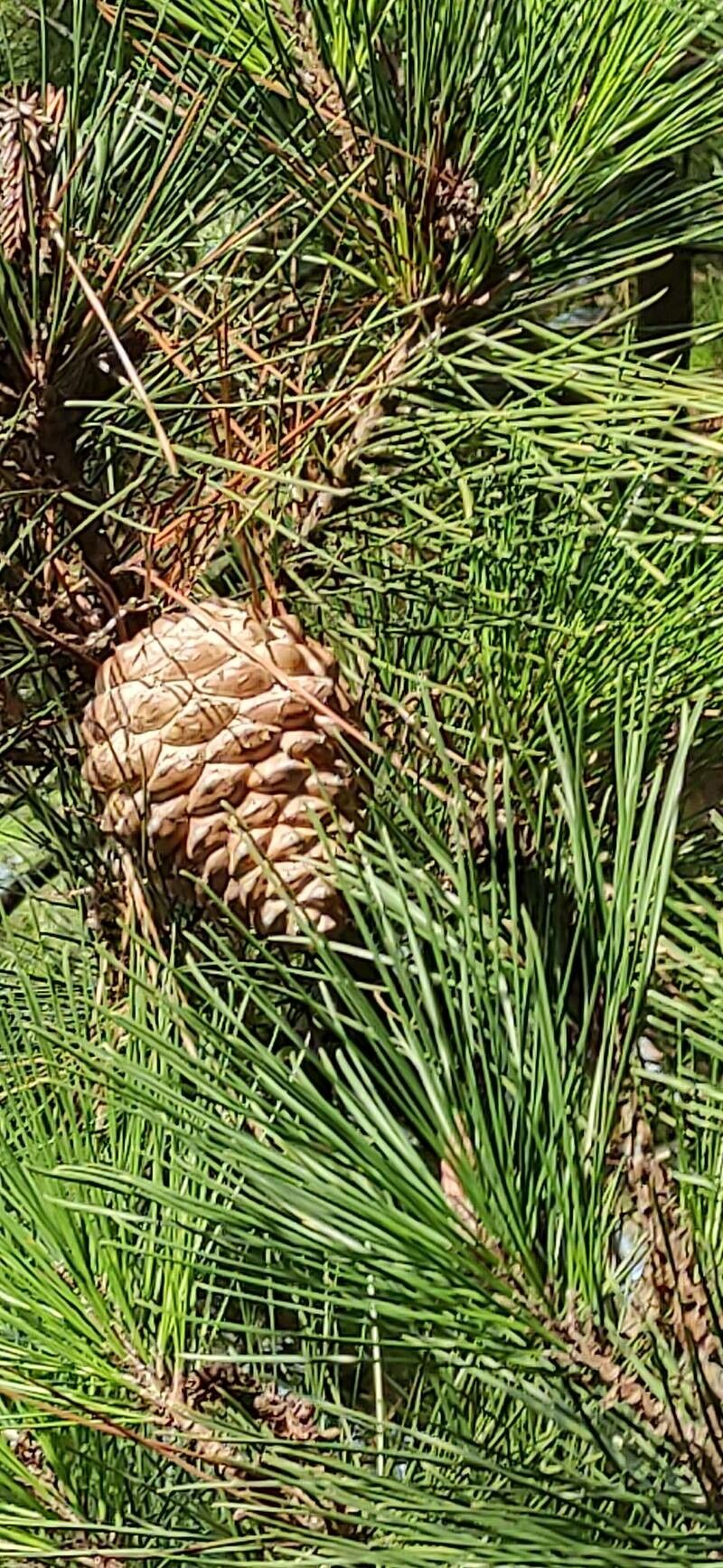
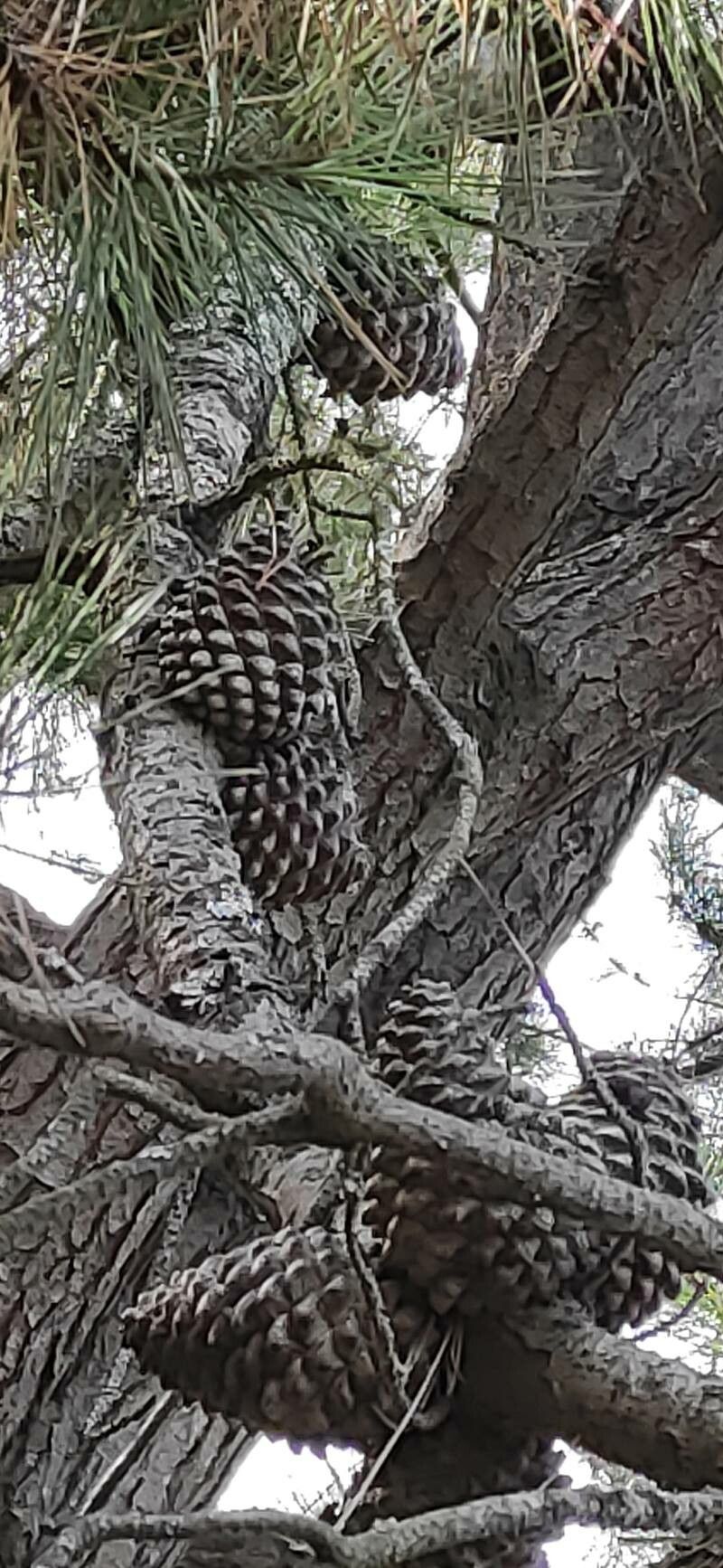
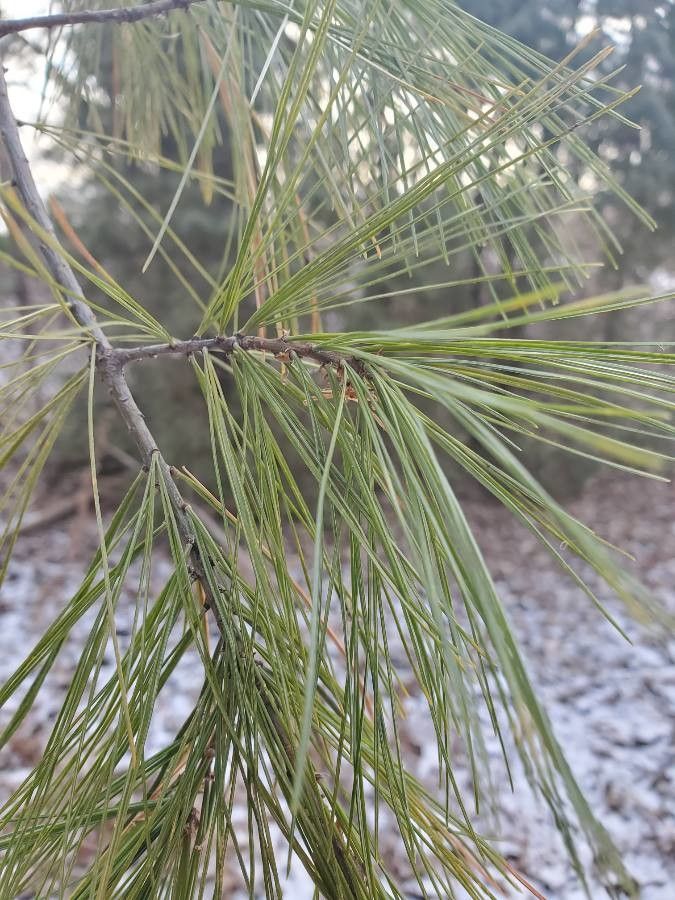
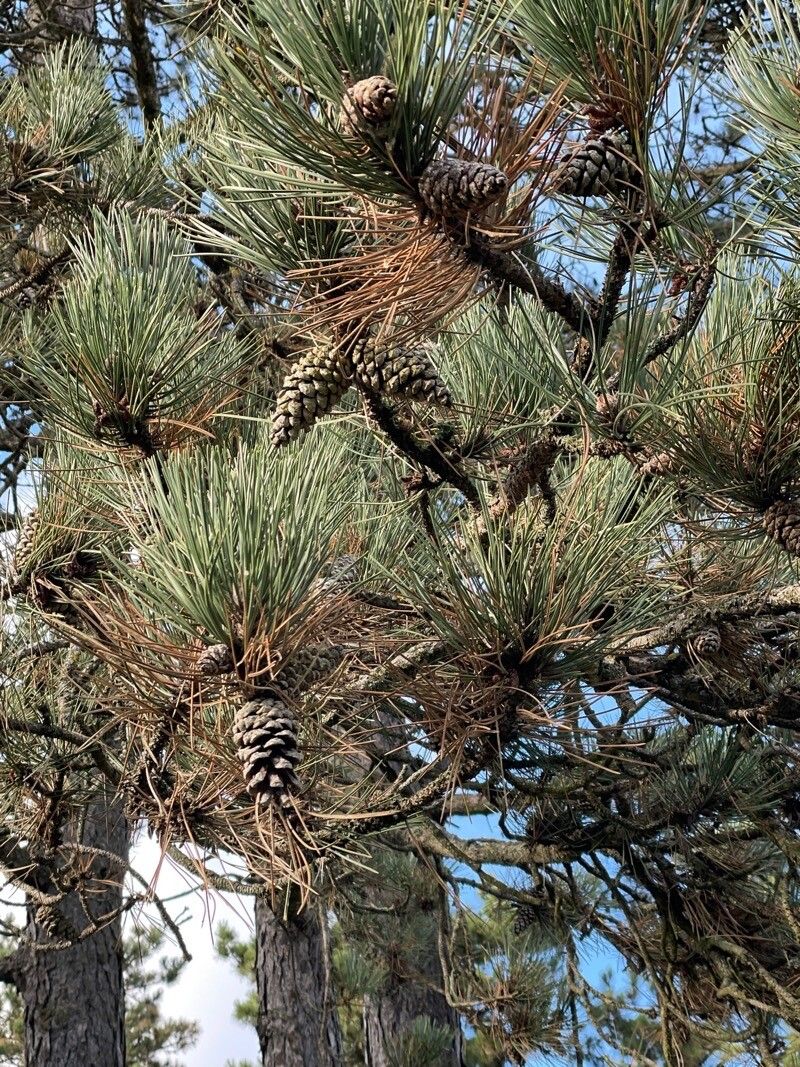
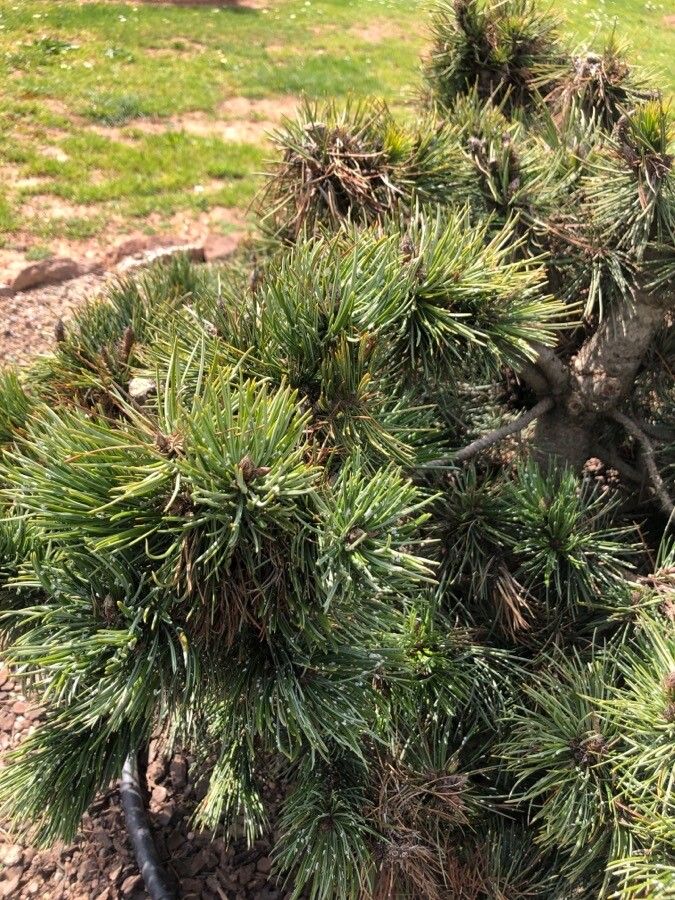
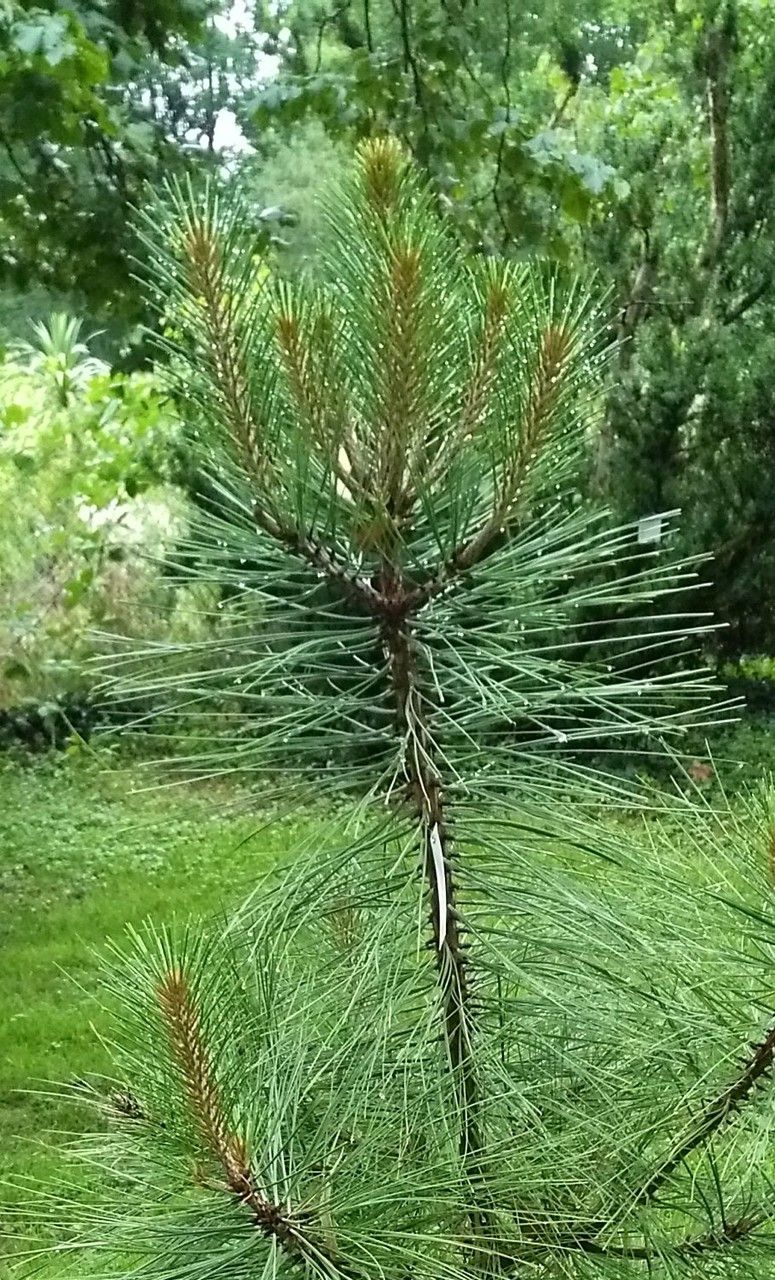
Pinus radiata, commonly known as Monterey pine, is a fast-growing evergreen tree native to the central coast of California. It can reach heights of 30 to 40 meters and has a conical shape with dense foliage. The tree's needles are long and slender, measuring around 15 to 20 cm in length, and are arranged in bundles of three. The bark of Pinus radiata is thick, deeply furrowed, and has a reddish-brown color. The tree produces cones that are approximately 7 to 17 cm long, with sharp scales that protect the seeds inside. Pinus radiata has become one of the most widely planted pine species globally due to its rapid growth rate, adaptability to various soil types, and ability to tolerate drought conditions. It is commonly used for timber production, providing high-quality wood suitable for construction purposes such as flooring, furniture making, and paper production. In addition to its commercial applications, Pinus radiata offers significant ecological benefits. It helps with erosion control on steep slopes and stabilizes sand dunes along coastlines. Furthermore, it provides habitat for various wildlife species, including birds like owls and hawks that use it for nesting sites. Overall, Pinus radiata is an important species both economically and ecologically. Its versatility in different applications makes it an essential component of many ecosystems worldwide.
Monterey pine is well resistant to disease and is generally not susceptible to illnesses. In terms of care, this plant is fairly low-maintenance. When grown outdoors it needs minimal watering, and larger plants usually do not require pruning. Smaller plants, however, should be pruned after they have bloomed. Monterey pine is suitable for anyone with an outdoor area, such as a garden or deck, and does not require much care experience.
How to keep Pinus Radiata.
Light
Monterey pine does best with continuous exposure to light during the day, though it can tolerate less complete illumination. It originally grew in habitats that received sunlight throughout the day, which supported its health and growth. Alterations in light exposure, whether too much or too little, can adversely affect the Monterey pine's development and vitality.
Water
The Monterey pine, native to coastal California, thrives in environments with moderate moisture and consistent humidity. While it can withstand some drought, it needs watering every 1-2 weeks to keep the soil slightly moist. Proper watering during the active growth season is crucial for maintaining the tree's lush foliage.
Humidity
This plant will thrive in moderate humidity, which is probably the level in your home. However, misting it a few times a week can be very beneficial. Make sure the room has good ventilation.
Temperature
Monterey pine does well in moderate temperatures between 59 and 95 ℉ (15 and 35 ℃). It prefers an annual average temperature of 64 to 72 ℉ (18 to 22 ℃) and can tolerate occasional extremes of heat and cold. In summer, regular watering is recommended to lessen heat stress.
Fertilizer
Monterey pine has specific nutrient needs and only requires modest fertilization. Spring is the best time to apply fertilizer for optimal growth. Providing nutrients improves its vigor, raises its resistance to pests and diseases, and helps preserve its long lifespan.
Pruning
The Monterey pine is a fast-growing evergreen that requires pruning during the winter months while it is dormant. When pruning, concentrate on removing dead branches and thinning out dense areas to improve airflow and light penetration. Proper pruning helps maintain the tree's shape, prevents overcrowding, and reduces the risk of disease. It's important to use clean tools and avoid pruning during periods of active growth.
Pot & Repot
When repotting Monterey pine, select a pot 1–2 inches (2.5–5.1 cm) larger with ample drainage. Use a well-draining potting mix. Repot in spring or fall, making sure the root ball is slightly lower than the rim of the flower pot. Water thoroughly after repotting and place it in a warm spot with indirect sunlight.
Botanical profile.
- Plant Type
- Tree
- Life Cycle
- Perennial
- Genus
- Pinus
- Family
- Pinaceae
- Hardiness Zone
- 7-10
- Mature Height
- 20.12 m
- Mature Spread
- 17.98 m
- Leaf Color
- Green
- Leaf Type
- Evergreen
- Flower Color
- Gold
- Flower Size
- 0.76 cm to 1.78 cm
- Bloom Time
- Early spring, Mid fall, Late fall, Winter
- Planting Time
- Spring
- Harvest Time
- Early spring, Mid spring, Mid summer, Late summer, Fall, Winter
- Native Area
- Mexico
Other names.
Reader questions.
How should I water my Monterey pine tree?
Watering your Monterey pine tree is a simple task. To do it, all you need to do is turn on your garden hose and slowly soak the soil. This method works well for mature trees, as they require a large amount of water. However, for smaller trees, a watering can or smaller tool can suffice. It's important to avoid overhead watering, as excessive moisture on the leaves can lead to disease, particularly in young trees.
Why should I put fertilizer on my Monterey pine?
To promote healthy growth in Monterey pine, it is recommended to fertilize it in the spring. It is important to remember that this plant has a long lifespan and therefore requires support. By adding nutrients to the soil, the plant's overall health can be improved, which can help it resist common pests and diseases that can hinder growth or reduce its lifespan.
What are the sunlight requirements for Monterey Pine?
Monterey Pine thrives under comprehensive exposure to light throughout the day, yet it can tolerate less complete illumination. It originated in environments with full exposure to sunlight, which is vital for its health and growth. Being sensitive to shifts in light exposure, both excessive and insufficient light can harm its development and vitality. Full sun is described as above 6 hours of sunlight, while partial sun is about 3-6 hours of sunlight. It's recommended to watch how sunlight moves through your garden to choose the best spots that provide a balance of light and shade for the plants, ensuring their happiness.
What is the ideal temperature range for growing Monterey pine?
Monterey pine thrives in moderate temperatures, ideally ranging from 59 to 95°F (15 to 35°C), with an annual average temperature preference of 64 to 72°F (18 to 22°C). It is capable of tolerating occasional hot and cold temperature extremes, making it a versatile pine for different climates.
What do I need to do if I give my Monterey pine tree too much water or not enough water?
Overwatering can be caused by poor soil conditions, particularly if the soil does not drain well. If you notice your Monterey pine starting to decline, it's likely due to overwatering. In this case, you have two options: improve the soil drainage or move the plant to a better location. If you have your Monterey pine in a pot, consider repotting it with looser soil and a container that allows for better drainage. An overwatered plant is more susceptible to diseases, so make sure to treat any signs of illness promptly. On the other hand, if your Monterey pine is underwatered, the solution is simple: water it more often. With proper hydration, your plant will regain its health. To determine if you have overwatered your Monterey pine, examine its foliage, paying attention to new growth. If the new growth is discolored or easily breaks, it's a sign of excessive moisture. Additionally, standing water or slow drainage in the plant's growing area indicates overly moist soil. Underwatered Monterey pine trees, on the other hand, will have sparse, brown leaves. Consider recent rainfall or consistently high temperatures if you see these symptoms to help diagnose the issue correctly.
When should I put fertilizer on my Monterey pine plant?
In some cases, the growing medium may not provide sufficient nutrients for healthy growth. However, Monterey pine is unique compared to typical garden plants such as annuals and perennials, as it doesn't need excessive amounts of nutrients. To ensure optimal growth, it is recommended to fertilize Monterey pine in the spring before new growth emerges.
How does artificial lighting affect Monterey Pine growth indoors?
Indoor Monterey Pines require adequate lighting for optimal growth, especially when natural sunlight is insufficient, such as in winter or less sunny spaces. Artificial lights, particularly LED lights, are a vital solution because they can be customized to provide specific wavelengths needed by the plant. For full sun plants like the Monterey Pine, 30-50W/sq ft of artificial light is recommended. The light source should be placed 12-36 inches above the plant to mimic natural sunlight, ensuring the plant receives 8-12 hours of light per day.
What are the water requirements for Monterey pine during summer?
During the summer months, it is recommended to provide regular watering to Monterey pine to minimize heat stress. This practice helps in maintaining its health and ensuring its growth despite the high temperatures.
How often do I need to water my Monterey pine tree?
A mature Monterey pine is drought tolerant and mainly relies on rainfall for survival. During the hottest months, it may need watering once a week, but generally, it does not need to be watered throughout the year. However, if you have recently planted a Monterey pine, it is important to water it regularly to help its roots establish. Just remember that standing water is not tolerated by this species, so it's better to avoid overwatering it.
When is it not a good time to fertilize my Monterey pine tree?
While some plants benefit from regular fertilization, such as monthly or weekly applications, Monterey pine is an exception. This type of plant does not require excessive amounts of nutrients, as too much fertilizer can actually cause it to deteriorate. It is best to only apply fertilizer to Monterey pine in the spring and refrain from doing so during the other seasons of summer, fall, and winter. Additionally, it is recommended to avoid adding any fertilizer or organic matter to the soil during these seasons as well.
What are the symptoms of light deficiency or overexposure in Monterey Pine?
When Monterey Pine is grown outside its optimal light conditions, it may exhibit symptoms such as small new leaves, leggy or sparse growth, faster leaf drop, and halted growth due to poor light conditions. Insufficient sunlight can lead to lighter-colored new leaves and irregular color patterns, indicating a lack of chlorophyll. Excessive sunlight, on the other hand, can cause chlorosis, sunscald, leaf curling, wilting, and leaf scorching. These symptoms point to the plant's struggle with either absorbing too much or too little light, affecting its overall health.
How can Monterey pine be protected from cold temperatures?
Monterey pine has a strong resistance to cold and usually does not require special frost protection. However, if temperatures are expected to drop below -15°C, protective measures should be taken. Wrapping the trunk and branches with non-woven fabric or cloth, and ensuring the soil remains moist by watering before the first freeze, can protect the plant during harsh winters.