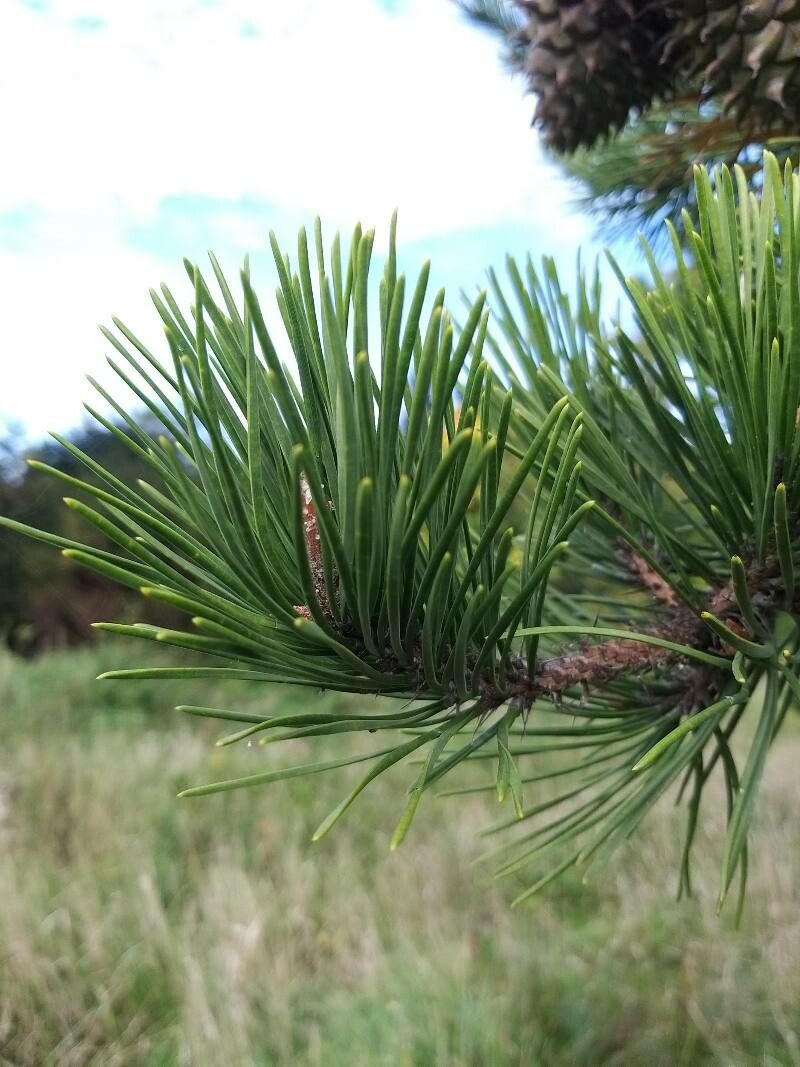
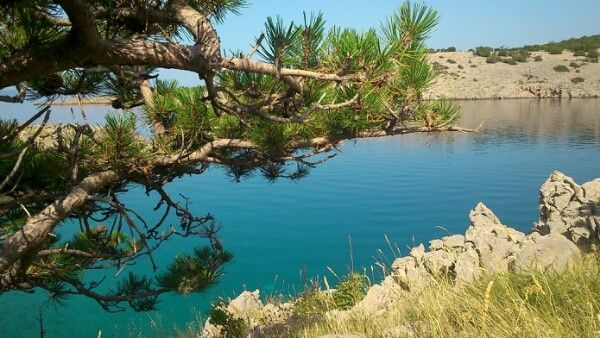
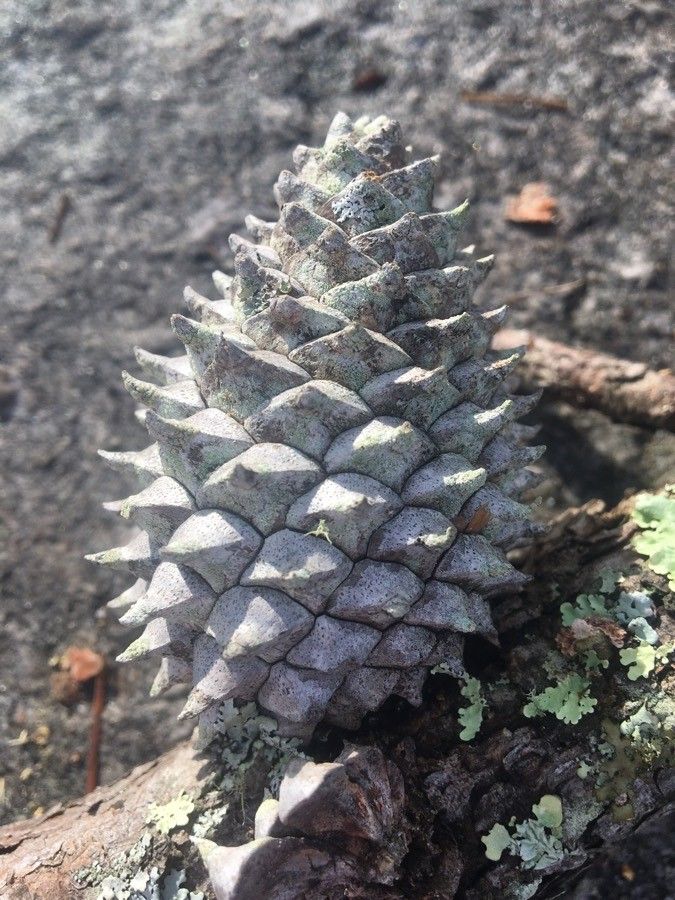
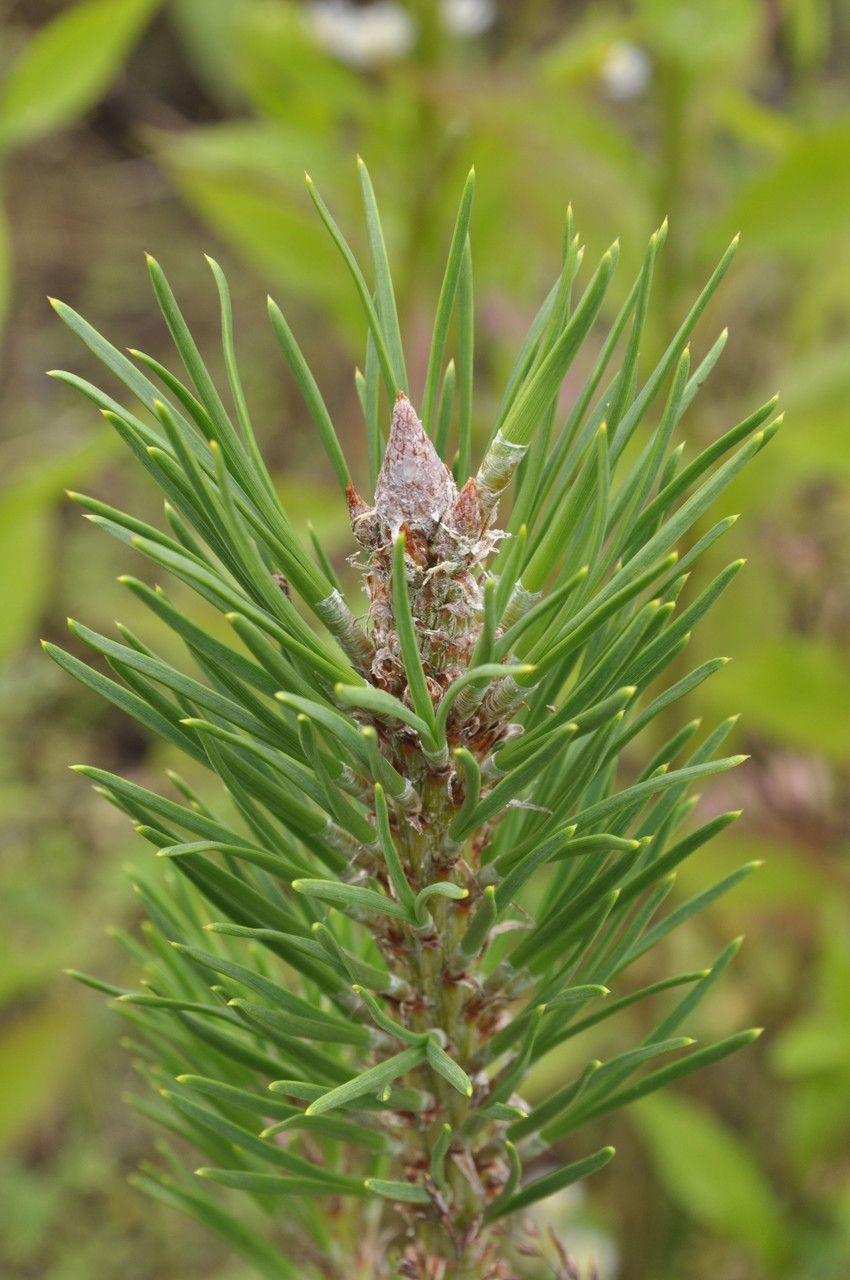
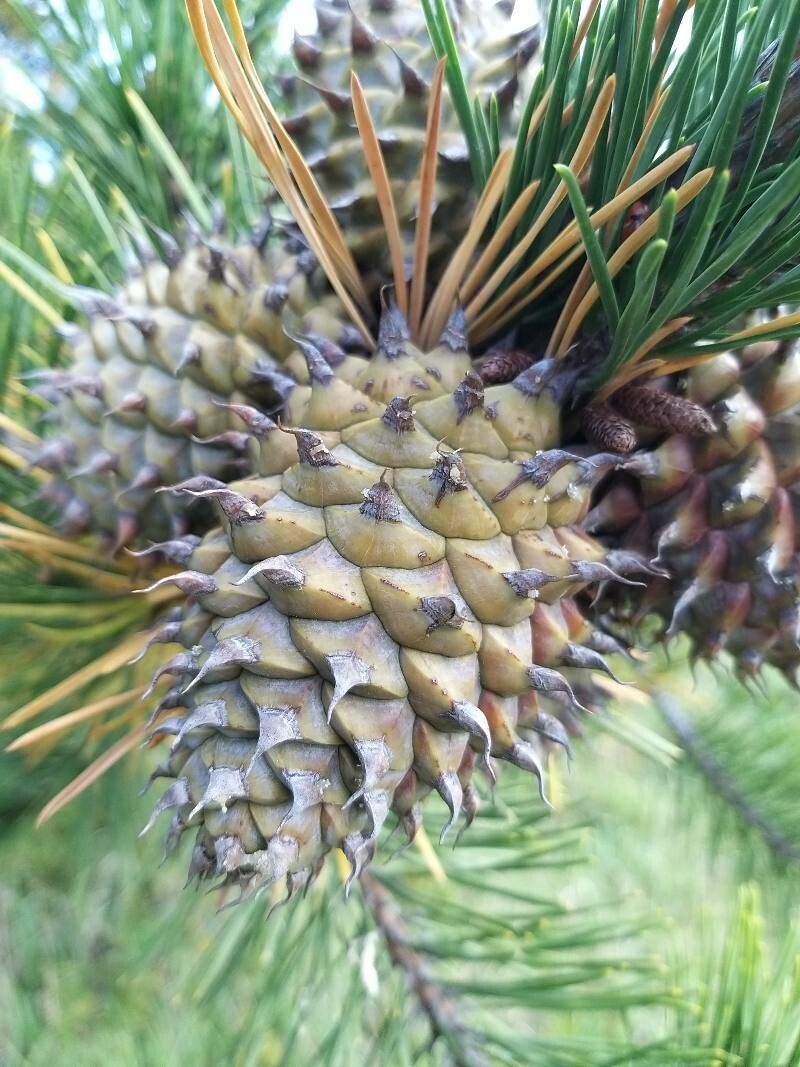
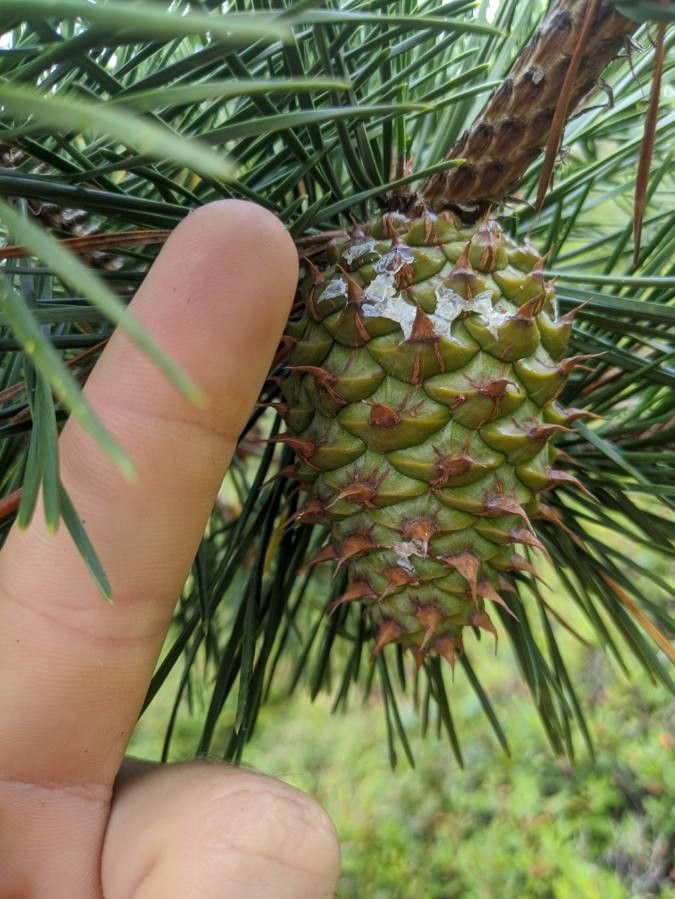
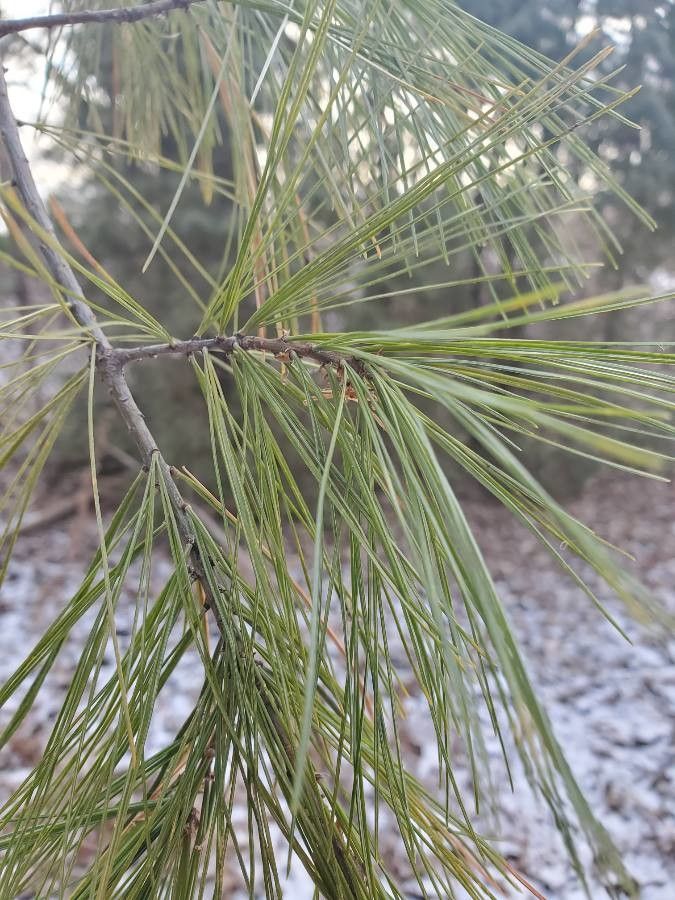
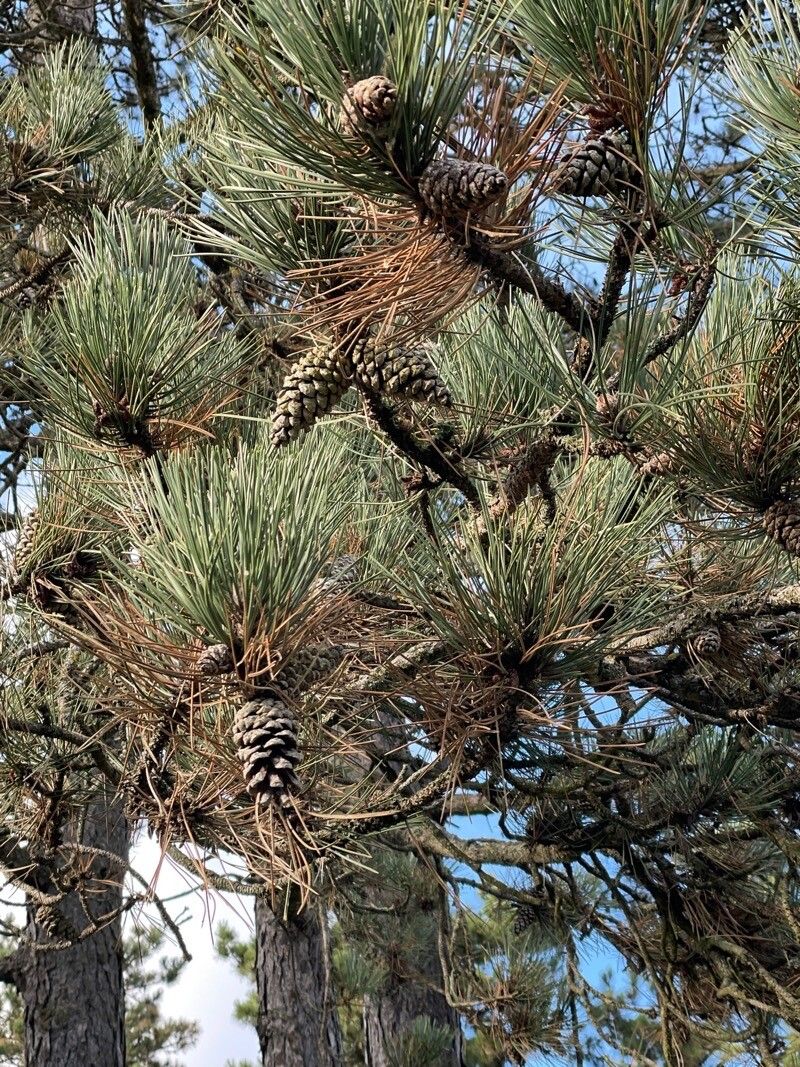
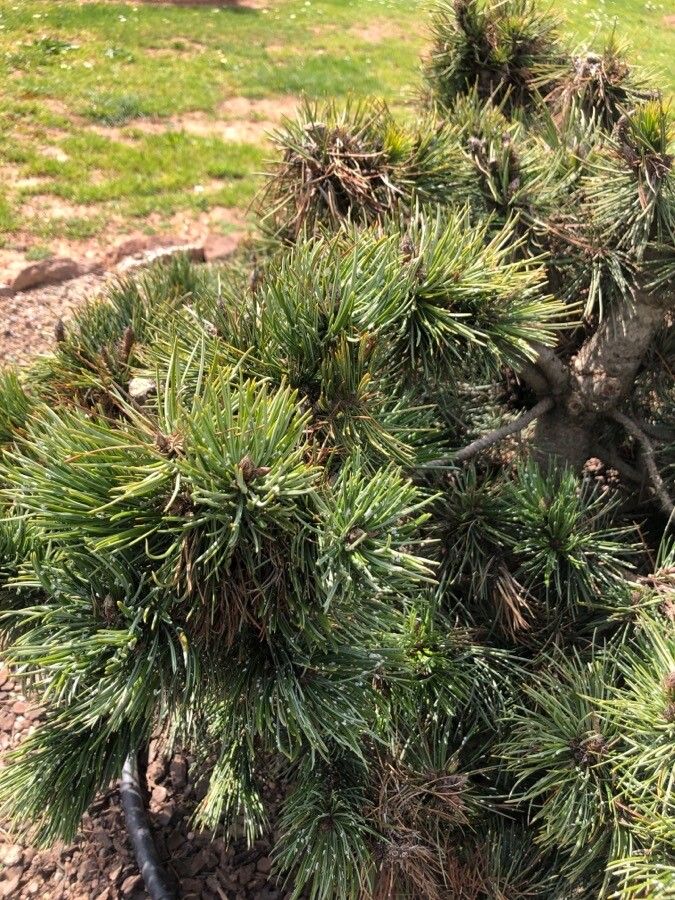
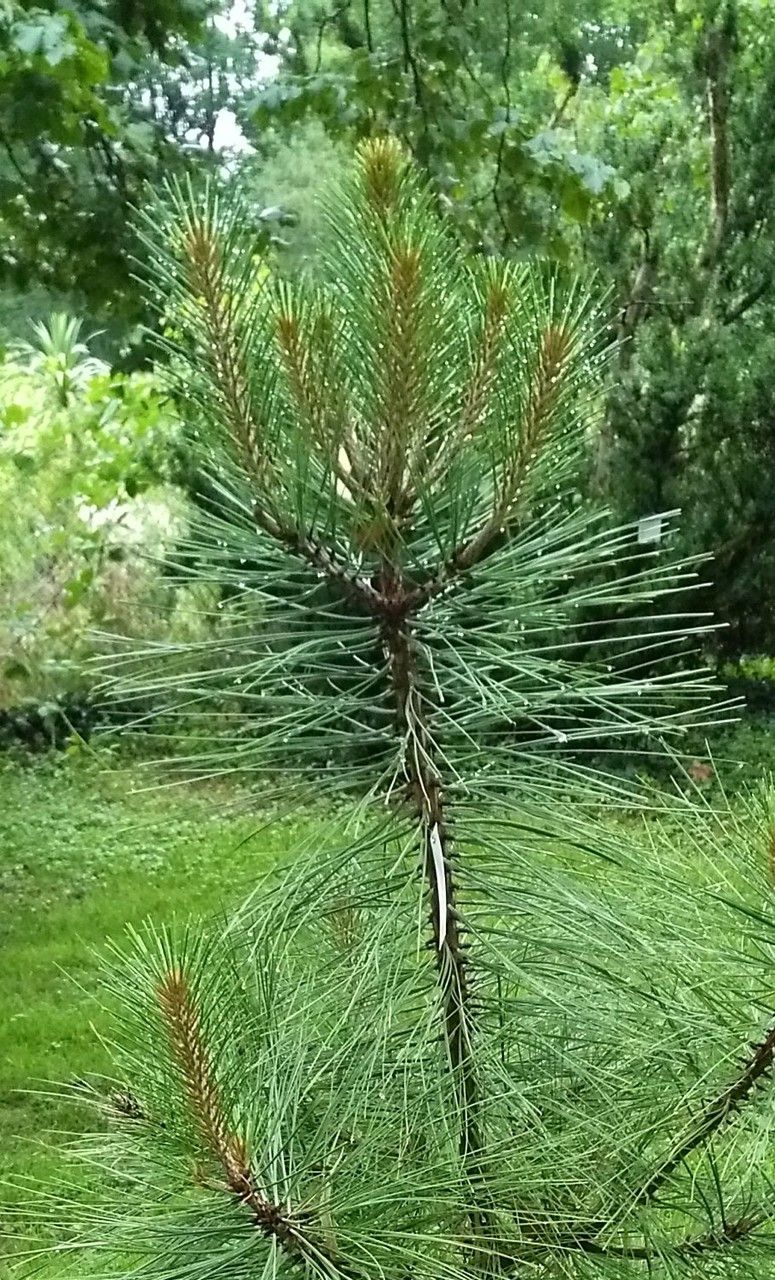
Pinus pungens, commonly known as the Table Mountain Pine, is a species of pine tree native to the eastern United States. It is a slow-growing evergreen that can reach up to 80 feet in height and 2 feet in diameter. The Table Mountain Pine has a conical shape, dense foliage, and short, blue-green needles. Its bark is thick, scaly, and reddish-brown. This species thrives in well-drained soils and can tolerate drought conditions once established. It grows best under full sun but can also withstand partial shade. The Table Mountain Pine is valued for several reasons. It is used ornamentally in landscaping due to its attractive appearance. Its strong wood makes it suitable for timber production. Ecologically, this pine provides essential habitat for various wildlife species such as birds and small mammals. It also helps prevent soil erosion by stabilizing soil on steep slopes. Overall, Pinus pungens is an important plant species that contributes both aesthetically and ecologically to its native environment, while also offering economic benefits through timber production.
Table mountain pine has strong resistance to disease and is generally not susceptible to illnesses. In terms of maintenance, this plant is fairly low-maintenance. When grown outdoors it needs only minimal watering, and larger specimens usually do not require pruning. Smaller plants, however, should be pruned after they finish blooming. Table mountain pine is appropriate for anyone with an outdoor area, such as a garden or deck, and does not demand much gardening experience.
How to keep Pinus Pungens.
Light
Table mountain pine benefits from ample sunlight to thrive optimally. Its healthy growth is closely tied to receiving a generous amount of light. However, too much or too little light can adversely affect its health. This trait stems from its native environments, where strong sun exposure is common, leading the species to adapt to that preference.
Water
The Table Mountain pine is highly adaptable to different watering conditions and is drought-tolerant. It should be watered once every 1-2 weeks, taking care not to over-saturate the soil. Although this tree thrives outdoors and benefits from natural rainfall, it may require additional watering during dry spells.
Temperature
Table mountain pine is indigenous to habitats with temperatures ranging from 41 to 95 °F (5 to 35 ℃). It favors moderate temperatures for optimal growth. If seasonal adjustments are necessary, they should aim to keep temperatures within this range.
Fertilizer
Table mountain pine has specific nutrient needs and does not require heavy fertilization. Spring is the best time to apply fertilizer for optimal growth. Providing nutrients enhances its health, increases resistance to pests and diseases, and supports its long lifespan.
Pruning
Pruning Table Mountain pine from early to late winter offers several benefits. By removing dead or damaged branches, you can enhance growth and improve air circulation. To minimize stress and pest issues, use clean, sharp tools. This not only improves the plant’s structure and longevity but also creates a visually appealing shape.
Botanical profile.
- Plant Type
- Tree
- Life Cycle
- Perennial
- Genus
- Pinus
- Family
- Pinaceae
- Hardiness Zone
- 5-9
- Mature Height
- 6.1 m to 12.19 m
- Mature Spread
- 10.67 m
- Leaf Color
- Green, Blue, Yellow, Gold
- Leaf Type
- Evergreen
- Flower Color
- Yellow
- Bloom Time
- Mid spring, Late spring
- Planting Time
- Spring, Summer
- Harvest Time
- Late summer, Early fall, Mid fall
Other names.
Reader questions.
What are the sunlight requirements for Table Mountain Pine?
Table Mountain Pine thrives in conditions where it can receive ample exposure to sunlight. It prefers full sun conditions, which means it should be exposed to more than 6 hours of sunlight daily. However, it can still grow in partial sun, with about 3-6 hours of sunlight. It's important to watch how sunlight moves through your garden, choosing spots that provide a perfect balance of light and shade to ensure the plants are happy and healthy.
What is the optimal temperature range for Table Mountain Pine?
Table Mountain Pine thrives in environments with temperatures ranging from 41 to 95 °F (5 to 35 °C), preferring moderate temperatures for optimal growth. It possesses strong cold resistance, making special frost protection measures usually unnecessary. However, if temperatures are expected to drop below -25°C, protective measures such as wrapping the trunk and branches with non-woven fabric or cloth should be considered. Additionally, abundant watering before the first freeze in autumn is recommended to keep the soil moist and prevent drought during winter and early spring.
How important is sunlight for the growth of Table Mountain Pine?
Sunlight is crucial for the optimal growth of Table Mountain Pine. Its healthy development is closely linked to a generous amount of light, emulating its native environments where significant sun exposure is a norm. Either excessive or deficient light may negatively impact its health. During periods of insufficient natural sunlight, such as winter or in less sunny spaces indoors, artificial lights can be an essential solution. They promote healthier and faster growth by providing the necessary light spectrum. LED lights, for instance, are popular for indoor plants as they can offer specific wavelengths required by the plants. The amount of artificial light needed varies by plant type, with full sun plants needing 30-50W/sq ft, partial sun plants 20-30W/sq ft, and full shade plants 10-20W/sq ft.
How does Table Mountain Pine respond to low temperatures, and what are the recommended solutions?
Table Mountain Pine is cold-tolerant, thriving best when temperatures are kept above 5°C. Throughout winter, maintaining the environment above -20°C is advised. Should temperatures fall below -25°C, branches may become brittle and dry by spring, with no new shoots emerging. The recommended solution for affected plants is to prune away dead branches that have failed to produce new leaves when spring arrives.
What symptoms indicate insufficient sunlight for Table Mountain Pine?
Table Mountain Pine may show various symptoms if it's not receiving enough sunlight. These symptoms include smaller new leaves, leggy or sparse growth, faster leaf drop, slower or halted growth, lighter-colored new leaves, chlorosis (leaves losing their green color), sunscald, leaf curling, wilting, and leaf scorching. Each of these symptoms indicates the plant is struggling with light deficiency and could affect its overall health and growth.
What are the effects of high temperatures on Table Mountain Pine and how can they be mitigated?
During summer, it's crucial to keep Table Mountain Pine's environment below 35°C. Temperatures exceeding 38°C may cause the plant's leaves to lighten in color, their tips to dry and wither, and increase susceptibility to sunburn. Mitigation strategies include trimming sunburned and dried parts, relocating the plant to a shaded location or providing shade with a cloth during the midday and afternoon sun, and ensuring the soil remains moist by watering the plant in the morning and evening.
How can I address sunlight-related issues for Table Mountain Pine?
To address issues related to inadequate sunlight for Table Mountain Pine, several strategies can be employed. Indoors, you can gradually move your plant to a sunnier location each week until it receives at least 6 hours of direct sunlight daily, use a south-facing window, or consider supplemental artificial lighting if the plant is large or not easily movable. Outdoors, the key is also gradual adaptation to sunnier sites to prevent sunburn. If sunlight is obstructed, consider reducing barriers like pruning trees or, for smaller plants, transplanting to a sunnier location during their dormant period. Remember, parts of the plant already affected may not recover, but new growth should be healthy with improved light conditions.