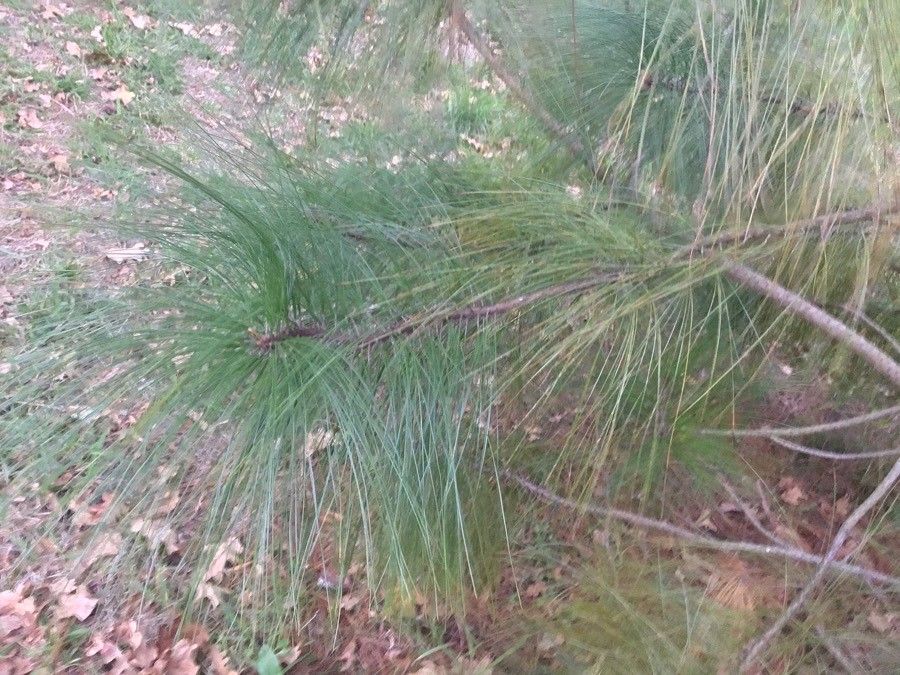
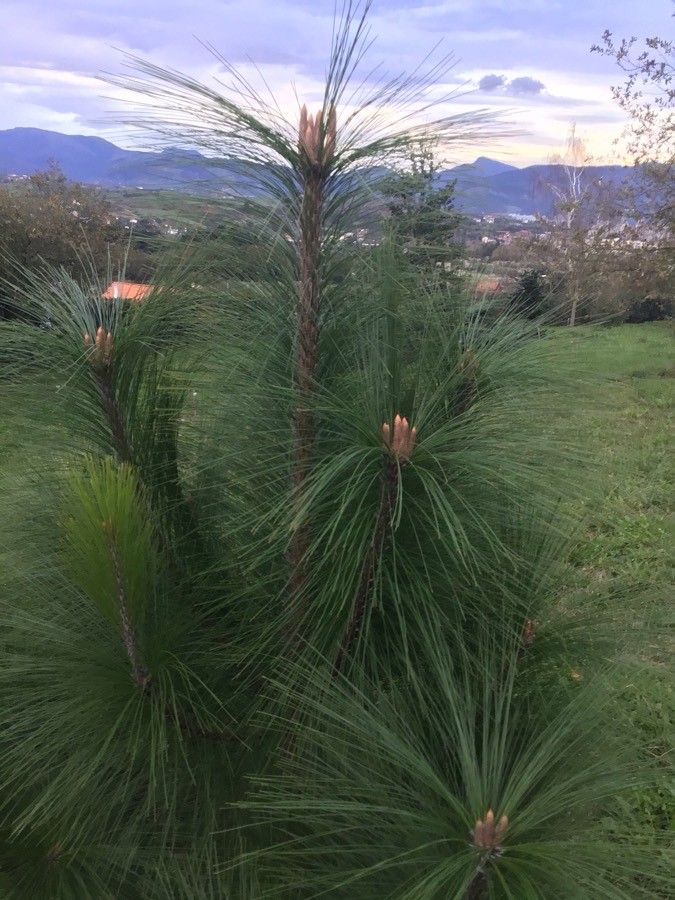
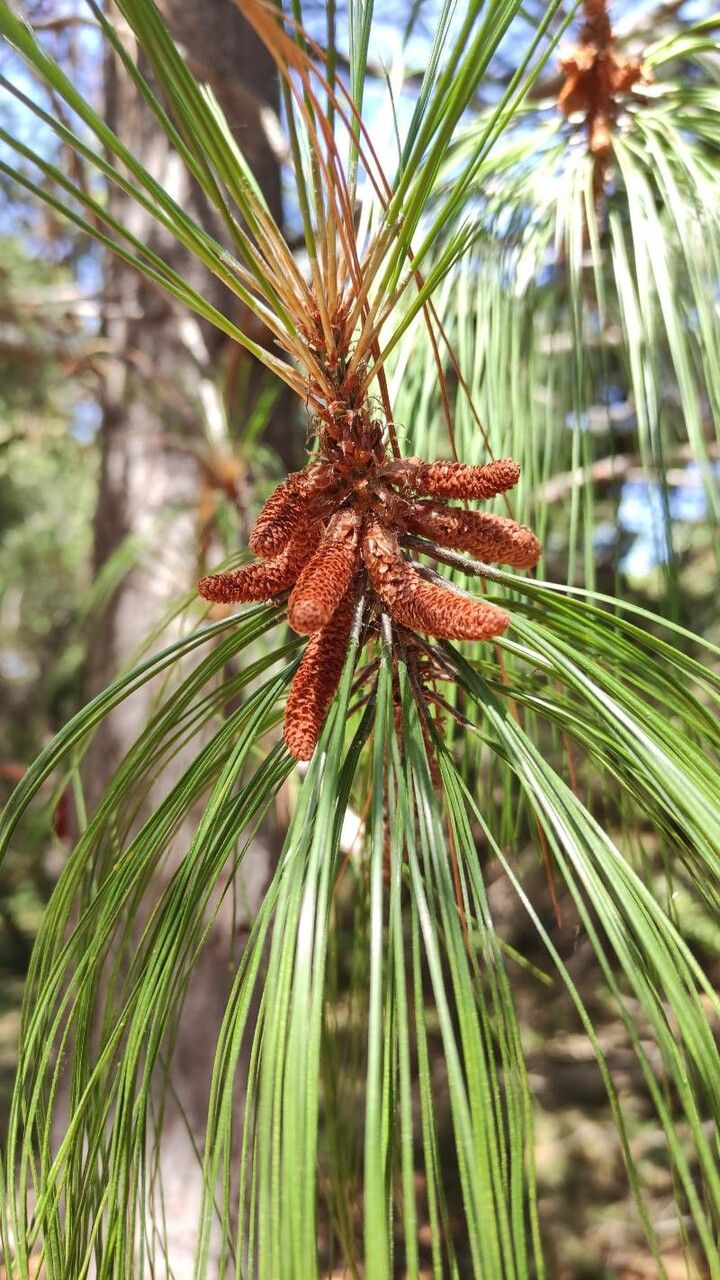
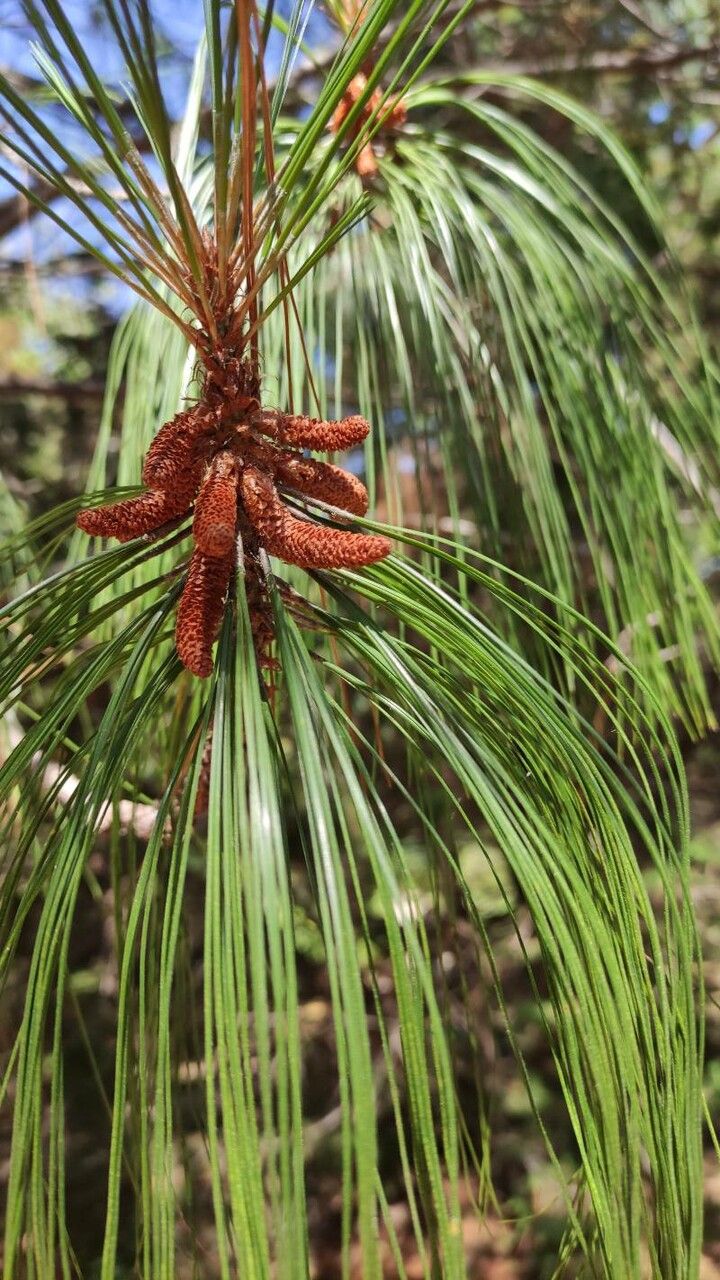
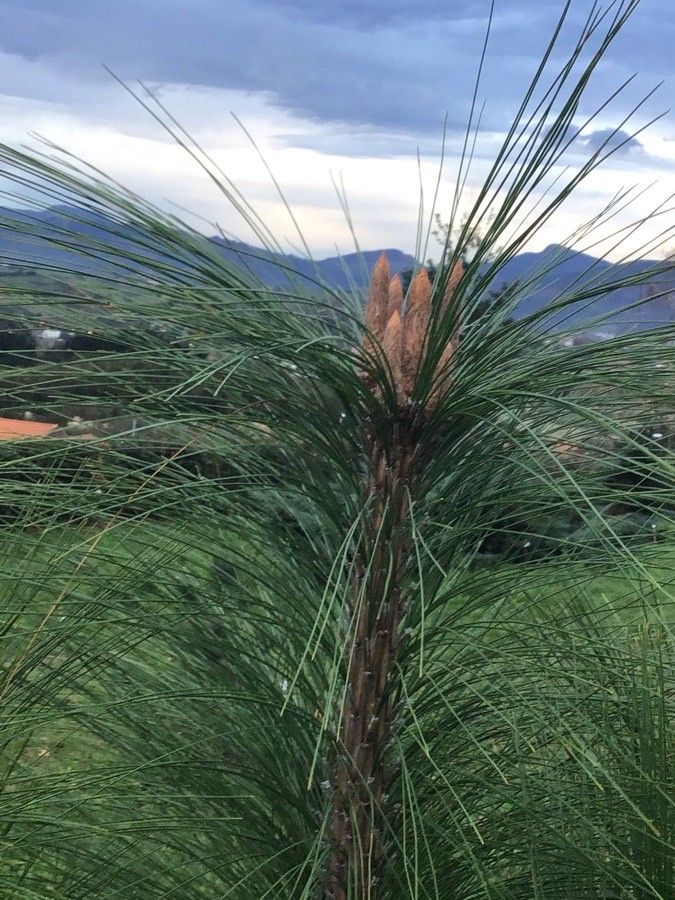
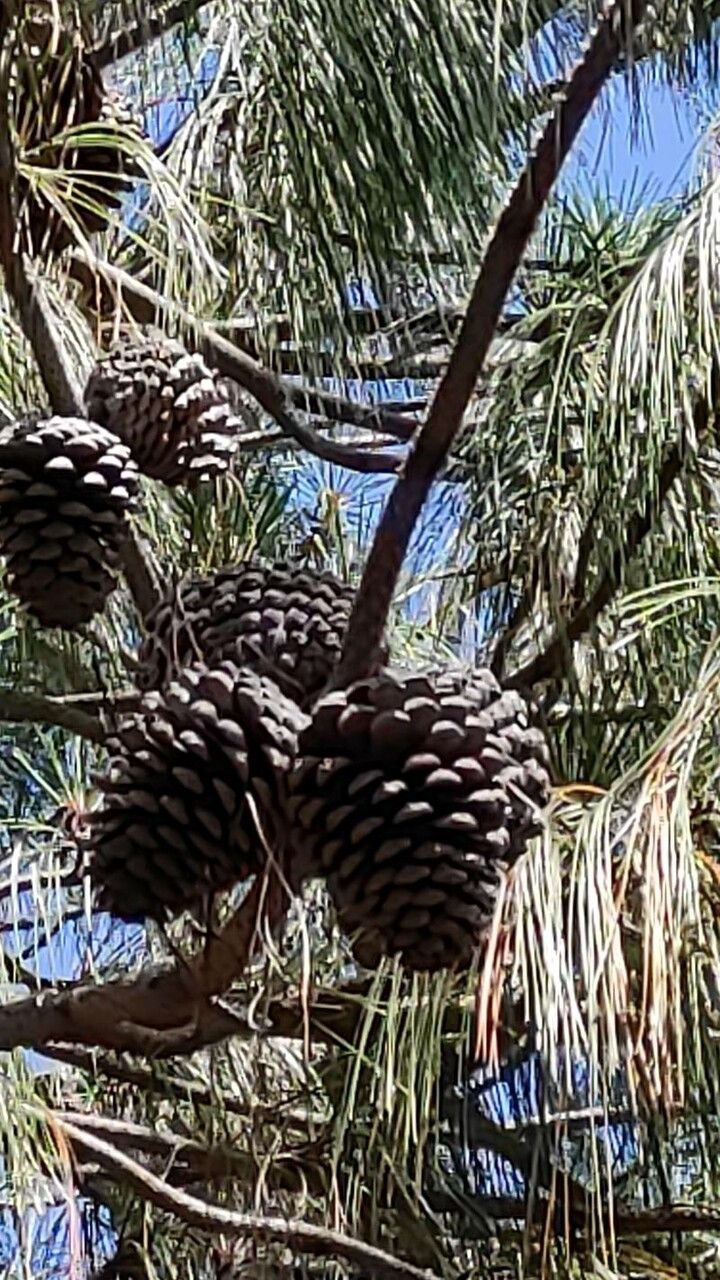
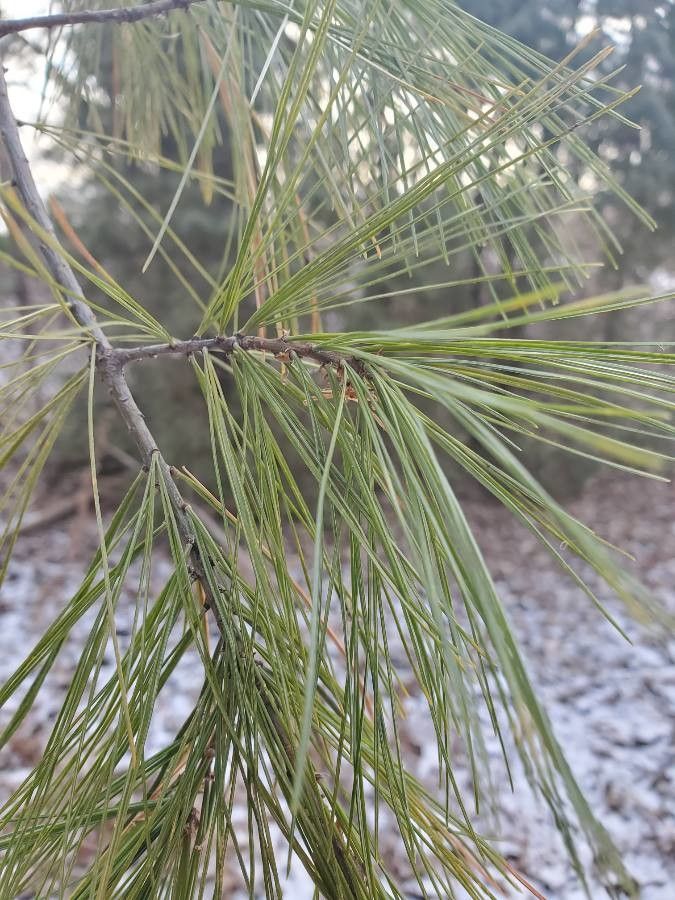
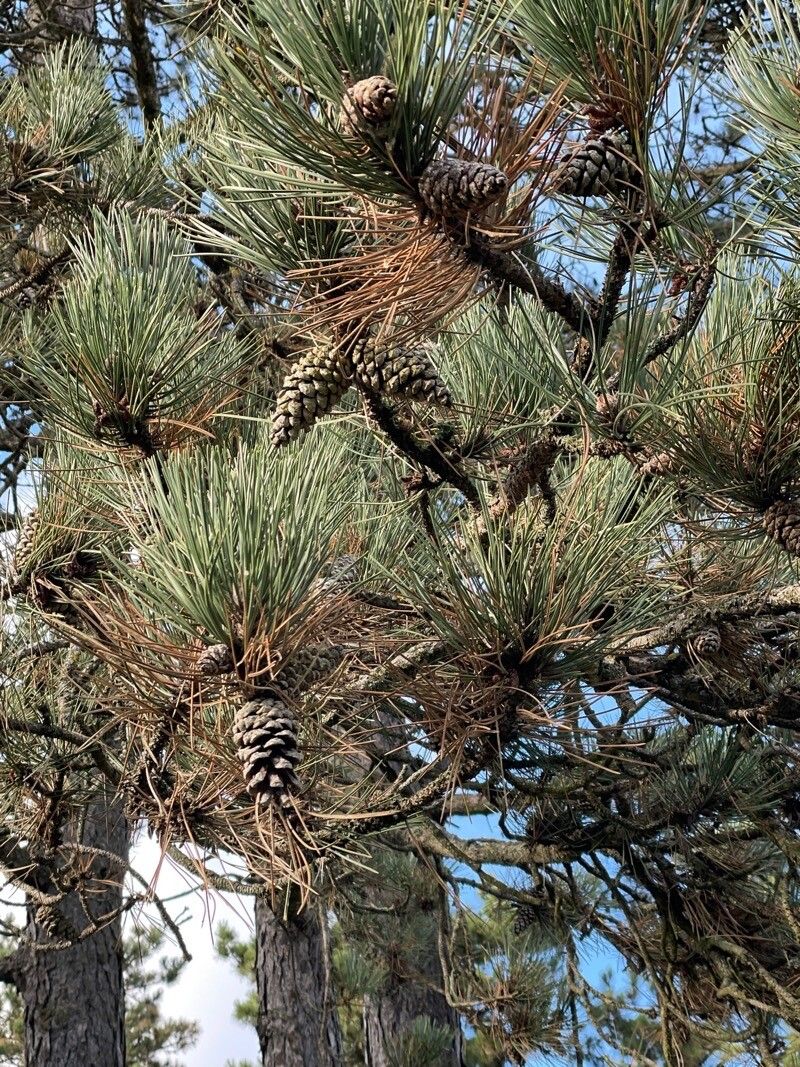
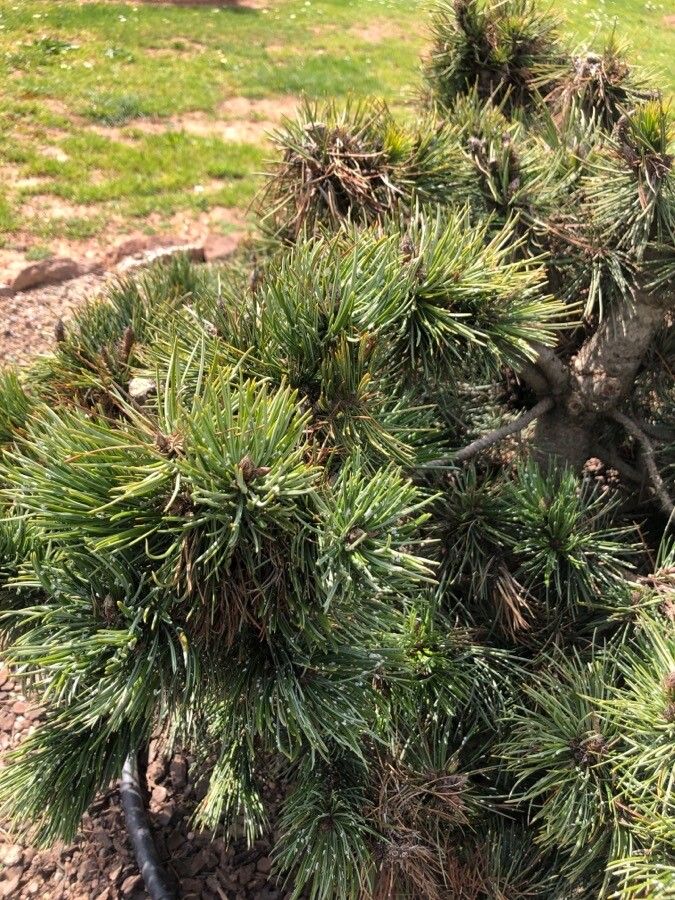
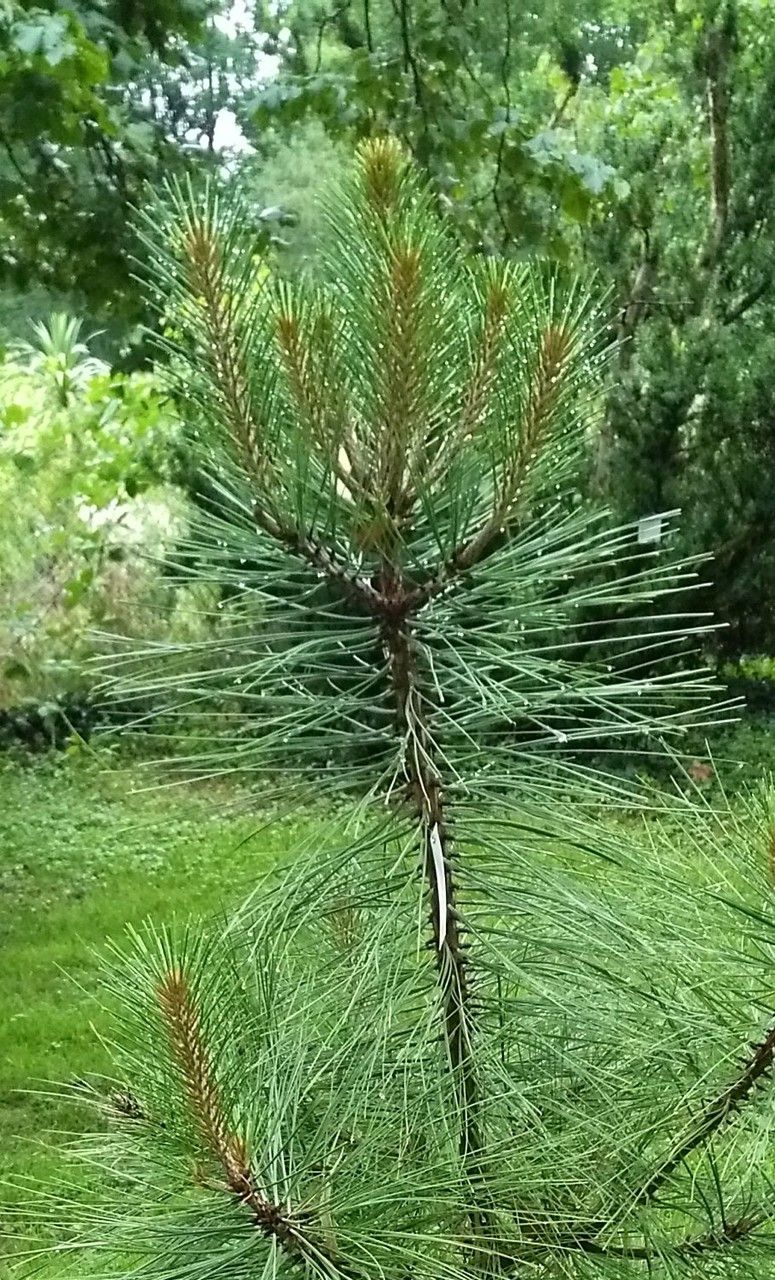
Pinus pseudostrobus, known in English as the smooth-bark Mexican pine and in Spanish as chamite or pacingo, is a tree found in forests of Mexico and Central America. It is 8 to 25 m tall with a dense and round top.It is threatened by logging and wood harvesting. The bark is brown and fissured and smooth when young. It is subject to ex situ conservation. It grows at altitudes between 850 and 3250 m. from 26° to 15° north latitude, from Sinaloa, Mexico to Nicaragua and Honduras. It occurs within a rainfall regime that rains mostly in summer.
False white pine is highly resistant to disease and is generally not vulnerable to illnesses. Regarding care, this plant is fairly low-maintenance. When grown outdoors it needs only light watering, and larger plants typically do not require pruning. Smaller plants, however, should be pruned after they bloom. False white pine is appropriate for anyone with an outdoor area, such as a garden or deck, and does not demand much gardening experience.
How to keep Pinus Pseudostrobus.
Light
False white pine is native to open habitats, such as sunny meadows and forest edges, where light is abundant. It performs best in full sun but can also tolerate partial sun, adapting well to different sunlight levels.
Water
The false white pine, well-suited for areas with intermittent rainfall, exhibits a moderate tolerance to drought. To ensure proper moisture retention, it needs deep watering every 1-2 weeks. As an evergreen, maintaining consistent soil moisture is essential, so it's important to monitor the soil's dryness rather than following a fixed watering schedule.
Temperature
False white pine shows good temperature adaptability, tolerating higher heat and wide temperature fluctuations. In hot conditions, attention should be paid to watering and providing appropriate shade to avoid sunburn. Its tolerance of low temperatures is relatively poor. While it can endure some cold, very cold conditions can cause frost damage.
Fertilizer
The false white pine has particular nutrient needs and does not require heavy fertilization. Fertilizing in spring is the best time to promote optimal growth. Providing nutrients improves its health, increases its resistance to pests and diseases, and helps sustain its long lifespan.
Pruning
The False White Pine is characterized by its tall height and soft, needle-like leaves. For optimal care, prune this tree mainly between early and late winter. Focus on removing dead branches and thinning out crowded areas to improve air circulation. To minimize stress and the risk of disease, avoid cutting the main trunk. This approach helps ensure healthy growth in the spring.
Botanical profile.
- Plant Type
- Tree
- Life Cycle
- Perennial
- Genus
- Pinus
- Family
- Pinaceae
- Hardiness Zone
- 7-10
- Mature Height
- 29.87 m to 39.93 m
- Mature Spread
- 7.92 m to 11.89 m
- Leaf Color
- Dark Green
- Leaf Type
- Evergreen
- Bloom Time
- Early spring, Mid spring
- Planting Time
- Spring, Autumn
- Harvest Time
- Late summer, Early fall, Mid fall
- Native Area
- El Salvador, Honduras, Mexico, Guatemala
Other names.
Reader questions.
What are the sunlight requirements for False white pine (Pinus pseudostrobus)?
The False white pine (Pinus pseudostrobus) thrives under different sunlight conditions depending on the specific needs. For full sun exposure, it requires above 6 hours of direct sunlight daily. If the plant is in an area with partial sun, it should receive about 3-6 hours of sunlight. It's important to observe how sunlight moves through your garden, finding spots that offer the right mix of light and shade. This careful selection will ensure your plants grow healthily and happily.