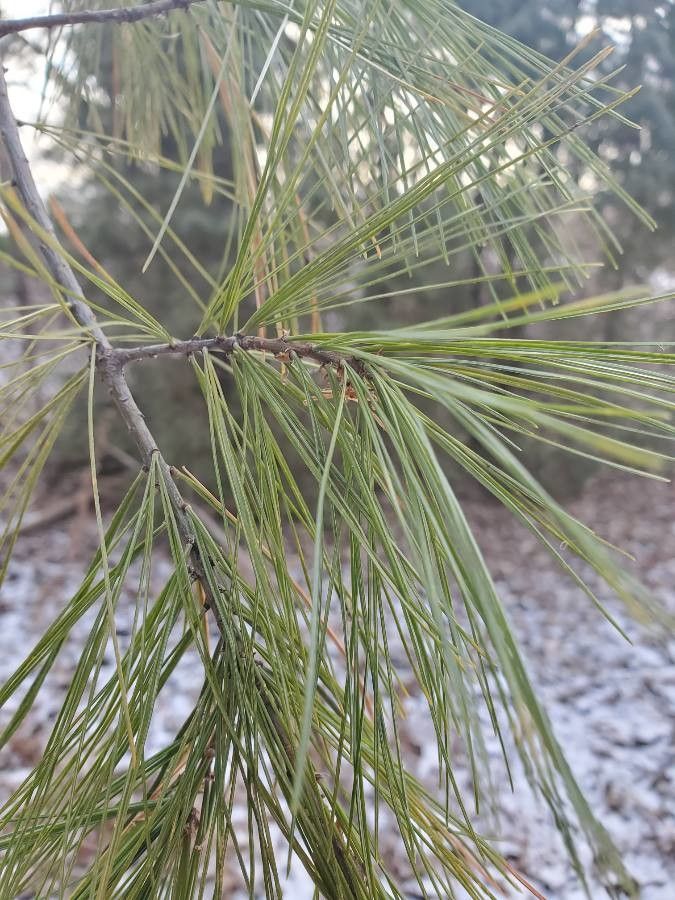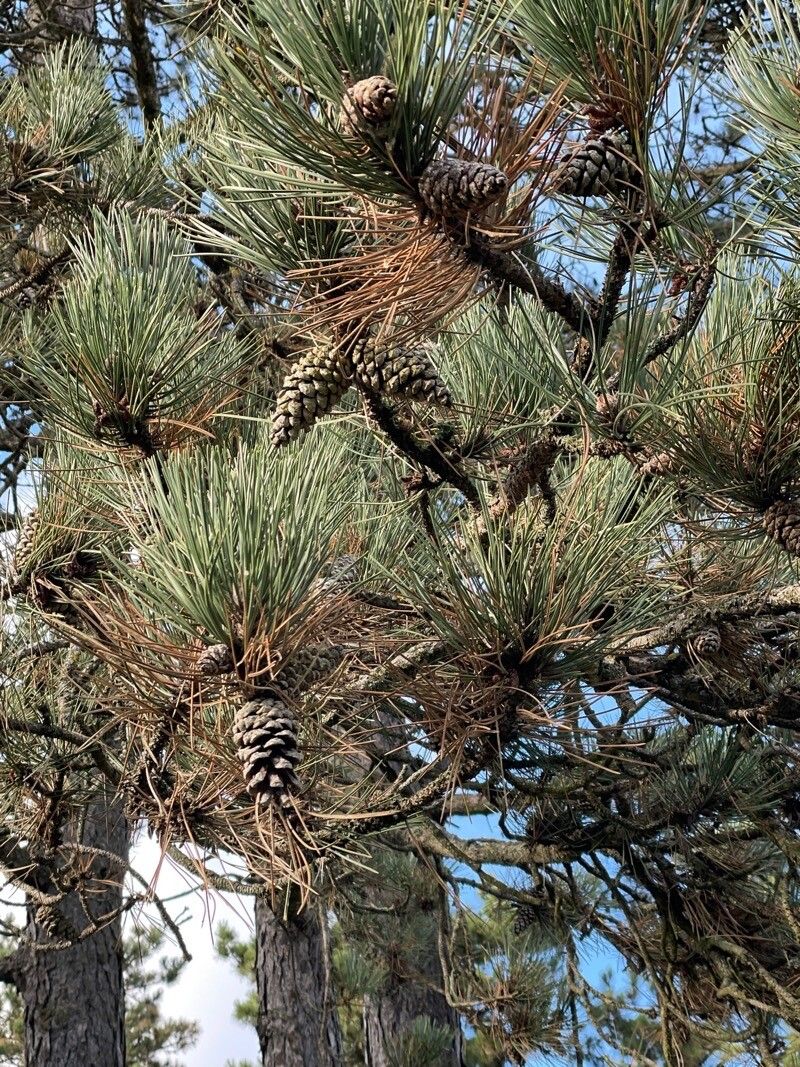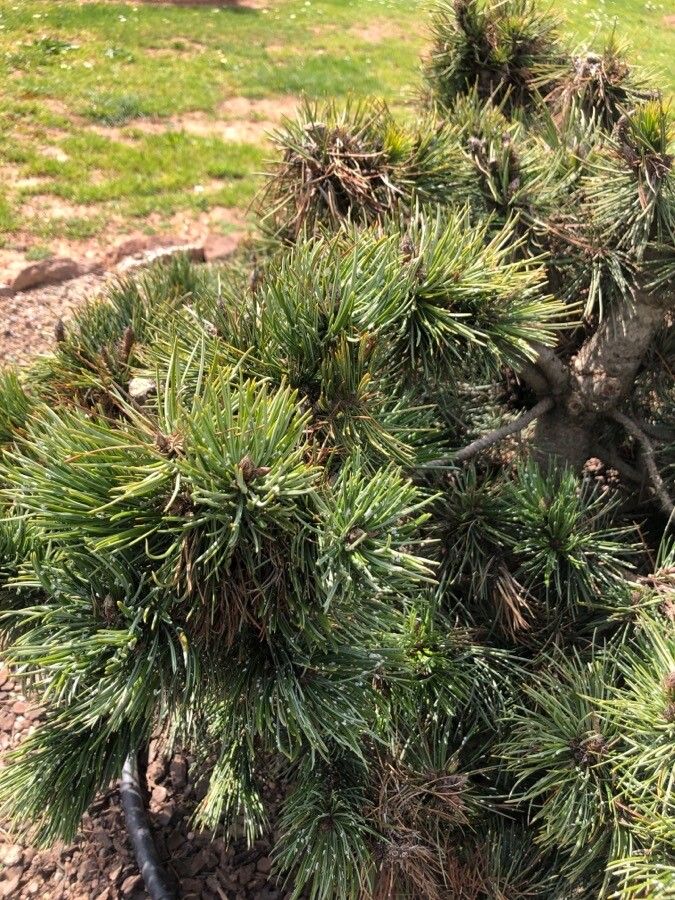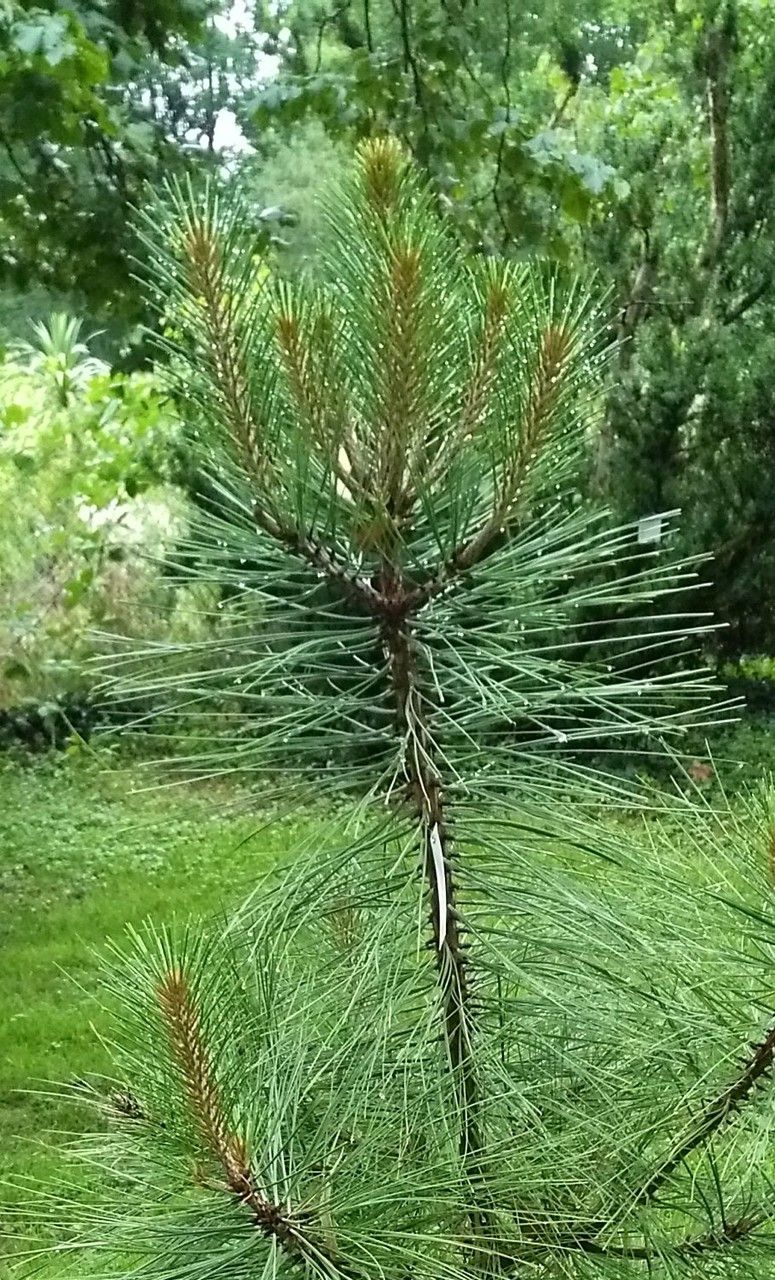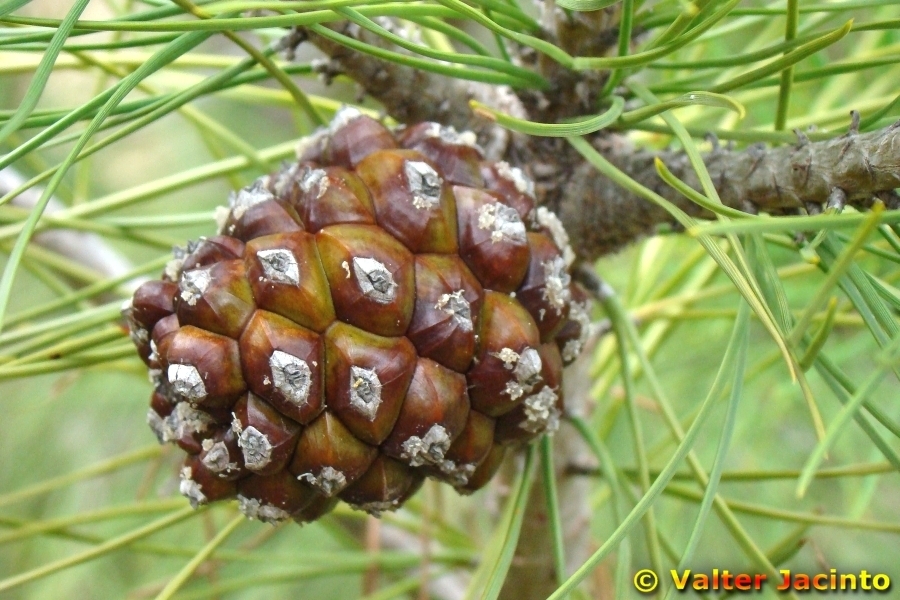
The stone pine, botanical name Pinus pinea, also known as the Italian stone pine, umbrella pine and parasol pine, is a tree from the pine family (Pinaceae). The tree is native to the Mediterranean region, occurring in Southern Europe and the Levant. The species was introduced into North Africa millennia ago, and is also naturalized in the Canary Islands, South Africa and New South Wales. Stone pines have been used and cultivated for their edible pine nuts since prehistoric times. They are widespread in horticultural cultivation as ornamental trees, planted in gardens and parks around the world. In coastal California, for example, where known popularly as the Italian stone pine in tree guidebooks since 1956, this evergreen is widely grown from Hollywood to Palisades Park (Santa Monica), to Sylmar in the northern San Fernando Valley, and in Marina del Rey, after World War II. This plant has gained the Royal Horticultural Society's Award of Garden Merit.Pinus pinea is a diagnostic species of the vegetation class Pinetea halepensis.
The Italian stone pine, scientifically known as Pinus pinea, is a tree whose name carries specific meanings. The genus name Pinus is the Latin word for "pines," while the specific epithet pinea translates to "pine cone" in Latin. The common name, "stone pine," likely refers to the hard shell of the pine nuts, which can be difficult to remove.
The Italian stone pine is fairly disease-resistant and is generally not prone to illnesses. Regarding care, this plant is relatively low-maintenance. When planted outdoors it requires minimal watering, and larger plants typically do not need pruning. Smaller plants, however, should be pruned after they have bloomed. The Italian stone pine is suitable for anyone with an outdoor space, such as a garden or deck, and does not require much care experience.
How to keep Pinus Pinea.
Light
The Italian stone pine does well when it receives abundant sunlight throughout the day. It can grow without shade because it originates from sunny habitats. A lack of strong sunlight may limit its growth, but the tree will still survive. Extremely intense sun exposure is unlikely to harm it.
Water
The Italian stone pine is well-suited to a Mediterranean climate, thriving in dry conditions with occasional rainfall. It is drought-tolerant and requires watering only once every one to two weeks, allowing the soil to dry out slightly between waterings. This tree prefers full sunlight and well-draining soil, which promotes healthy growth and helps prevent waterlogging.
Humidity
This plant prefers dry conditions, so don't mist it. However, watering it less often can also thrive in higher humidity.
Temperature
The Italian stone pine does best in its native habitat where temperatures commonly fall between 59–95 °F (15–35 °C). It’s best to set temperatures to approximate this range, allowing for seasonal variation when needed.
Fertilizer
The Italian stone pine has particular nutrient needs and does not require heavy fertilization. Applying fertilizer in spring is the best time for achieving optimal growth. Providing nutrients enhances its health, strengthens its resistance to pests and diseases, and helps preserve its long lifespan.
Pruning
The Italian stone pine, known for its umbrella-shaped canopy and fragrant needles, thrives when pruned regularly during its dormant period, from early to late winter. To maintain the tree's health and shape, remove any dead or crossing branches. Use sharp tools to minimize damage and help the Italian stone pine retain its structure and visual appeal.
Botanical profile.
- Plant Type
- Tree
- Life Cycle
- Perennial
- Genus
- Pinus
- Family
- Pinaceae
- Hardiness Zone
- 7-10
- Mature Height
- 11.89 m to 24.99 m
- Mature Spread
- 11.89 m to 17.98 m
- Leaf Color
- Green
- Leaf Type
- Evergreen
- Flower Color
- Yellow, Green
- Bloom Time
- Late spring, Early summer
- Planting Time
- Spring, Autumn
- Harvest Time
- Mid summer, Late summer, Early fall
- Native Area
- Turkey, Portugal, Italy, Spain, France
Other names.
Reader questions.
How should I water my Italian stone pine tree?
Watering your Italian tone pine is a simple task. The easiest way is to use a garden hose and slowly soak the soil. This is especially effective for large trees that need a lot of water. Smaller trees can be watered with a watering can or smaller tool. It's important to avoid overhead watering, as excessive moisture on the leaves can cause disease, especially for young trees.
Why should I put fertilizer on my Italian stone pine?
To promote healthy growth of Italian tone pine, it is recommended to fertilize it in the spring. It's important to remember that this plant has a long lifespan and requires support. By adding nutrients to the soil, you can enhance the plant's overall health, helping it to effectively resist common pests and diseases that can hinder growth or reduce its lifespan.
What are the sunlight requirements for Italian tone pine?
The Italian tone pine requires significant exposure to sunlight throughout the day to thrive well, ideally benefiting from full sun conditions. It flourishes in environments where it can receive more than 6 hours of sunlight daily, without the need for shade. Although it originates from sunny habitats and is less likely to be harmed by extreme sun exposure, insufficient sunlight could potentially affect its growth, albeit not fatally. For optimal sunlight, observe your garden to identify areas that provide a perfect balance of light and shade, ensuring your plant's happiness.
What are the ideal growth conditions for Italian tone pine?
Italian tone pine thrives best in its native environment, where temperatures range from 59-95 °F (15-35 °C). To ensure optimal growth, it is beneficial to adjust the surrounding temperature to mimic this range, allowing for necessary seasonal fluctuations. The plant possesses significant cold resistance, so special frost protection measures aren't typically required during winter. However, if temperatures are expected to fall below -15°C, it's crucial to protect the tree from the cold by wrapping its trunk and branches with materials like non-woven fabric or cloth. Additionally, watering the plant abundantly before the first freeze in autumn is recommended to keep the soil moist, which helps prevent drought and water scarcity during the winter and early spring.
What should I do if I give my Italian stone pine tree too much water or too little water?
Poor soils can sometimes cause overwatering issues for Italian tone pines. If the soil doesn't drain well, the plant will start to decline. To fix this, you can either improve the soil's drainage by adding amendments or relocate the plant to a better growing environment. If you're growing the pine in a pot, you might need to repot it with looser soil and a container that allows for better drainage. Overwatering can also lead to disease, so be sure to treat any infections promptly. On the other hand, if your Italian tone pine is underwatered, simply water it more frequently to bring it back to health. To determine if your plant is being overwatered, look at the new growth. If it's discolored or easily breaks, it's a sign of excessive moisture. Standing water or slow drainage can also indicate overly moist soil. Underwatered pines will have sparse, brown leaves. Consider recent rainfall or high temperatures as possible causes for these symptoms.
When should I fertilize my Italian stone pine?
Italian tone pine is a unique plant that doesn't need a lot of extra nutrients to grow well. Unlike regular garden plants, the growing medium it's in might not provide enough nutrients. To ensure healthy growth, it's best to fertilize Italian tone pine in the spring, before new growth starts to appear.
How can artificial lighting support indoor plants like the Italian tone pine?
Indoor plants, including the Italian tone pine, require adequate lighting for optimal growth. When natural sunlight is insufficient, especially during winter or in less sunny spaces, artificial lights offer a crucial solution. To use artificial lighting effectively: 1. Choose LED lights, which can be tailored to provide specific wavelengths necessary for your plant. Full sun plants need 30-50W/sq ft of light, partial sun plants need 20-30W/sq ft, and full shade plants should have 10-20W/sq ft. 2. Position the light source 12-36 inches above the plant to mimic natural sunlight. 3. Mimic natural daylight hours, ensuring most plants receive 8-12 hours of light per day. These steps promote faster, healthier growth by compensating for the lack of natural sunlight.
How does Italian tone pine react to low temperatures?
Italian tone pine is quite tolerant of cold and generally thrives when temperatures remain above 15°C. During winter, it is imperative to ensure the temperature does not fall below -10°C. If the temperature drops below -15°C, you might not observe any immediate changes during the winter; however, by springtime, the branches may turn brittle and dry, and the tree may fail to produce new shoots. The recommended solution for these symptoms is to prune away any dead branches that have not produced new leaves in the spring.
How often do I need to water my Italian stone pine?
Italian tone pine trees are mature and do not require a lot of water. They can survive mostly on rainfall and only need to be watered about once a week during the hottest months. In other seasons, they usually do not need watering at all, except for newly planted trees. For newly planted trees, regular watering is necessary to maintain soil moisture and help the roots establish. However, it is important to avoid overwatering, as Italian tone pines cannot tolerate standing water. It is safest to err on the side of not watering too much.
When is it a bad idea to use fertilizer on my Italian stone pine tree?
Italian tone pine does not require frequent fertilization like some other plants. It is important to avoid over-fertilizing, as this can cause it to start dying back. Fertilizer should only be applied in the spring, and none should be added during the summer, fall, and winter seasons. Additionally, there is no need to add organic matter to the soil during these seasons.
What symptoms indicate insufficient or excessive light exposure in Italian tone pine?
Insufficient light exposure in Italian tone pine can lead to symptoms such as smaller new leaves, leggy or sparse growth, faster leaf drop, slower or no new growth, lighter-colored new leaves, indicating a lack of chlorophyll and essential nutrients. Excessive sunlight may cause chlorosis (leaves turning yellow), sunscald (pale or necrotic areas on plant tissue), leaf curling (a defense mechanism to minimize water loss), wilting (loss of turgor pressure causing drooping), and leaf scorching (brown, dry edges on leaves). These symptoms reflect the plant's sensitivity to heat and its requirements for well-balanced light conditions.
What should be done if Italian tone pine experiences high temperatures?
During the summer months, it's crucial to keep the temperature below 35°C for Italian tone pine. If temperatures soar above 41°C, the plant's leaves may lighten in color and the tips can become dry and withered, increasing susceptibility to sunburn. To manage these symptoms, trim away any sunburned and dried-up parts of the plant. It's also beneficial to move the plant to a shadier location or use a shade cloth to protect it from the midday and afternoon sun. Ensuring the soil remains moist by watering in the morning and evening can also help mitigate the effects of high temperatures.