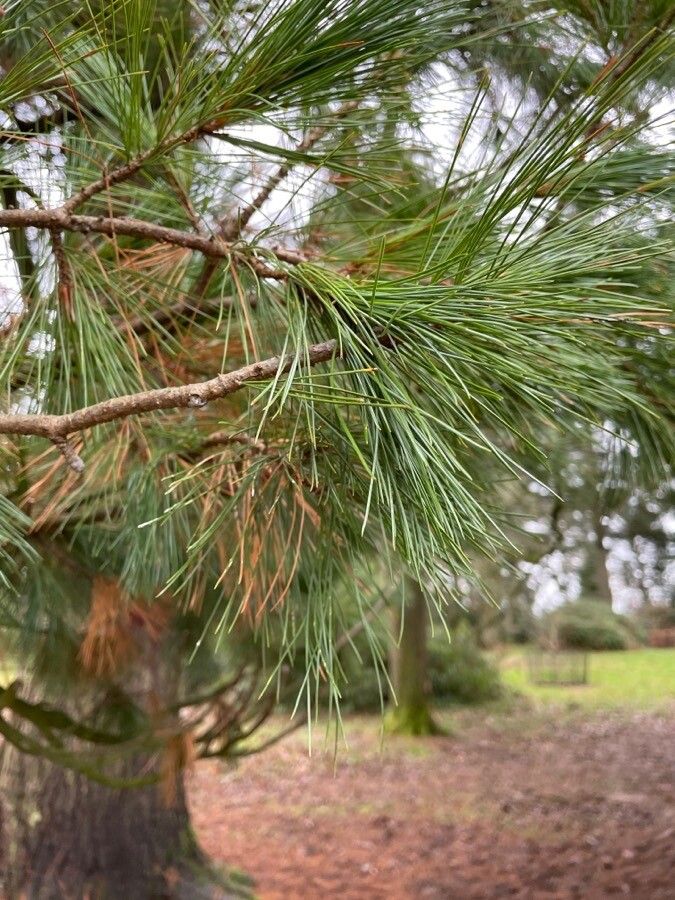
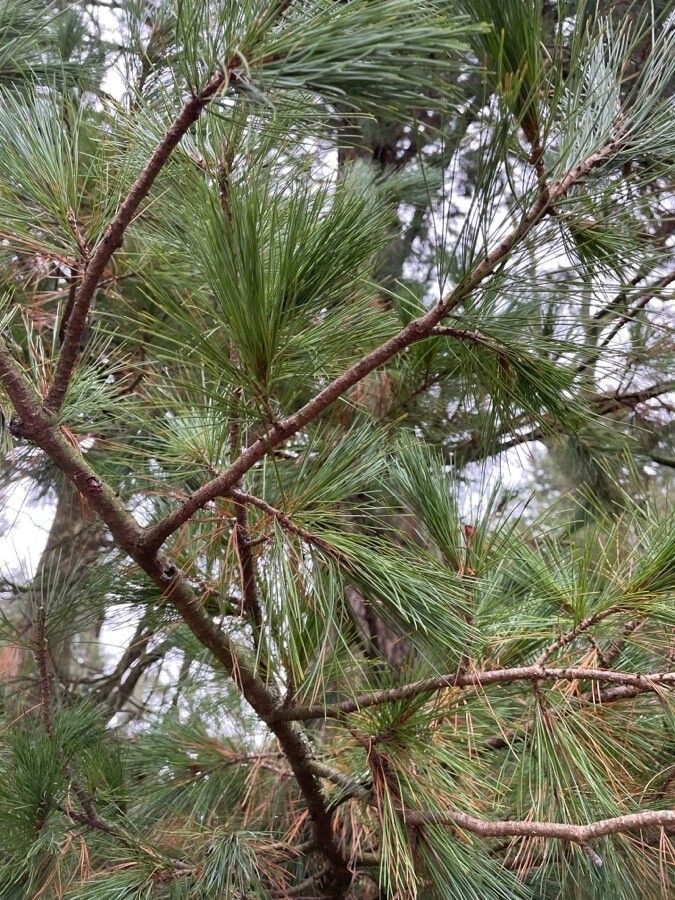
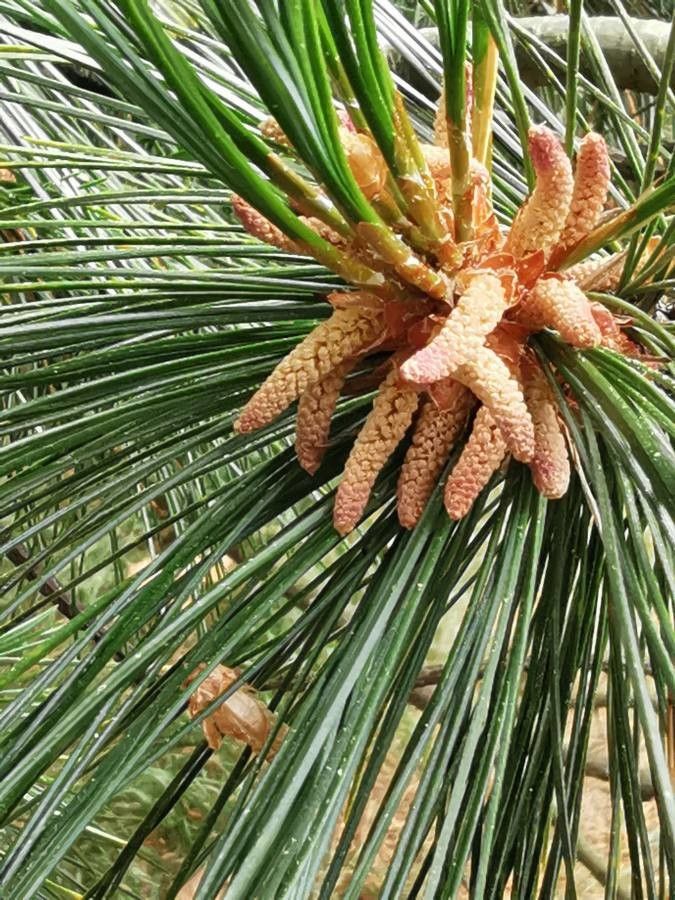
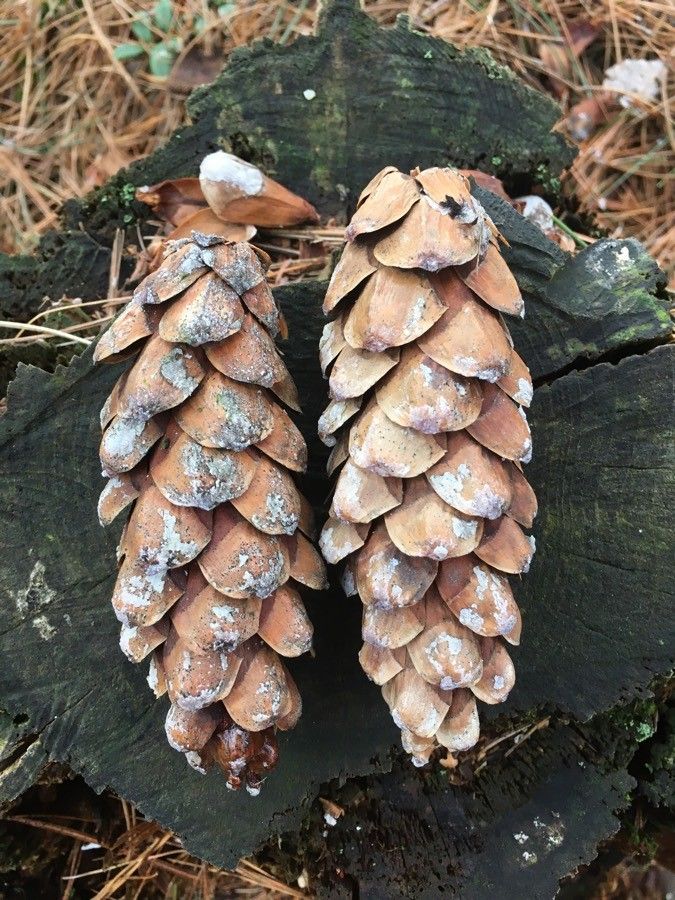
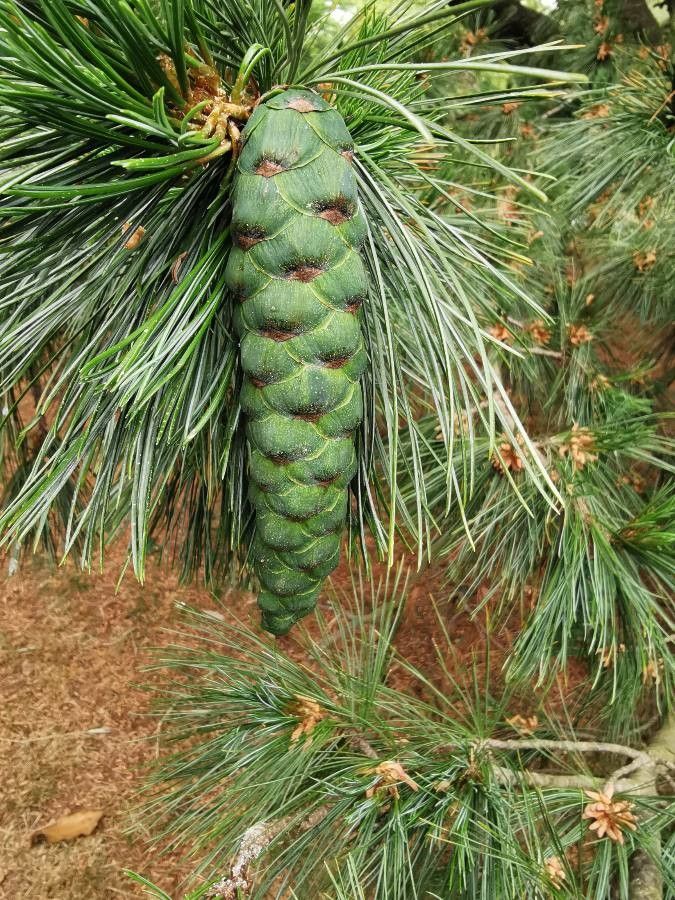
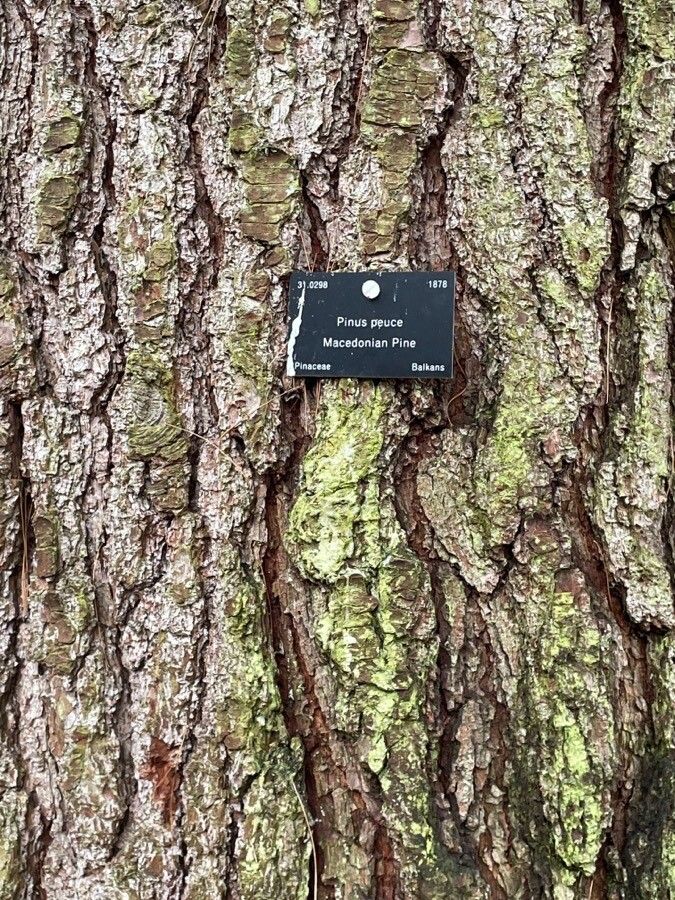
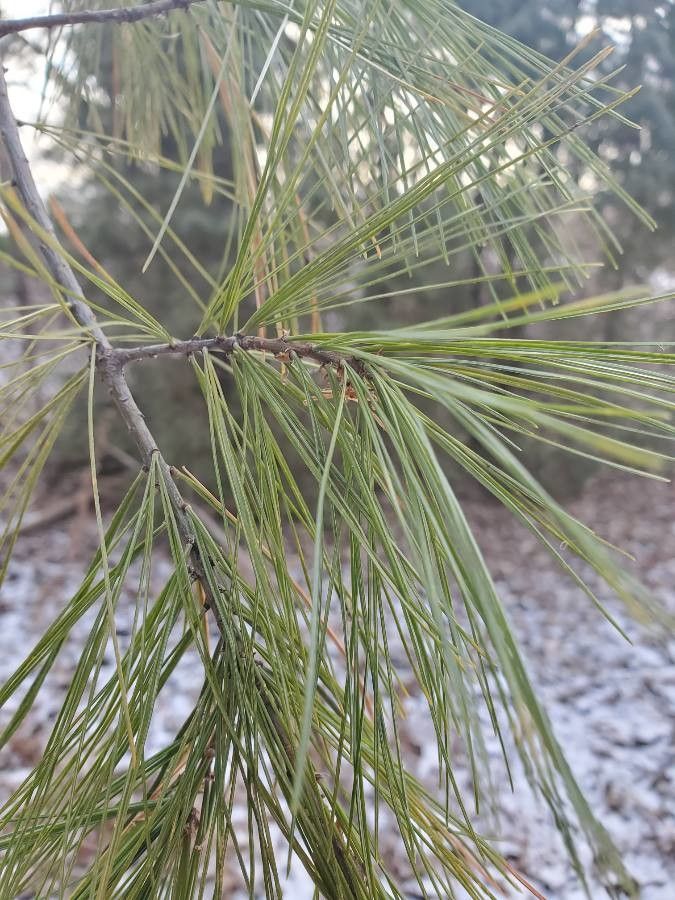
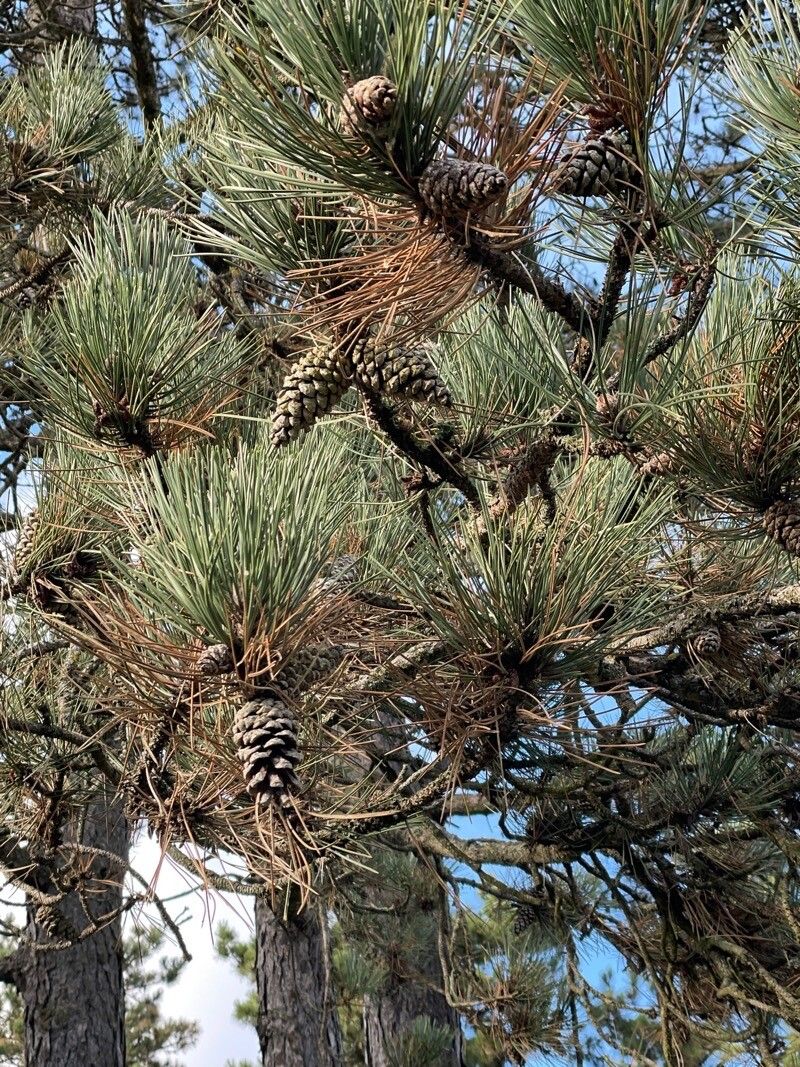
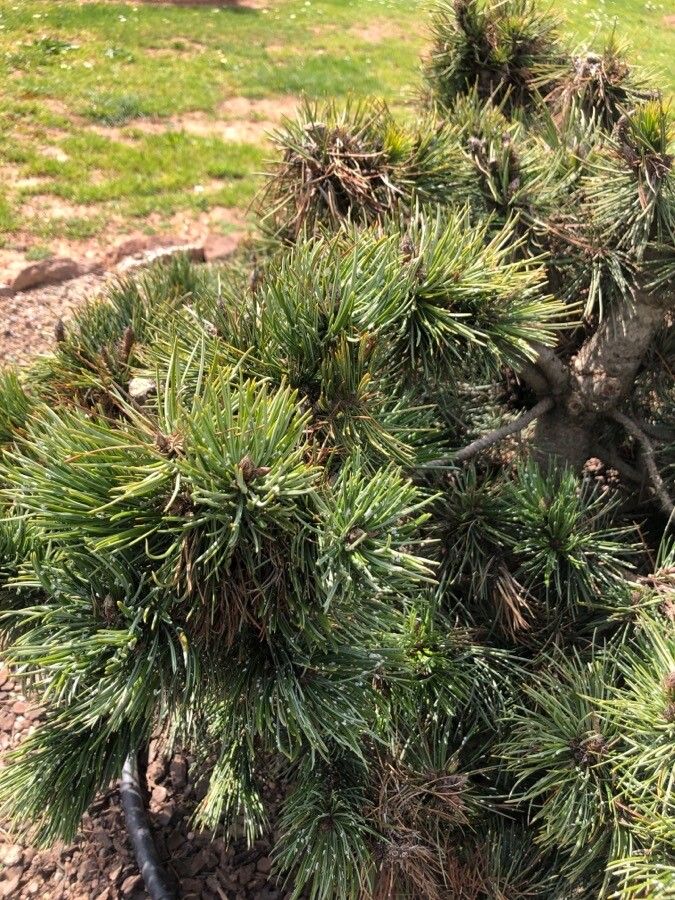
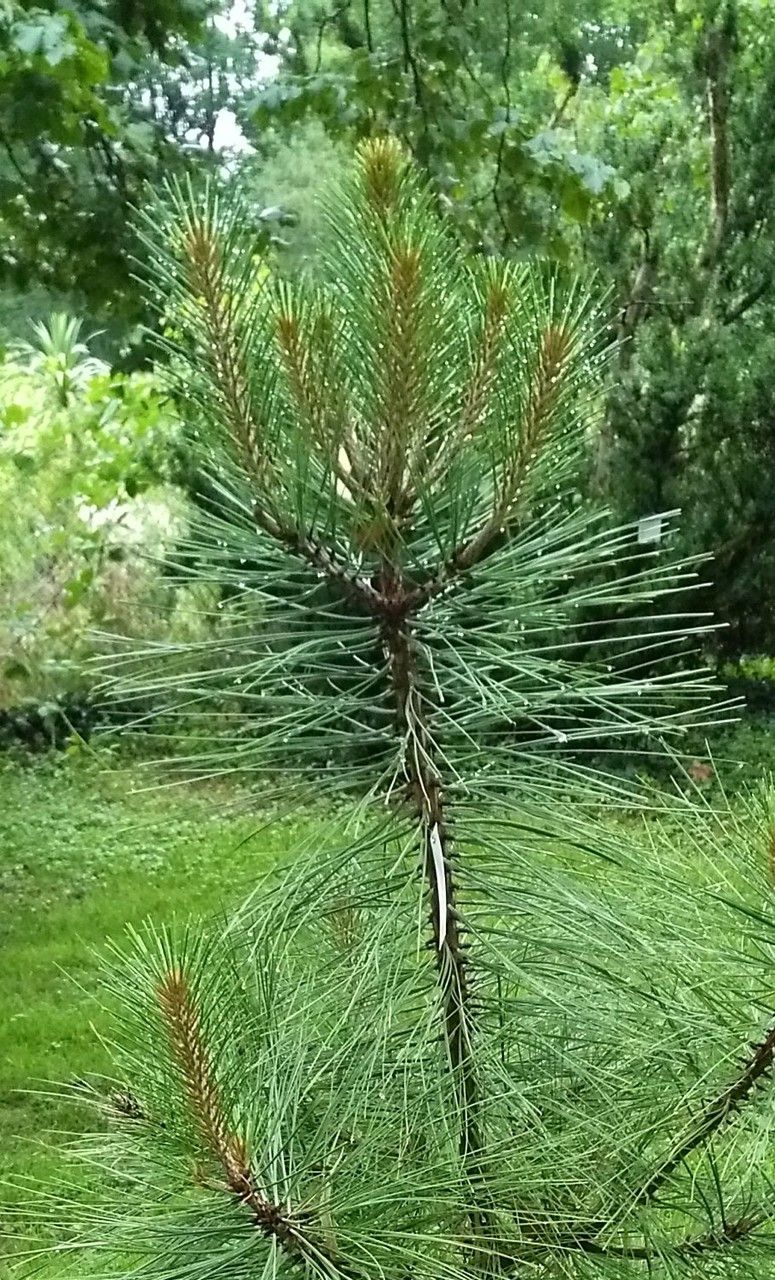
Pinus peuce (Macedonian pine or Balkan pine) (Serbo-Croatian/Macedonian: молика, molika; Bulgarian: бяла мура, Byala mura) is a species of pine native to the mountains of Macedonia, Bulgaria, Albania, Montenegro, Kosovo, the extreme southwest of Serbia, and the extreme north of Greece, growing typically at (600-) 1,000-2,200 (-2,300) m altitude. It often reaches the alpine tree line in this area. The mature size is up to 35–40 m height, and 1.5 m trunk diameter. However, the height of the tree diminishes strongly near the upper forest limit and may even obtain shrub sizes.It is a member of the white pine group, Pinus subgenus Strobus, and like all members of that group, the leaves ('needles') are in fascicles (bundles) of five, with a deciduous sheath. They are 6–11 cm long. Its pine cones are mostly 8–16 cm long, occasionally up to 20 cm long, green at first, becoming yellow-brown when mature, with broad, flat to downcurved scales. The 6–7 mm long seeds have a 2 cm wing and can be wind-dispersed, but are also very often dispersed by spotted nutcrackers.
Balkan pine has strong resistance to disease and is generally unlikely to be affected by illnesses. Regarding care, this plant is fairly low maintenance. When grown outdoors it needs only minimal watering, and larger specimens usually do not require pruning. Smaller plants, however, should be pruned after they have bloomed. Balkan pine is appropriate for anyone with an outdoor area, such as a garden or deck, and does not demand extensive gardening experience.
How to keep Pinus Peuce.
Light
Balkan pine comes from open habitats, such as sunny meadows and forest margins, that provide plenty of light. It performs best in Full Sun but can also tolerate Partial Sun, adjusting well to different sunlight levels.
Water
The Balkan pine flourishes in moderately moist, well-drained soil and needs watering every 1 to 2 weeks. Being an evergreen, it retains moisture throughout the year and is resilient to different temperatures and moisture levels, which makes it ideal for outdoor cultivation.
Fertilizer
The Balkan pine has specific nutrient needs and does not require heavy fertilization. Fertilizing in spring is the best time to promote optimal growth. Supplying nutrients improves its health, increases its resistance to pests and diseases, and helps preserve its long lifespan.
Pruning
Pruning Balkan pine from early to late winter helps maintain its health and shape by removing dead or overcrowded branches. This process enhances air circulation and light penetration, which promotes growth and reduces the risk of disease. Pruning during winter minimizes sap loss and stress, supporting strong development during the growing season.
Botanical profile.
- Plant Type
- Tree
- Life Cycle
- Perennial
- Genus
- Pinus
- Family
- Pinaceae
- Hardiness Zone
- 4-7
- Mature Height
- 9.14 m to 18.29 m
- Mature Spread
- 6.1 m to 9.14 m
- Leaf Color
- Green, Blue
- Leaf Type
- Evergreen
- Flower Color
- Yellow, Red, Brown
- Flower Size
- 7.62 cm to 15.24 cm
- Bloom Time
- Mid spring, Late spring
- Planting Time
- Spring, Autumn
- Harvest Time
- Late summer, Early fall, Mid fall
- Native Area
- Montenegro, Serbia, Bulgaria, Greece
Other names.
Reader questions.
What are the sunlight requirements for Balkan pine (Pinus peuce)?
Balkan pine, also known as Pinus peuce, thrives in conditions that meet specific sunlight requirements. For optimal growth, this plant needs full sun, which is defined as more than 6 hours of sunlight a day. However, it can also tolerate partial sun, meaning it requires about 3-6 hours of sunlight daily. When choosing a spot to plant your Balkan pine, it's crucial to observe how sunlight moves through your garden throughout the day. Selecting a location that offers the right balance of light and shade will ensure your plant's health and happiness. Keep in mind that the placement is key to accommodating the plant's light needs.
What is the Balkan pine?
The Balkan pine, known botanically as Pinus peuce, is a type of pine tree. This particular species does not have any specific essential details, symptoms, or additional information provided as of now.