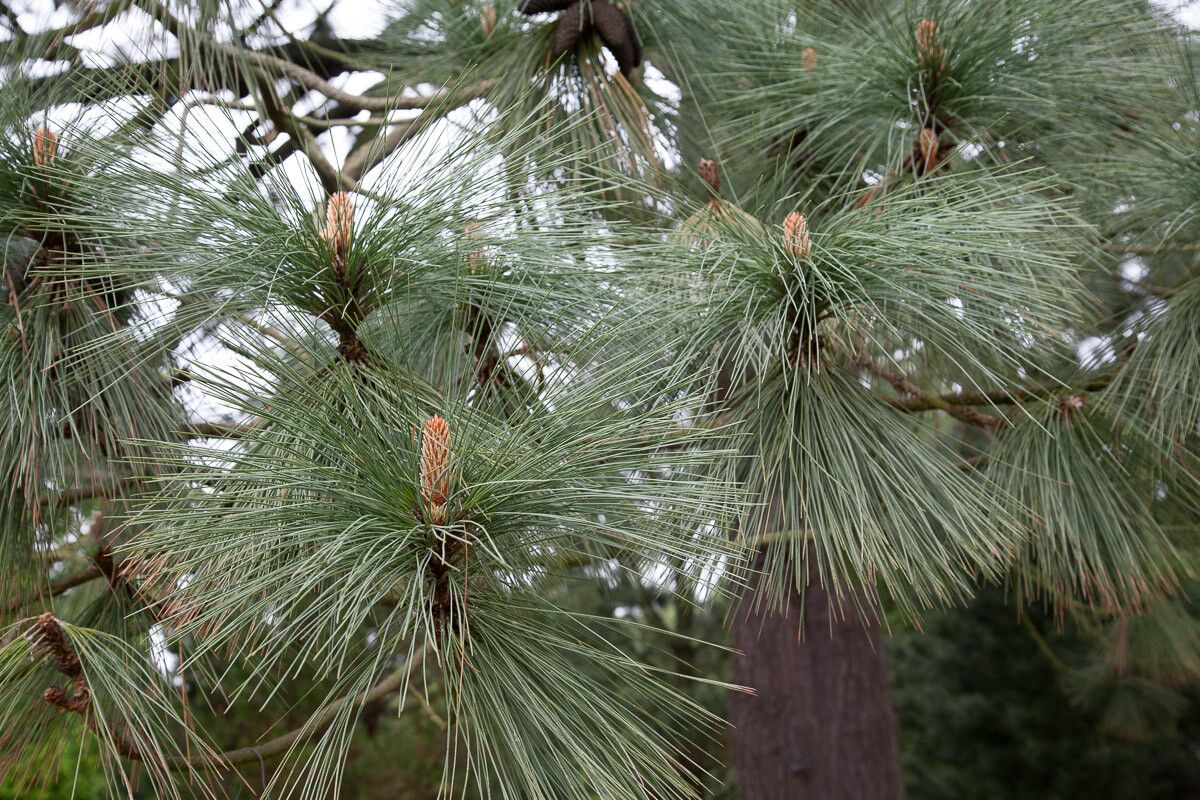
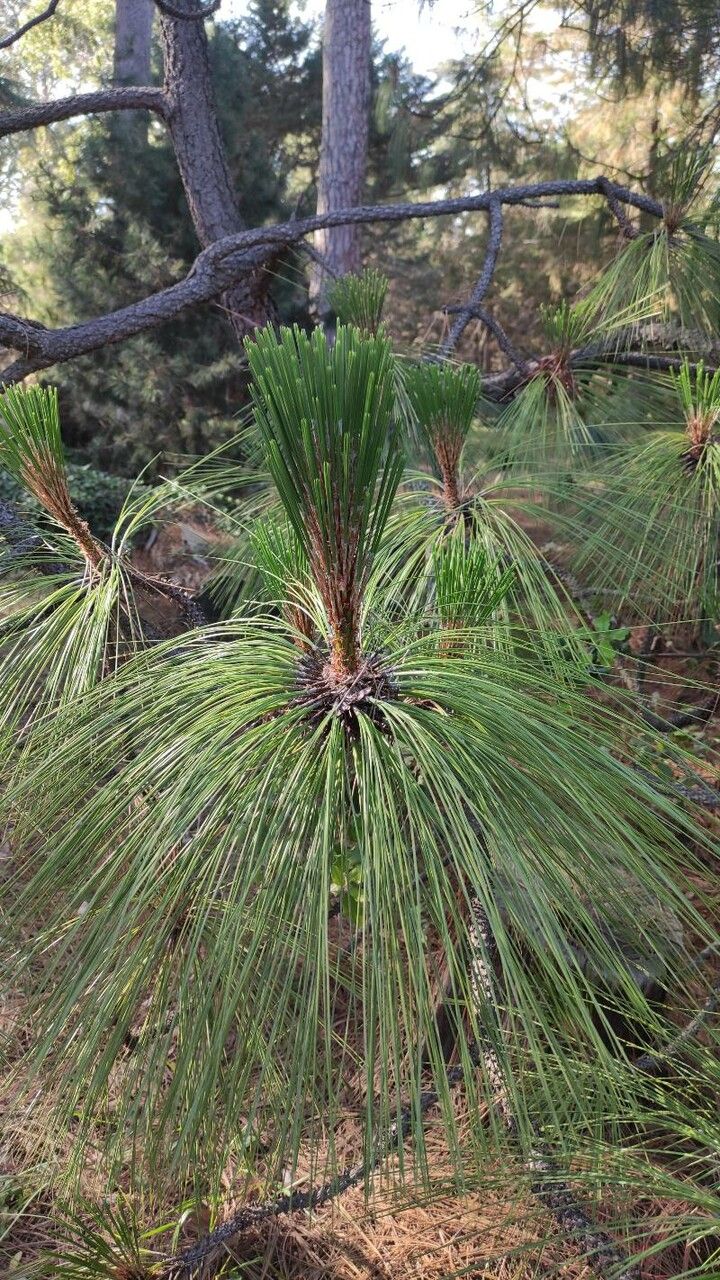
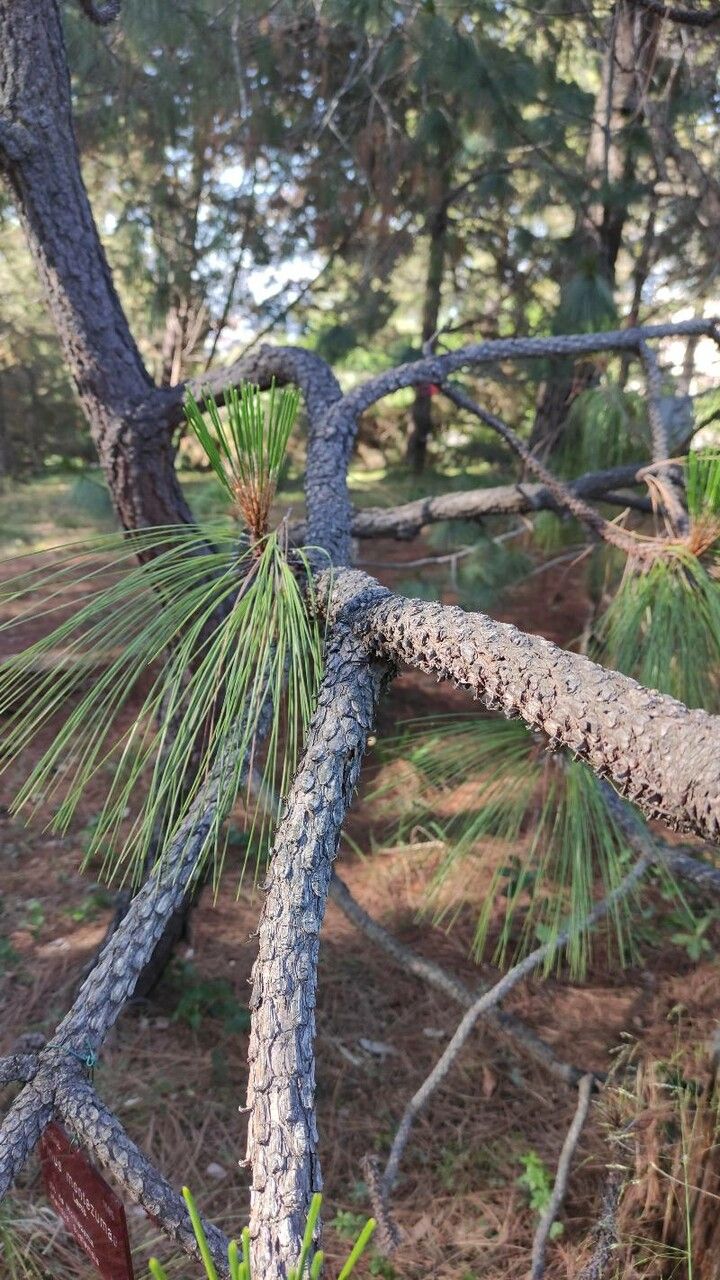
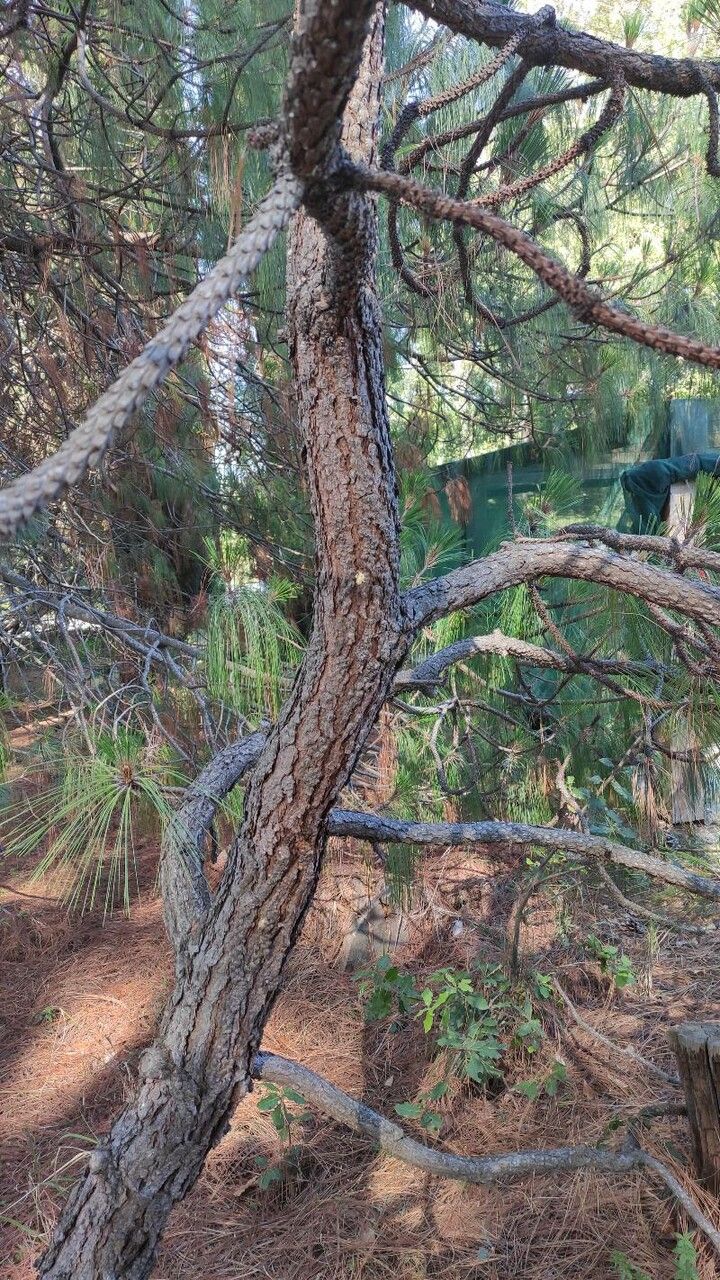
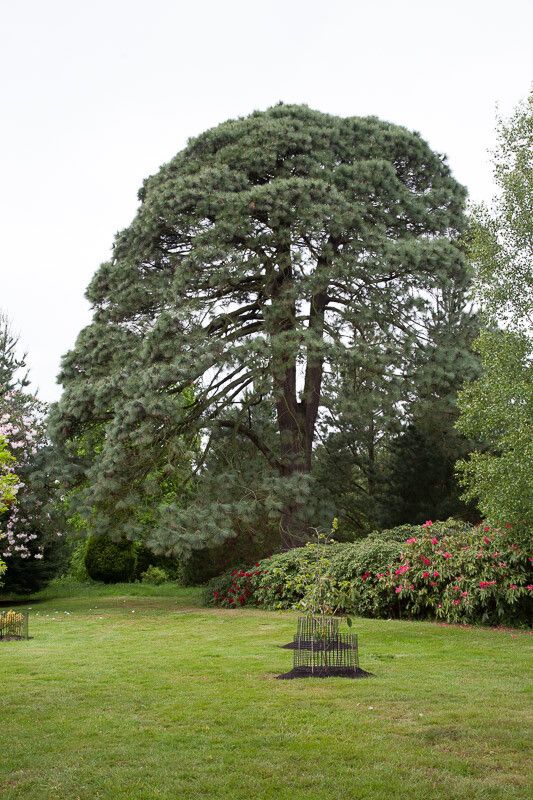
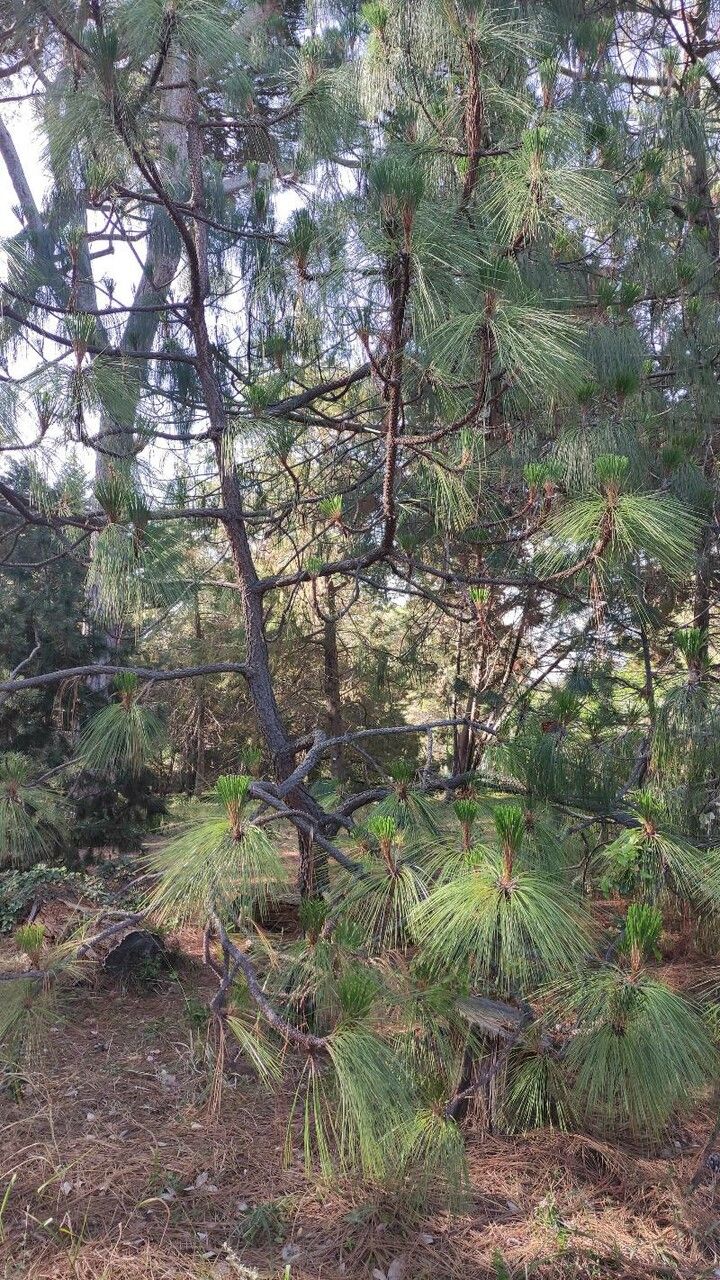
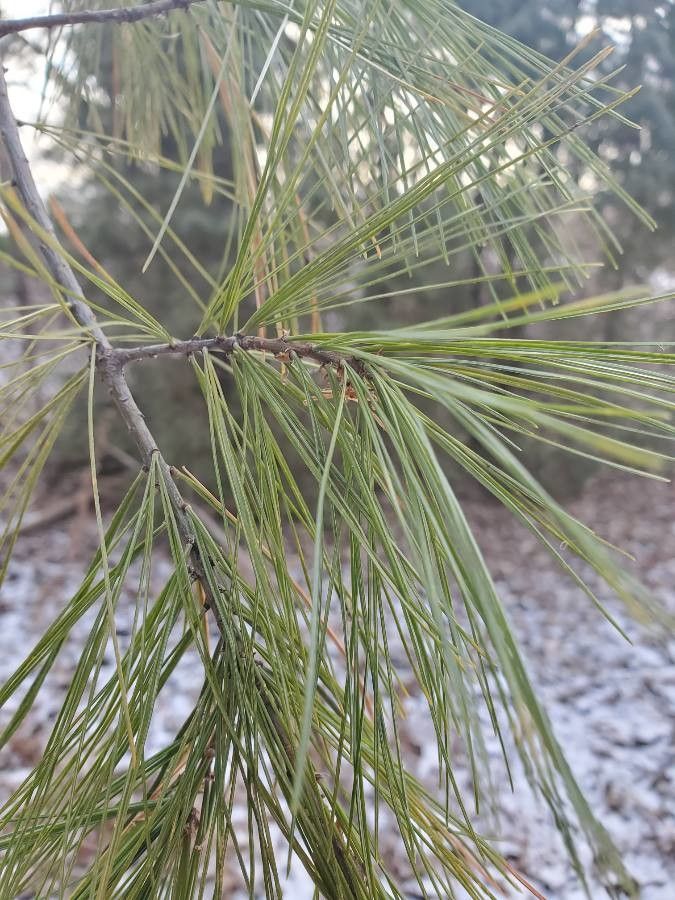
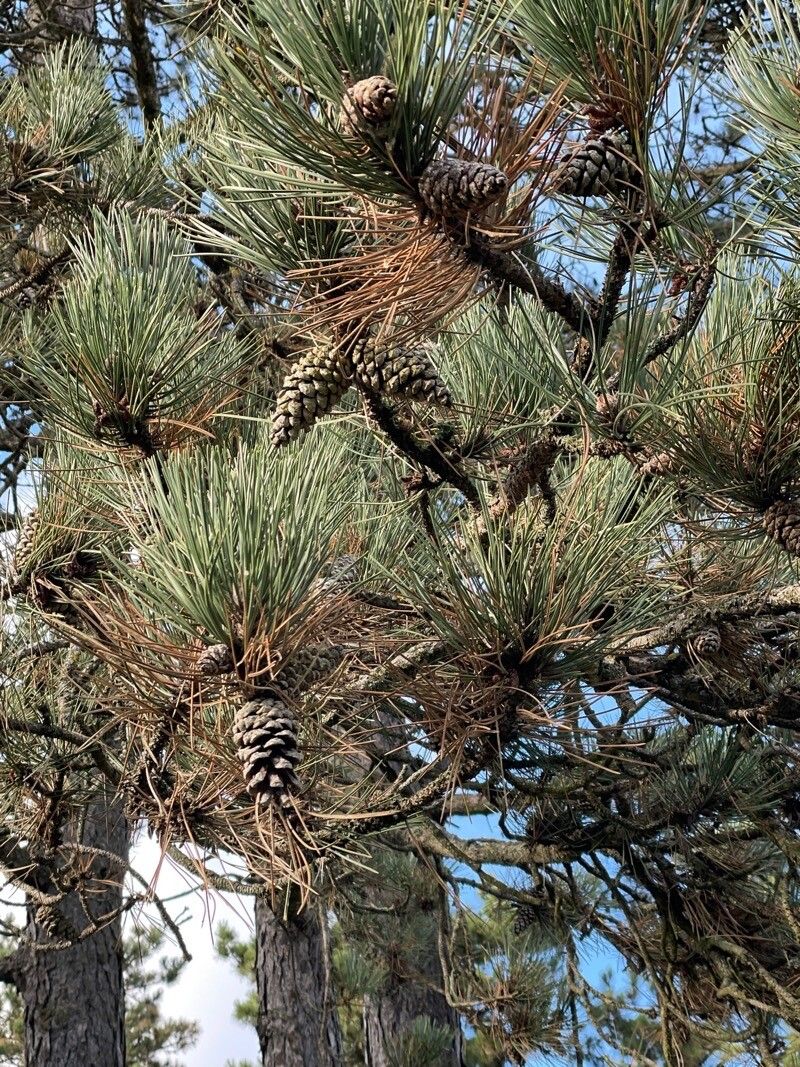
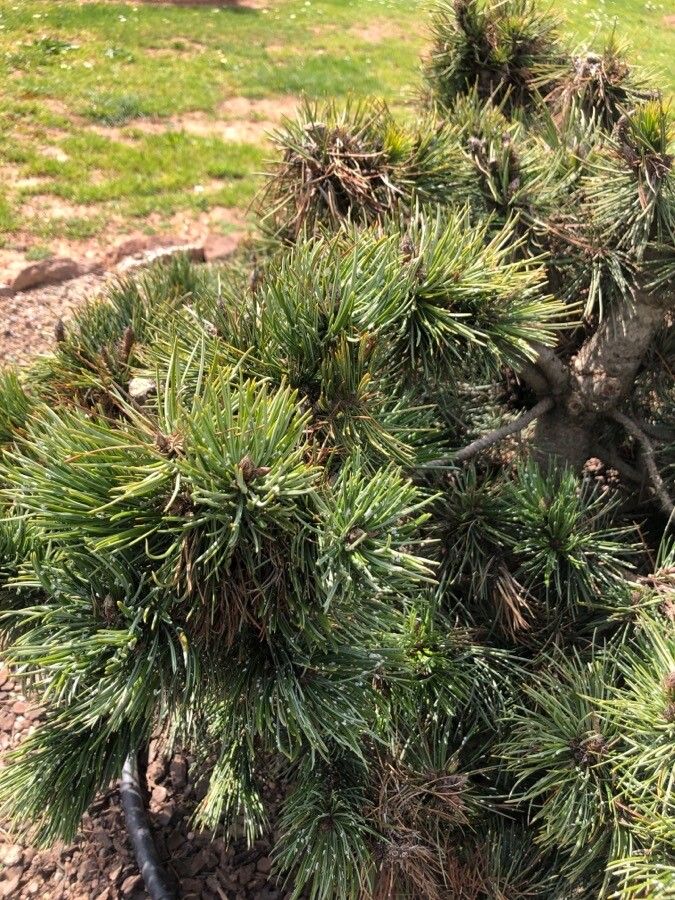
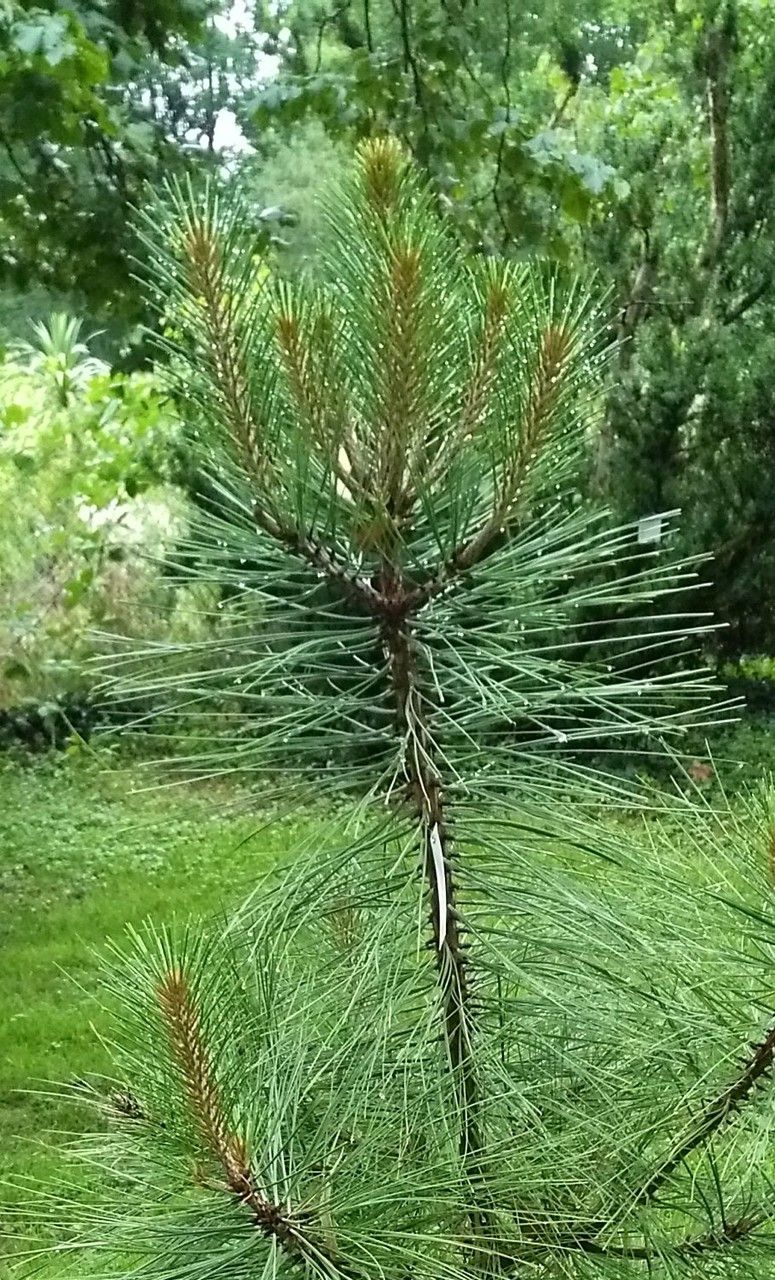
Pinus montezumae, known as the Montezuma pine, is a species of conifer in the family Pinaceae. It is native to Mexico and Central America, where it is known as ocote. The tree grows about 35 m high and 80 cm in diameter; occasionally it may reach a height of 40 m and diameter of 1 m. It has a round crown. The bark is dark brown-grayish. It is the only pine species (in the variety rudis) which has seven needles in each fascicle. It is found from the Mexican states of Nuevo León (25° N. Lat.) and Jalisco (22° n.l.) to the north and to Nicaragua (15° N. Lat.) to the south. It occurs on both mountain ranges of the Sierra Madre Oriental and Sierra Madre Occidental. It grows at altitudes from 2000–3200 m above sea level. It is found in areas between 800–1000 mm rainfall per year. In most of the tree's habitat, rain falls mostly in summer, but in the state of Veracruz, precipitations are spread year round and the climate is very wet. However, specimens from the state of Jalisco grow in semi-arid places. It occurs in warm temperate to cool climates (18 °C to 10 °C). At the highest altitudes of its distribution it usually receives snow in the winter.
Ocote wood is yellowish-brown white, with the heartwood being light brown, is hard, heavy and used for construction. It is appreciated for its resin. The resin is so flammable that a cut branch will burn as a torch emitting black smoke when ignited; for this reason, it is very common in Mexico to use ocote wood as a fire starter for campfires and barbecues. Growth is slow in the first three or six years, after this stage it is a fast-growing tree. The cities of Ocotlán in Jalisco Mexico and Ocotal in Nicaragua derive their names from this tree. It is planted in plantages in South Africa and Queensland, Australia at mid altitudes; in Kenya, Malawi, Botswana, Zimbabwe and Bolivia at high altitudes. Trees planted in New Zealand and New South Wales, Australia near sea level have done very well.
Montezuma pine has strong resistance to disease and is generally not susceptible to illnesses. In terms of care, this species is relatively low-maintenance. When planted outdoors it needs minimal watering, and larger specimens typically do not require pruning. Smaller specimens, however, should be pruned after they have finished blooming. Montezuma pine is suitable for anyone with an outdoor area, such as a garden or a deck, and does not require extensive gardening experience.
How to keep Pinus Montezumae.
Light
Montezuma pine comes from open habitats, such as sunlit meadows and forest margins, where there is abundant light. It does best in Full Sun but can also endure Partial Sun, adapting well to different light conditions.
Water
The Montezuma pine is well-suited to arid regions due to its high tolerance for drought. It should be watered every one to two weeks for optimal growth, as it prefers a balanced amount of moisture. Being an evergreen, the Montezuma pine keeps its foliage throughout the year, which helps conserve water more effectively than deciduous plants.
Temperature
Montezuma pine is highly adaptable to a range of climate conditions, coping with both very hot summers and cold winters. However, it has an ideal temperature range for growth. When temperatures become too high, the plant is susceptible to heat and humidity stress, which can lead to its death. In areas where temperatures approach the lower limit of its cold tolerance, it is important to apply insulation measures to protect the plant.
Fertilizer
Montezuma pine has particular nutrient needs and does not require heavy fertilization. Spring is the best time to apply fertilizer to achieve optimal growth. Supplying nutrients enhances its health, increases its resistance to pests and diseases, and supports its long lifespan.
Pruning
The Montezuma pine, known for its impressive height and long needles, benefits greatly from pruning in early spring. Key techniques include removing dead branches, thinning to improve air circulation, and shaping to manage overgrowth. Performing these tasks at the right time promotes rapid wound healing, boosts growth, and helps maintain the tree's health and longevity.
Botanical profile.
- Plant Type
- Tree
- Life Cycle
- Perennial
- Genus
- Pinus
- Family
- Pinaceae
- Hardiness Zone
- 7-10
- Mature Height
- 21.34 m to 30.48 m
- Mature Spread
- 9.14 m
- Leaf Color
- Green, Gray, Silver
- Leaf Type
- Evergreen
- Bloom Time
- Early spring, Mid spring
- Planting Time
- Spring, Autumn
- Harvest Time
- Late summer, Early fall, Mid fall
- Native Area
- Mexico, Guatemala
Other names.
Reader questions.
What are the sunlight requirements for a Montezuma pine?
The Montezuma pine (Pinus montezumae) thrives under specific sunlight conditions to ensure its growth and happiness. It requires 'Full sun' which entails above 6 hours of direct sunlight daily, or 'Partial sun,' meaning about 3-6 hours of sunlight. It's important to observe the movement of sunlight in your garden to find the best spot that offers an optimal balance between light and shade, suitable for the Montezuma pine's needs.
What is Montezuma pine?
Montezuma pine, known scientifically as Pinus montezumae, is a species of pine native to Mexico and Central America. It is recognized for its significance in forestry and its adaptability to various environmental conditions. The tree is celebrated for its aesthetic appeal and its use in landscaping and reforestation projects.