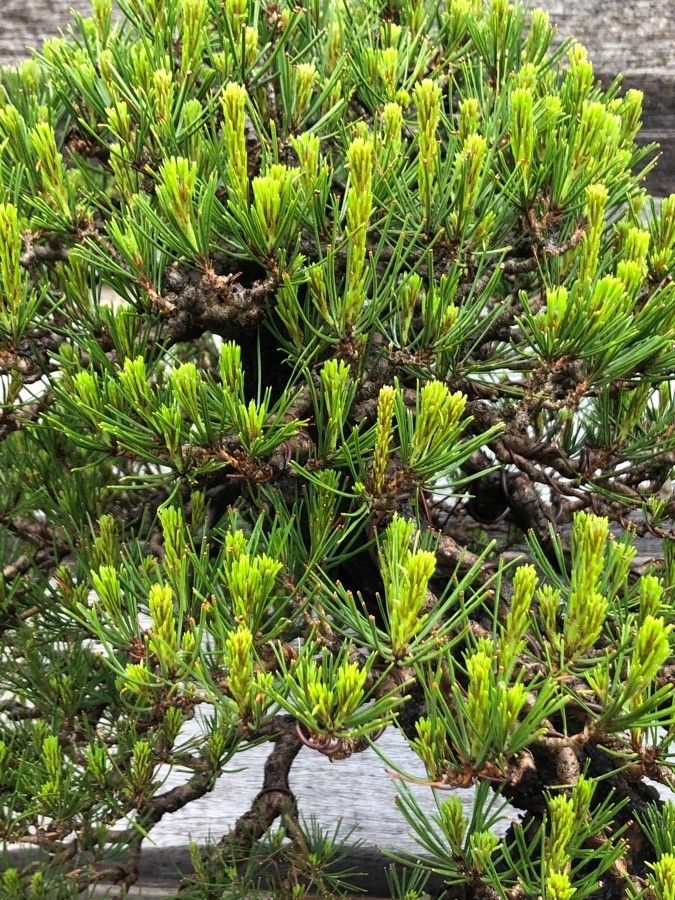
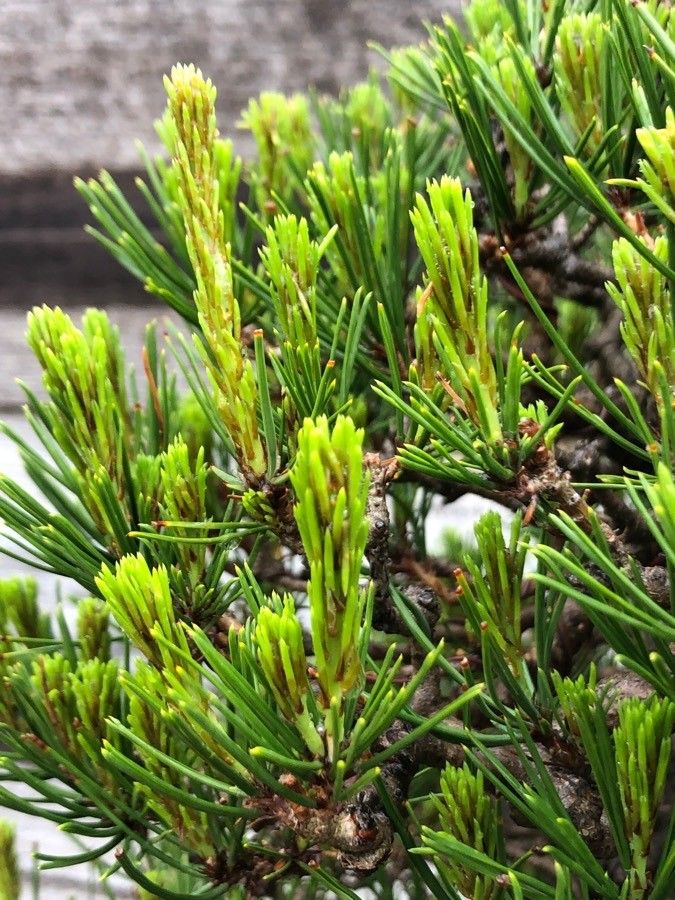
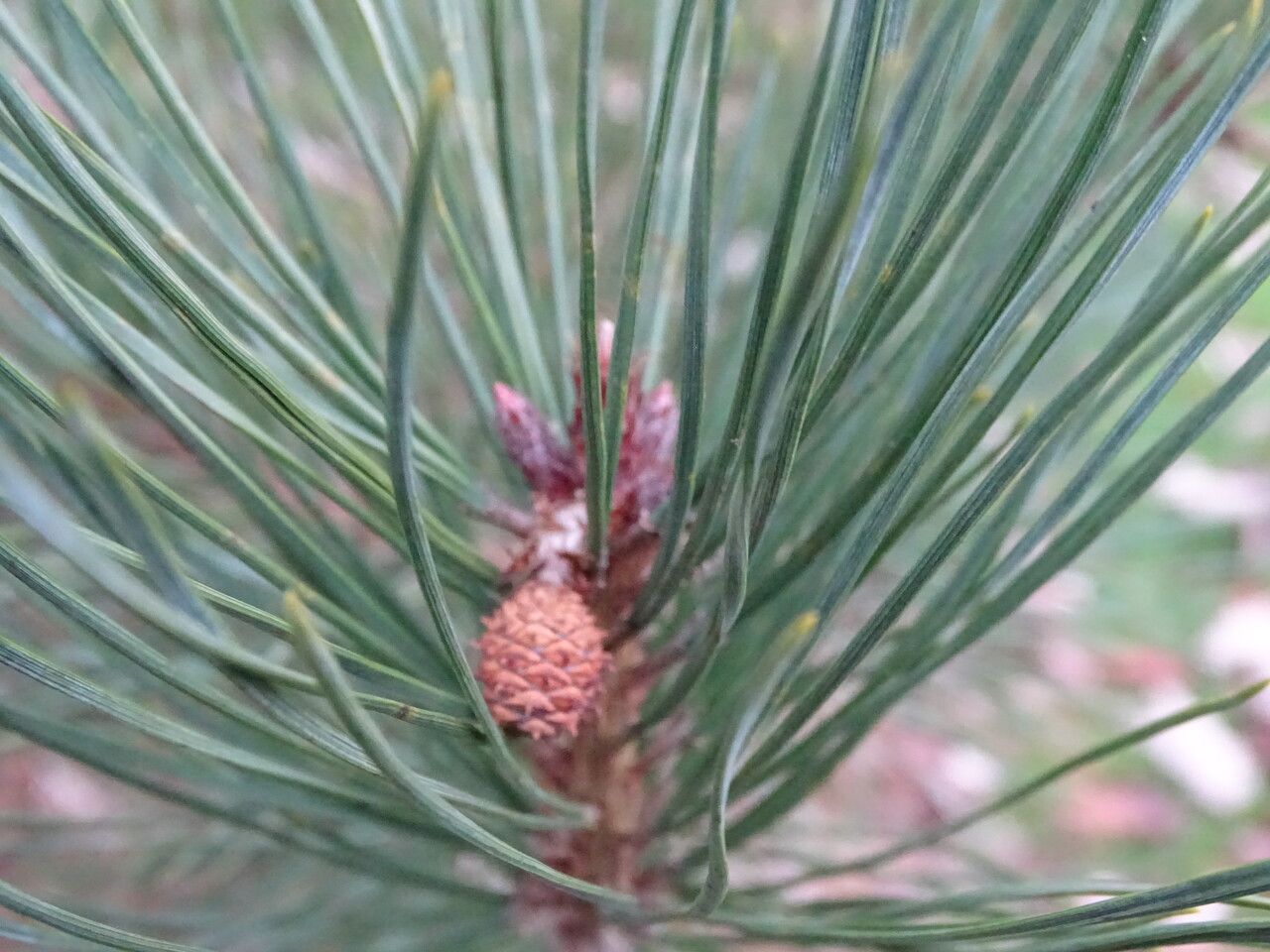
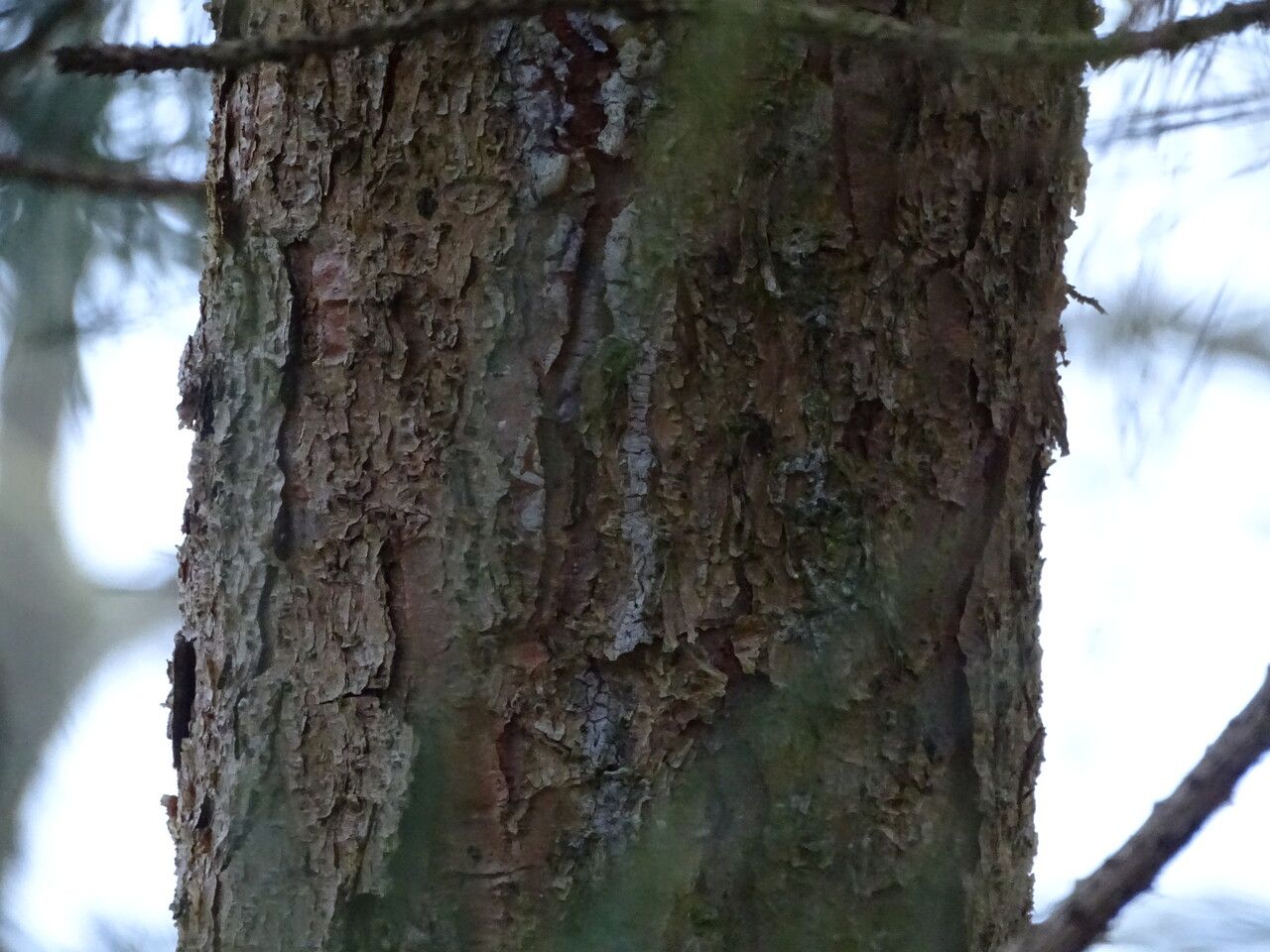
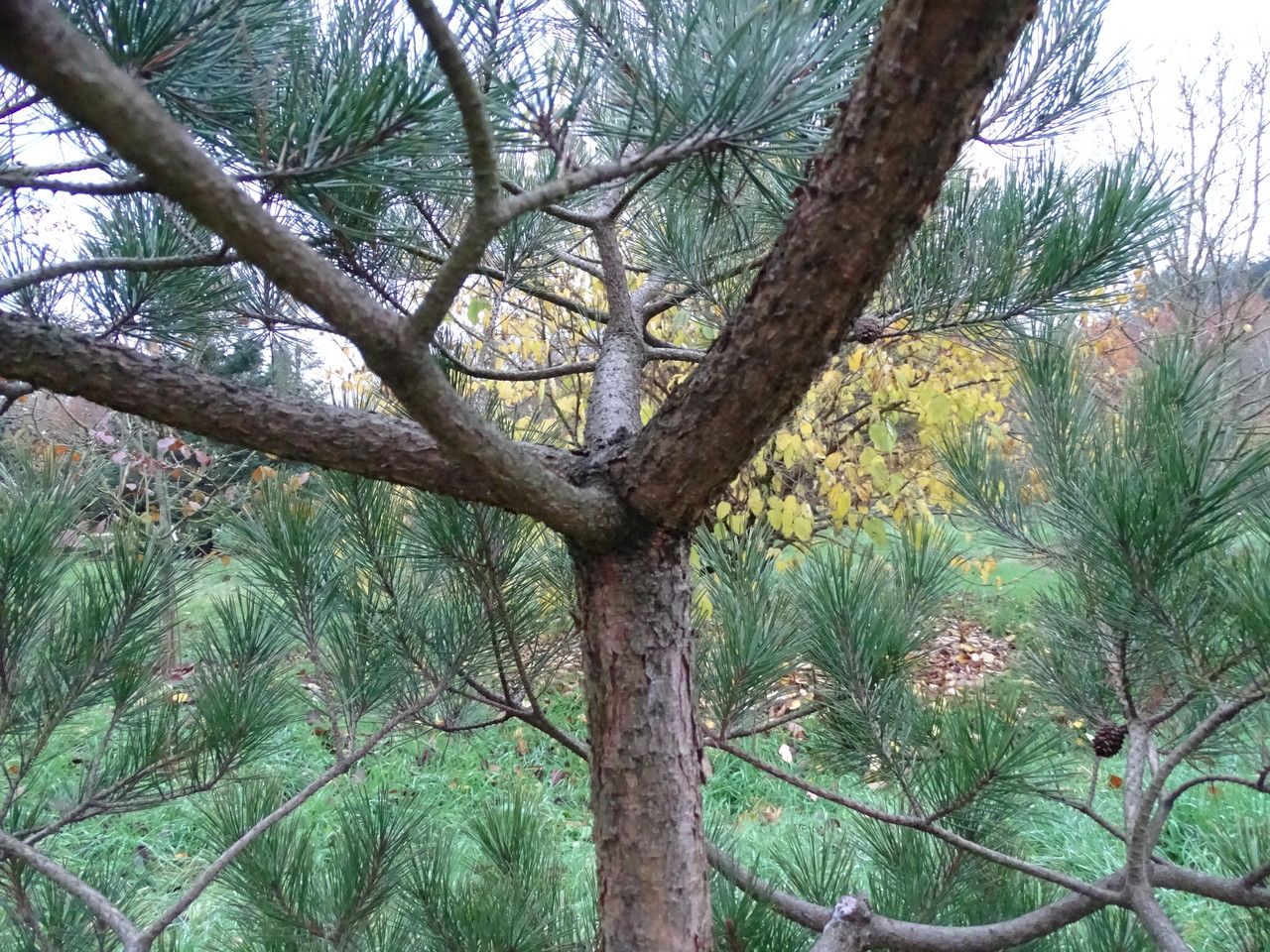
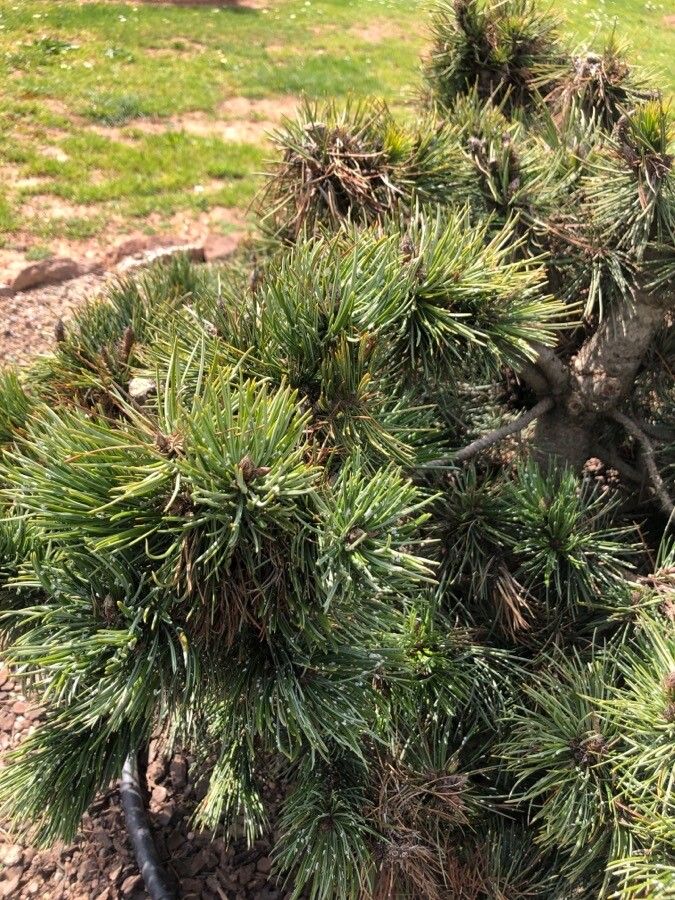
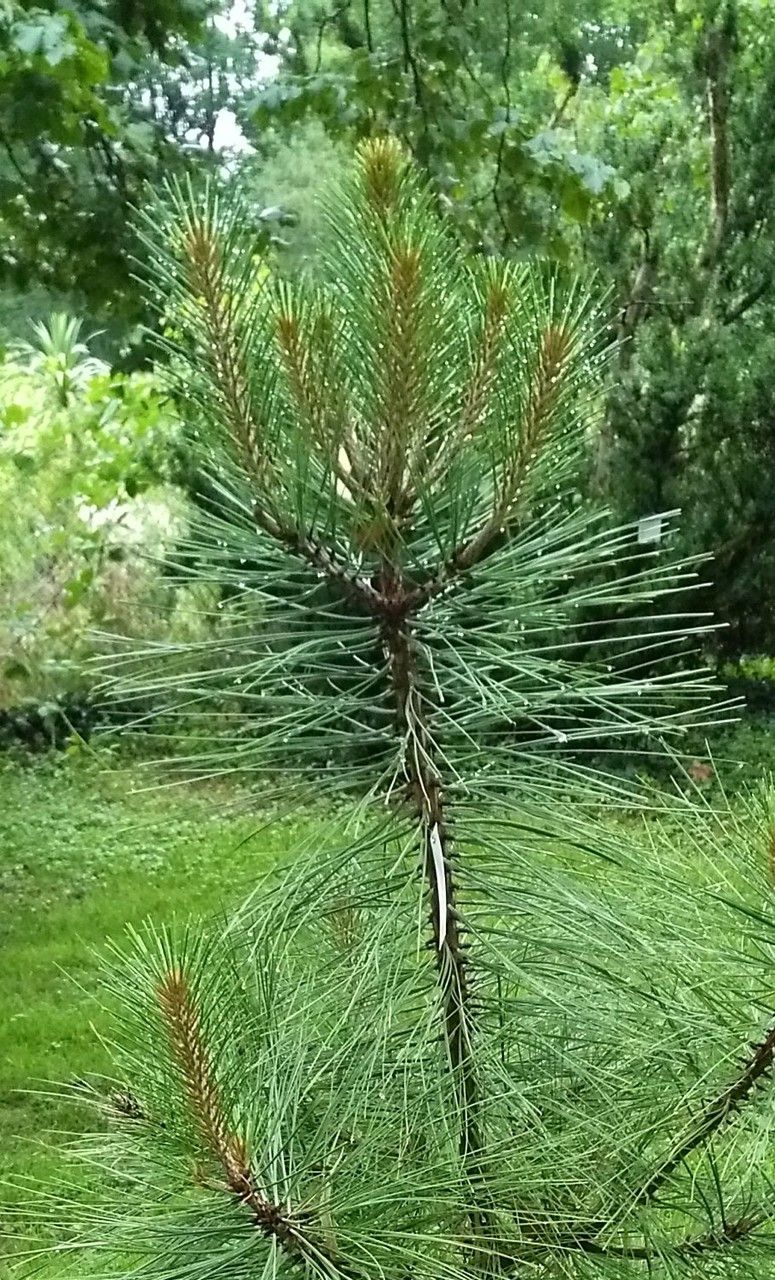
Pinus densiflora, commonly known as the Japanese red pine, is a pine tree species native to Japan and Korea. This medium-sized evergreen tree can grow up to 35 meters tall, with a trunk diameter of up to 1 meter. As the tree ages, its reddish-brown bark becomes scaly.
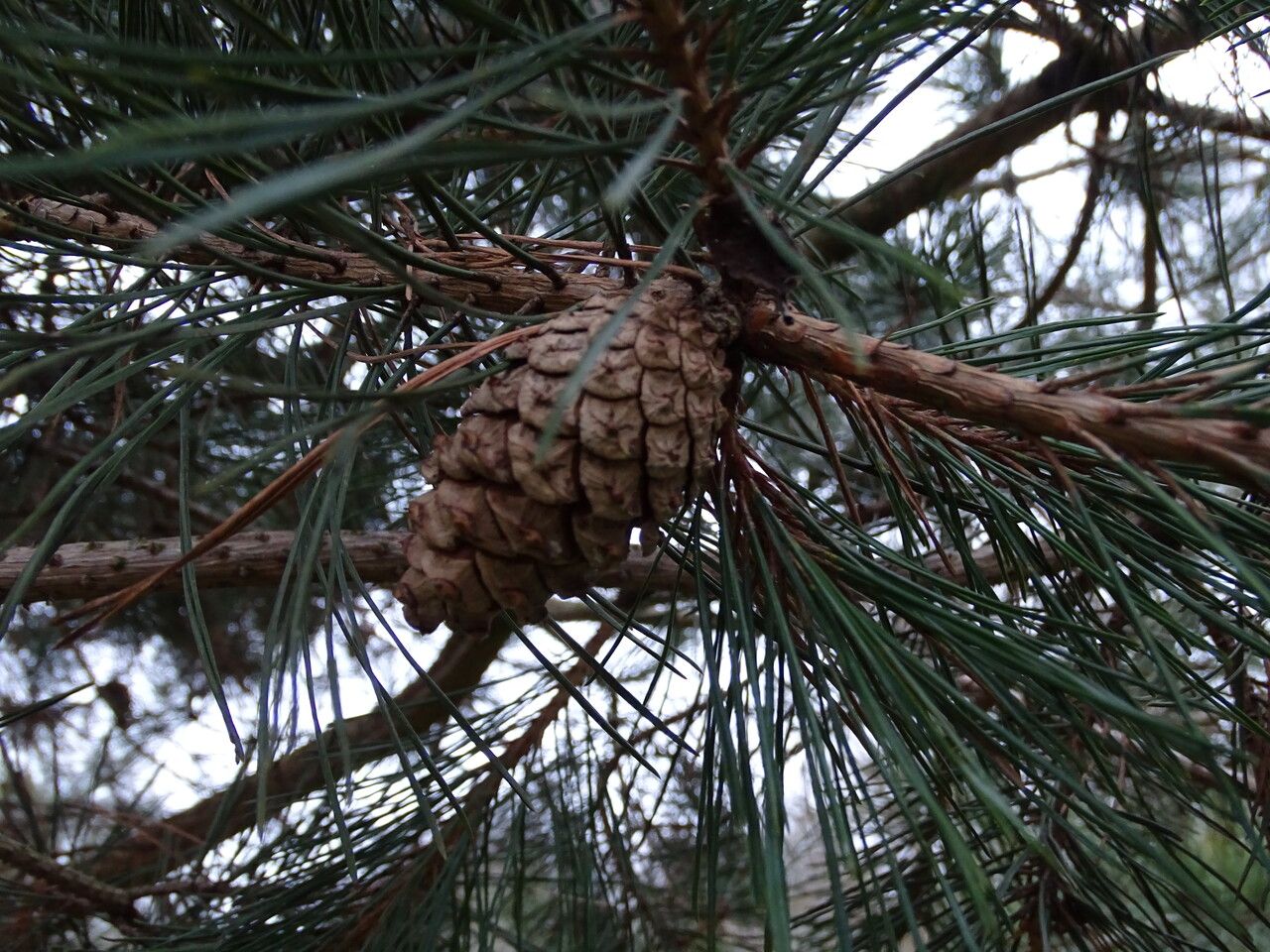
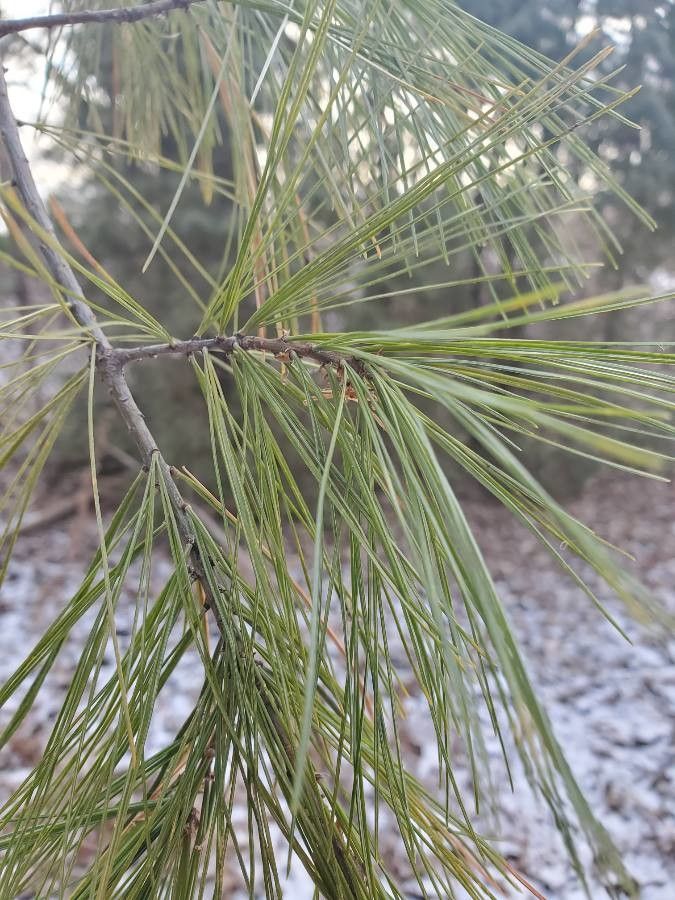
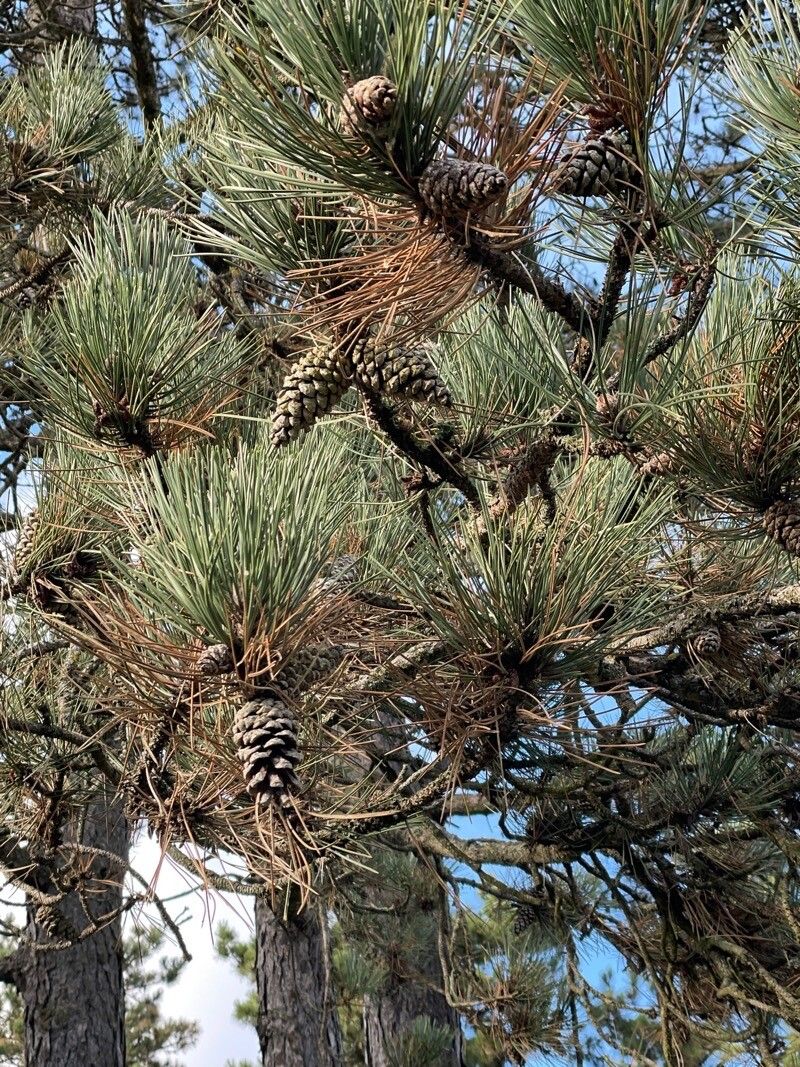
The dark green needles of Pinus densiflora grow in pairs and measure around 10-15 cm long. Its cones are dark brown and can reach up to 10 cm in length.
This species thrives in well-drained soils with good moisture retention but can adapt to various soil types, including sandy or rocky soils. It prefers full sun exposure but can tolerate partial shade.
Pinus densiflora is valued for numerous purposes. Its attractive appearance makes it popular for ornamental use, while its timber is utilized in construction for furniture making and building materials. Additionally, the tree's resin has medicinal properties.
Overall, Pinus densiflora is significant both ecologically and economically. It provides habitat for wildlife like birds and squirrels, which depend on it for food and shelter, while also offering versatile uses for humans.
Japanese red pine is highly resistant to disease and typically not susceptible to illnesses. As for care, this species is fairly low-maintenance. Planted outdoors it needs only minimal watering, and larger specimens usually do not require pruning; however, smaller plants should be pruned after they finish blooming. Japanese red pine is well suited for anyone with an outdoor area, like a garden or deck, and does not demand extensive gardening experience.
How to keep Pinus Densiflora.
Light
Japanese red pine does well in sites that receive plentiful, unobstructed strong sunlight. Greater light exposure promotes better health and faster growth. Although it can survive in shadier locations, such conditions lead to slower development and diminished vigor. Because it originates from varied environments, very intense or very low light typically does not greatly harm its health.
Water
The Japanese red pine, native to temperate regions, is drought-tolerant and thrives in moderate humidity. To mimic its natural environment, it should be watered every two weeks. When grown outdoors in cooler climates, its growth cycle adapts to the seasonal changes in temperature and precipitation.
Temperature
Japanese red pine adapts well to a variety of climate conditions, whether confronted with hot summers or cold winters. However, it has an optimal temperature range for growth. If temperatures rise too high, the plant becomes susceptible to heat and humidity stress, which can lead to its death. In areas where temperatures approach the lower limit of its cold tolerance, it is important to use insulation measures to protect the plant.
Fertilizer
Japanese red pine has specific nutrient needs and does not require heavy fertilization. Fertilizing in spring is the best time for optimal growth. Providing nutrients improves its health, increases resistance to pests and diseases, and helps maintain its long lifespan.
Pruning
The Japanese red pine is distinguished by its vibrant reddish-brown bark and dense clusters of needles. For optimal care, it is best to prune the tree from early to late winter. During this dormant period, remove any dead or crossing branches to improve air circulation and light penetration. Pruning at this time minimizes stress to the tree, reduces the risk of disease, and helps maintain an attractive structure.
Botanical profile.
- Plant Type
- Tree
- Life Cycle
- Perennial
- Genus
- Pinus
- Family
- Pinaceae
- Hardiness Zone
- 5-6
- Mature Height
- 12.19 m to 18.29 m
- Mature Spread
- 10.36 m to 14.94 m
- Leaf Color
- Green
- Leaf Type
- Evergreen
- Flower Color
- Yellow, Red, Brown, Orange, Gold
- Flower Size
- 2.54 cm to 7.62 cm
- Bloom Time
- Mid spring, Late spring
- Planting Time
- Spring, Winter
- Harvest Time
- Late summer, Early fall, Mid fall
- Native Area
- Russia, Japan, Koppen, South Korea, China
Other names.
Reader questions.
How should I water my Japanese red pine tree effectively?
Watering your Japanese red pine is an easy task. The best way to do it is to turn on your garden hose and slowly soak the soil. For large trees, the garden hose is ideal because they need a lot of water. However, for smaller trees, you can use a watering can or another smaller tool. It's important to avoid overhead watering, especially for young trees, as too much moisture on the leaves can cause disease.
Why should I put fertilizer on my Japanese red pine?
To promote healthy growth, it's important to fertilize Japanese red pine in the spring. It's crucial to provide ongoing support for this long-lived plant. Additionally, enriching the soil with nutrients can further enhance the plant's overall health, making it more resistant to common pests and diseases, which can otherwise inhibit growth or reduce its lifespan.
What are the sunlight requirements for Japanese Red Pine?
Japanese Red Pine requires full sun, which means it should receive above 6 hours of sunlight daily, to thrive well. It can also grow under conditions of partial sun, or about 3-6 hours of sunlight. It's essential to watch how sunlight moves through your garden and choose spots that offer the right balance of light and shade for your plants, ensuring their well-being and happiness.
What is the botanical name of the Japanese red pine?
The botanical name of the Japanese red pine is Pinus densiflora.
What should I do if I give too much or too little water to my Japanese red pine?
Overwatering can occur when the soil does not allow for effective drainage, causing decline in your Japanese red pine. To address this, you can improve the soil's drainage or relocate the plant. If your pine is in a pot, you may need to repot it with looser soil and a container that promotes better drainage. Overwatering can lead to diseases, which should be treated promptly. On the other hand, underwatering can be resolved by increasing watering frequency. To determine if your pine is overwatered, observe the foliage, particularly new growth, for discoloration and fragility. Standing water or slow drainage in the plant's area is another indication of excessive moisture. If the foliage becomes sparse and brown, it may be due to underwatering. Consider recent heavy rain or high temperatures as possible causes of these symptoms.
When should I fertilize my Japanese red pine tree to get the best results?
The growing medium may not provide sufficient nutrients for healthy growth in most plants. However, Japanese red pine is an exception and does not need an excessive amount of nutrients. For optimal growth, it is best to fertilize Japanese red pine in the spring, before new growth starts to emerge.
Can Japanese Red Pine grow in less sunny environments?
Yes, Japanese Red Pine can adapt to environments with less sunlight but its growth may be slower and its vitality reduced compared to when it's grown in locations with an abundance of strong, unblocked sunlight. While the plant's health isn't significantly harmed by excessive or too little light owing to its versatility, optimal growth and health are observed in more light.
How many times should I water my Japanese red pine?
A mature Japanese red pine doesn't require much water. It can typically survive on rainfall alone and become drought tolerant. During the hottest months, watering once a week should suffice, while during other seasons, watering may not be necessary. However, if you have recently planted a Japanese red pine, regular watering is important to establish the roots. It's crucial to avoid standing water as this species is intolerant to it. When unsure, it's safer to refrain from watering the tree excessively.
When is the best time to not fertilize my Japanese red pine?
While some plants benefit from regular fertilization, the Japanese red pine does not require excessive nutrients. Applying too much fertilizer can lead to its decline. It is best to only apply fertilizer in the spring and avoid doing so in the summer, fall, and winter months. Additionally, refrain from adding any fertilizer or organic matter to the soil during these seasons.
How can artificial lighting be used for Japanese Red Pine indoors?
Indoor plants like the Japanese Red Pine require adequate lighting for optimal growth, especially when natural sunlight is insufficient. Artificial lights, particularly LED lights, are recommended because they can provide specific wavelengths needed by plants. Full sun plants need 30-50W/sq ft, partial sun plants need 20-30W/sq ft, and full shade plants require 10-20W/sq ft of artificial light. The light source should be placed 12-36 inches above the plant, mimicking natural sunlight conditions. Most plants benefit from 8-12 hours of light per day.
How much water does my Japanese red pine tree need?
During the height of summer, it is important to water your Japanese red pine. Usually, giving it about one inch of water per week is enough. However, if it has rained one inch or more that week, you don't need to water it. For newly planted Japanese red pines, they will require more water during the establishment period. This means watering them once every one to two weeks for the first few growing seasons.
What kind of fertilizer does my Japanese red pine tree need?
Consider the age of your plant when selecting fertilizer. Keep in mind that Japanese red pine does not need excessive nutrients. Look for a balanced plant food that promotes healthy root development and growth. Avoid fertilizers that have high levels of nitrogen.