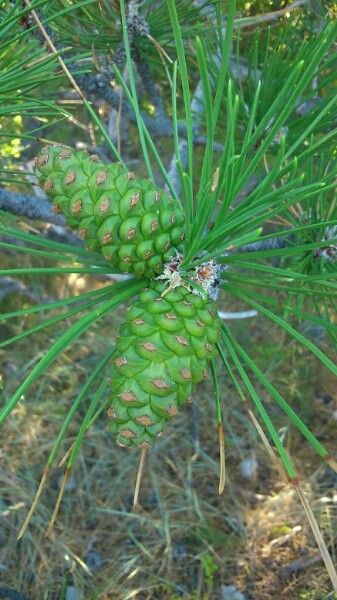
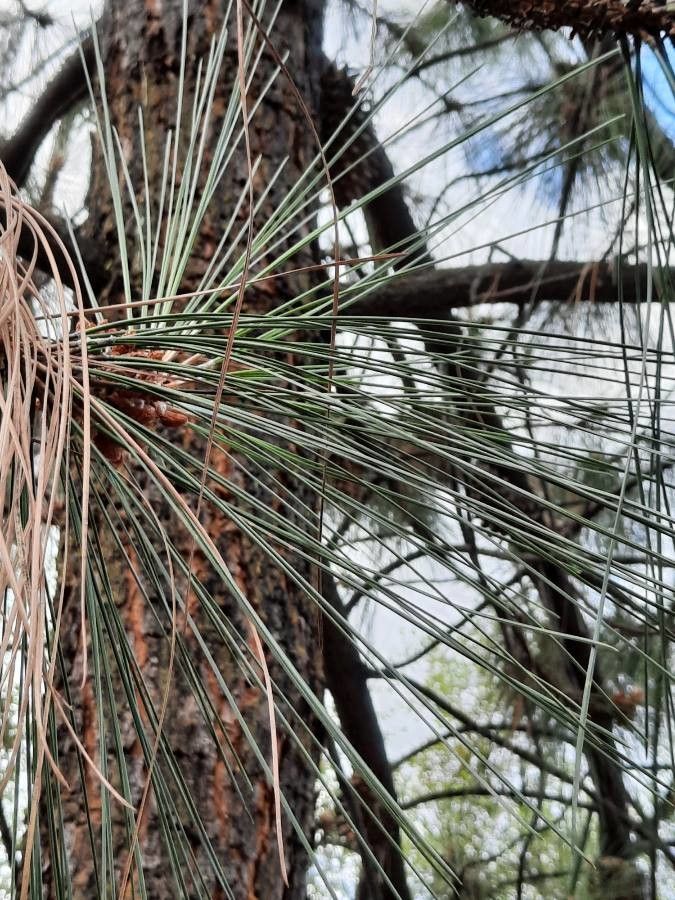
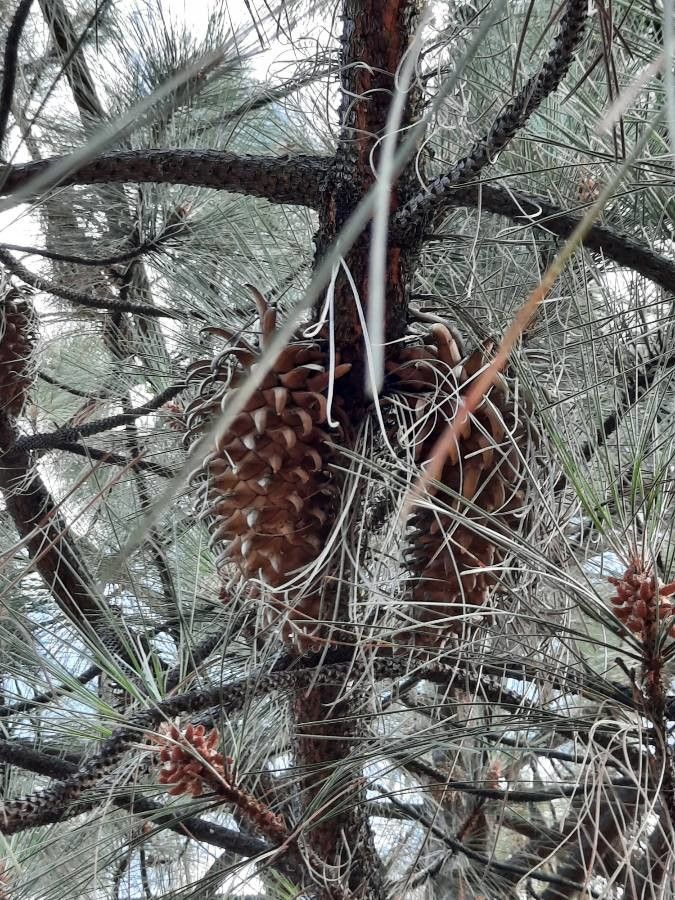
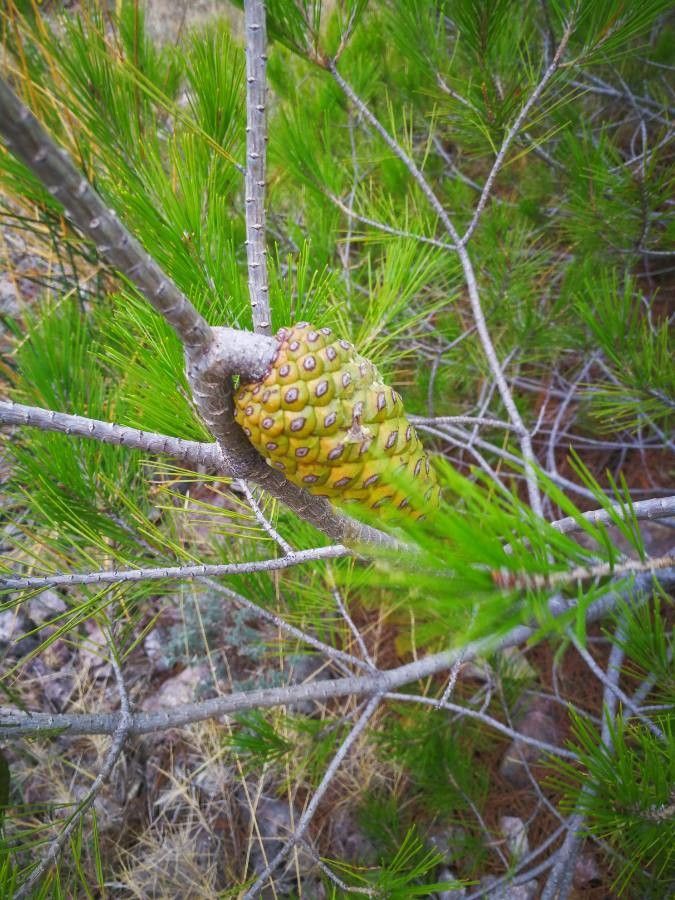
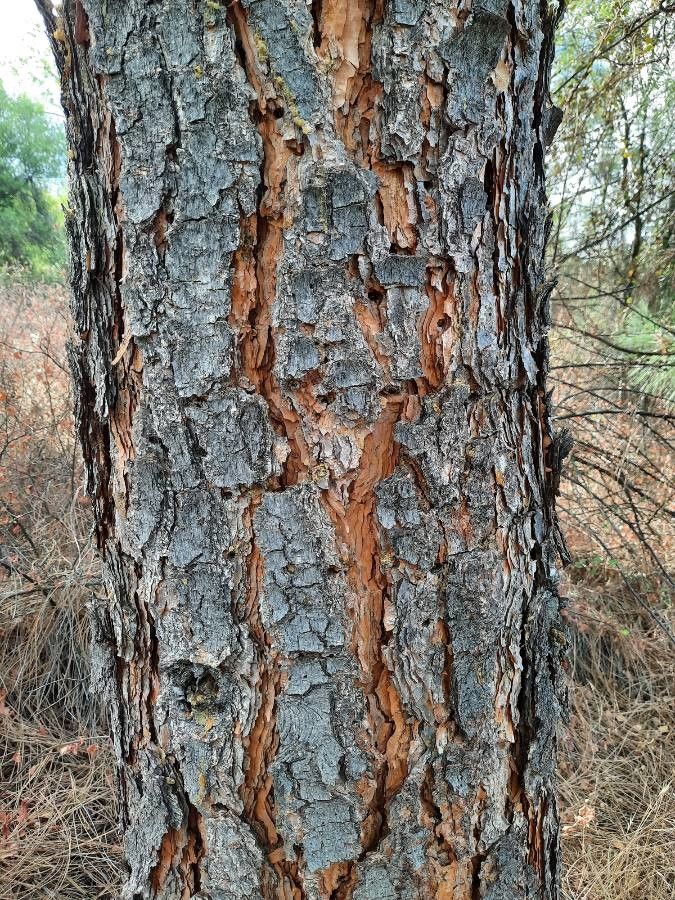
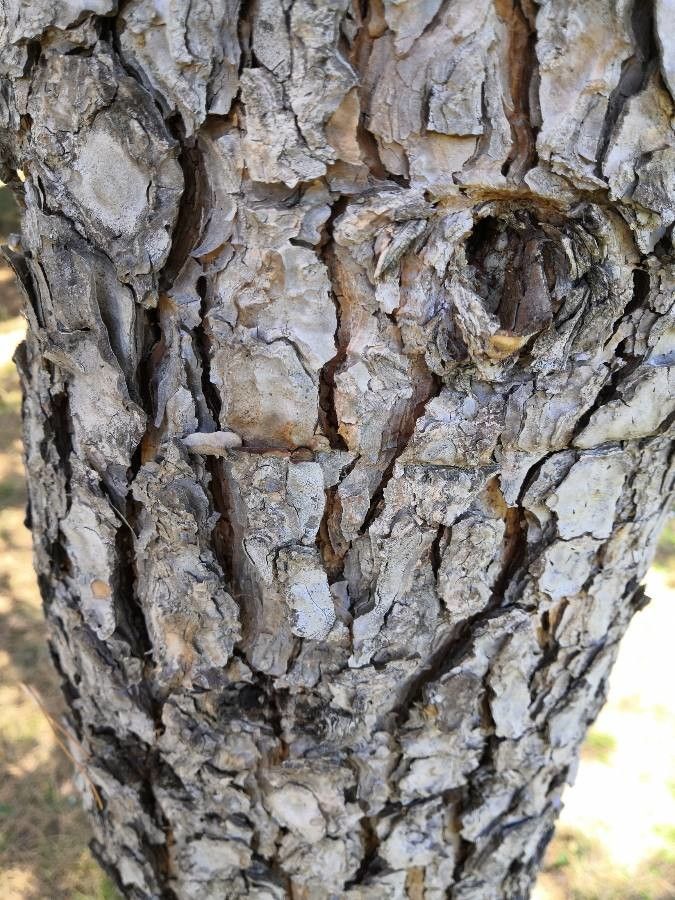
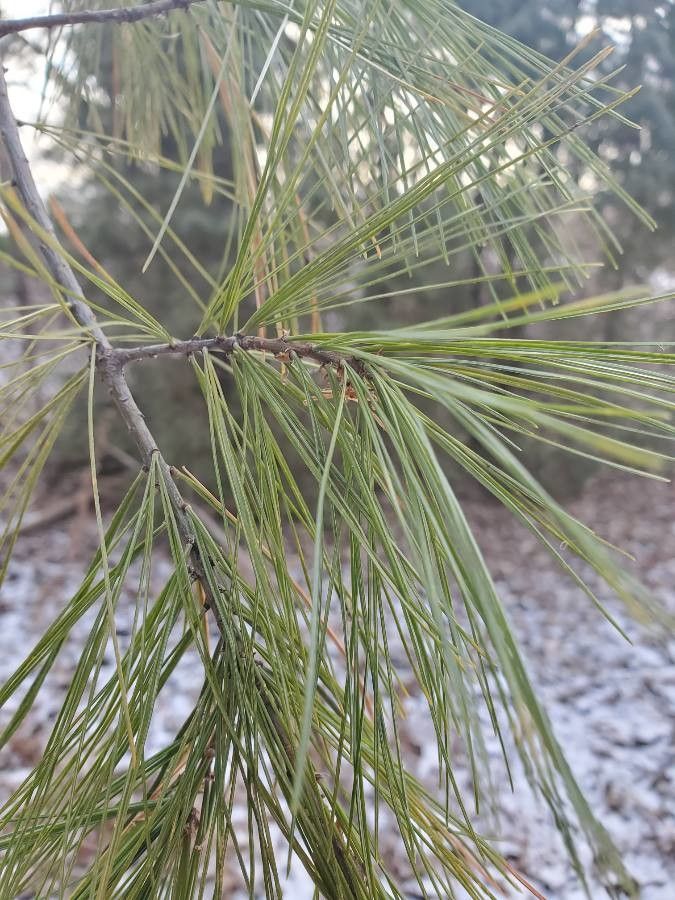
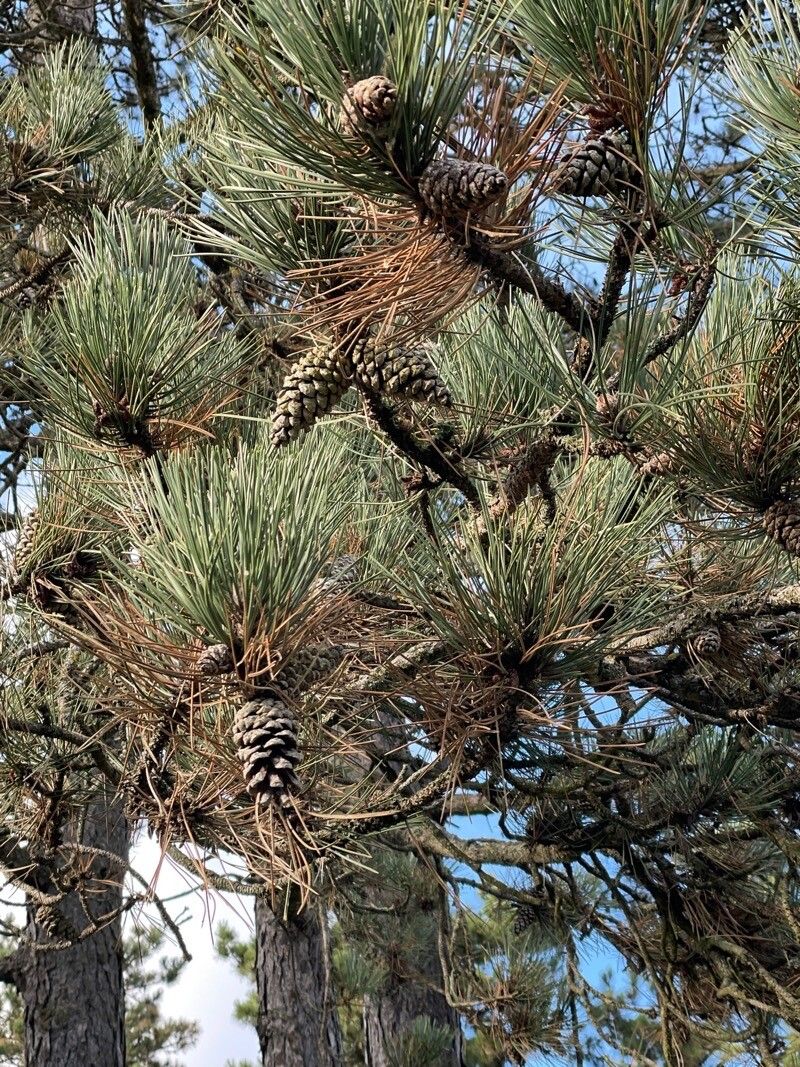
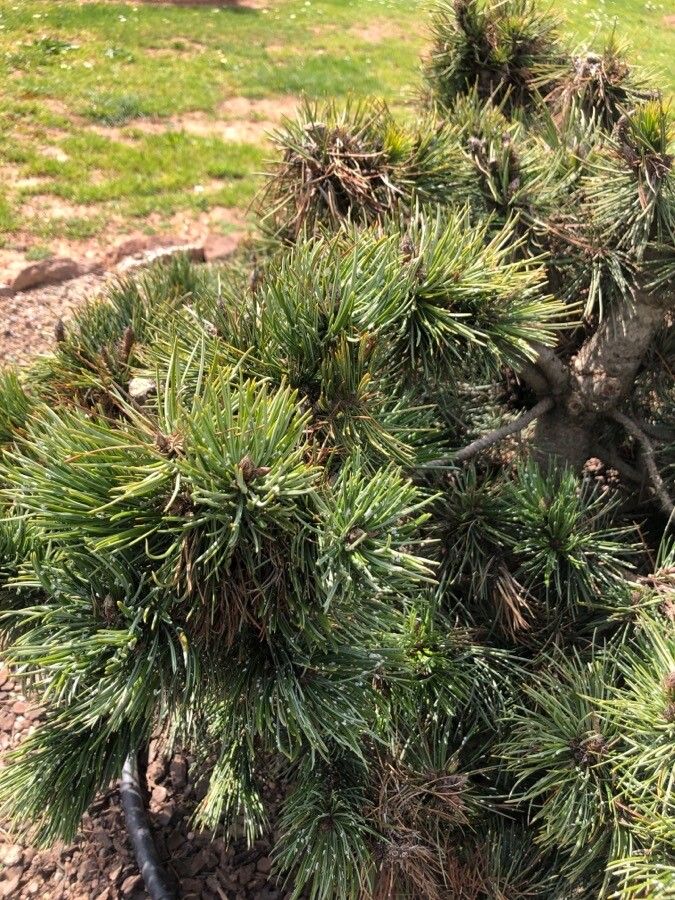
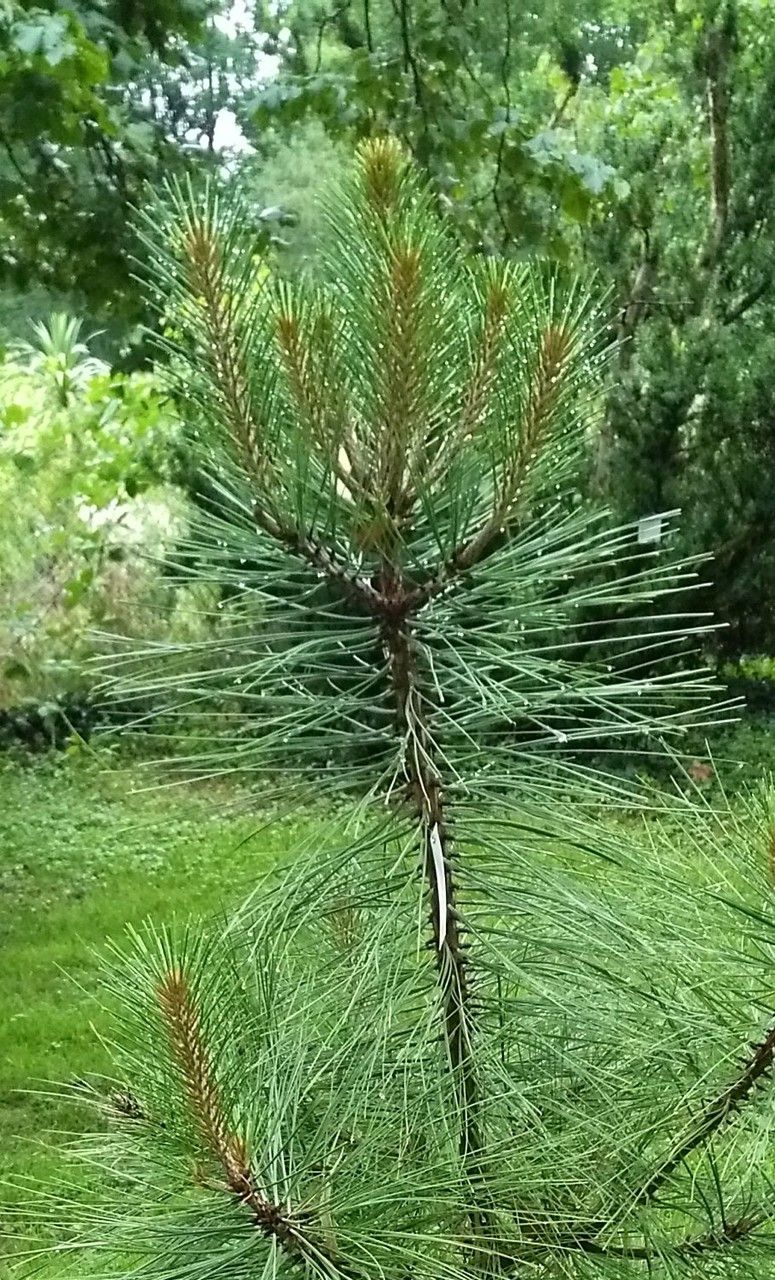
Pinus attenuata, commonly known as the knobcone pine, is a species of pine tree native to the western coast of North America. Typically, it reaches heights of 15 to 25 meters and has a conical shape with dense foliage. The needles are long and slender, measuring up to 20 cm, and are arranged in clusters of three.
What sets the knobcone pine apart are its unique cones, which have thick, woody scales adorned with sharp knobs. These cones can remain on the tree for many years before eventually opening to release their seeds.
This species thrives in dry, rocky soils and is found at elevations ranging from sea level to 2,400 meters. It grows in open woodlands or as part of mixed conifer forests along the Pacific coast, from southern Oregon to Baja California.
Indigenous peoples have utilized the knobcone pine for various purposes, such as using the seeds for food, the resin for medicine, and the wood for building materials. However, it is not widely used commercially due to its slow growth rate.
Overall, Pinus attenuata plays a crucial ecological role by providing habitat for various wildlife, including birds and small mammals, and by contributing to soil stabilization with its deep root system.
The knobcone pine exhibits good resistance to disease and is generally not prone to ailments. In terms of care, this plant is fairly low-maintenance. When grown outdoors it requires minimal watering, and larger plants typically do not need pruning. Smaller plants, however, should be pruned after they have finished blooming. The knobcone pine is suitable for anyone with an outdoor area, such as a garden or deck, and does not require extensive care experience.
How to keep Pinus Attenuata.
Light
The knobcone pine does best in continuous bright light that imitates its native habitat. It can endure this exposure at every stage of growth without suffering ill effects. Insufficient sunlight can impede its healthy development. By contrast, even too much exposure does not harm it because it has a strong tolerance for light.
Water
The knobcone pine shows a moderate tolerance to drought due to the sporadic rainfall in its native habitat. It thrives best in conditions where moisture retention and drainage are well balanced. It is recommended to water it every 1-2 weeks, letting the soil dry out slightly between waterings. Typically cultivated outdoors, the knobcone pine adapts well to seasonal variations in water availability.
Temperature
Knobcone pine is native to areas with temperatures between 50 and 77 °F (10 to 25 °C). This temperature range is its comfort zone, where it thrives most.
Fertilizer
Knobcone pine has specific nutrient needs and does not require heavy fertilization. Spring is the best time to apply fertilizer for optimal growth. Supplying nutrients improves its health, increases its resistance to pests and diseases, and helps maintain its long lifespan.
Pruning
The Knobcone pine features twisted cones and dense foliage. To maintain its health and reduce fire risks, prune the tree from early to late winter. Remove any dead branches to enhance air circulation. Make sure to use clean, sterilized tools to prevent infections and ensure neat cuts.
Botanical profile.
- Plant Type
- Tree
- Life Cycle
- Perennial
- Genus
- Pinus
- Family
- Pinaceae
- Hardiness Zone
- 6
- Mature Height
- 7.92 m to 24.08 m
- Mature Spread
- 4.88 m to 10.06 m
- Leaf Color
- Green, Gray
- Leaf Type
- Evergreen
- Flower Color
- Yellow, Green, Brown
- Flower Size
- 7.62 cm to 15.24 cm
- Bloom Time
- Early spring, Mid spring
- Planting Time
- Spring, Summer, Autumn
- Harvest Time
- Late summer, Early fall, Mid fall
- Native Area
- Mexico
Other names.
Reader questions.
How should I water my Knobcone pine tree?
Watering your Knobcone pine is a simple task. To do it, you just need to turn on your garden hose and use it to slowly soak the soil around the tree. This method works well for mature trees that require a lot of water. If you have smaller trees, you can use a watering can or another smaller tool. Additionally, it's important to avoid overhead watering as it can cause disease, especially in young trees.
Why should I add fertilizer to my Knobcone pine?
To promote healthy growth in Knobcone pine, it is recommended to fertilize it in the spring. It is important to remember that this plant has a long lifespan and requires support. By adding nutrients to the soil, the plant's health can be improved, allowing it to better resist common pests and diseases that can hinder growth or shorten its lifespan.
What are the sunlight requirements for plants?
Plants have varying sunlight requirements to thrive. Full sun plants need more than 6 hours of direct sunlight daily, while partial sun plants require about 3-6 hours of sunlight. It's important to observe how sunlight moves through your garden, choosing spots that offer the right balance of light and shade for your plants. This ensures their growth and happiness by providing them with the optimal amount of light they need for photosynthesis and healthy development.
What is the indigenous temperature range for Knobcone pine?
The Knobcone pine thrives in regions where the temperature ranges between 50 to 77°F (10 to 25°C). This temperature range is considered the comfort zone for the plant, enabling it to flourish optimally.
What do I do if I give my Knobcone pine tree too much or too little water?
Overwatering can occur due to poor soil conditions for your Knobcone pine. If the soil doesn't allow for effective drainage, the plant may start to decline. In this situation, you have two options: improve the soil's drainage by amending it or relocate the pine to a more suitable area. If your Knobcone pine is in a pot, you might need to switch to looser soil in a container that drains well. Overwatering can lead to diseases, so it's important to address them promptly. To determine if your Knobcone pine is overwatered, examine its foliage, especially the new growth. Discolored or easily breakable new growth can indicate excessive moisture. Standing water or slow drainage in the plant's growing area is another clue. On the other hand, an underwatered Knobcone pine can be remedied by increasing watering frequency, allowing the plant to recover. Also, keep in mind that symptoms such as sparse brown leaves can indicate both overwatering and underwatering. Consider recent rainfall or consistently high temperatures to make an informed judgment.
When should I put fertilizer on my Knobcone pine?
The growing medium may not always provide enough nutrients for healthy growth, but Knobcone pine is unique in that it doesn't need a lot of extra nutrients. The ideal time to fertilize it is in the spring, just before new growth starts.
How does sunlight affect the growth of a knobcone pine?
The knobcone pine thrives under full sun conditions, mimicking its native environment where it's exposed to blazing sunlight throughout the day. During all stages of growth, knobcone pines can sustain direct sunlight exposure without suffering adverse effects. A lack of sufficient sunlight may hinder its growth, while an array of symptoms indicate the plant's struggle under suboptimal light conditions. However, thanks to its robust light endurance capabilities, the knobcone pine isn’t negatively affected by overexposure to sunlight.
Is Knobcone pine cold-tolerant?
Yes, Knobcone pine is highly cold-tolerant and does not require additional frost protection measures during winter. It is recommended, however, to water the plant generously before the first freeze in autumn to keep the soil moist. This preparation helps the soil enter a frozen state, preventing drought and water scarcity for the plant during the colder months.
How frequently should I water my Knobcone pine?
A mature Knobcone pine is drought tolerant and can survive only on rainfall. During the hottest months of the year, it may need to be watered once a week. However, in other seasons, it usually does not require any additional watering. The exception is if the tree has just been planted, in which case regular watering is necessary to establish its roots. It's important to note that Knobcone pines cannot tolerate standing water, so it is better to under-water than over-water them.
When is the best time to not fertilize my Knobcone pine tree?
While some plants benefit from frequent fertilization, Knobcone pine does not need excessive nutrients. Applying too much fertilizer can actually cause it to decline. To properly nourish Knobcone pine, only fertilize it in the spring and avoid doing so during the summer, fall, and winter seasons. It is also advised to not add any additional fertilizer or organic matter to the soil during these seasons.
What solutions are available for indoor plants with insufficient sunlight?
Indoor plants with insufficient sunlight can benefit greatly from artificial lighting. Adequate lighting promotes faster, healthier growth, especially when natural sunlight is scarce in winter or less sunny spaces. LED lights, preferred for their customizable wavelengths, should provide 30-50W/sq ft for full sun plants, 20-30W/sq ft for partial sun plants, and 10-20W/sq ft for full shade plants. The light source should be placed 12-36 inches above the plant to mimic natural sunlight, ensuring the plants receive 8-12 hours of light per day to mimic natural daylight hours for optimal growth.
What should I do if the winter temperature drops below -25°C for Knobcone pine?
If the winter temperature drops below -25°C, Knobcone pine can still manage well due to its extreme cold tolerance. There might not be noticeable changes during the winter; however, the branches may become brittle, dry, and no new shoots will emerge in spring. It is advised to prune away any dead branches that have failed to produce new leaves as a solution.