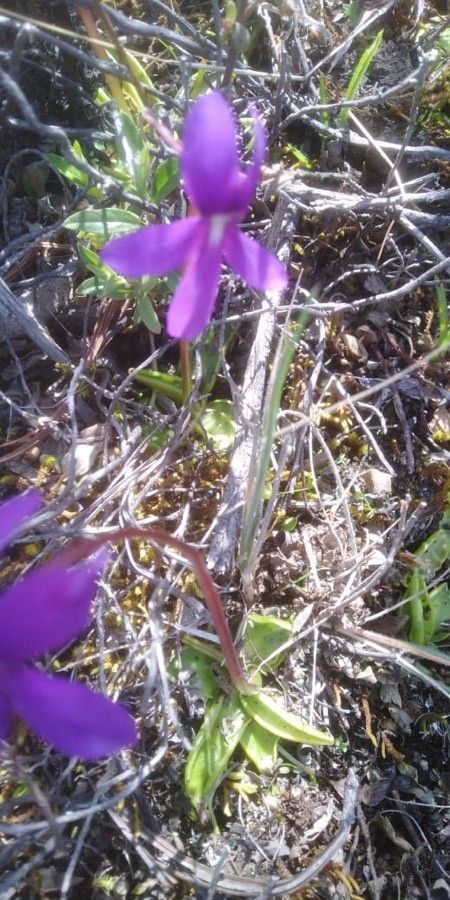
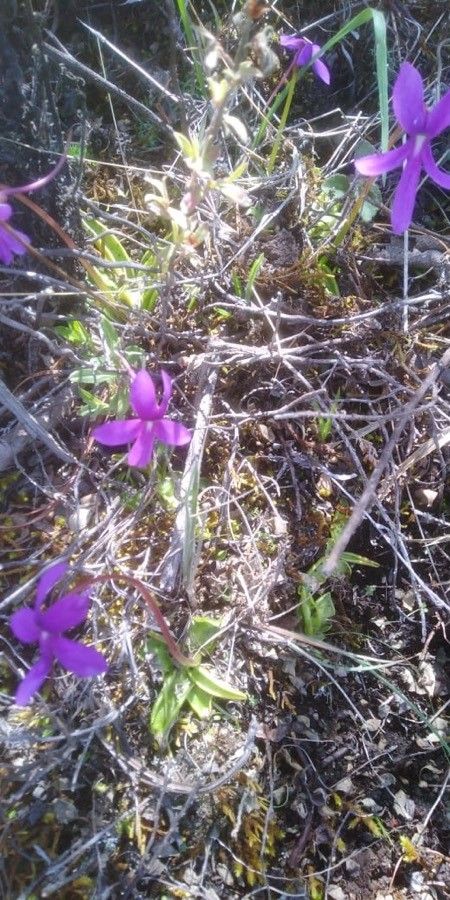
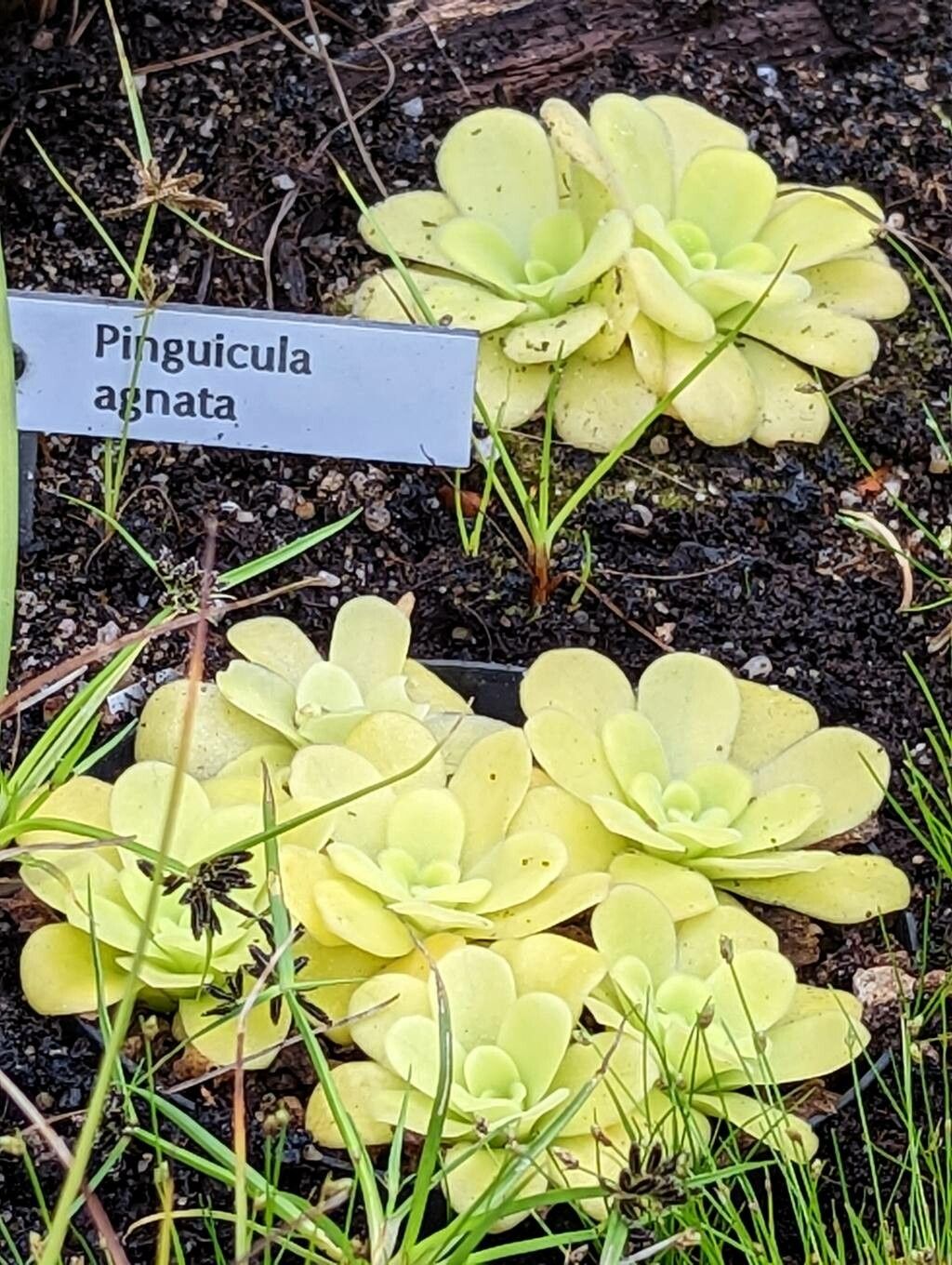
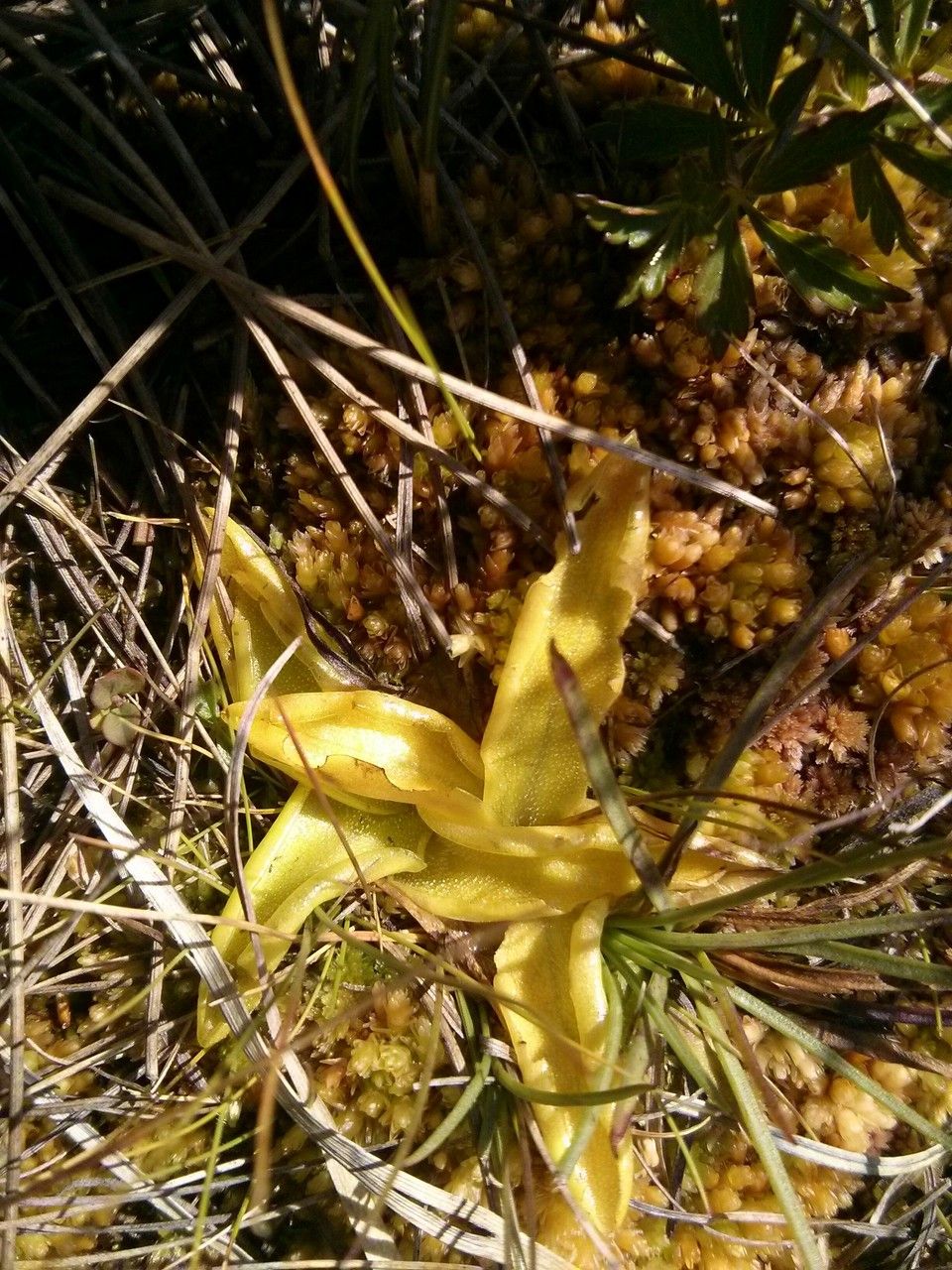
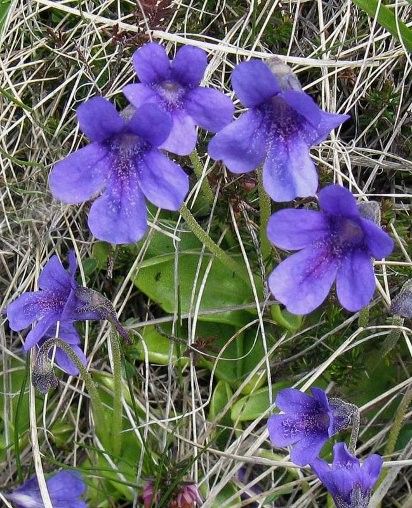
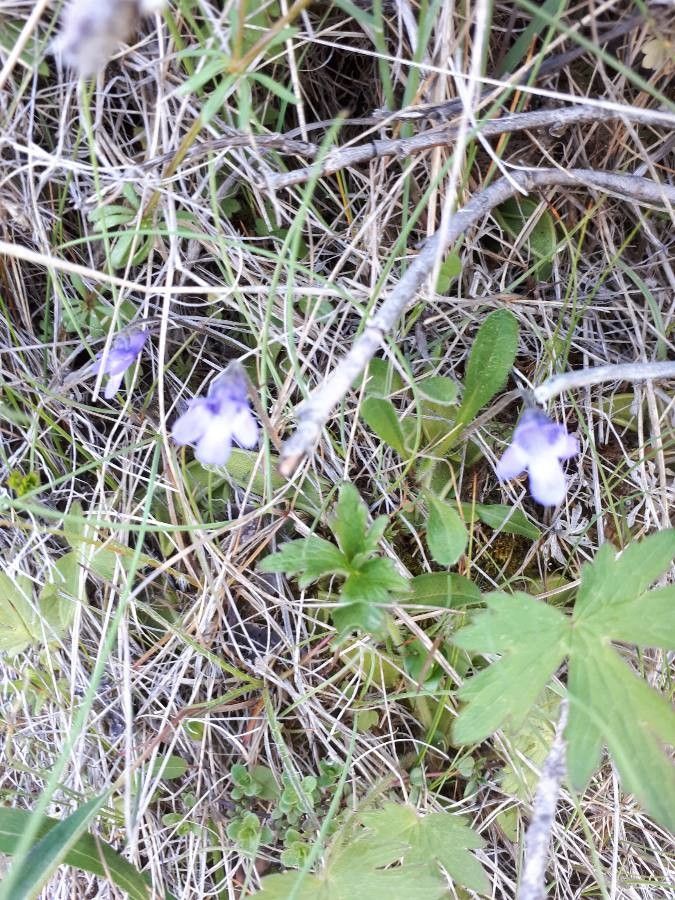
Pinguicula orchidioides is a perennial rosette-forming insectivorous herb native to Mexico and Guatemala. A species of butterwort, it forms summer rosettes of flat, succulent leaves up to 5 centimeters (2 in) long, which are covered in mucilaginous (sticky) glands that attract, trap, and digest arthropod prey. Nutrients derived from the prey are used to supplement the nutrient-poor substrate that the plant grows in. Uniquely among Pinguicula species from the Americas, p. orchidioides produces gemma-like basal buds which elongate into stolons and serve as a means of asexual reproduction. In the winter the plant forms a non-carnivorous rosette of small, fleshy leaves that conserves energy while food and moisture supplies are low. Single purple flowers appear between July and September on upright stalks up to 22 centimeters long. The species was first described in 1844 by Alphonse Pyrame de Candolle, but following an unfortunate misidentification by his contemporary William Jackson Hooker, was relegated to the ranks of botanical synonymy and generally forgotten until it was rediscovered through the works of botanists in the 1990s. The generic name Pinguicula is derived from the Latin pinguis (meaning "fat") due to the buttery texture of the surface of the carnivorous leaves. The specific epithet orchidioides refers to dainty, orchid-like flowers.
Pinguicula orchidioides has moderate resistance to disease and needs a high-humidity environment. However, if ventilation is poor, it can be prone to rot. The plant's care is considered difficult because it requires constant humidification to maintain that high humidity. It is also highly prone to rot when the environment lacks ventilation and becomes too hot. Pinguicula orchidioides is appropriate for growers with more experience who can provide a suitable growing environment.
How to keep Pinguicula Orchidioides.
Light
Pinguicula orchidioides is native to habitats with plentiful sunlight, such as open bogs and sunlit wetlands. It prefers full sun but can also tolerate partial sun.
Temperature
For Pinguicula orchidioides, moderate temperatures — similar to what most people find comfortable — are preferred. It does best in conditions that are neither excessively warm nor cold. The main concern with high temperatures is sunburn, so providing some shade in summer is recommended to avoid too much heat. When temperatures fall, Pinguicula orchidioides becomes dormant. To maintain continuous growth, higher temperatures must be kept during winter. Frost can damage the plant and should be avoided.
Pot & Repot
When repotting Pinguicula orchidioides, select a container 1–2 inches (2.5–5.1 cm) larger that has good drainage. Use a well-draining potting mix. Repot in spring or fall, ensuring the root ball is positioned slightly below the pot rim. Water thoroughly after repotting and place the plant in a warm spot with indirect sunlight.
Botanical profile.
- Genus
- Pinguicula
- Family
- Lentibulariaceae
- Hardiness Zone
- 10-11
- Native Area
- Mexico, Guatemala