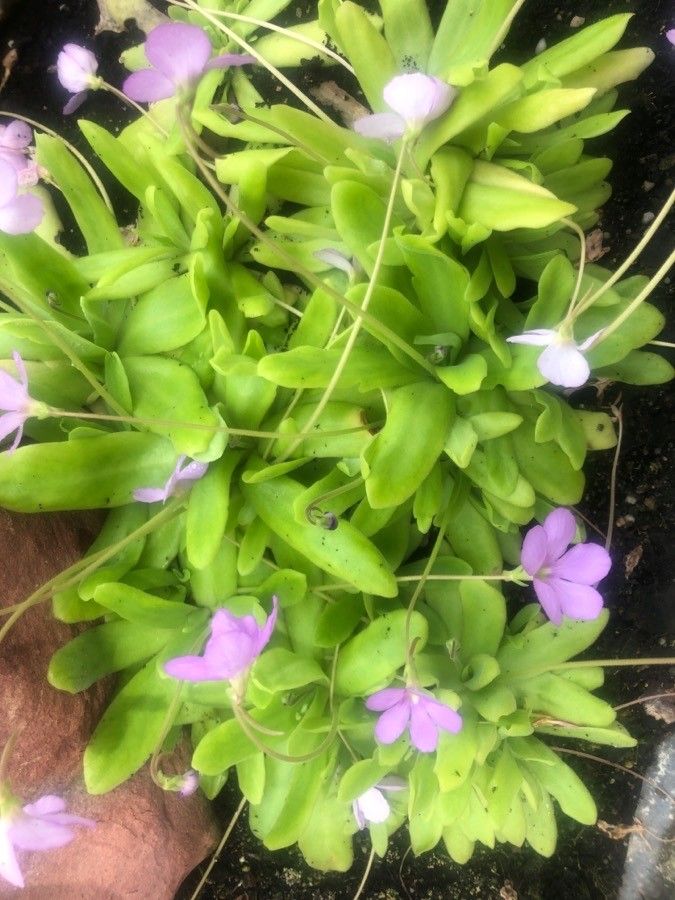
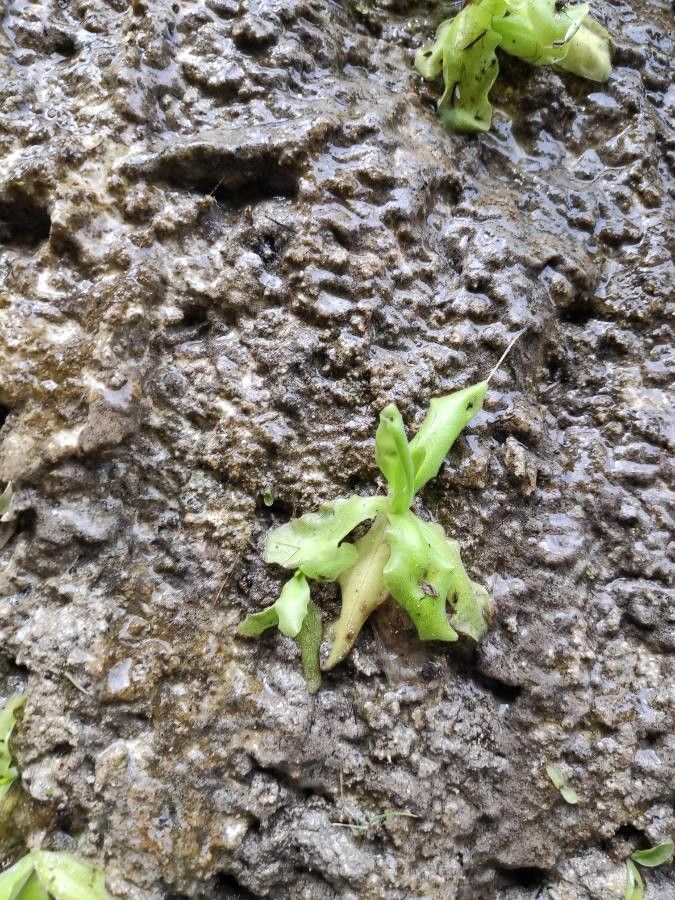
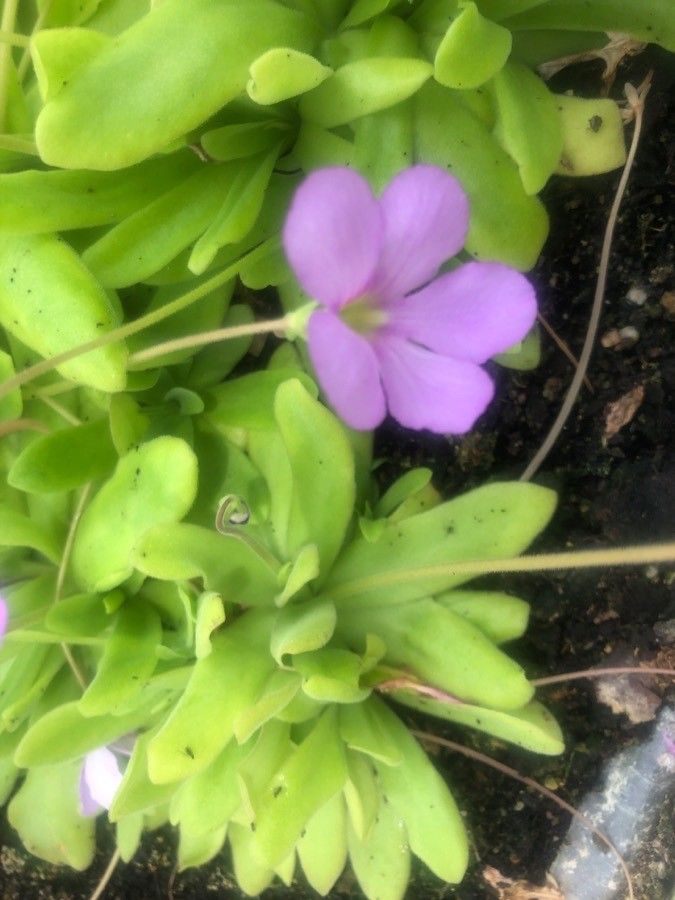
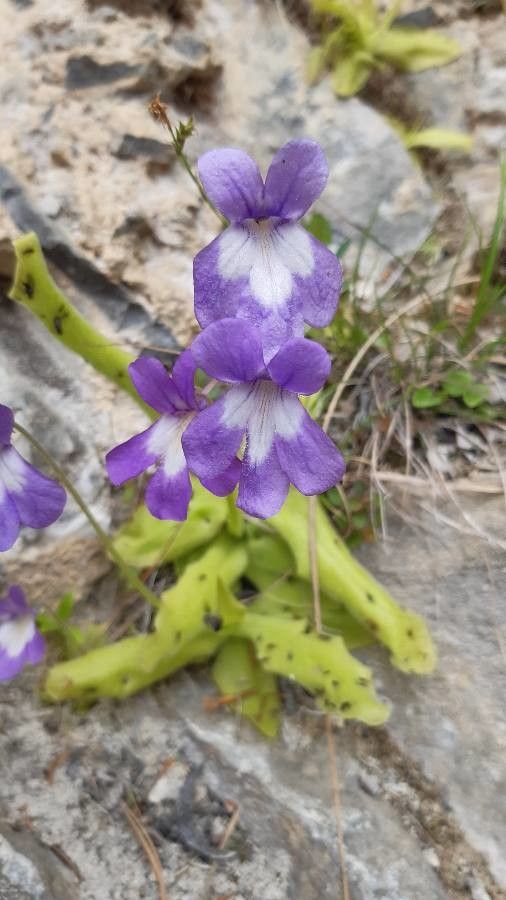
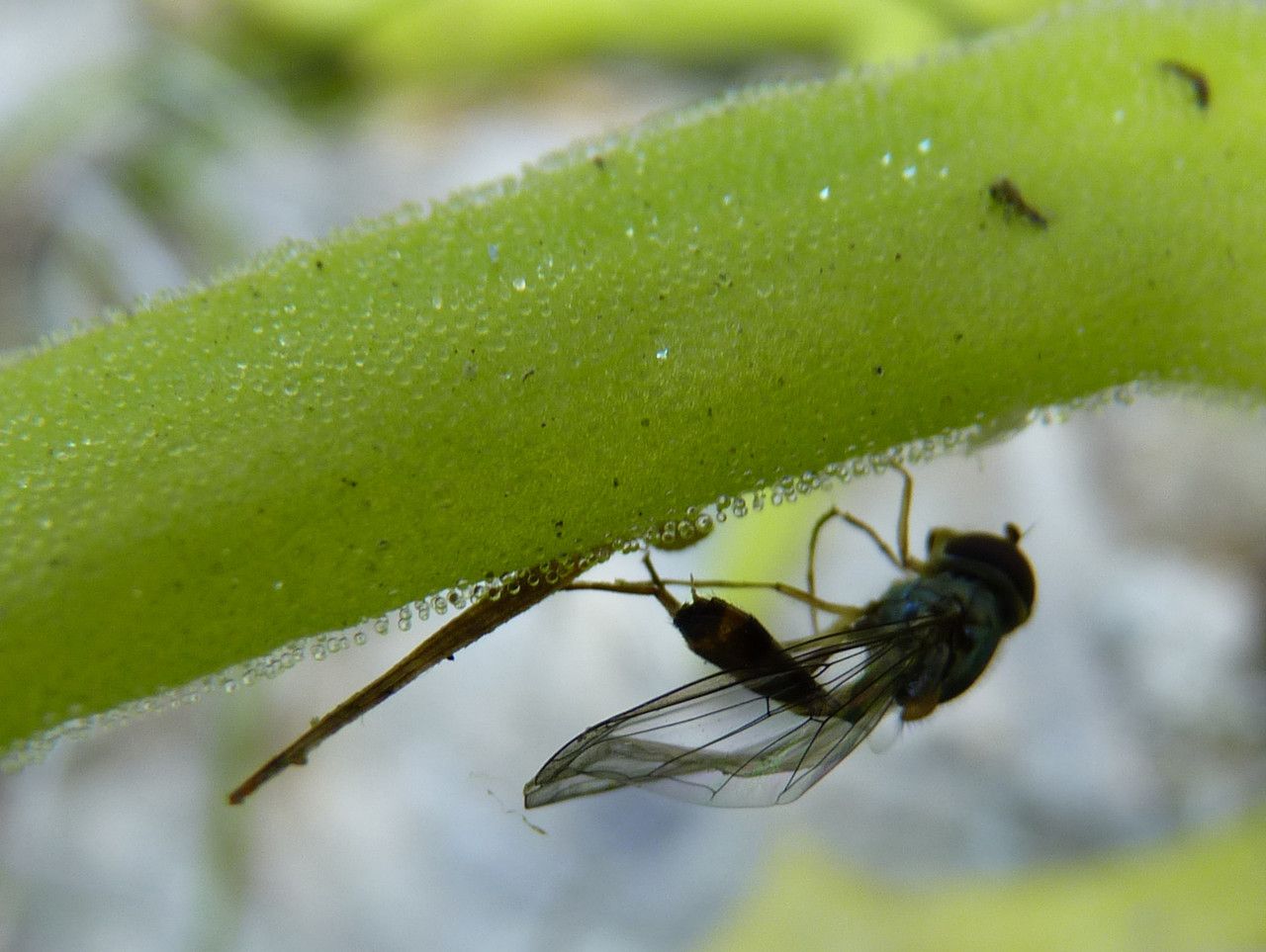
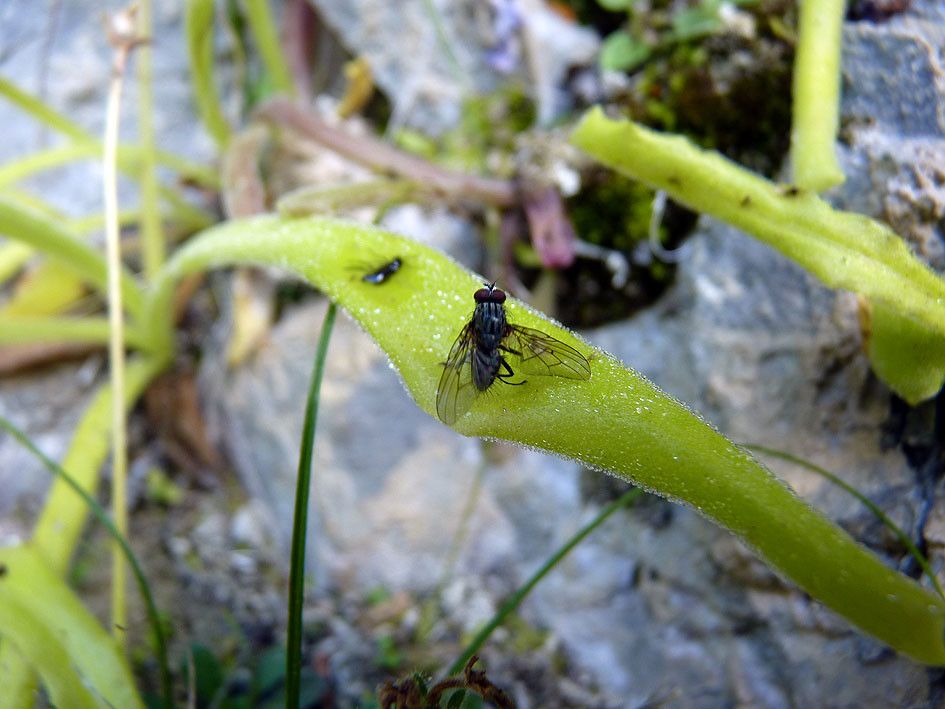
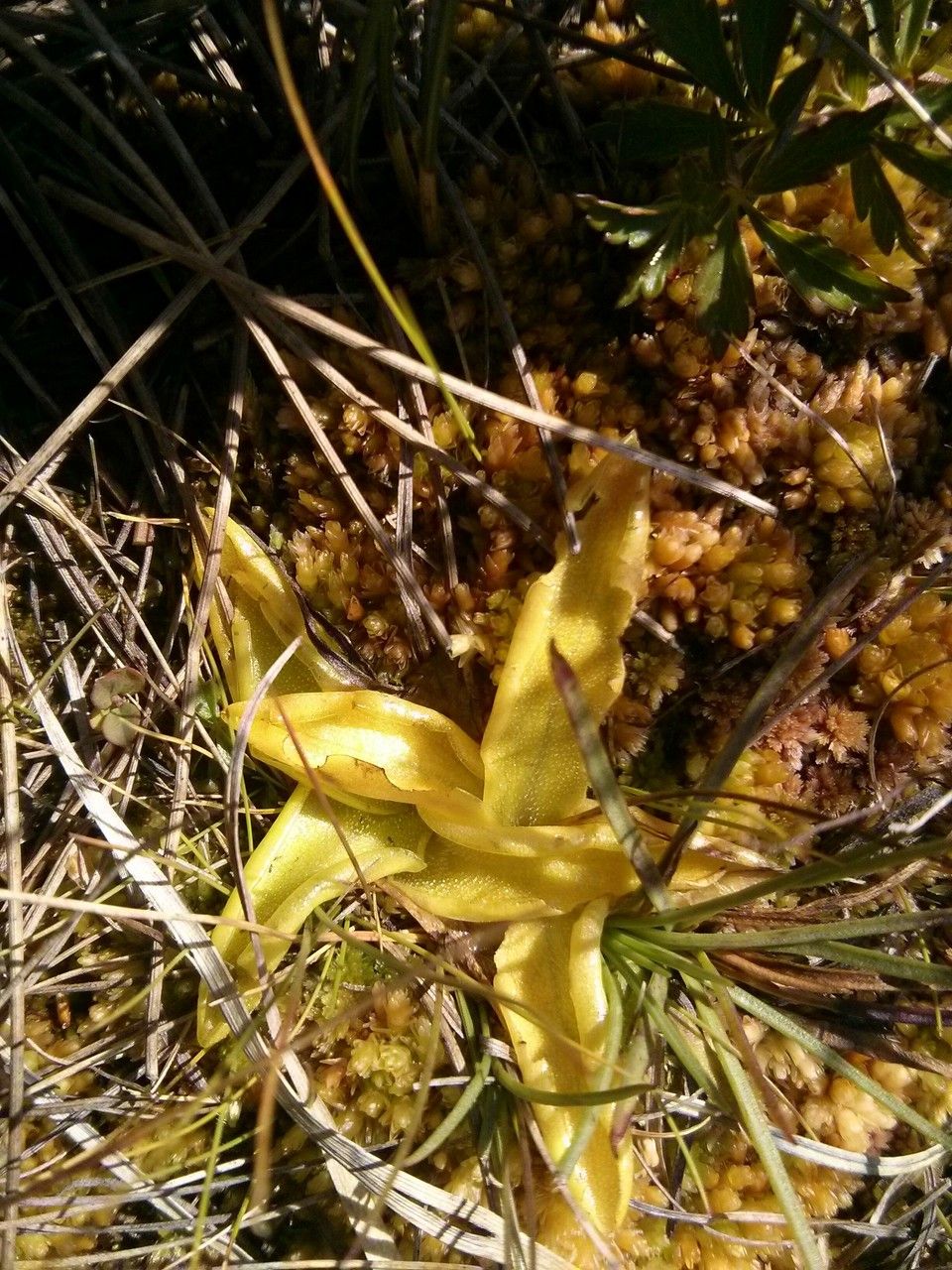
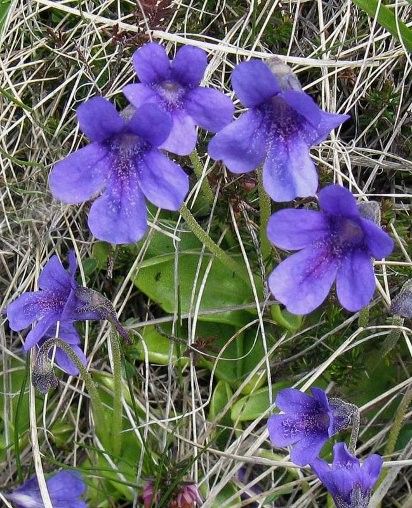
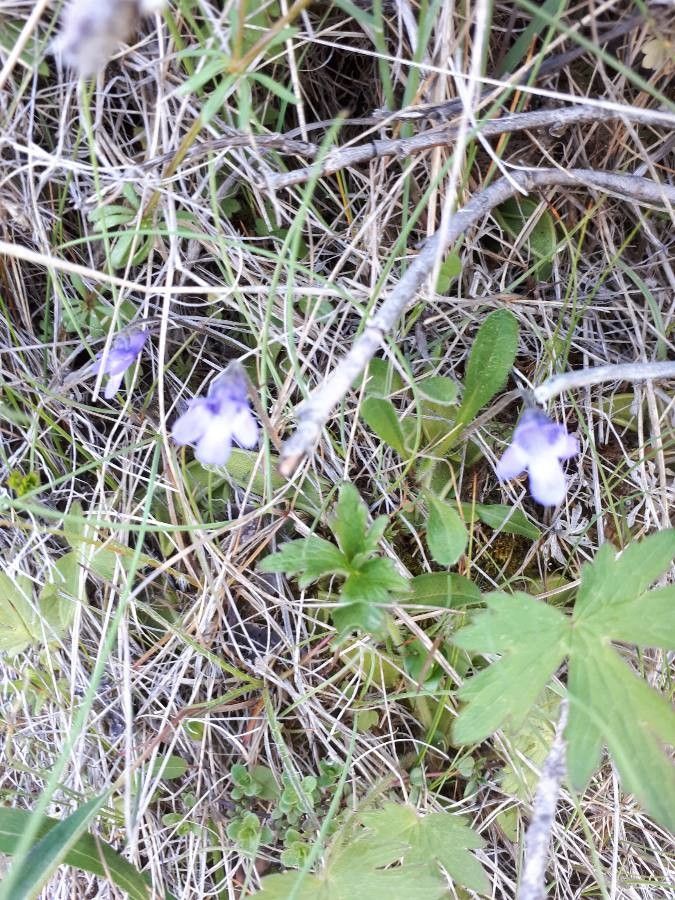
Pinguicula longifolia, commonly known as the long-leaved butterwort, is a perennial carnivorous subalpine plant of the Central Pyrenees, found on both sides of the border. It catches its prey by using its modified leaves that lie on the ground and have “densely covered stalked glands that bear a droplet of sticky mucilage on its top.” The need to capture arthropods is driven by the lack of nutrients present in the soil. P. l. subsp. longifolia obtain their nutrition primarily from flying insects, mainly diptera, which replenished the carnivorous plant with nitrogen. P. l. subsp. longifolia grows in wet shady areas and on vertical or overhanging limestone walls. It has been found at altitudes between 700 – 1900 meters. In the spring, the winter buds open and the first carnivorous leaves present themselves. These leaves are then followed by the flowers in early summer. Throughout summer the leaves can grow up to 14 cm in length and have glands present on both sides of the leaves, which is highly characteristic of P. l. subsp. longifolia. More carnivorous leaves arise throughout summer, and when the conditions become unfavourable, around autumn, a protective winter casing composed of scale like leaves is produced, in the centre of the rosette, called the hibernacula, also known as the plant bud. The leaves halt production and the old leaves wither and decay; P. l. subsp. longifolia is now ready for the winter dormancy. There must be optimal growth during the summer for P. l. subsp. longifolia, otherwise they produce weakened hibernacula which rot very easily. The endemicity of this subspecies in the Pyrenees is a problem as habitat destruction could lead to reduced space to propagate on. P. l. subsp. longifolia are also threatened by carnivorous plant enthusiasts who collect rare specimens. The genus Pinguicula has been known to have many human uses, as they produce a strong bactericide, which prevents captured insects from rotting while digestion occurs. This beneficial property has been known by Europeans for centuries, as application of the bactericide to wounds of cattle encourages healing. Furthermore, the leaves have been used to curdle goat’s milk into Filmjölk, a Swedish fermented milk product.
Long-leaved butterwort has moderate disease resistance and is especially sensitive to humidity and overwatering. It becomes more susceptible to disease when it lacks light and is overwatered. In terms of care, Long-leaved butterwort is drought tolerant and can withstand long periods without watering. It needs little fertilizer and only occasional pruning. This makes it suitable for people of all experience levels, particularly those who prefer to spend less time on plant care and who may be away from home for extended periods. It is a good option for those who do not want to invest much time in maintenance but still want an easy-to-care-for plant.
How to keep Pinguicula Longifolia.
Light
Long-leaved butterwort comes from habitats with filtered light, such as forest understories or rocky spots that provide natural shade. It prefers partial sun but can also tolerate full sun.
Water
The long-leaved butterwort flourishes in environments with high humidity and needs regular hydration, favoring moderately moist soil. Ideally, it should be watered twice a week. Often grown indoors, the long-leaved butterwort benefits from being placed in terrariums or enclosed spaces to maintain the moisture levels that mimic its naturally moist habitat.
Temperature
Long-leaved butterwort performs best in warm conditions and requires relatively high temperatures during the growing season to support growth and metabolic processes. It prefers abundant sunlight, suitable moisture, and good airflow. It can be damaged by very low temperatures and by overwatering. Likewise, it’s important to maintain balance and avoid excessively high temperatures and overly dry conditions.
Fertilizer
Light applications of fertilizer once or twice a year during the growing season are enough for Long-leaved butterwort. Do not fertilize in winter or summer when the plant is dormant. Use less fertilizer for repotted plants and wait a couple of months after repotting before feeding. Fertilizing helps maintain healthy growth and encourages blooms.
Pruning
The long-leaved butterwort has sticky leaves that trap insects and requires minimal pruning. Pruning is mainly needed to remove dead foliage, which improves airflow. Perform pruning from early to late spring to prevent fungal problems and promote healthy growth. Regularly inspect the plant and carefully trim dying leaves close to the base.
Pot & Repot
When repotting Long-leaved butterwort, pick a pot about 1–2 inches (2.5–5.1 cm) larger with good drainage. Use a well-draining potting mix. Repot in spring or fall, making sure the root ball sits slightly below the rim of the pot. Water thoroughly after repotting and place it in a warm spot with indirect sunlight.
Botanical profile.
- Plant Type
- Herb, Succulent
- Life Cycle
- Perennial
- Genus
- Pinguicula
- Family
- Lentibulariaceae
- Hardiness Zone
- 7-10
- Mature Height
- 5 cm to 10 cm
- Mature Spread
- 5 cm to 15 cm
- Leaf Color
- Light Green, Yellow Green
- Leaf Type
- Semi-evergreen
- Flower Color
- Purple, Lavender
- Flower Size
- 2.03 cm to 3.05 cm
- Bloom Time
- Mid spring, Late spring, Early summer
- Planting Time
- Spring, Summer, Autumn
- Harvest Time
- Summer
Other names.
Reader questions.
What are the sunlight requirements for a Long-leaved butterwort?
The Long-leaved butterwort, botanically known as Pinguicula longifolia, thrives in full shade conditions, requiring less than 3 hours of sunlight daily. It's important to observe the way sunlight moves through your garden to find the perfect spots that offer a balance of light and shade. This careful selection ensures your Long-leaved butterwort remains healthy and happy.