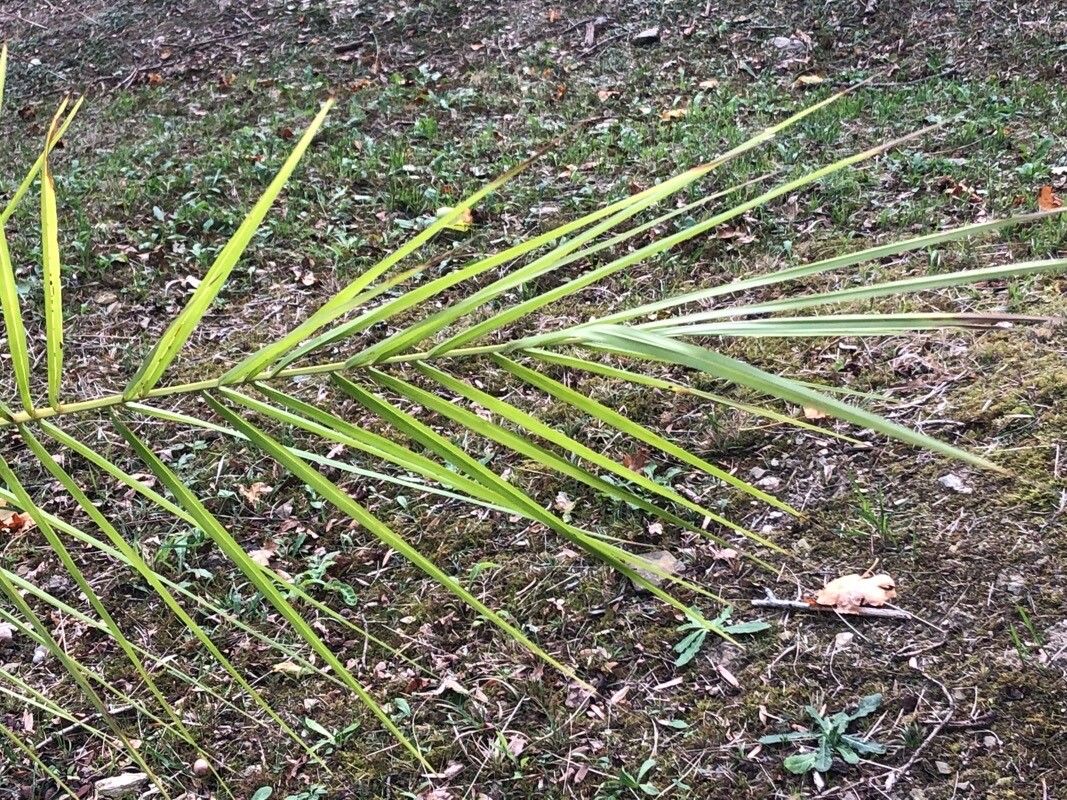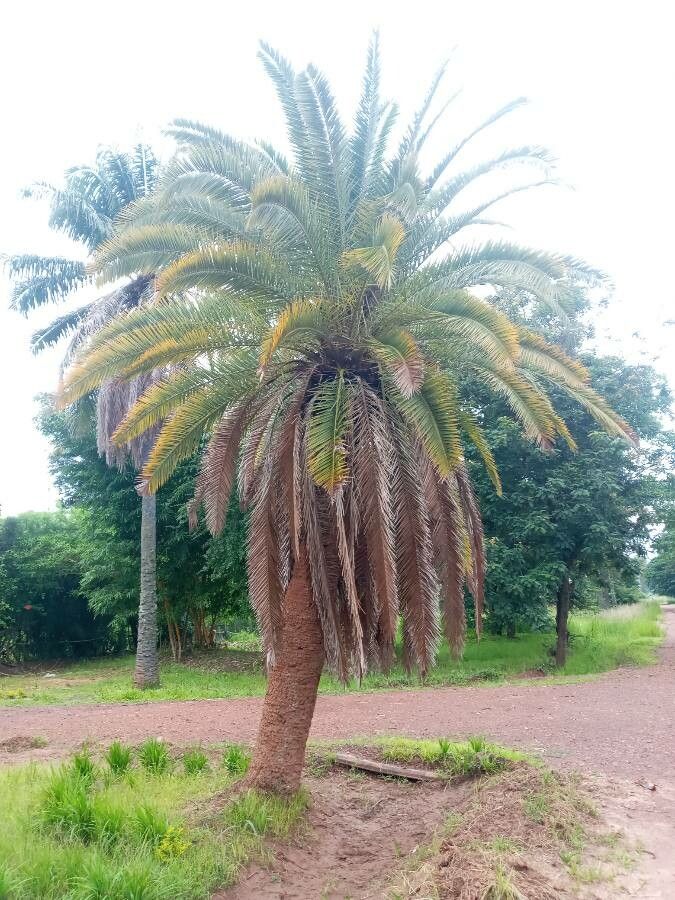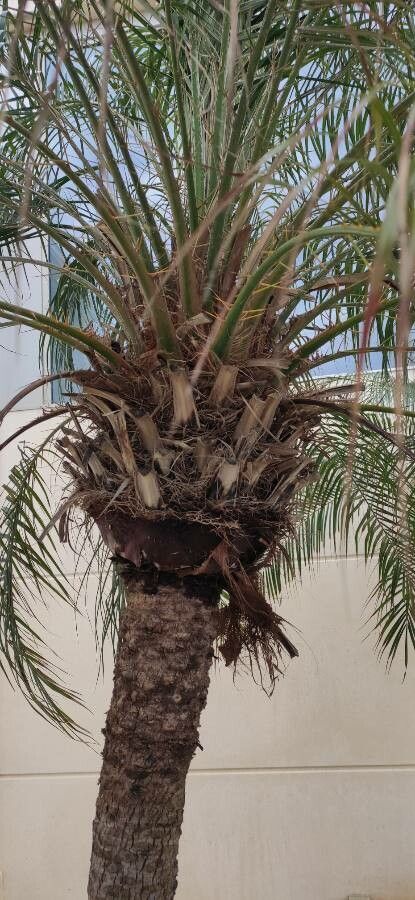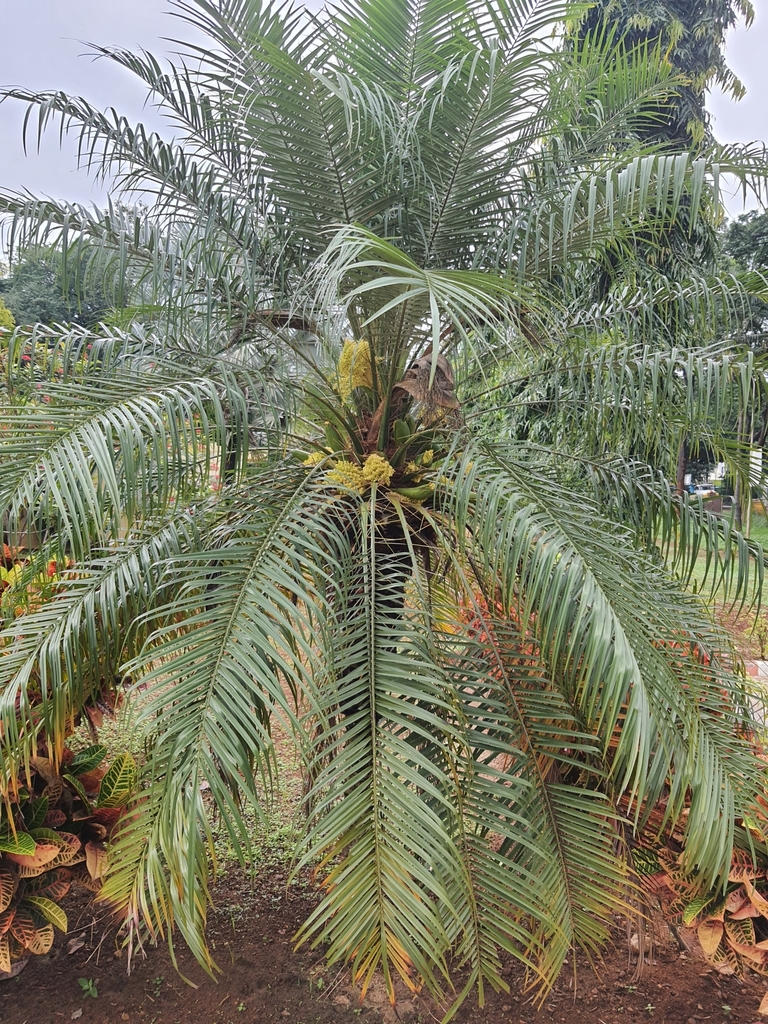
Phoenix roebelenii, commonly known as the Pygmy Date Palm, is a small palm tree native to Southeast Asia. This plant is highly valued as an ornamental due to its compact size and appealing appearance. Typically, the Pygmy Date Palm grows up to 10 feet tall, featuring slender trunks enveloped in brown fibers. The leaves are pinnate, resembling feathers with leaflets growing in pairs along the stem. These dark green leaflets can extend up to 2 feet in length.
During the summer months, the Pygmy Date Palm produces small yellow flowers that bloom in clusters on long stalks. These flowers eventually give way to small black fruits, which look similar to dates but are not edible for humans.
Thriving in warm climates with ample sunlight, this plant can also tolerate partial shade. It prefers well-draining soil and regular watering, though it can withstand periods of drought once established.
In a 1989 study on clean air, the National Aeronautics and Space Administration (NASA) aimed to identify plants with the greatest potential for purifying air in space stations. The research highlighted the pygmy date palm as one such plant. It was found that the pygmy date palm could effectively remove toxic pollutants like formaldehyde, xylene, and toluene from the air. However, it was also noted that the plant was not capable of eliminating ammonia, benzene, or trichloroethylene. FUN FACT · FROM THE LIBRARY
Due to its low maintenance requirements and attractive appearance, the Pygmy Date Palm is commonly used as both an indoor and outdoor ornamental plant. Its compact size makes it an ideal choice for smaller gardens or indoor spaces such as offices and homes.
In summary, Phoenix roebelenii is a versatile palm tree with many appealing qualities, making it a popular choice among gardeners worldwide.
Pygmy Date Palm (Dwarf Date Palm): This plant is called a date palm because some species within the Arecaceae family produce a sweet, sugary fruit pulp. Due to its smaller stature compared to the regular date palm, it is known as the Pygmy Date Palm or Dwarf Date Palm.
The Pygmy date palm shows strong resistance to diseases and is usually not prone to them. Still, if it is kept in poor conditions it can become more vulnerable to illness. It also has few insect pests. For care, this plant has moderate requirements. It needs plenty of sunlight, because insufficient light can make it more disease-prone and lead to thin, weak growth. Since it is often grown indoors, it may need to be moved to a bright spot on a regular basis. It does not need frequent watering. Overall, the Pygmy date palm is suitable for most people, but it is best for those who can provide good light conditions.
How to keep Phoenix Roebelenii.
Light
The pygmy date palm thrives in strong sunlight and maintains healthy growth, a trait that reflects its native habitat. Light is essential in shaping its development through all stages. Nonetheless, it can tolerate areas with limited sun. Both too little and too much light can harm the plant's health.
Water
The Pygmy date palm thrives in humid environments and prefers consistently moist conditions, needing to be watered every 1-2 weeks. While it is moderately drought-tolerant, occasional misting can help to maintain its health and the vibrancy of its evergreen fronds, mimicking its natural tropical habitat.
Temperature
The pygmy date palm is native to tropical areas and needs temperatures of 68 to 100 ℉ (20 to 38 ℃) for best growth. It favors warm conditions but can withstand temperatures slightly below 68 ℉ (20 ℃) for brief periods. In colder months, it is advisable to keep indoor temperatures between 64 and 74 ℉ (18 to 23 ℃) to support healthy growth.
Fertilizer
Fertilize your Pygmy date palm in early spring to encourage healthy growth. Regular feeding improves overall health, leading to vigorous development, better tolerance of adverse conditions, and greater resistance to pests and diseases. Keep to a consistent fertilization schedule for your Pygmy date palm to maintain foliage that is vibrant, deeply colored, and lush.
Pruning
The pygmy date palm is a small ornamental palm known for its feathery fronds. To keep the plant healthy and attractive, it is best to prune it in early spring. Remove dead fronds and trim any suckers, but make sure to leave the healthy green fronds intact, as they are essential for photosynthesis. Regular pruning helps maintain the palm's compact shape and prevents pest infestations. Always use clean, sharp tools when pruning to prevent the spread of disease.
Pot & Repot
When repotting a pygmy date palm, choose a pot that is slightly larger and has excellent drainage. Use a potting mix that drains well. Repot in spring, taking care not to damage the roots during the process. Set the palm at the same depth it had in the old pot. Water thoroughly after repotting and place it in a warm spot with bright, indirect sunlight. Avoid overwatering to prevent root rot.
Toxicity
Pygmy date palms are not toxic and, in ideal conditions, produce edible dates. In fact, these palms are considered excellent for cleaning the air and have been notable in eliminating carbon monoxide, formaldehyde, benzene, and xylene.
Further reading →
The toxicity and danger assessments provided are for reference only. We do not assure their accuracy, so it's crucial not to depend on them. Seek professional advice when necessary for accurate guidance.
Botanical profile.
- Plant Type
- Palm
- Life Cycle
- Perennial
- Genus
- Phoenix
- Family
- Arecaceae
- Hardiness Zone
- 10-12
- Mature Height
- 0.91 m to 3.05 m
- Mature Spread
- 1.83 m to 2.44 m
- Leaf Color
- Green
- Leaf Type
- Evergreen
- Flower Color
- Yellow
- Flower Size
- 30.48 cm
- Bloom Time
- Late spring, Early summer, Mid summer
- Planting Time
- Spring, Autumn
- Harvest Time
- Mid summer, Late summer
- Native Area
- Vietnam, Laos, Thailand, China
Other names.
Reader questions.
How should I water my Pygmy date palm?
To properly water your Pygmy date palm when kept indoors, apply water directly to the top layer of soil in the container. It is recommended to use rainwater or distilled water that is at or around room temperature. To determine if your plant needs water, check the moisture level of the soil by poking your finger into it. If the first few inches of soil are dry, add enough water to moisten those layers and allow excess water to drain through the bottom of the container. It is advisable to underwater rather than overwater your Pygmy date palm, as overwatering can lead to root rot and other complications. When growing the Pygmy date palm outdoors, rainfall alone may suffice to provide the necessary water. However, if it rains less than once per week during the growing season, you may need to supplement with additional water to the soil. Regardless of it being grown indoors or outdoors, it is best to use rainwater or distilled water for watering.
Why do I have to give food to my Pygmy date palm?
To ensure the best health for your Pygmy date palm, it's important to regularly fertilize it. This provides the necessary nutrients for strong growth and helps the plant thrive in difficult conditions and fight off pests and diseases. A key aspect of maintaining the palm's visual appeal is preserving its attractive foliage. To achieve this, create and stick to a personalized fertilization schedule that will enhance the leaves' color and overall lush appearance.
What are the sunlight requirements for a Pygmy date palm?
The Pygmy date palm (Phoenix roebelenii) thrives best under conditions that mimic its natural habitat, requiring intense sunlight exposure for healthy growth. It prefers above 6 hours of sunlight daily, categorized as full sun, but can manage with about 3-6 hours, known as partial sun. Insufficient or excessive light exposure can adversely affect the plant's health. Sunlight plays a critical role, especially in its various growth stages, and ensuring the right balance can avoid potential issues like chlorosis or leaf scorching. Watching how sunlight moves through your garden helps identify the ideal spots that offer a mix of light and shade, promoting plant happiness.
What are the optimal growth temperatures for the Pygmy Date Palm?
The Pygmy Date Palm (Phoenix roebelenii) thrives in tropical regions and requires temperatures between 68°F to 100°F (20°C to 38°C) for optimal growth. It can tolerate warm temperatures well but can only endure temperatures slightly below 68°F (20°C) for brief periods. During colder seasons, maintaining indoor temperatures between 64°F to 74°F (18°C to 23°C) promotes healthy growth. The plant is extremely heat-loving, so it is crucial to protect it from cold temperatures by moving outdoor plants indoors near a bright window and ensuring they are not placed too close to heaters during autumn and winter. Maintaining a temperature above 20°C in winter is beneficial, while temperatures near 5°C can be harmful.
What should I do if I give the Pygmy date palm too much or too little water?
Here are some signs that indicate plants are not getting enough water: brown tips on the plant, wilted and drooping leaves that appear lifeless, and the potential for leaves to turn brown, crispy, and dry out severely. If you notice these signs, water the plant as soon as possible. Alternatively, overwatering can lead to root rot. If this occurs, remove any damaged roots from the soil, especially if they are mushy, fragile, and black. It is important to remove a larger part of the root to address the issue. Overwatering can also cause leaves to turn brown and fall off early. To help the plant recover, drain excess water and wait for the soil to dry before watering again. If you notice signs of root rot, discard the soil in the pot. Clean everything thoroughly and place pebbles in the pot to improve drainage. If you observe tan rings or reddish-brown spots on the leaves, discard any excess water at the base of the pot. Additionally, ensure the plant is in a well-ventilated location to promote faster soil drying and prevent future rotting.
When should I fertilize my Pygmy date palm tree?
To properly fertilize your Pygmy date palm, start by applying fertilizer in late winter or early spring. This will provide the necessary nutrients for healthy growth as the weather warms up. If you live in a warm climate region, it is recommended to give your palm another fertilization in early fall. This will not only supply additional nutrients for the next growing season but also help make the palm more resilient to winter cold and prevent foliage damage. Fertilizing earlier in the fall ensures that new branches have enough time to grow strong before the cold winter arrives.
How can I supplement sunlight for my indoor Pygmy date palm?
For indoor Pygmy date palms, especially in areas with limited natural sunlight or during less sunny seasons like winter, artificial lighting can significantly boost growth. LED lights are recommended due to their efficiency and ability to be customized to the specific light wavelengths needed by plants. Full sun plants require 30-50W/sq ft, partial sun plants 20-30W/sq ft, and full shade plants 10-20W/sq ft of artificial light. It's important to position the light source 12-36 inches above the plant, simulating natural sunlight conditions. Additionally, ensuring that your plant receives 8-12 hours of light per day can mimic the natural daylight hours and support its growth.
How should you care for a Pygmy Date Palm experiencing low temperatures?
Pygmy Date Palms prefer warm environments and do not tolerate low temperatures well, thriving best above 20°C and needing to remain above 5°C during winter. Exposure to temperatures below 1°C may lead to leaves lightening in color, which is a precursor to browning or blackening of leaves, wilting, and drooping as a result of frost damage. The remedy for frost damage includes trimming the affected parts and moving the plant indoors to a warm spot, ideally near a south-facing window to ensure ample sunlight. It's also important to avoid placing the plant near heaters or air conditioning vents to prevent air from becoming excessively dry.
What should I do if I give my Pygmy date palm too much water or too little water?
When watering the Pygmy date palm, the main issue to watch out for is overwatering. There are several clear signs that indicate this problem has occurred. The Pygmy date palm that gets too much water will have brown, drooping leaves. The stems of the plant may also become soft and produce a bad smell. Overwatering can also cause root rot, which can be deadly if left unchecked. If you catch the overwatering early, you can fix it by reducing the watering or adding sand to improve drainage. In severe cases, you will need to remove the plant from its container, get rid of any rotten roots, and repot it in a new container. If you grow the Pygmy date palm outdoors and it consistently gets too much water, you should transplant it to a different location with looser soil to improve drainage. Underwatered Pygmy date palms will also have drooping leaves, but they are more likely to be yellow. You will also notice slower growth in plants that don't get enough water. If you see these signs, you need to water the Pygmy date palm more often.
When should I not put fertilizer on my Pygmy date palm?
There are certain times of the year when fertilizing your Pygmy date palm should be avoided. The first is in the early and mid-winter months when the palm is dormant and does not require nutrients. Additionally, it is not recommended to fertilize the plant during late spring and summer when the weather is typically hotter and drier. These conditions can have a negative impact on the palm's response to fertilization. To prevent any issues, it is best to stick to a fertilization schedule that only includes feeding in early spring and early fall.
What are the symptoms of insufficient sunlight for a Pygmy date palm?
When a Pygmy date palm receives inadequate sunlight, especially indoors or during winter, several symptoms can manifest. These include slower or halted growth, the emergence of lighter-colored new leaves indicating a lack of chlorophyll, early dropping of older leaves as a resource-conservation measure, and symptoms of chlorosis where leaves turn yellow. Other symptoms like sunscald, which damages plant tissues, leaf curling as a defense against excessive sunlight, wilting from increased water loss, and leaf scorching evidencing too much sunlight can also occur. These signs reflect the plant's struggle under non-ideal light conditions and necessitate prompt corrective action.
What steps should be taken if a Pygmy Date Palm is exposed to high temperatures?
During summer, it's crucial to keep the Pygmy Date Palm below 38°C. Exposure to temperatures above 43°C can cause the leaves to lighten and increases the plant's susceptibility to sunburn. To care for a plant exposed to high temperatures, trim away sunburned and dried-up parts. Then, relocate the plant to a shaded area, especially during the midday and afternoon sun, and ensure the soil remains moist by watering in the morning and evening. Such measures help protect the plant from heat stress and promote its recovery.