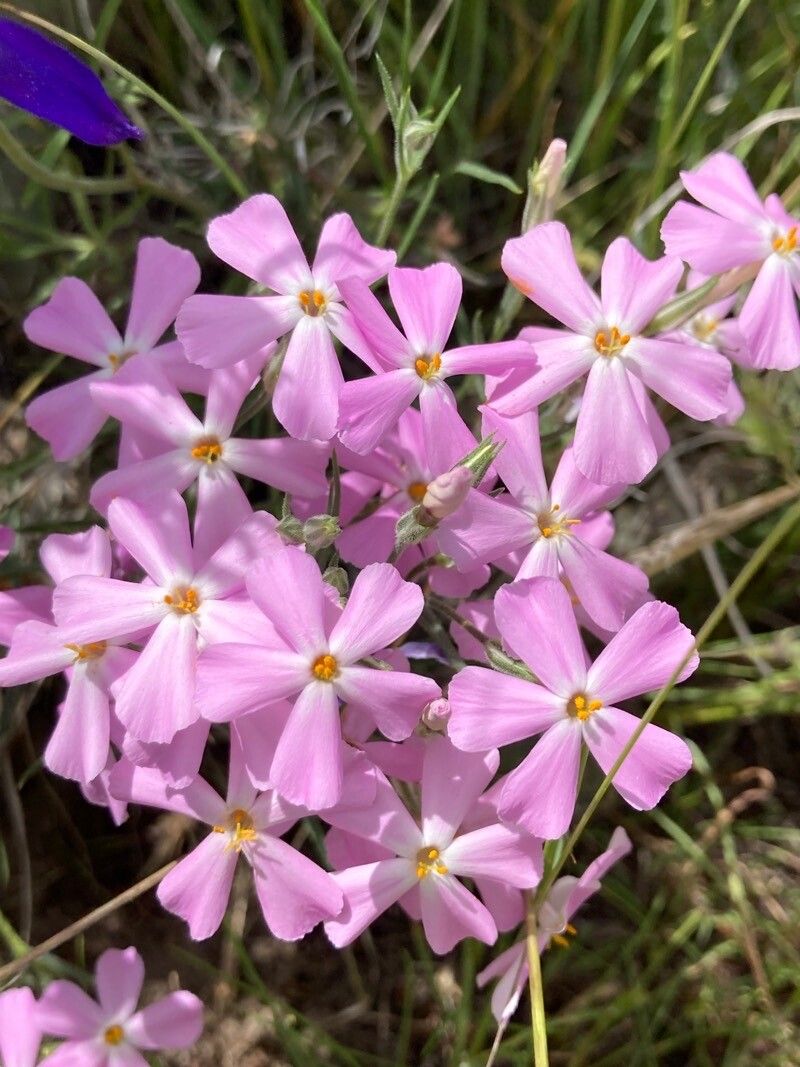
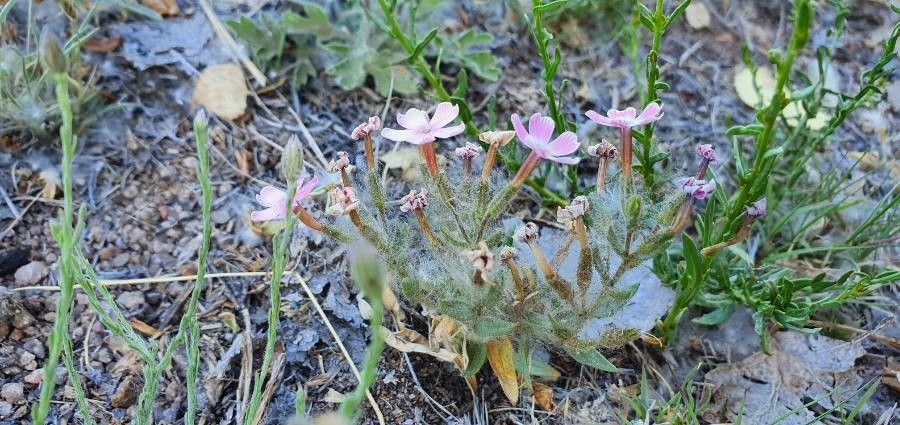
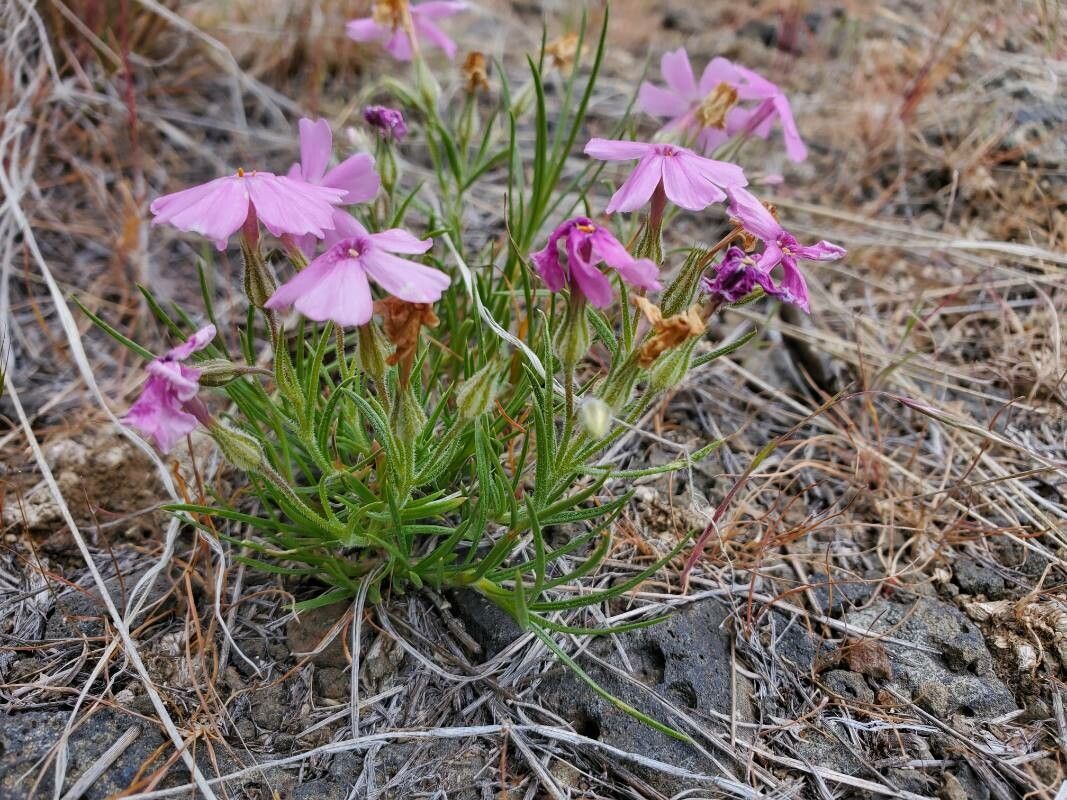
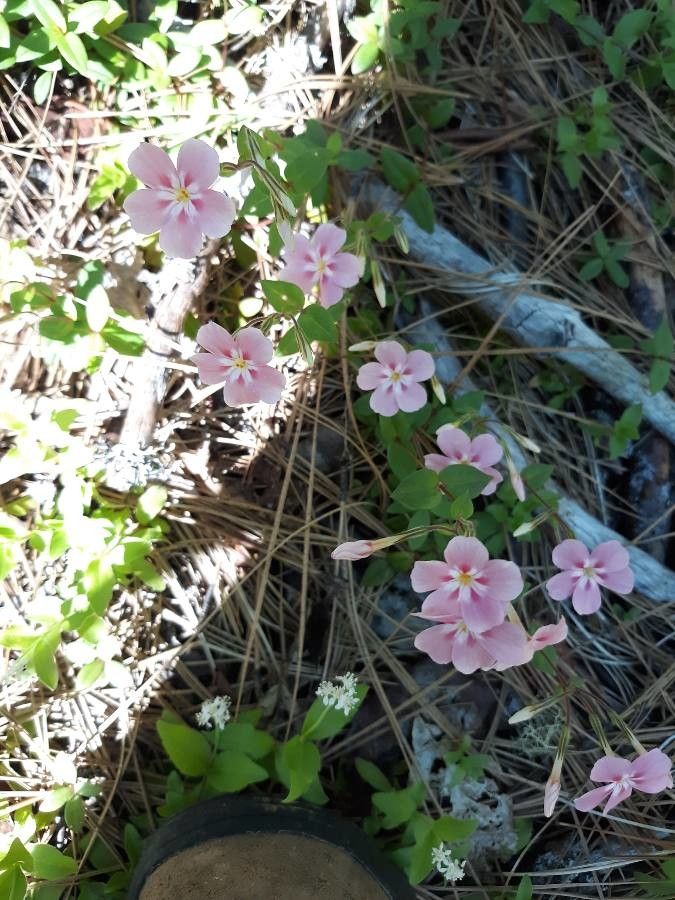
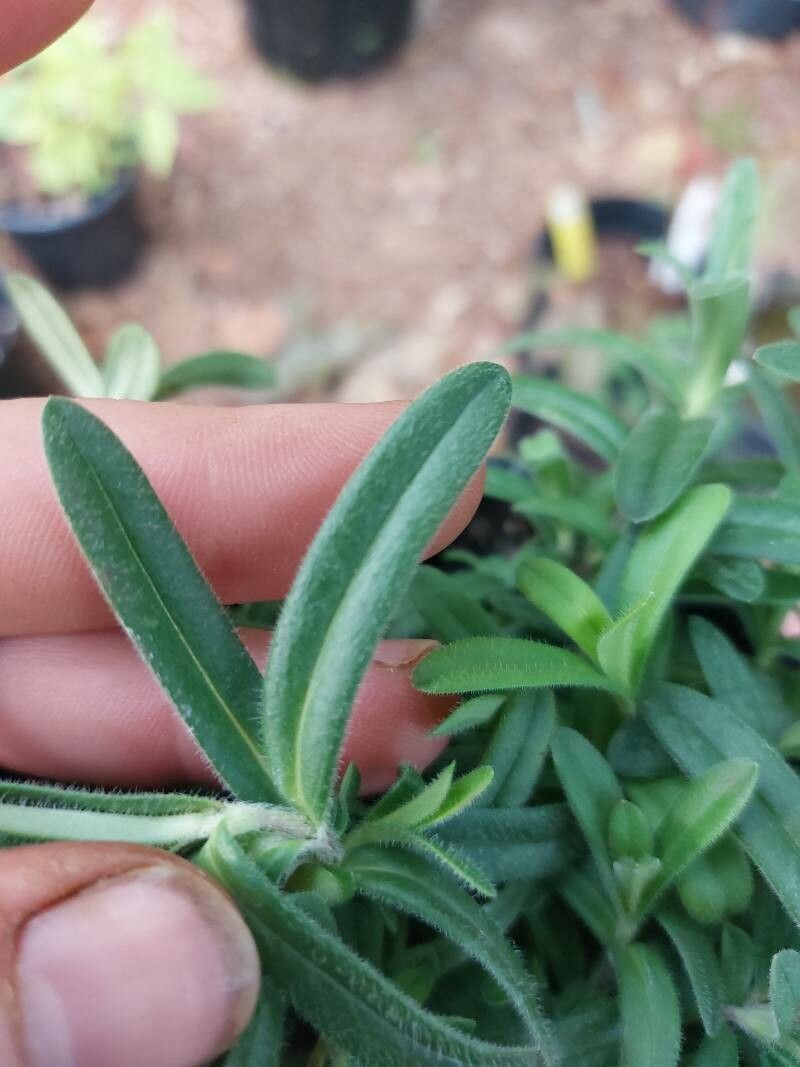
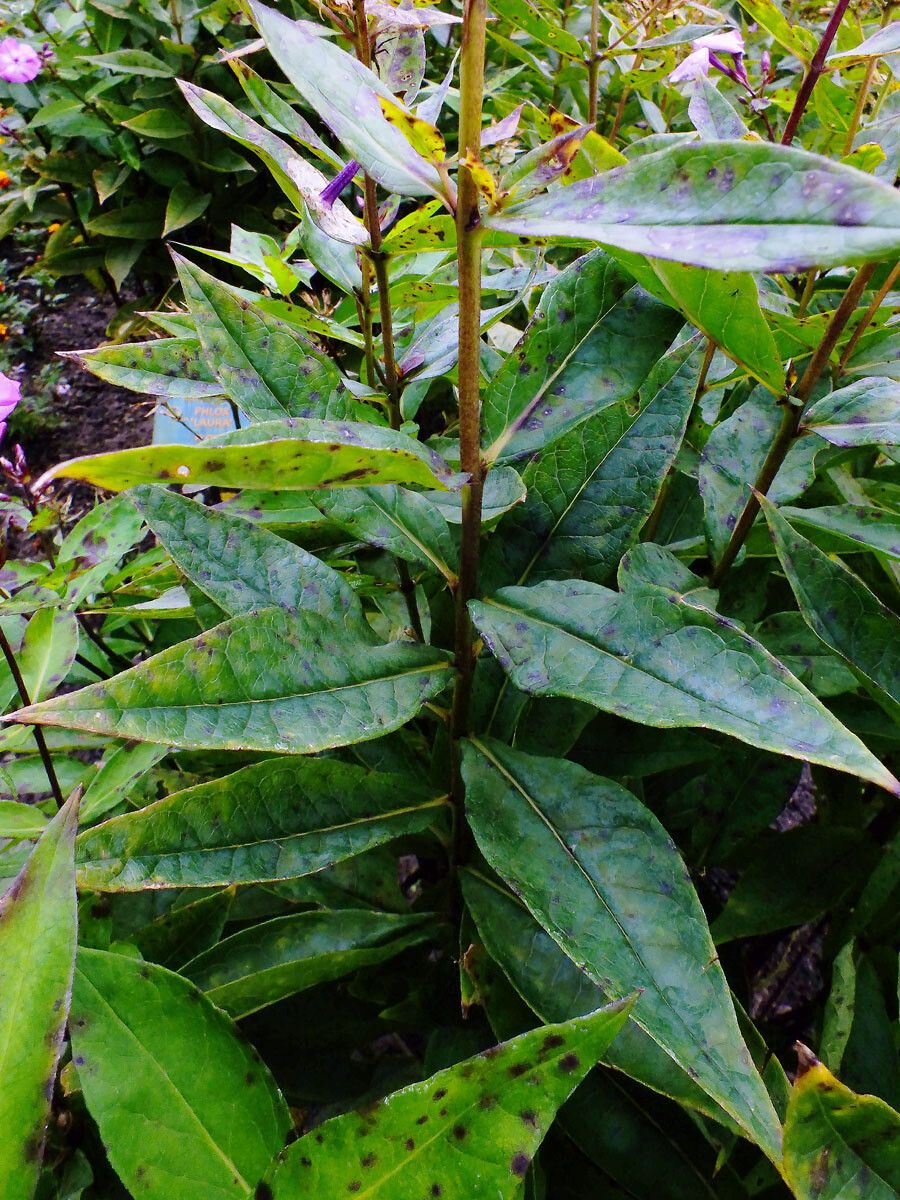
Phlox stansburyi is a species of phlox known by the common names cold-desert phlox and pink phlox. It is native to the southwestern United States from California to Utah to Texas, where it occurs in desert and plateau scrub and woodland habitat. It is a perennial herb taking an upright, branching form. The hairy linear or lance-shaped leaves are 1 to 3 centimetres (0.39 to 1.18 in) in length and oppositely arranged. The inflorescence bears one or more white to pink flowers with narrow, tubular throats which may exceed 3 cm (1.2 in) in length. The base of the tube is encased in a calyx of keeled, ribbed sepals. The flower corolla is flat and five-lobed. In drier environments, the corolla-lobes may be narrower and curled, and the plant may be shorter or grow up through other shrubs.
Cold desert phlox is fairly disease-resistant and is usually not susceptible to illnesses. As for care, this plant is fairly low-maintenance. When grown outdoors it needs little watering, and larger plants typically do not require pruning. Smaller plants, however, should be trimmed after they finish flowering. Cold desert phlox is suitable for anyone with outdoor space, such as a garden or a deck, and does not demand much gardening experience.
How to keep Phlox Stansburyi.
Light
Cold desert phlox prospers in places where sunlight is abundant, illuminating it for the majority of the day. However, it can also survive in areas where sunlight is slightly reduced. The development and well-being of the plant are dependent on a proper amount of light, which its native outdoor habitat provides. A shortage or an excess of light could hinder its thriving growth.
Water
The cold desert phlox is a drought-tolerant plant that thrives in arid conditions with very little moisture. It only needs watering every 2-3 weeks, making it an excellent choice for xeriscaping and rock gardens. Its ability to conserve water during dry spells makes it well-suited for dry environments.
Temperature
The cold desert phlox plant naturally grows in regions where the temperature typically fluctuates between 41 and 90 °F (5 to 32 ℃). It thrives in temperate climates. When it comes to cooler seasons, it is advisable to slowly modify the temperature to resemble the conditions found in its original habitat.
Fertilizer
For the Cold desert phlox, the timing of fertilization is critical. Begin fertilizing in the early spring and continue on a monthly basis until the beginning of summer. Fertilizer aids in the creation of beautiful blooms and supplies energy during both dormant and active stages of growth.
Pruning
The cold desert phlox is a low-growing perennial cherished for its vibrant flowers and needle-like leaves. To encourage healthy growth and better air circulation, prune the plant in early spring by removing spent blooms and woody stems. Be sure to use clean, sharp tools for effective pruning and faster recovery.
Botanical profile.
- Plant Type
- Shrub
- Life Cycle
- Perennial
- Genus
- Phlox
- Family
- Polemoniaceae
- Hardiness Zone
- 4-8
- Mature Height
- 15 cm
- Mature Spread
- 15 cm to 25 cm
- Leaf Color
- Green, Dark Green
- Leaf Type
- Deciduous
- Flower Color
- White
- Flower Size
- 1.52 cm
- Bloom Time
- Mid spring, Late spring, Early summer
- Planting Time
- Spring, Summer, Autumn
- Harvest Time
- Summer
Other names.
Reader questions.
What are the sunlight requirements for Cold Desert Phlox?
Cold Desert Phlox (Phlox stansburyi) flourishes best in full sun, receiving more than 6 hours of sunlight a day, but it can also thrive in partial sun, with about 3-6 hours of sunlight. The health and growth of the plant significantly depend on receiving an adequate amount of light, mimicking its natural desert habitat. Too little or too much light can hinder its growth, so it's crucial to find the perfect balance of light and shade in your garden to ensure the plant's well-being.
What is the native temperature range for Cold desert phlox?
Cold desert phlox, botanically known as Phlox stansburyi, thrives in temperatures that typically range from 41°F to 90°F (5°C to 32°C). It is adapted to temperate environments. To support its growth in colder seasons, gradual temperature adjustments are beneficial to mimic its natural habitat conditions.
What should I do if natural sunlight is not enough for my indoor Cold Desert Phlox?
When natural sunlight is insufficient, especially during winter or in less sunny spaces, artificial lights can be a vital solution for indoor Cold Desert Phlox. LED lights are a popular choice because they can provide specific wavelengths needed by plants. For full sun plants, 30-50W/sq ft of artificial light is necessary, partial sun plants need 20-30W/sq ft, and full shade plants require 10-20W/sq ft. Place the light source 12-36 inches above the plant to mimic natural sunlight and ensure the plant receives 8-12 hours of light per day.
Does Cold desert phlox need frost protection in winter?
Despite Cold desert phlox's strong resistance to cold, it generally does not require special frost protection measures during winter. However, in locations where winter temperatures are likely to plummet below -30°C, it is crucial to provide some form of cold protection. Wrapping the trunk and branches with non-woven fabric or cloth can offer sufficient protection. Additionally, watering the plant abundantly before the first autumn freeze to maintain moist soil can help prevent drought and water scarcity during the winter and early spring months.
What are the symptoms of insufficient light in Cold Desert Phlox?
When Cold Desert Phlox does not receive enough light, it may show several symptoms including smaller new leaves, leggy or sparse growth, faster leaf drop, delayed growth or a complete halt in new growth. New leaves might also appear lighter in color or develop pale, irregular color patterns due to a lack of chlorophyll and essential nutrients. These symptoms indicate the plant is not thriving as it should in low light conditions.
How does Cold desert phlox react to temperatures below -30°C?
When Cold desert phlox is exposed to temperatures below -30°C, it maintains a remarkable level of cold tolerance and may not exhibit immediate signs of distress. However, come spring, its branches may appear brittle and dry, failing to produce new shoots. To alleviate this, it's advised to prune away any dead branches that show no signs of new growth in the spring.
How do I address symptoms of too much light in Cold Desert Phlox?
Excessive sunlight can cause symptoms such as chlorosis, where leaves lose their green color and turn yellow, sunscald resulting in pale, bleached areas on plant tissue, leaf curling as a defense mechanism to reduce water loss, wilting due to increased transpiration, and leaf scorching characterized by brown, dry edges on leaves. Managing these conditions involves gradually accustoming your plant to the right amount of sunlight and ensuring it is not exposed to overly intense sun without protection.
What should be done if Cold desert phlox experiences high temperatures?
Cold desert phlox should ideally be kept in conditions below 32°C during the summer. If temperatures exceed 35°C, the plant may display signs of stress, such as lighter-colored leaves, dry and withered tips, and an increased risk of sunburn. In such cases, it's recommended to trim away the damaged parts of the plant. Moving the plant to a shaded area or employing a shade cloth can protect it from the harsh midday and afternoon sun. Additionally, watering the plant in the morning and evening helps keep the soil consistently moist, further mitigating the stress from high temperatures.
How can I improve the lighting conditions for my Cold Desert Phlox?
To optimize growth, gradually move your Cold Desert Phlox to sunnier spots, ensuring at least 6 hours of direct sunlight daily. For indoor plants, use south-facing windows or artificial lighting if the plant is large or not easily movable, keeping lights on for at least 8 hours a day. For outdoor plants, avoid sudden changes in light intensity to prevent sunburn. Reducing obstructions like pruning branches or relocating plants to sunnier areas can also help. Remember, while parts of the plant affected by insufficient sunlight may not recover, new growth after light exposure adjustment will be healthy.