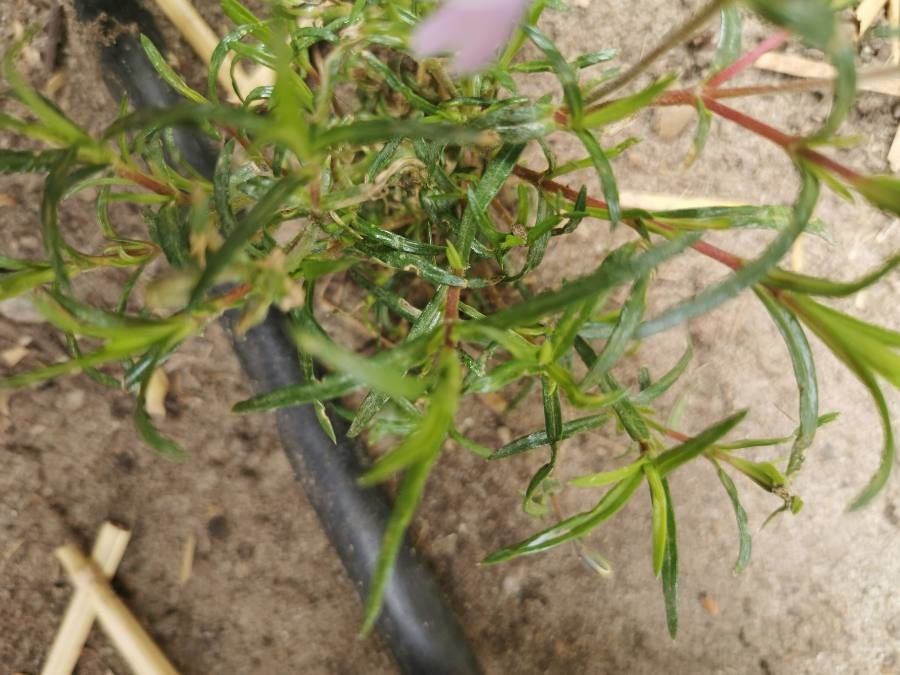
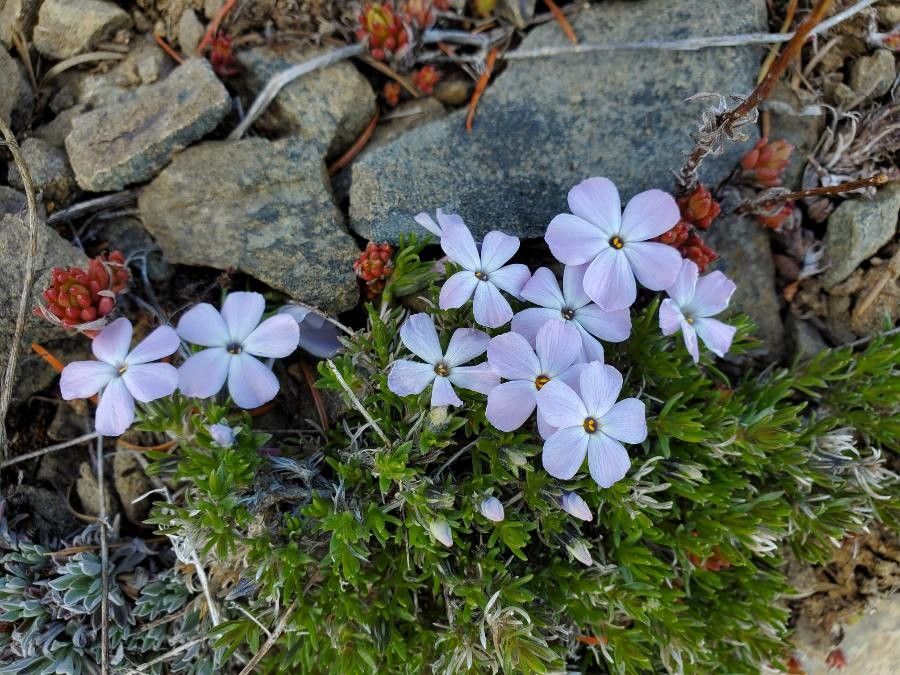
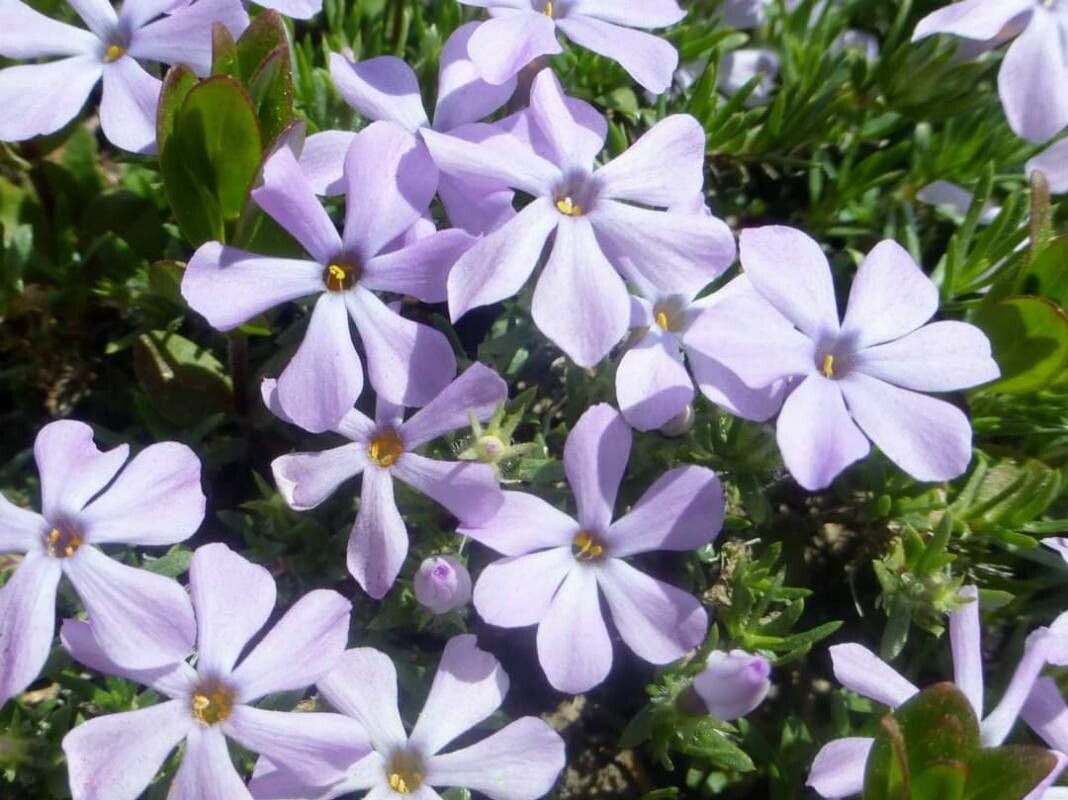
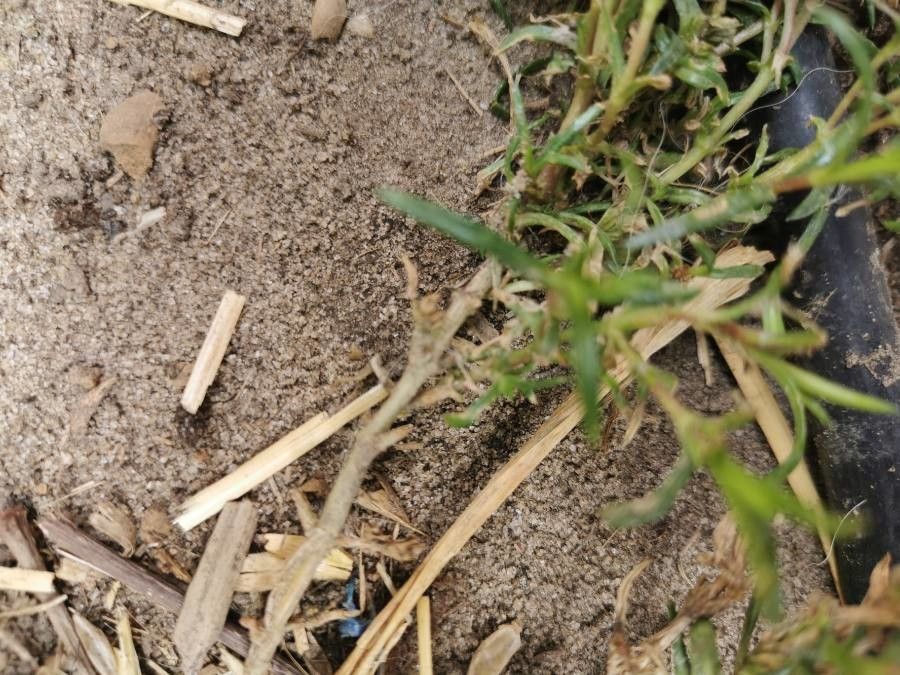
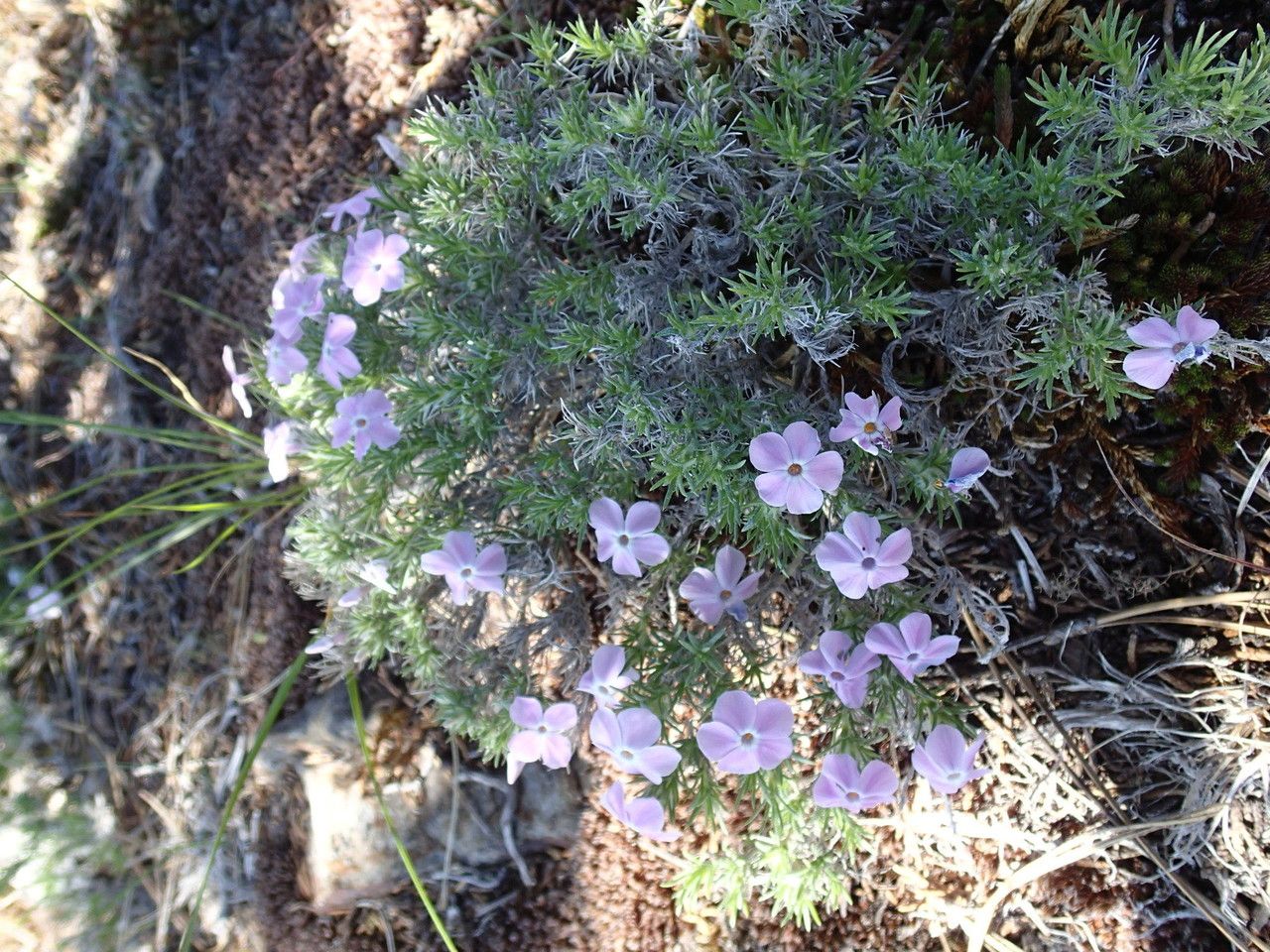
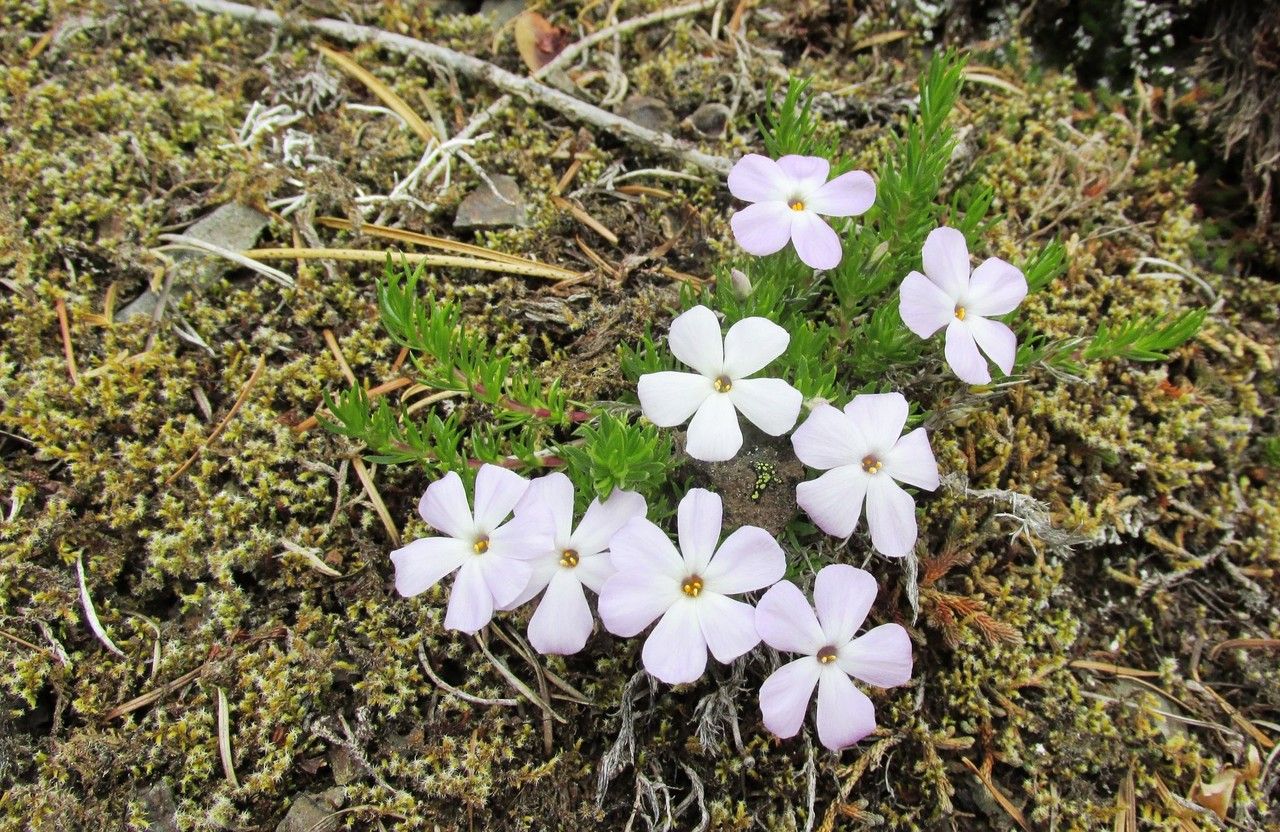
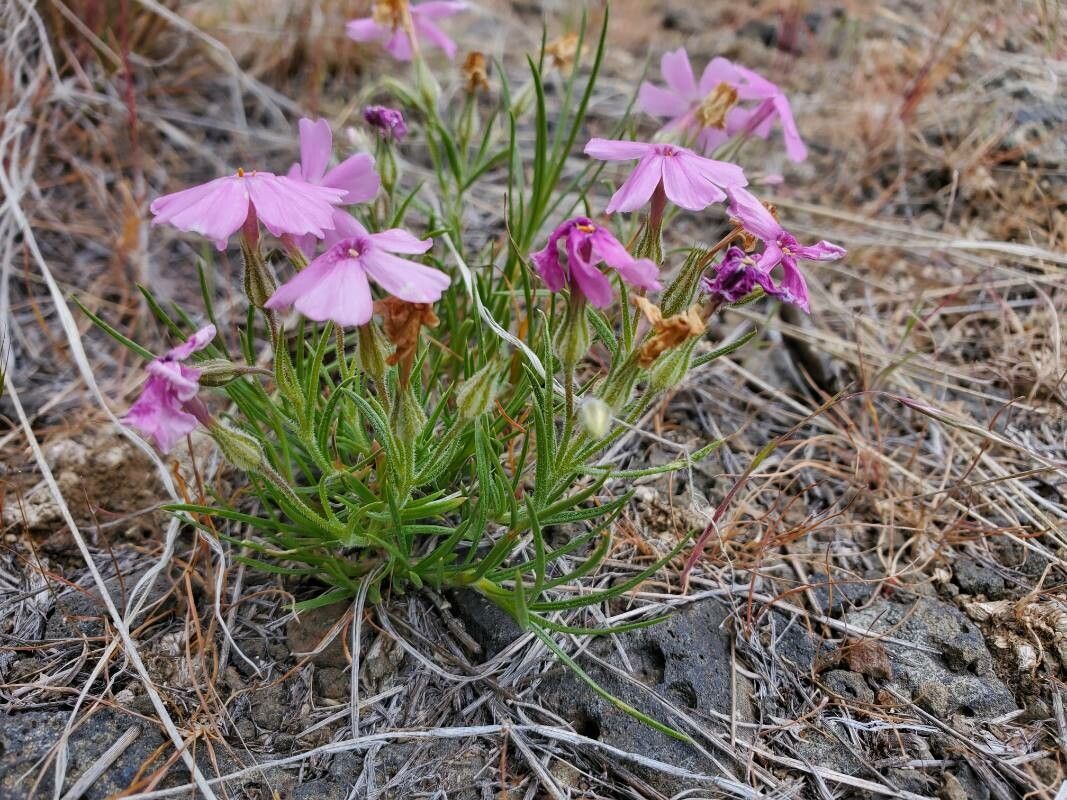
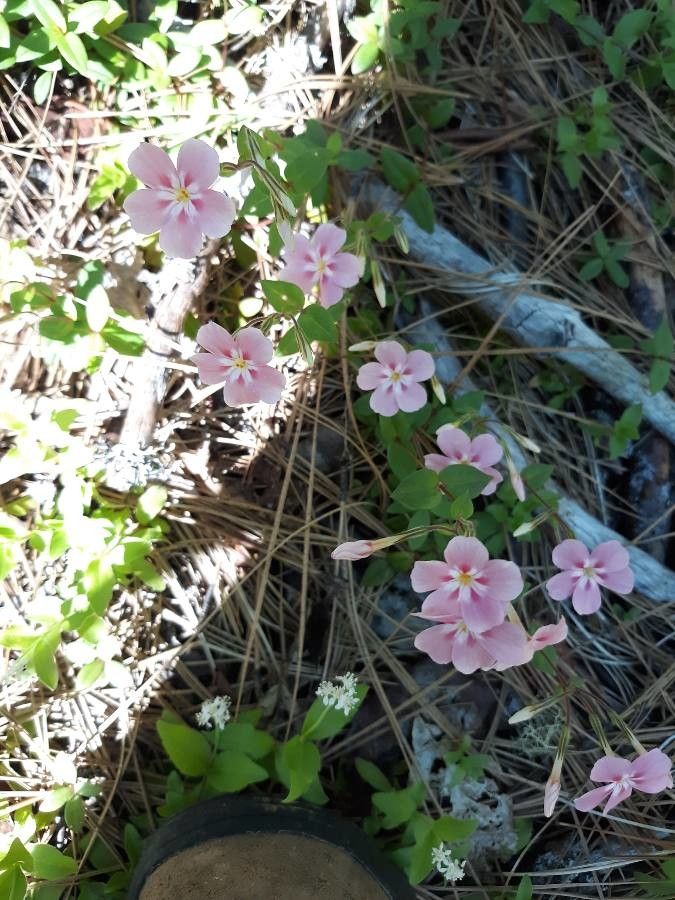
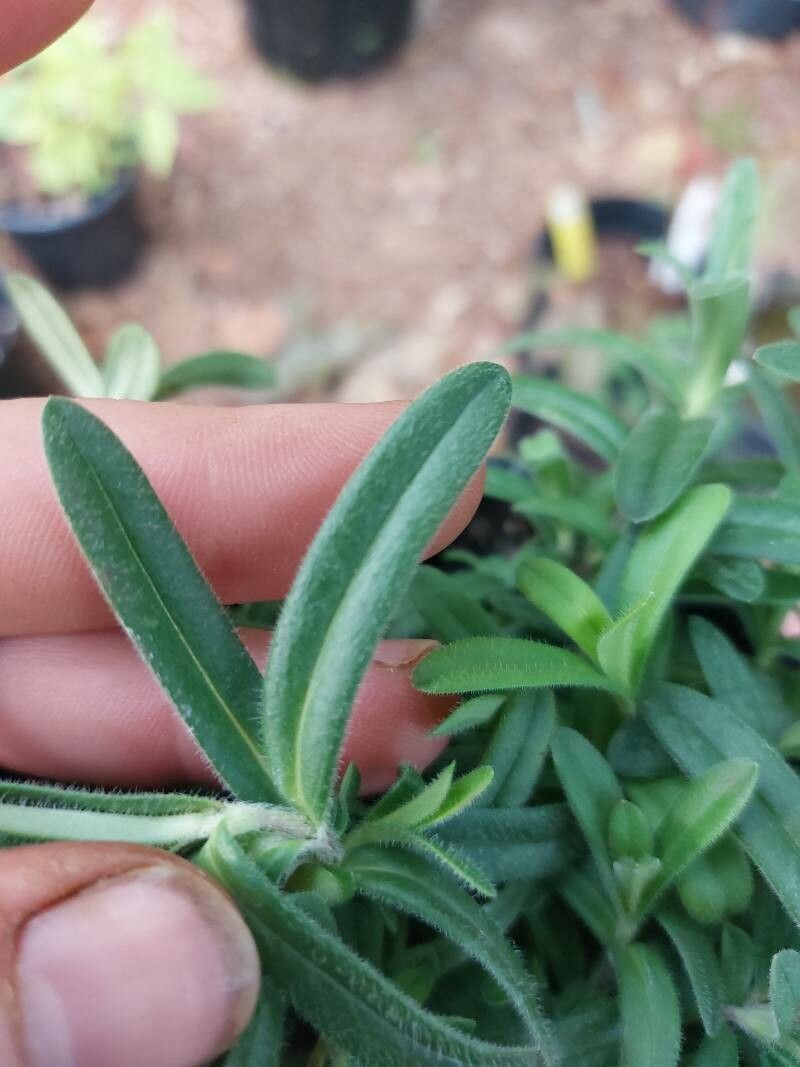
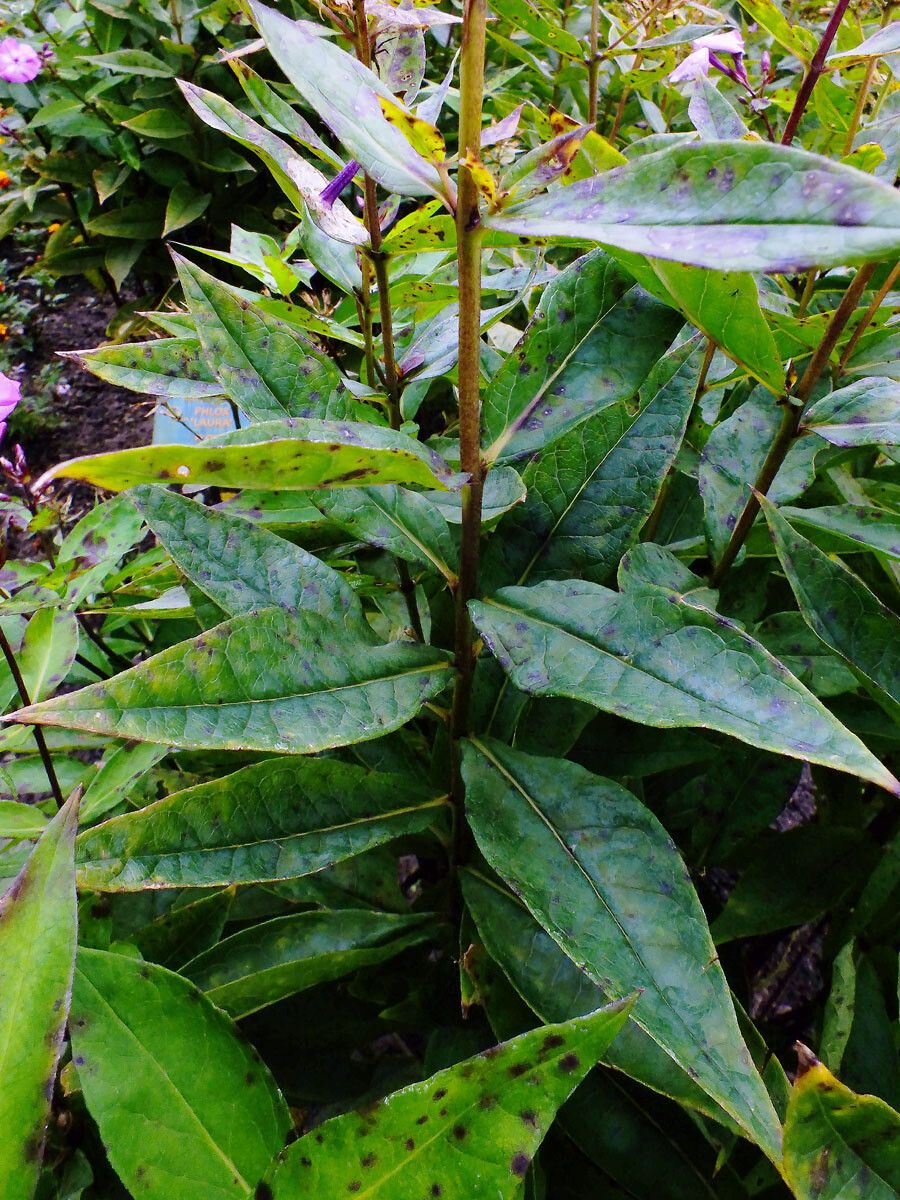
Phlox diffusa is a species of phlox known by the common name spreading phlox. It is native to western North America from British Columbia to the southwestern United States to the Dakotas, where it grows in many types of habitat, including rocky, high elevation mountain slopes. It is a very compact mat-forming perennial herb growing in cushions or patches of short, decumbent stems. The linear, lance-shaped, or needle-like leaves are no more than 1.5 centimeters long and are oppositely arranged in bundles on the short stems. The inflorescence is a solitary tubular flower around a centimeter long. It has a flat white or pale pink or blue corolla with five lobes each just under a centimeter in length.
Spreading phlox is fairly disease-resistant and typically doesn't suffer from illnesses. However, it can be affected by pests and diseases present in its environment. These problems are usually mild. For care, the plant requires a moderate level of maintenance. It should be pruned regularly to preserve a neat appearance and support healthy growth. Fertilizing can also help encourage flowering. Spreading phlox is appropriate for anyone with outdoor space, such as a garden or patio, and doesn't demand much gardening experience. It may need more attention if grown indoors.
How to keep Phlox Diffusa.
Light
Spreading phlox does best in locations that get strong sunlight daily, which enables it to grow well and bloom. Although it grows in brightly lit habitats, it does not require shade. Too much or too little light can hinder growth, make the plant weak, or cause discoloration.
Water
Spreading phlox flourishes in well-drained soils with moderate moisture. For optimal health, it requires weekly watering. This plant prefers consistent moisture without becoming oversaturated and performs exceptionally well outdoors, especially during its growing season, when the soil maintains a balance of adequate drainage.
Humidity
This plant prefers dry conditions, so don't mist it. However, watering it less often can also thrive in higher humidity.
Temperature
Spreading phlox is acclimated to the temperature range of its native habitat, 41 to 89.6 °F (5 to 32 ℃), indicating a liking for moderate to warm climates. To reproduce these conditions, keep temperatures within a similar range year-round, making adjustments as necessary during extreme seasons.
Fertilizer
The primary time to fertilize Spreading phlox is in early spring when the flowers are beginning to form. Using the right fertilizer promotes better blooms and helps Spreading phlox produce attractive flowers. Fertilizing in early spring ensures strong flowering during the season and supplies energy for dormant growth phases.
Pruning
To keep your spreading phlox healthy and encourage flourishing blooms, it is important to prune them in early spring or late winter. Start by removing any damaged stems to improve air circulation and prevent overcrowding. This will help promote vibrant blooms and maintain a neat appearance. For the best pruning techniques, refer to trusted horticultural sources.
Botanical profile.
- Plant Type
- Herb
- Life Cycle
- Perennial
- Genus
- Phlox
- Family
- Polemoniaceae
- Hardiness Zone
- 5-7
- Mature Height
- 5 cm to 20 cm
- Mature Spread
- 1.83 m
- Leaf Color
- Green
- Leaf Type
- Evergreen
- Flower Color
- Pink, White, Lavender
- Flower Size
- 1.02 cm to 1.78 cm
- Bloom Time
- Spring
- Planting Time
- Spring
- Harvest Time
- Early summer, Mid summer
Other names.
Reader questions.
How should I water my Spreading phlox?
To properly water your Spreading phlox, follow these guidelines for best results. Use filtered water at room temperature for this plant, as tap water may contain harmful particles. The Spreading phlox originates from a warm environment, so it is sensitive to cold water. Avoid overhead watering to prevent foliage complications. Instead, apply the filtered room temperature water directly to the soil until it is completely soaked. This method helps moisturize the roots, allowing them to spread and absorb essential nutrients.
Why should I put fertilizer on my Spreading phlox?
Fertilization is important for Spreading phlox because it provides essential nutrients for the plant's growth. While the fertilization needs of Spreading phlox are generally low, it can still benefit from annual fertilization. This can help the plant survive and promote the development of longer-lasting flowers. Therefore, for those looking to optimize the appearance of their Spreading phlox, maintaining annual fertilization is recommended.
What are the sunlight requirements for Spreading Phlox?
Spreading Phlox, or Phlox diffusa, requires different amounts of sunlight depending on its growth stage and desired health. For optimal growth, it thrives in full sun, meaning the plant should receive above 6 hours of sunlight daily. However, it can also grow in partial sun, which is about 3-6 hours of sunlight. It's crucial to observe how sunlight moves through your garden to ensure you choose spots that provide the right balance of light and shade for these plants. Too much or too little sunlight can affect their growth, leading to various problems such as weak stems or discoloration.
What temperature conditions are ideal for Spreading phlox?
Spreading phlox thrives in a temperature range of 41 to 89.6 °F (5 to 32 °C), indicative of its preference for moderate to warm climates. These conditions reflect its original habitat's temperature range, suggesting that maintaining a similar temperature throughout the year is beneficial for its growth. Given its high cold tolerance, Spreading phlox does not need special frost protection in winter. However, it's advisable to water the plant generously before the first freeze in autumn to keep the soil moist, supporting the plant through winter and early spring.
What should I do if I give my Spreading phlox too much or too little water?
Overwatering and underwatering can harm your Spreading phlox, but overwatering is more common. Excess water causes wilting and yellowing of stems and leaves, and can potentially lead to root rot, mold, and mildew. Underwatering is less likely due to the plant's drought tolerance, but it can result in brittle and brown leaves. Promptly detecting signs of overwatering is crucial, as some diseases like root rot may become irreversible if not addressed immediately. Reduce watering and assess soil drainage if overwatering is suspected. Increase watering if signs of underwatering are present.
When should I fertilize my Spreading phlox?
The best time to fertilize a Spreading phlox is in the late winter to early spring when the plant is coming out of dormancy and starting to grow. Fertilizing at this time promotes healthy growth and sets up the plant for a successful season. While early spring is the most beneficial time, fertilizing in the fall is also acceptable, but it is not recommended to fertilize in the summer or winter.
Can Spreading Phlox grow with artificial lighting and if so, how?
Yes, Spreading Phlox can grow with artificial lighting, especially when natural sunlight is insufficient, such as during winter or in less sunny spaces. Adequate lighting is essential for the optimal growth of indoor plants. LED lights are a popular choice for providing the specific wavelengths of light that plants need. For full sun plants like Spreading Phlox, you'll need 30-50W/sq ft of artificial light, placed 12-36 inches above the plant to mimic natural sunlight. The duration of light exposure should also mimic natural daylight hours, generally around 8-12 hours per day.
How does Spreading phlox respond to low temperatures?
Spreading phlox exhibits remarkable cold tolerance, with the ability to withstand winter temperatures above -25°C. Despite this resilience, if temperatures fall below this threshold, there might not be any visible signs of distress during winter. However, such extreme cold can lead to a reduced sprouting rate or even a complete absence of sprouting in the following spring. To manage this, it's recommended to remove any parts that have failed to sprout as spring arrives.
How frequently should I water my Spreading phlox?
If your Spreading phlox is planted in a pot, you can determine if it needs water by checking the soil moisture level. Stick your finger in the soil and if the top two to three inches are dry, it's time to water. The same method can be used for outdoor plants grown in the ground. If the top few inches of soil are dry, water is needed. Typically, watering once a week is sufficient during spring and early fall. However, during hot weather, watering frequency may need to be increased to twice or more a week. It's worth noting that mature and well-established Spreading phlox plants have a good tolerance for drought.
When is it not a good idea to fertilize my Spreading phlox?
To ensure proper fertilization of your Spreading phlox, it is best to feed the plant only during late winter and early spring. This plant does not require frequent fertilization, so one annual feeding should be enough. Avoid fertilizing during spring, summer, and fall as it can easily result in overfertilization and its associated complications. However, if you didn't fertilize during spring, it is acceptable to feed the plant in fall. Additionally, refrain from fertilizing during the winter when the Spreading phlox is in a dormant growth phase and not producing new growth.
What symptoms indicate Spreading Phlox is receiving inadequate light?
Symptoms of inadequate light in Spreading Phlox include small leaves, leggy or sparse growth, faster leaf drop, slower or no new growth, and lighter-colored new leaves. These symptoms suggest the plant is not receiving enough sunlight, leading to poor growth and development. Conversely, symptoms of too much sunlight include chlorosis, sunscald, leaf curling, wilting, and leaf scorching, indicating that the plant is exposed to excessive sunlight, which can damage its health.
What should be done if Spreading phlox is exposed to high temperatures?
Spreading phlox is sensitive to high temperatures, especially when the mercury exceeds 32°C. In such conditions, its growth halts, and the plant becomes more prone to rot. To mitigate the adverse effects of high temperatures, affected or sunburned parts should be trimmed away. Relocating the plant to a shaded area or using a shade cloth can protect it from the harsh midday and afternoon sun. Additionally, watering the plant in the morning and evening helps keep the soil sufficiently moist, providing further relief from heat stress.