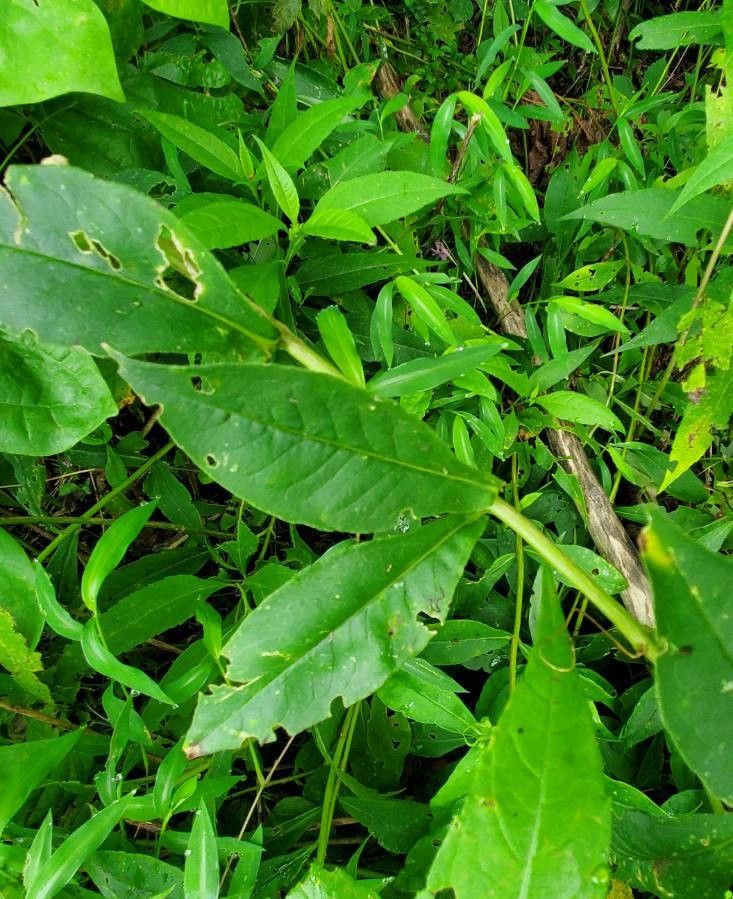
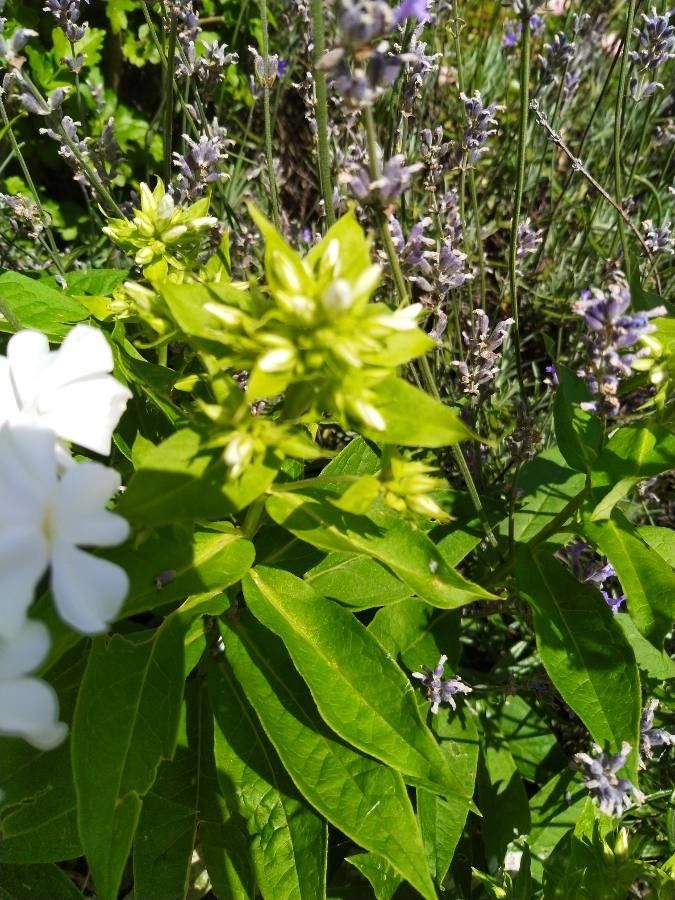
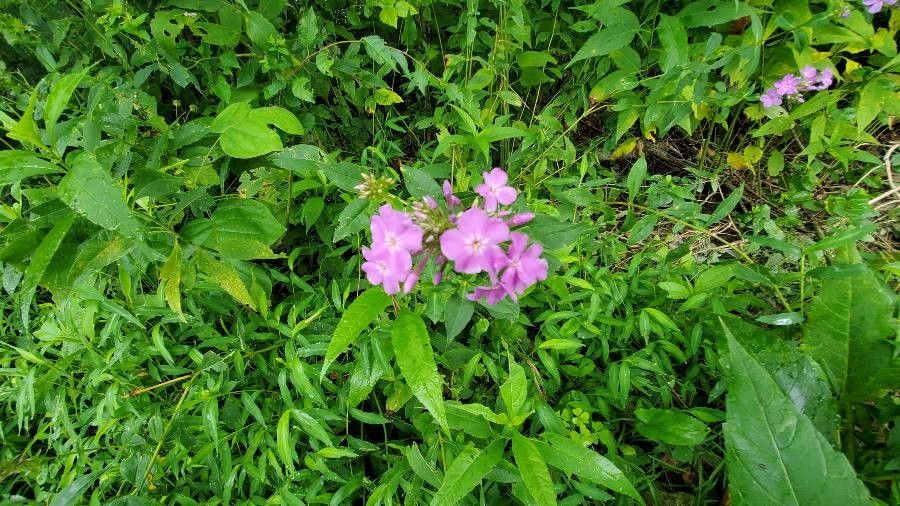
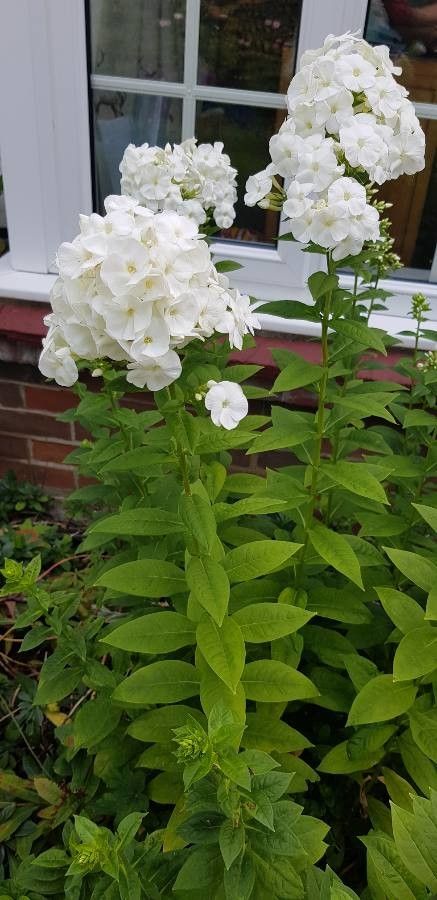
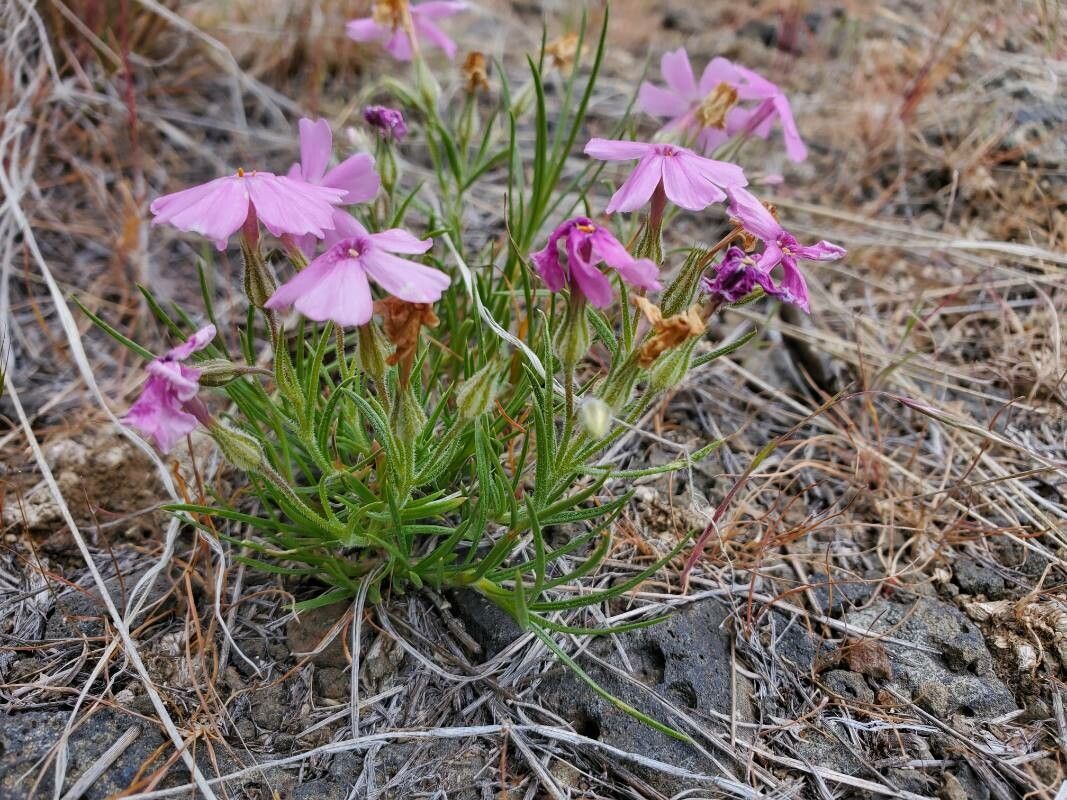
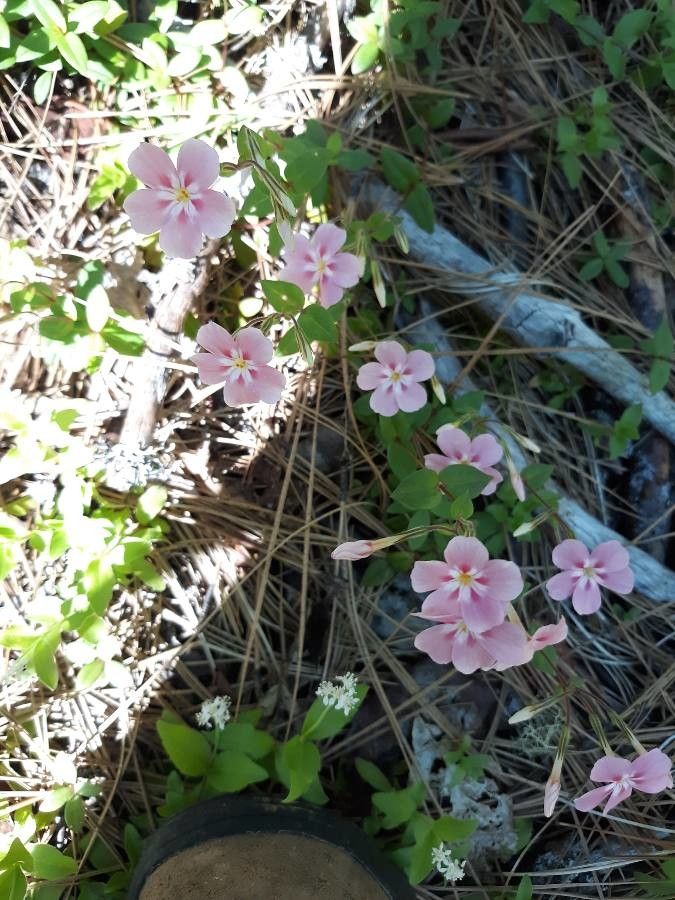
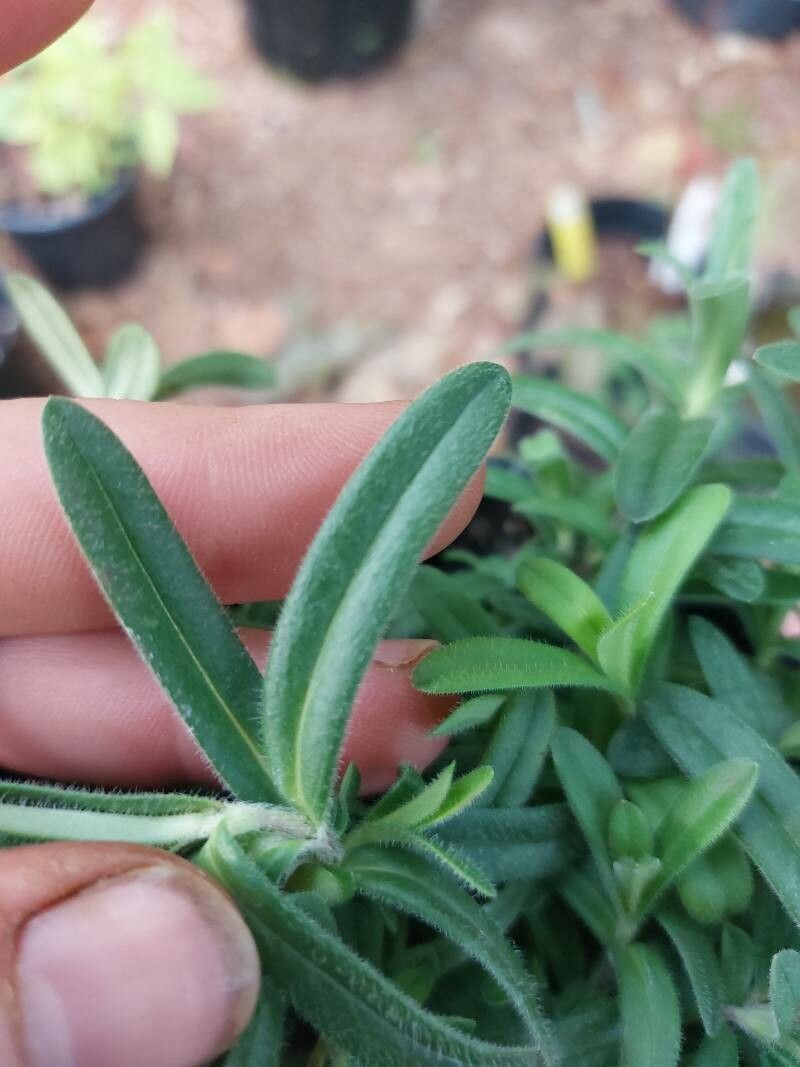
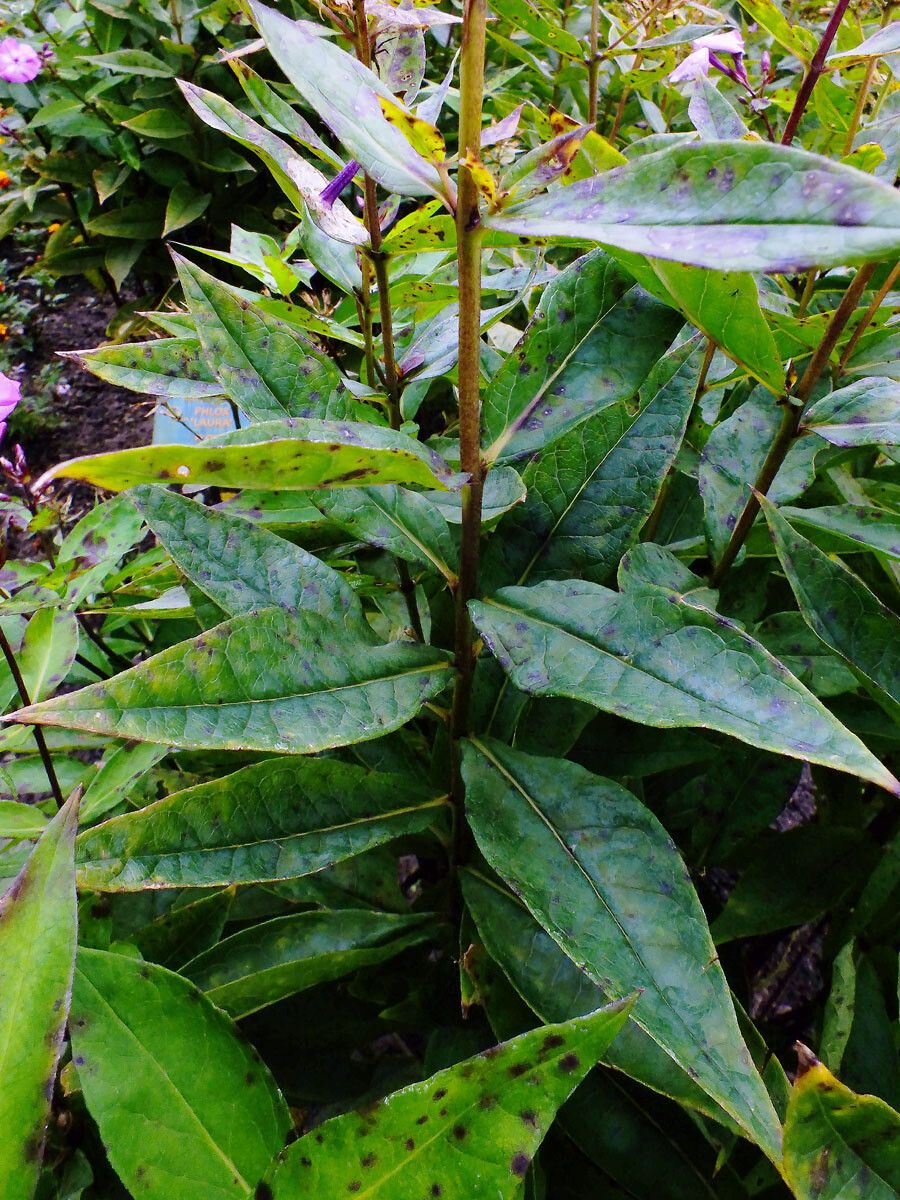
Phlox carolina, the thickleaf phlox, is a species of flowering plant in the family Polemoniaceae. It is an herbaceous perennial growing to 1.2 m (4 ft) tall by 45 cm (18 in) wide, with leaves to 13 cm (5 in) long, and purple or pink flowers in summer. The specific epithet carolina refers to its native habitat in the eastern United States. It grows in woodland edges and openings. Flowers attract bees, hummingbirds, and butterflies.It is the parent of numerous garden cultivars, of which 'Bill Baker' (pink) and 'Miss Lingard' (pure white) have gained the Royal Horticultural Society's Award of Garden Merit.
Thick-leaf phlox is fairly disease-resistant and typically not prone to illnesses. However, it can be vulnerable to pests and diseases present in its surroundings. Such infections are generally mild. Regarding care, this plant needs moderate maintenance. Regular pruning is required to keep a tidy appearance and encourage healthy growth. Applying fertilizer can also help encourage flowering. Thick-leaf phlox is suitable for anyone with an outdoor area, such as a garden or patio, and does not demand much care experience. It may need more attention when grown indoors.
How to keep Phlox Carolina.
Light
Thick-leaf phlox is a sun-loving, perennial herbaceous plant native to open habitats, commonly found in meadows and grasslands. It prefers full sun but can also tolerate partial sun.
Water
Thick-leaf phlox grows best in soil that is consistently moist but not waterlogged. It prefers regular watering, and a weekly schedule works well. Usually planted outdoors, this plant thrives in natural light and benefits from seasonal rains. It flourishes in garden settings that replicate its native humid environments.
Temperature
Thick-leaf phlox can tolerate a wide range of temperatures, though its distribution may still be restricted by different combinations of moisture and heat. It performs best in warm summer conditions with adequate rainfall or irrigation. Extended periods of cloudy, rainy weather, and prolonged high temperatures can raise the likelihood of Thick-leaf phlox dying. In winter, suitable protection from cold can increase the plant's chances of survival.
Fertilizer
The best time to fertilize a Thick-leaf phlox is in early spring, as it comes out of dormancy and starts active growth. Fertilizing supplies essential nutrients for healthy development. Although Thick-leaf phlox has fairly low fertilizer requirements, applying fertilizer annually can improve its survival and encourage healthier, longer-lasting blooms.
Pruning
Thick-leaf phlox is known for its robust, leathery leaves and vivid flowers. To encourage new growth and enhance airflow, which helps reduce disease risk, prune the plant in early spring. Removing spent blooms can also extend the flowering period. Regular trimming helps maintain the plant's shape and health, ensuring that thick-leaf phlox thrives in your garden.
Botanical profile.
- Plant Type
- Herb
- Life Cycle
- Perennial
- Genus
- Phlox
- Family
- Polemoniaceae
- Hardiness Zone
- 3-9
- Mature Height
- 0.3 m to 1.52 m
- Mature Spread
- 46 cm to 61 cm
- Leaf Color
- Green
- Leaf Type
- Deciduous
- Flower Color
- Pink
- Flower Size
- 2.54 cm
- Bloom Time
- Summer
- Planting Time
- Spring, Autumn
- Harvest Time
- Late summer, Early fall, Mid fall
- Native Area
- Georgia
Other names.
Reader questions.
What are the sunlight requirements for Thick-leaf phlox (Phlox carolina)?
Thick-leaf phlox, or Phlox carolina, thrives in various sunlight conditions. For full sun exposure, it requires above 6 hours of sunlight daily to flourish. If the plant is in partial sun, about 3-6 hours of sunlight daily is suitable. It's crucial to observe how sunlight moves through your garden to find the ideal spots that offer a harmonious balance of light and shade, ensuring your Thick-leaf phlox plants are happy and healthy.