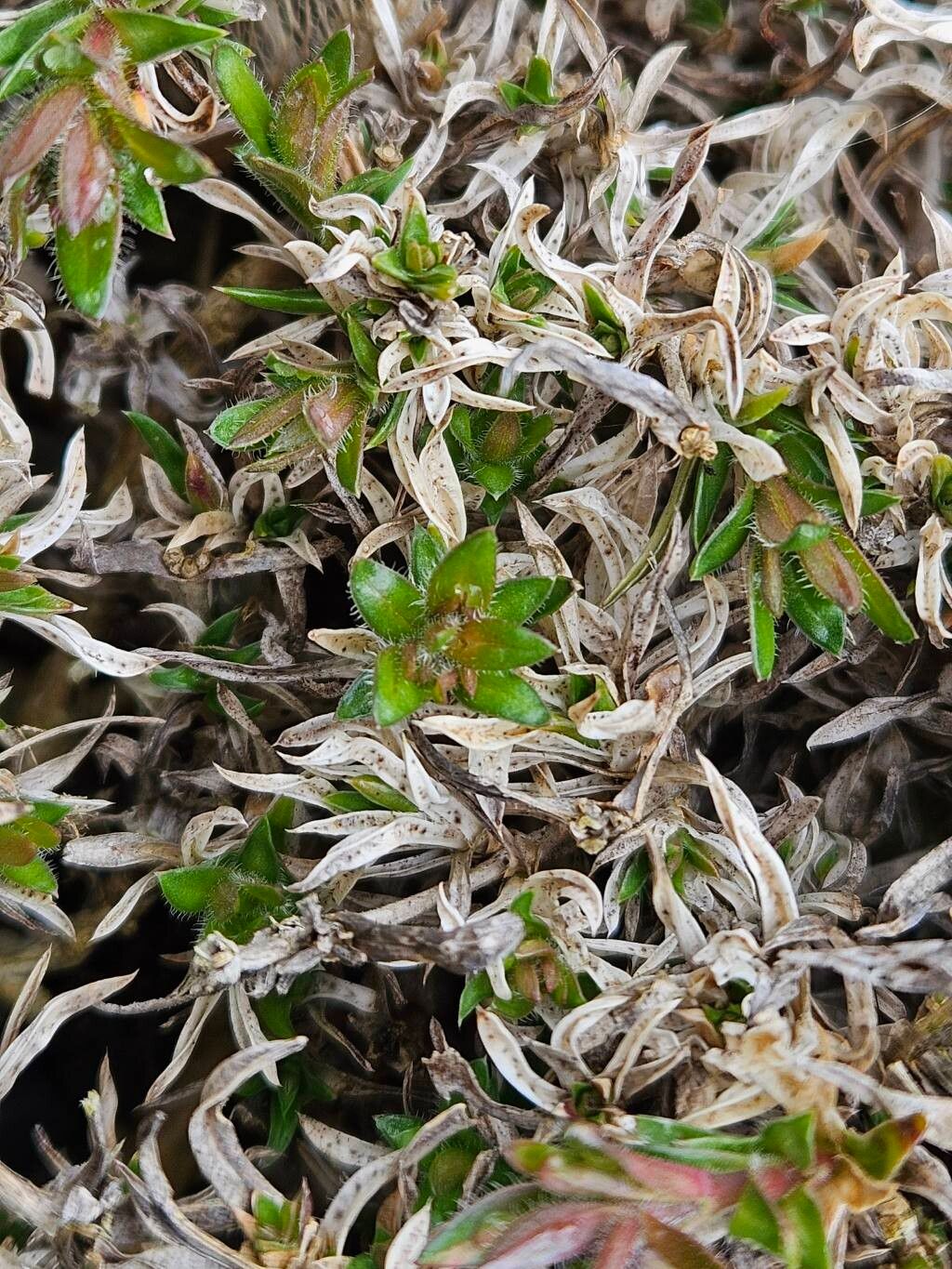
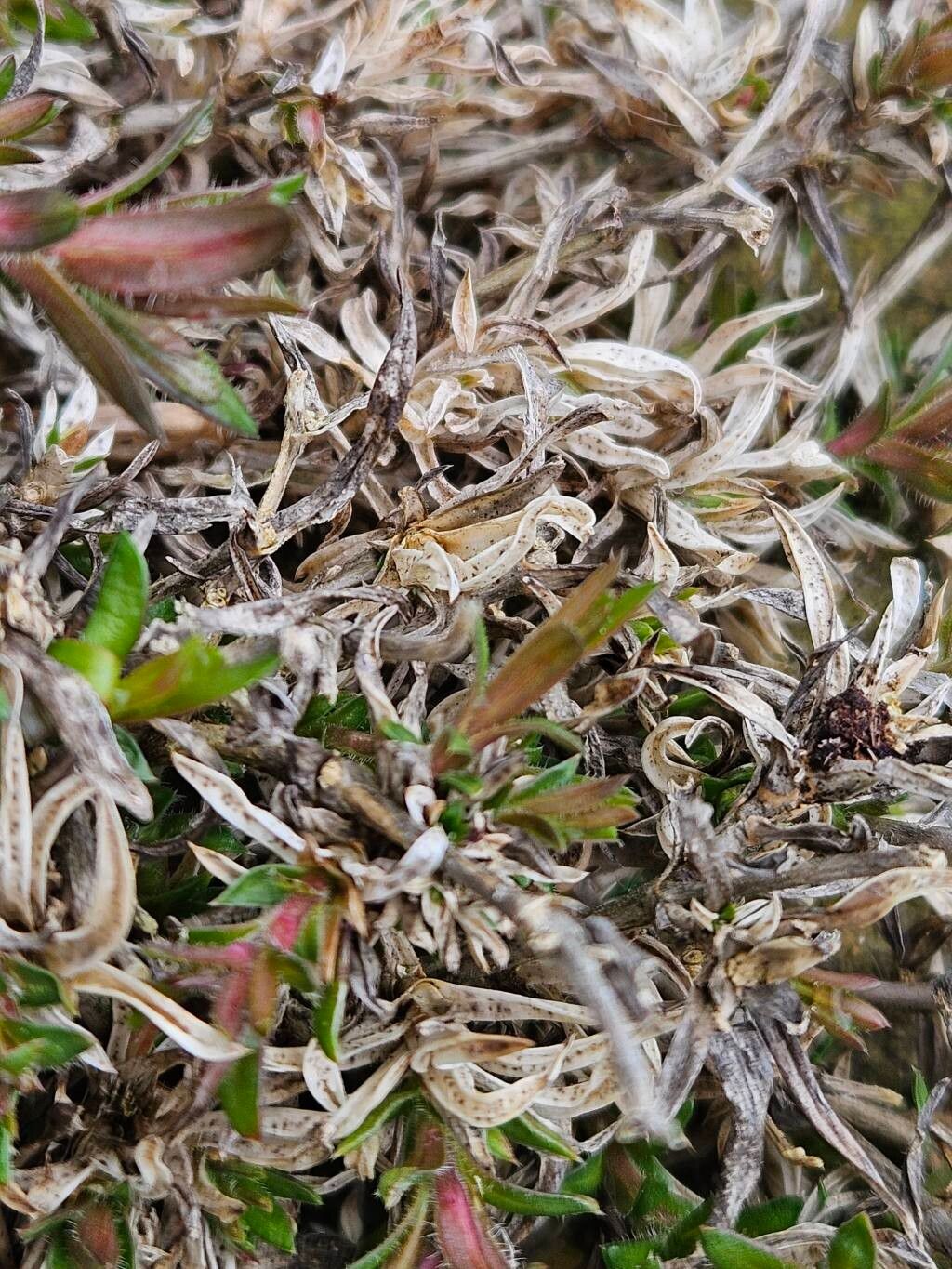
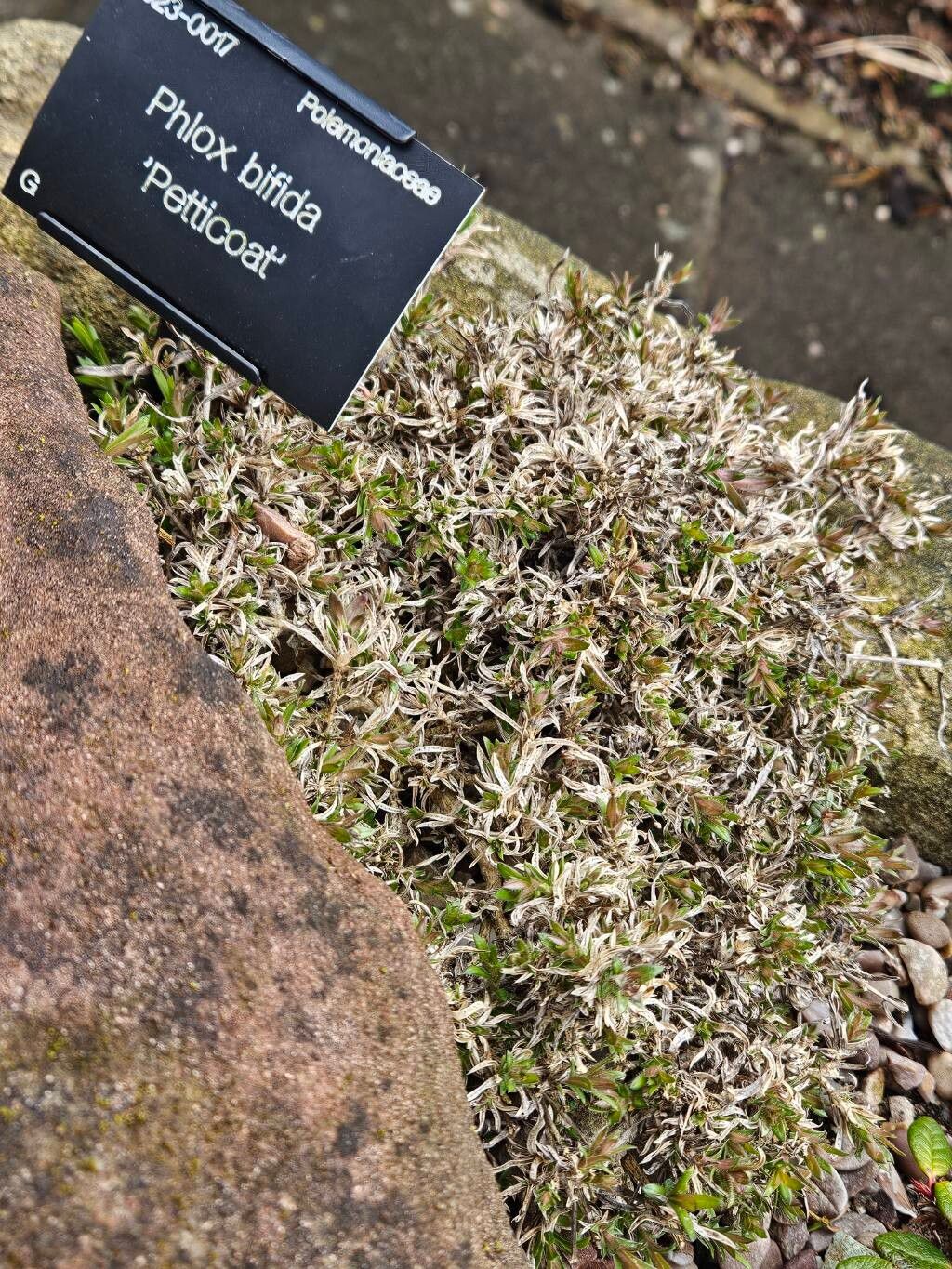
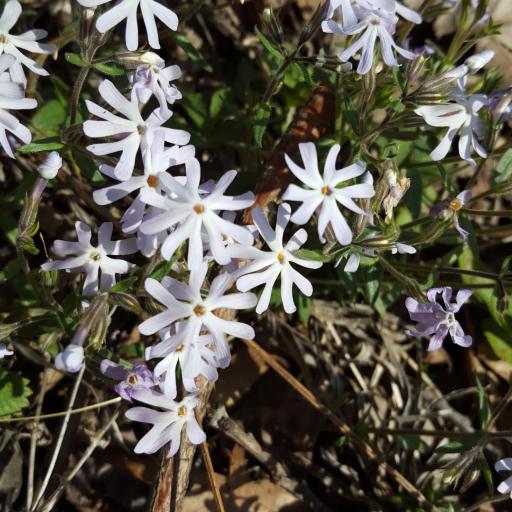
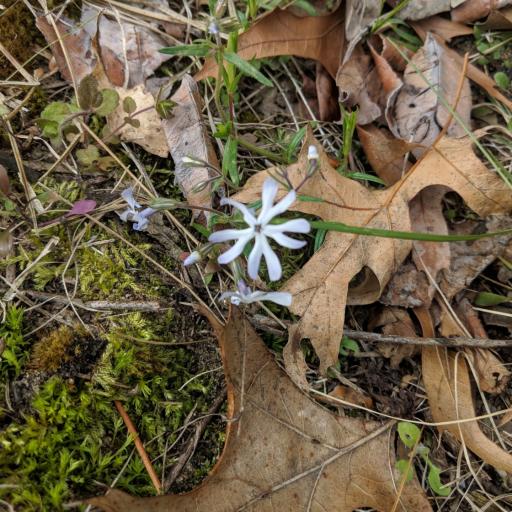
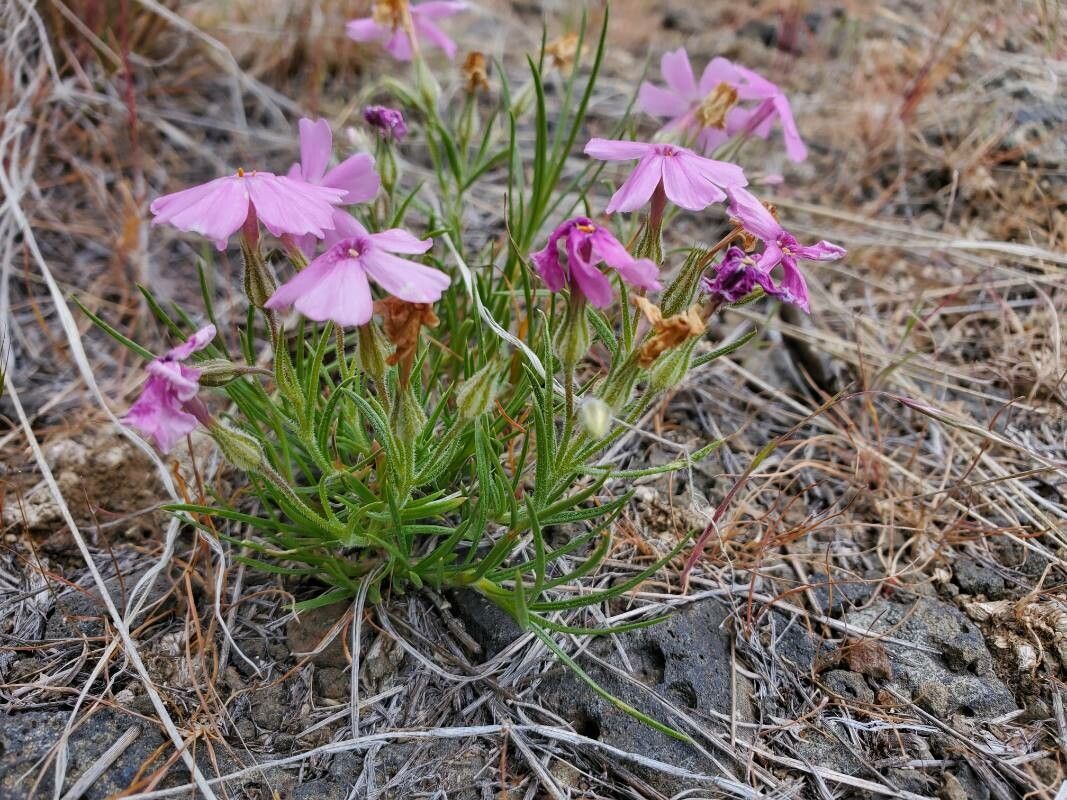
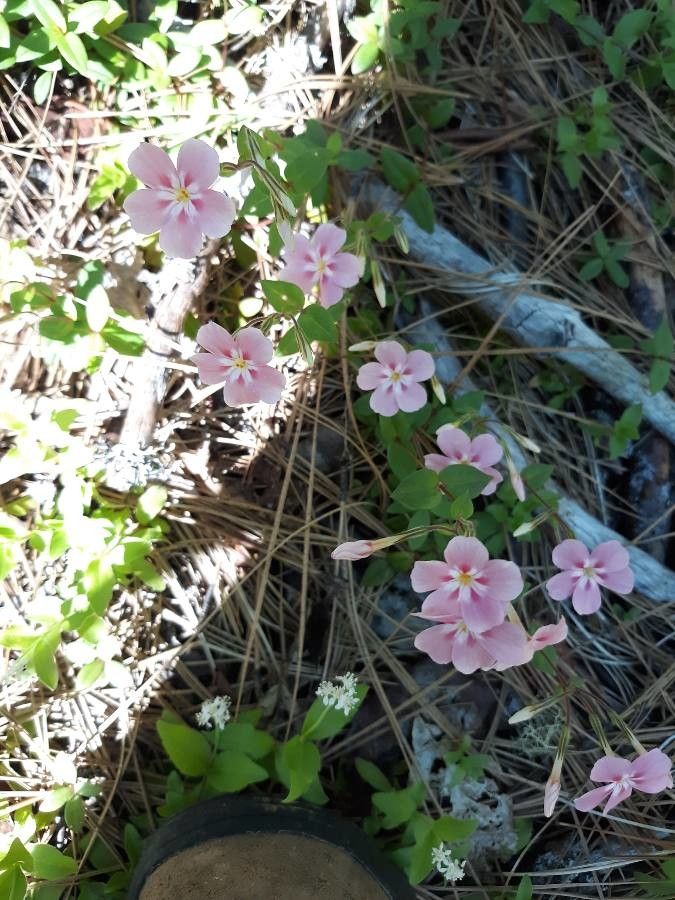
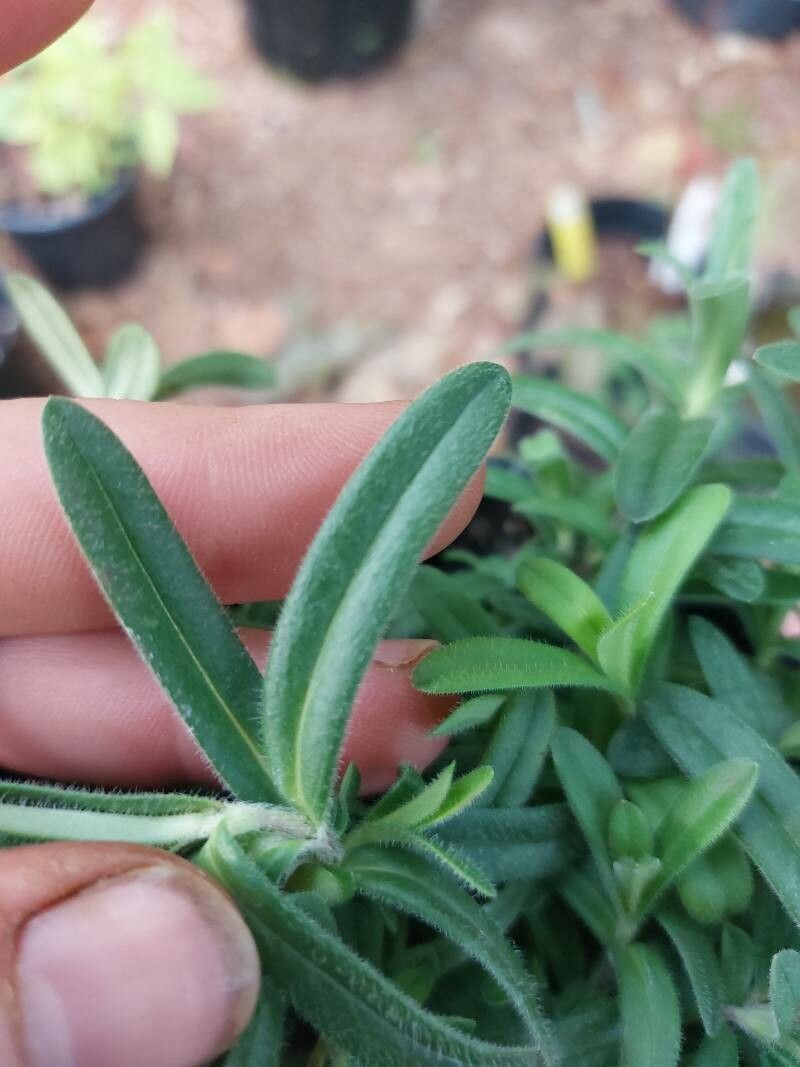
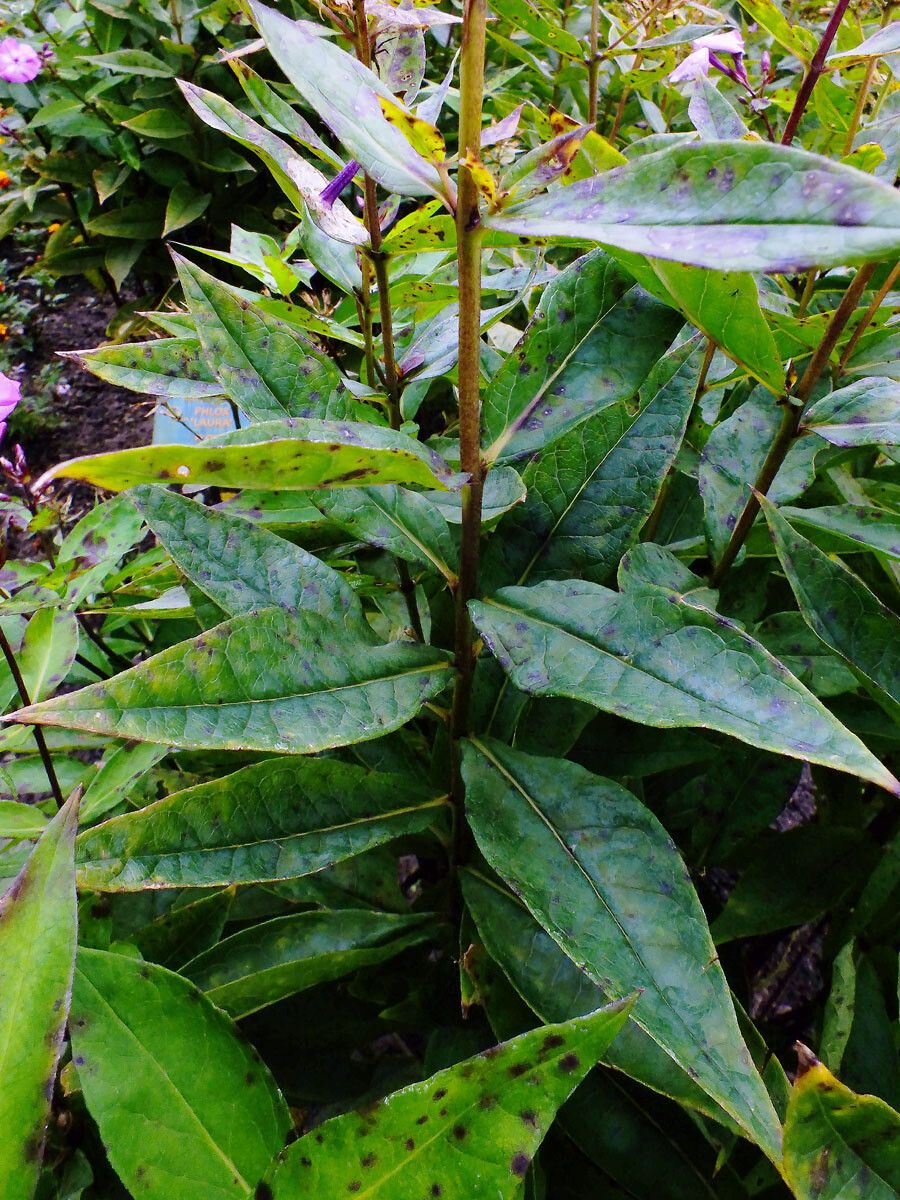
Phlox bifida, the cleft phlox or sand phlox, is native to the Midwestern United States, the Ozarks, and the cedar glades of Kentucky and Tennessee. It is found on rock outcrops, limestone glades, and in generally dry or sandy areas. It is a mat-forming subshrub growing in patches of short stems. It flowers in the spring. Two subspecies of Phlox bifida are distinguished based on hair and flower characters. These are: Phlox bifida ssp. bifida - Native to sandy regions of the Midwest. Phlox bifida ssp. stellaria - Native to limestone glades and cliffs of Kentucky and Tennessee.
Cleft phlox has strong resistance to disease and is generally not easily affected by illnesses. Still, it can be vulnerable to pests and diseases present in its surroundings. Such infections are generally mild. Regarding care, this plant needs moderate maintenance. It should be pruned on a regular basis to keep a neat appearance and encourage healthy growth. Applying fertilizer can also aid in boosting flowering. Cleft phlox is appropriate for anyone with outdoor space, like a garden or patio, and does not demand extensive care experience. It may need additional attention when grown indoors.
How to keep Phlox Bifida.
Light
Cleft phlox prefers sites with steady, ample sunlight, which fosters healthy growth. It can also adapt to locations with moderate sun exposure. Both excessive and insufficient sunlight can impair its growth and overall health.
Temperature
Cleft phlox naturally occurs in habitats with temperatures ranging from 41 to 95 °F (5 to 35 °C). It grows best within this range. In hotter or colder regions, seasonal adjustments may be necessary to maintain its growth.
Fertilizer
The best time to fertilize a Cleft phlox is in early spring, when it is coming out of dormancy and beginning active growth. Fertilization supplies essential nutrients for healthy development. Although Cleft phlox has fairly low fertilizer requirements, giving it fertilizer once a year can improve its survival and encourage better, longer-lasting blooms.
Botanical profile.
- Plant Type
- Herb
- Life Cycle
- Perennial
- Genus
- Phlox
- Family
- Polemoniaceae
- Hardiness Zone
- 4-9
- Mature Height
- 30 cm
- Mature Spread
- 25 cm
- Leaf Color
- Green
- Leaf Type
- Evergreen
- Flower Color
- Lavender, Pink, White
- Flower Size
- 2.54 cm
- Bloom Time
- Early spring, Mid spring
- Planting Time
- Spring, Summer, Autumn
- Harvest Time
- Late spring, Early summer
Other names.