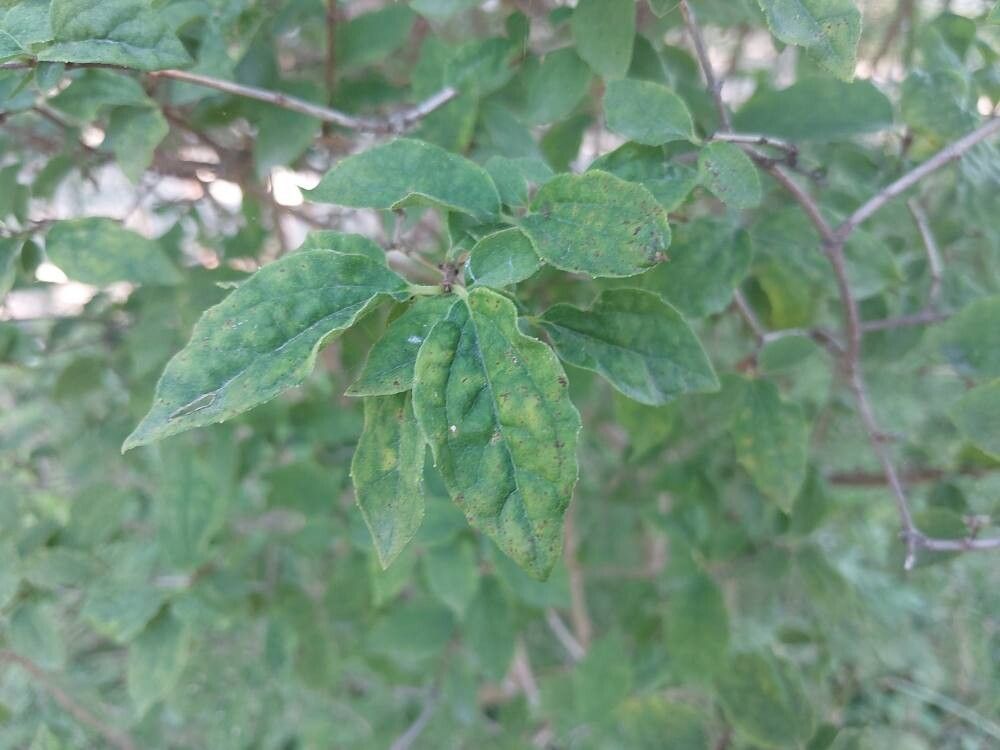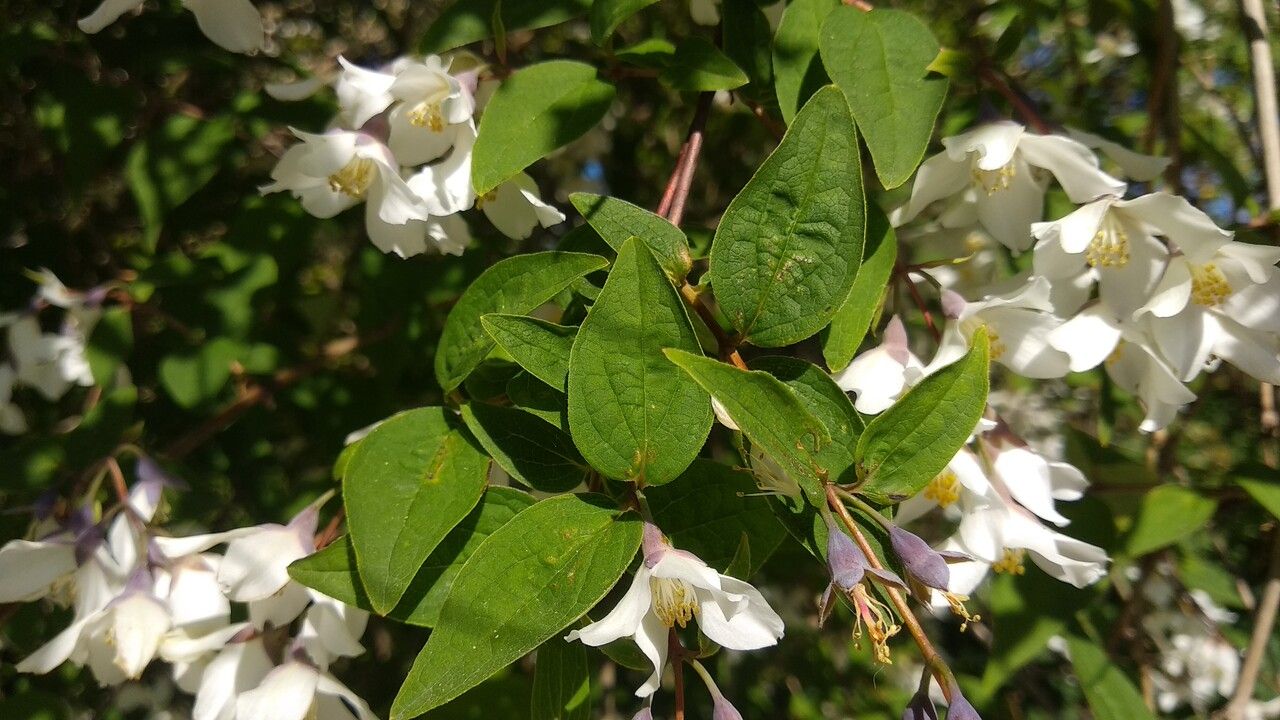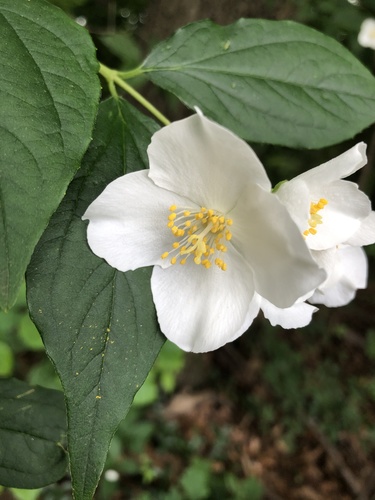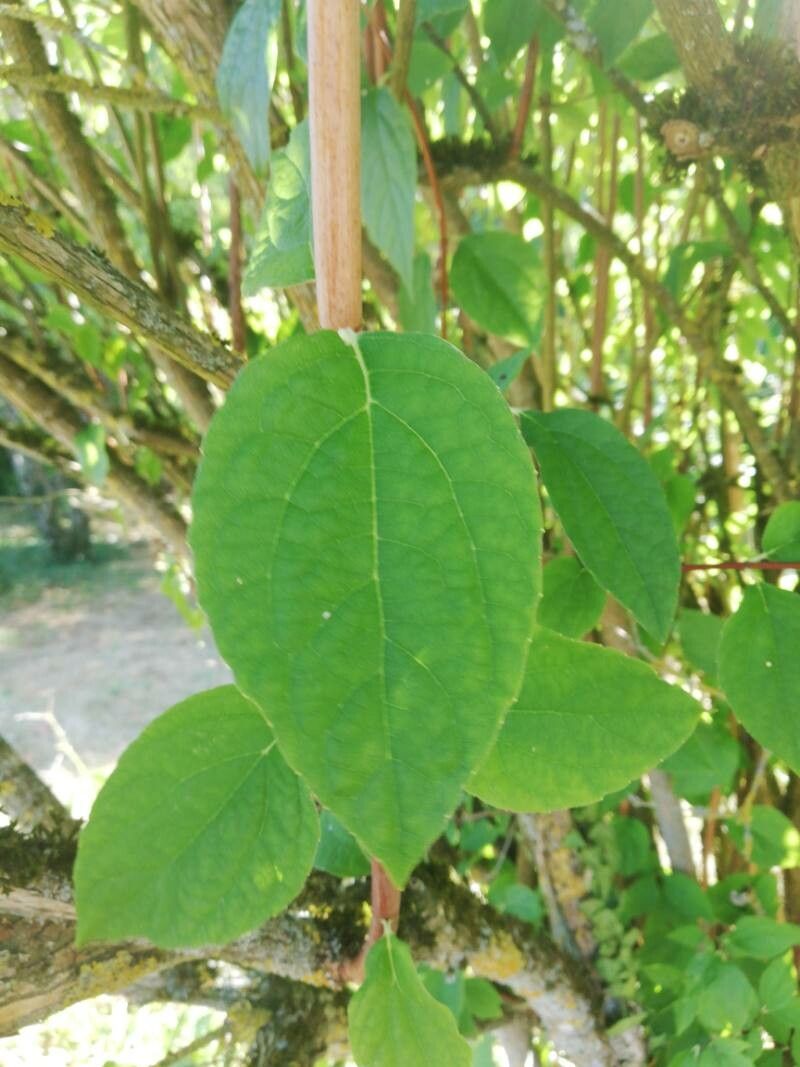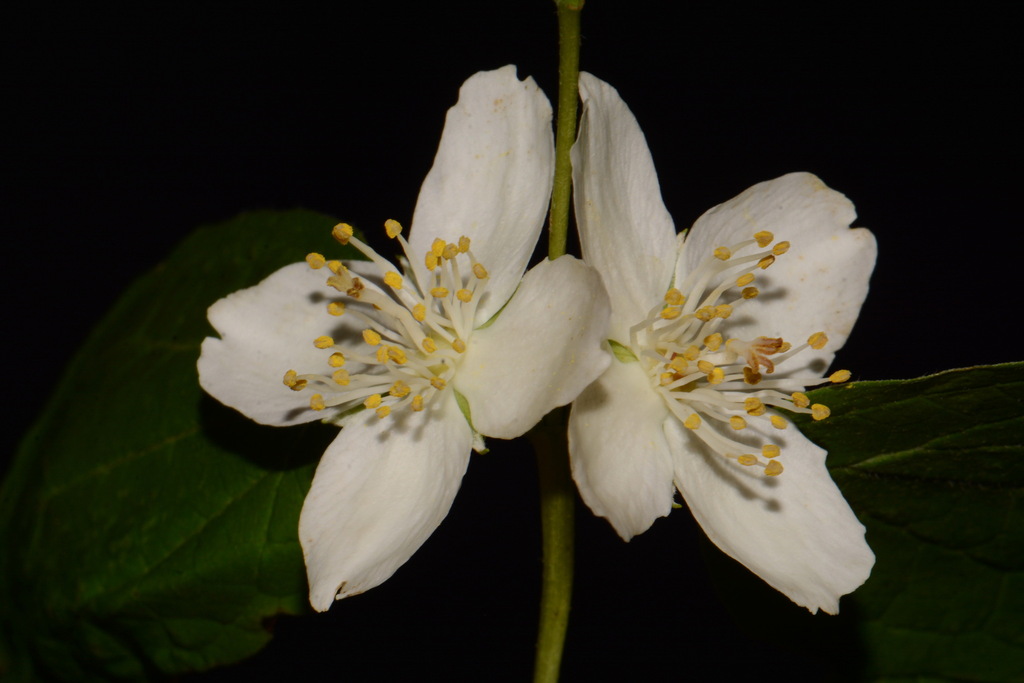
Philadelphus pubescens is a species of flowering plant in the hydrangea family known by the common name hoary mock orange. It is native to the eastern United States. It is a perennial shrub. The flowers are white.
Hoary mock orange is resistant to disease and generally not susceptible to illness. In terms of care, the plant is fairly low-maintenance. When grown outdoors it needs only minimal watering, and larger plants typically do not require pruning. Smaller plants, however, should be pruned after they finish blooming. Hoary mock oranget is appropriate for anyone with an outdoor area, such as a garden or deck, and does not call for extensive care experience.
How to keep Philadelphus Pubescens.
Light
Hoary mock orange comes from open habitats, such as sunlit meadows and woodland edges, that offer plenty of light. It prefers Full Sun but can also tolerate Partial Sun, showing good adaptability to different light conditions.
Water
The hoary mock orange flourishes in moderately moist conditions, preferring soil that remains evenly moist without drying out completely. To encourage healthy flowering, water the plant every 1-2 weeks, particularly during its active growing season. Typically grown outdoors, this deciduous plant is sensitive to hydration levels.
Temperature
Hoary mock orange shows strong adaptability to a range of climates, from very hot summers to cold winters. Nevertheless, it grows best within a specific temperature range. If temperatures rise too much, the plant is susceptible to stress from heat and humidity, which can kill it. In areas where temperatures approach the lower boundary of its cold tolerance, taking insulating precautions to protect the plant is necessary.
Fertilizer
Timing is essential for fertilizing Hoary mock orange. Fertilize in early spring and continue monthly until early summer. Fertilizer encourages attractive blooms and provides energy during both dormant periods and active growth.
Pruning
The hoary mock orange blooms for a short period, so it's advisable to prune it after the flowers fade in late summer to promote future growth. To do this, cut one out of every four older stems down to the base. Trim the top third of the plant to maintain a height of about 1 meter (3.3 feet). Additionally, prune branches above buds that face outward and remove any poorly positioned branches.
Botanical profile.
- Plant Type
- Shrub
- Life Cycle
- Perennial
- Genus
- Philadelphus
- Family
- Hydrangeaceae
- Hardiness Zone
- 4-8
- Mature Height
- 1.22 m to 3.05 m
- Mature Spread
- 1.52 m to 2.44 m
- Leaf Color
- Green, Dark Green
- Leaf Type
- Deciduous
- Flower Color
- White
- Flower Size
- 3.05 cm to 4.06 cm
- Bloom Time
- Late spring, Early summer
- Planting Time
- Spring, Summer, Autumn
- Harvest Time
- Mid summer, Late summer, Early fall