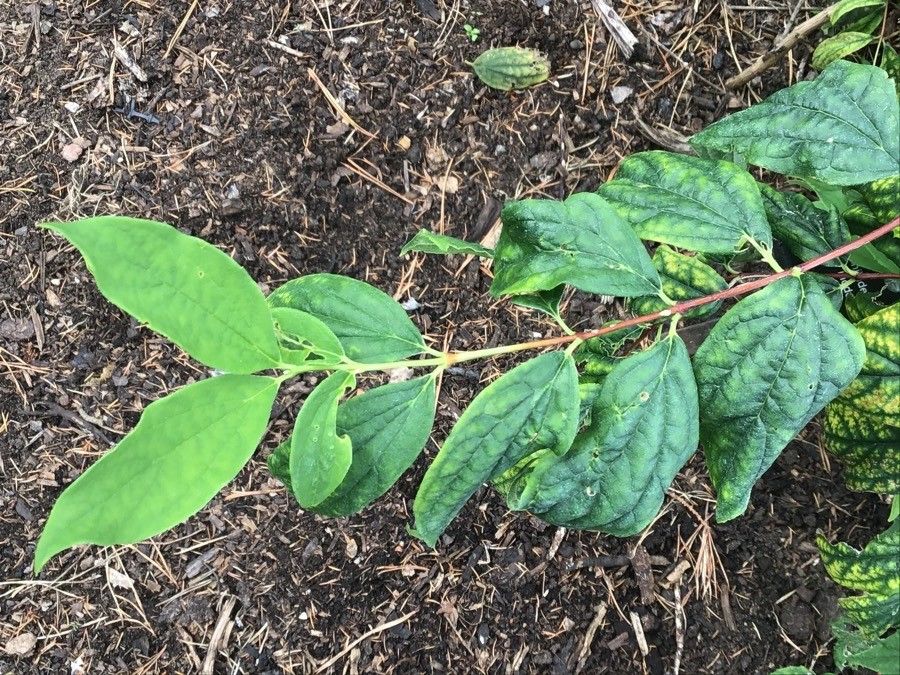
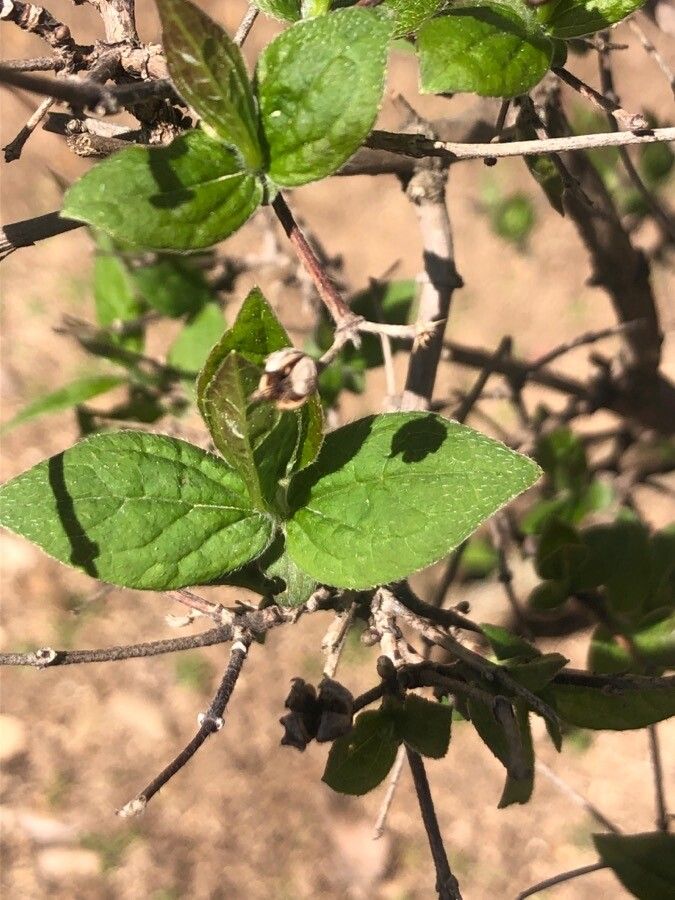
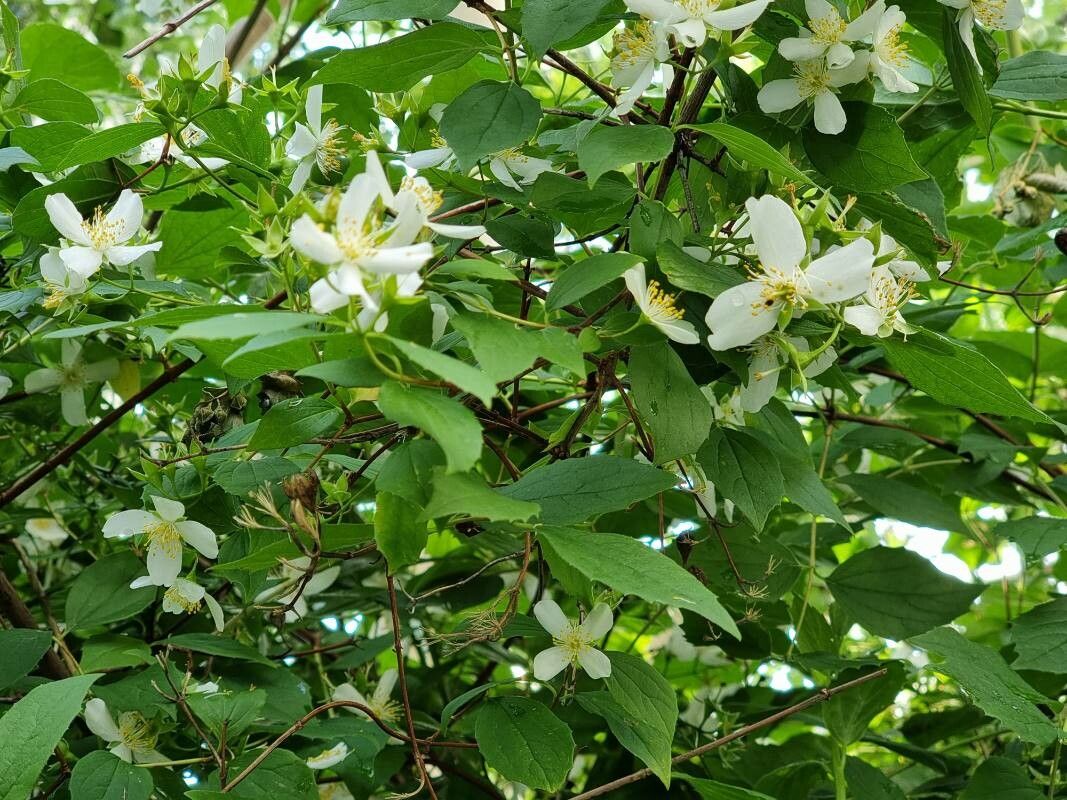
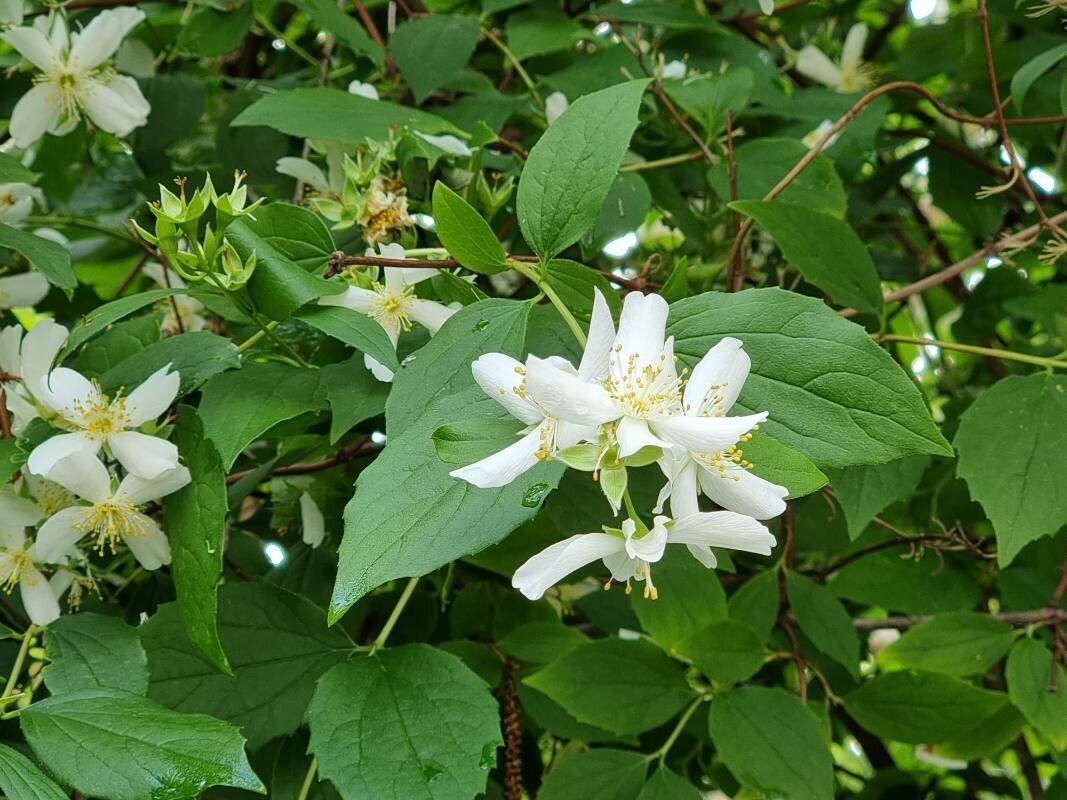
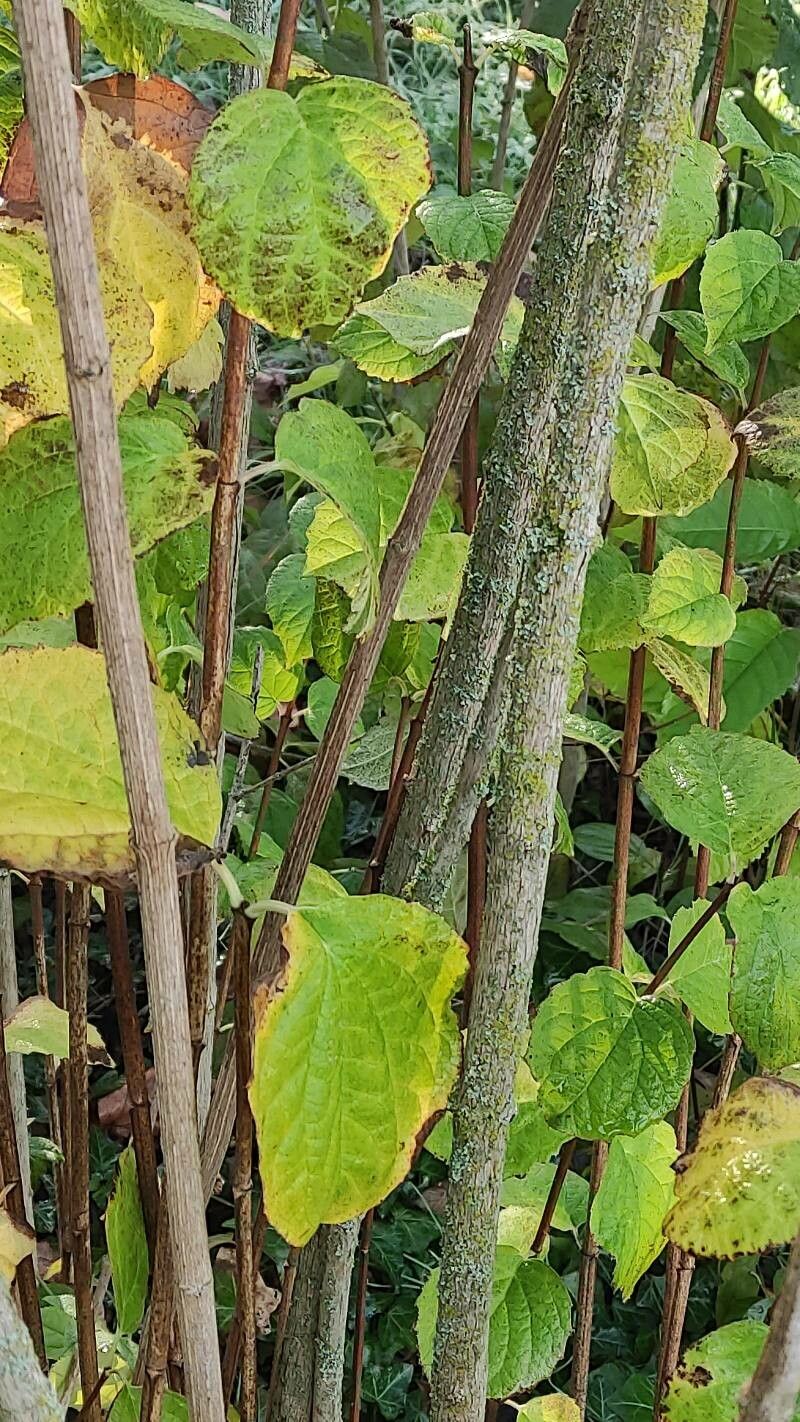
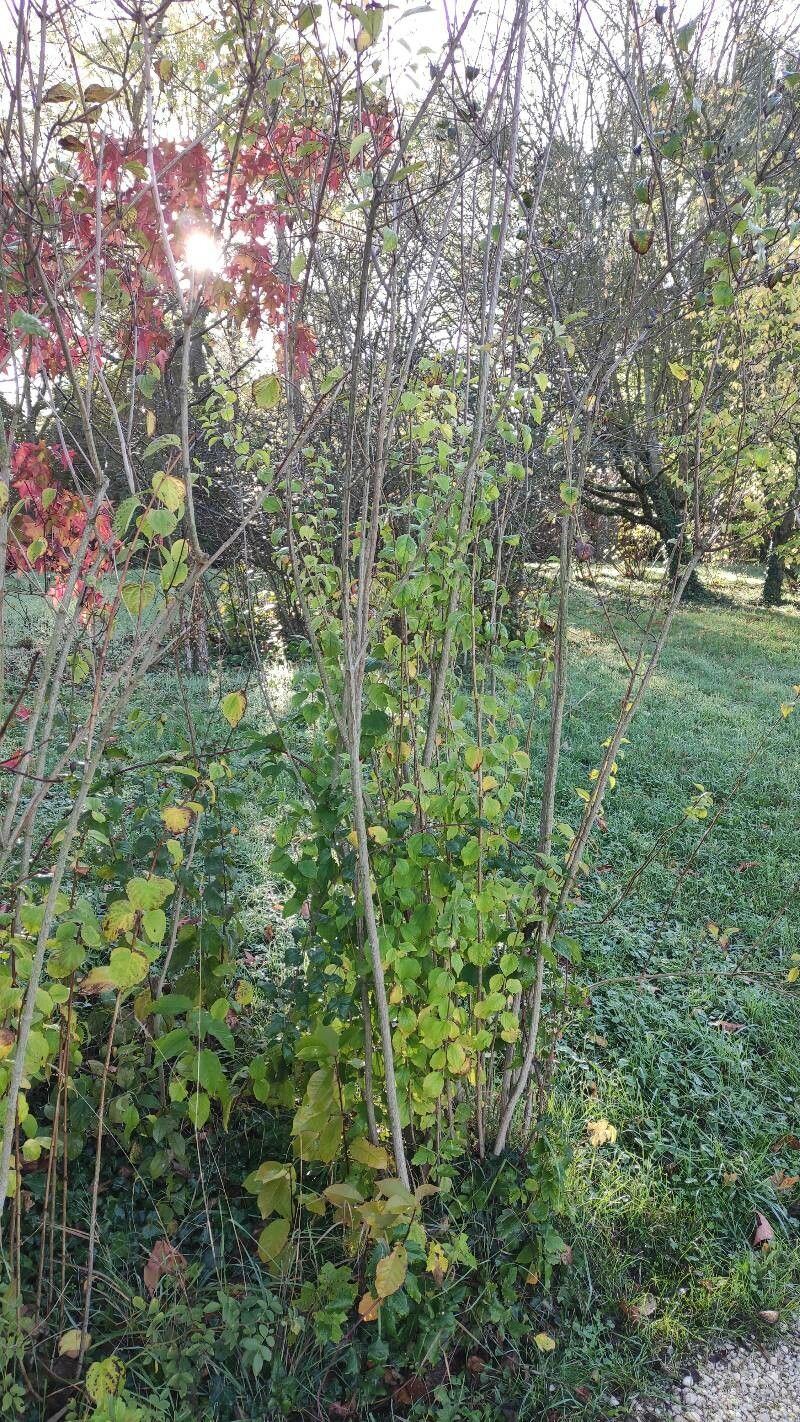
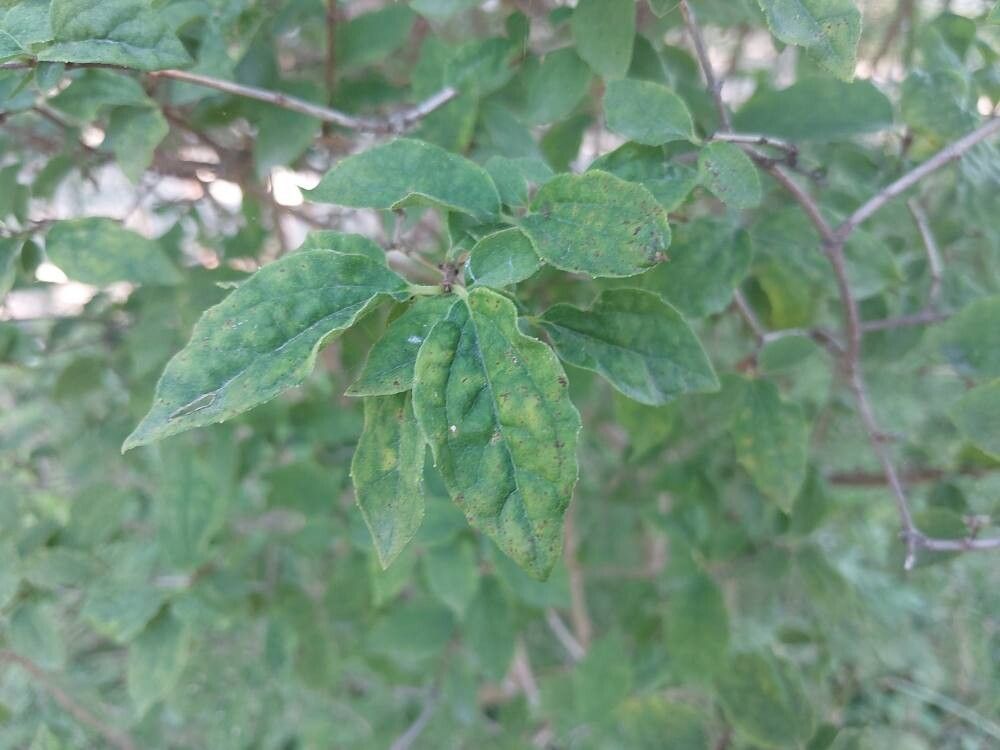
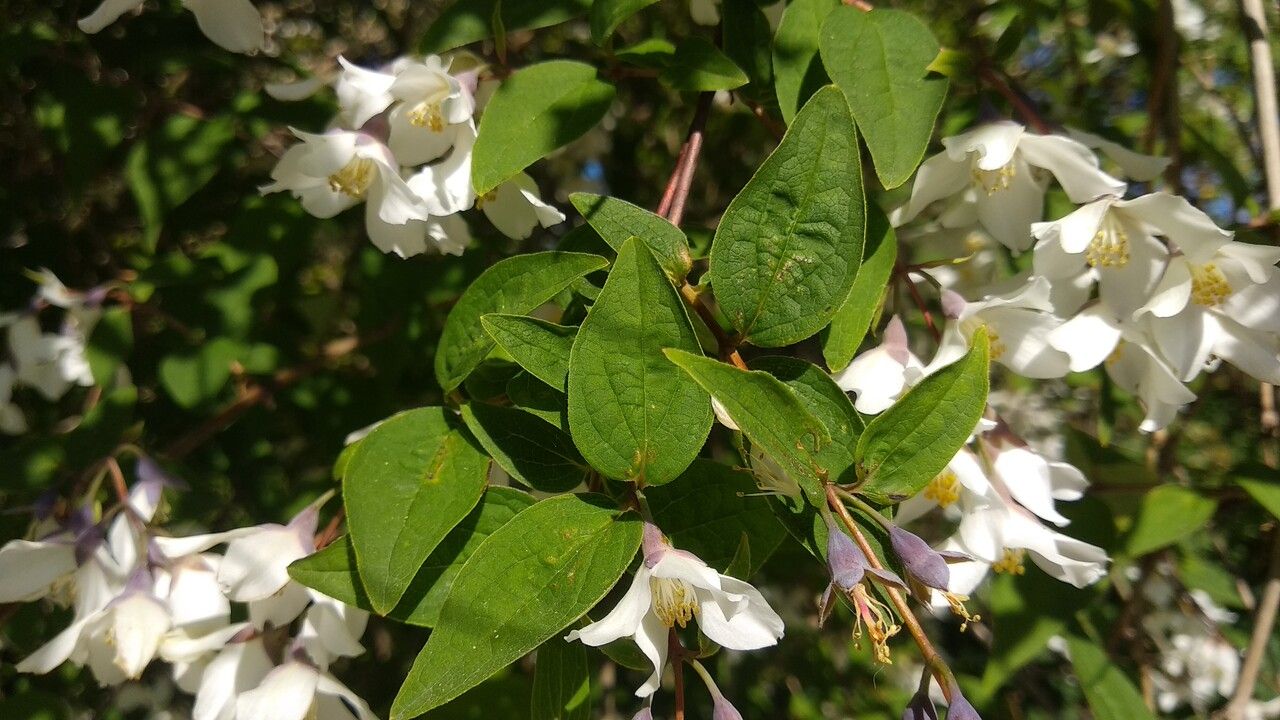
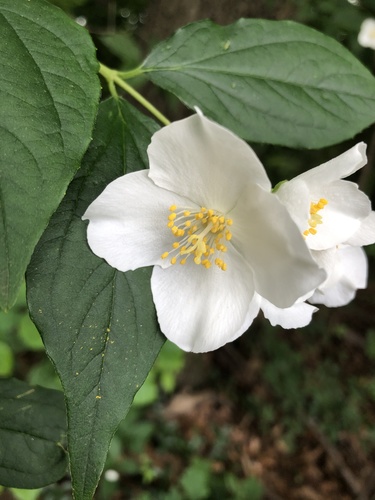
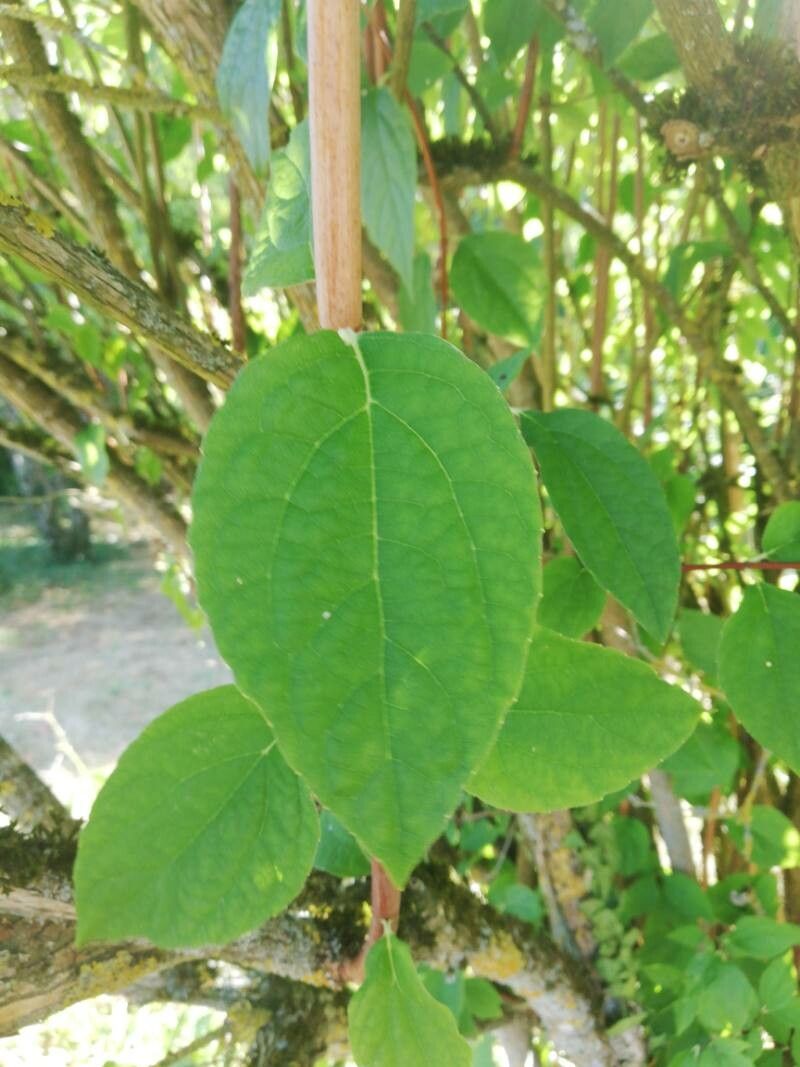
Philadelphus inodorus, commonly known as the scentless mock orange, is a deciduous shrub belonging to the Hydrangeaceae family. Native to North America, this plant thrives in diverse habitats such as woodlands, meadows, and along streams. It can grow up to 3 meters tall and features an upright habit with arching branches. The leaves of Philadelphus inodorus are dark green and ovate-shaped with serrated edges. The shrub produces white or cream-colored flowers, each with a 2-3 cm diameter, exuding a sweet fragrance similar to that of orange blossoms. These blooms appear from late spring to early summer. This shrub favors well-drained soil rich in organic matter but can tolerate various soil types, including clay soils. It thrives in full sun or partial shade but can also endure some shade. Philadelphus inodorus is often used as an ornamental shrub due to its appealing flowers and delightful fragrance. Additionally, it provides a habitat for birds such as finches, sparrows, and thrushes, which feed on its seeds. Overall, Philadelphus inodorus is an easy-to-grow shrub that adds beauty and fragrance to any garden or landscape. It also offers ecological benefits by supporting wildlife.
Scentless mock orange is resistant to disease and is generally not susceptible to illnesses. In terms of care, this plant is relatively low-maintenance. Planted outdoors, it needs only minimal watering, and larger plants typically do not require pruning. Smaller plants, however, should be pruned after they finish blooming. Scentless mock orange is suitable for anyone with an outdoor space, such as a garden or deck, and does not demand extensive gardening experience.
How to keep Philadelphus Inodorus.
Light
The scentless mock orange mainly favors environments with steady, moderate sunlight. Excessive light can cause harmful effects on its health, while insufficient light may hinder strong growth. Nevertheless, being in full sun does not greatly damage the plant. In its natural habitats, it has become suited to a range of light conditions.
Water
The scentless mock orange thrives in moderate moisture conditions, benefiting from consistent watering while being able to withstand short dry periods. To maintain its health, water the plant every two weeks. Typically grown outdoors, it needs adequate water during the growing season to promote lush foliage and robust growth.
Temperature
Scentless mock orange is native to warm temperate zones and is adapted to temperatures between 41 and 95 °F (5 to 35 ℃). Ideally, regulate your garden temperatures to this range, ensuring winter lows do not fall below 41 °F (5 ℃).
Fertilizer
The timing of fertilizing Scentless mock orange is important. Apply fertilizer in early spring and continue monthly through early summer. Fertilizer encourages attractive blooms and supplies energy during both dormant and active growth stages.
Pruning
Scentless mock orange benefits from pruning, particularly in late spring after it has finished blooming. To enhance air circulation, concentrate on removing dead wood and overcrowded branches. Clean cuts help the plant heal and protect against disease, ensuring that the scentless mock orange remains healthy and well-shaped.
Botanical profile.
- Plant Type
- Shrub
- Life Cycle
- Perennial
- Genus
- Philadelphus
- Family
- Hydrangeaceae
- Hardiness Zone
- 5-10
- Mature Height
- 0.91 m to 3.05 m
- Mature Spread
- 1.22 m to 1.83 m
- Leaf Color
- Green
- Leaf Type
- Deciduous
- Flower Color
- White
- Flower Size
- 2.54 cm
- Bloom Time
- Late spring, Early summer
- Planting Time
- Spring, Autumn
- Harvest Time
- Mid summer, Late summer, Early fall
Other names.
Reader questions.
What's the best way to water Scentless mock orange?
Soaker hoses are a great option for maintaining the moisture of leaves and flowers. They allow for efficient water delivery directly to the plant's base without wetting the entire foliage. To use a soaker hose, lay it around the plant and keep it on for 30 to 45 minutes until the soil is moist but not overly wet. You can connect a regular hose to the soaker hose and cover it with mulch. Alternatively, some people prefer using drip feeders to retain moisture throughout the day. When it comes to watering Scentless mock orange planted in pots, a watering can is recommended. Wait until you observe water dripping from the bottom of the pots, which indicates that the soil has been sufficiently moistened. Using a portable watering can allows you to reach the soil and ensure that water penetrates the roots deeply, promoting better growth.
Why is it important to fertilize my Scentless mock orange?
Fertilizing a Scentless mock orange is important for a few reasons. One of the most obvious benefits is that fertilizer helps the plant produce beautiful blooms. The best time to fertilize in early spring to ensure excellent flowers during that season. In addition, fertilizer provides the plant with extra energy that it can store in the ground while it is dormant. Adding nutrients during fall planting or late spring will help the plant hold more energy to use when it starts growing again.
What are the sunlight requirements for scentless mock orange?
Scentless mock orange requires moderate yet consistent sunlight conditions, preferring about 3-6 hours of sunlight (partial sun) to thrive, but it can also adapt to full sun conditions (above 6 hours of sunlight). It's essential to observe how sunlight moves through your garden to find the perfect balance of light and shade, ensuring that the plants receive adequate light without the detrimental effects of too much or too little exposure.
What is the ideal temperature range for Scentless mock orange?
Scentless mock orange thrives in a temperature range from 41 to 95 °F (5 to 35 °C), originating from warm temperate zones. Gardeners should aim to adjust their garden temperatures accordingly, ensuring that during cooler winter months, temperatures do not fall below 41 °F (5 °C). Despite its strong cold resistance, which usually negates the need for special frost protection measures, it's important to provide protection if winter temperatures are expected to drop below -25°C by wrapping the trunk and branches with non-woven fabric or cloth. Additionally, watering the plant abundantly before the first autumn freeze to keep the soil moist is suggested for preventing drought and water scarcity during winter and early spring.
What should I do if I give Scentless mock orange too much or too little water?
If you've overwatered your Scentless mock orange, take a step back and prevent further damage. These plants are hardy and more likely to survive. Allow the plant to dry out by stopping the watering. Roots sitting in water can harm the plant, so aerating can help. Symptoms of overwatering can include yellow leaves falling prematurely, fewer flowers, and misshapen buds. In severe cases, leaves may wilt and turn brown. Overwatering can lead to root rot in the long run. Symptoms of underwatering can be similar, with wilting being a sign. Check the soil moisture by sticking your finger into it. If it's too dry, the plant may be dehydrated. Adjust your watering schedule by adding some water in the evening if necessary. Always check the soil's dryness and follow a regular morning watering schedule.
When should I fertilize my Scentless mock orange plant?
When it comes to fertilizing Scentless mock orange, timing is crucial. Using fertilizer too early while the plant is still dormant is ineffective and will be washed away by rainwater, causing waste and pollution. To ensure proper fertilization, apply the first round of fertilizer in early spring and continue monthly until early summer.
Can scentless mock orange be grown under artificial lighting?
Yes, scentless mock orange can be grown under artificial lighting, especially when natural sunlight is insufficient, such as during winter or in less sunny spaces. Artificial lights, like LED, can be customized to provide specific wavelengths needed for optimal plant growth. For full sun plants, 30-50W/sq ft is recommended; for partial sun plants, 20-30W/sq ft; and for full shade plants, 10-20W/sq ft. The lights should be placed 12-36 inches above the plant and turned on for 8-12 hours per day to mimic natural daylight hours.
How does Scentless mock orange react to low temperatures?
Scentless mock orange is cold-tolerant and fares best when temperatures remain above 5°C. While the plant should ideally be kept above -20°C during winter, temperatures falling below -25°C may not show immediately noticeable changes, but come spring, branches can become brittle and dry, with no new shoots emerging. The suggested solution for this issue is to prune any dead branches that have failed to produce new leaves come spring.
How frequently should I water Scentless mock orange?
To properly care for the Scentless mock orange, it is recommended to water it deeply two to three times a week. However, if you live in a hot climate, it may require more frequent watering. It prefers moist but well-drained soil, so be sure to check the soil moisture before watering. If the top 2-4 inches of soil are dry, it is likely a good time to water. If the plant is outdoors, watering it 1-2 times a week should suffice, as it will receive additional moisture from rainwater.
When is the best time to not add fertilizer to my Scentless mock orange plant?
To ensure optimal growth and blooming of Scentless mock orange, it is important to be mindful of the fertilizer used. Avoid using a fertilizer with high levels of nitrogen, as it can result in excessive leaf growth but few blooms. Instead, opt for a fertilizer that has a lower nitrogen content compared to other nutrients. Timing is also crucial when it comes to fertilizing Scentless mock orange. It is advised to refrain from fertilizing during late autumn, as this can lead to rapid growth right before winter. Additionally, avoid fertilizing during hot and dry periods, as dry soil does not effectively deliver nutrients. Fertilizing during such times can stimulate growth that requires more water, which may not be readily available. It is advisable to apply fertilizer earlier in the season when temperatures are cooler. Lastly, it is worth noting that Scentless mock orange has the ability to absorb nearby fertilizers applied to other plants or lawns. Thus, it is important to be cautious and avoid inadvertently giving the tree/shrub a double dose of fertilizer.
What are the symptoms of light deficiency in scentless mock orange?
When scentless mock orange does not receive sufficient light, it may show several symptoms indicating light deficiency. These include smaller new leaves, leggy or sparse growth, faster leaf drop, slower or halted growth, lighter-colored new leaves, and symptoms of excessive sunlight exposure such as chlorosis, sunscald, leaf curling, wilting, and leaf scorching. These symptoms can affect the plant's overall health and appearance.
What should I do if the Scentless mock orange experiences high temperatures?
During the summer, it's critical to ensure that the temperature around the Scentless mock orange does not exceed 35°C. Exposure to temperatures above 41°C can cause the leaves to lighten in color, tips to become dry and withered, and the plant to become more prone to sunburn. To mitigate these effects, trim away any sunburned and dried parts, move the plant to a shaded location or use a shade cloth to protect it from the midday and afternoon sun. It's also advantageous to water the plant in the morning and evening to maintain soil moisture.