Phalaenopsis aphrodite is a species of orchid found from southeastern Taiwan to the Philippines.
The moth orchid typically has strong resistance to disease and is affected by relatively few insect pests. Its care is considered difficult because it needs a high-humidity yet well-ventilated environment with minimal harmful pathogens. Too much watering can cause root rot. Although anyone can grow moth orchids, keeping them healthy and getting them to bloom again requires more cultivation experience.
How to keep Phalaenopsis Aphrodite.
Light
The moth orchid thrives in locations with partial sunlight and is able to survive even in places where sunlight cannot fully penetrate. Sunlight encourages robust growth and flourishing for the plant. On the other hand, too much shade could negatively impact its health, and too much light could speed up its dehydration process. Its environmental roots reflect these lighting conditions.
Water
Aphrodite's phalaenopsis flourishes in warm and humid conditions. It needs high humidity and consistent moisture but should not be waterlogged. Watering once a week helps maintain the right soil moisture. Occasionally misting the plant mimics tropical rain, promoting optimal hydration and growth for this indoor epiphyte.
Humidity
This plant needs special care because it loves high humidity levels of 60-80% or more. The best way to achieve this is by placing a humidifier near the plant. Daily misting is also essential! Make sure the room has good ventilation.
Temperature
The Moth orchid is a woodland plant that thrives in moderate climates and likes temperatures between 68 and 100 ℉ (20 to 38 ℃). Naturally, this orchid grows in areas where there is a steady day time temperature of 77 to 86 ℉ (25 to 30 ℃) and a nighttime temperature drop of 10-15 ℉ (5-8 ℃). During colder seasons, additional heating through pads or other artificial means may be needed, while in the warmer summer months, shade with temperature control or air-conditioned spaces are necessary.
Fertilizer
Correct fertilizing is essential to the health and look of the Moth orchid. Administer fertilizer to the Moth orchid during summer on a monthly basis. Nutrients are necessary to support growth and preserve plant structures. Fertilizing improves the flower display of the Moth orchid, guaranteeing outstanding blooms.
Pruning
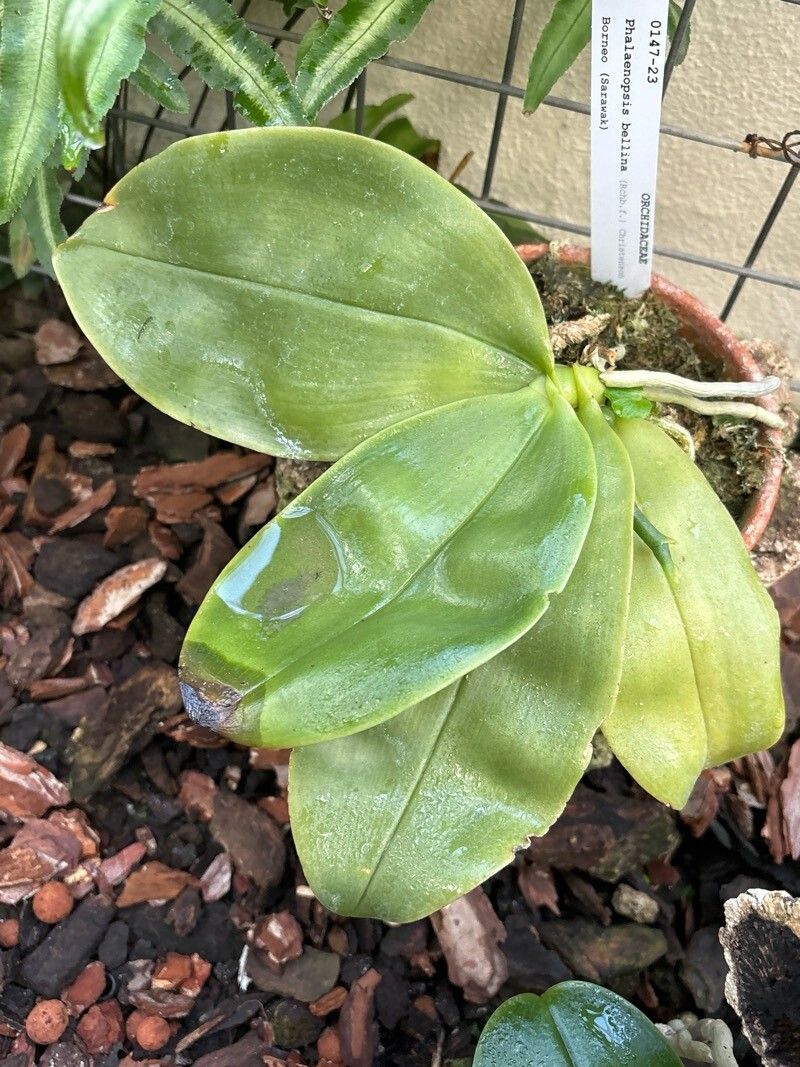
Aphrodite's phalaenopsis features beautiful, long-lasting blooms and thick leaves. To promote healthy growth, prune the plant after it finishes blooming, typically from late winter to early spring, by cutting spent flower spikes down to the base. Additionally, remove any yellow or damaged leaves to maintain the plant's overall health. This practice encourages new growth, improves airflow, and prolongs the vitality of its blooms.
Pot & Repot
When rehousing a Moth orchid, opt for a marginally larger container with proper drainage, ideally a transparent orchid pot. Employ a well-percolating, orchid-specific blend that includes bark or moss. Carefully clean the roots and cut any that are deceased or decaying. Usually in spring or autumn, replant after the blossoming period, provide ample water, and position it in bright, diffuse light. Once it has been repotted, it's crucial not to disrupt the roots.
Botanical profile.
- Plant Type
- Herb
- Life Cycle
- Perennial
- Genus
- Phalaenopsis
- Family
- Orchidaceae
- Hardiness Zone
- 10-12
- Mature Height
- 10 cm to 61 cm
- Mature Spread
- 5 cm to 8 cm
- Leaf Color
- Green
- Leaf Type
- Evergreen
- Flower Color
- White, Yellow, Pink, Purple, Blue
- Flower Size
- 4.06 cm to 6.35 cm
- Bloom Time
- Spring, Late summer, Fall, Winter
- Planting Time
- Spring, Autumn
- Harvest Time
- All year round