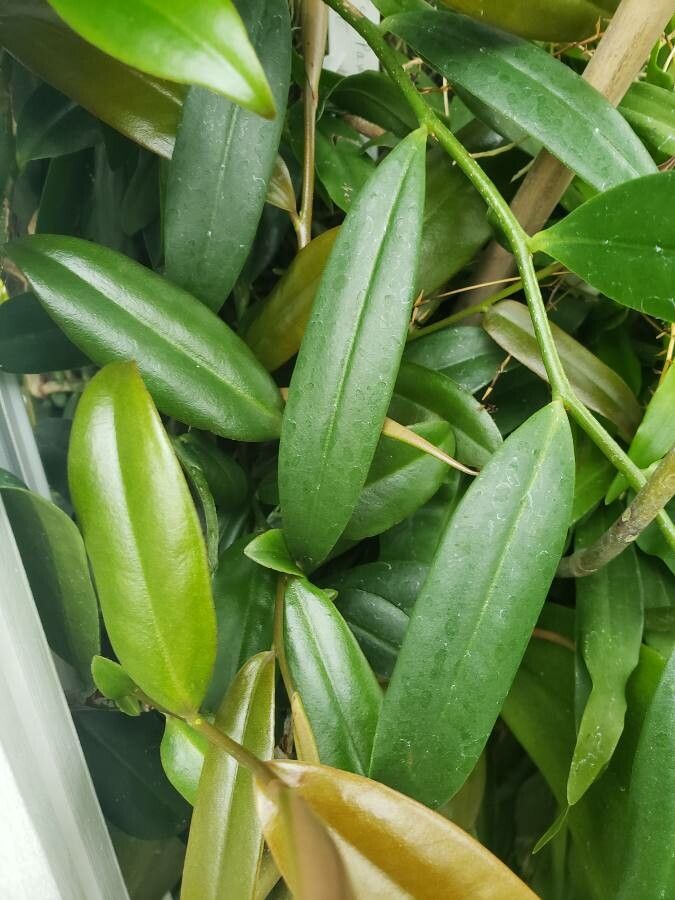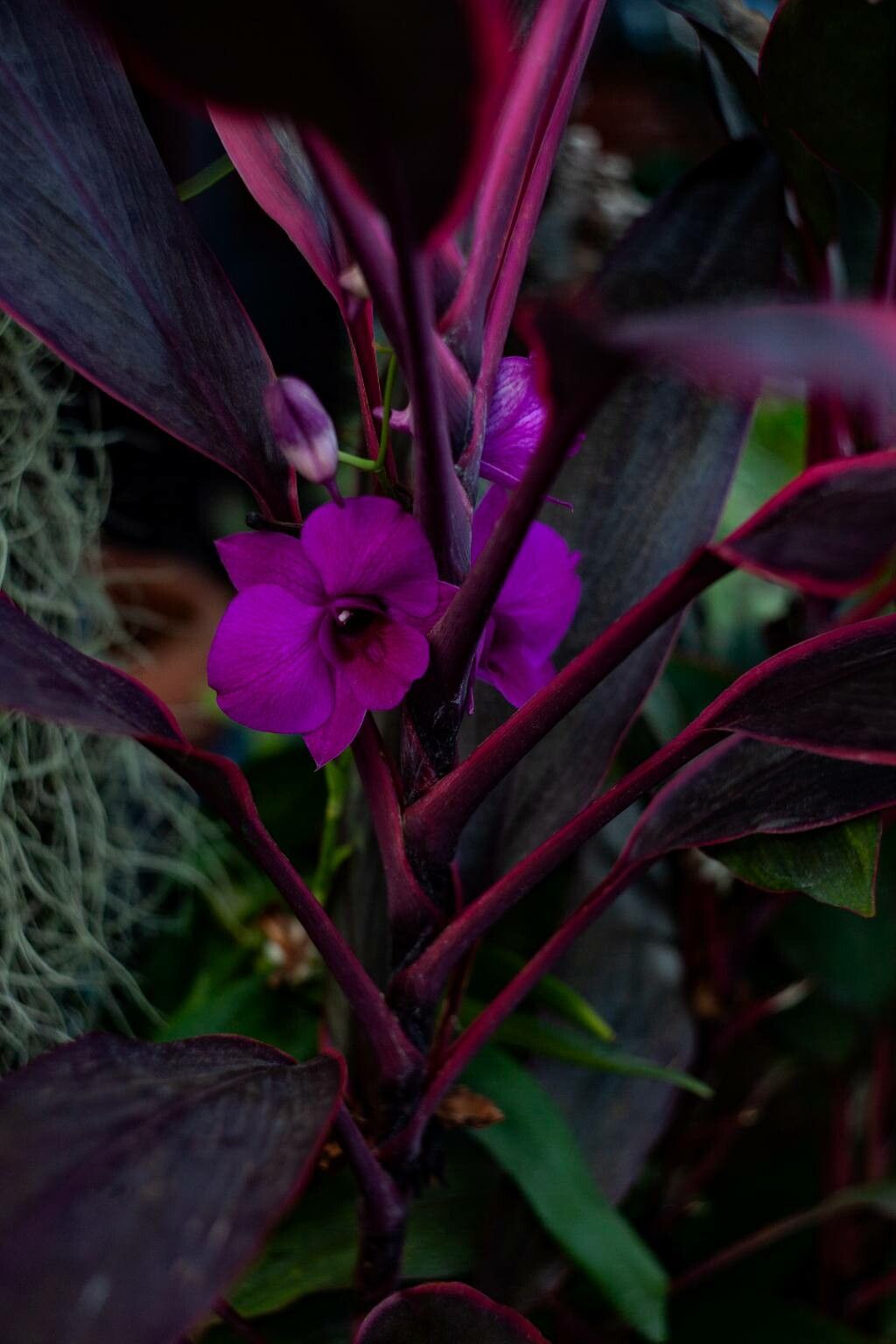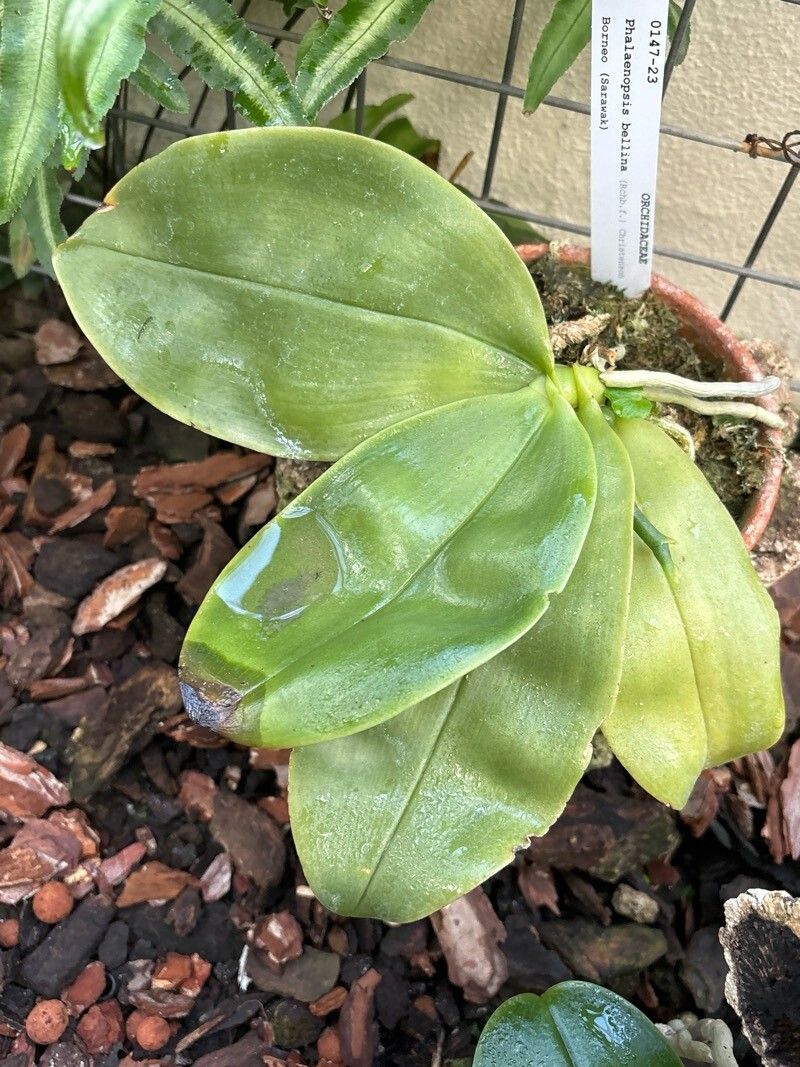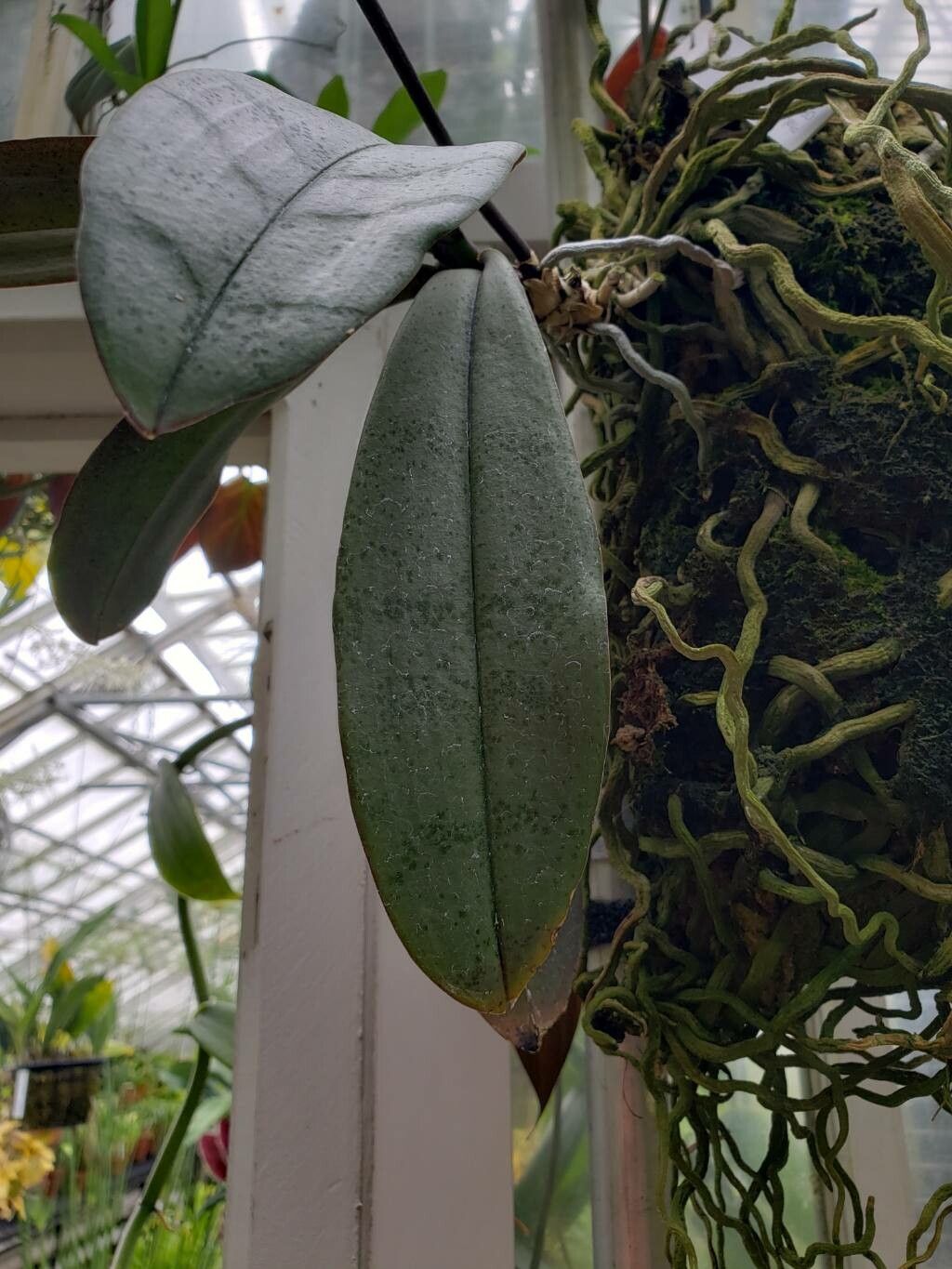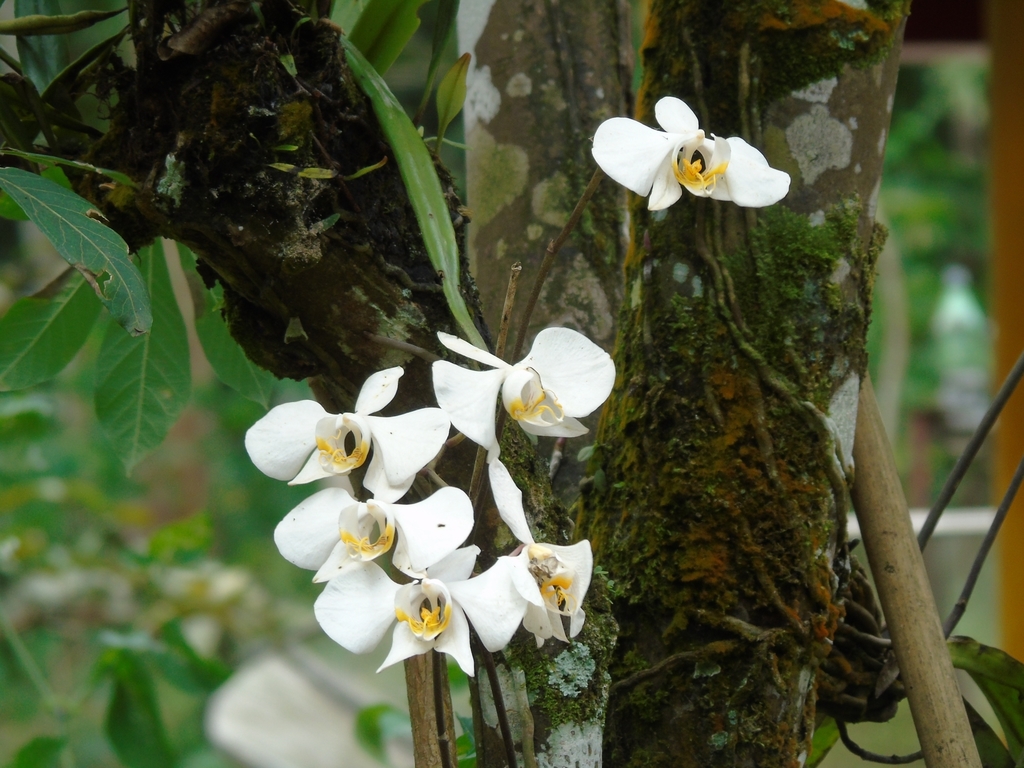
Phalaenopsis amabilis, commonly known as the moon orchid or moth orchid in India and as anggrek bulan in Indonesia, is a species of flowering plant in the orchid family Orchidaceae. It is native to the East Indies and Australia, and widely cultivated as a decorative houseplant. It is an epiphytic or lithophytic herb with long, thick roots, between two and eight thick, fleshy leaves with their bases hiding the stem and nearly flat, white, long-lasting flowers on a branching flowering stem with up to ten flowers on each branch.
In the 1750s, a Swedish naturalist in Java observed some orchids from a distance and mistook them for a group of large moths. As a result, they have been known as moth orchids ever since. The term "Phalaena" refers to a genus of moths, while "opsis" means "resembling" or "like." Additionally, the Latin word "amabilis" translates to "lovely."
The moth orchid typically has strong resistance to disease and is affected by relatively few insect pests. Its care is considered difficult because it needs a high-humidity yet well-ventilated environment with minimal harmful pathogens. Too much watering can cause root rot. Although anyone can grow moth orchids, keeping them healthy and getting them to bloom again requires more cultivation experience.
How to keep Phalaenopsis Amabilis.
Light
Moth orchids can prosper in moderate sunlight, but they can also survive in shadier, lower-light conditions. This ability to tolerate different light levels comes from their original habitat—the base of heavily wooded areas. However, extended exposure to too much light or too little light can cause leaf burn or stunted growth, respectively.
Water
The moth orchid flourishes in humid environments and needs consistent humidity along with moderate watering. Watering once a week is typically enough, and adding occasional misting helps mimic its native tropical rainforest habitat. This approach supports optimal growth and prevents the roots from becoming oversaturated.
Humidity
This plant needs special care because it loves high humidity levels of 60-80% or more. The best way to achieve this is by placing a humidifier near the plant. Daily misting is also essential! Make sure the room has good ventilation.
Temperature
The moth orchid is a temperate woody plant that prefers temperatures between 68 and 100 ℉ (20 to 38 ℃). It originates from regions with warm, humid climates, such as Southeast Asia. During the winter months, it is advisable to set the temperature to 60 to 70 ℉ (15.5 to 21 ℃) for proper growth.
Fertilizer
Correct fertilizing is essential to the health and look of the Moth orchid. Administer fertilizer to the Moth orchid during summer on a monthly basis. Nutrients are necessary to support growth and preserve plant structures. Fertilizing improves the flower display of the Moth orchid, guaranteeing outstanding blooms.
Pruning
The moth orchid benefits from regular pruning, especially from early spring to late winter. To encourage new growth, remove spent flowers and any yellowing leaves. Pruning just above the flower nodes can lead to secondary blooms, while also improving air circulation, reducing the risk of disease, and promoting overall vigor.
Pot & Repot
When rehousing a Moth orchid, opt for a marginally larger container with proper drainage, ideally a transparent orchid pot. Employ a well-percolating, orchid-specific blend that includes bark or moss. Carefully clean the roots and cut any that are deceased or decaying. Usually in spring or autumn, replant after the blossoming period, provide ample water, and position it in bright, diffuse light. Once it has been repotted, it's crucial not to disrupt the roots.
Botanical profile.
- Plant Type
- Herb
- Life Cycle
- Perennial
- Genus
- Phalaenopsis
- Family
- Orchidaceae
- Hardiness Zone
- 10-12
- Mature Height
- 30 cm to 91 cm
- Mature Spread
- 25 cm
- Leaf Color
- Green
- Leaf Type
- Evergreen
- Flower Color
- White, Yellow
- Flower Size
- 5.08 cm to 12.70 cm
- Bloom Time
- All year round
- Planting Time
- Autumn, Spring
- Harvest Time
- Late spring, Summer, Fall
Other names.
Reader questions.
When Should I Water My Moth Orchid?
Watering your moth orchid is essential for its health and flowering. Look for signs like dry soil, which is checked by the dryness of the top 1 to 2 inches, or wilted and lackluster leaves. The plant particularly needs water during its pre-flowering stage, and more so in warm temperatures and high sunlight exposure. Be cautious not to water too early or too late to prevent risks like root rot or plant dehydration. Understanding these signs will help you manage an effective watering schedule for the moth orchid.
Why should I put fertilizer on my Moth orchid?
Fertilizer and soil nutrients are like fuel for your Moth orchid, helping it to grow and stay healthy. Plants use nutrients from the soil to create new plant material and maintain their existing parts. For the Moth orchid, fertilization is especially important to enhance the beauty of its flowers. Since the flowers are what make this plant attractive, most gardeners want to do everything to ensure they look their best. Fertilization is a dependable method to help your Moth orchid produce exceptional blooms.
What are the sunlight requirements for a Moth orchid?
Moth orchids require a specific balance of sunlight to thrive. They prosper under partial sun, which equates to about 3-6 hours of sunlight daily. For areas classified as full shade, less than 3 hours of sunlight is needed. It's vital to observe how sunlight moves through your garden to pick spots that offer the ideal mix of light and shade, ensuring the plant's well-being.
What is the preferred temperature range for moth orchid?
The moth orchid, known botanically as Phalaenopsis amabilis, thrives in a temperate range between 68 to 100°F (20 to 38°C). Native to warm and humid climates, such as Southeast Asia, it requires careful temperature management through different seasons. During winter, a cooler climate of 60 to 70°F (15.5 to 21°C) is ideal for its growth. However, if temperatures dip below 5°C, it is advisable to bring the moth orchid indoors, ensuring the temperature remains above 20°C. Placement near a south-facing window is recommended for adequate sunlight, alongside regular misting or the use of a humidifier to maintain humidity. For outdoor cultivation in cold months, positioning the orchid in a sheltered, sunny spot or using protective measures like a temporary greenhouse or wrapping with plastic film or fabric can be beneficial.
How Should I Water My Moth Orchid?
Moth orchid requires proper watering techniques due to its sensitivity. Bottom-watering by placing the plant in water for 15-20 minutes and removing it to drain is effective. Misting recreates its humid natural environment but avoid overdoing it to prevent fungal growth. Using a watering can with a long spout helps direct water to the soil, not the plant's crown to prevent rot. Utilizing tools like a moisture meter and a clear plastic pot helps in monitoring the plant's need for water and ensuring you're focusing on watering the soil and roots, not the crown, for optimum health.
When should I fertilize my Moth orchid for best results?
The Moth orchid has two main phases in a year. The first phase is the dormant phase, which occurs during the winter, and during this phase, the plant grows very little. The second phase is the active growth phase, which happens in spring and fall. This is the time when your Moth orchid requires the most fertilization. To start, it is recommended to fertilize your Moth orchid in the spring. Throughout the spring and most of the summer, you should fertilize once a month. As fall approaches, you can gradually decrease the frequency of fertilization.
Can Moth orchids survive in both sun and shade?
Yes, Moth orchids can indeed flourish in moderate sunlight but can also survive in shaded areas with less light. This adaptability is attributed to their natural habitat at the base of densely wooded areas. However, it's important to avoid excessive light exposure or a significant lack of it, as this can lead to leaf burn or hindered growth, respectively.
How does low temperature affect moth orchids and what are the solutions?
Moth orchids prefer warm environments and are significantly affected by low temperatures, thriving best when conditions are above 20°C. Should temperatures fall below 5°C, there is a risk of damage when it drops below 1°C, evident by extensive water-soaked necrosis, wilting, and drooping leaves. To mitigate these effects, it's crucial to trim off the frostbitten areas and move the plant to a warm indoor environment. A south-facing window offers ample sunlight without the risks posed by heaters or air conditioning vents, which can lead to excessive dryness.
How Much Water Does Moth Orchid Really Need?
The moth orchid doesn't require constant wetness, mirroring its tropical habitat's conditions. The right amount of water depends on factors like pot size, with a 6-inch pot generally needing about a quart of water. Ensure the roots are thoroughly soaked without the plant sitting in standing water. Visible indicators like a healthy green root color and robust growth show proper watering, while signs like wilted yellow leaves or rotted roots indicate watering issues. Over-watering and under-watering both pose risks, so understanding the orchid's needs is crucial.
When should I not add fertilizer to my Moth orchid?
If you want to help your Moth orchid grow without risking root burn, it's important to provide extra nutrients during its active growth phase in spring and summer. However, when the plant enters its dormancy stage in fall and winter, it is best to refrain from fertilizing.
How can artificial lighting benefit indoor Moth orchids?
Artificial lighting plays a crucial role in the growth of indoor Moth orchids, especially when natural sunlight is scarce, such as in winter or less sunny locations. Adequate lighting prompts faster, healthier growth. LED lights are recommended for indoor plant lighting due to their ability to mimic specific wavelengths needed by plants. The intensity required varies: full sun plants need 30-50W/sq ft, partial sun plants require 20-30W/sq ft, and full shade plants benefit from 10-20W/sq ft. The artificial light source should be placed 12-36 inches above the plant to simulate natural sunlight, and plants generally need 8-12 hours of light per day.
What are the effects of high temperature on moth orchids and how can they be mitigated?
Exposure to high temperatures, particularly above 38°C, can halt the growth of moth orchids and induce leaf wilting. The risk escalates past 43°C, making the plant more prone to root rot and sunburn. To counteract high-temperature exposure, it's advised to trim the sunburned and dried parts of the plant. Relocating the orchid to a shaded area, especially away from the harsh midday and afternoon sun, along with watering in the morning and evening, helps maintain moisture for both the plant and its environment, thereby mitigating potential damage.