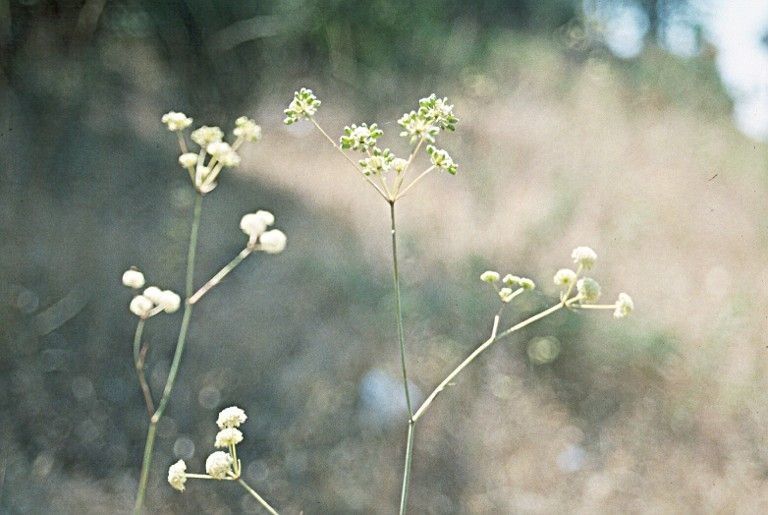
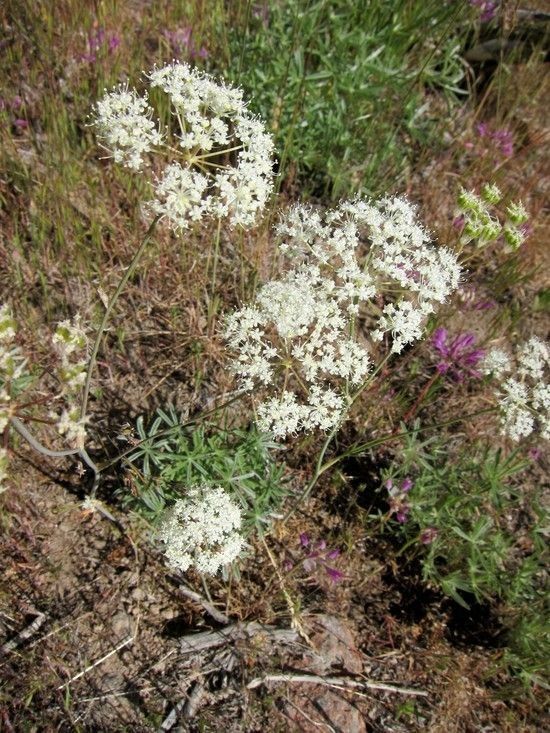
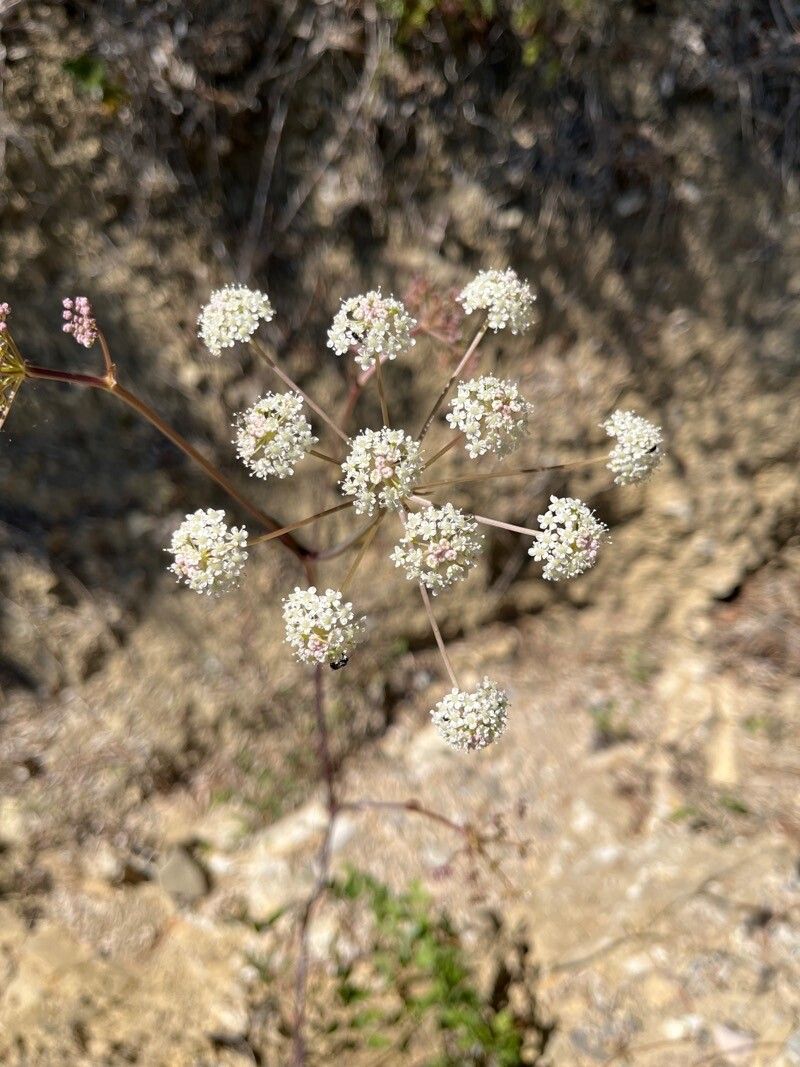
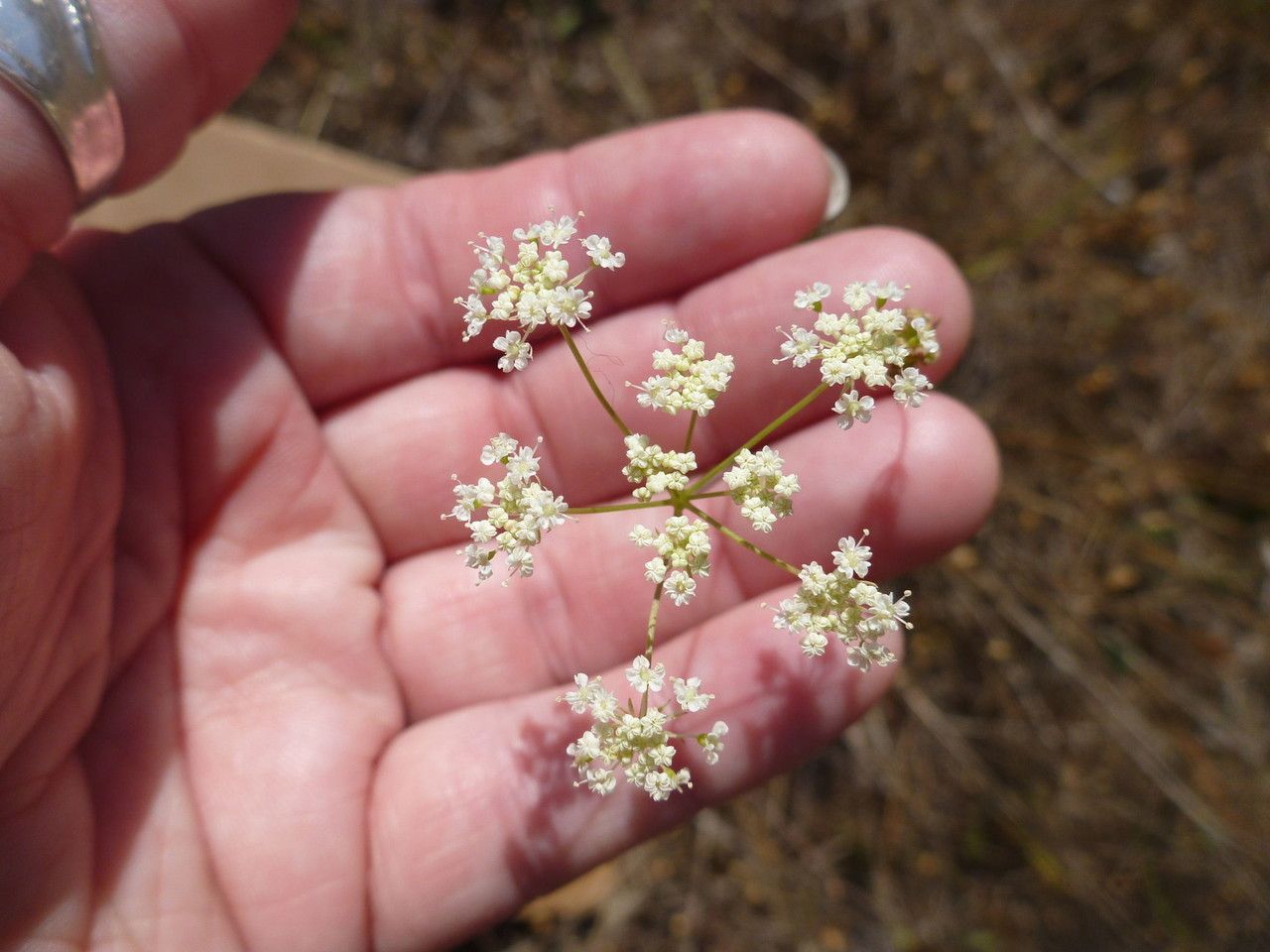
Perideridia americana is a species of flowering plant in the family Apiaceae known by the common names eastern yampah and wild dill. It has been found in 12 Midwestern United States, and is listed as threatened or endangered in at least 3 of them. In Missouri it is a conservation species of concern.Wild dill grows in calcareous soils in many habitat types, including glades, upland prairies, and forests. It is a perennial herb whose upright stems are between 50 and 120 centimeters tall, with sparse alternate doubly pinnate leaves ending in long tapering leaflets. The inflorescence is a compound umbel of many spherical clusters of small white flowers. The fruits are 3-5 millimeters long with 5 slender ribs. The life cycle of this species was described in a 1993 paper.
Wild dill is fairly resistant to disease and is generally not easily affected by illnesses. However, it can still be vulnerable to pests and diseases present in its surroundings. Such infections are typically mild. For care, this plant needs moderate maintenance. Regular pruning is necessary to keep a tidy appearance and support healthy growth. Fertilizing can also help encourage flowering. Wild dill is well suited to anyone with outdoor space, like a garden or patio, and does not require extensive care experience. It may need more attention when grown indoors.
How to keep Perideridia Americana.
Light
Thriving in areas that receive abundant sunlight, wild dill needs as much sun as possible for healthy growth. Its adaptability allows it to tolerate shadier spots, though this can weaken its vigor. Both overexposure and too little sun can jeopardize flowering and seed production.
Water
Wild dill flourishes in moist environments, needing consistent moisture without becoming waterlogged. To mimic its natural habitat, it is ideal to water it weekly. Rainwater is particularly beneficial for outdoor cultivation, as it enhances growth by providing essential nutrients.
Temperature
Wild dill can tolerate a broad range of temperatures, but its distribution may still be constrained by different combinations of moisture and heat. It does best in warm summer climates with adequate rainfall or watering. Extended stretches of cloudy, rainy weather, as well as prolonged high temperatures, can increase the risk of Wild dill dying. In winter, protecting it from cold can raise the plant's chances of survival.
Fertilizer
Wild dill typically requires only one fertilizer application in spring, however, for optimized growth, it can be fed multiple times. This should be done every month to six weeks. Fertilizing boosts the aesthetics and functionality of the leaves by maintaining their color and ensuring a healthy texture. Also, it encourages the growth of roots and absorption of nutrients, which contribute to the overall wellbeing of the plant in the long run.
Pruning
To keep wild dill healthy, it's important to prune it from early to late spring. Focus on removing any dead or damaged stems. This helps the plant thrive by improving air circulation and reducing the risk of fungal infections. Light shaping of the plant can enhance its appearance. Regular pruning not only boosts the plant's vigor but also increases its blooming potential. For the best results, consider consulting horticultural guides for optimal pruning techniques.
Botanical profile.
- Plant Type
- Herb
- Life Cycle
- Perennial
- Genus
- Perideridia
- Family
- Apiaceae
- Hardiness Zone
- 5-9
- Mature Height
- 0.61 m to 1.22 m
- Mature Spread
- 20 cm to 40 cm
- Leaf Color
- Green
- Leaf Type
- Deciduous
- Flower Color
- White
- Flower Size
- 2.54 cm
- Bloom Time
- Early summer, Mid summer
- Planting Time
- Spring, Summer, Autumn
- Harvest Time
- Late summer, Early fall
Other names.
Reader questions.
What are the sunlight requirements for wild dill?
Wild dill thrives best in full sunlight, requiring more than 6 hours of sunlight daily for optimal growth. It can also adapt to partial sun, with about 3-6 hours of sunlight, but this may affect its robustness and potentially hinder flowering and seed production. It's essential to watch how sunlight moves through your garden to pick spots offering the right balance of light and shade, ensuring the plant's happiness.
How can artificial lighting help indoor wild dill plants?
For indoor wild dill plants, artificial lighting is crucial when natural sunlight is insufficient, especially during winter or in less sunlit spaces. LED lights are recommended because they can be customized to provide specific wavelengths needed by plants. Full sun plants should get 30-50W/sq ft of light, partial sun plants 20-30W/sq ft, and full shade plants 10-20W/sq ft. The light source should be placed 12-36 inches above the plant, simulating natural sunlight for 8-12 hours per day.
What are the symptoms of inadequate lighting for wild dill?
Symptoms of inadequate lighting in wild dill include smaller new leaves, leggy or sparse growth, faster leaf drop, cessation or slowing of new growth, and paler or irregularly colored new leaves. Chlorosis, sunscald, leaf curling, wilting, and leaf scorching can also occur, showing the plant's struggle with either too little or too much sunlight.
How can I address lighting issues for my wild dill plants?
To optimize wild dill's growth in terms of lighting, indoors you can gradually move it to sunnier spots until it achieves at least 6 hours of direct sunlight. Using south-facing windows or artificial grow lights for at least 8 hours daily can also provide sufficient light. Outdoors, transition your plant to sunnier locations gradually to prevent sunburn. Pruning nearby trees or transplanting can reduce sunlight obstructions. Remember, damaged parts from poor light exposure may not recover, but new growth will be healthy with increased light.