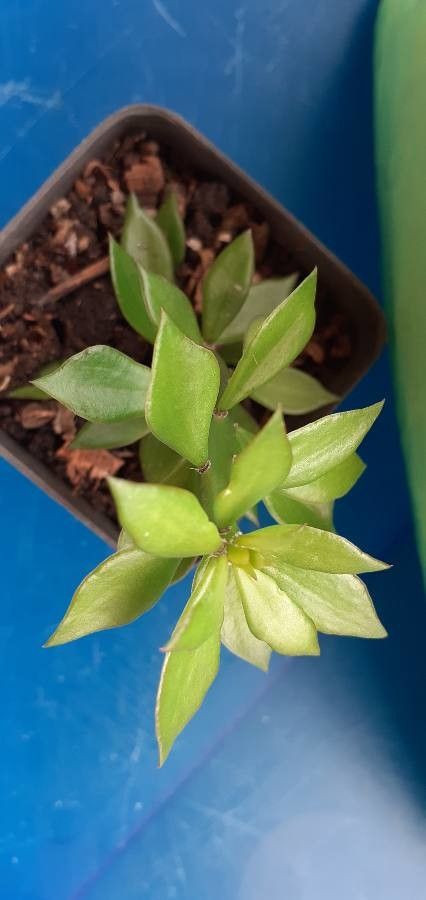
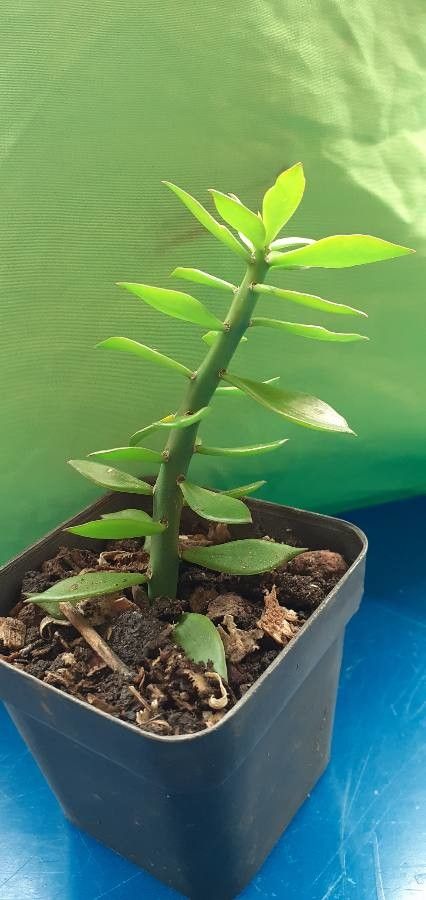
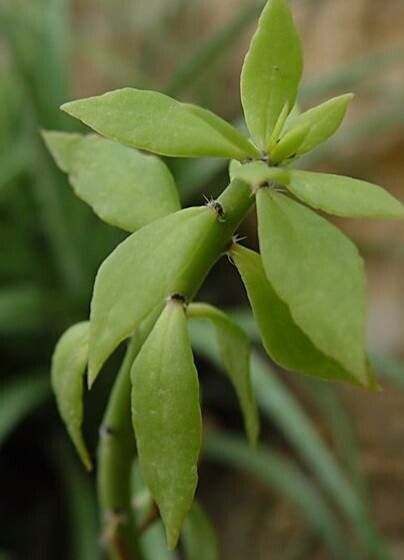
Pereskiopsis diguetii, synonym Pereskiopsis spathulata, is a species of cactus in the subfamily Opuntioideae.
Pereskiopsis diguetii has strong disease resistance and typically stays healthy under normal care. It can be prone to mealybugs, which may cause some damage but are usually not a serious problem. In terms of care, Pereskiopsis diguetii is drought-tolerant and does not need frequent watering. It can endure long periods without water and requires little fertilizer. However, it is very susceptible to root rot if kept in poor light and overwatered. Overall, Pereskiopsis diguetii is well suited to people who want a low-maintenance plant, though its basic needs should still be met. It is particularly appropriate for those who are away for long periods and might forget to water regularly.
How to keep Pereskiopsis Diguetii.
Light
Pereskiopsis diguetii, native to dry regions, grows best in full sun because its natural habitat has intense sunlight and little shade. It can also tolerate partial sun, providing some flexibility in its growth.
Water
Pereskiopsis diguetii is native to arid environments and requires minimal watering, ideally about once a week. Its impressive drought tolerance makes it well-suited for dry landscapes. With its succulent properties, this plant efficiently stores water, allowing it to thrive in rocky terrains and demonstrate resilience against unpredictable rainfall patterns.
Temperature
Pereskiopsis diguetii does best in warm conditions and needs elevated temperatures during the growing season to support its growth and metabolic activity. It prefers plenty of sunlight, suitable moisture levels, and good air circulation. However, it is vulnerable to harm from very low temperatures and from overwatering. Maintaining balance is important, and extremely high temperatures or excessively dry conditions should also be avoided.
Fertilizer
Pereskiopsis diguetii needs light fertilizing once or twice a year during the growing season. Do not fertilize in winter or in summer when it is dormant. Cut back on fertilizer for plants that have been repotted and wait a couple of months after repotting before applying fertilizer. Fertilizing helps maintain healthy growth and promotes blooms.
Pruning
To improve the shape of Pereskiopsis diguetii and promote growth, prune the plant in early spring. This helps to remove dead branches and makes the plant denser. Trim back overgrown stems and thin out crowded areas to improve air circulation. Regular pruning not only enhances the plant's appearance but also contributes to its health and vigor, helping to prevent pests and diseases.
Botanical profile.
- Plant Type
- Shrub, Succulent
- Life Cycle
- Perennial
- Genus
- Pereskiopsis
- Family
- Cactaceae
- Hardiness Zone
- 9-11
- Mature Height
- 0.91 m to 2.13 m
- Mature Spread
- 49 cm to 91 cm
- Leaf Color
- Green
- Leaf Type
- Evergreen
- Flower Size
- 3.05 cm to 5.08 cm
- Bloom Time
- Summer, Early fall, Mid fall
- Planting Time
- Spring, Summer, Autumn
- Harvest Time
- Late summer, Fall, Early winter
- Native Area
- Mexico
Other names.
Reader questions.
What is Pereskiopsis diguetii?
Pereskiopsis diguetii is a plant species recognized by its botanic name 'Pereskiopsis diguetii'. There is no additional information provided on the essentials, symptoms, or other significant details about the plant.