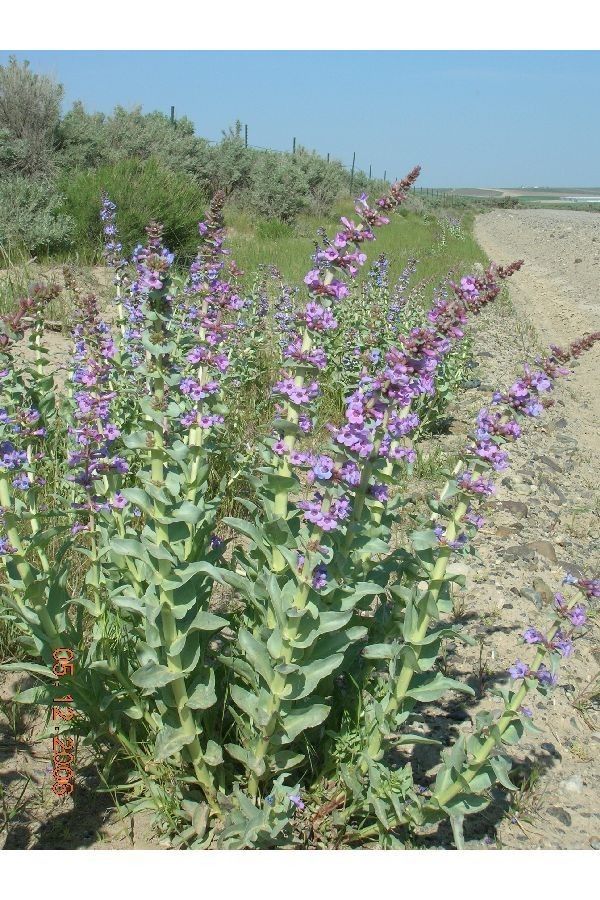
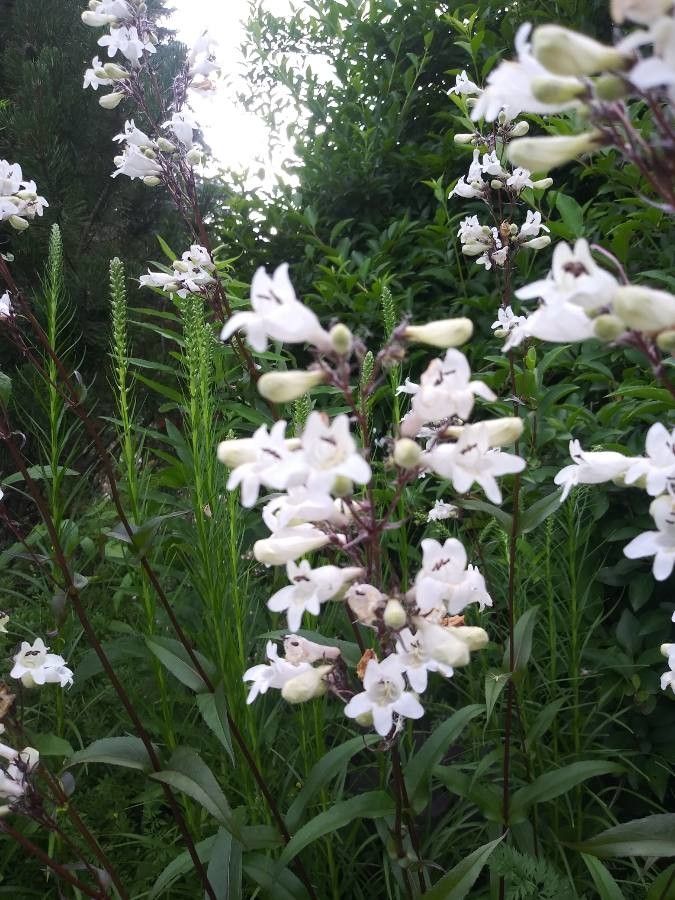
Penstemon venustus is a species of penstemon known by the common names Venus penstemon and alpine penstemon. It is native to the northwestern United States, where it grows in many types of open habitat. It is a spreading shrub growing erect to a maximum height near 80 centimeters. The thick, stiff leaves are lance-shaped, serrated, and up to 12 centimeters in length. The showy inflorescence bears many tubular lavender flowers, the largest nearly 4 centimeters long. The mouth of the flower and the staminode are covered in long, white hairs. This penstemon is cultivated for use in wilderness landscaping in its native habitat.
Venus penstemon is fairly disease-resistant and usually not prone to illness. However, it can be affected by pests and diseases present in its surroundings. These infections are generally mild. Regarding care, this plant requires moderate maintenance. It should be pruned regularly to maintain a tidy appearance and healthy growth. Fertilizing can also help encourage flowering. Venus penstemon is suitable for anyone with outdoor space, such as a garden or patio, and does not need extensive care experience. It may need more attention when grown indoors.
How to keep Penstemon Venustus.
Light
Venus penstemon does best when it gets most of the daylight, though it can tolerate moderate light levels. Native to areas with plentiful all-day sunshine, the plant depends on that exposure for healthy growth. Too little light can cause stunted growth, while too much can produce leaf discoloration.
Water
Venus penstemon, a plant native to arid regions, thrives with minimal moisture due to its strong drought tolerance. It prefers dry conditions and requires moderate watering on a weekly basis. In xeric landscapes, where water is scarce, venus penstemon benefits from infrequent but deep irrigation. This practice encourages robust growth and enhances its resilience during dry spells.
Temperature
Venus penstemon originates from temperate habitats and prefers temperatures between 41 and 89.6 °F (5 to 32 ℃). It performs best in moderate conditions, tolerating cold but not extreme heat. Monitor seasonal shifts and adjust the temperature accordingly.
Fertilizer
The best time to fertilize a Venus penstemon is in early spring, as it comes out of dormancy and starts active growth. Fertilizing supplies essential nutrients needed for healthy development. Although Venus penstemon has relatively low fertilizer requirements, applying fertilizer once a year can improve its survival and encourage better, longer-lasting flowers.
Pruning
To optimize the growth of Venus Penstemon, start by pruning in early spring. Remove any dead stems to encourage new shoots and improve airflow. For prolonged blooming, deadhead the spent flowers. Once flowering has finished, prune back the plant by one-third to maintain its shape and health. This will enhance its overall appearance and vigor.
Pot & Repot
To promote healthy growth and prevent root rot, make sure to provide Venus penstemon with excellent drainage when planting it in pots.
Botanical profile.
- Plant Type
- Herb, Shrub
- Life Cycle
- Perennial
- Genus
- Penstemon
- Family
- Plantaginaceae
- Hardiness Zone
- 4-8
- Mature Height
- 76 cm
- Mature Spread
- 30 cm to 61 cm
- Leaf Color
- Dark Green
- Leaf Type
- Evergreen
- Flower Color
- Purple, Lavender
- Flower Size
- 2.54 cm
- Bloom Time
- Early summer, Mid summer
- Planting Time
- Spring, Summer
- Harvest Time
- Late summer, Early fall
Other names.
Reader questions.
What are the sunlight requirements for Venus penstemon?
Venus penstemon requires a significant amount of sunlight to thrive, with ideal conditions involving more than 6 hours of sunlight for full sun exposure and about 3-6 hours for partial sun. It is vital to observe the movement of sunlight through your garden to find locations that offer an optimal balance of light and shade. This observation ensures the plants enjoy an environment similar to their native habitat, which is crucial for their health and growth. Inadequate sunlight may result in stunted growth or leaf discoloration, indicating the importance of proper sunlight exposure for the Venus penstemon.
What is the native habitat and ideal temperature range for Venus penstemon?
Venus penstemon, botanically known as Penstemon venustus, is native to temperate habitats. It prefers temperatures ranging from 41 to 89.6 °F (5 to 32 °C), thriving best under moderate conditions. This plant has a strong resistance to cold and can usually tolerate cold temperatures without needing special frost protection measures. However, it does not tolerate extreme heat well. It's important to monitor seasonal changes and adjust the surrounding temperature of the plant accordingly.
How can I use artificial lighting for indoor Venus penstemon plants?
When natural sunlight is insufficient for your indoor Venus penstemon plants, particularly during winter or in less sunny spaces, artificial lighting becomes essential for their growth. LED lights are recommended for their ability to provide specific wavelengths needed by the plants. The required intensity of artificial light varies by plant type: full sun plants need 30-50W/sq ft, partial sun plants require 20-30W/sq ft, and full shade plants need 10-20W/sq ft. The ideal placement for artificial lights is 12-36 inches above the plant, simulating natural sunlight. Additionally, to mimic the natural cycle, most plants benefit from 8-12 hours of light per day. This approach helps in promoting healthier and faster plant growth indoors.
What are the cold protection measures for Venus penstemon during extreme winter conditions?
Although Venus penstemon is resistant to cold and does not usually require special frost protection during winter, if temperatures are expected to plunge below -30°C, it's important to take measures to protect the plant from the cold. This can include covering the plant with materials such as soil or straw to insulate it. Additionally, before the first freeze of autumn, it is advised to water the plant abundantly. A moist soil entering a frozen state can help prevent drought and water scarcity for the plant during the winter and early spring months.
What are the symptoms of inadequate light in Venus penstemon?
Inadequate lighting can lead to several issues in Venus penstemon, including smaller new leaves, leggy or sparse growth, faster leaf drop, slower or no growth, and lighter-colored new leaves, indicating a lack of chlorophyll and essential nutrients. Other serious conditions like chlorosis, where leaves turn yellow due to chlorophyll breakdown, sunscald, leaf curling, wilting, and leaf scorching can also occur from improper sunlight exposure. These symptoms highlight the critical nature of providing sufficient sunlight or artificial lighting to maintain the plant's health and growth.
How does low temperature affect Venus penstemon and what are the solutions?
Venus penstemon is cold-tolerant and thrives best in temperatures above 5°C. However, during winter, it should be kept above -25°C to prevent damage. If temperatures fall below -30°C, while there may not be any noticeable changes immediately, there could be a decrease in sprouting or no sprouting at all come springtime. The solution in spring for any parts of the plant that have failed to sprout is to remove those parts to encourage new growth.
What solutions are available for Venus penstemon experiencing light deficiency?
To counter light deficiency in Venus penstemon, it's recommended to gradually move plants to sunnier spots, aiming for at least 6 hours of direct sunlight daily. For indoor plants, utilizing a south-facing window or artificial grow lights for at least 8 hours a day can markedly improve light exposure. Outdoors, it's crucial to adapt your plants gradually to prevent sunburn. Sometimes, reducing obstructions like trees or transplanting to sunnier locations can also enhance sunlight access. Although plants affected by insufficient light may not fully recover, new growth will be healthy with improved light conditions.
How does high temperature affect Venus penstemon and what are the solutions?
During the summer, Venus penstemon should be kept below 32°C. Temperatures exceeding 35°C can lead to the leaves becoming lighter in color, prone to curling, susceptible to sunburn, and in severe cases, the entire plant may wilt and dry up. In situations where the plant has become sunburned or dried up, trimming away these affected parts is advised. To protect against future high temperature stress, moving the plant to a location with midday and afternoon shade or employing a shade cloth can be beneficial. Additionally, watering the plant in the morning and evening will help keep the soil moist and reduce stress on the plant.