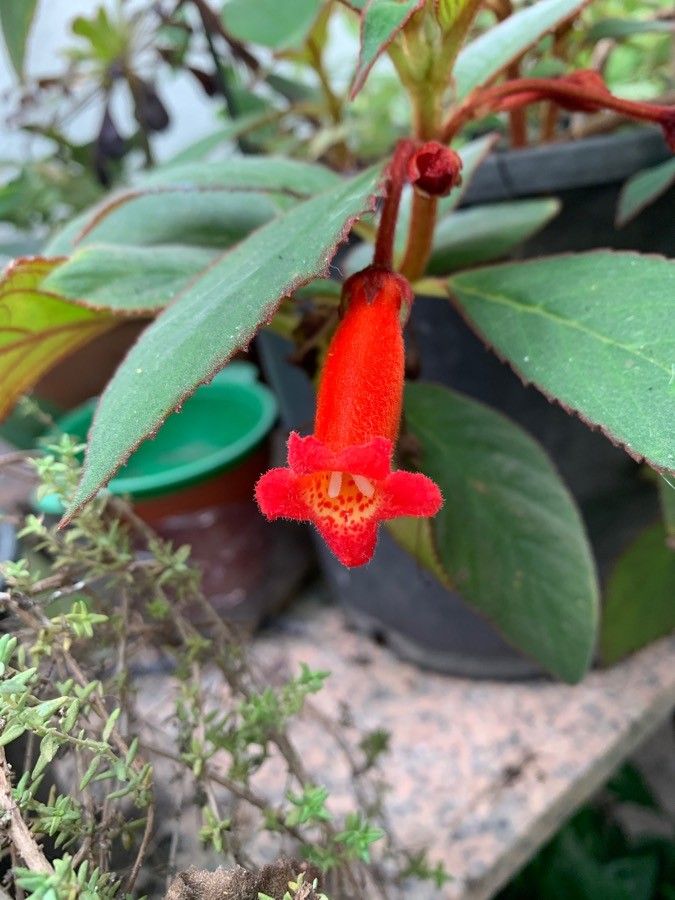
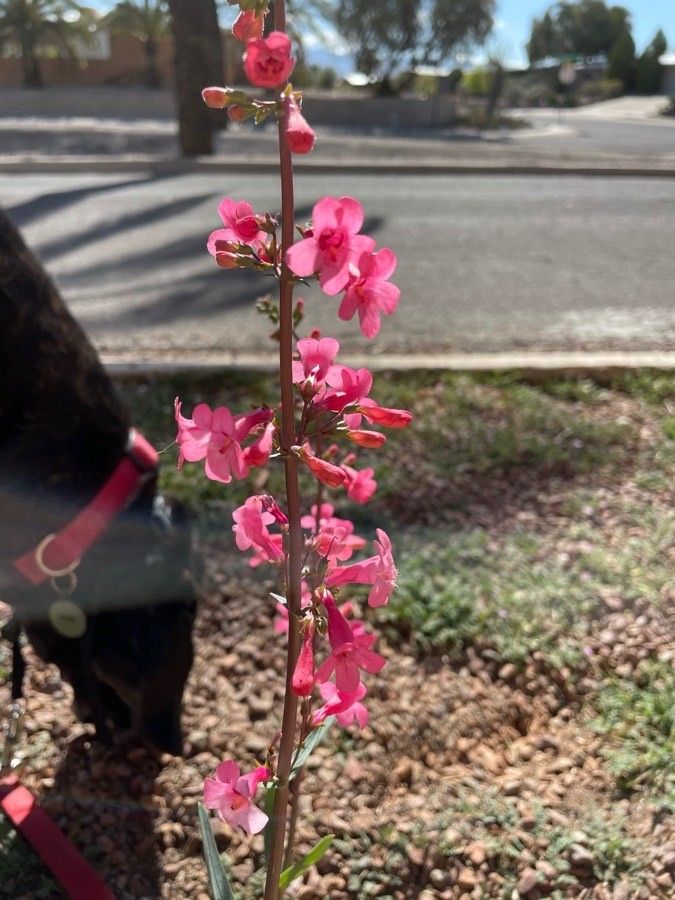
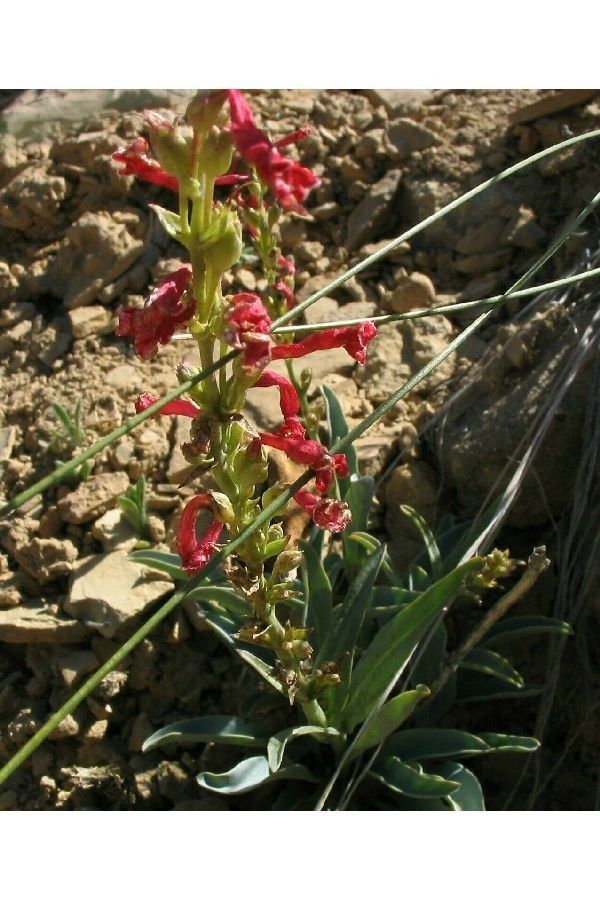
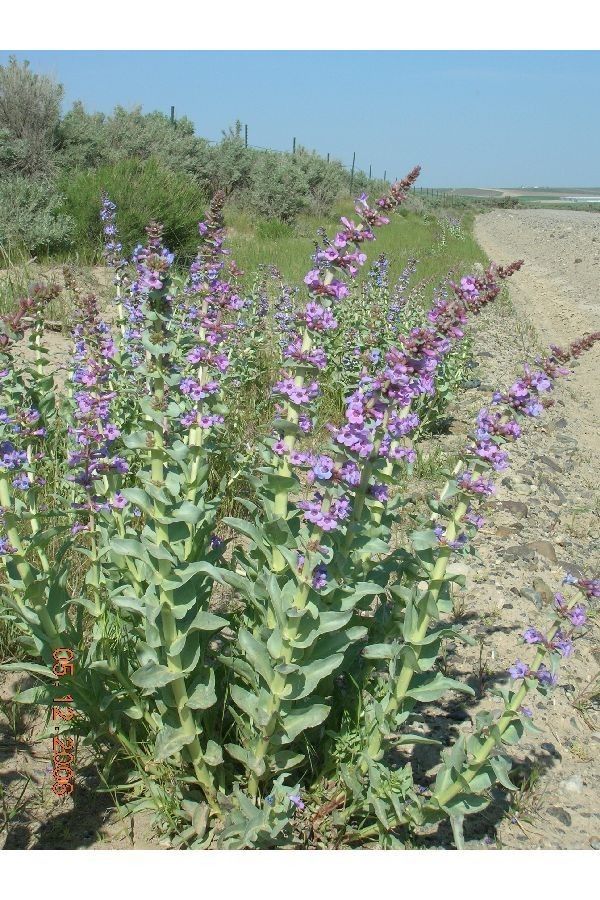
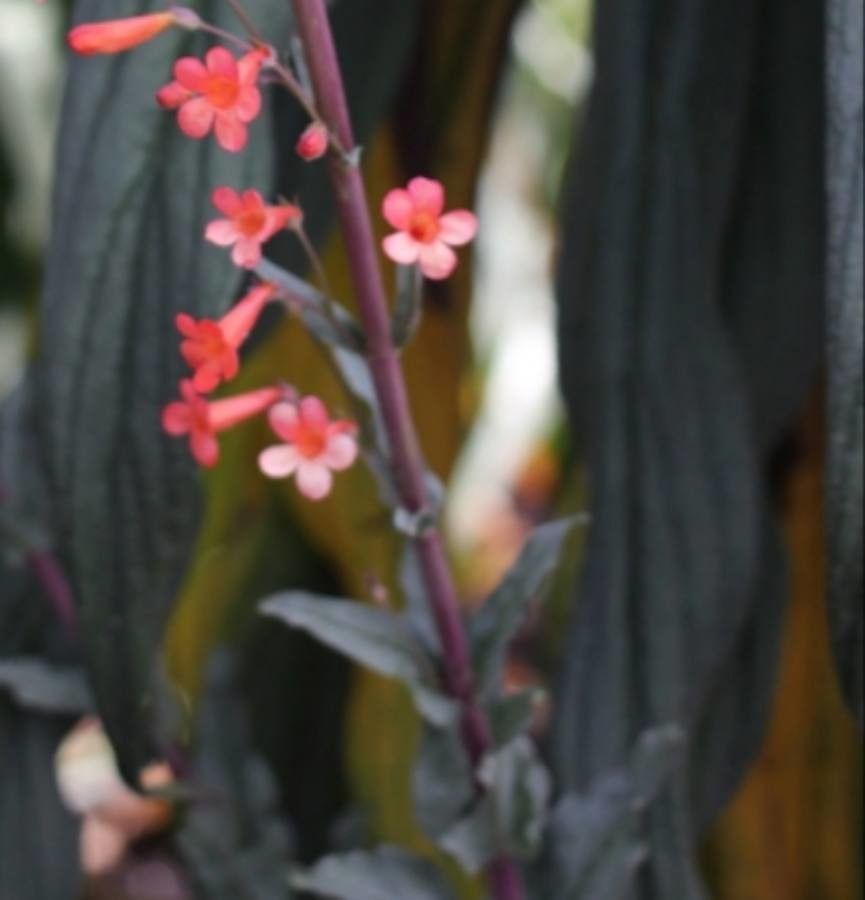
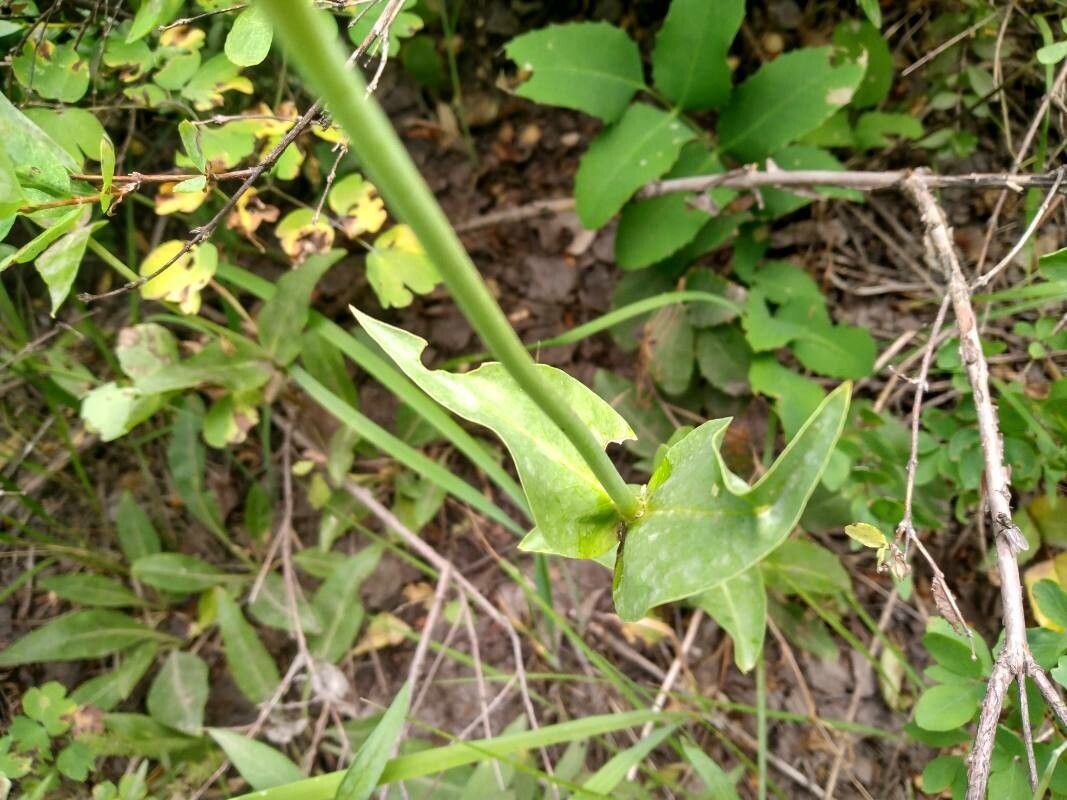
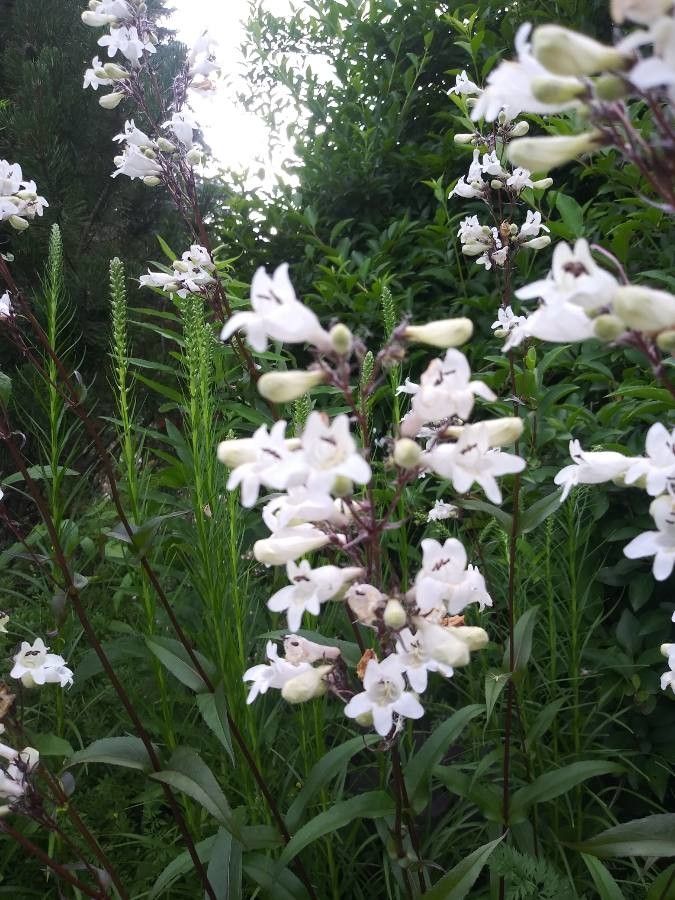
Penstemon utahensis is a species of penstemon known by the common names Utah beardtongue and Utah penstemon. It is native to the southwestern United States, where it grows in scrub, woodland, and canyons. It is a perennial herb growing erect to a maximum height near half a meter. The thick leaves are located around the base of the plant and in opposite pairs along the stem. The upper leaves are lance-shaped and often folded lengthwise, measuring up to 5.5 centimeters long. The showy inflorescence bears many bright red-pink flowers up to 2.5 centimeters in length. They are cylindrical, tubular, or funnel-shaped with wide, lobed mouths, and mostly hairless to slightly hairy and glandular.
Utah penstemon is fairly resistant to disease and typically does not suffer many problems. However, it can be affected by pests and diseases present in its surroundings. Such infections are usually mild. In terms of upkeep, this plant needs moderate maintenance. Regular pruning is required to keep a neat appearance and encourage healthy growth. Fertilizing can also aid in promoting blooms. Utah penstemon is appropriate for anyone with outdoor space, like a garden or patio, and does not demand extensive gardening experience. It may need extra care if grown indoors.
How to keep Penstemon Utahensis.
Light
Utah penstemon thrives when exposed to full sun all day, though it can tolerate moderate sunlight. Its natural habitat is areas that receive substantial light. Too much or too little sun can hinder its healthy growth and vibrancy.
Water
Utah penstemon is well-suited for arid conditions due to its excellent drought tolerance. By watering it weekly, you can replicate its natural sparse rainfall environment. This plant thrives in full sun, making it ideal for outdoor cultivation and xeriscaping, thanks to its resilience to water scarcity.
Temperature
Utah penstemon is native to habitats where temperatures typically range from 41 to 95 °F (5 to 35 ℃). It generally thrives best within that range. In other seasons, the plant’s surroundings may need to be adjusted to meet its temperature preferences.
Fertilizer
The best time to fertilize a Utah penstemon is in early spring, when it is coming out of dormancy and starting active growth. Fertilizing supplies essential nutrients for healthy development. Although Utah penstemon needs relatively little fertilizer, annual feeding can improve its survival and encourage better, longer-lasting blooms.
Pruning
Utah penstemon is known for its vibrant tubular flowers and its ability to tolerate drought. To encourage growth and blooming, prune it from early to late spring. Be sure to remove any dead stems, but avoid heavy pruning, as the plant blooms on new growth. Thinning the plant helps improve air circulation and reduces the risk of disease.
Pot & Repot
Utah penstemon needs excellent drainage in pots to grow well, preventing waterlogging and promoting healthy root development.
Botanical profile.
- Plant Type
- Herb
- Life Cycle
- Perennial
- Genus
- Penstemon
- Family
- Plantaginaceae
- Hardiness Zone
- 4-9
- Mature Height
- 30 cm to 61 cm
- Mature Spread
- 15 cm to 30 cm
- Leaf Color
- Green
- Leaf Type
- Evergreen
- Flower Color
- Red
- Flower Size
- 2.54 cm
- Bloom Time
- Mid spring, Late spring
- Planting Time
- Spring, Summer
- Harvest Time
- Early summer, Mid summer
Other names.
Reader questions.
How should I water my Utah penstemon plant to keep it healthy?
When caring for the Utah penstemon, it's important to use filtered water at room temperature. Tap water may contain harmful particles, so filtered water is preferred. Since the plant is accustomed to a warm environment, it's best to avoid using cold water, which can shock the plant. Instead of watering from above, it's better to apply filtered room temperature water directly to the soil until it is completely soaked. This helps to properly moisten the roots and allows them to spread and collect the necessary nutrients for the plant.
Why should I add fertilizer to my Utah penstemon?
The leaves of the Utah penstemon are an important part of its structure. Fertilization is vital in making sure these leaves look great and function properly. Proper fertilization will help your Utah penstemon maintain consistent color and a healthy texture. It also benefits the roots of the plant, both existing roots and future root growth. By fertilizing, you not only keep your plant healthy now but also improve its ability to absorb nutrients from the soil in the long run.
What are the sunlight requirements for Utah penstemon?
Utah penstemon thrives best in environments that offer full sun exposure, which means they need to be in direct sunlight for more than 6 hours a day. However, they can also grow in partial sun conditions, with about 3-6 hours of sunlight. This plant's natural habitats are areas bathed in significant sunlight, making maximum sun exposure ideal for its growth and vibrancy. It's essential to monitor the sunlight movement through your garden carefully to ensure areas chosen for your Utah penstemon provide a balance of light and shade, conducive to the plant's health and happiness.
What is the preferred temperature range for Utah penstemon?
Utah penstemon, a plant native to certain environments, thrives best in temperatures ranging from 41 to 95 °F (5 to 35 °C). It has a strong resistance to cold and generally does not require special frost protection measures during winter. However, if temperatures are expected to fall below -30°C, it's important to take steps to protect the plant from the cold by covering it with materials like soil or straw. Additionally, watering the plant abundantly before the first freeze in autumn is recommended to keep the soil moist throughout winter and early spring, helping to prevent drought and water scarcity for the plant.
What do I need to do if I give my Utah penstemon too much water or too little water?
Overwatering and underwatering can harm your Utah penstemon. Overwatering is more common and causes wilting, yellowing leaves, and can lead to diseases like root rot. Underwatering is less common but can result in dry, brittle, brown leaves. It's important to recognize the signs of overwatering early. Reduce watering immediately if you notice signs and consider improving soil drainage. If your Utah penstemon shows signs of underwatering, simply water more regularly until the signs improve.
When should I fertilize my Utah penstemon to get the best results?
Growing your Utah penstemon outdoors each year will result in new growth appearing in early spring. This signifies that it's the appropriate time to start fertilizing for the year. Usually, a single application of fertilizer in the spring is sufficient for a healthy Utah penstemon. However, if you want to promote maximum growth, you can feed your Utah penstemon multiple times during the spring and early summer. If you opt for this approach, you can fertilize your Utah penstemon approximately once every month to a month and a half.
How does inadequate sunlight affect Utah penstemon?
Inadequate sunlight can lead to several symptoms in Utah penstemon, indicating that the plant is not receiving the light it needs to thrive. These symptoms include smaller new leaves, leggy or sparse growth, faster leaf drop, slower or no new growth, and lighter-colored or yellowing leaves (chlorosis). Excessive sunlight can also harm, causing symptoms like sunscald, leaf curling, wilting, and leaf scorching. Identifying these signs early can help in adjusting the plant's exposure to sunlight, either by moving it to a more suitable location or by using artificial lighting solutions.
How does Utah penstemon react to low temperatures, and what are the recommended care steps?
Utah penstemon is notably cold-tolerant, best thriving when temperatures are above 5°C. However, during winter, it's important to ensure the temperature remains above -25°C. If temperatures drop below -30°C, the plant may not show immediate changes, but there could be a decrease in sprouting or even a lack of sprouting come springtime. In case of such occurrences, it is recommended to remove any parts of the plant that have failed to sprout in the spring, as a solution to help promote new growth and maintain the plant's well-being.
How frequently do I need to water my Utah penstemon plant?
If your Utah penstemon is in a pot, the most precise way to determine if it needs water is to check the moisture level of the soil. Simply stick your finger into the soil and if the top two to three inches are dry, it's time to water. If you're growing your Utah penstemon outdoors, you can use the same method to test the soil. Once again, if the top few inches are dry, it's time to add water. Typically, during the spring and early fall, watering once a week is sufficient. However, during extremely hot weather, you may need to water twice or more per week. It's worth noting that mature, well-established Utah penstemon plants have a remarkable ability to withstand drought.
When is it not a good idea to add fertilizer to my Utah penstemon plant?
During the late fall and winter, your Utah penstemon goes through a dormant phase and stops producing new growth. It is best to avoid fertilizing during this time. If you choose to fertilize during the spring and summer, gradually reduce the amount of fertilizer as summer approaches, as the growth rate of your Utah penstemon also slows down. It is not recommended to fertilize your Utah penstemon when the weather is unseasonably hot or when the soil is extremely dry, as it can cause stress and premature death.
What artificial lighting solutions can support Utah penstemon's growth?
When natural sunlight is insufficient, especially during the winter or in less sunny indoor locations, artificial lighting can offer a vital solution for supporting the growth of Utah penstemon. LED lights are recommended due to their efficiency and ability to provide specific light wavelengths needed by plants. For plants requiring full sun, 30-50W/sq ft of artificial light is needed; those needing partial sun should get 20-30W/sq ft, and full shade plants require 10-20W/sq ft. The light source should be placed 12-36 inches above the plant and turned on for 8-12 hours per day to mimic natural sunlight conditions effectively.
What should be done if Utah penstemon is exposed to high temperatures?
During the summer, it is crucial to ensure that the temperature around Utah penstemon does not exceed 35°C. Exposing the plant to temperatures above 38°C may cause the leaves to lighten in color, become prone to curling and susceptible to sunburn, and in severe instances, the entire plant may wilt and dry out. To counteract these effects, it is advisable to trim away any sunburned and dried-up parts of the plant. Moving the plant to a shadier location or using a shade cloth to protect it from midday and afternoon sun, along with watering it in the morning and evening, can help keep the soil moist and the plant healthy.