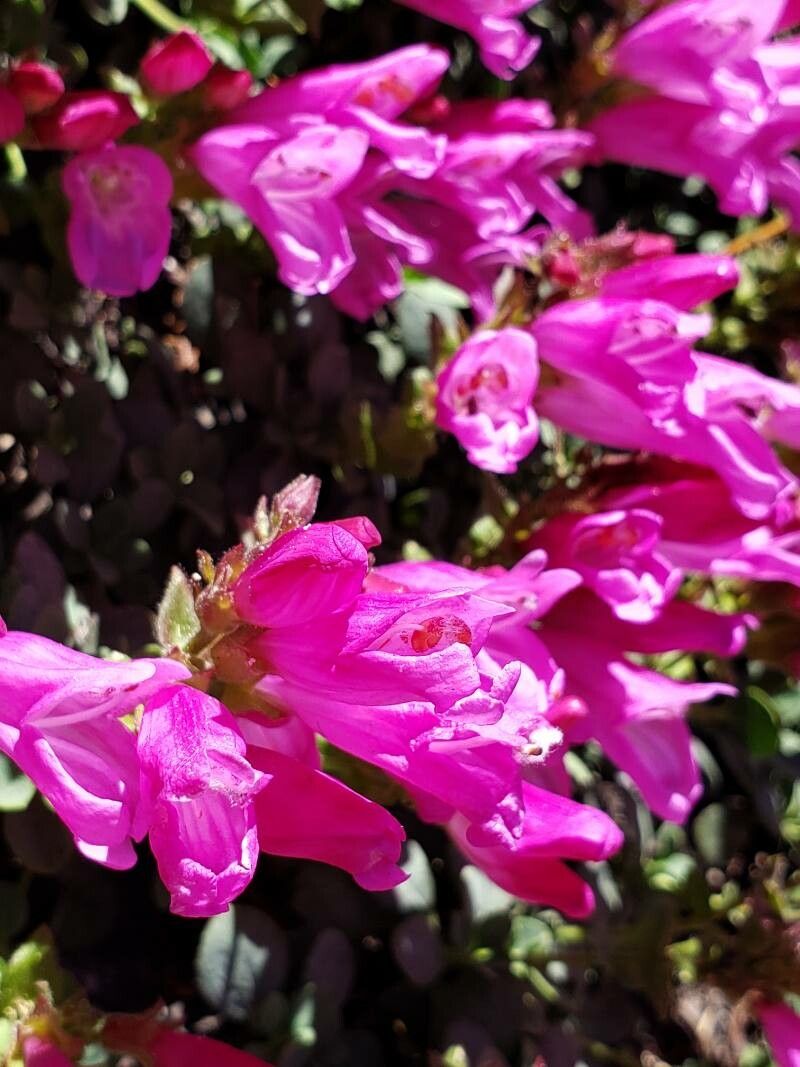
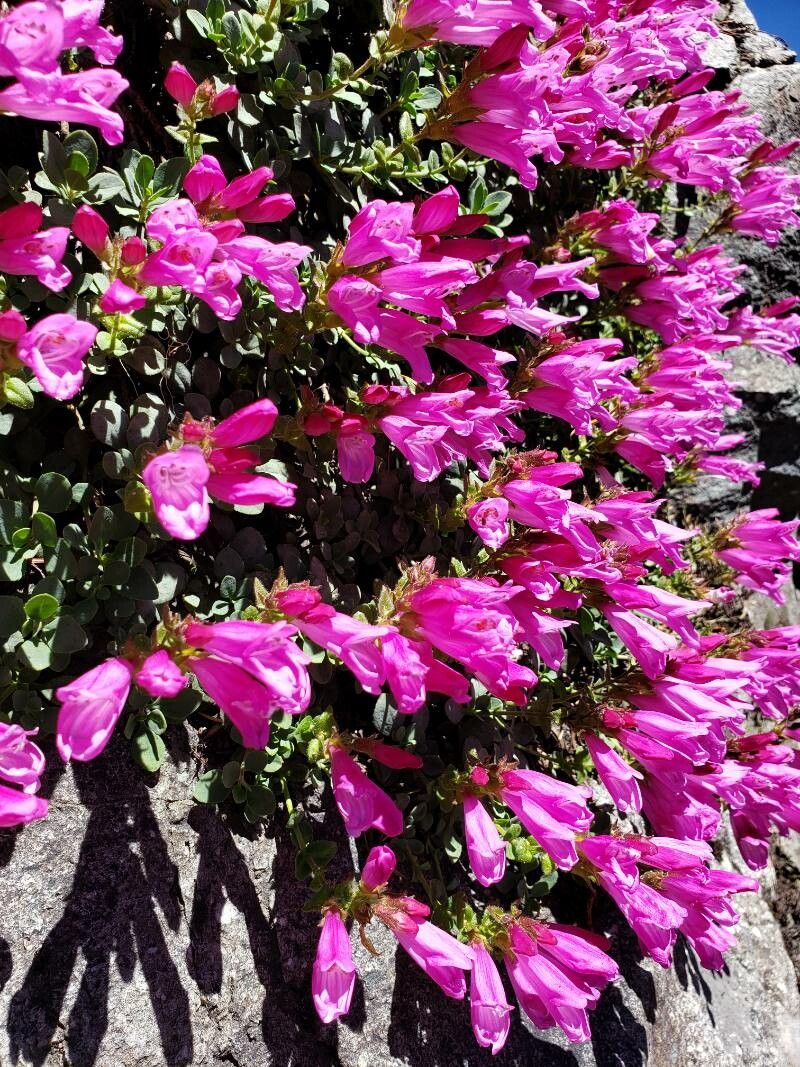
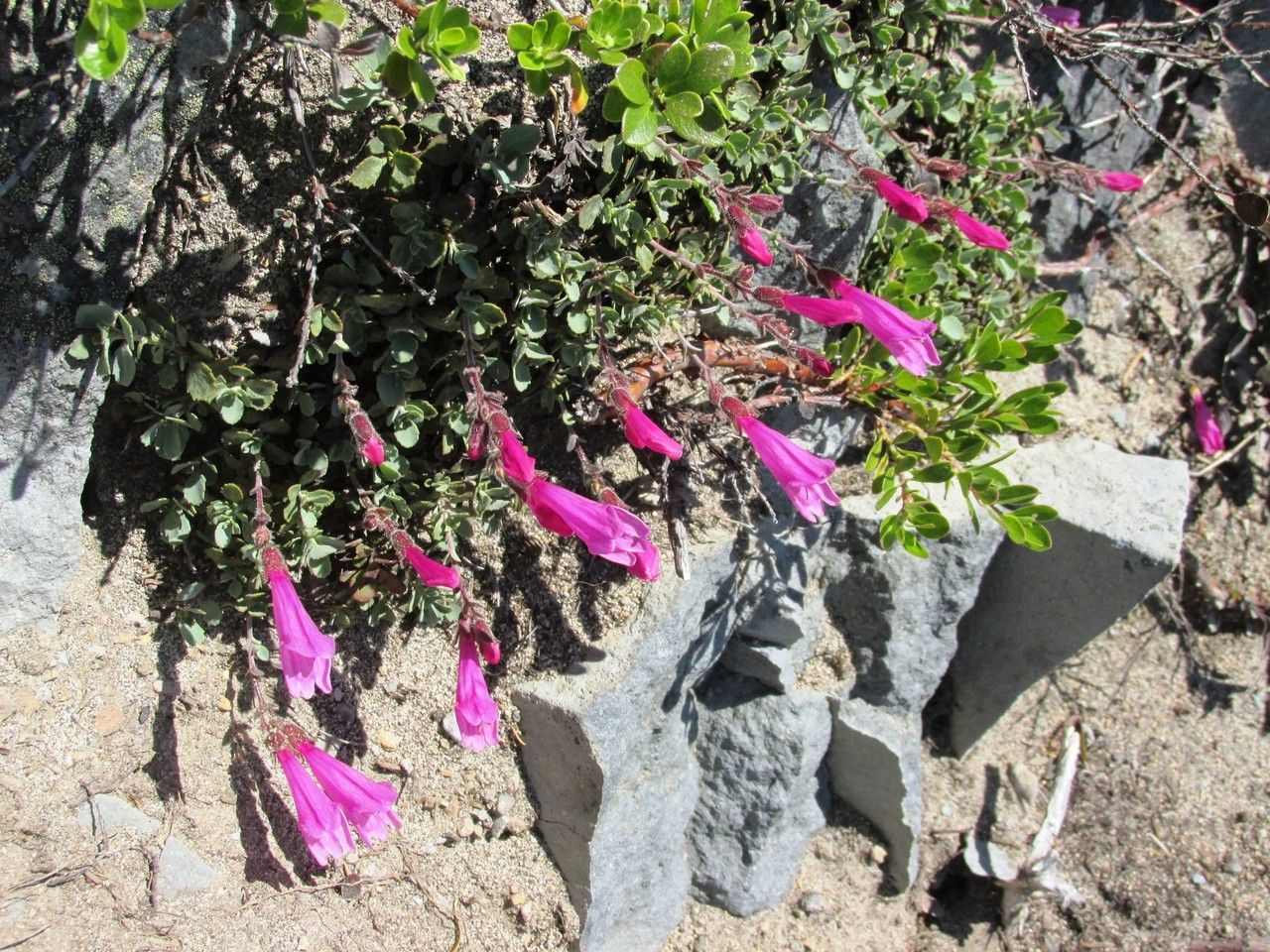
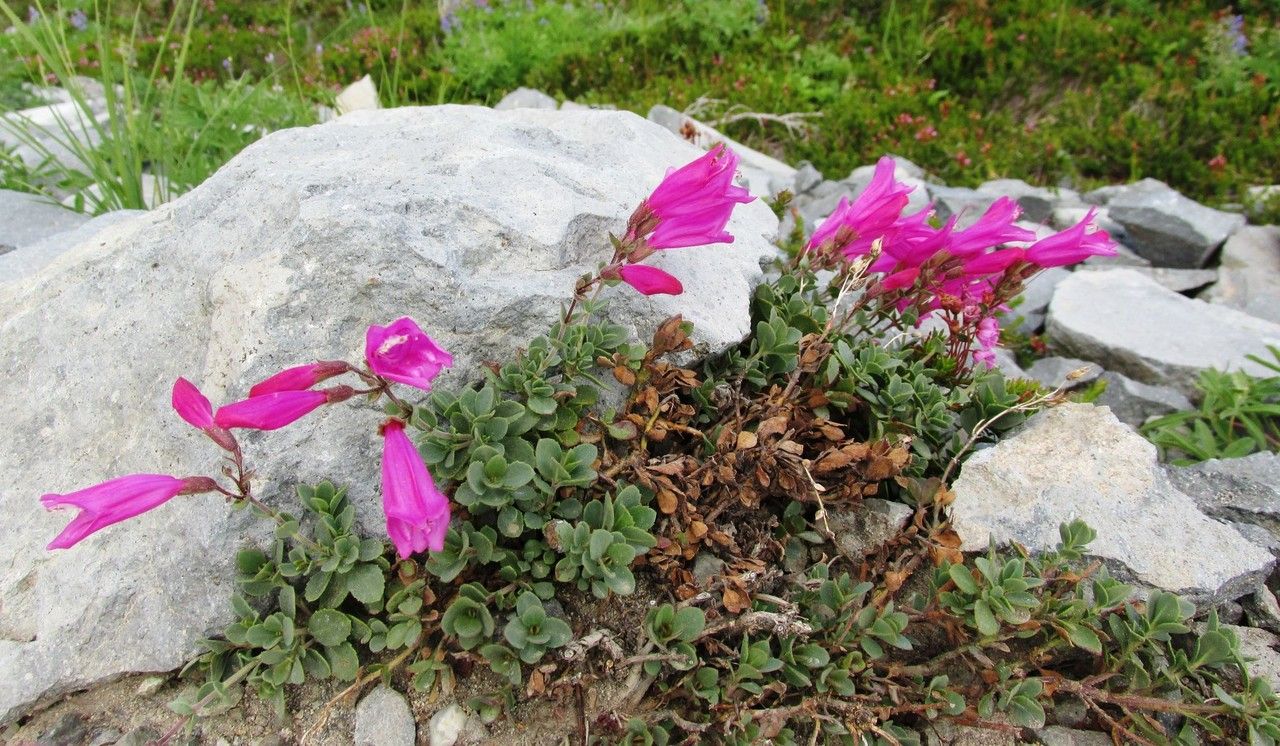
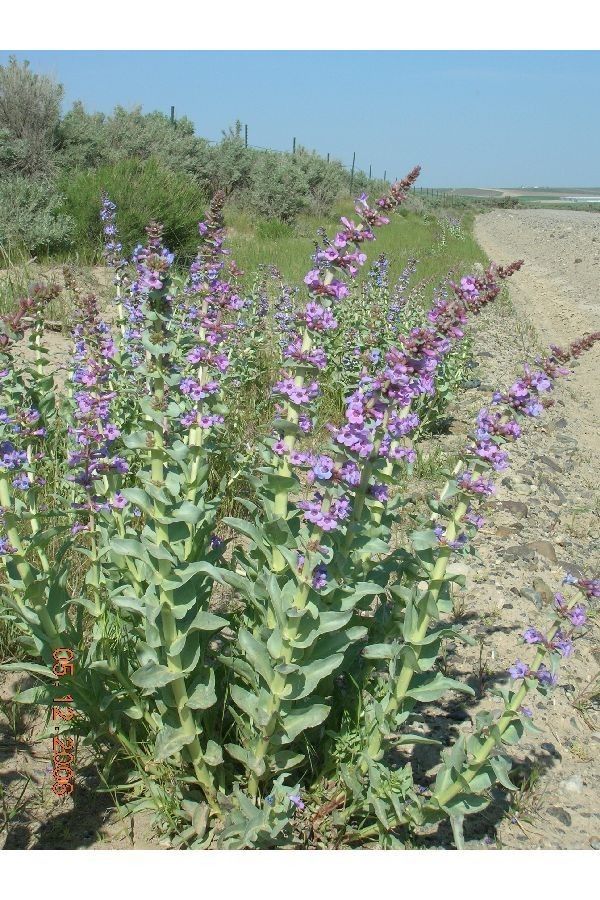
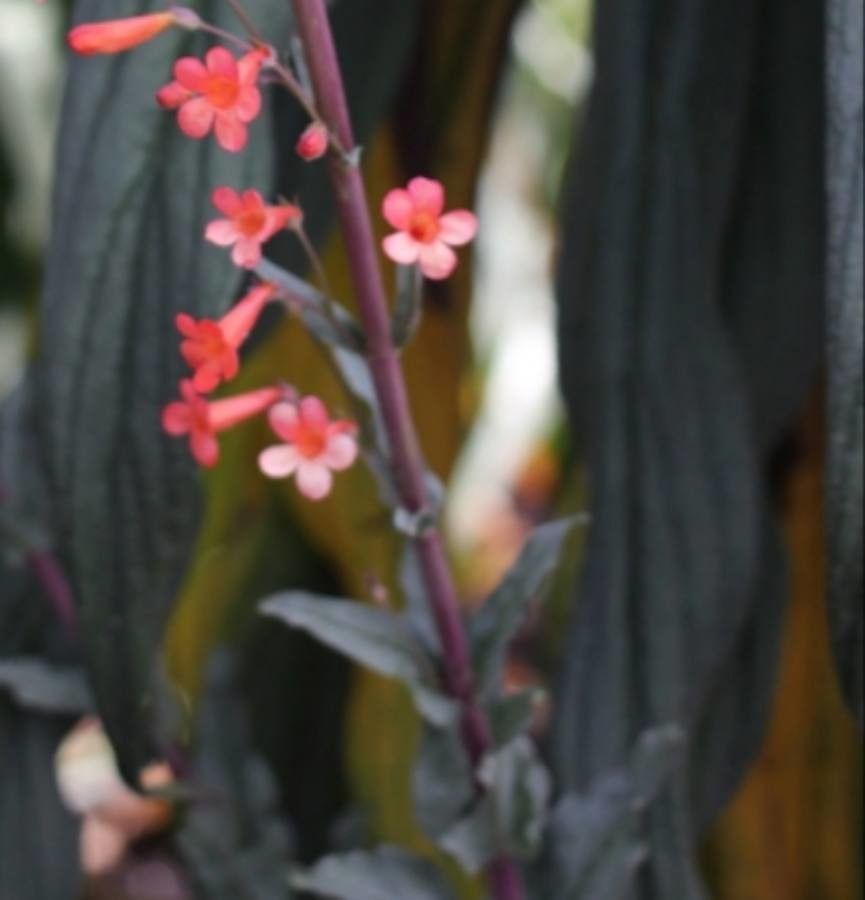
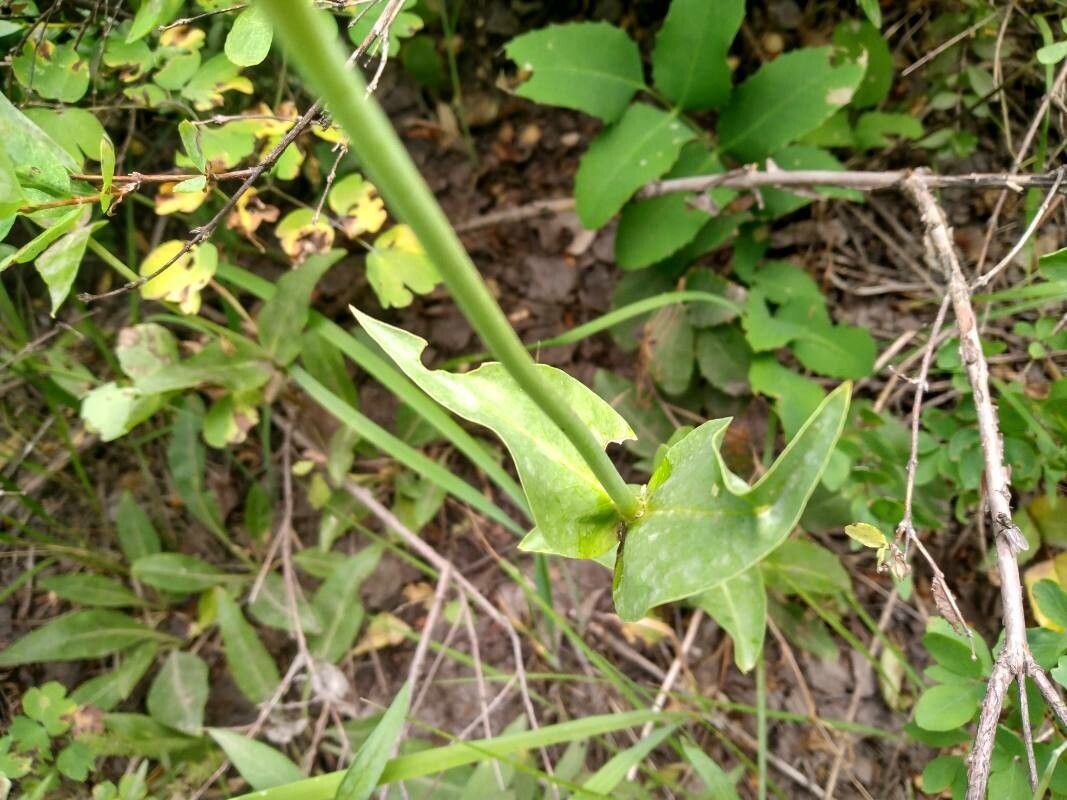
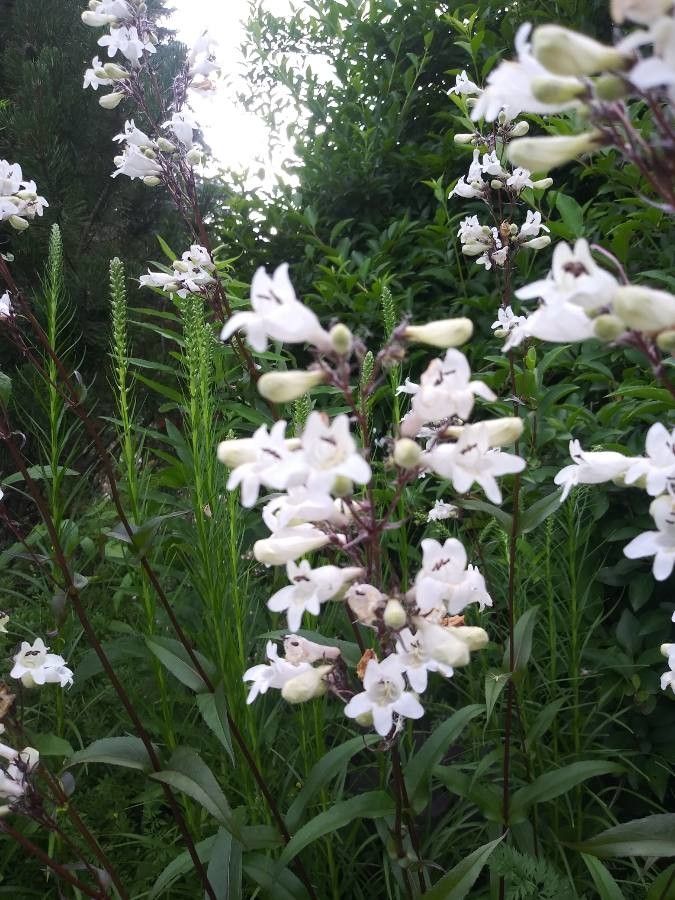
Penstemon rupicola, commonly known as rock penstemon, is a perennial herbaceous plant belonging to the family Plantaginaceae. Native to the western United States, it thrives in rocky areas and cliffs at elevations ranging from 4,000 to 10,000 feet.
Typically, the plant grows to a height of 1 to 2 feet and features narrow, green or grayish-green leaves. Its tubular flowers, which have five petals, vary in color from pinkish-purple to deep blue-violet with white throats. These vibrant blooms appear on tall spikes from late spring through early summer.
Penstemon rupicola is a hardy plant that requires well-drained soil and full sun exposure for optimal growth. It can be propagated through seeds or by dividing mature plants in the fall or early spring.
This species attracts pollinators, such as bees and hummingbirds, thanks to its brightly colored flowers that provide a rich source of nectar.
Overall, Penstemon rupicola is a beautiful addition to any garden due to its striking blooms and its ability to attract pollinators. It is also relatively easy to care for once established.
Cliff beardtongue has good disease resistance and is generally not prone to illnesses. However, it can be susceptible to pests and diseases present in its surroundings. These infections are usually not severe. For care, this plant requires a moderate level of maintenance. It should be pruned regularly to keep a good appearance and support healthy growth. Fertilization can also help promote flowering. Cliff beardtongue is suitable for anyone with an outdoor space, such as a garden or patio, and does not need a lot of plant-care experience. It may require more attention when grown indoors.
How to keep Penstemon Rupicola.
Light
Cliff beardtongue is a sun-loving, perennial herbaceous plant native to open habitats, commonly found in meadows and grasslands. It prefers full sun but can also tolerate partial sun.
Water
Cliff beardtongue is a hardy plant that flourishes in rocky, arid environments. It is drought-tolerant, requiring only weekly watering to replicate its natural habitat. When grown indoors, it is essential to plant it in well-draining soil to prevent root rot. As an evergreen, cliff beardtongue has consistent watering needs all year round.
Fertilizer
The best time to fertilize a Cliff beardtongue is in early spring, when it is coming out of dormancy and starting active growth. Fertilizing supplies essential nutrients for healthy development. Although Cliff beardtongue has fairly low fertilizer requirements, a once-a-year application can improve its survival and encourage better, longer-lasting blooms.
Pruning
Cliff beardtongue is known for its vibrant, tubular flowers and its ability to thrive in rocky terrains. To keep the plant healthy and encourage a bushier growth, lightly prune it in early spring. This involves removing spent blooms and any damaged stems, which will also promote better air circulation. Regular pruning throughout the growing season will enhance its flowering potential and overall vitality.
Pot & Repot
Cliff beardtongue needs excellent drainage in pots to grow well. This ensures good air circulation and prevents root rot. Regularly checking the soil's moisture levels is important for keeping the plant healthy.
Botanical profile.
- Plant Type
- Herb
- Life Cycle
- Perennial
- Genus
- Penstemon
- Family
- Plantaginaceae
- Hardiness Zone
- 4-8
- Mature Height
- 5 cm to 15 cm
- Mature Spread
- 46 cm
- Leaf Color
- Blue, Green, Gray, Silver
- Leaf Type
- Evergreen, Semi-evergreen
- Flower Color
- Pink
- Flower Size
- 2.03 cm to 3.05 cm
- Bloom Time
- Mid spring, Late spring, Early summer
- Planting Time
- Spring, Autumn
- Harvest Time
- Mid summer, Late summer, Early fall
Other names.
Reader questions.
What are the sunlight requirements for Cliff beardtongue?
Cliff beardtongue, or Penstemon rupicola, thrives in different sunlight conditions depending on your garden's specific needs. For those plants that require 'Full sun,' they will need above 6 hours of sunlight daily to flourish. Meanwhile, for Cliff beardtongue plants that do better in 'Partial sun,' about 3-6 hours of sunlight daily is ideal. It's important to observe how sunlight moves through your garden to choose spots that provide the perfect balance of light and shade. This careful observation ensures the happiness and health of your Cliff beardtongue plants by meeting their sunlight requirements.