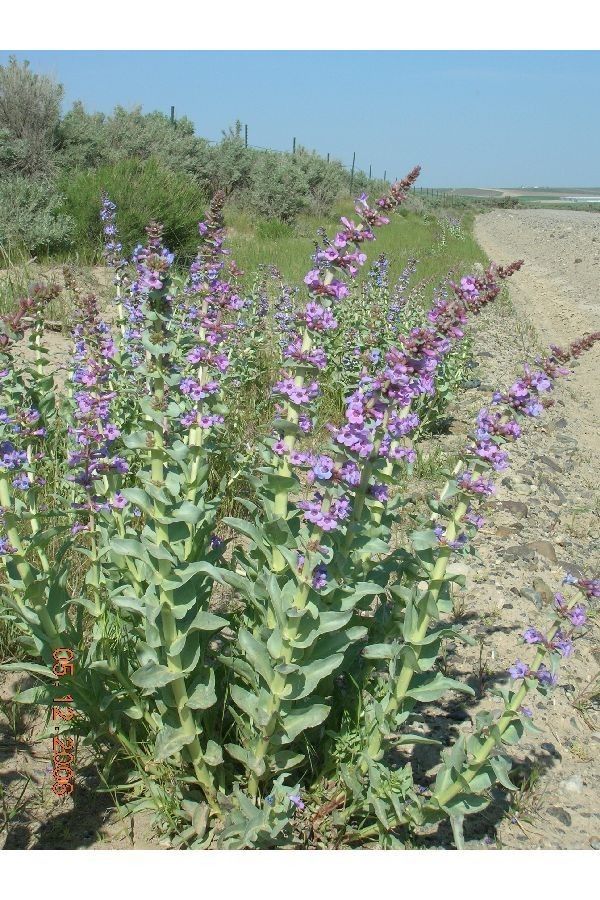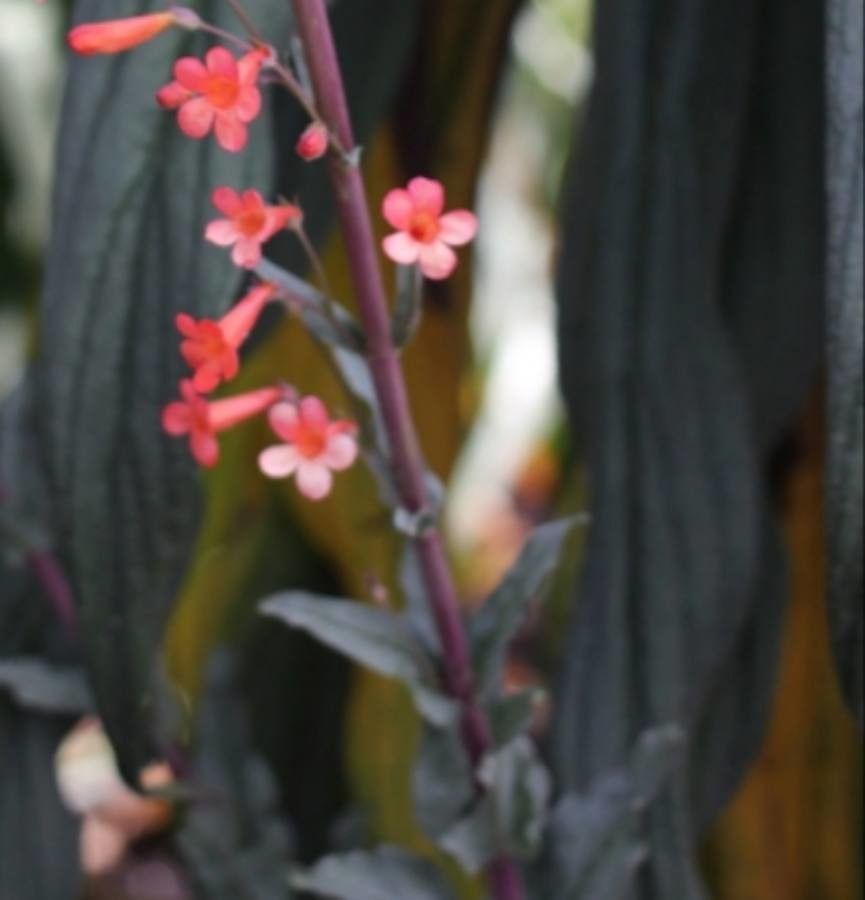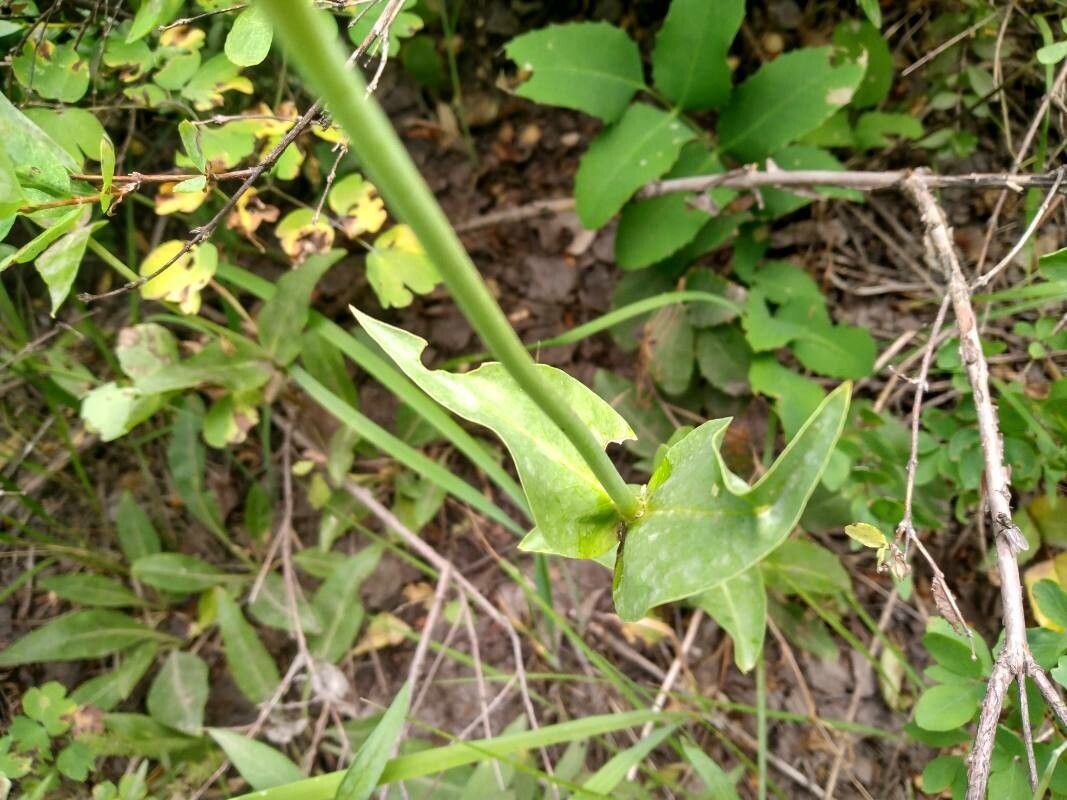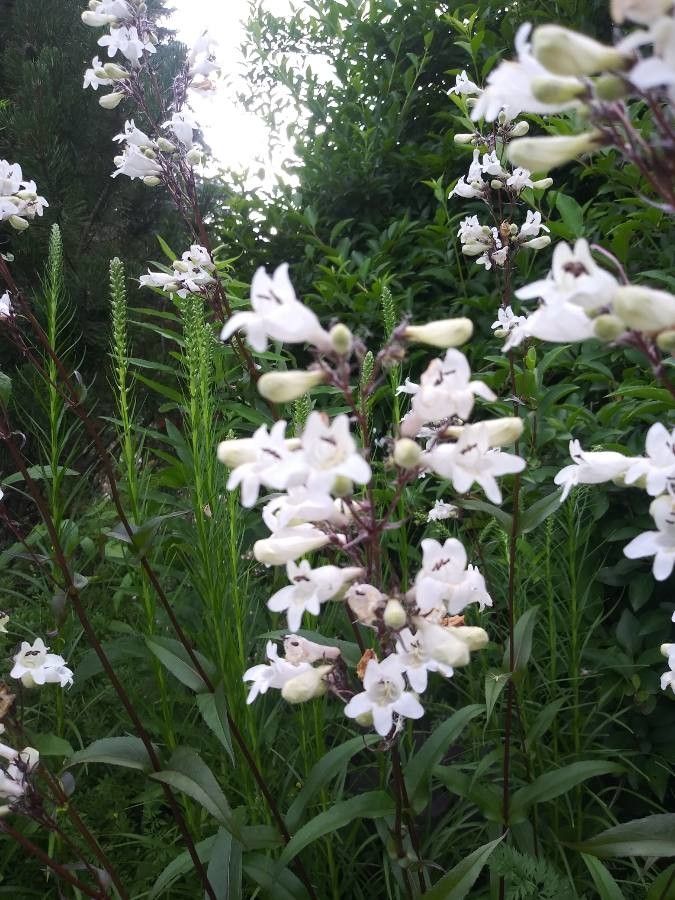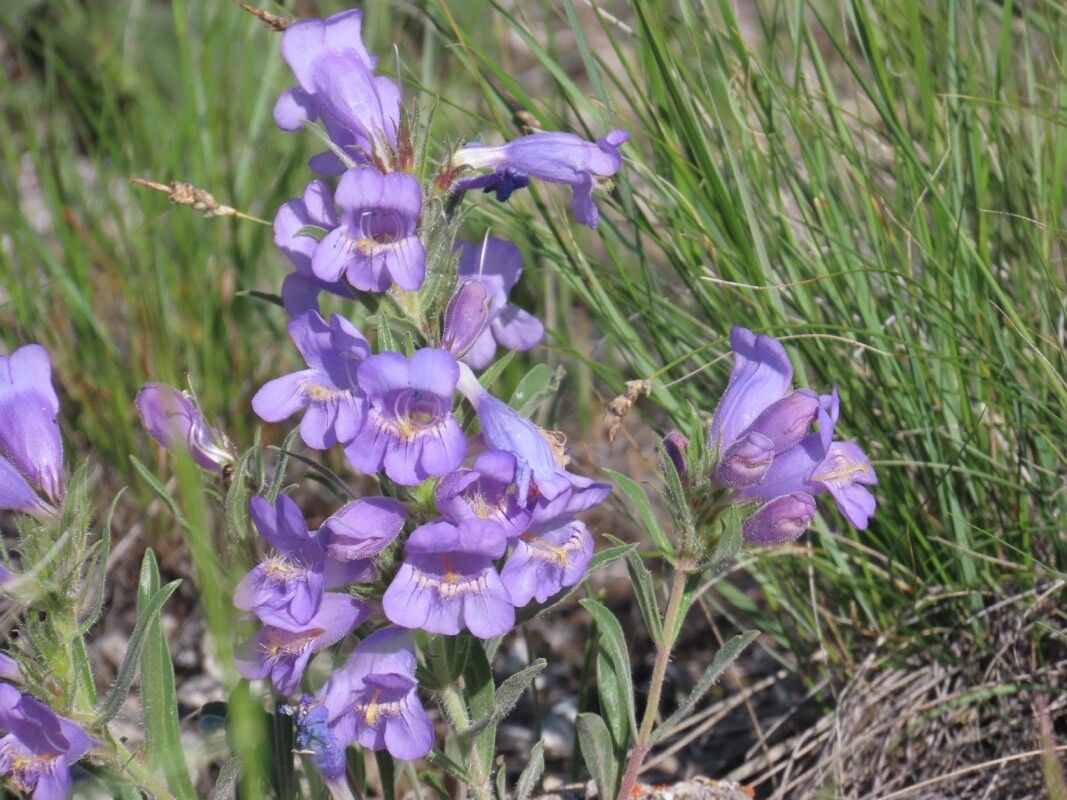
Penstemon eriantherus is a species of flowering plant in the plantain family known by the common names fuzzytongue penstemon and crested beardtongue. It is native to western North America, where it occurs in western Canada and the northwestern and north-central United States.This species is a perennial herb growing from a woody caudex and thick taproot. It branches into several stems that reach up to 40 centimeters tall. Much of the herbage is coated in gray hairs, and the inflorescence can be glandular. The oppositely arranged leaves are up to 13 centimeters long and are sometimes slightly toothed along the edges. The flower is borne in a calyx of narrow, pointed sepals. The corolla is up to 4 centimeters long with a mouth up to 1.4 centimeters wide. It is lavender to reddish or bluish purple. The lower lip and the staminode are heavily bearded with yellowish hairs.This plant grows on clay soils in dry, open habitat. In Washington it grows in plant communities dominated by antelope bitterbrush (Purshia tridentata) and Indian ricegrass (Oryzopsis hymenoides), purple sage (Salvia dorrii) and bluebunch wheatgrass (Pseudoroegneria spicata), and rabbitbrush (Ericameria nauseosa). It occurs on rocky soils in sagebrush habitat. Its ability to live in a relatively rough habitat may help it persist in disturbed areas, such as eroded trails.There are 5 varieties of this species: Penstemon eriantherus var. argillosus (endemic to Oregon) Penstemon eriantherus var. cleburnei - Cleburn's penstemon Penstemon eriantherus var. eriantherus Penstemon eriantherus var. redactus - longsac penstemon Penstemon eriantherus var. whitedii - Whited's penstemon (endemic to Washington)
Fuzzytongue penstemon is fairly disease-resistant and is generally not easily affected by illnesses. However, it can be vulnerable to pests and diseases present in its environment. Such infections are typically not serious. For care, this plant requires moderate maintenance. It should be pruned regularly to keep a tidy appearance and support healthy growth. Fertilizing can also help encourage flowering. Fuzzytongue penstemon is suitable for anyone with outdoor space, like a garden or patio, and does not demand extensive plant-care experience. It may need more attention when grown indoors.
How to keep Penstemon Eriantherus.
Light
Fuzzytongue penstemon is a sun-loving, perennial herbaceous plant native to open habitats, commonly thriving in meadows and grasslands. It prefers full sun but can also tolerate partial sun.
Water
The fuzzytongue penstemon is well-suited for arid environments due to its impressive drought tolerance, needing only weekly watering. It prefers dry conditions and thrives outdoors in sunlight. Its growth cycle is adapted to seasonal rainfall, allowing it to conserve water efficiently.
Fertilizer
One application of fertilizer in spring is usually enough for Fuzzytongue penstemon, though multiple feedings can increase growth. Feed once every month to a month and a half. Fertilizing improves the leaves’ appearance and function, encouraging even color and a healthy texture. It also promotes root development and nutrient uptake for long-term plant health.
Pruning
The fuzzytongue penstemon is known for its fuzzy leaves and tubular flowers, thriving when pruned correctly. Key techniques include deadheading the blooms and cutting back one-third of the stems in early spring. Light pruning in late spring helps maintain the plant's shape, while regularly removing damaged branches promotes health and increases bloom production.
Pot & Repot
To thrive and prevent root rot, fuzzytongue penstemon needs excellent drainage in pots, which ensures optimal growth conditions.
Botanical profile.
- Plant Type
- Herb, Shrub
- Life Cycle
- Perennial
- Genus
- Penstemon
- Family
- Plantaginaceae
- Hardiness Zone
- 4-9
- Leaf Color
- Green, Blue
- Leaf Type
- Evergreen, Semi-evergreen
- Flower Color
- Pink, Purple
- Bloom Time
- Spring, Mid summer
- Planting Time
- Spring
Other names.
Reader questions.
What are the sunlight requirements for Fuzzytongue penstemon?
Fuzzytongue penstemon thrives in conditions where it can receive full sun, which is defined as above 6 hours of sunlight per day. However, it is also adaptable to partial sun conditions, needing about 3-6 hours of sunlight daily. Observing how sunlight moves through your garden will help in choosing the best spots that provide the perfect balance of light and shade, ensuring the plants' optimal growth and happiness.
What essentials do I need to know about growing Fuzzytongue penstemon?
Fuzzytongue penstemon is a sun-loving perennial herbaceous plant, native to open habitats like meadows and grasslands. It requires full sun but can tolerate partial sun. In scenarios where natural sunlight is inadequate, especially during winter or in less sunny locations, artificial lighting such as LED lights can be employed. These lights should be adjusted to provide 30-50W/sq ft for full sun plants, 20-30W/sq ft for partial sun plants, and placed 12-36 inches above the plant for 8-12 hours per day to imitate natural sunlight conditions.
What are the symptoms of inadequate light in Fuzzytongue penstemon?
Common symptoms of light deficiency in Fuzzytongue penstemon include smaller new leaves, leggy or sparse growth, faster leaf drop, slower or no new growth, lighter-colored new leaves, chlorosis, sunscald, leaf curling, wilting, and leaf scorching. These symptoms can range from poor growth to damage from overexposure to sunlight. It's important to monitor these signs and adjust the plant's exposure to light accordingly for its health and growth.
How can I address light-related issues for both indoor and outdoor Fuzzytongue penstemon plants?
For indoor plants, ensuring at least 6 hours of direct sunlight daily or using artificial light for large or immovable plants is essential. A desk or ceiling lamp, or professional plant grow lights, should be on for a minimum of 8 hours. Outdoors, gradual relocation to sunnier spots is recommended to prevent sunburn, while removing obstructions like branches from trees can maximize sunlight exposure. Transplanting is also an option during the plant's dormant period for smaller plants to areas with better sunlight and drainage.