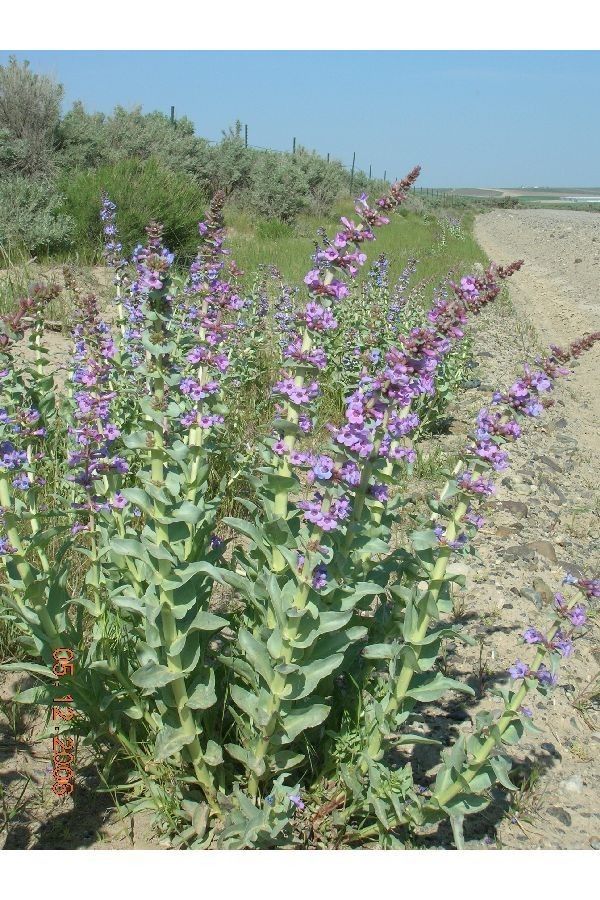
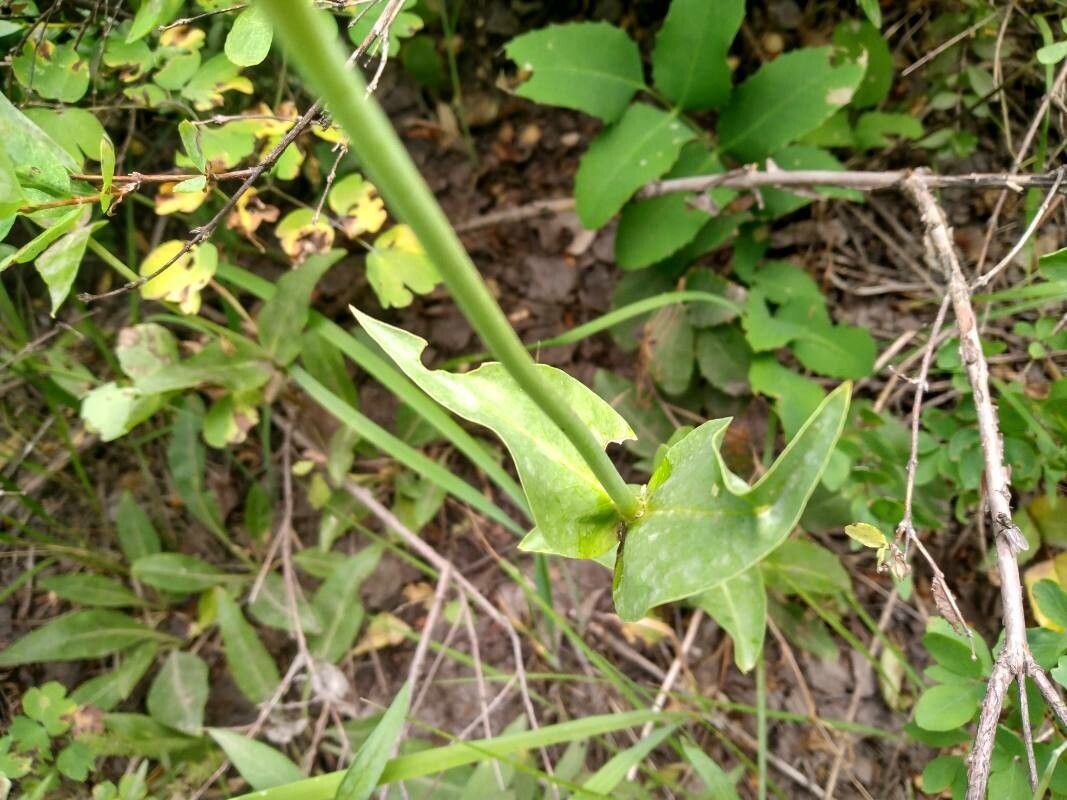
Penstemon cyaneus is a species of flowering plant in the plantain family known by the common names blue penstemon and dark-blue beardtongue. It is native to the western United States, where it is widespread in Idaho, Montana, and Wyoming.This species is a perennial subshrub with a woody base and several erect stems reaching up to 70 centimeters tall. Most of the leaves are near the base of the plant. They are up to 15 centimeters long and have petioles. There are some leaves higher on the stem, which are smaller and clasping at their bases. The flowers are blue, sometimes with a pinkish tinge. They are up to 3.5 centimeters long by 1 centimeter wide at the flaring mouth. They are attractive to bees.This plant grows on high plains and in sagebrush.This species may be used in revegetation projects in wildlife habitat. It is also appropriate for landscaping in dry areas such as roadsides. It may be difficult to use because it is vulnerable to root rot infections.
Blue penstemon is fairly disease-resistant and typically does not suffer from many illnesses. That said, it can be vulnerable to pests and diseases that occur nearby. Such infections tend to be mild. Care-wise, this plant is of moderate maintenance. Regular pruning is necessary to preserve an attractive look and healthy development. Applying fertilizer can also encourage more blooms. Blue penstemon is appropriate for anyone who has outdoor space like a garden or patio and does not demand extensive gardening experience. If kept indoors, it may need extra attention.
How to keep Penstemon Cyaneus.
Light
Blue penstemon is a sun-loving, perennial herbaceous plant native to open habitats and often thriving in meadows and grasslands. It prefers full sun but can also tolerate partial sun.
Temperature
Blue penstemon is capable of acclimatizing to a variety of temperature circumstances, although its spread may be constrained by specific mixes of moisture and heat conditions. It optimally flourishes in summer's warm climates provided there's sufficient rain or irrigation. Extended durations of overcast and rainy states, along with extended high temperatures, can augment the risk of Blue penstemon's death. In the winter season, providing appropriate protection from the cold can enhance the plant's chances of survival.
Fertilizer
It's best to fertilize a Blue penstemon in the early spring, as it shifts from dormancy into active growth. This adds vital nutrients essential for its healthy growth. Even though the nutrient requirements of Blue penstemon are not very high, a yearly fertilization can benefit its chances of survival and encourage the production of superior, longer-lasting blooms.
Botanical profile.
- Plant Type
- Herb, Shrub
- Life Cycle
- Perennial
- Genus
- Penstemon
- Family
- Plantaginaceae
- Hardiness Zone
- 4-8
- Mature Height
- 30 cm to 61 cm
- Mature Spread
- 30 cm to 46 cm
- Leaf Color
- Green, Dark Green
- Leaf Type
- Deciduous
- Flower Color
- Blue
- Flower Size
- 2.03 cm to 3.05 cm
- Bloom Time
- Early summer, Mid summer
- Planting Time
- Spring, Summer, Autumn
- Harvest Time
- Late summer, Early fall