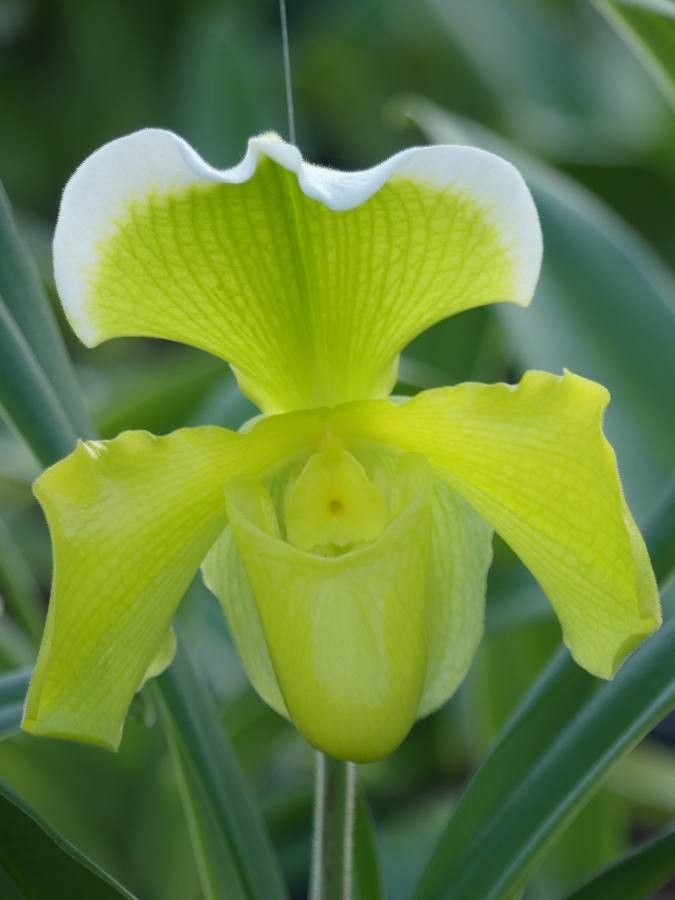
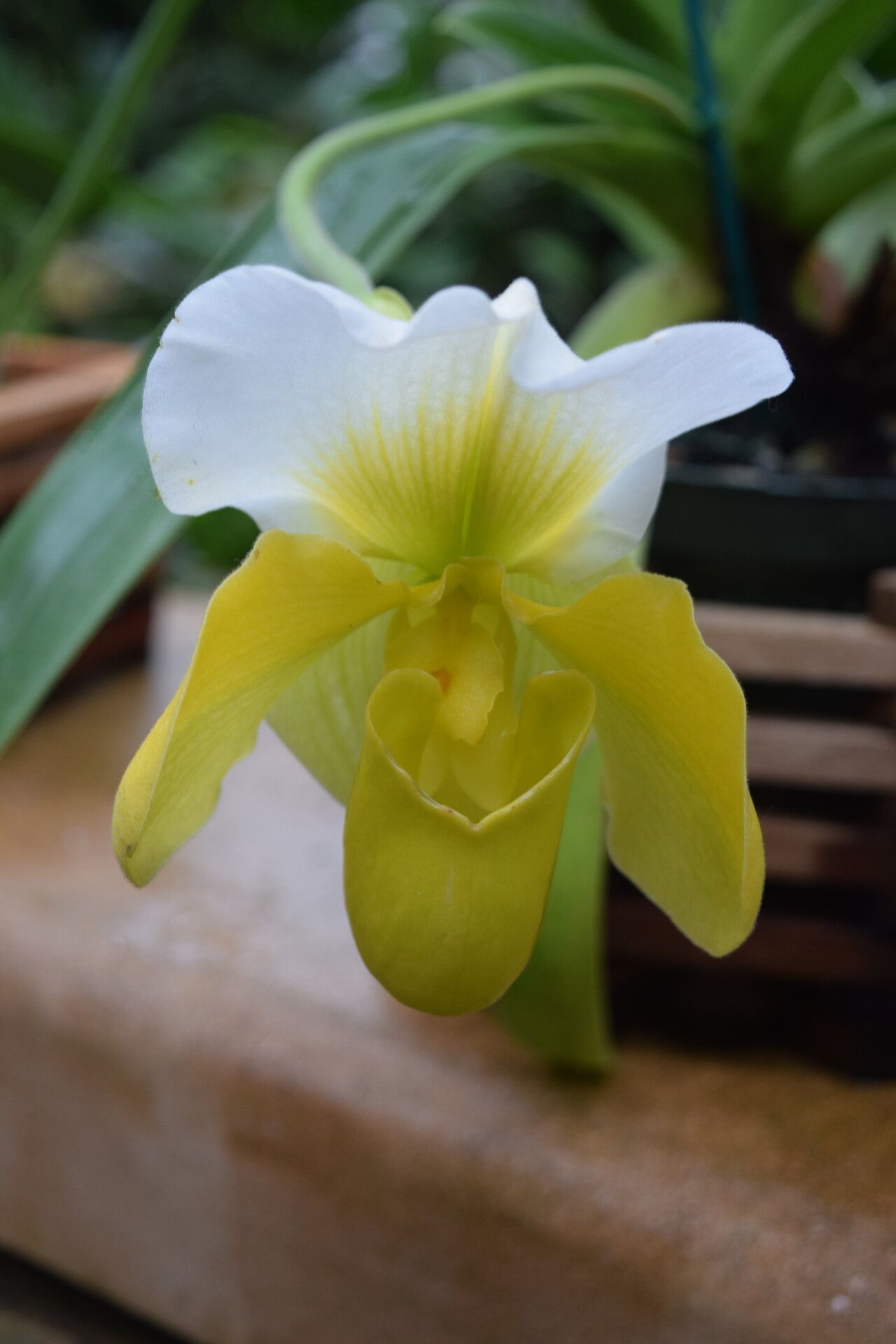
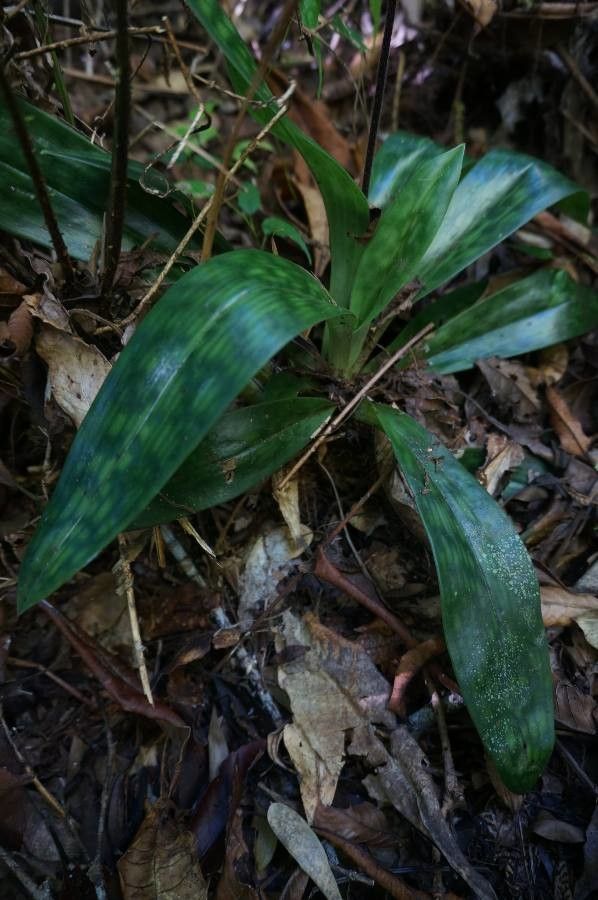
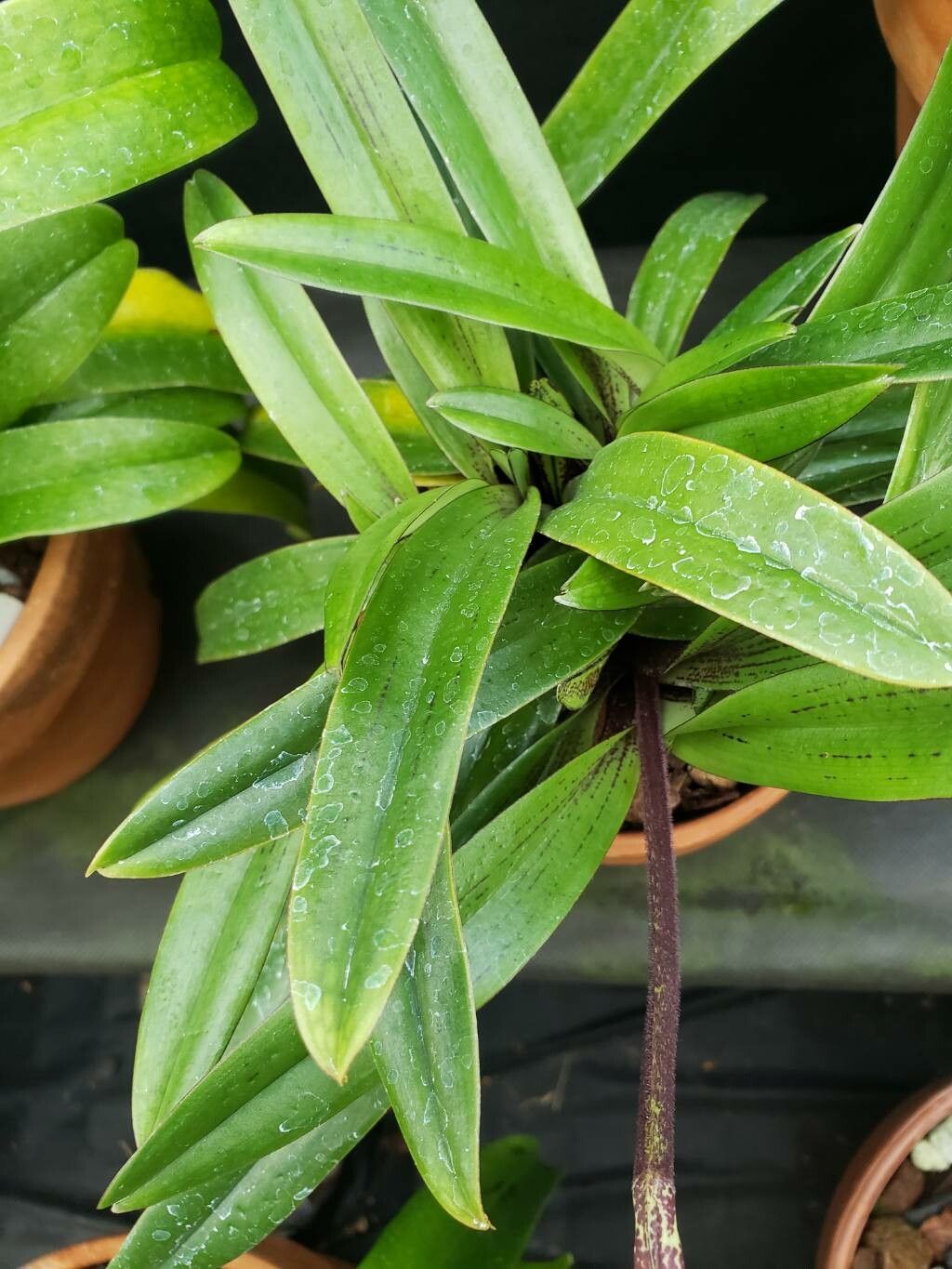
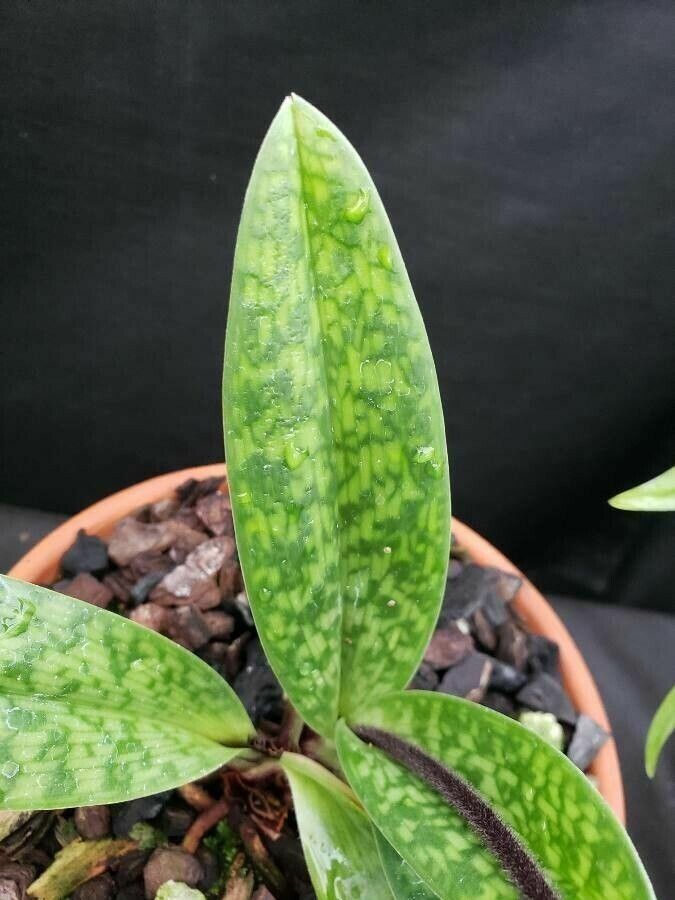
Paphiopedilum barbigerum is a species of flowering plant in the family Orchidaceae known commonly as the beard carrying paphiopedilum. It is native to China, Vietnam, and Thailand. It is an endangered species due to habitat destruction and overcollection for the horticultural trade.This orchid grows in soil, on rocks, or on tree trunks in limestone habitat types. It produces 4 to 6 linear green leaves up to 19 centimeters long. It blooms in a single flower on a hairy brownish stalk. The flower is up to 8 centimeters wide. The dorsal sepal is white with a greenish or brownish spot at the base. The synsepal is pale green and the petals are brownish with pale edges. The staminode is yellow.This species is pollinated by hoverflies, in particular Allograpta javana and Episyrphus balteatus.
Beard carrying paphiopedilum typically has good disease resistance and is affected by relatively few insect pests. Its care is considered difficult because it needs high humidity while also having good air circulation and few harmful pathogens. Too much watering can cause root rot. While anyone can grow Beard carrying paphiopedilum, keeping it healthy and getting it to flower again requires more growing experience.
How to keep Paphiopedilum Barbigerum.
Light
Beard carrying paphiopedilum originates from habitats like forest understories or rocky areas, where it grows in natural shade. It prefers partial sun but can adjust to full sun or full shade, demonstrating its versatility and hardiness.
Temperature
Beard carrying paphiopedilum does best in warm surroundings. It prefers moderately high temperatures and not conditions that are overly hot and humid. Sunlight helps warm the plant and encourages flowering. However, long periods of direct sun in summer can cause sunburn, so the amount of sunlight it gets in that season should be controlled. The plant generally handles cold poorly, so it needs sufficient protection and warmer temperatures in winter to avoid freezing.
Fertilizer
Appropriate fertilization is essential for the health and appearance of Beard carrying paphiopedilum. Fertilize Beard carrying paphiopedilum during the summer, repeating the application once a month throughout the season. Nutrients fuel growth and support the plant's parts. Fertilization improves Beard carrying paphiopedilum's floral display, helping to ensure the best blooms.
Pruning
Promptly prune wilted flower spikes on Paphiopedilum orchids right after they bloom to reduce nutrient loss and promote new blossoms. Also, remove any withered or diseased leaves immediately to improve air circulation, which can help lower the risk of pests and diseases.
Pot & Repot
When repotting Beard carrying paphiopedilum, choose a pot that is only slightly larger and has good drainage, preferably a clear orchid pot. Use an orchid-specific, well-draining mix that contains bark or moss. Gently clean the roots and trim any that are dead or rotting. Repot after flowering, usually in spring or fall; water thoroughly and place in bright, indirect light. Avoid disturbing the roots once repotted.
Botanical profile.
- Plant Type
- Herb
- Life Cycle
- Perennial
- Genus
- Paphiopedilum
- Family
- Orchidaceae
- Hardiness Zone
- 10-12
- Mature Height
- 20 cm to 30 cm
- Mature Spread
- 15 cm to 25 cm
- Leaf Color
- Dark Green, Forest Green
- Leaf Type
- Evergreen
- Flower Color
- Yellow, Brown
- Flower Size
- 5.08 cm to 6.35 cm
- Bloom Time
- Fall
- Planting Time
- Spring
- Harvest Time
- Winter
- Native Area
- Vietnam, Thailand, China
Other names.