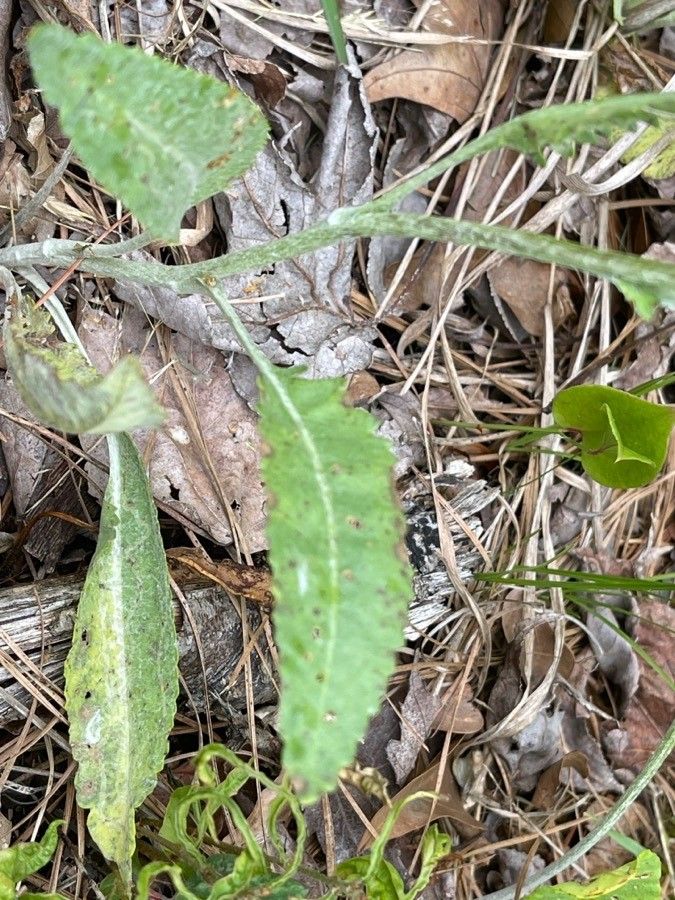
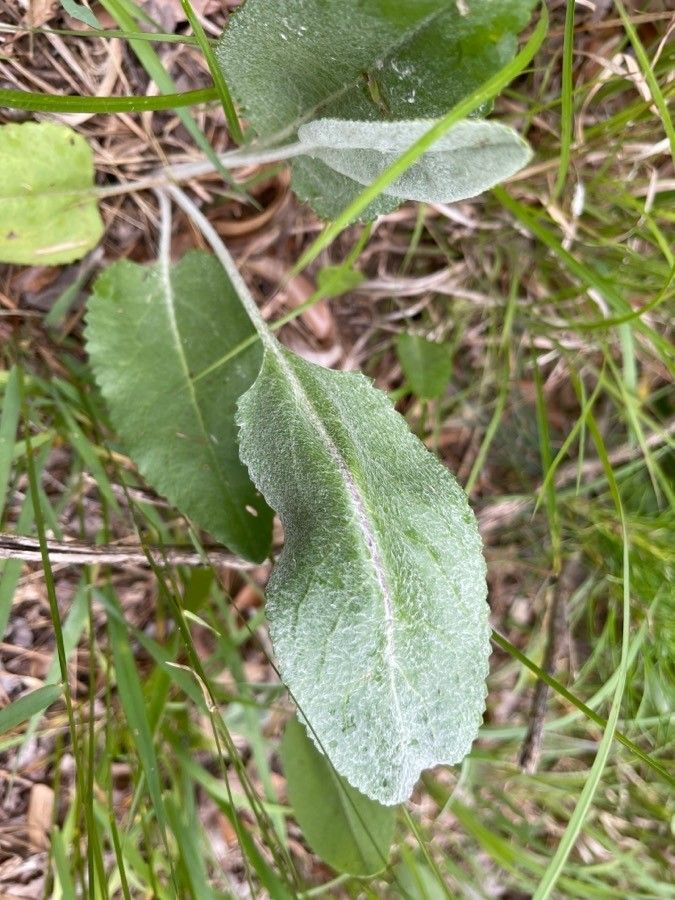
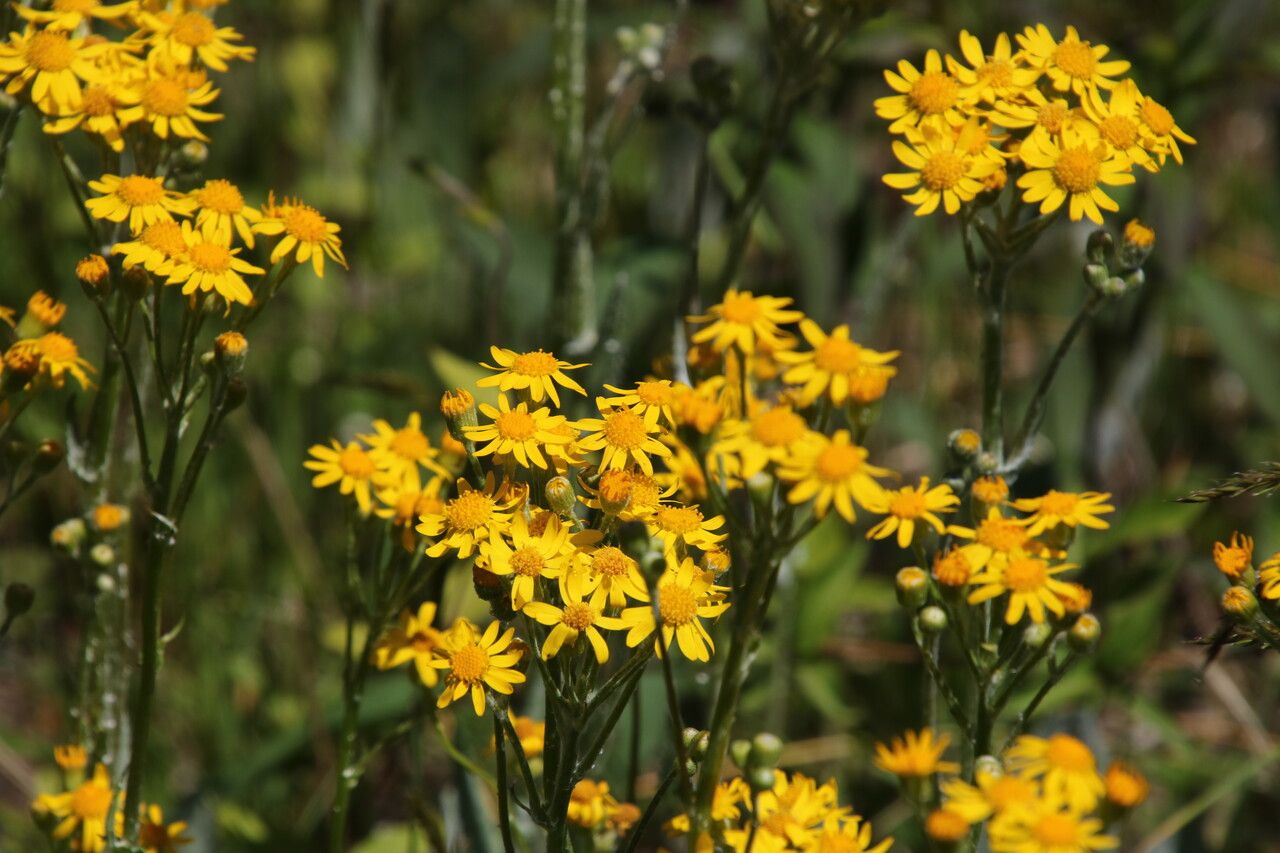
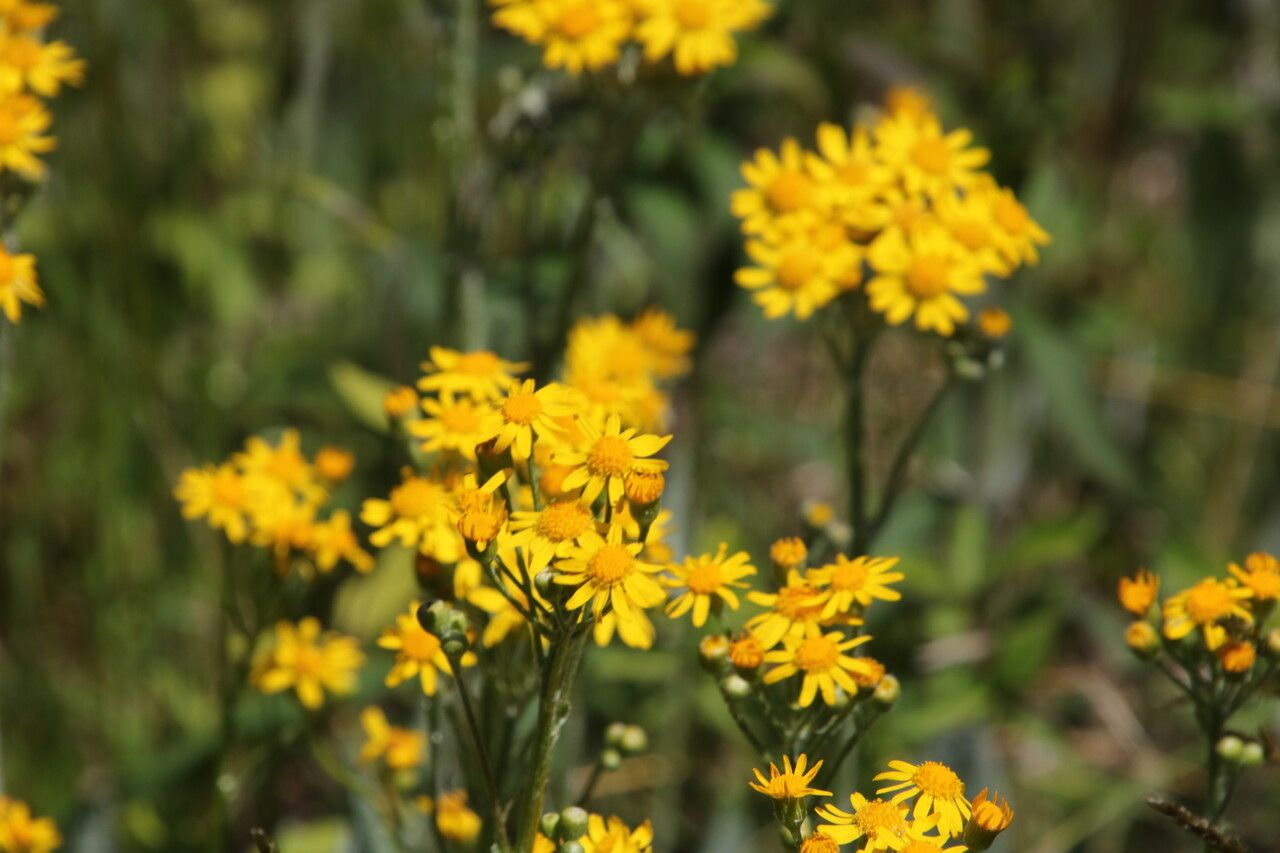
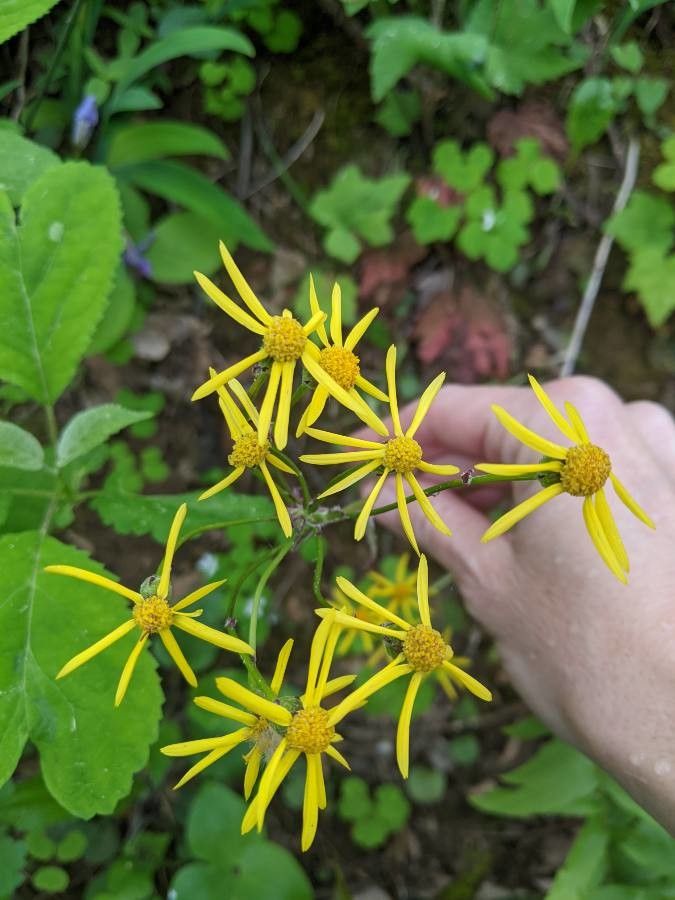
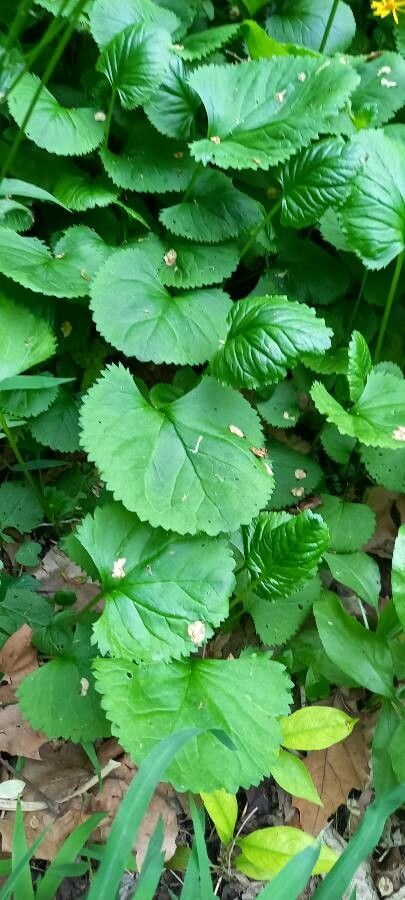
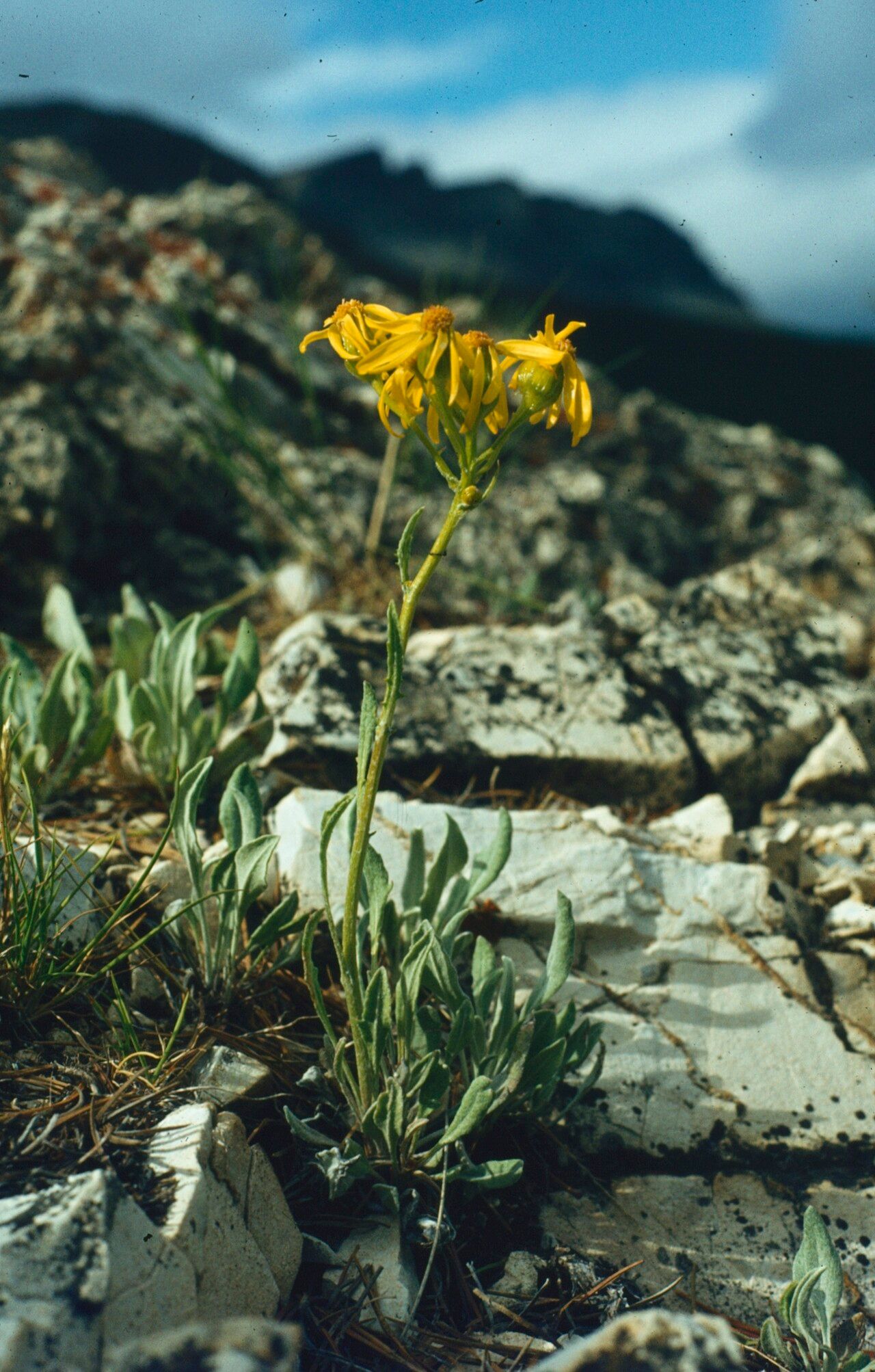
Packera tomentosa, commonly known as woolly ragwort or woolly groundsel, is a perennial plant in the Asteraceae family. Native to North America, it thrives in diverse habitats such as meadows, woodlands, and rocky slopes. This plant can grow up to 2 feet tall and features a basal rosette of leaves covered in dense white hairs, giving it a distinctive woolly appearance. The leaves are deeply lobed with toothed edges and can extend up to 8 inches in length. Packera tomentosa produces bright yellow flowers with ray petals encircling the central disk flowers. These blooms appear from late spring to early summer and attract bees and butterflies. Packera tomentosa serves as an important food source for various insects, including the caterpillars of several moth species such as the painted lady butterfly (Vanessa cardui). However, it's important to note that this plant contains toxic compounds that can cause liver damage if ingested by livestock or humans. Overall, Packera tomentosa is an attractive wildflower that enhances the beauty and diversity of natural landscapes while providing essential ecological benefits for pollinators.
Woolly ragwort has strong disease resistance and is generally not prone to illness. However, it can be vulnerable to pests and diseases present nearby. These infections tend to be mild. In terms of care, the plant requires a moderate level of maintenance. It should be pruned regularly to maintain a neat appearance and healthy growth. Applying fertilizer can also encourage flowering. Woolly ragwort is suitable for anyone with outdoor space such as a garden or patio and does not require extensive care experience. It may need more attention when grown indoors.
How to keep Packera Tomentosa.
Light
Woolly ragwort, a perpetual herbaceous plant that prefers sunshine, originates from open environments and often flourishes in grasslands and meadows. Whilst it prefers being fully exposed to the sun, it is also capable of tolerating partially sunny conditions.
Water
Woolly ragwort flourishes in moist environments and needs regular watering to stay healthy. It prefers soil that remains evenly moist, so it should be watered weekly to prevent drought stress. Outdoors, natural rainfall supports its growth, leading to lush foliage throughout the growing season.
Temperature
Woolly ragwort is native to regions with temperature fluctuations between 41 to 95 °F (5 to 35 ℃). Such climates are most conducive to its growth. With changing seasons, modifications in the temperature might be necessary to ensure ideal growth conditions are maintained.
Fertilizer
Typically, a solitary spring fertilizer application is enough for Woolly ragwort, although numerous feedings can enhance growth. This should be done approximately once a month to a month and a half. Fertilization contributes to the improvement of the leaf's look and functionality, fostering uniform color and robust texture. It also encourages the development of roots and the absorption of nutrients, leading to enduring plant wellness.
Pruning
Woolly ragwort is known for its woolly leaves and bright yellow flowers. To encourage dense growth, improve air circulation, and reduce pests, it’s best to prune this plant from early to late spring. Be sure to trim away any spent flowers and damaged stems. Always use clean, sharp tools to minimize stress and the risk of disease, which will help promote vibrant blooming periods.
Botanical profile.
- Plant Type
- Herb
- Life Cycle
- Perennial
- Genus
- Packera
- Family
- Asteraceae
- Hardiness Zone
- 5-9
- Mature Height
- 30 cm to 61 cm
- Mature Spread
- 30 cm to 61 cm
- Leaf Color
- Gray, Green
- Leaf Type
- Semi-evergreen
- Flower Color
- Yellow
- Flower Size
- 1.52 cm to 2.03 cm
- Bloom Time
- Mid spring, Late spring, Early summer
- Planting Time
- Spring, Autumn
- Harvest Time
- Early summer, Mid summer
Other names.
Reader questions.
What is the ideal temperature range for Woolly ragwort?
Woolly ragwort, known botanically as Packera tomentosa, thrives in environments where the temperature ranges between 41 to 95 °F (5 to 35 °C). It is best suited to these climate conditions for optimal growth. Seasonal temperature adjustments are crucial in maintaining these conditions to support its health.
Does Woolly ragwort require frost protection measures?
Woolly ragwort possesses strong cold resistance, which typically means that special frost protection measures are not necessary. However, during winters when temperatures are expected to fall below -25°C, it is important to take steps to protect it from the cold. This can involve covering the plant with soil or straw. It is also advised to water the plant abundantly before the first freeze in autumn to keep the soil moist, helping to prevent drought and water scarcity during winter and early spring.
How does Woolly ragwort react to low temperatures?
Woolly ragwort is quite cold-tolerant, thriving best at temperatures above 5°C. Despite being resilient during winter, when temperatures are kept above -20°C, if they drop below -25°C, there may not be visible changes during winter, but a decrease in sprouting or a complete lack of sprouting may occur in spring. In such cases, removing any parts that have failed to sprout in spring is the recommended action.
What should be done if Woolly ragwort is exposed to high temperatures?
During summer, it's important to ensure that Woolly ragwort does not remain in temperatures exceeding 35°C. Exposure to temperatures above 38°C can cause the leaves to lighten in color, become prone to curling, are susceptible to sunburn, and in severe cases lead to wilting and drying of the entire plant. To mitigate these effects, trim away the affected parts, move the plant to a shaded location, or use a shade cloth to protect it from midday and afternoon sun. Additionally, watering the plant during the morning and evening will help maintain soil moisture.